
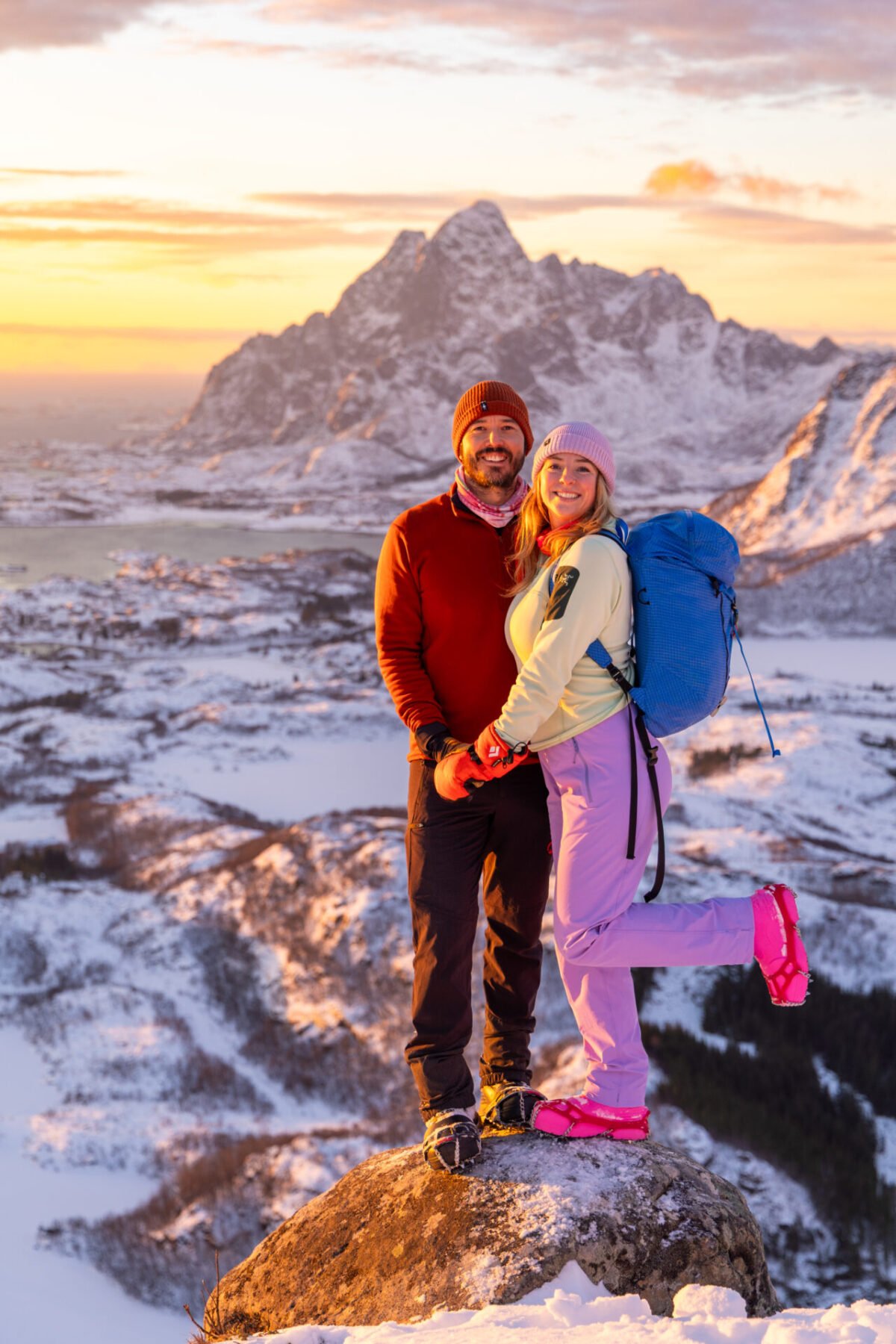
Complete Lofoten winter packing list: what to wear for hiking in Arctic Norway
Last Updated on 19 September 2026
Norwegians have a saying: “there’s no such thing as bad weather, only bad clothing,” and nowhere does this feel more accurate than winter in Lofoten. Perched above the Arctic Circle and fully exposed to the Norwegian Sea, this wind-whipped archipelago delivers a demanding mix of wet snow, icy ground, and gale-force gusts— but with the right layers, traction, and weather protection, even –10 °C can feel like ideal conditions for getting outside!
After many cold-weather mountaineering expeditions (where I learned from brutally cold mistakes) and nearly a month of hiking around Lofoten in January 2026, we’ve refined our layering system to handle anything the Arctic winter throws at us, ALL shared in this detailed winter packing list!
Although tailored specifically to Lofoten’s mixed conditions, this same system works beautifully for active winter travel across much of the Nordics with only minor tweaks— so if you’re considering a winter adventure in Norway or beyond, this packing list outlines the EXACT layers we’d recommend (from merino wool base layers to hard shell for added wind protection), plus essential winter hiking and safety gear you should never hit the mountain without.
This post contains affiliate links, which means I may earn a small commission if you purchase something I recommend, at no extra cost to you. I ONLY recommend gear that I personally use (or that James uses) and that we genuinely LOVE— your support helps keep this site going and the adventures rolling!
Check out my outdoor gear guides for the best:
Winter weather in Lofoten
Although winter temps in Lofoten typically range between a relatively mild 0° to –10°C, what truly defines the Arctic winter here is the coastal mix of wet snow, powerful wind, and fast-moving storms. These conditions can be even more challenging to manage than the dry, stable cold of –30°C in Lapland, but careful packing will ensure you’re still incredibly comfortable amidst the chaos!
Rather than relying on a single expensive winter parka, a robust layering system is the BEST way to deal with shifting winter conditions in Lofoten, allowing you to fully customise your outdoor attire for colder, wetter, or windier days, even on a minute-to-minute basis. Prioritising layers that breathe during movement, insulate even when damp, and provide reliable wind protection, you’ll be well equipped for anything Lofoten throws at you!
🏔️ Read more about how to assess safe winter hiking conditions: Best winter hikes in Lofoten: your guide to safe winter hiking in Arctic Norway
Lofoten winter packing tips
- prioritise base and mid-layers that insulate even when damp— wool is a standout for this, while Polartec fleece is an excellent synthetic option (I love layering merino wool under Polartec for the best balance of warmth and breathability)
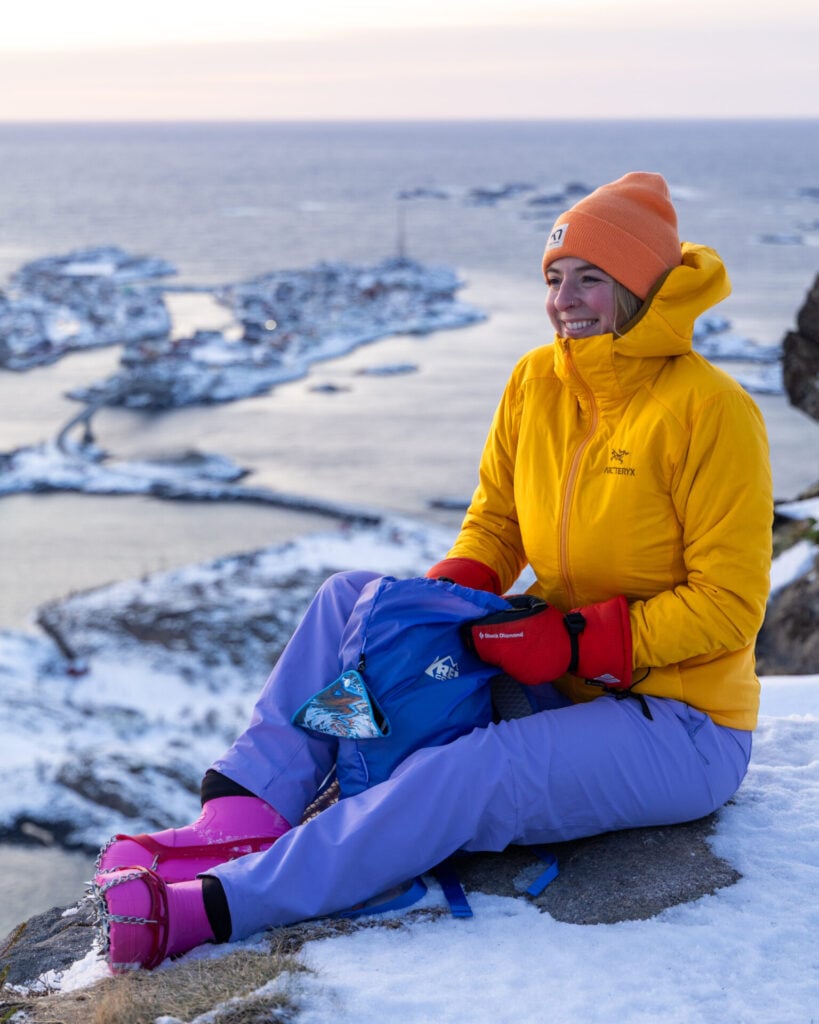
- down does not insulate well when wet, either from the damp climate or from sweat while hiking; instead, look for insulation from a wool mid-layer or a synthetic jacket (like the Arc’teryx Atom) that retains warmth far more reliably in mixed winter conditions
- 2–3x gloves or mittens might seem like overkill, but your hands are often the first thing to get painfully cold— we carried lightweight hiking gloves, leather alpine gloves, and down mittens on every single hike and regularly swapped between them throughout the day
- protect your head, ears, face, and neck with wool or other insulating layers, as this is where significant heat loss and painful windburn most commonly occur
- use microspikes and trekking poles with snow baskets on every hike, as Lofoten’s winter terrain is usually a mix of ice, slush, rock, and packed snow that require added traction
*Packing list for winter hiking in Lofoten
Rather than overwhelm you with a generic Norway packing list full of adapters, toiletries, and travel extras, this guide focuses specifically on the winter layers, trail gear, and safety items that will ensure you have a successful winter hiking trip in Lofoten. Below is a quick overview of the exact gear I’ll walk through in more detail in the following sections:
UPPER BODY: BASE LAYERS, MID-LAYERS & JACKETS
⭐️ wool base layer: Smartwool Classic Thermal Base Layer Top (women’s) / (men’s)
⭐️ quarter-zip wool base layer: Kari Traa Rose Base Layer
⭐️ lightweight fleece mid-layer: Arc’teryx Rho Zip Neck (women’s) / (men’s)
⭐️ Polartec fleece mid-layer: Arc’teryx Kyanite Zip Neck (women’s) / (men’s)
⭐️ wool jumper: Kari Traa Sundve Sweater
⭐️ insulated jacket: Arc’teryx Atom Hoody (women’s) / (men’s)
⭐️ hard shell Gore-tex jacket: Arc’teryx Beta SL Jacket (women’s) / (men’s)
LOWER BODY: BASE LAYERS, MID-LAYERS & PANTS
⭐️ wool base layer bottoms: Arc’teryx Satoro Merino Wool Bottoms (women’s) / (men’s)
⭐️ Polartec fleece bottoms: Arc’teryx Kyanite Base Layer Bottoms (women’s) / (men’s)
⭐️ soft shell pants: Arc’teryx Gamma Pants (women’s) / (men’s)
⭐️ hard shell pants: Arc’teryx Sentinel Pants (women’s) / Sabre Pants (men’s)
ACCESSORIES: HEAD, HANDS & FEET
⭐️ beanie: Arc’teryx Mallow Toque
⭐️ neck gaiter: Buff Original
⭐️ lightweight hiking gloves: Outdoor Research Trail Mix Gloves (women’s) / (men’s)
⭐️ alpine gloves: Black Diamond Legend Gloves (women’s) / (men’s)
⭐️ insulated mittens: Black Diamond Super Light Mitts
⭐️ hand warmers: rechargeable electronic hand warmers from Amazon
⭐️ thick wool socks: Smartwool Classic Mountaineer Socks
⭐️ winter boots: Fubuki Niseko 3.0 Low Boots (women’s) / (men’s)
WINTER HIKING GEAR
⭐️ daypack: REI Co-op Flash 18 OR Arc’teryx Alpha FL 30
⭐️ microspikes: Kahtoola Microspikes
⭐️ trekking poles: Black Diamond Trail Trekking Poles
⭐️ PLB/SOS: Garmin InReach Mini 3
⭐️ fitness watch: Garmin Venu 4 OR Gamin Fenix 7
⭐️ first aid kit: Adventure Medical Ultralight .5
⭐️ headlamp: Black Diamond Spot 400-R
⭐️ powerbank: VRURC Portable Charger with Built-in Cables, 10000mAh
⭐️ insulated water bottle: Hydro Flask Wide-Mouth Vacuum Bottle 32oz
Upper body: base layers, mid-layers & jackets
The upper body is where you’ll experience the largest temperature swings in winter— your core heats up quickly (and sweats) on steep climbs, cools just as fast when you stop, and is most exposed to wind and moisture. It’s also the easiest part of your system to adjust throughout the day, which is why upper-body layering deserves so much attention (and probably requires twice as many options as the lower body).
To give you a general idea, I usually:
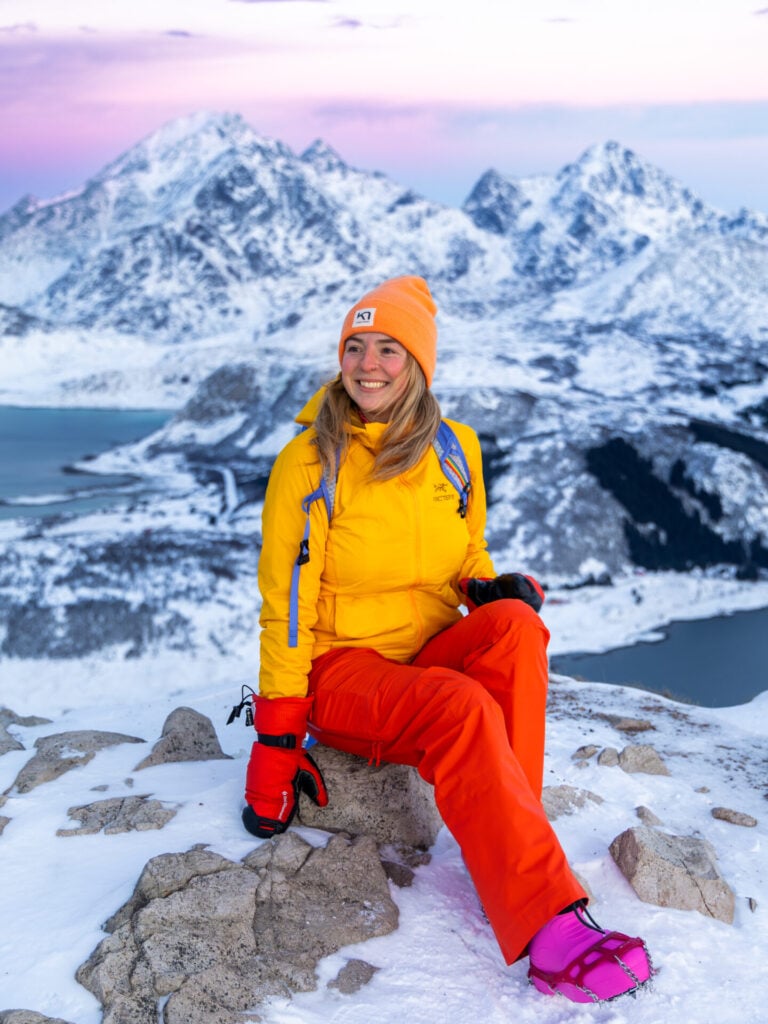
- started the hike in a base layer + mid-layer + insulated jacket
- stripped down to just my base layer on the ascent
- pulled all 3 original layers back on (base layer + mid-layer + insulated jacket) PLUS added my hard shell jacket on the windy summit
Being able to customise my warmth, breathability, and weather protection constantly throughout the day kept me so much more comfortable overall! In colder or windier conditions, every layer in this system can be worn simultaneously (in the exact order presented below), giving you coverage for nearly any scenario you’ll encounter in Lofoten.
👉🏼 Need help building the perfect layering system? Check out this post for how to build an outdoor layering system for backcountry hiking & extreme alpine conditions
wool base layer: Smartwool Classic Thermal Base Layer Top (women’s) / (men’s)
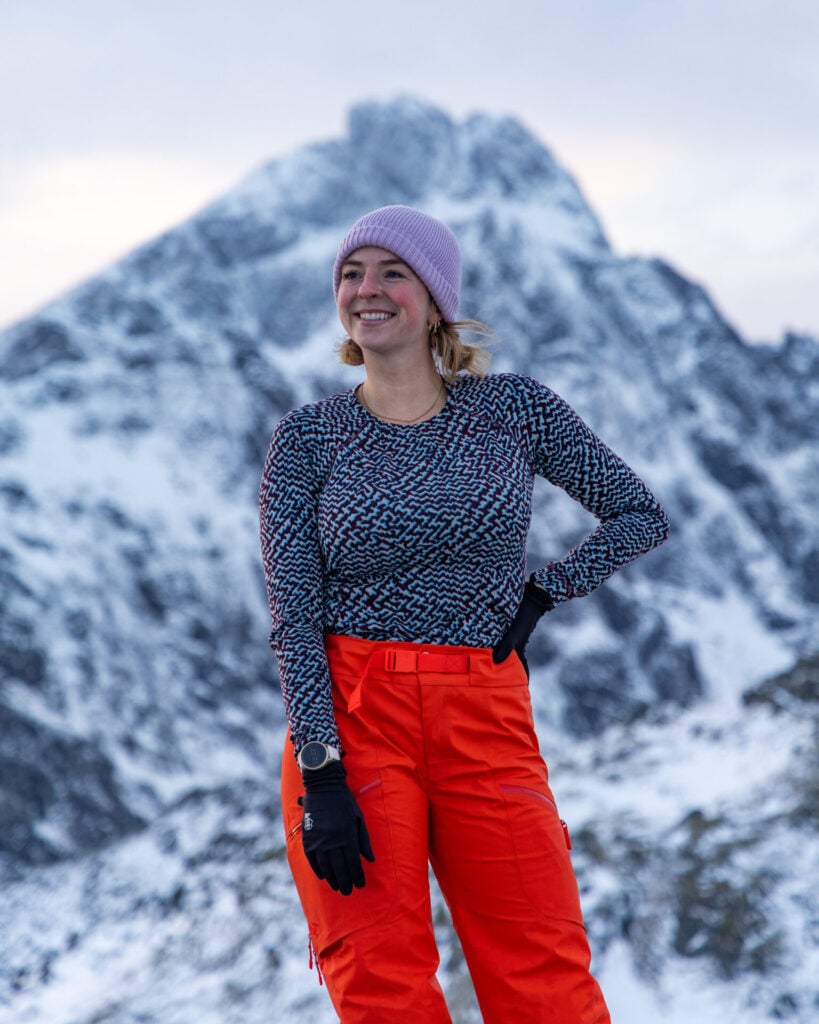
A merino wool long-sleeve is the starting point for any winter wardrobe, unbeatable as a lightweight base layer that retains warmth even when damp, regulates temperature during variable output, and resists odour over multiple wears.
I wore this Smartwool crew (or the quarter-zip below) every single day as my next-to-skin layer. I’d recommend packing 2-3x base layers (in either style) for most trips, depending on how much you personally sweat.
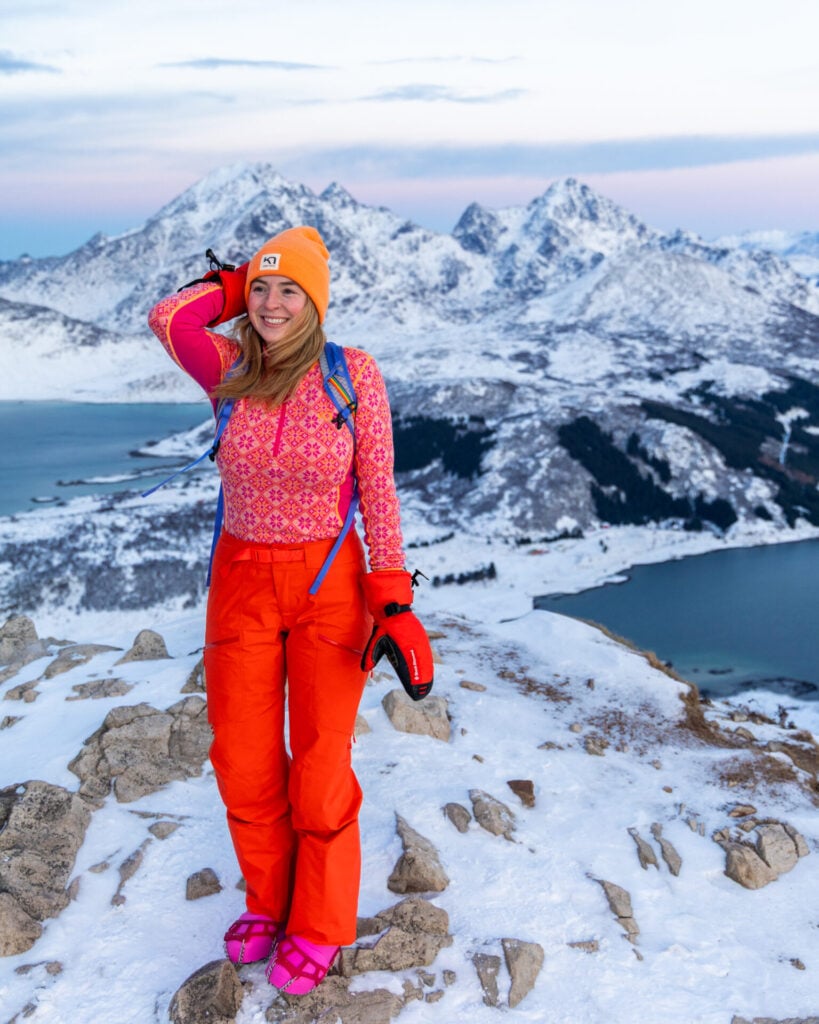
quarter-zip wool base layer: Kari Traa Rose Base Layer
A zip-neck merino wool base layer adds built-in ventilation, which is incredibly useful for winter hiking (providing neck coverage in the wind OR unzipping to dump heat and prevent sweating).
It may seem like a lot to pay for “just a shirt”, but the quality of 100% merino wool layers vs cheap mixed or synthetic versions is immediately apparent in harsh conditions. Think of it as an investment in long-term comfort and safety outdoors!
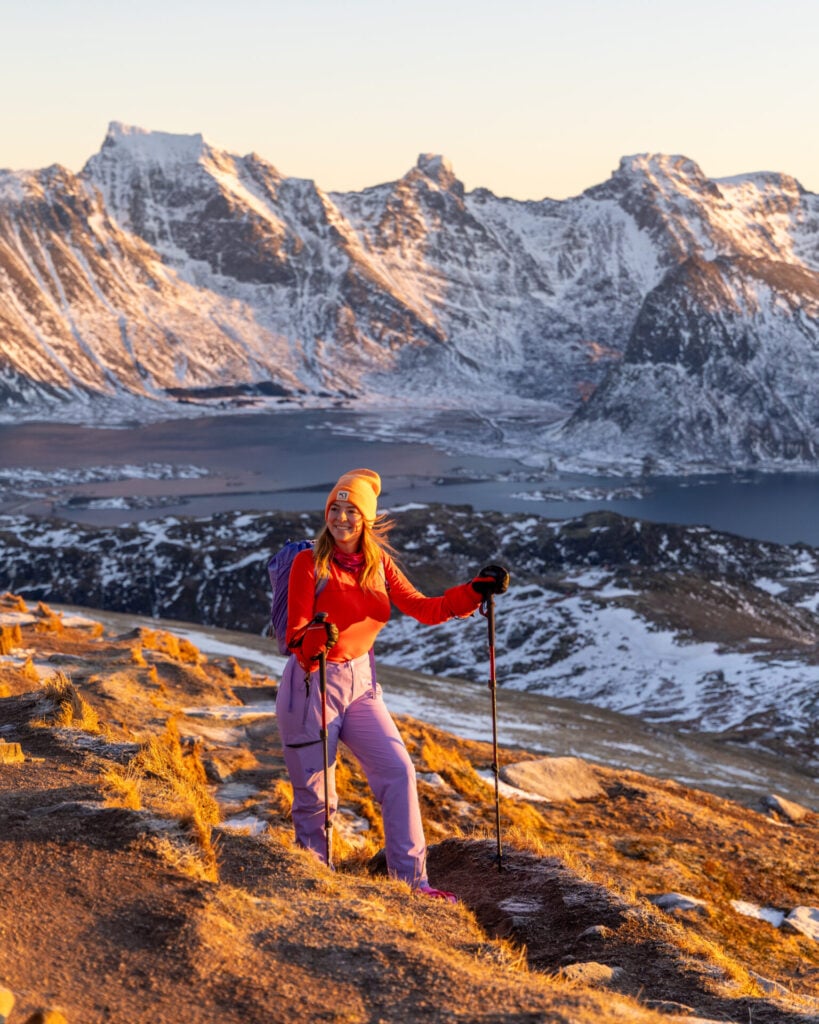
lightweight fleece mid-layer: Arc’teryx Rho Zip-Neck (women’s) / (men’s)
Although lightweight fleece zips like this are often marketed as base layers, I tend to prefer fleece as a mid-layer worn over a merino wool base, since wool handles odour far better during multi-day use. That being said, I’ve owned this orange zip-neck for 15+ years and have yet to run out of combinations for it!
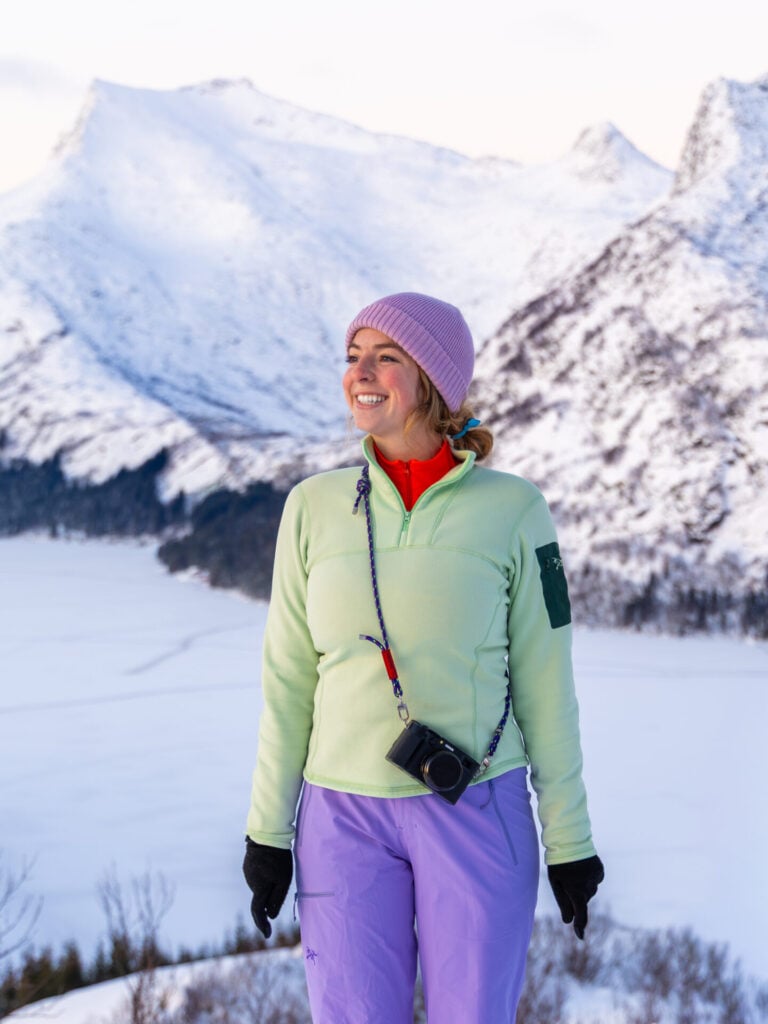
Polartec fleece mid-layer: Arc’teryx Kyanite Zip Neck Top (women’s) / Rho Heavyweight Zip Neck Top (men’s)
Polartec is one of my absolute favourite outdoor fabrics, providing an incredible amount of warmth while adding almost no weight or bulk. It’s breathable, stretchy, performs well even when damp— and we’ve quickly become obsessed with these Arc’teryx quarter-zips as everything from snuggly cold-weather sleep layers to versatile mid-layers on winter hikes.
Because they’re so featherlight and compact, it’s easy to throw the Kyanite into your pack as an extra layer in case conditions turn! So if you’re only going to buy one new fleece layer for the trip (between the Kyanite and the Rho), this is the one that really serves the most unique purpose.
Note: Arc’teryx keeps changing the name of this pullover, but at the time of writing, the women’s version is “Kyanite”, while men’s is still using the old “Rho Heavyweight”.
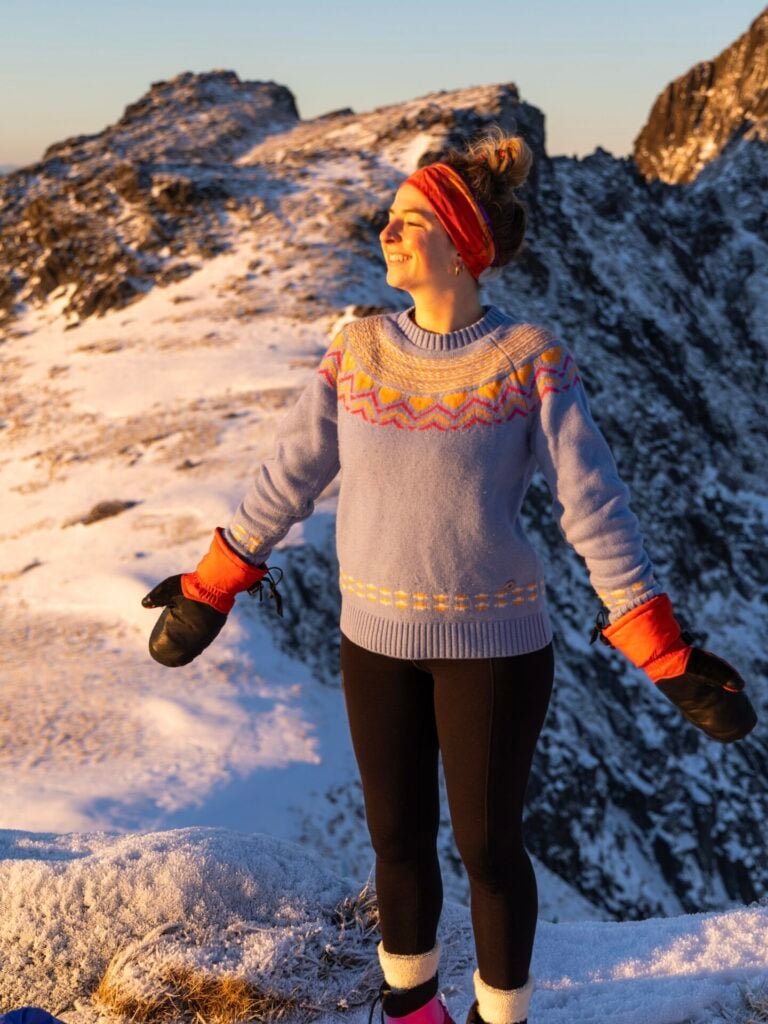
wool jumper: Kari Traa Sundve Sweater
Norwegians think of wool jumpers as the original outdoor performance garment— although not as light, stretchy, or breathable as the fleece layers recommended above, wool is crazy warm even when damp, making it perfect for winter adventures. Also: CUTE.
I predominantly used this layer for walking around town or lounging at home (over a base layer to protect against the mild itchiness), but did also bring it on a few hikes and found it to be super warm! If you’re visiting Oslo or other city destinations on the same trip, this is also an excellent dinner/cocktail bar jumper.
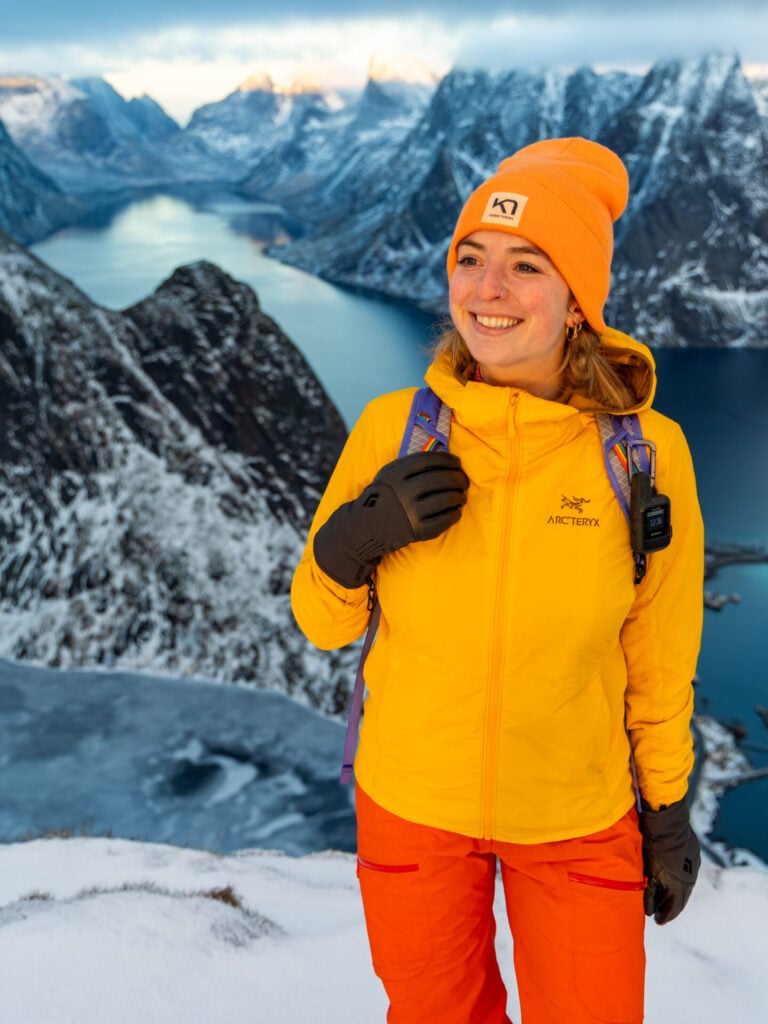
insulated jacket: Arc’teryx Atom Hoody (women’s) / (men’s)
In Lofoten’s wet, coastal winter, synthetic insulation is far more reliable than down, and this Atom jacket does it SO WELL: breathable for high-output hiking in cold conditions + consistent warmth even when exposed to snow, sleet, or internal moisture from sweat.
While it isn’t fully waterproof, it offers enough weather resistance for light snow and wind (and layers perfectly under a hard shell when conditions worsen). James and I both used this jacket on EVERY hike in Lofoten, and it’s also the jacket I use more than any other for mountain adventures around the world!
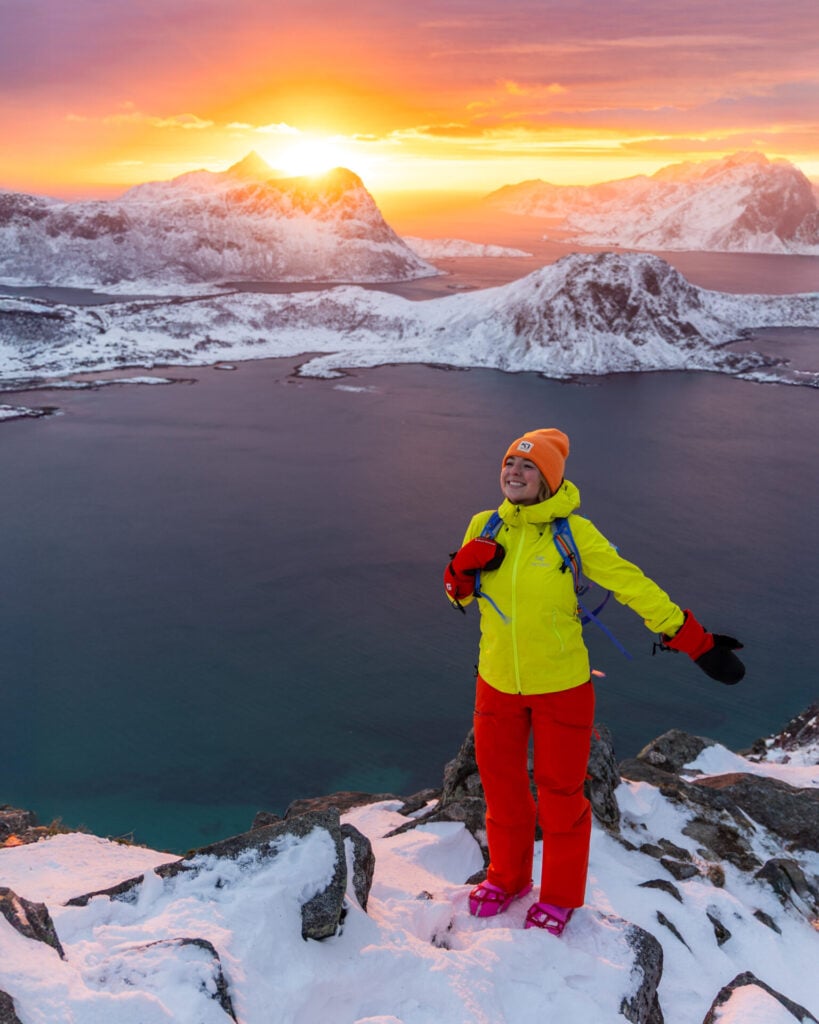
hard shell Gore-tex jacket: Arc’teryx Beta SL Jacket (women’s) / (men’s)
This is the outermost layer that protects everything underneath it (including YOU) from Lofoten’s wild winter weather. Even on clear days, wind chill on exposed ridges can be severe and storm systems can move quickly across the islands, so a fully waterproof, windproof Gore-Tex shell is like safety equipment— do NOT leave the trailhead without it.
The Arc’teryx Beta lived in my pack on every hike and went on immediately whenever conditions shifted. Even worn over a single base layer, it provides a LOT of warmth and weather protection (but at the expense of some breathability, hence why it’s usually not needed until the summit). When you do need to climb in your shell during heavy wind, pit zips are invaluable for dumping heat and limiting sweat accumulation.
If you’re considering upgrading from a basic rain jacket, know that quality Gore-Tex is a long-term investment: designed to perform in the harshest conditions and built to last for 10-15+ years. It’s expensive, but WILDLY superior in every way. After 11 years of use with a heavy backpack, my Beta jacket began to delaminate at the shoulders and Arc’teryx just replaced it for free under warranty 🖤
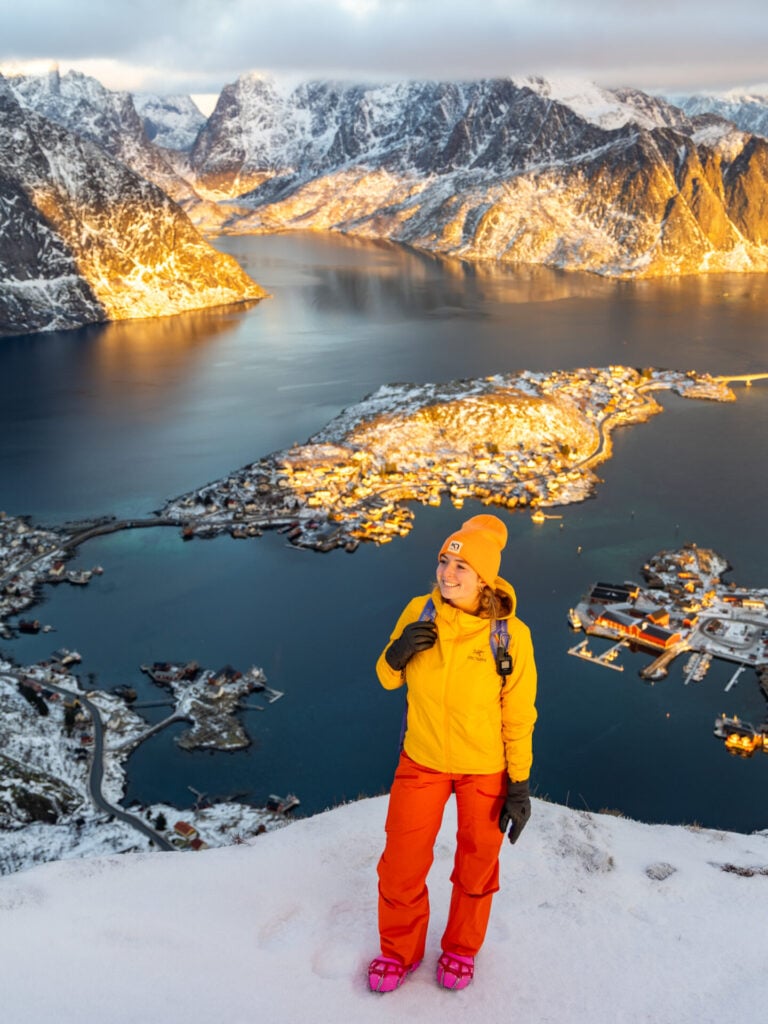
Lower body: base layers, mid-layers & pants
The same outdoor layering principles apply to your legs, but with one important caveat: you can’t easily add or remove layers halfway up a snowy mountainside, so choosing the right combination before you leave the house is much more critical.
Personally, I found 2 lower body layers on any given day to be perfect for Lofoten, where temperatures rarely drop below –5°C and you’re generating plenty of heat while moving: pair a base OR mid-layer (depending on temperature) with soft shell OR hard shell pants (depending on wind and precipitation risk). With just these 4 lower-body layers, you’re totally set for anything Norway throws at you!

wool base layer bottoms: Arc’teryx Satoro Merino Wool Bottoms (women’s) / (men’s)
As with the upper body, merino wool makes the ideal base layer for your lower half, layering neatly under any of the other pants on this list to provide additional warmth without compromising breathability. Depending on your sweat levels and access to laundry, 1-2x wool base layers should be plenty for any trip.
In Lofoten, I wore either this base layer OR the fleece layer below underneath shell pants, but in very cold conditions across the Nordics, you can absolutely double up these layers for max insulation.
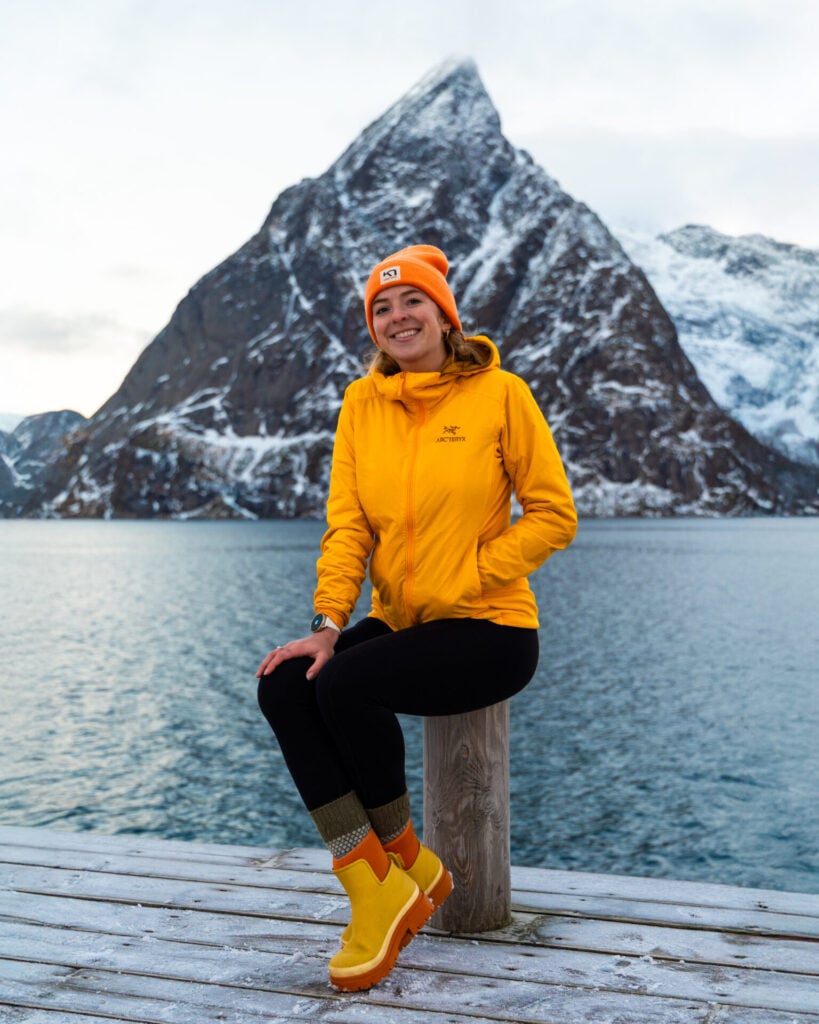
Polartec fleece bottoms: Arc’teryx Kyanite Base Layer Bottoms (women’s) / (men’s)
Much like the Kyanite Zip Neck I love so much, these bottoms use Polartec fleece to deliver a surprising amount of warmth with very little bulk, remaining stretchy, breathable, and comfortable on the trail.
James and I both wore the Kyanite bottoms on most hikes as our base layer under soft shell or hard shell pants (when we wanted a little more warmth than just the thin merino wool base layer above). But for women, they also work perfectly as a stand-alone layer— fitting like sleek black leggings with a smooth, stretchy exterior and plush fleece lining.
I own 2 pairs of these and they’ve become my favourite thing to pull on in the winter, both on the trail and around town!
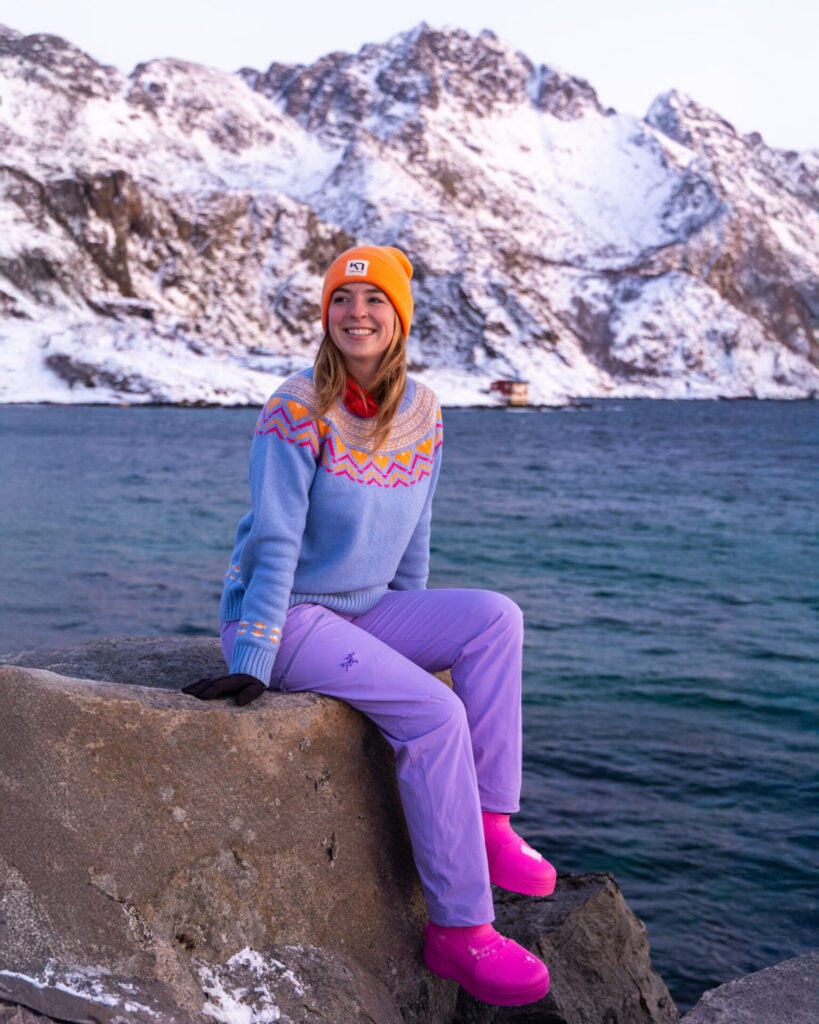
soft shell pants: Arc’teryx Gamma Pants (women’s) / (men’s)
Winter hiking in Lofoten is best served by 2 different types of shell pants: soft shell (like these Gamma Pants) and hard shell (like the Sentinel Pants below).
Soft shells are designed to prioritise breathability, stretch, and freedom of movement. Although they aren’t fully waterproof, they still shed light snow well, block moderate wind, and feel comfortable during long ascents thanks to their excellent airflow and flexibility.
James wore his Gamma Pants on every hike, while I alternated between soft and hard shell pants depending on the forecast. If you’re only planning to bring one pair of shell pants, these are an excellent all-around choice (and you can always layer base + mid-layers underneath to maximise insulation).
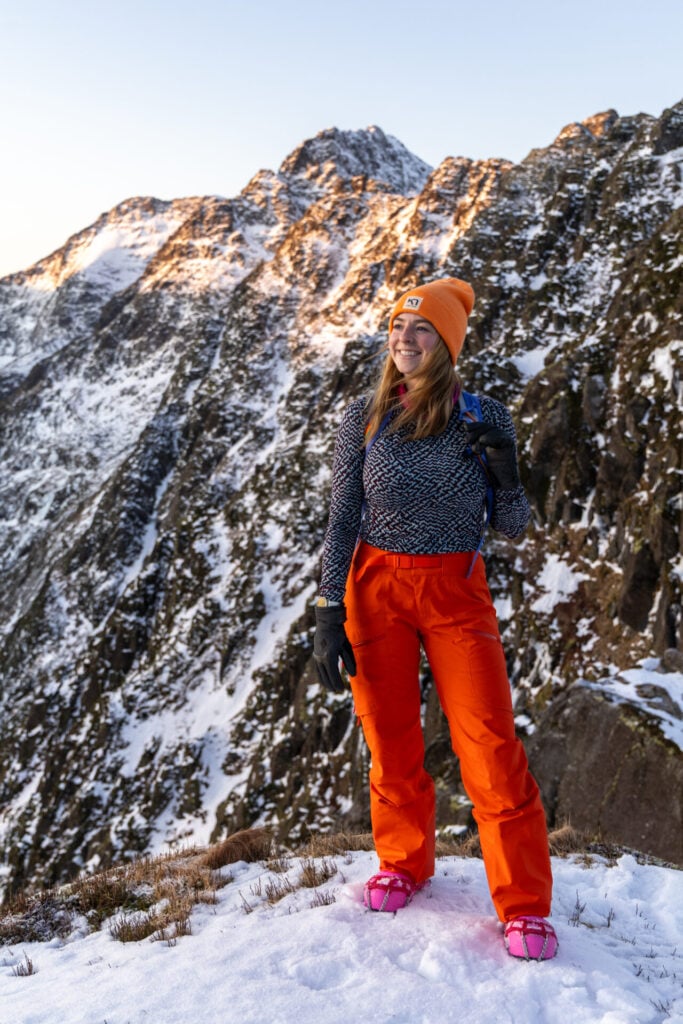
hard shell Gore-tex pants: Arc’teryx Sentinel Pants (women’s) / Sabre Pants (men’s)
Just like a Gore-tex jacket, hard shell pants are your defence against the worst winter conditions in Lofoten: strong wind, wet snow, and prolonged exposure on ridgelines or summits. And unlike soft shells, these are fully waterproof and windproof, making them essential for hikes where weather protection matters more than breathability.
Sentinel and Sabre are both marketed as snowboarding pants, but I find they work fantastically for all snowy pursuits, including winter hiking in Lofoten. These Gore-tex pants have an internal boot gaiter (snow cuff) to keep snow out, long thigh zips to dump heat, and enough room around the knee for full articulation on scrambly routes. These pants are new to me this season and I can’t wait to test them on more alpine climbs!
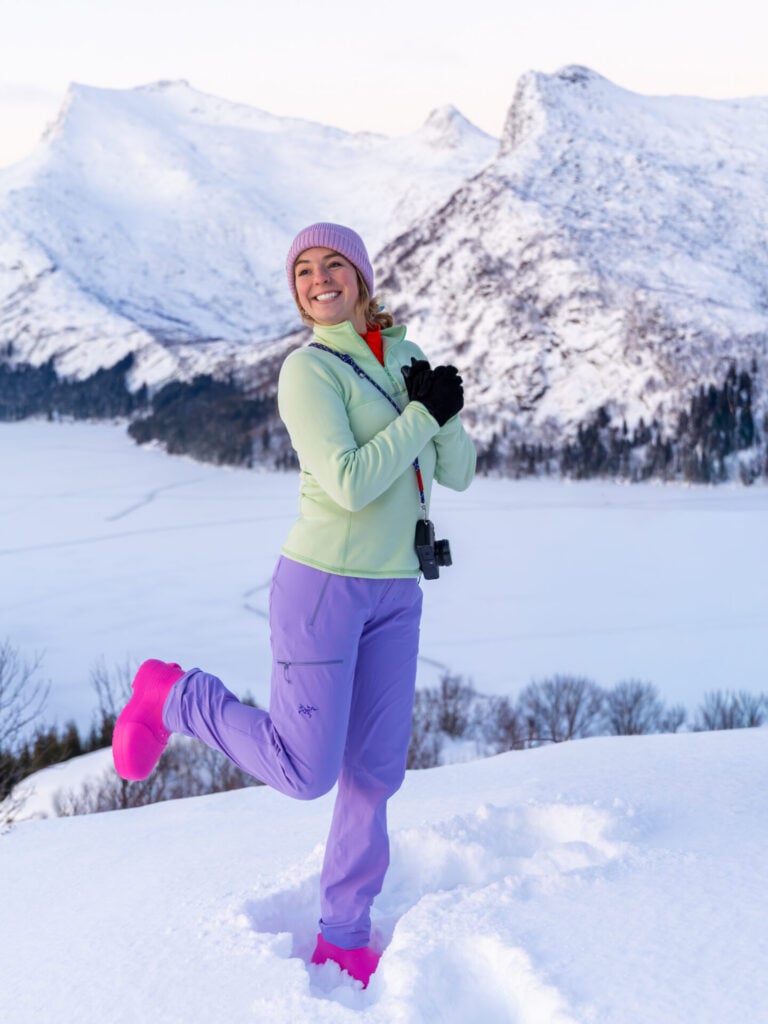
Accessories: head, hands & feet
In Lofoten’s damp, windy winter climate, the materials you choose for your extremities matter just as much as the layers on your torso.
Wool is a standout because it continues to insulate even when damp, resists odour over multi-day use, and feels warm against the skin in freezing air. For your hands specifically, leather or weather-treated down alpine gloves and mittens offer phenomenal warmth performance and dexterity (for holding poles or the occasional scramble move). Here’s what I specifically used and recommend:

beanie: Arc’teryx Mallow Toque
A warm, comfortable wool beanie is absolutely non-negotiable for winter travel in Norway, and especially on the windy trails of Lofoten. We wore a hat 100% of the time when we were outside.
I’d recommend packing 1–2x hats depending on trip length, and prioritising wool or wool-blend fabrics, which insulate better when damp and block wind more effectively than fully synthetic knits.
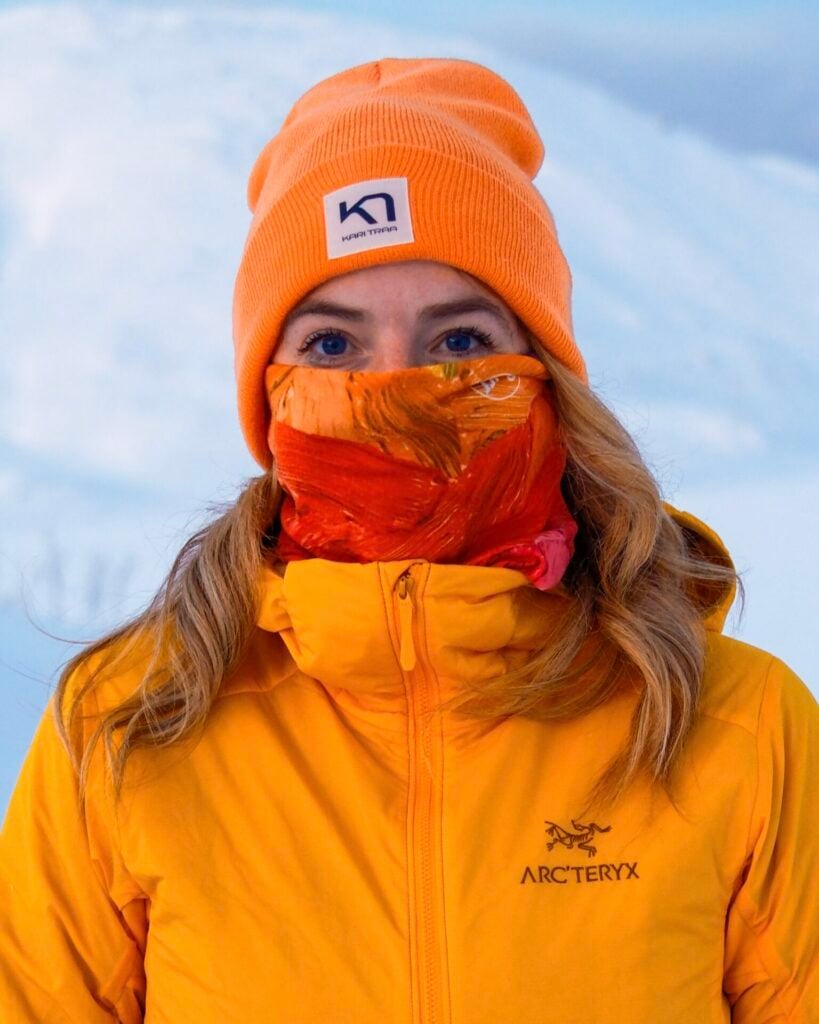
neck gaiter: Buff Original
A neck gaiter makes a massive difference in cold, windy conditions by sealing the gap between your jacket and face, which is one of the most common areas of heat loss. We wore these on EVERY hike, usually pulled over our mouth and nose to prevent against painful wind burn.
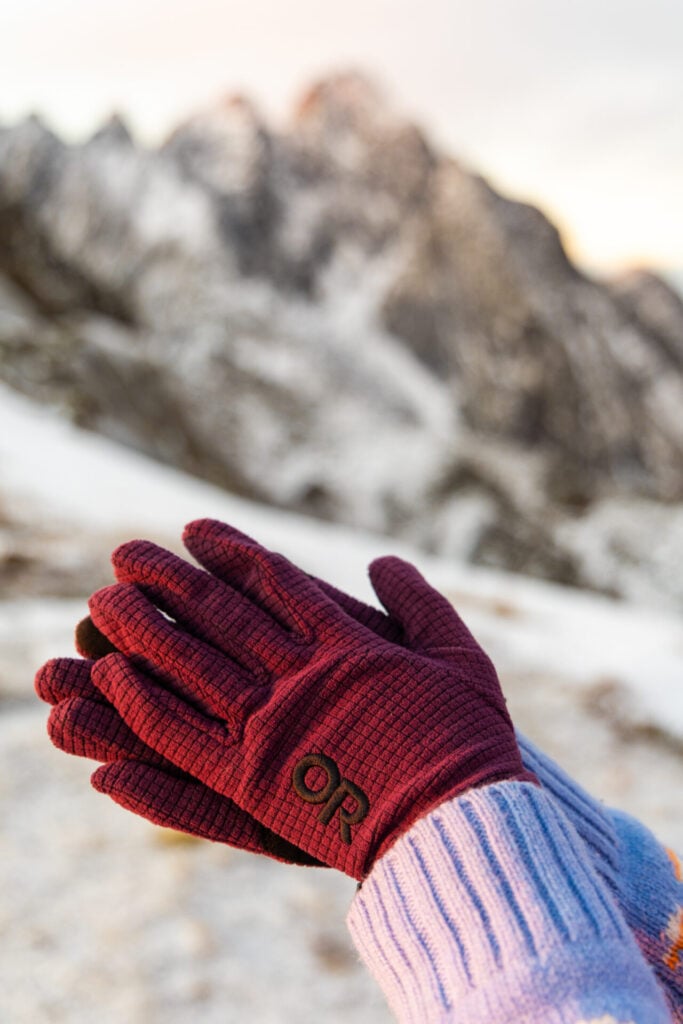
lightweight hiking gloves: Outdoor Research Trail Mix Gloves (women’s) / (men’s)
Lightweight gloves are essential general packing for winter in Lofoten! These get daily use around town, at the supermarket, shooting photos, and on the occasional warmer hike.
Since you’ll turn to more robust gloves or mittens as soon as things get super cold, this is one area of the wardrobe where you don’t need to spend $200 to get the right thing— just find a comfortable, affordable glove with tech-tips so you can use your phone without taking the gloves off.
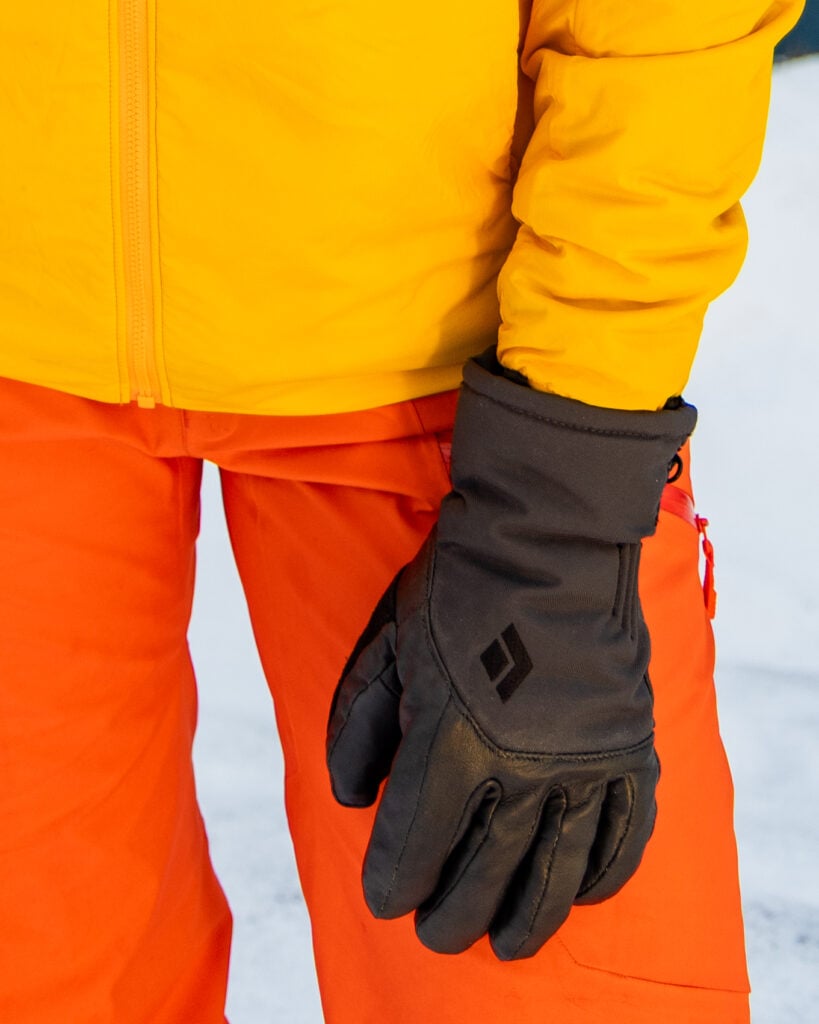
alpine gloves: Black Diamond Legend Gloves (women’s) / (men’s)
Although I wore insulated mittens most days in Lofoten, these leather alpine gloves were invaluable on scrambly routes where dexterity really mattered. They offer a great balance of warmth, grip, and control when you need to use your hands on rock or icy terrain.
I normally use these for alpine climbing, where rope handling and ice axe control are critical, but James actually prefers them over mittens for general winter hiking. At an absolute minimum, bring one seriously warm option (either insulated gloves OR mittens), but I personally carried both to dial in comfort across changing conditions.
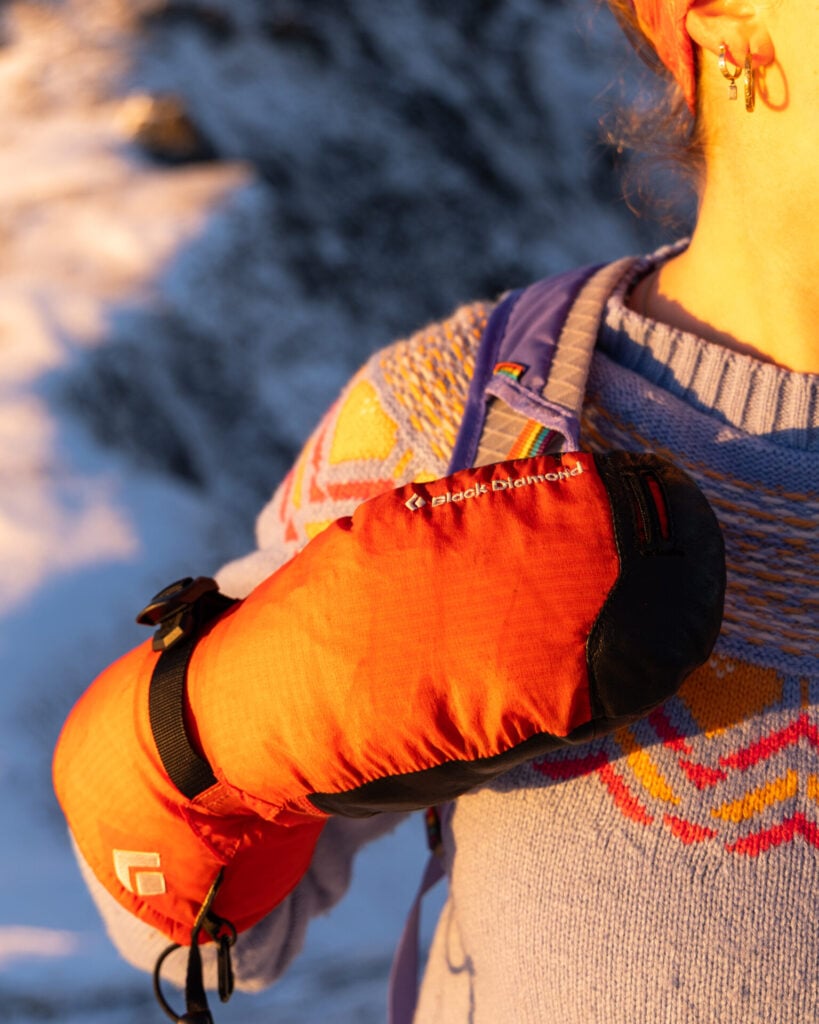
insulated mittens: Black Diamond Super Light Mitts
Mittens are dramatically warmer than gloves, and these down-insulated Super Light Mitts are the warmest hand layer I own— I’ve used them down to –25°C wind chill on Aconcagua, so they were the ultimate luxury during Lofoten’s comparatively mild winter.
On calm ascents they can even feel too warm (I occasionally swapped them out to avoid sweating), but there were plenty of other situations in strong wind where I genuinely felt like these mittens saved my fingers from frostbite. Invest in at least one pair of super warm mittens or gloves and you will be SO happy you did.
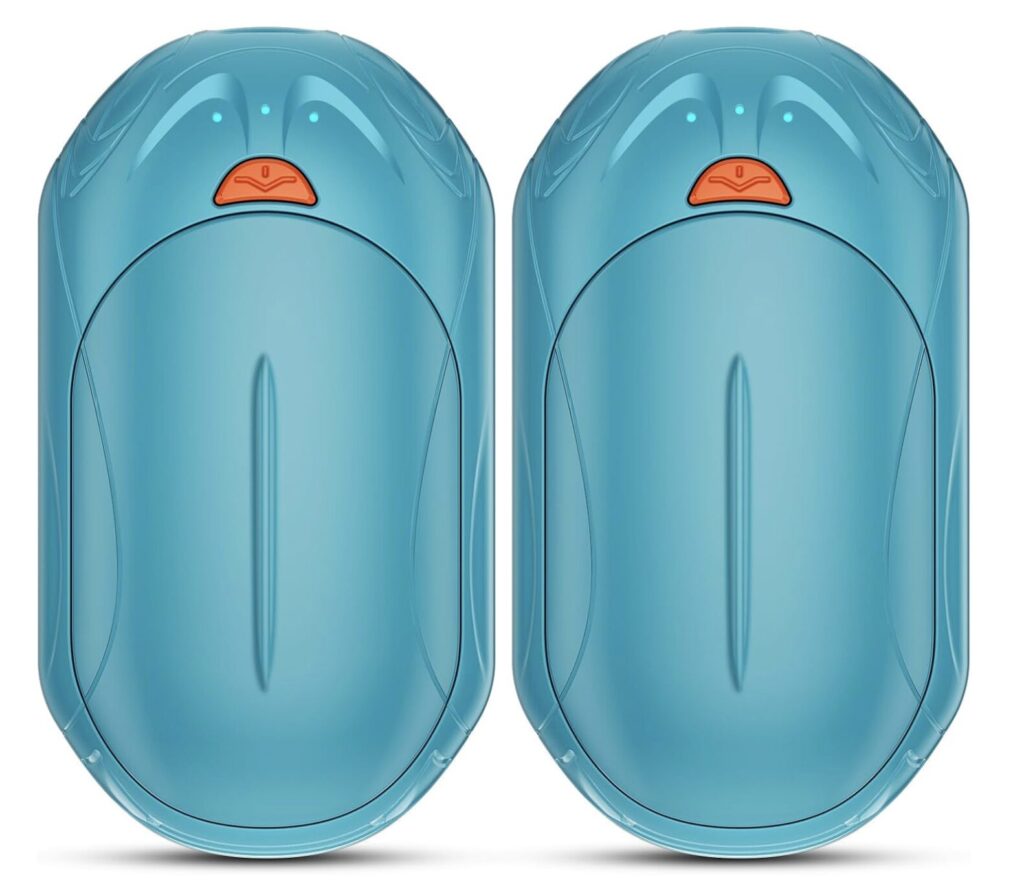
hand warmers: rechargeable electronic hand warmers from Amazon
We bought these inexpensive electronic hand warmers from Amazon and they were LIFE SAVERS in the Arctic! If your hands get dangerously cold (from taking your mittens off to take photos, for example), these hand warmers the quickest, safest way to heat your fingers back up.
Recharge using a standard USB-C— no waste and better temperature control than single-use hand warmers!
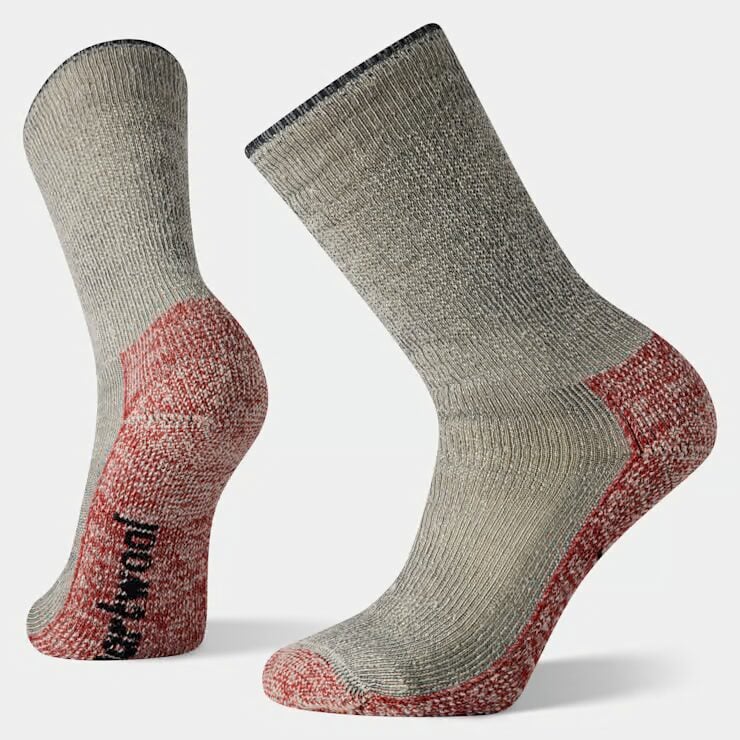
thick wool socks: Smartwool Classic Mountaineer Socks
Choose thick merino socks with ample cushioning, and avoid thin “performance” hiking socks suited to summer— winter demands insulation over breathability. I’d recommend 2-3x pairs of these socks, depending on your trip length.
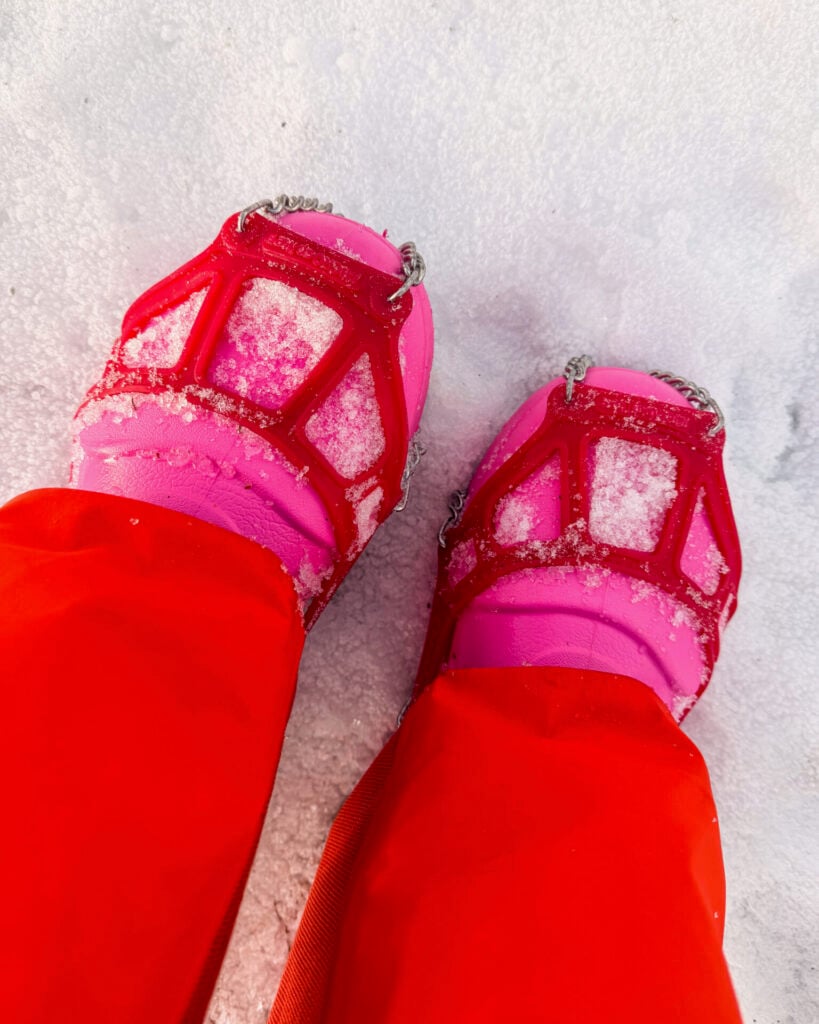
winter boots: Fubuki Niseko 3.0 Low Boots (women’s) / (men’s)
Regular summer hiking boots simply won’t cut it in Lofoten— they’ll soak through within minutes in snow and slush, leaving you cold, uncomfortable, and at real risk of frostnip.
We bought our low Fubuki boots to handle –30°C days in Lapland, but they completely exceeded our expectations as a winter hiking boot for Norway!
They’re 100% waterproof, heavily insulated, yet still comfortable for hiking on everything from dry trail to slick ice to deep snow. They’re also impressively lightweight, reasonably priced, and integrate well with both microspikes and snowshoes, making them (in our opinion) the BEST all-rounder winter boot on the market!
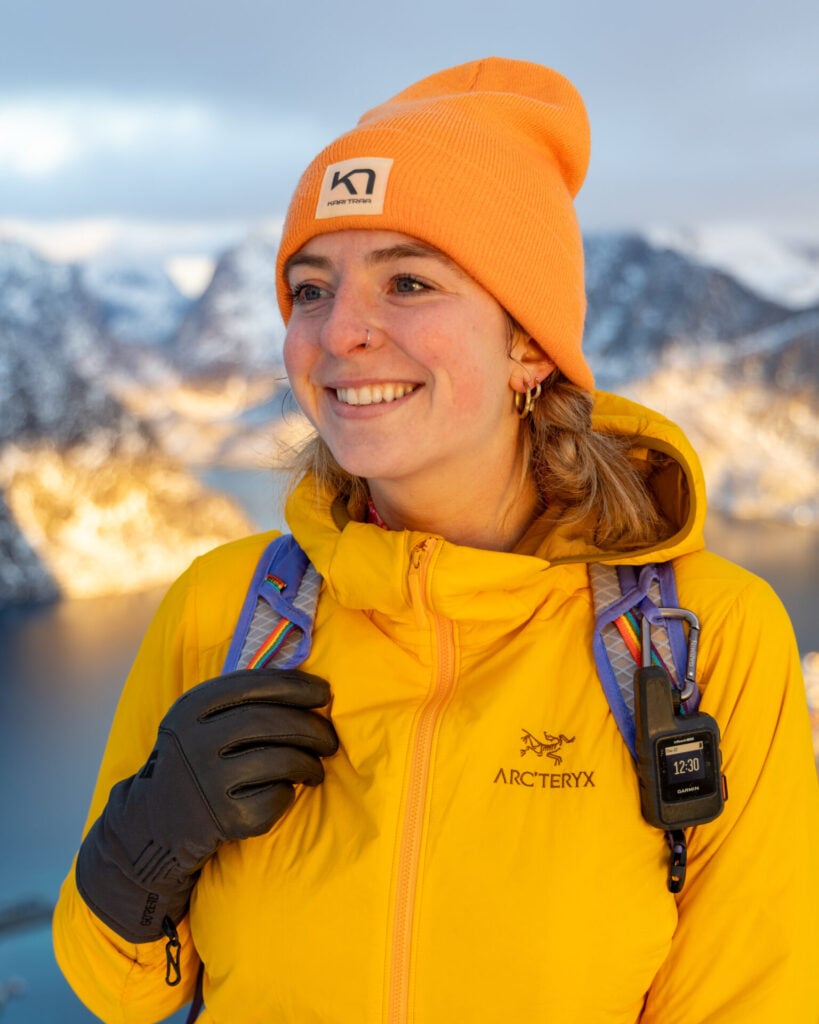
Winter hiking gear
Many of the iconic Lofoten hikes that feel straightforward in summer become significantly more demanding in winter, with snow-covered rock, ice, and often no clear “trail” to follow.
Even if you don’t plan on using everything, I’d still recommend bringing the following winter hiking and safety gear on EVERY hike: microspikes for traction on ice and compacted snow, trekking poles for balance on uneven terrain, a compact daypack to manage layers as conditions change, and reliable navigation and emergency gear in case you’re caught out after dark.
👉🏼 Planning a winter hiking trip to Lofoten? Check out the best winter hikes in Lofoten: your guide to safe winter hiking in Arctic Norway

daypack: REI Co-op Flash 18 OR Arc’teryx Alpha FL 30
A lightweight 20-30L daypack is perfect for carrying extra layers, snacks, and safety gear on the short hikes in Lofoten! We traded off carrying the REI Co-op Flash 18 and the Arc’teryx Alpha 23 (a size they no longer make), and we both love the Alpha as a no-frills alpine pack with excellent weather resistance and a clean exterior that doesn’t snag on rock.
👉🏼 Need more advice on choosing a backpack? Check out this post: How to choose the best hiking backpack for every outdoor adventure
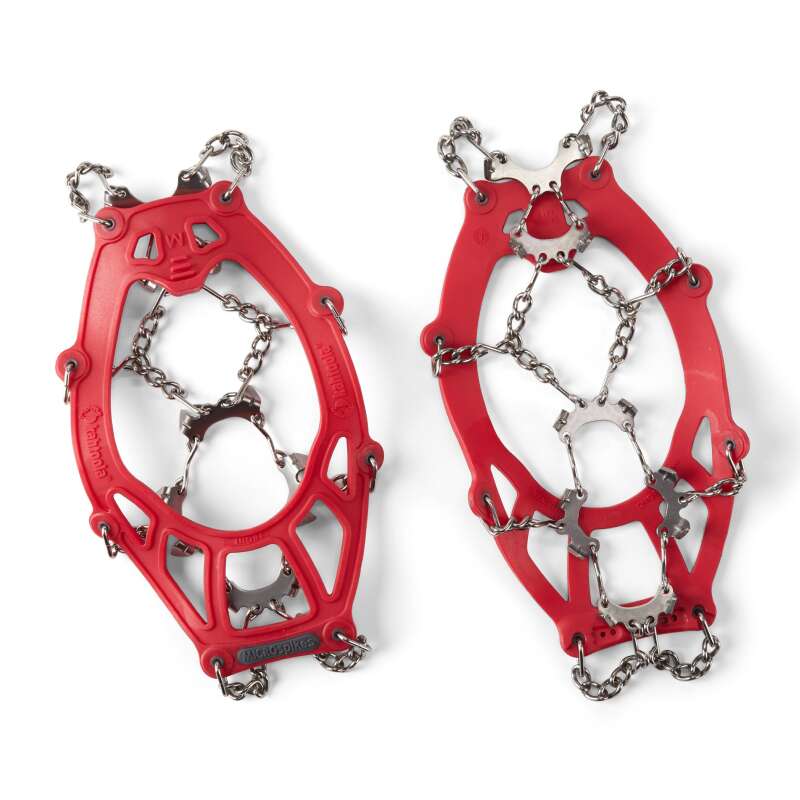
microspikes: Kahtoola Microspikes
Microspikes are one of the most important pieces of winter hiking safety gear in Lofoten, and I wouldn’t step onto ANY snowy or icy trail without them!
You’ll see some packing lists use the word crampons (perhaps a translation issue), so it’s worth clarifying:
- crampons are technical alpine climbing equipment designed for steep ice, glaciers, and mountaineering boots— these are NOT needed for winter hiking in Lofoten
- microspikes are lightweight traction devices that stretch over regular winter boots and provide reliable grip on ice, frozen rock, and compacted snow— THIS is exactly what you need in Lofoten
In deep, unconsolidated snow, microspikes can be less effective (in which case snowshoes are usually a better option and are available to rent locally), but we personally completed every hike in Lofoten using microspikes alone.

trekking poles: Black Diamond Trail Trekking Poles
Even if you’re not someone who usually hikes with poles, winter in Lofoten is absolutely the time to see what all the fuss is about— I’d consider these almost as essential as microspikes when it comes to winter safety. And be sure to screw on snow baskets, which prevent the poles from plunging straight through soft snow!

PLB/SOS: Garmin InReach Mini 3
A Personal Locator Beacon (PLB) is your lifeline in the outdoors and I NEVER go hiking without my Garmin InReach Mini 3, which allows me to send messages, get weather updates, track location, and place an SOS call in an emergency, even without phone service.
It does require a subscription (starting at $12/month), but it comes with rescue insurance and has literally saved both of my parents’ lives in the backcountry! I am now the unofficial (and very much unpaid) spokeswoman for this device.
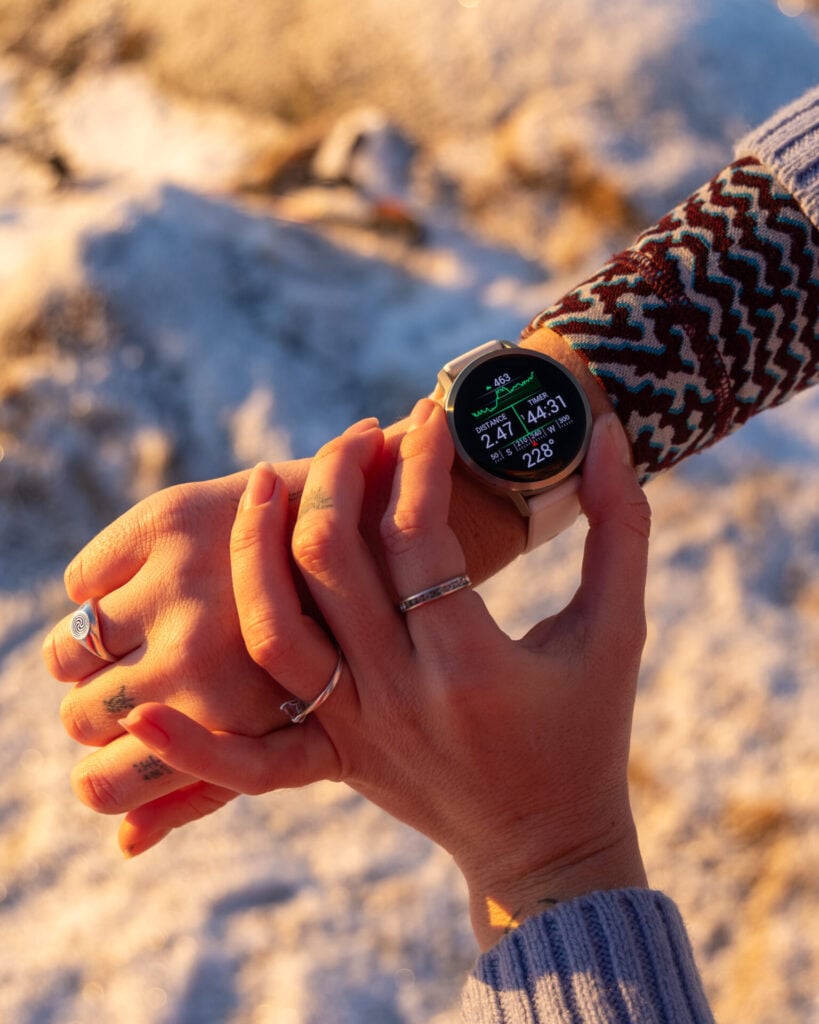
fitness watch: Garmin Venu 4 OR Gamin Fenix 7
A fitness watch isn’t essential for winter hiking in Lofoten, but I absolutely loved using my Garmin Venu 4 on this trip. It’s lightweight, has excellent battery life in cold conditions, and makes it easy to track distance, elevation gain, and time on trail so you can manage pace during limited daylight hours.
James has the Garmin Fenix 7, which adds full topographic maps and robust GPS features— we used this extensively for navigating along snow-covered trails in Lofoten (where the path was largely obscured).

First Aid Kit: Adventure Medical Ultralight .5
A compact first aid kit is something I carry on EVERY hike, no exceptions. Pre-assembled kits from Adventure Medical are a great starting point if you don’t want to build your own, with the essentials already dialled for backcountry use.

headlamp: Black Diamond Spot 400-R
With limited daylight during winter in Lofoten, a reliable headlamp is a lightweight insurance policy in case you get caught out after dark. I keep mine fully charged and in my top pocket on EVERY hike, even when I’m convinced I’ll be back well before sunset (famous last words).

powerbank: VRURC Portable Charger with Built-in Cables, 10000mAh
A small power bank with built-in cables is another easy safety win, allowing you to top up your phone, headlamp, GPS, or Garmin InReach in an emergency. Cold drains batteries fast, and having backup power can make a stressful situation far more manageable!

insulated water bottle: Hydro Flask Wide-Mouth Vacuum Bottle 32oz
Lofoten’s winter temps are usually mild enough that water won’t instantly freeze in your pack, but an insulated bottle is still smart insurance if you’re out longer than planned. It also doubles as a thermos for hot tea or summit hot chocolate on colder, windier days, which feels borderline life-changing in winter.
Lofoten’s winter temperatures may be mild, but the conditions are known to be volatile and occasionally intense, which why proper layers, traction, and safety gear really matter. Hopefully this packing list has helped clarify what’s truly essential for hiking around Lofoten in winter. Happy trails!
Read more about winter in Scandinavia
Lofoten winter hiking guide + 10 best winter hikes!
Norway winter itinerary COMING SOON
Sweden winter itinerary COMING SOON
Finnish Lapland winter itinerary COMING SOON
