
Last Updated on 5 October 2026
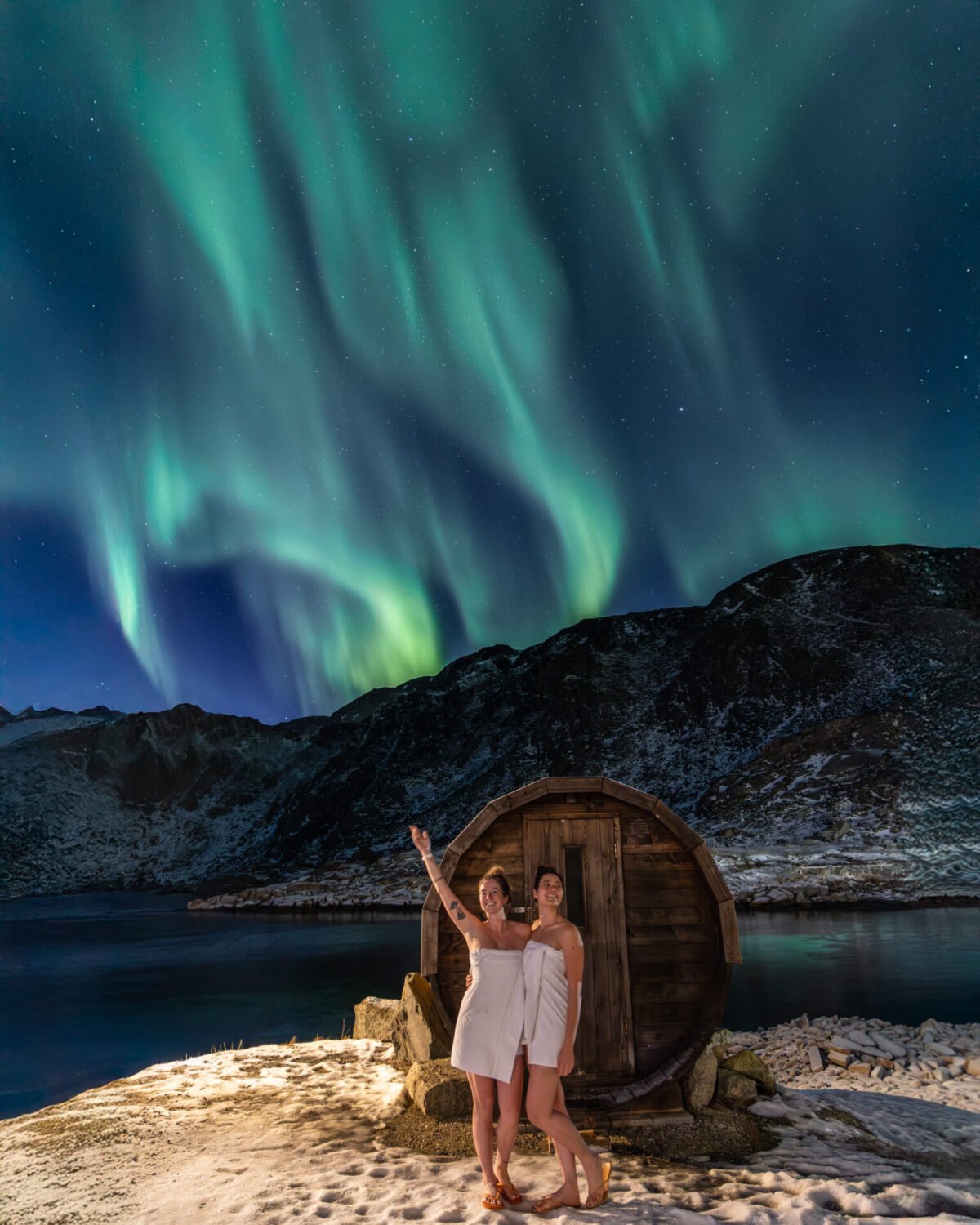
Summer may be the most popular time to visit Norway (and I’ve lost count of how many people asked us why we’d even consider travelling north in the “off-season”), but here’s the truth: winter is Norway at its MOST extraordinary! High above the Arctic Circle, Northern Lights dance as early as 4pm over snow-capped peaks rising straight from sea, while orcas patrol icy fjords and reindeer roam frozen tundra like something straight out of a nature documentary; the fjords further south reveal tiny Viking villages, frozen waterfalls, and floating saunas.
Swap the crowded summer trails and raucous cruise ports for solitude, dramatic lighting, and the Arctic scenery of winter— and you might just find that Norway is best experienced under a blanket of snow.
This 2-week Norway itinerary combines the highlights of Arctic Norway, from aurora chasing and whale watching in Tromsø to winter hiking in Lofoten, with the country’s iconic fjord landscapes on a scenic journey from Bergen to Flåm to Oslo. It balances raw nature with culture, adventure with cozy cabin stays, and remote islands with walkable cities, all connected by some of the most scenic transport routes in the world for a perfect winter adventure in Norway.
This post contains affiliate links, which means I may earn a small commission if you book something I recommend, at no extra cost to you. I ONLY recommend tours, rentals and places I’ve personally used (or would happily book again) — your support helps keep this site going and the adventures rolling!
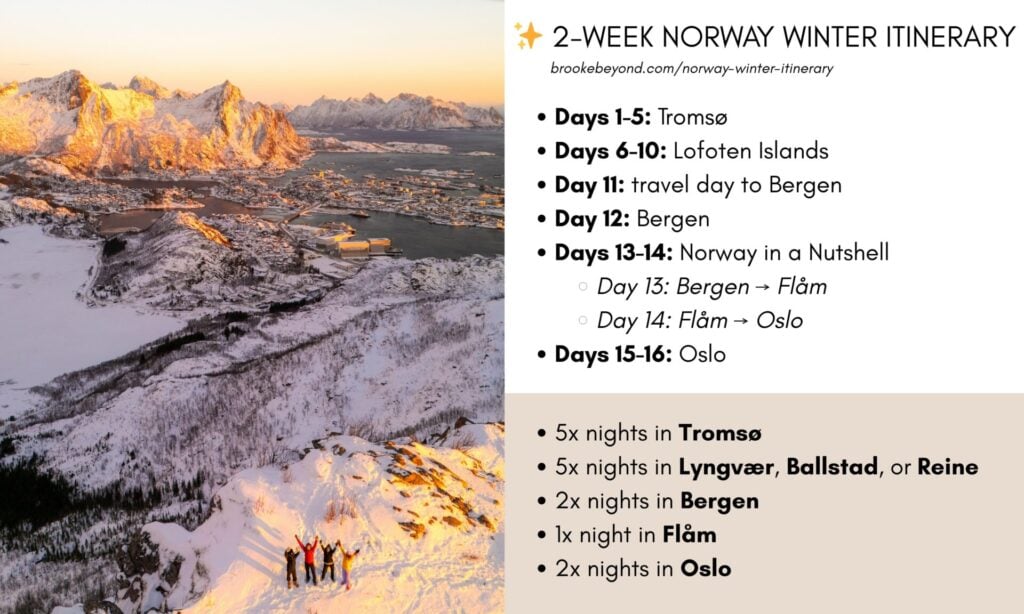
Itinerary map
Here’s an overview map of our recommended Norway winter itinerary, perfect for 2+ weeks of snowy travel! Keep reading for trip logistics and detailed recommendations for what to do in Tromsø, Lofoten, Bergen, Flåm, and Oslo.
Norway trip logistics
How many days do I need?
With wildly unpredictable conditions and short daylight hours, expect that you’ll only be able to do 1 activity per day and that some days will be lost entirely to the weather gods, so more time is ALWAYS better when it comes to winter travel in Norway.
If outdoor activities and/or aurora viewing are a priority, you need a minimum of 2 weeks to follow this itinerary, but ideally 3+ weeks to maximise good-weather days. We personally spent more than 5 weeks visiting only the destinations in this post and still want to go back next winter for more!
⏱️ IF YOU ONLY HAVE ONE WEEK
With 7-10 days to experience Norway in the winter, I’d suggest limiting your visit to just the Arctic destinations (Tromsø + Lofoten), adding in Oslo only if you have time. Limited daylight and volatile weather make it difficult to move quickly between destinations in winter, so you’ll have a far better experience by focusing on 2-3 places rather than trying to rush through all 5 on this itinerary!


When to go to Norway
The best time for winter travel in Norway is late January through March, when daylight returns quickly, winter conditions remain firmly in place, and chances of seeing the Northern Lights are still excellent. But of course, each month offers something a little different!
- December – early January: this period includes Polar Night in the far north, when the sun does not rise above the horizon (roughly late November to mid-January in Tromsø, slightly shorter in Lofoten); while this means almost no true daylight, you’ll still get several hours of twilight (blue hour or even sunset colours) on clear days, and the darkness creates exceptional conditions for Northern Lights viewing as early as 4pm!
- Late January – February: as daylight returns quickly after Polar Night, this is the BEST time to travel in Northern Norway for optimising all 3 winter variables: sufficient daylight hiking hours + long, dark nights for aurora viewing + magical snow-covered winter landscapes!
- March: late winter offers the longest days of the season, making it ideal for hiking and outdoor activities; snow remains in the mountains, but warmer temperatures and stronger sun can also introduce thaw–freeze cycles and more variable conditions
Winter weather in Norway
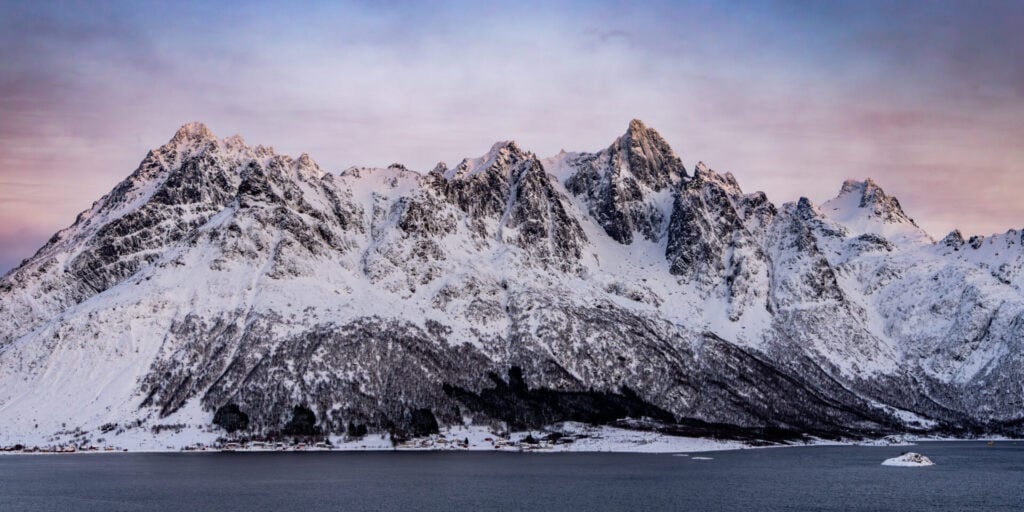
Winter temperatures across most of Norway typically hover between 0° and –15°C, but those numbers can feel WILDLY different depending on wind, precipitation, and humidity.
- In Arctic Norway (Tromsø + Lofoten), coastal winds and frequent snowfall dramatically amplify wind chill, making even moderate freezing temps feel extreme. Arctic weather patterns also frequently cancel tours and postpone outdoor plans, which is why this itinerary prioritises extra time in Tromsø and Lofoten to optimise your good weather window!
- Further south, Bergen and Flåm experience higher humidity and frequent winter rain, which can sometimes feel just as cold (our bodies lose heat in damp conditions WAY faster). Oslo, by contrast, is typically colder, but drier and more stable than the coastal destinations.
🎒 PACKING FOR WINTER IN NORWAY
Ultimately, winter weather in Norway is highly variable, so packing warm, windproof, and fully waterproof layers (including winter boots!) is essential for an enjoyable trip. Check out this post for detailed gear recommendations to cope with winter weather in Norway: Complete Lofoten winter packing list: what to wear for hiking in Arctic Norway.
The one ESSENTIAL item not in this hiking-focused packing list is a warm, waterproof winter parka. After a mountain of research and a lot of product comparison, these are the all-around BEST parkas and we’ve now worn them for 3 months of sub-zero winter travel through Norway, Sweden, and Finland. 100% would buy again tomorrow!!
* women’s: The North Face Arctic Parka (+1 size for layers, I sized up to M)
* men’s: The North Face McMurdo Parka (usual size, James wears a M)
Northern Lights in Norway
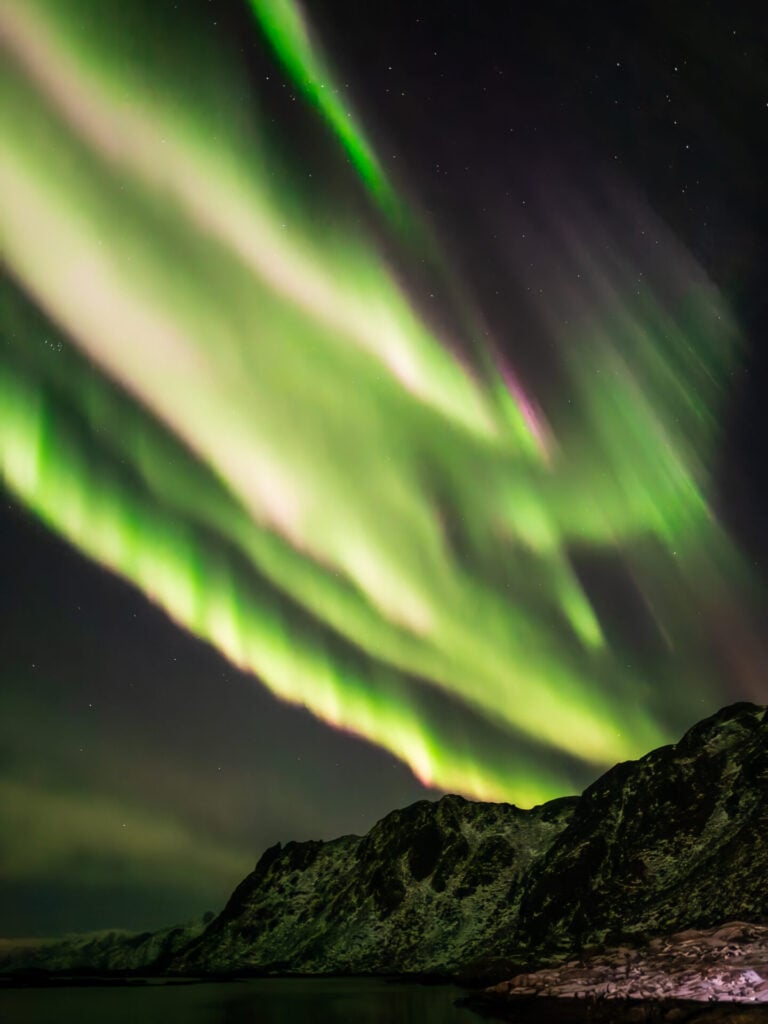
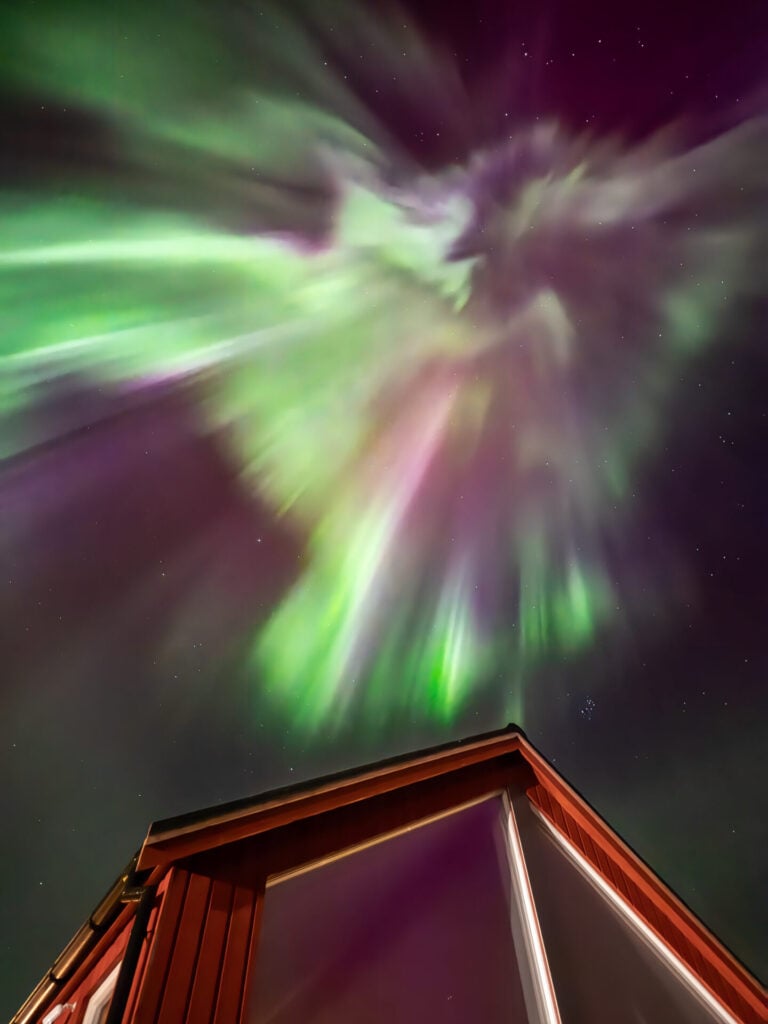
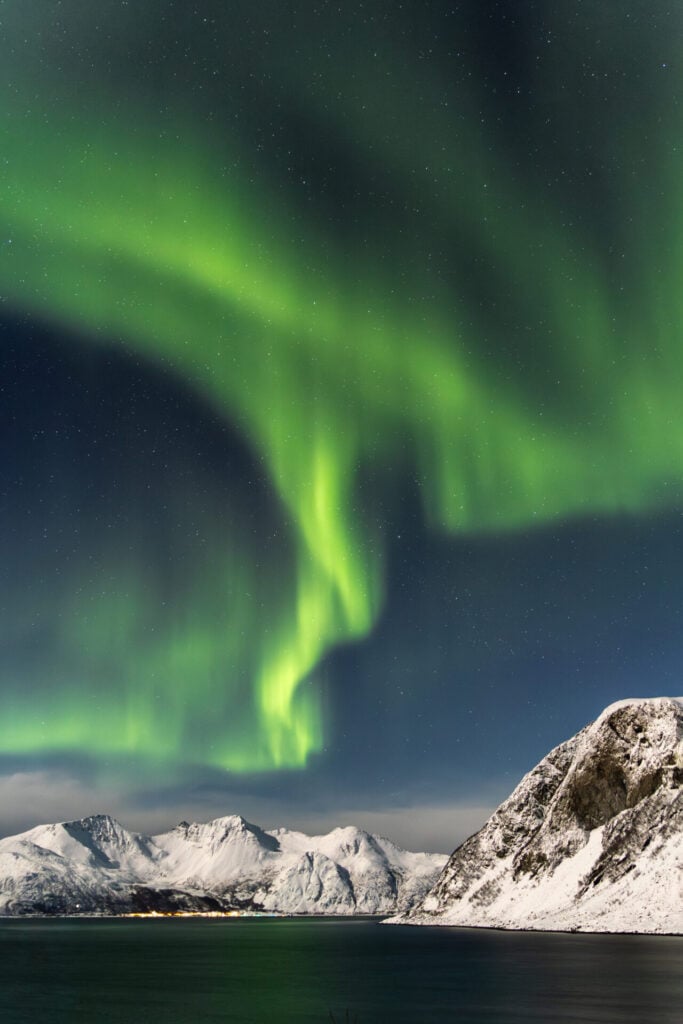
Above the Arctic Circle, aurora activity is frequent and often intense throughout the winter, making Tromsø and Lofoten among the most reliable places in the world to see Northern Lights. If you spend at least a week in northern Norway (10+ days according to this itinerary), your chances of seeing the aurora are all but guaranteed!
On our winter trip in 2026, we saw the Northern Lights just once during a stormy week in Tromsø, then EVERY night for three straight weeks in Lofoten as part of record-breaking solar storms. We highly recommend staying somewhere with low light pollution and an outdoor jacuzzi, sauna, or at least a deck/patio, so you can comfortably watch the sky throughout the evening without fully gearing up or driving to a secondary location.
TIPS FOR SEEING THE AURORA IN ARCTIC NORWAY
✨ KP Index is the primary measure of geomagnetic storm strength, which influences how far south the aurora extends on a given night— above the Arctic Circle (where you’re nearly always under the auroral oval), even KP 1–2 can produce visible Northern Lights!
✨ Use Yr.no to monitor cloud cover (by far the most important factor) and Hello Aurora to track detailed fluctuations in aurora activity— turn on notifications to know when Northern Lights activity is increasing and/or aurora has been spotted by another user in your area!
✨ Step outside to check the sky every 20–30min on clear evenings, especially between 6pm-1am— early aurora often appears as faint grey or milky streaks before intensifying into defined green arcs
✨ The Northern Lights are NOT “only visible through a camera”— when activity is strong, the aurora will be bright, fast-moving, and completely unmistakable to the naked eye


Getting to Norway
This Norway winter itinerary is designed as a one-way route from Tromsø to Oslo, moving from the Arctic north towards milder cities in the south. The route can also be reversed if you prefer to ease into winter conditions more gradually (Oslo to Tromsø), but for us, starting north made the most sense: it gets you straight into Norway’s most dramatic winter landscapes while leaving flexibility later in the trip if weather disrupts plans.
Importantly, you can fly directly into Tromsø from many European airports (we came in from Paris) and Tromsø is one of only 2 Norwegian cities offering direct flights to Lofoten, so north to south also minimises domestic flight connections.
- Starting point: Tromsø
- Ending point: Oslo
Getting around Norway
This itinerary relies primarily on a combination of domestic flights, scenic train journeys, and local public transport, all of which function well in winter and are far less stressful than driving in snow and ice. In cities like Tromsø, Bergen, Flåm, and Oslo, public transport is reliable (or the city itself is very walkable), so having a car simply isn’t necessary.
Lofoten is the one major exception: if hiking, photography, or flexibility are priorities, a car is absolutely essential in Lofoten. Winter bus services are insanely limited and short weather windows mean you’ll want the freedom to move quickly between trailheads, viewpoints, and villages when conditions are good. While it’s possible to stay car-free in walkable bases like Ballstad or Reine if hiking isn’t a goal, you’ll miss much of what makes winter in Lofoten special without your own vehicle.
We were able to rent a 2WD hybrid for less than $90/day and this worked perfectly for our 3.5 weeks in Lofoten. Search for the best car hire prices at DiscoverCars and BOOK EARLY to maximise savings!
👉🏼 Read more about winter driving in Lofoten in this super-detailed post: Best winter hikes in Lofoten: your guide to safe winter hiking in Arctic Norway
🗺️ TRAVEL TIPS FOR NORWAY
→ Language: Norwegian is the official language, but English is universally spoken, especially in cities and tourist regions; language barriers are essentially non-existent
→ Currency: Norwegian Krone (NOK), approximately 100NOK = $10USD as of January 2026; Norway is almost entirely cashless, so use a card with no foreign transaction fees
→ Tourist visa: although not part of the EU, Norway is within the Schengen Zone, so most nationalities (including AUS, USA, Canada, etc) can enter visa-free for up to 90 days within any 180-day period
→ SIM card: install an eSIM for Norway via Airalo; coverage is excellent even in the mountains (we never really found a single dead zone in Norway!)
→ Packing list: check out my winter hiking in Norway packing list for all the essential layers and safety gear I recommend: Complete Lofoten winter packing list: what to wear for hiking in Arctic Norway
→ Essential apps: Yr.no (reliable local weather app for the Nordics); Vy (state-owned Norwegian public transport, including train and bus lines); Hello Aurora (great for tracking northern lights forecasts); AllTrails (GPS map of hiking trails, usable even as the free version since the mobile network is so good)
*Detailed Norway winter itinerary
- Days 1-5: Tromsø
- Days 6-10: Lofoten Islands
- Days 11-12: Bergen
- Days 13-14: Norway in a Nutshell (Flåm)
- Days 15-16: Oslo
Days 1-5: Tromsø
Above the Arctic Circle at 69.6°N, Tromsø is one of the best places in the world to experience a true Arctic winter— and with a well-connected international airport offering direct flights from major European hubs, it’s also an excellent starting point for any Norway winter itinerary!
The town itself is compact and charming, set along a snowy waterfront with floating saunas, cozy cafés, and a genuinely impressive restaurant scene, while the wider Troms region offers some of the world’s most reliable Northern Lights viewing, expansive winter adventures in the Lyngen Alps, and bucket-list whale excursions offshore, all easily accessed through small group tours that handle winter transport logistics.
HOW MANY DAYS IN TROMSØ?
I’d recommend at least 5 days in Tromsø, but ideally closer to a week. Winter weather in Arctic Norway is highly volatile, daylight is limited, and most days realistically allow for just ONE major activity (with some days lost entirely to wind or snow cancellations), so if seeing the aurora or swimming with Orcas is high on your list, adding extra time here is the best way to improve your odds!


What to do in Tromsø
Tromsø offers an incredible range of activities (just about every tour you can imagine!), but these are the ones we personally think are the most worthwhile and unique:
- Northern Lights photography tour: Without a car, it’s absolutely worth joining a small-group aurora tour with a guide who’ll drive hours (sometimes even into Finland!) to find clear skies and strong activity. We highly recommend this aurora tour with Govind, who kept us well-fed and incredibly entertained for an epic 8hr chase with just 5 other people (way more reviews on Airbnb, but cheaper on Viator). Book early, then adjust the date closer to your trip based on weather with free cancellation up to 24hrs.
- Snowshoeing in the Lyngen Alps: The mountains outside Tromsø offer dramatic fjord views and stunning Arctic alpine terrain, but due to considerable avalanche risk, we’d recommend join a tour for safe access, easy gear rental, and transport. We loved this small-group tour with Wandering Owl!
- Whale watching: Each winter, orcas and humpbacks follow herring into the fjords north of Tromsø, creating super reliable whale encounters amidst spectacular Arctic scenery. You have 3 main options for seeing them:
- Catamaran from Tromsø: cruise north from Tromsø to Skjervøy on an electric catamaran; this is the most comfortable option with the simplest logistics, but the trade-off is several hundred people on the boat and more limited time with the whales (sometimes just 1hr)
- RIB boat from Skjervøy: catch a transfer to Skjervøy and board a small RIB with just 12 passengers; this offers a far more personal, water-level encounter and more than twice as much time (2.5hrs) near the whales, but it’s a 12hr commitment from Tromsø. These tours are also frequently cancelled due to weather, so consider booking on 2 different days and getting a refund for the 2nd day if you don’t end up needing it!
- Snorkelling tour: the most adventurous option is joining a snorkelling tour in Skjervøy where you’ll slip into a dry suit and swim alongside the whales; by far the most exhilarating experience, but spots are CRAZY limited and can book out 6mo in advance—we’ll be coming back for this one!
- Vulkana Arctic Spa Boat: Book a 1–2hr session aboard this historic harbour boat to enjoy a wood-fired hot tub and sauna, with access to a shocking 2°C plunge in the Norwegian Sea. One of the most unique sauna settings we’ve experienced anywhere in the world!
- Pust floating sauna: Another great floating sauna option is Pust (with several locations around Tromsø; we like the Pust Lavvo), which also offers direct Arctic Ocean plunges and fantastic views of the Arctic Cathedral and mountains.
- Fjellheisen cable car: The best panoramic view over Tromsø, but only worth doing in clear conditions, so keep this flexible and watch the forecast.
- Arctic Cathedral (Ishavskatedralen): An architectural icon across the bridge from town; a quick visit for excellent photos, especially in blue hour!


Where to eat in Tromsø
For a small town, Tromsø has a surprisingly delightful restaurant scene ranging from traditional Norwegian dishes to modern Scandinavian fine-dining. It’s priced exactly like you’d expect (HIGH), but this is one of the very few places I’d recommend eating out in Norway, so a few splurge meals are worth it! We specifically loved:
- Mors Mat: meaning “Mum’s Food”, this is a cozy, relaxed restaurant specialising in Norwegian comfort food like hearty reindeer stew and meatballs
- Nitty Gritty: this meat-focused restaurant offers various cuts of steak, reindeer, and moose, accompanied by flavourful sides and amazing cocktails
- Bardus Bistro: refined Arctic cuisine with a strong focus on local, seasonal ingredients
- Fiskekompaniet: renowned seafood-focused fine dining right on the waterfront, showcasing fresh Arctic fish and shellfish (their fish soup is a must!)
- Svermeri Kafé: a favourite brekky or lunch spot with homemade cakes, delicious soups, and a delightfully cozy interior perfect for lingering during short winter days
- Vervet Bakeri: ideal for a fresh cinnamon bun and hot coffee as you explore the waterfront
Where to stay in Tromsø
I’d highly recommend choosing a hotel or apartment on Tromsøya (the island) within easy walking distance of the city centre and harbour, ideally in Tromsø proper, the newer Vervet waterfront area, or immediate surrounds. Most group tours depart near the Scandic Hotel, while floating saunas and other activities are clustered along the harbour, so staying central means you can walk everywhere without relying on infrequent winter buses.
Specifically, check out Dock 69°39° for an upscale waterfront stay in Vervet or Quality Hotel Saga for a central, more budget-friendly option in Tromsø. You’ll find cheaper accommodation in residential neighbourhoods further out, but I’d strongly caution against booking more than a 20min walk from the centre.
Days 6-10: Lofoten Islands
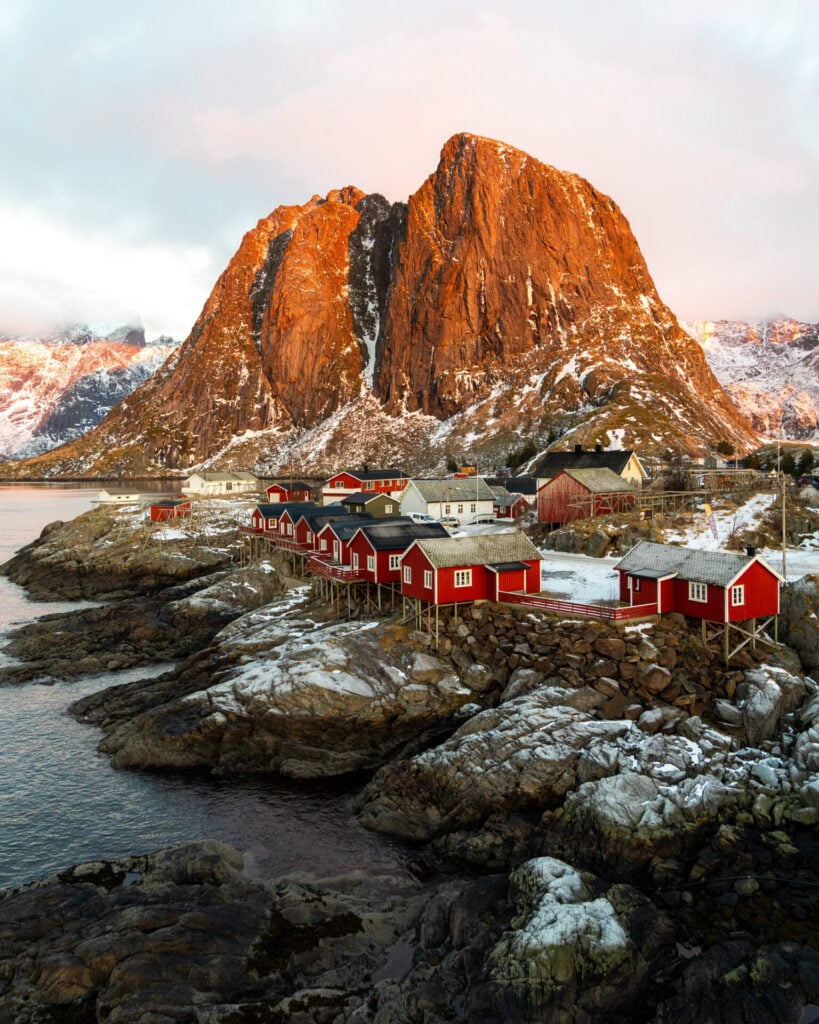
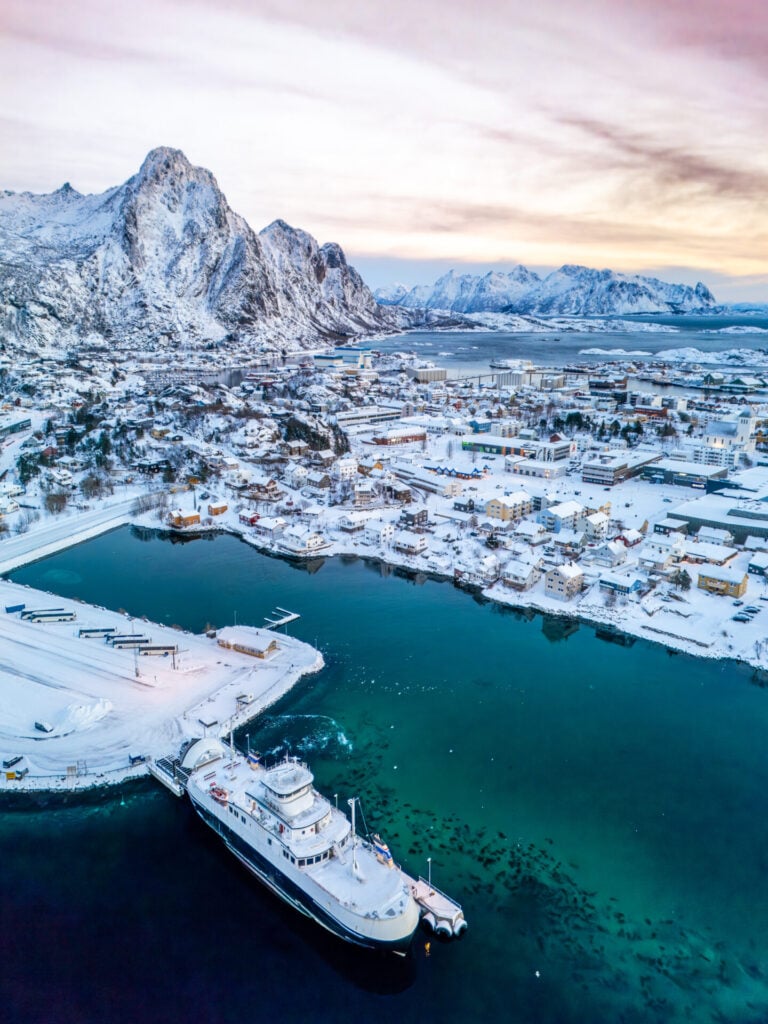
Flying south from Tromsø, the next destination on your Norway winter itinerary should be Lofoten, a spectacular archipelago of jagged peaks, sheltered fjords, and tiny fishing villages scattered across a narrow chain of islands above the Arctic Circle. During the quiet winter months, the usual tourist crowds give way to empty trails, mountains draped in snow, and pastel sunrises + sunsets that extend for hours across the middle of the day.
This is our absolute favourite place in Norway and one of the most extraordinary landscapes we’ve ever experienced. The scenery feels SURREAL, adventure opportunities are endless, and independent exploration is blissfully simple, chasing the best winter lighting and aurora colours from one island to the next. Lofoten is pure magic and it is the undeniable crown jewel of this itinerary 🖤
HOW MANY DAYS IN LOFOTEN?
I’ve suggested 5+ days in Lofoten as an absolute MINIMUM, and if you’re not a hiker, that might be enough for you to enjoy the postcard views and charming villages covered in snow… but if you’re keen to dig into some of the best winter hiking in the world, Lofoten easily deserves weeks of slow exploration! With some extra time, consider splitting your stay between two bases (such as Ballstad and Reine) to explore different corners of the archipelago— specific recommendations below.


Getting from Tromsø to Lofoten
There are direct flights from Tromsø to Leknes (LKN) and Svolvær (SVJ) Airports, both fairly centrally located in Lofoten (about 1.5hrs apart).
If you’re hiring a car in Lofoten (which I strongly recommend!), choose the airport offering cheaper car hire or whichever is nearer to your base: Leknes for Ballstad or the central islands, Svolvær for Lyngvær or the northern section of the archipelago.
What to do in Lofoten
Unlike Tromsø, Lofoten is not about tours— it’s about self-guided hiking, scenic drives, and chasing light between small villages. The winter hiking is truly world-class and I’ve written a full guide to the best winter hikes in Lofoten (with detailed route notes, conditions, and safety tips), which I highly recommend reading before you go.
To get you started, here are some of our trail recommendations for different experience levels and travel styles:
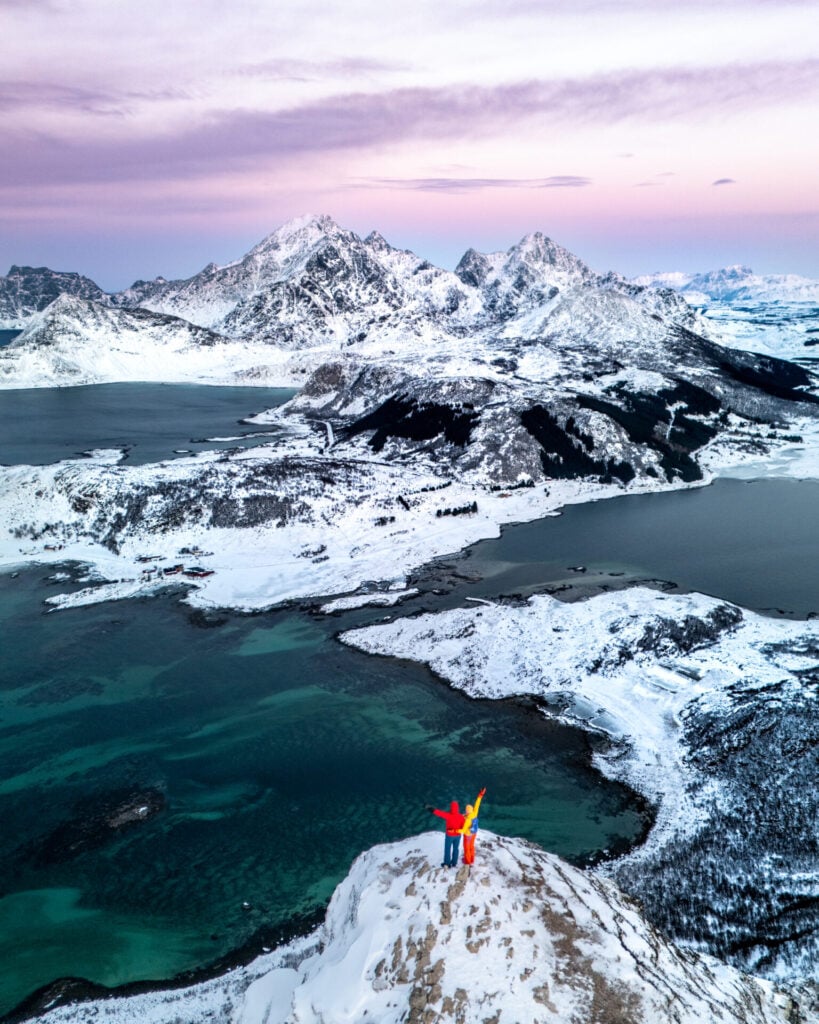
Easy winter hikes— if you don’t have much experience hiking on snow and/or ice, start with some of these more straightforward routes that are popular with locals and therefore well-trodden, easy to follow, and with little to no avalanche risk
- Ballstadheia: short, accessible hike right out of Ballstad, popular with locals and partially supported by stone steps (1hr return, 200m gain)
- Offersøykammen: also popular with locals and easy to follow, but with an even more remote feel and wild summit view (2hrs, 450m gain)
- Tjeldbergtind: safe terrain and spectacular views even before the summit (2hrs, 370m gain)
- Ryten: iconic hike with a very gradual ascent and no avalanche terrain, suitably beginner-friendly for most of the winter (3hrs, 600m gain)
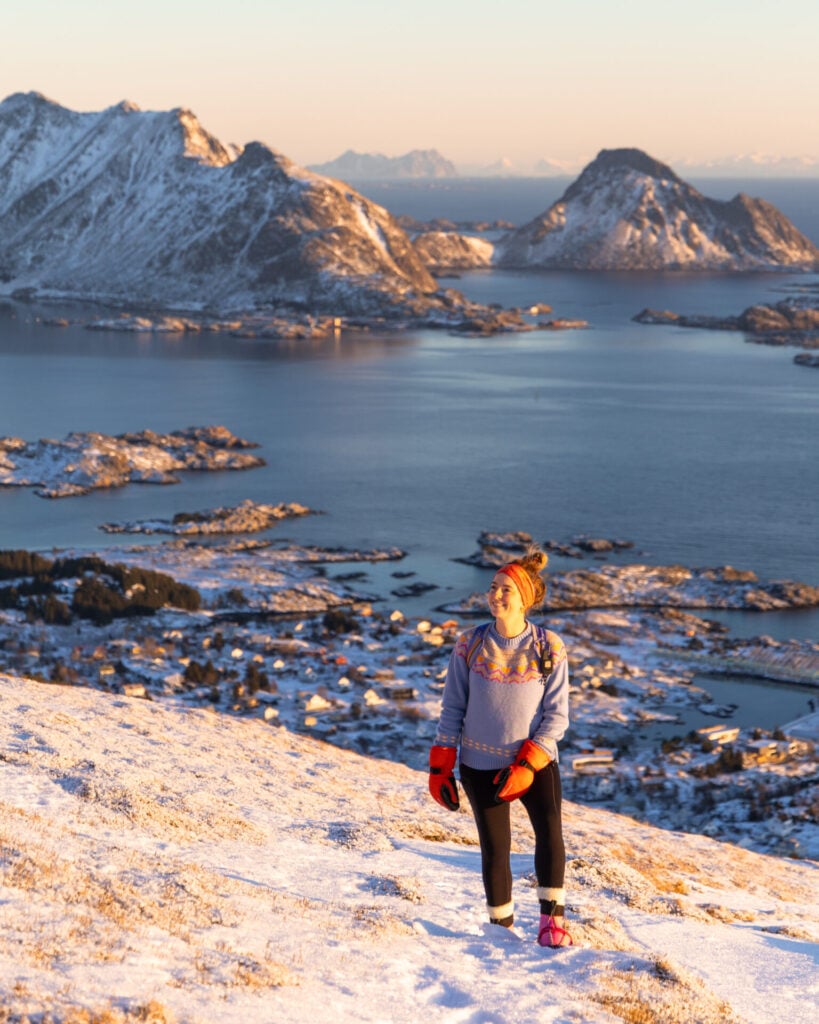
Accessible winter hikes— I highly recommend hiring a car to benefit from flexible transport, but if that’s simply not in the budget, these hikes are near towns that would potentially be easier to access on limited public transport
- Ballstadheia and Nonstinden: directly above Ballstad
- Tjeldbergtind: ~2km outside of Svolvær in Osan
- Nipen / Festvågtind: ~3km outside of Henningsvær
- Reinebringen: ~1km outside of Reine
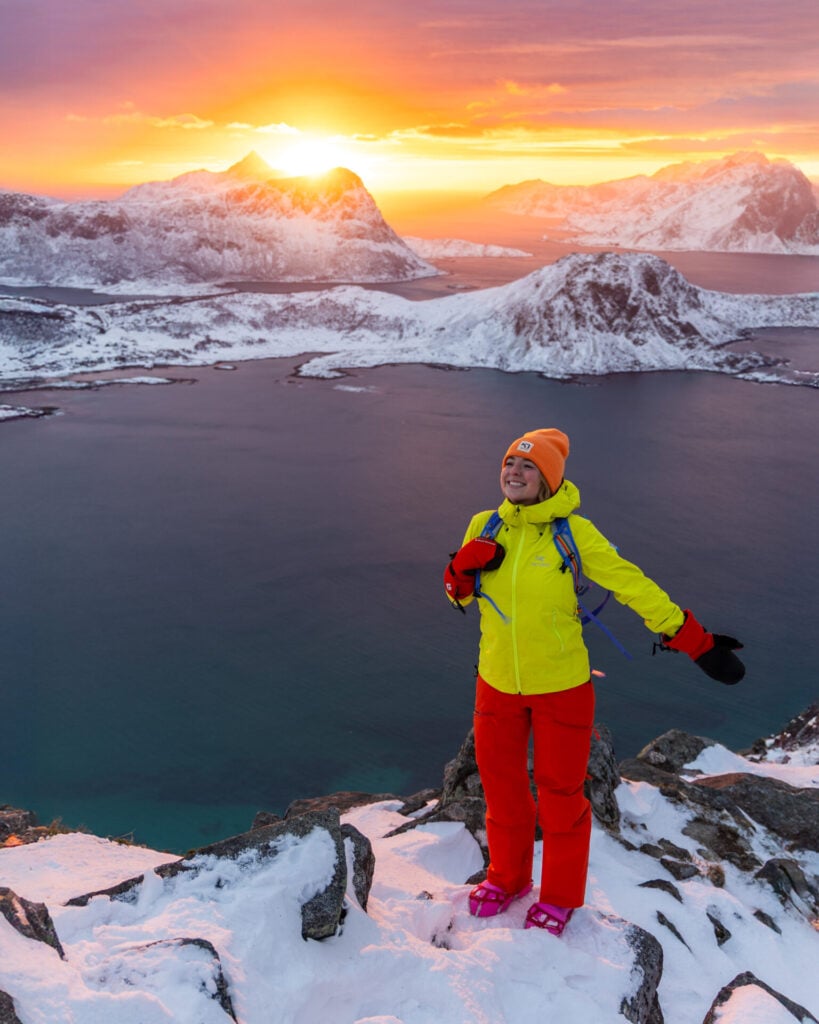
Adventurous winter hikes— with considerable winter hiking experience, these are the routes that offer the most backcountry vibe and true adventure
- Mannen: absolutely spectacular route that steeply ascends and then runs an exposed ridge above Haukland Beach
- Tindstinden: part winter hike, part alpine mountaineering summit, this is a true off-route adventure through high-consequence terrain that you’re guaranteed to enjoy alone
- Nonstinden + other summits: continuing from Ballstadheia, there are countless routes and summits to explore, many of which offer exhilarating exposure along the ridgeline
Beyond hiking, these are some of the most worthwhile places to explore around Lofoten for scenery, photography, or simply soaking up the winter atmosphere:
- Austnesfjorden: one of the most scenic stretches of road in Lofoten (north of Svolvær), particularly around Vestpollen, where steep granite peaks plunge directly into still Arctic waters
- Henningsvær: a compact, photogenic fishing village with galleries, cafés, and exposed coastal views, best known for its dramatic football field perched on a rocky island at the edge of the sea
- Nusfjord: one of Norway’s oldest and best-preserved fishing villages, with traditional rorbuer and a quiet, historic atmosphere that feels especially peaceful in winter
- Hamnøy: home to one of the most iconic viewpoints in Lofoten!
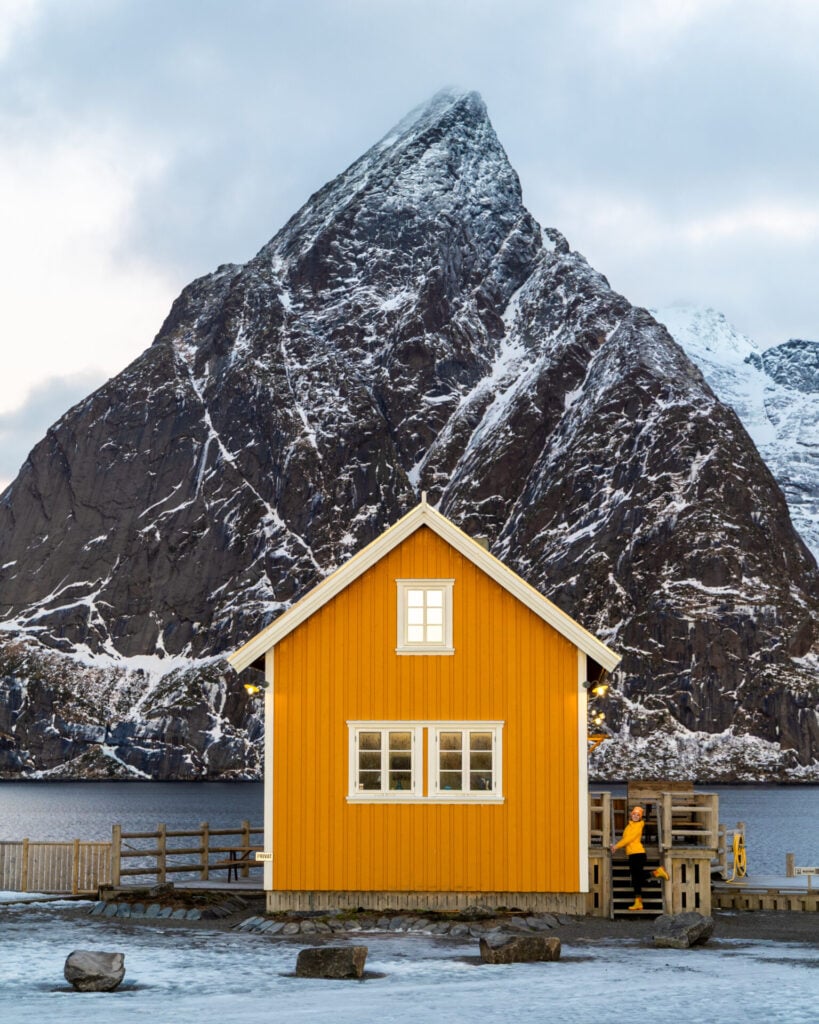
- Sakrisøya: tucked between Hamnøy and Reine, this tiny island is known for its bright yellow cabins and excellent photo compositions looking toward Olstinden
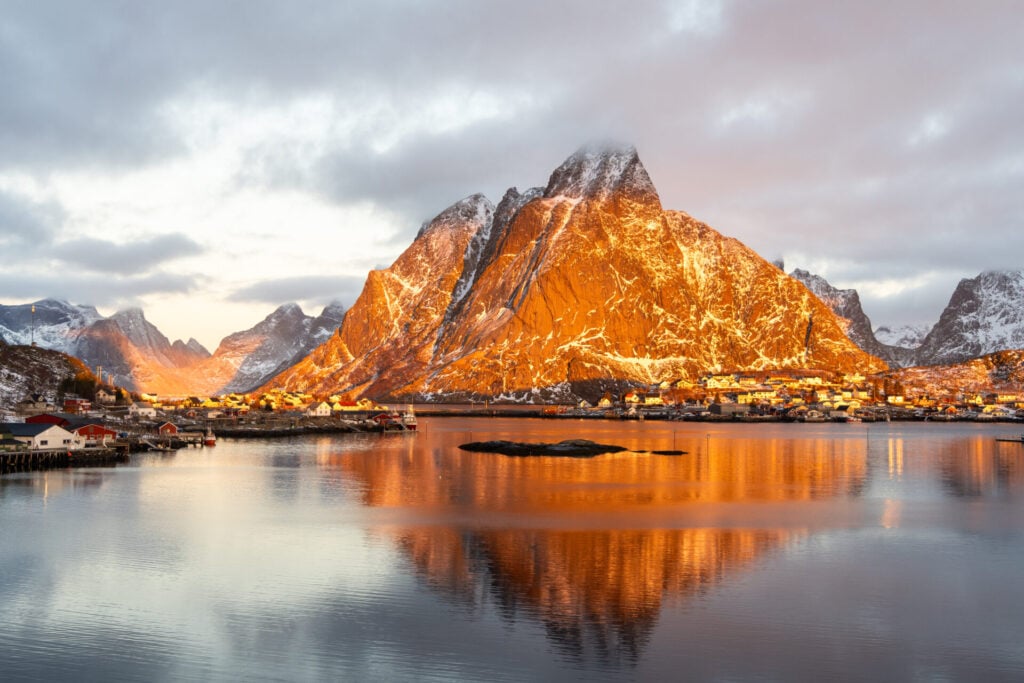
- Reine: the most recognisable village in Lofoten, framed by towering peaks and fjord views towards the national park
- Å: the southernmost point of the road-accessible archipelago and gateway to Lofotodden National Park, where trails become wilder and mountains larger as you approach the end of the E10
Where to eat in Lofoten
While there are some lovely cafés and a handful of excellent dining spots scattered across the islands, the true magic of Lofoten in winter is the cabin experience.
Instead of splashing out on expensive restaurants, I’d STRONGLY suggest investing in a rental car and stocking up at the local supermarket so you can cook at home, watch the aurora from your deck, or step straight from dinner into an outdoor sauna or jacuzzi. This is a huge part of what makes Lofoten so special!
Where to stay in Lofoten
Where you base yourself in Lofoten matters a lot in winter— not because it’s hard to get around, but because weather windows are short and you don’t want to spend all day in the car! If time allows, consider staying in 2 different locations to get a varied experience.
These are some of the best bases for exploring Lofoten:
- Lyngvær (Austvågøya): a quiet area about 20min from Svolvær that’s booming with modern, purpose-built Airbnb cabins (many with private jacuzzis and/or saunas); while it’s a long drive to the far south of the archipelago, this is IDEAL for darker skies, fewer crowds, and excellent Northern Lights viewing right from your deck ->WHERE WE STAYED: Lofoten Prestige Cabins (2BR) / (3BR)
- Ballstad (Vestvågøya): the most strategic all-rounder base in winter, located 15min from Leknes and roughly central in the archipelago, giving you access to Reine/Å/Lofotodden National Park to the south AND Svolvær/Henningsvær to the north within ~1–1.5hrs; stay in a red rorbu (classic fishing cabin) perched over the water for the true Lofoten experience ->WHERE WE STAYED: Lofoten Waterfront Luxury Lodge
- Reine, Hamnøy, or Sakrisøya (Moskenesøya): home to Lofoten’s most iconic mountain backdrops and the biggest, most jaw-dropping southern peaks, but with noticeably more tourists, less privacy, and inflated accommodation prices; if you want to go carless, this would be a fabulous place to do it, with many viewpoints, tour operators, and cafes within walking distance -> WHERE WE WOULD STAY: Rostad Retro Rorbuer
Days 11-12: Bergen
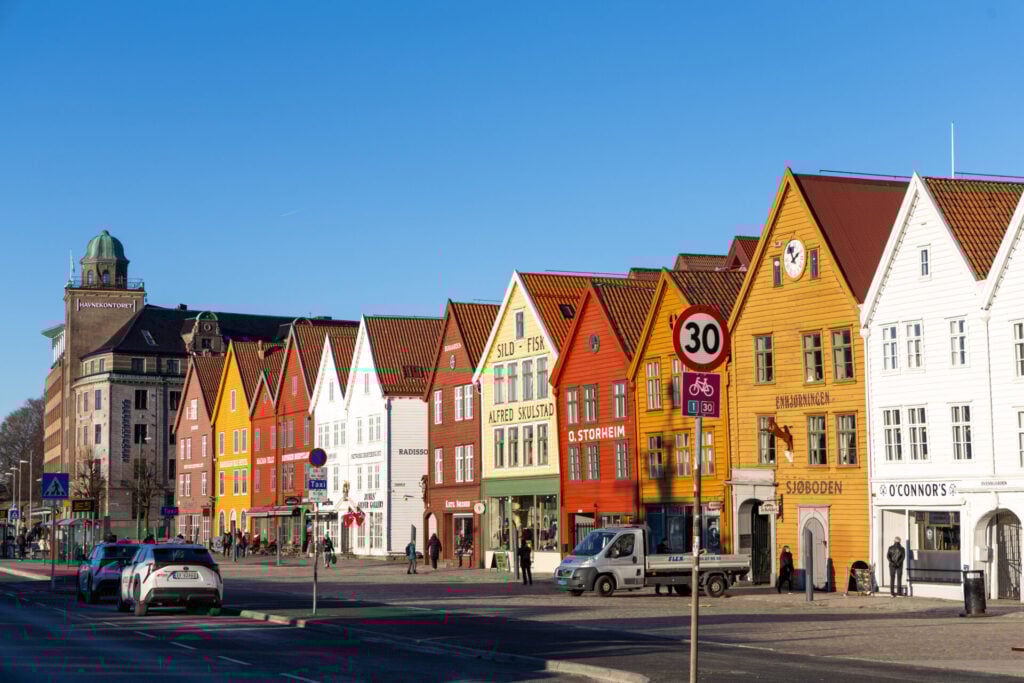
Norway’s second-largest city shows up on this itinerary largely for logistics, positioning you perfectly for the scenic journey onward to Flåm. That said, Bergen is undeniably charming: colourful wooden houses lining Bryggen, mountain backdrops rising straight from the harbour, and a compact, walkable city centre that feels cosy even in winter drizzle.
HOW MANY DAYS IN BERGEN?
Although some may feel Bergen deserves more time than the one full day I’ve allocated it in this itinerary (we actually spent 9 days here ourselves), I would ALWAYS prioritise stacking extra days onto Tromsø or Lofoten over time in Bergen. In winter especially, the Arctic experiences are simply more unique! Give Bergen 1-2 days MAX and then carry on.
Getting from Lofoten to Bergen
Fly from either of Lofoten’s airports (Svolvær or Leknes) south to Bergen, with an unavoidable connection through Tromsø or Bodø. This will effectively eat up an entire day, leaving you with one full day (Day 12) to explore Bergen before continuing south— which I think is perfectly adequate for most winter travellers!


What to do in Bergen
With your one full day in Bergen, you’ll have time to enjoy a few of the city’s main highlights:
- Bryggen: the UNESCO-listed wharf is Bergen’s postcard scene, with colourful wooden Hanseatic buildings, narrow alleyways, and small artisan shops
- Fløibanen funicular (Mount Fløyen): on a clear day, ride up for panoramic views over the harbour and surrounding mountains
- Harbour & fish market area: Bergen’s fish market dates back to the 1200s and is still bustling with food vendors today!
- Heit Bergen Sauna: book a time slot in this floating sauna right on the harbour with views of the bay and city skyline, great even in gloomy weather
Where to stay in Bergen
I’d recommend choosing accommodation near Bergen’s waterfront and historic centre, specifically around Bryggen and Bergenhus— this is the most atmospheric and photogenic part of the city, with colourful wooden buildings, excellent restaurants, and the train station all within easy walking distance.
For a comfortable, budget-friendly option, Scandic Ørnen is a great choice near the station, while Home Hotel Bryggen puts you right in the heart of the historic district.
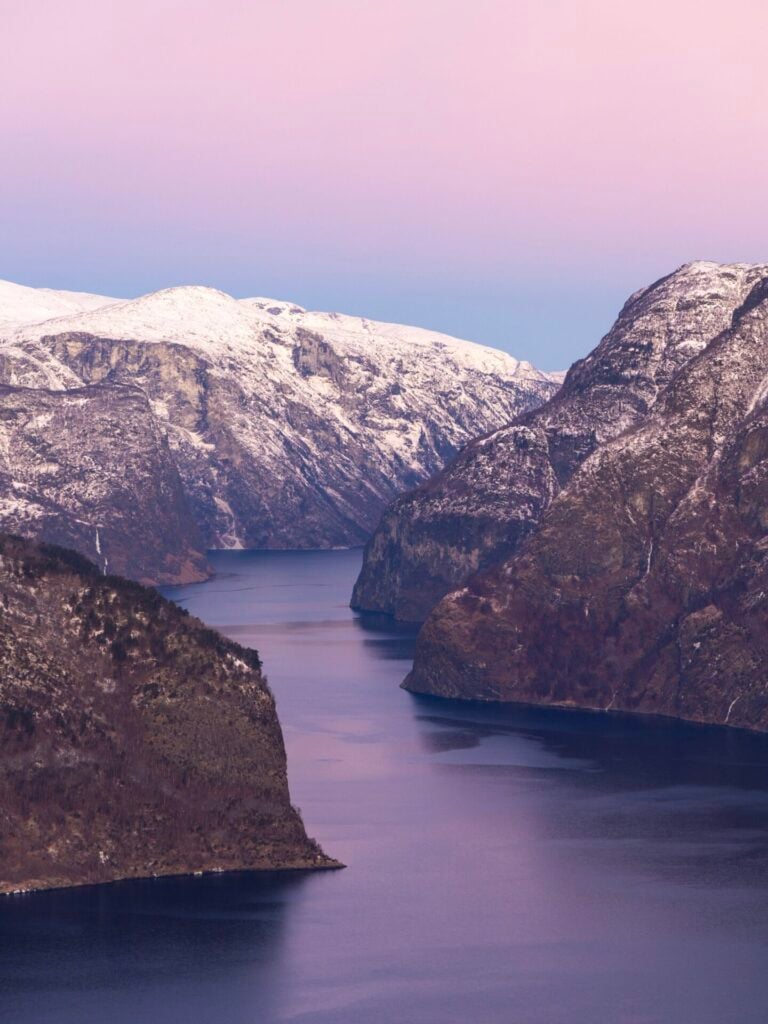
Days 13-14: Norway in a Nutshell (Bergen → Flåm → Oslo)
The next segment of this itinerary follows Norway’s most famous scenic route: “Norway in a Nutshell.” This iconic journey links trains, buses, and a fjord cruise to showcase dramatic western fjords, mountain plateaus, and one of the steepest railways in the world, all as part of a seamless, self-guided journey between Bergen and Oslo.
For winter, I recommend travelling Bergen → Flåm (overnight) → Oslo, which allows you to break up the journey into 2 days and make the most of limited daylight hours.
“Norway in a Nutshell” is technically a branded package offered by the company FjordTours, but there’s no guide and no group, so you can book the exact same route independently (or save yourself the planning time by just booking packaged tickets through the site). It’s the same either way!
To self-book, use Norway’s state-run transport website Vy.no for trains and buses, then book the fjord cruise directly with Norway’sBest. Alternatively, purchase a self-guided tour that arranges all the tickets for you OR reserve with FjordTours, the original creator of “Norway in a Nutshell”.
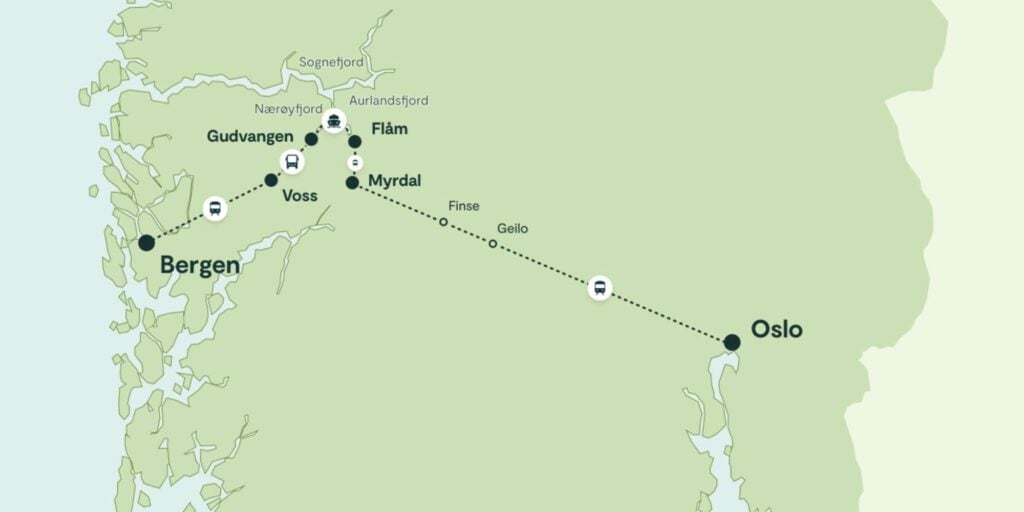
Day 13: Getting from Bergen to Flåm
Following the first half of Norway in a Nutshell from Bergen to Flåm, you’ll take the following transport:
- Train from Bergen to Voss (~8-9am)
- Bus from Voss to Gudvangen (~10-11am)
- Fjord cruise from Gudvangen to Flåm (12-2pm)— immensely scenic journey through the UNESCO-listed Nærøyfjord!


What to do in Flåm
Arriving in Flåm around 2pm from the Nærøyfjord cruise, you’ll have a few hours in the afternoon on Day 13 to enjoy the magic of this tiny fjord-side town:
- Flåm Bakeri: right in front of the pier, grab a quick lunch of woodfire pizza or fresh pastries at this charming local bakery
- FjordSauna: then book a 1.5hr session at my favourite floating sauna in all of Norway, with a hatch built right into the floor for cold-plunging in the Aurlandsfjord!
- Ægir Brewery: finish off the evening with the Viking Plank, a delicious 5-course meal of traditional Norwegian flavours paired with 5 fantastic craft beers from the local brewery
- Flåmsbrygga: overnight at this charming and conveniently located hotel right on the pier
The following morning (Day 14), you’ll have time for one of these activities, both of which depart from the FjordSafari office on the pier:
- Snowshoe hike to Stegastein viewpoint: a scenic and relaxed snowshoe tour with FjordSafari beginning at the famous Stegastein platform overlooking Aurlandsfjord (approx. 8-11am)
- RIB fjord safari: bundle into thermal suits for a RIB boat adventure through Aurlandsfjord with FjordSafari, passing frozen waterfalls and stopping off in the charming village of Undredal to sample classic Norwegian brown cheese (approx. 9-10.30am)
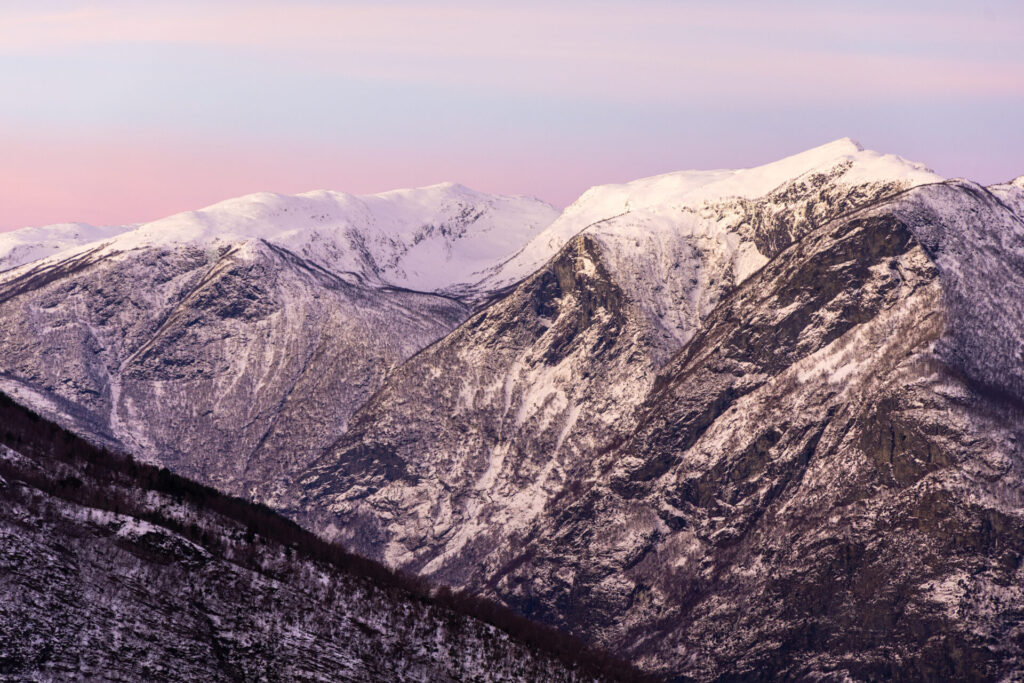
WINTER MAGIC IN FLÅM
Several local companies have teamed up on the Flåm Winter Magic Package, which bundles together a RIB fjord safari + 1.5hr slot in the FjordSauna + Viking Plank dinner at Ægir Brewery! It’s designed to fit into a single day, but if you reach out to the lovely team at FjordSafari, they can help schedule your boat trip so it works with this travel itinerary arriving from Bergen ~2pm and departing for Oslo ~11.45am the following day.
Day 14: Getting from Flåm to Oslo
On the 2nd half of the Norway in a Nutshell route, you’ll take the following transport:
- Train from Flåm to Myrdal (~11.45am-12.30pm)— considered one of the most scenic train journeys in the world!
- Train from Myrdal to Oslo (~2-7pm)
Days 15-16: Oslo
Oslo is a fitting final stop on this itinerary— a refined, design-forward capital that’s effortlessly explored on foot and a perfect contrast to the wild Arctic landscapes that defined the rest of this journey! With modern architecture, waterfront saunas, world-class museums, and standout restaurants clustered around the harbour, wrap up your Norwegian adventure in style.
HOW MANY DAYS IN OSLO?
Oslo is compact and highly walkable, so 1 full day is enough to see the main highlights. With 2 days, you can slow the pace, adding longer museum visits, extended sauna sessions, or simply lingering over great food and cocktails to close out the trip!
What to do in Oslo
- KOK Floating Sauna (Langkaia): book a private or communal slot in the most iconic of Oslo’s floating saunas, docked directly in front of the Opera House where you can plunge in the chilly Oslofjord with incredible views
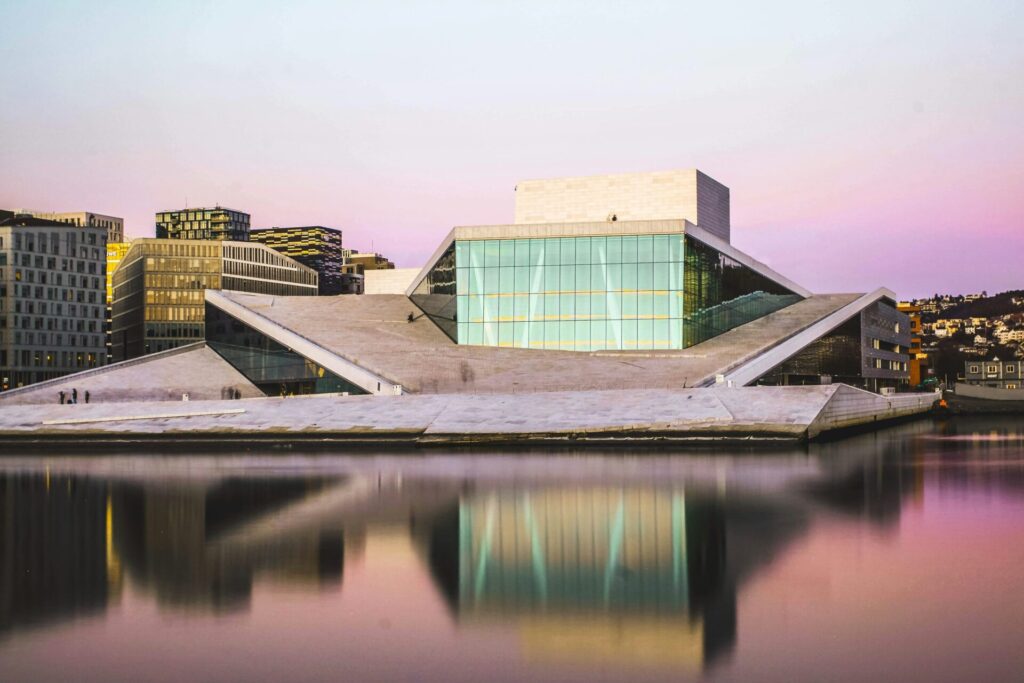
- Oslo Opera House (Operahuset): walk the sloping white marble roof for panoramic views of the harbour (bonus points for being completely free to explore in this expensive city!)
- MUNCH Museum: a striking building housing Edvard Munch’s works, including multiple versions of The Scream
- Akershus Fortress: a medieval fortress overlooking the harbour, ideal for a short historic wander
- Himkok: one of the “world’s best cocktail bars”, serving house-distilled aquavit, gin, and inventive Nordic drinks


Where to stay in Oslo
For this itinerary, I’d recommend staying in Sentrum, specifically in the area between Oslo Central Station and the harbour. This puts you within easy walking distance of the waterfront (Opera House, MUNCH Museum, KOK sauna), Karl Johans gate, and countless restaurants and cocktail bars.
I absolutely love the Bob W Sentralen in Oslo: modern, apartment-style suites combining the amenities of a hotel with the liveability of an apartment, all in a super central location that makes it easy to explore Oslo on foot. Bob W has locations all over Europe (mostly in major cities), and I always recommend it to other travellers!
Itinerary extensions & modifications
- With 3 weeks? Add more time in Lofoten (for serious winter hiking + photography) or extend your stay in Tromsø (to increase your odds of strong aurora nights and wildlife encounters). Winter weather is highly unpredictable and tours are frequently cancelled, so extra days give you the flexibility to capitalise on good conditions and actually DO everything you planned in each destination!
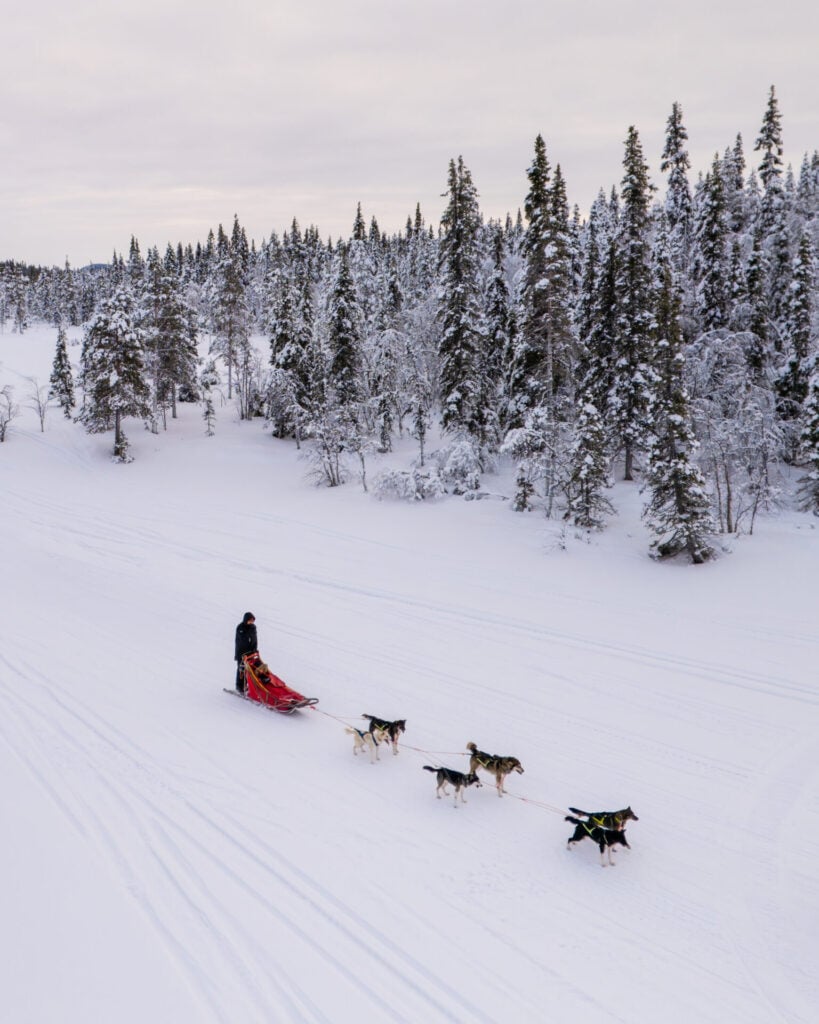
- 2–3 weeks, but Arctic only? Head east to explore Swedish Lapland! Abisko National Park is just 4hrs from Lofoten (bus from Svolvær to Narvik, then direct train to Abisko). The famed starting point of Kungsleden, Sweden’s best multi-day hike/ski tour route, Abisko is a paradise of low-Arctic mountains with extensive winter trails, ice climbing waterfalls, and excellent aurora viewing. You can also continue 1.5hrs south to Kiruna for dog sledding (we did this 4-day trip!), snowmobiling, and a visit to the ICEHOTEL before flying out from Kiruna Airport.
- With only 7–10 days? Cut this itinerary in half and focus exclusively on Tromsø + Lofoten OR choose one Arctic destination and pair it with Oslo for a balance of wilderness and city.
Other adventure itineraries
2-week Patagonia itinerary: best of Torres del Paine & Los Glaciares/El Chaltén
2-week Montenegro road-trip itinerary: epic hiking, Riviera beaches & wine country
10-day Switzerland itinerary: Zermatt, Interlaken, Jungfrau & beyond!
2-week Mexico volcanoes itinerary: climbing Pico de Orizaba, Izta, Malinche & Toluca
10-day Rwanda road trip itinerary: gorillas, volcanoes & Lake Kivu
