• start here
  • about
  • itineraries
  • brooke beyond
  • hiking guides
  • outdoor gear
    • hiking boots
    • hiking backpacks
    • cold-weather layers
    • backpacking tent
    • outdoor sleep system
    • backcountry food
    • day-hike packing list
    • hut-to-hut packing list
    • via ferrata packing list
    • backpacking packing list
    • mountaineering packing list
brooke beyond
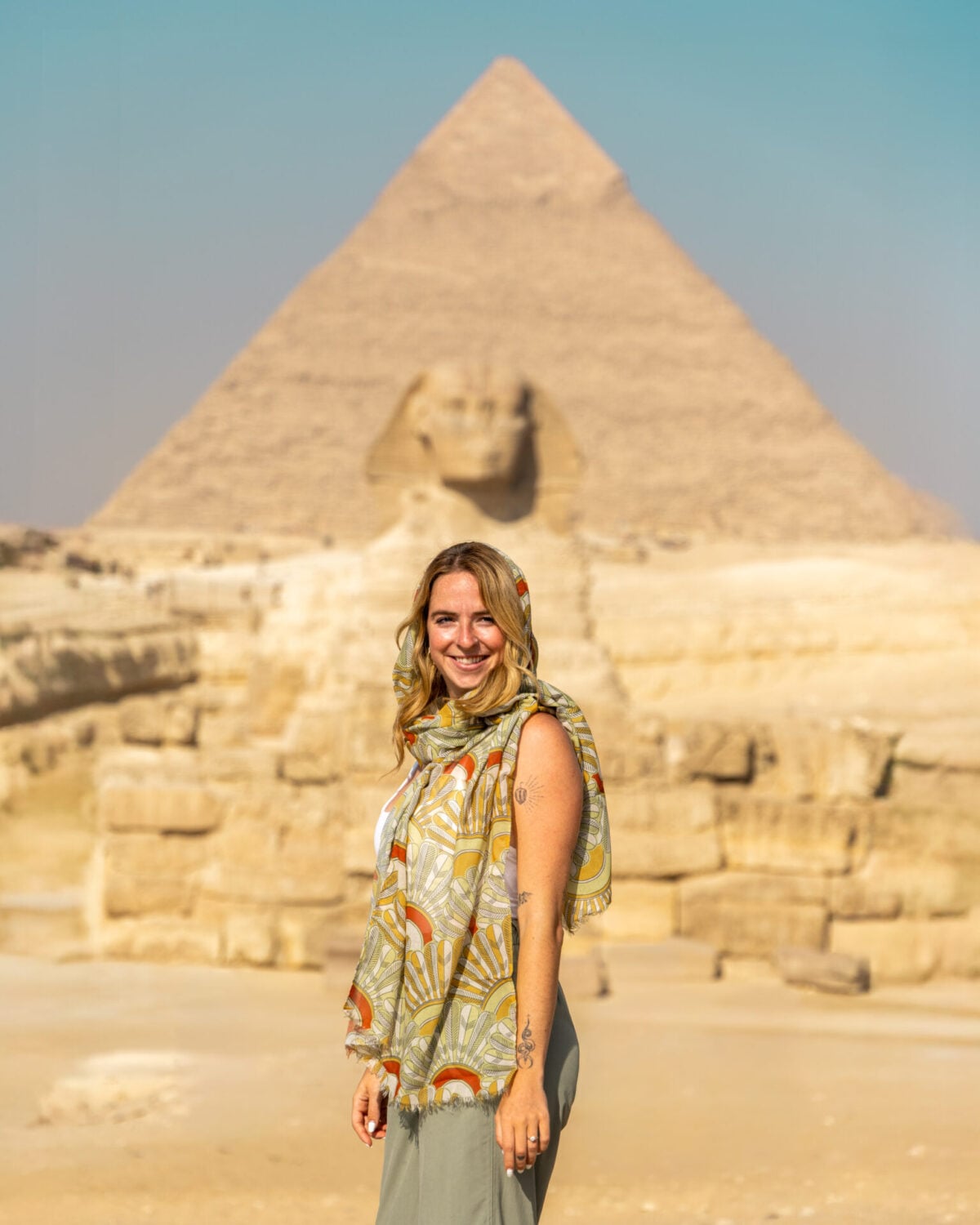
Best view of the Sphinx
Egypt / Middle East

Detailed 3-day Cairo & Giza itinerary for first-time visitors

2 May 2026

Cairo is the starting point for nearly every trip through Egypt, but it’s far more than just a gateway to the rest of the country! This vast, chaotic megacity is home to some of the most iconic sights in the world, from the Pyramids of Giza and the Sphinx to the spectacular (and brand new) Grand Egyptian Museum, as well as centuries of Islamic and Coptic history woven through its mosques, churches, and bustling bazaars.

I’ve been to Cairo FIVE TIMES, exploring every destination on this list repeatedly, at different times of day, with and without a guide, and now as part of the group trips we run through Egypt. All that experience has given me some very strong opinions on what’s genuinely worth your time, what you can skip, and how to get the most out of Cairo through better organisation!

This detailed 3-day Cairo & Giza itinerary is designed specifically for first-time visitors, balancing the city’s most iconic ancient sites with its rich Islamic and Coptic history, award-winning Egyptian restaurants with classic street food, and bustling markets with leafy neighbourhoods along the Nile— all while following a logical route across the city so you’re not wasting hours zig-zagging through Cairo’s notoriously intense traffic.

What's in this guide

Toggle
  • Essential Cairo logistics 
    • Is Cairo safe?
    • How many days in Cairo?
    • Getting around Cairo
    • Where to stay in Cairo
    • Best Egypt eSIM
  • *Detailed Cairo & Giza itinerary
    • Day 1: Saqqara, Dahshur & Giza pyramids
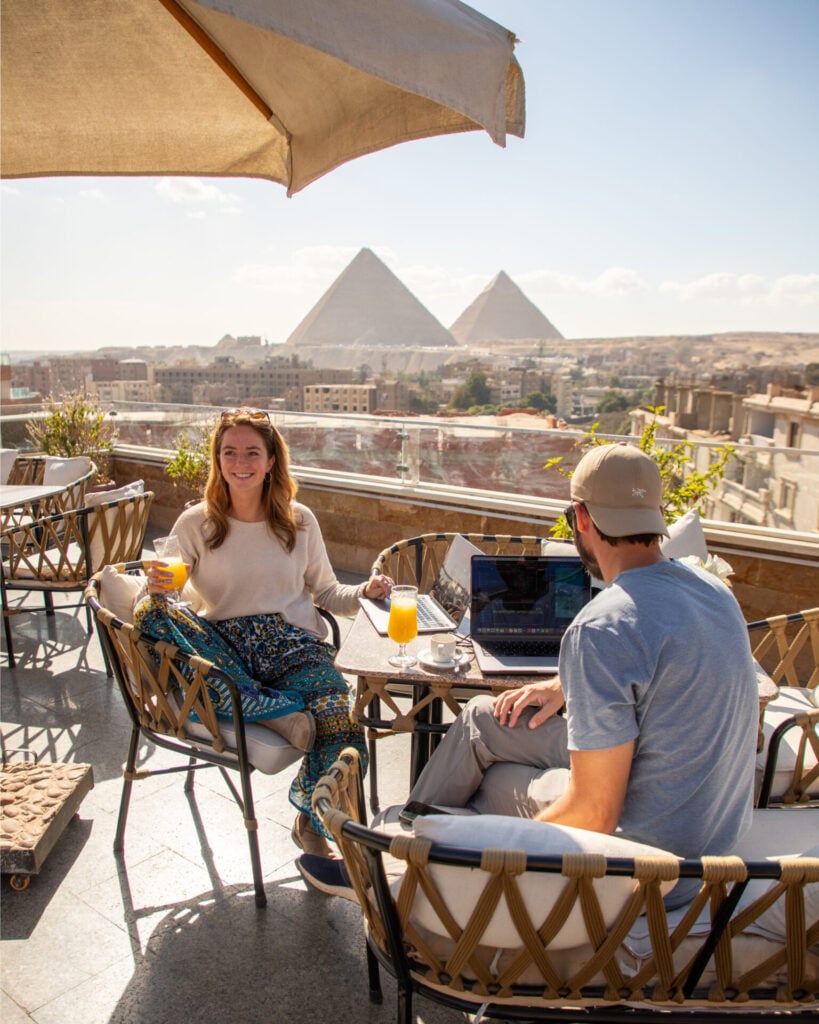
      • breakfast on the rooftop of your Giza hotel (6.30am)
      • Saqqara Necropolis (8-10am)
      • Step Pyramid of Djoser
      • Tomb of Mereruka
      • Pyramid of Teti
      • Dahshur: Bent Pyramid + Red Pyramid (10.30-11.30am)
      • Bent Pyramid
      • Red Pyramid
      • Lunch at Khufu’s (1-2pm)
      • Giza Necropolis (2-4pm)
      • Pyramid of Khufu
      • Pyramid of Khafre
      • Pyramid of Menkaure
      • The Sphinx
      • 9 Pyramids Lounge (4-5pm)
      • Dinner at Zeeyara Pyramids Elite OR your hotel
    • Day 2: Grand Egyptian Museum & Khan el-Khalili Bazaar
      • Grand Egyptian Museum (9am-1pm)
      • Lunch at Zooba (1-2pm)
      • Transfer to your hotel in central Cairo (2-3pm)
      • Khan el-Khalili Bazaar (4-7pm)
      • Dinner at Zeeyara Restaurant in Cairo (7-8pm)
    • Day 3: Coptic & Islamic Cairo with dinner in Maadi
      • Coptic Cairo (10-11.30am)
      • Abu Serga
      • Hanging Church in Old Cairo
      • Ben Ezra Synagogue
      • St. George’s Church
      • Cave Church & the Monastery of St. Simon (12-1pm)
      • Lunch on the way: try Egyptian koshari (1-2pm)
      • Islamic Cairo (2-4pm)
      • Saladin Citadel 
      • Mosque & Madrasa of Sultan Hassan
      • Dinner & cocktails in Maadi (6-9pm)
Best view of the Giza pyramids
Grand Egyptian Museum
Coptic Cairo artwork at the Hanging Church

Essential Cairo logistics 

Is Cairo safe?

Cairo is generally safe for travellers, but it can certainly feel overwhelming if it’s your first time in Egypt. Expect persistent vendors, busy streets, and a level of chaos that can be difficult to navigate without a clear plan of attack— which is where this itinerary comes in!

The key is to mentally prepare for things to be a little frenetic, stay aware of your surroundings, and rely on trusted transport (Uber/inDrive or a private driver). As long as you’re sticking to the main tourist areas and not abandoning general common sense, your experience in Cairo will be perfectly safe.

How many days in Cairo?

Based purely on the quantity of things to do, you could easily spend weeks exploring Cairo, but the traffic, pollution, and sheer intensity do get rather tiring. After many visits, we think 3 days is the perfect amount of time to explore the pyramids of Giza and other ancient sites like Saqqara and Dahshur, experience the spectacular Khan El-Khalili Bazaar, and visit the highlights of Coptic & Islamic Cairo.
Nile scenery near Saqqara
Lush scenery along the Nile near Saqqara

Getting around Cairo

With a population of 23 million people, Cairo is one of the largest cities in the entire world and its highlights are spread across an enormous distance— it typically takes 1-1.5hrs to drive between Cairo proper and the pyramids of Giza, which makes the structure of your itinerary particularly important.

In almost all instances, you’ll need to use a private driver or taxis to get around Cairo. Thankfully, it’s inexpensive to hire a driver for short trips or even the entire day, just be warned the traffic is atrocious and the driving can be rather adventurous.

>>> Download the inDrive app, a local alternative to Uber that tends to work more reliably in Cairo!
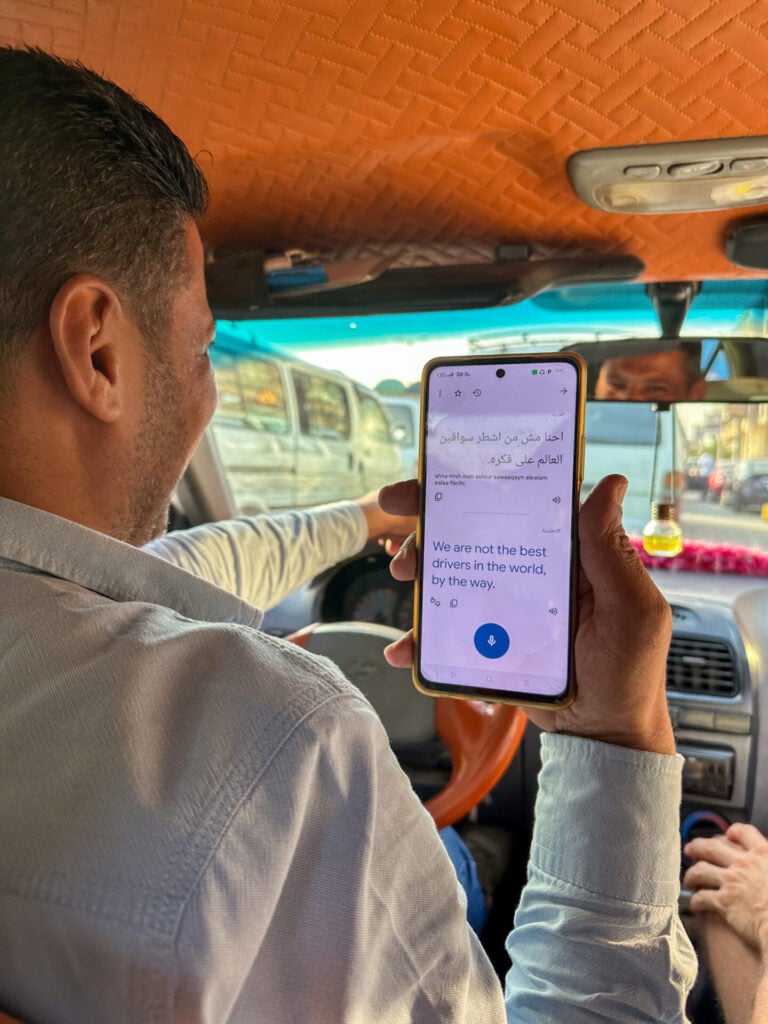
Taxi driver in Cairo
Our Cairo taxi driver sharing a public safety announcement

Where to stay in Cairo

To minimise time spent in traffic, I highly recommend splitting your stay between Giza and central Cairo. 

Start with 2 nights in Giza, which allows you to explore Saqqara, Dahshur, the Giza Plateau, and the Grand Egyptian Museum efficiently (Day 1 + the morning of Day 2). Both of our top picks have a rooftop terrace with pyramid views and a free breakfast:

  • View Delta Hotel— budget hotel with amazing staff!
  • La Boutique Hôtel Vue des Pyramides— trendy boutique hotel with a $10 buffet dinner on the rooftop!

On Day 2, I’d suggest relocating to central Cairo for 1–2 nights, positioning yourself closer to the city’s historical and cultural sites for the remainder of your itinerary. Our favourite area is Maadi, a trendy, upscale neighbourhood along the Nile with excellent restaurants, cafés, and a much calmer atmosphere than central Cairo. Alternatively, Zamalek (an island in the Nile) offers an even more central location with a similar polished feel.

Rooftop view from the View Delta Hotel in Giza

Best Egypt eSIM

Purchase and install an Egypt eSIM from Airalo before you arrive for instant mobile data upon landing. It’s the easiest way to access maps, Uber/inDrive (a local ride-share app), and WhatsApp while you’re out exploring!
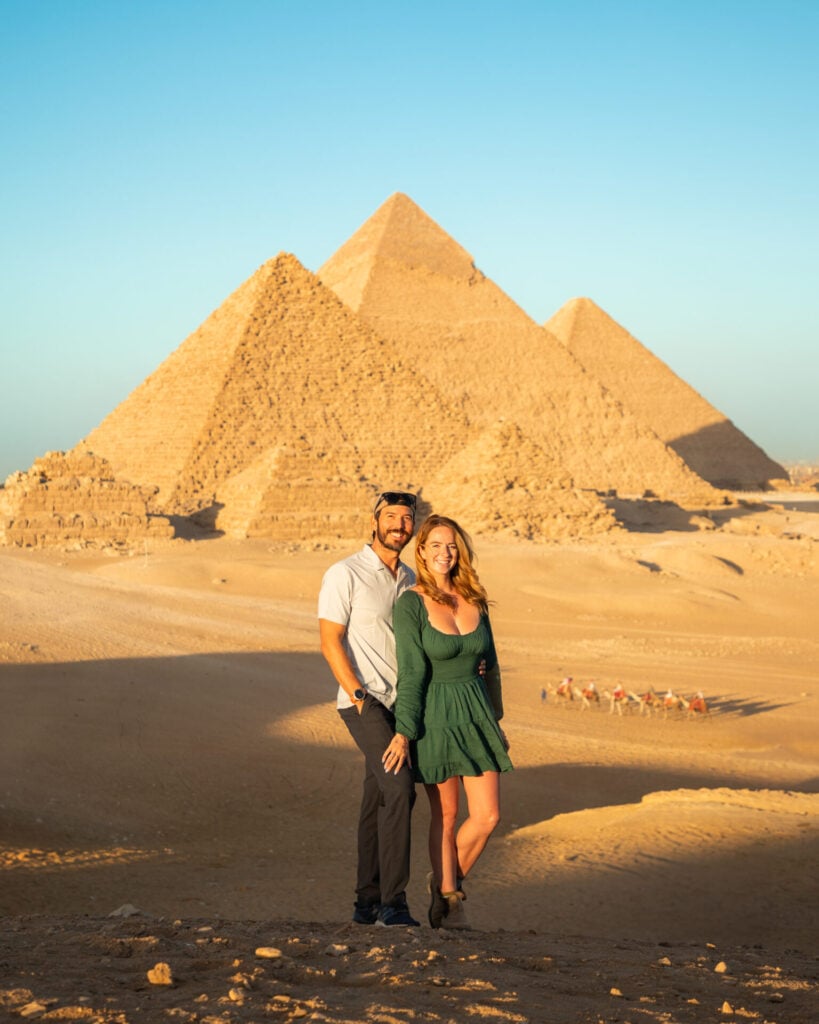
View of the 9 pyramids at Giza
Our favourite Giza view near 9 Pyramids Lounge

*Detailed Cairo & Giza itinerary

After spending heaps of time in Egypt’s chaotic capital, I’ve carefully curated this 3-day itinerary to give first-timers the perfect introduction to Cairo:

  • Day 1: Saqqara, Dahshur & Giza pyramids
  • Day 2: Grand Egyptian Museum & Khan el-Khalili Bazaar
  • Day 3: Islamic & Coptic Cairo with dinner in Maadi

Day 1: Saqqara, Dahshur & Giza pyramids

Spend your first full day in Cairo exploring the awe-inspiring pyramids and ancient monuments that have dominated this landscape for 4,600 years, starting with the earliest architectural experiments and culminating at the iconic Pyramids of Giza:

  • enjoy breakfast with a view on the rooftop of your Giza hotel
  • explore the Saqqara Necropolis, including the Pyramid of Teti, Tomb of Mereruka, and Step Pyramid of Djoser
  • tour the next generation of Egyptian pyramids in Dahshur (Red Pyramid & Bent Pyramid)
  • indulge in lunch at Khufu’s, rated the #1 restaurant in the Middle East
  • admire the Great Pyramid, Sphinx, and other iconic sites of the Giza Necropolis
  • visit 9 Pyramids Lounge for the BEST viewpoint of the pyramids
View of the Sphinx in Giza
Tomb of Mereruka at Saqqara
View of the pyramids near 9 Pyramids Lounge

⚠️ DAY 1 CONSIDERATIONS

>>> You can visit Saqqara, Dahshur, and Giza in any order (ex. starting at Giza early for the absolute lowest crowds), but I’ve intentionally structured this day to move from oldest to newest pyramids AND to align with lunch at Khufu’s and golden hour at the pyramids, one of the most beautiful times to explore the site!

>>> I highly recommend hiring a licensed Egyptologist guide and private driver for today. Expect to pay around $60-80USD for 2 people, plus $30USD in entrance fees per person ($60USD if you want to enter the Great Pyramid).
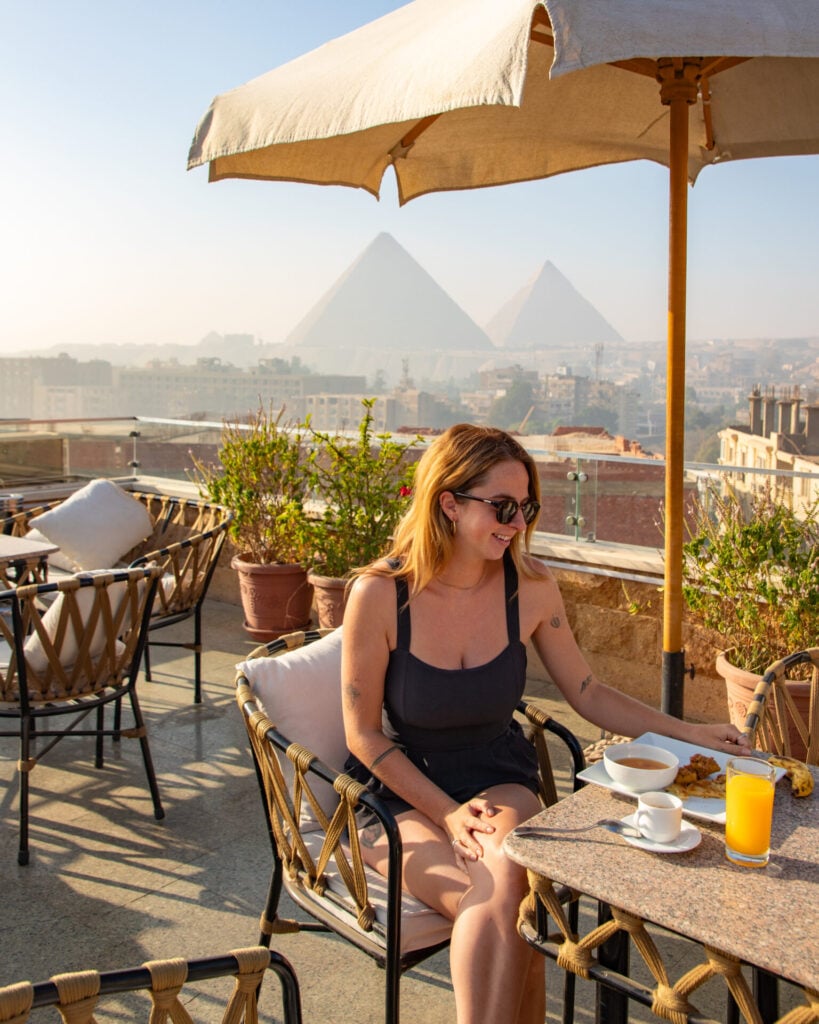

Rooftop hotel in Giza
Breakfast on the rooftop of the View Delta Hotel

breakfast on the rooftop of your Giza hotel (6.30am)

Start the morning with an early breakfast—nearly every hotel in Giza has a rooftop with pyramid views, so this is an awesome teaser before seeing the pyramids up-close this afternoon!

>>> I specifically recommend staying at either View Delta Hotel (budget-friendly) or La Boutique Hôtel Vue des Pyramides (trendy boutique), both of which offer free breakfast and excellent rooftop views!

Saqqara Necropolis (8-10am)

Plan for your guide and driver to pick you up at your Giza hotel around 7am for the 1hr drive south to Saqqara, Egypt’soldest pyramid complex. Entry is 600EGP + an additional 220EGP for the Tomb of Mereruka (totalling just $15USD).
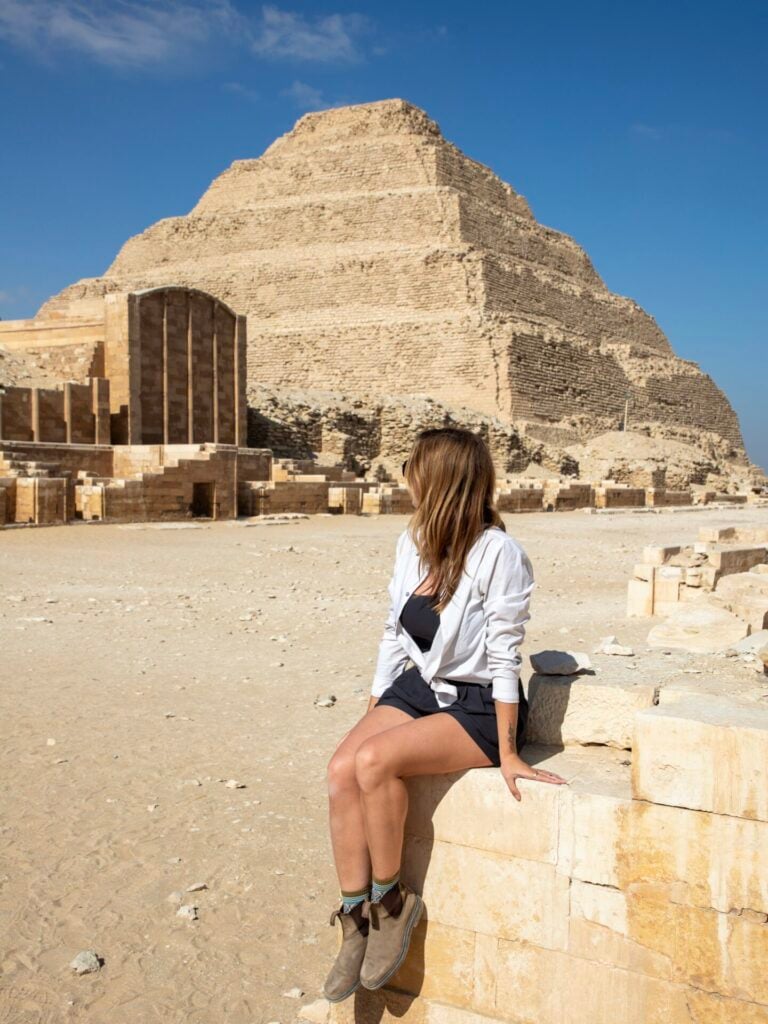
Step Pyramid of Djoser in Saqqara
The Step Pyramid was the first pyramid ever constructed!

Step Pyramid of Djoser

The Step Pyramid of Djoser was built around 2670 BCE for Pharaoh Djoser and is widely considered the first pyramid ever constructed— and more broadly, the first large-scale stone building in human history! Rising in six tiers, it marks the transition from simple mastaba tombs (basically low piles of dirt) to the monumental pyramids that defined Egypt’s Old Kingdom more than 4,500 years ago.

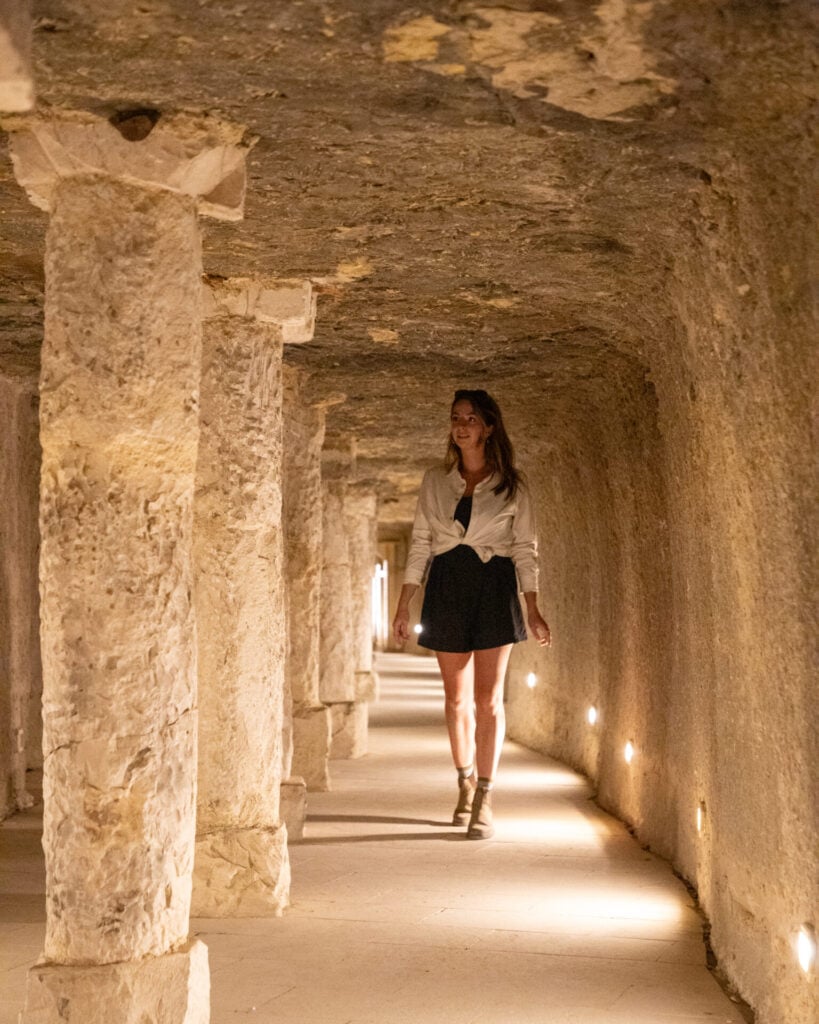
Inside the Step Pyramid of Djoser
Inside the Step Pyramid of Djoser, our favourite interior!
Inside the Step Pyramid of Djoser
Colonnaded Entrance to the Step Pyramid of Djoser

Pass through the grand Colonnaded Entrance to Djoser and eventually into a subterranean tomb. Unlike later pyramids, the Step Pyramid contains a vast underground network of tunnels and chambers built to house the king’s burial and funerary goods, and it’s far more impressive than even the interior of the Great Pyramid!

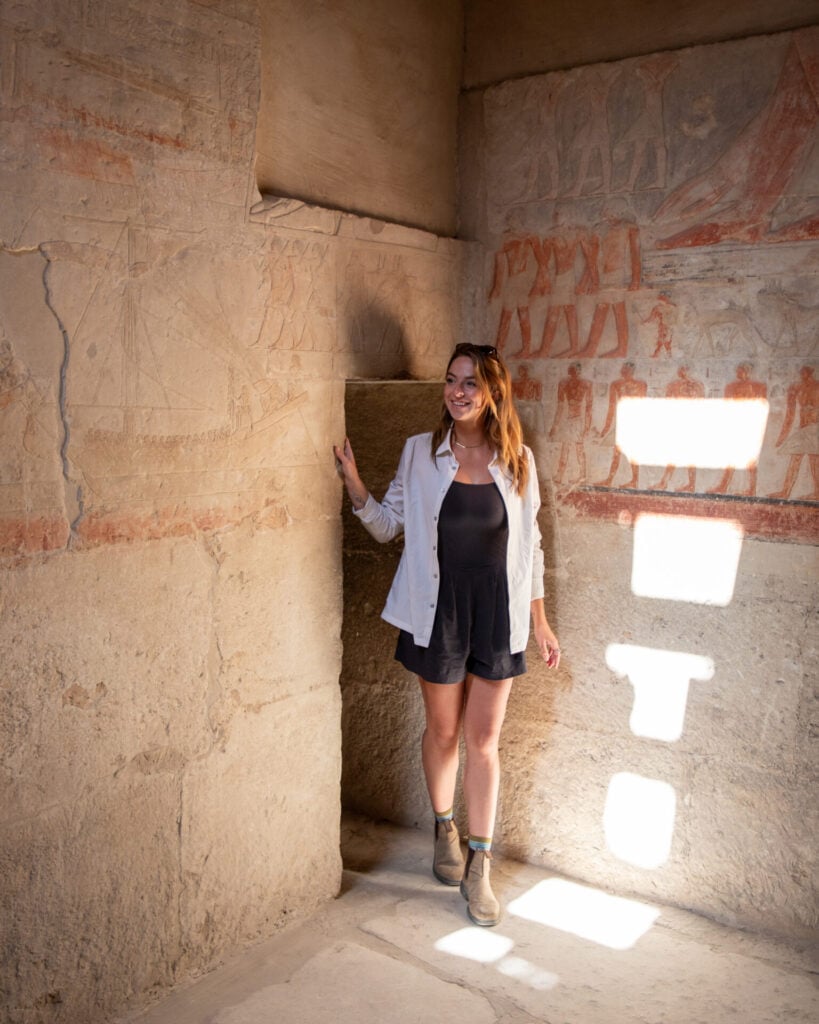
Tomb of Mereruka at Saqqara
Colourful artwork on the walls of the Tomb of Mereruka

Tomb of Mereruka

A short distance away, visit the Tomb of Mereruka, built around 2340 BCE during the reign of Pharaoh Teti. This is the largest and most elaborate noble tomb at Saqqara, with more than 30 rooms covered in exceptionally detailed reliefs. Colourful scenes of hunting, farming, music, and banquets offer one of the most vivid glimpses into daily life in ancient Egypt. 

Tomb of Mereruka at Saqqara
Artwork in the Tomb of Mereruka at Saqqara
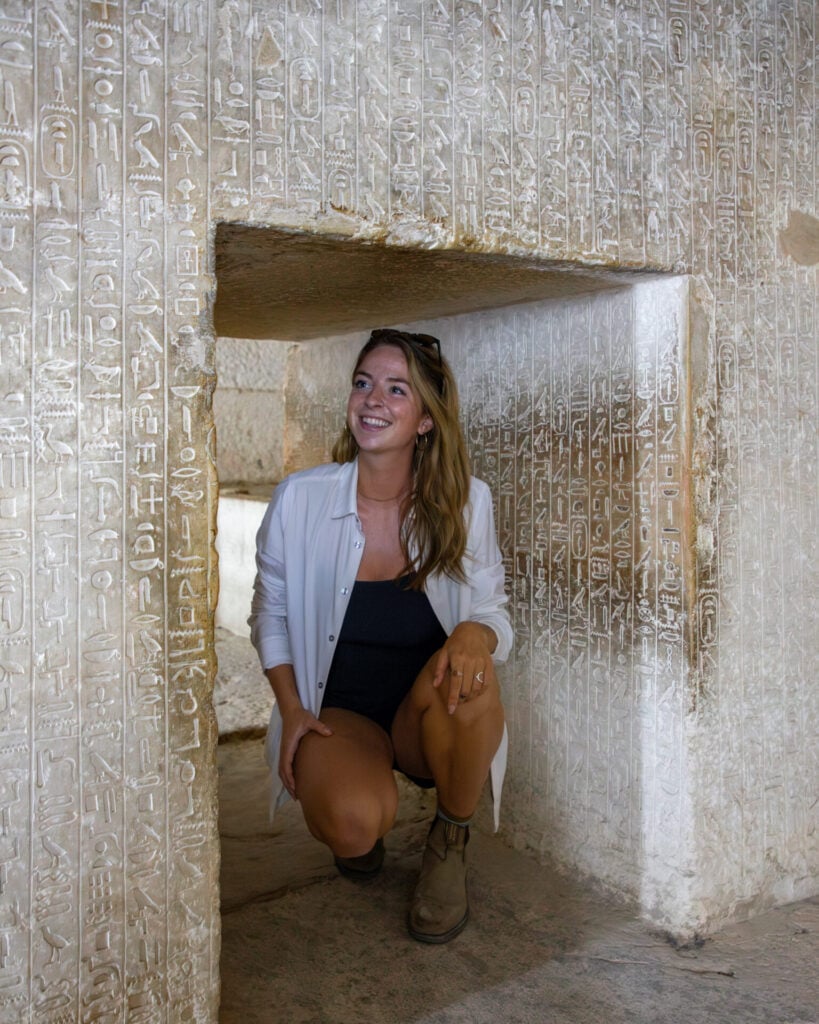
Hieroglyphics in the Tomb of Mereruka at Saqqara
Spectacular hieroglyphics in the Tomb of Mereruka

In my opinion, this is the only tomb in Lower Egypt that still feels impressive after visiting the Valley of the Kings in Luxor! I did a little bit of crying here, if that helps convey the magnificence.

Inside the Pyramid of Teti at Saqqara

Pyramid of Teti

Finally, descend beneath an unassuming pile of dirt to discover the Pyramid of Teti, an absolutely spectacular limestone burial chamber lined by the Pyramid Texts, the oldest known religious writings in the world.

Dating back over 4,300 years, these inscriptions were intended to guide the pharaoh safely into the afterlife and represent the earliest surviving body of Egyptian funerary literature. It’s narrow and a little claustrophobic in here, but completely mind-blowing and definitely one of the most impressive sites in Cairo! 

Hieroglyphics in the Pyramid of Teti at Saqqara

Plan to spend around 2hrs at Saqqara before driving 30min further south to Dahshur to visit ancient pyramids built about 70 years later.


Dahshur: Bent Pyramid + Red Pyramid (10.30-11.30am)

Dahshur represents the next major step in pyramid evolution, with two pyramids built here in 2600 BCE under Pharaoh Sneferu (father of Khufu, who would later construct the Great Pyramid in Giza). Entry to the site is 200EGP ($4USD).

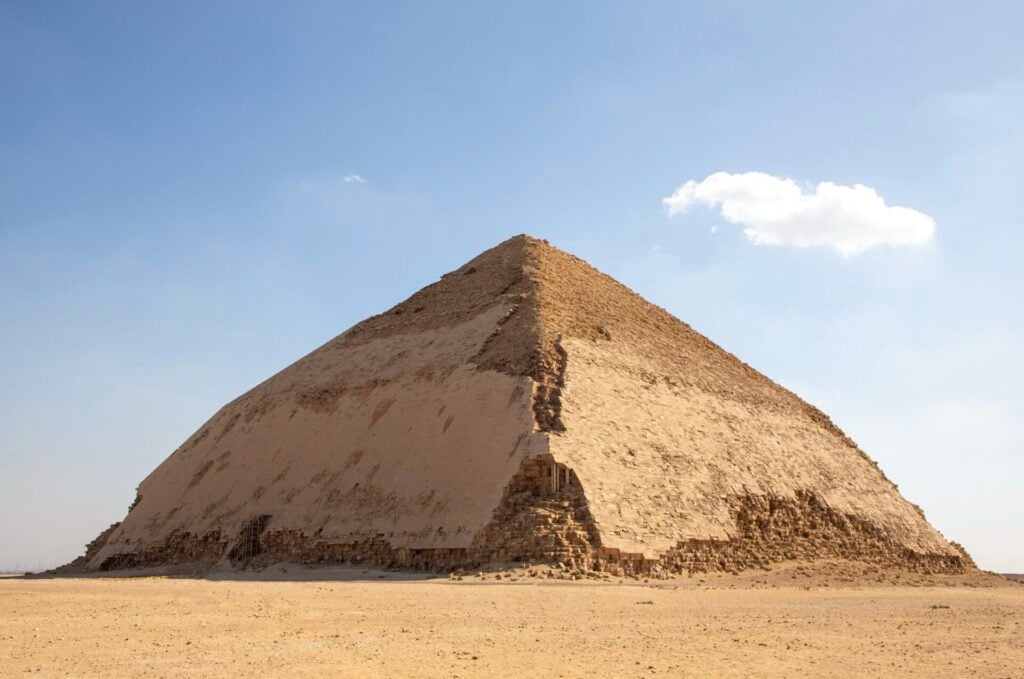
The Bent Pyramid at Dahshur

Bent Pyramid

The first of the pyramids built by Sneferu was also one of the earliest attempts at a smooth-sided “true” pyramid. Unfortunately, engineers realised mid-construction that they’d chosen too steep of an angle, but rather than scrap the entire project, they simply lessened the angle and carried on— giving the structure its distinctive “bent” shape.

Both Dahshur pyramids are dramatically less crowded than those at Giza, and you can enter both— we strongly recommend the Bent Pyramid, which descends an impossibly narrow 79m tunnel into the chambers below. It’s a bit claustrophobic, but it’s quite an adventure and we giggled the whole way down.
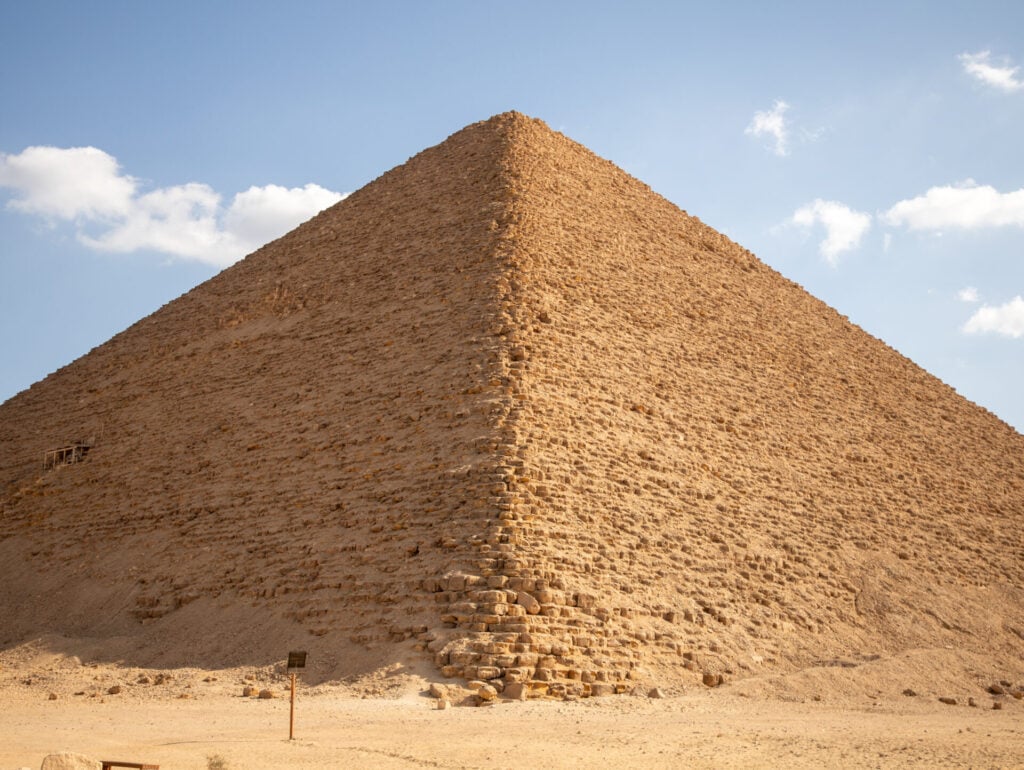
Red Pyramid at Dahshur
The Red Pyramid, Egypt’s first true pyramid!

Red Pyramid

Because of his failure with the Bent Pyramid, Sneferu commissioned a second pyramid at Dahshur: the Red Pyramid, considered the first successfully completed true pyramid in history. At 105m tall, it was one of the largest pyramids of its time and became the blueprint for the pyramids at Giza built under Khufu just a few decades later!

After exploring Dahshur, begin the 1–1.5hr drive back to Giza to see the NEXT evolution of pyramid architecture!


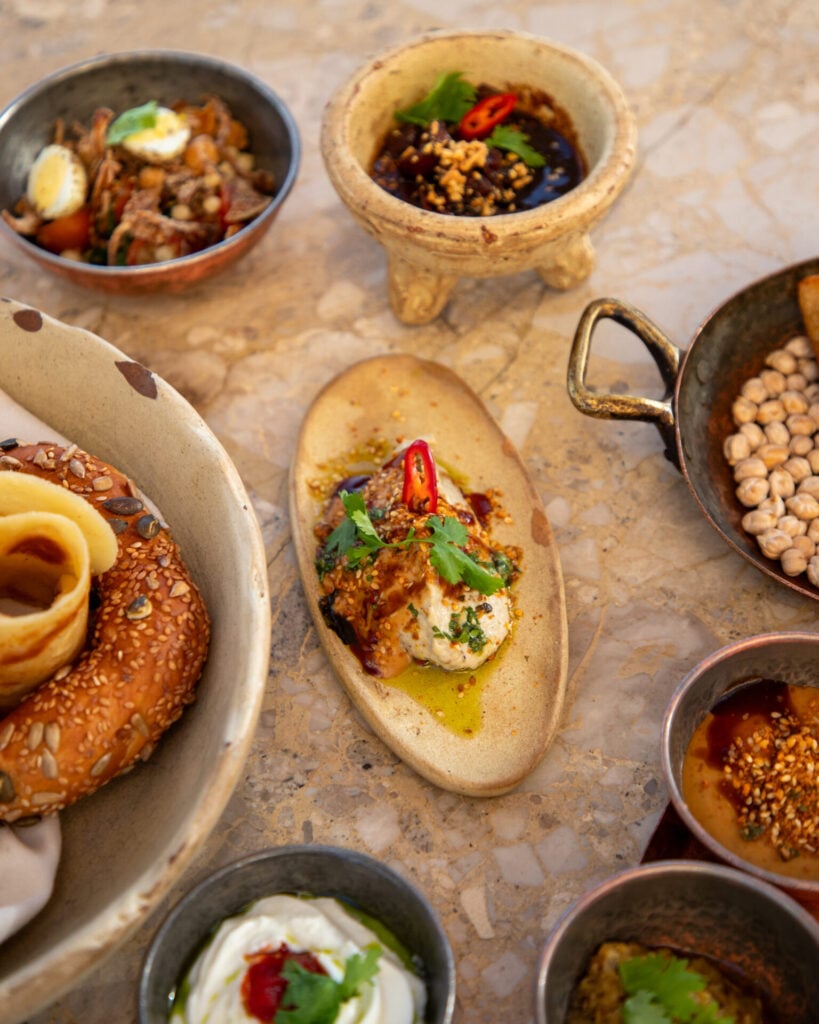
Khufu's Restaurant in Giza
The incredible multi-course menu at Khufu’s Restaurant

Lunch at Khufu’s (1-2pm)

Purchase your ticket to the Giza Plateau at the Visitor Centre (700 EGP/$13USD), but before exploring the site, stop for lunch at Khufu’s, consistently rated the #1 restaurant in the Middle East. Reservations are essential!

With a few options for set menus of elevated Egyptian cuisine, the food is seriously incredible— spectacular pyramid views are just a bonus! Even with the new shuttle system inside the complex (more on that below), your driver can drop you directly at Khufu’s before heading to the main parking area.


Giza Necropolis (2-4pm)

After a slow lunch at Khufu’s, it’s time to explore Egypt’s most iconic site: the Giza Necropolis, built at the peak of ancient Egyptian power around 2580–2500 BCE. I’ve intentionally organised today’s itinerary to follow the broader chronology of pyramid evolution, and the pyramids of Khufu, Khafre, and Menkaure at Giza represent the next major leap forward in scale, precision, and ambition!

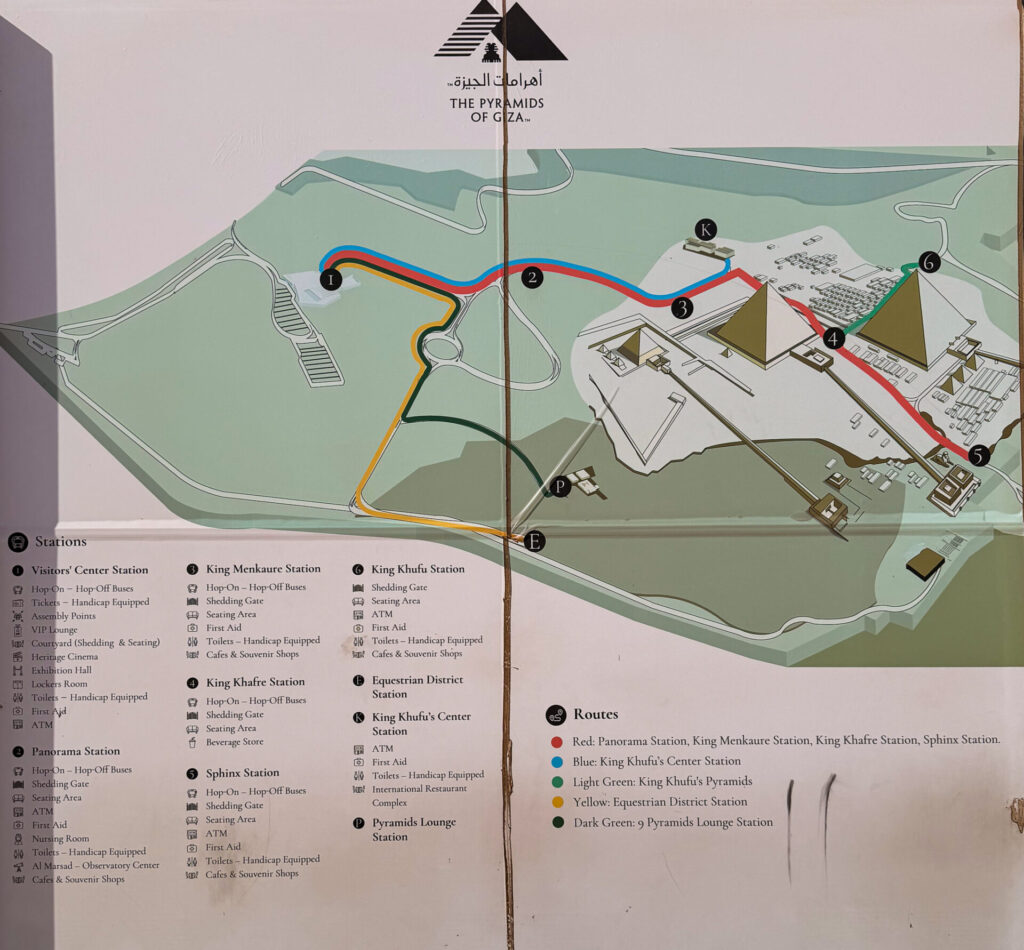
>>> In late 2025, the government implemented a hop-on/hop-off shuttle system on the Giza Plateau to reduce congestion. It’s free to use (and wildly impractical to walk across the complex anyway), so hop on at the Visitor Centre and make a few recommended stops.

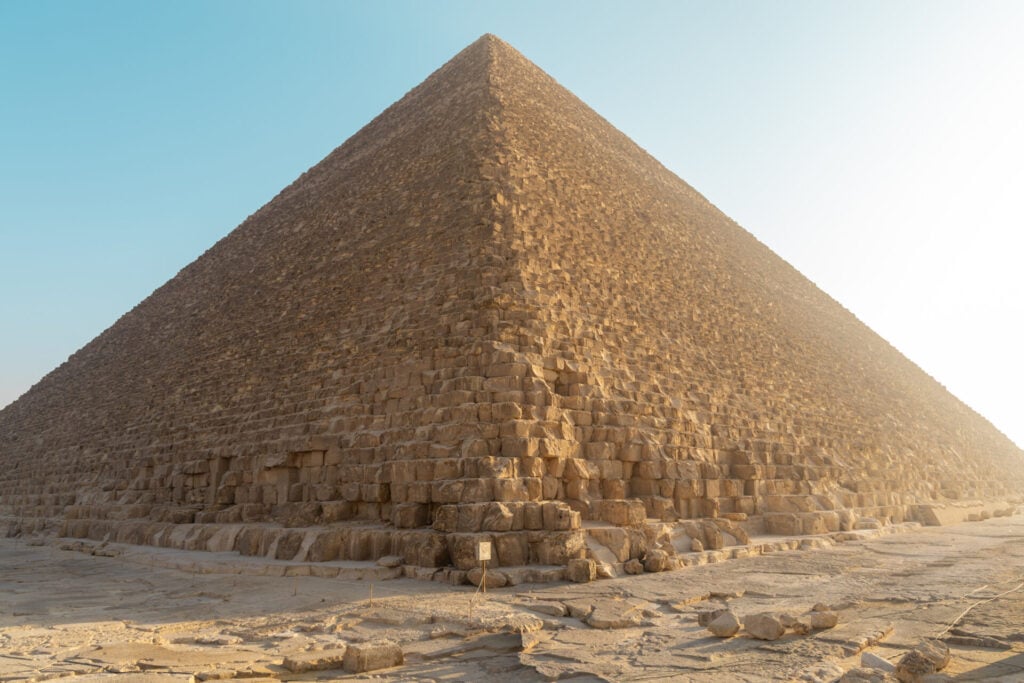
The Great Pyramid of Khufu
The Great Pyramid of Khufu, the oldest & largest of Giza’s pyramids

Pyramid of Khufu

Start by taking the shuttle to the Khafre stop and walking a short distance to Khufu’s pyramid, the oldest and largest of the three main pyramids at Giza, built by the son of Sneferu (who built the Red Pyramid about 20 years previously). Originally rising to 147m, it remained the tallest man-made structure in the world for nearly 4,000 years!

It’s possible to enter the Great Pyramid (with an additional $30USD ticket purchased at the entrance), but if you’re even remotely claustrophobic or low on time, it’s an easy thing to skip— in our opinion, this is one of the least impressive pyramid interiors you’ve had the chance to see today, so it’s more about the novelty.

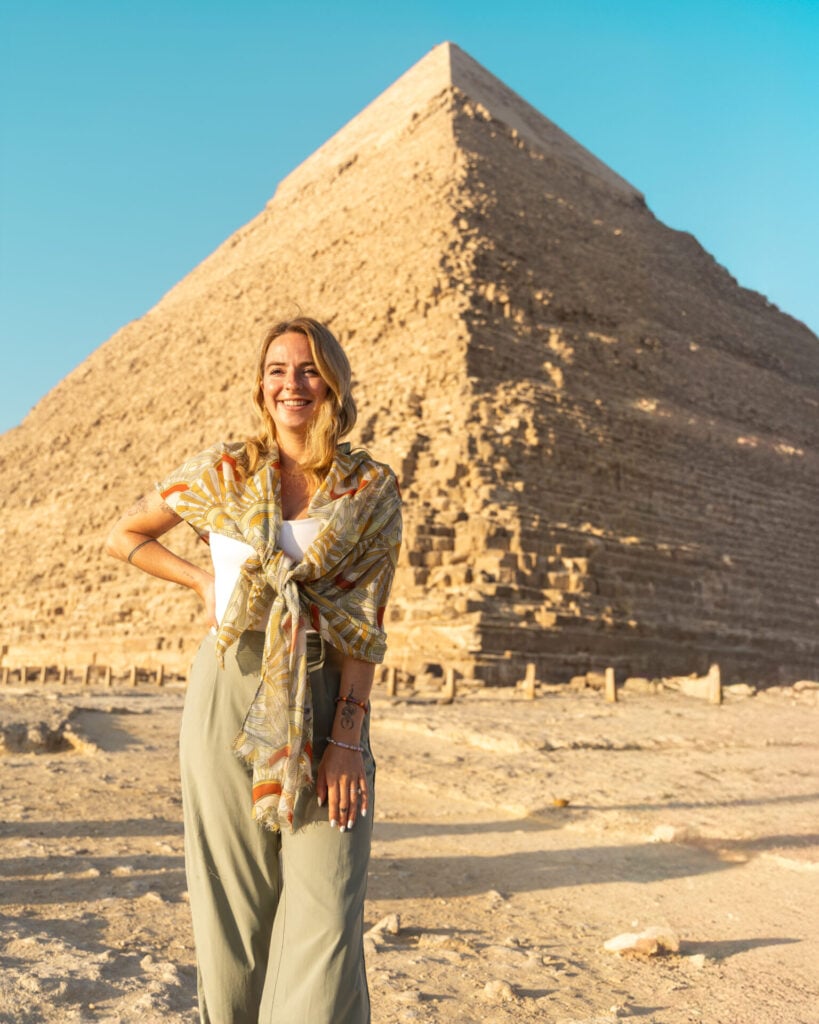
Pyramid of Khafre in Giza
Pyramid of Khafre, the 2nd pyramid built in Giza

Pyramid of Khafre

Walking back towards the shuttle bus stop, visit the next pyramid at Giza c. 2570 BCE, this one built for Pharaoh Khafre, son of Khufu (are you seeing a trend yet?). Although slightly smaller than Khufu’s pyramid, Khafre’s actually appears taller due to its elevated position on the plateau, a clever visual effect that has fooled visitors for thousands of years. 

Khafre’s pyramid is easily recognised by the smooth casing stones still clinging to its peak, remnants of the polished white limestone that once covered all the pyramids so that they would gleam and sparkle for miles across the desert. Sadly, nearly all of this original casing was stripped away from the pyramids during the medieval period and reused in the construction of buildings across Cairo.
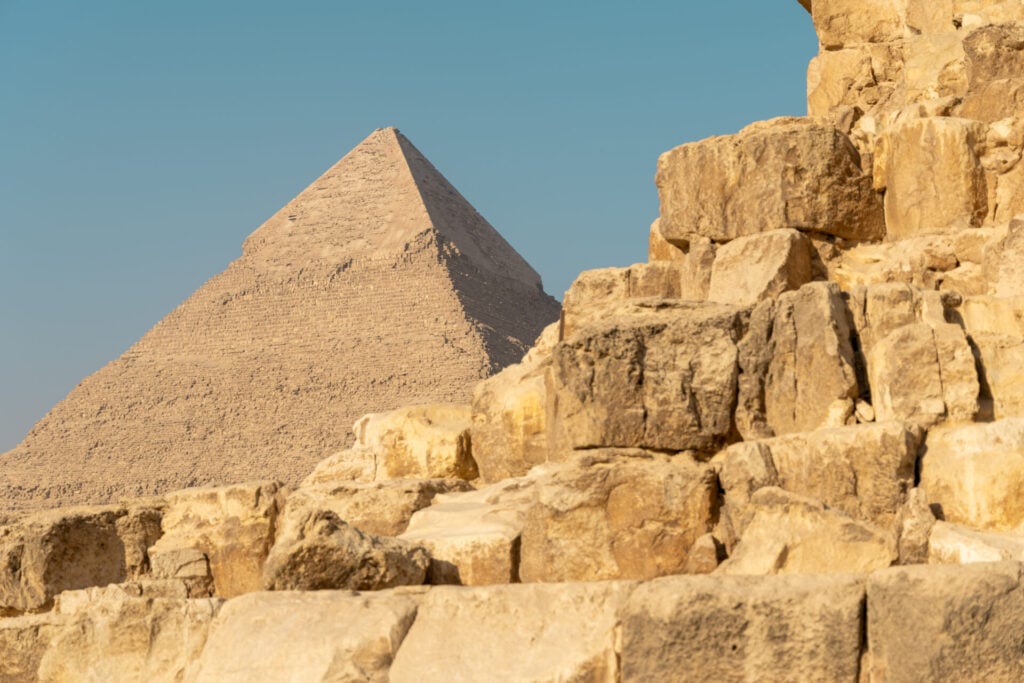
Pyramid of Khafre
Khafre’s pyramid peaking out from behind Khufu’s pyramid

Pyramid of Menkaure

The third of the major pyramids built at Giza was for Menkaure (you guessed it: Khafre’s son and Khufu’s grandson). You can take a shuttle bus over to see it, but it’s smaller and not terribly distinct, so I don’t think there’s much point getting up close— you’ll get a great panorama of all the pyramids, including Menkaure’s, at the end of the day!
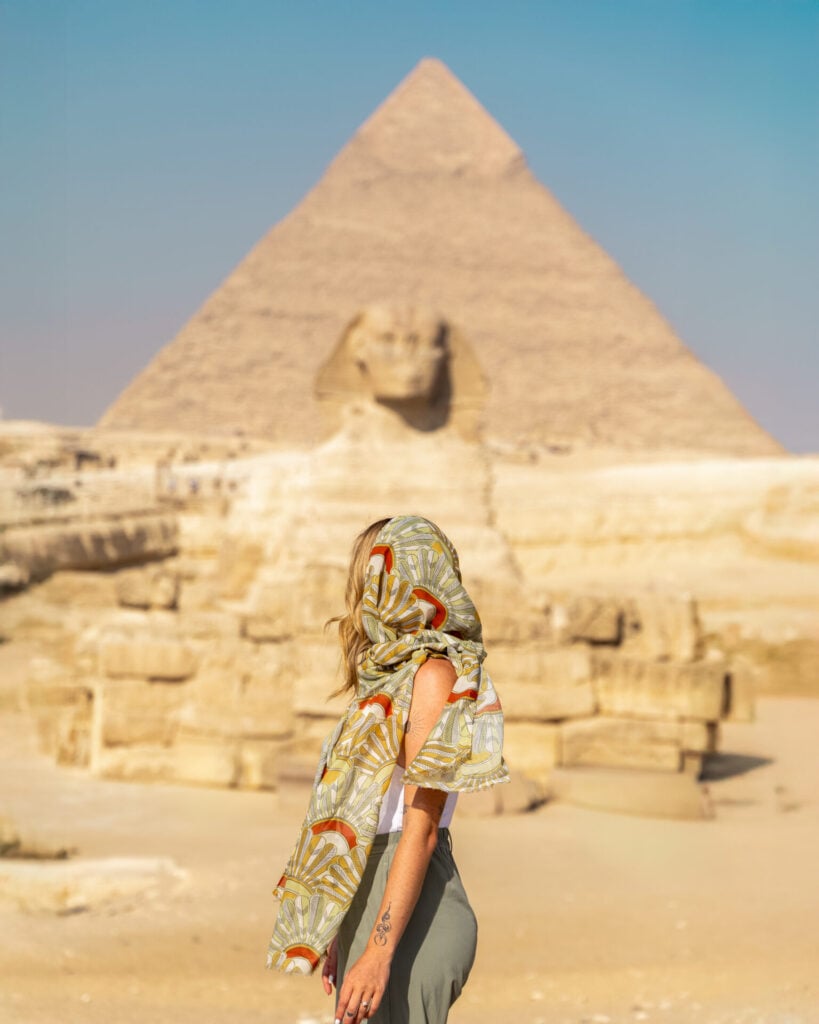
Pyramid of Khafre behind the Sphinx

The Sphinx

Next, take the shuttle to the Sphinx, the iconic human-headed lion carved directly from the limestone bedrock during Khafre’s reign around 2500 BCE. Measuring 73m long and 20m high, it’s still the largest monolithic statue in the world, believed to represent the pharaoh himself as a divine guardian of the plateau.

If you walk out into the sandy lot in front of the statue, you’ll line up one of the most iconic shots in Giza: the Great Sphinx against Khafre’s pyramid. This is an amazing view and a perfect photo opportunity!
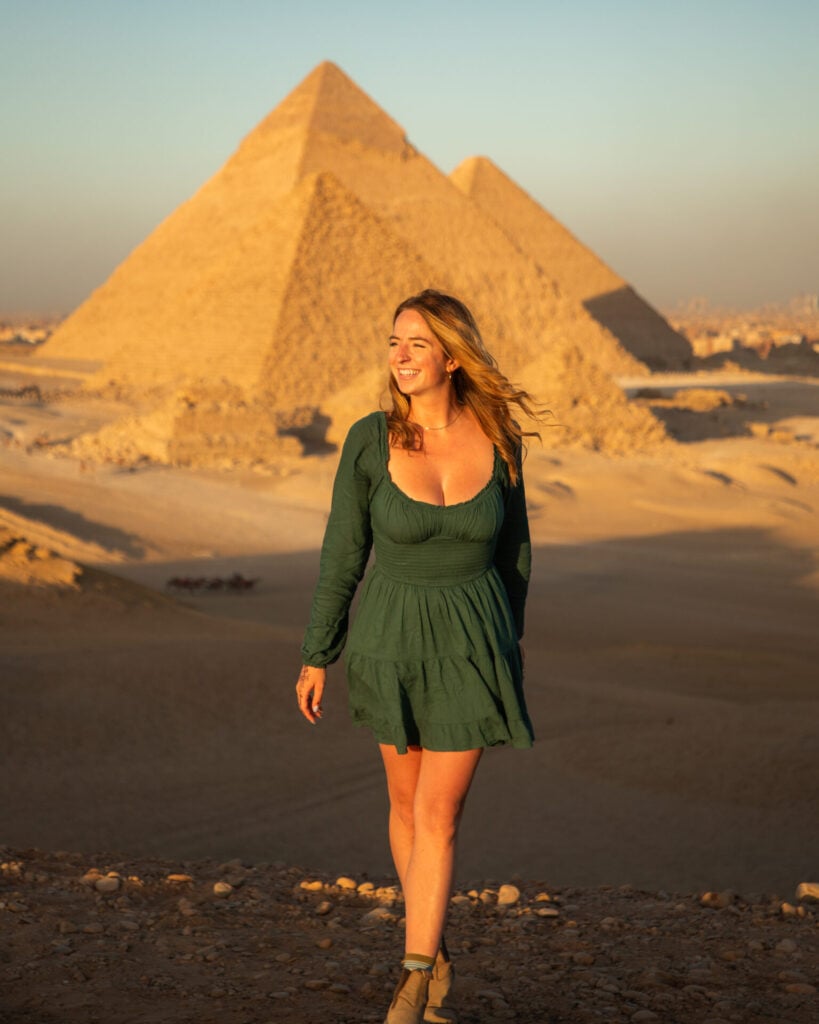

view from 9 Pyramids Lounge
Beautiful view from 9 Pyramids Lounge

9 Pyramids Lounge (4-5pm)

Finally, make your way back to the Visitor Centre and catch a different shuttle to 9 Pyramids Lounge— reservation required to visit this area, and we’d recommend 4:00–4:30pm for something light, like tea or coffee. The real reason to come here is for the BEST panoramic viewpoint of the pyramids!

Best view of the Giza pyramids
Our favourite view of the pyramids from the hill near 9 Pyramids Lounge
Sunset at the pyramids of Giza
Golden hour is the perfect time for photos at the pyramids

From a nearby sandy hill just left of the cafe, you’ll get an unobstructed view of all 9 pyramids at Giza— and at golden hour, the light is absolutely spectacular for photos!
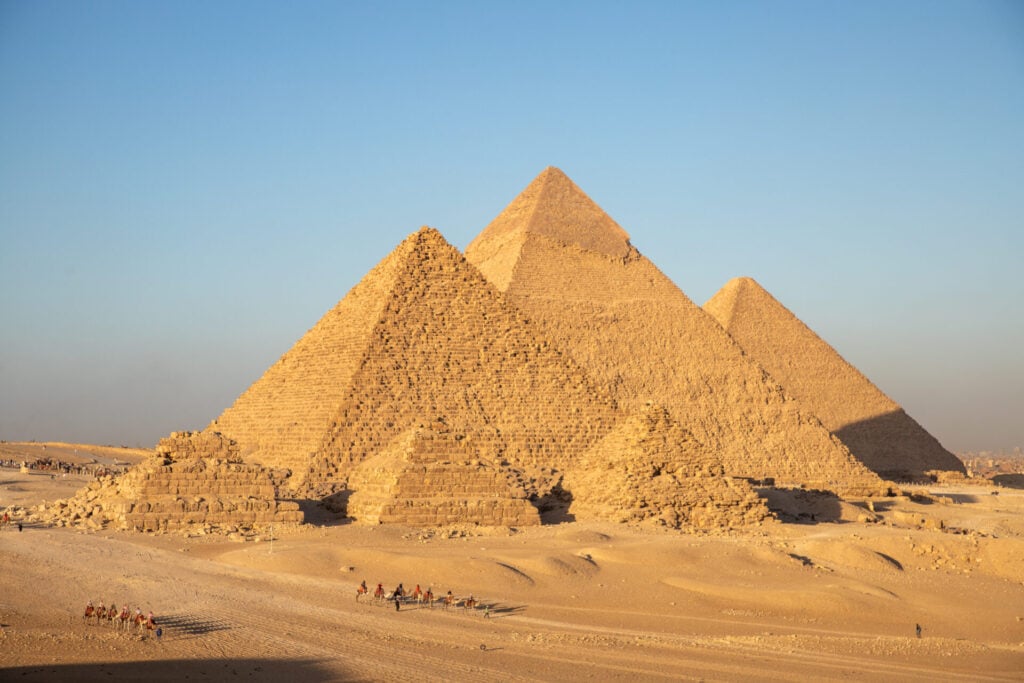
The Giza Plateau officially closes at 5pm, but security usually doesn’t start herding people out in earnest until about 5.15/5.30pm, so enjoy the lighting and dwindling crowds before shuttling back to the Visitor Centre, meeting your driver in the car park, and returning to your nearby Giza hotel.


Dinner at Zeeyara Pyramids Elite OR your hotel

For dinner, I’d either recommend Zeeyara, located on the rooftop of the Pyramids Elite Hotel with an excellent view of the pyramids, OR simply enjoy dinner at your hotel. If you’re staying at La Boutique, they serve a Middle Eastern buffet on their rooftop (also with pyramid views), which is good enough and delightfully convenient.
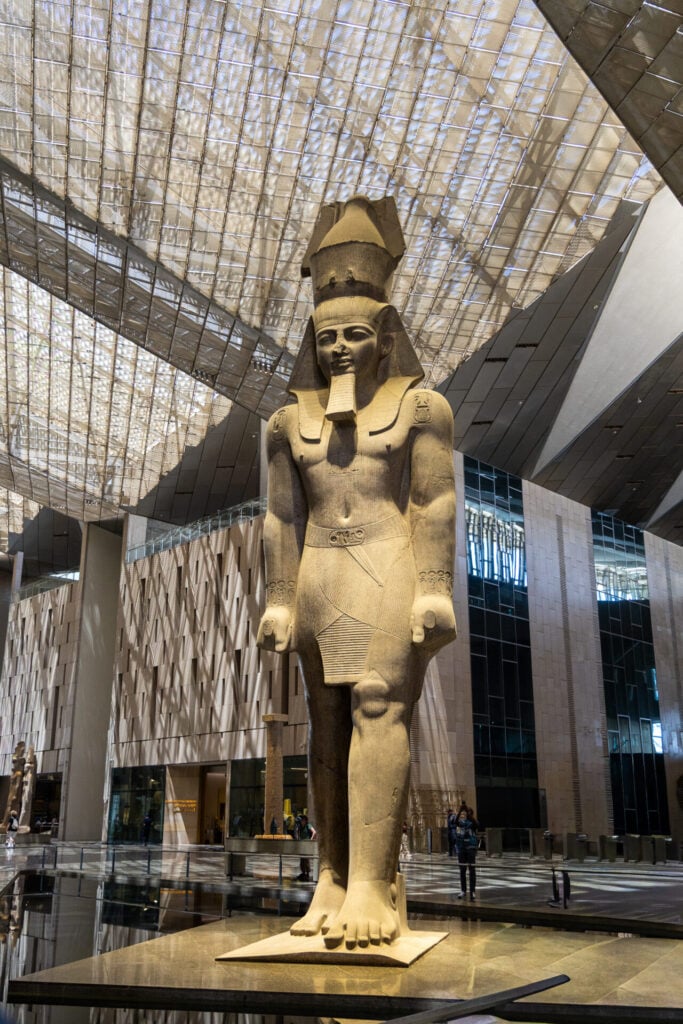

Statue of Ramesses II in the foyer of the Grand Egyptian Museum

Day 2: Grand Egyptian Museum & Khan el-Khalili Bazaar

Starting with the country’s most important museum and ending in its most famous marketplace, Day 2 is all about the dramatic transition from ancient Egypt to the living, breathing chaos of Cairo:

  • visit the newly opened Grand Egyptian Museum (GEM), now home to the complete Tutankhamun collection
  • grab lunch at Zooba’s GEM location for elevated Egyptian street food
  • transfer to your hotel in central Cairo
  • wander the intoxicating maze of Khan el-Khalili Bazaar
  • enjoy a traditional Egyptian dinner at Zeeyara
Ancient artefacts from the Grand Egyptian Museum
Khan el-Khalili Bazaar in Cairo

⚠️ DAY 2 CONSIDERATIONS

>>> For the smoothest logistics today, check out of your Giza hotel in the morning and store your luggage with reception while you visit the GEM by Uber or taxi. After lunch, return to collect your bags and transfer to your hotel in central Cairo (we recommend staying somewhere in Maadi or Zamalek). Once settled, head out to Khan el-Khalili in the late afternoon— the market is lively well after dark and you can find dinner nearby!

>>> Although the bazaar sits right next to the monuments of Islamic Cairo, I’ve intentionally split these sites across two days. This allows you to explore the GEM and the market today without hiring a guide or driver, while saving Islamic Cairo for Day 3, when a knowledgeable local guide is highly recommended.
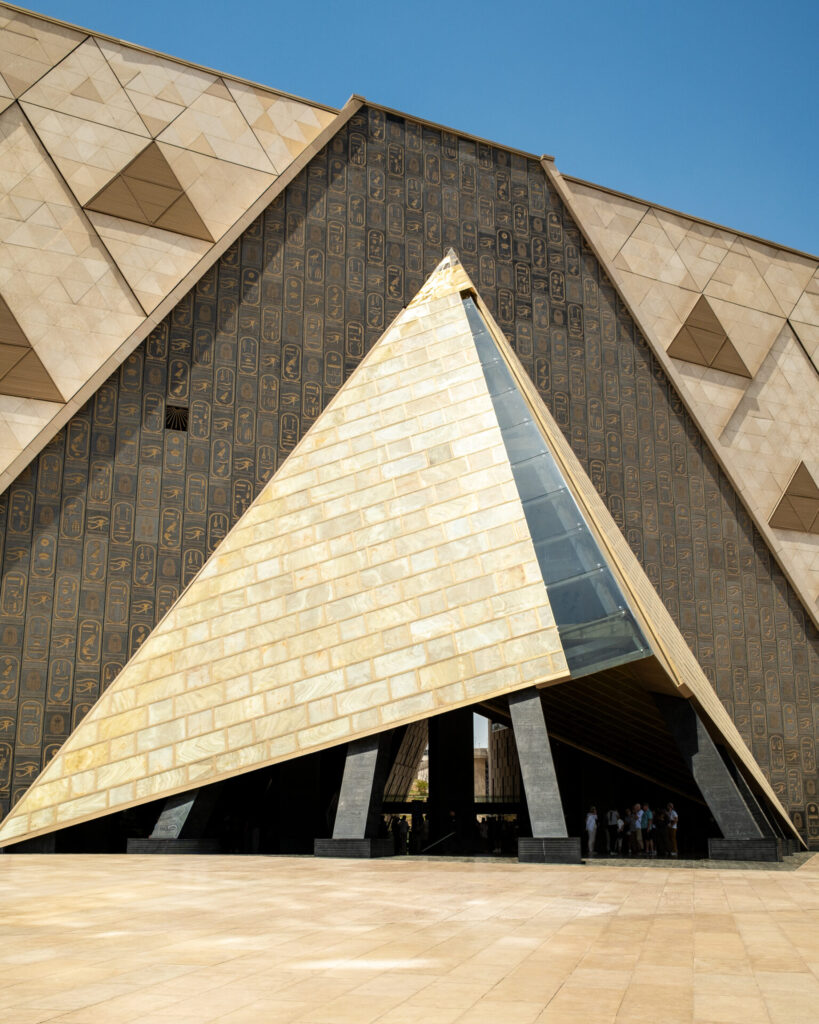

Entrance to the Grand Egyptian Museum

Grand Egyptian Museum (9am-1pm)

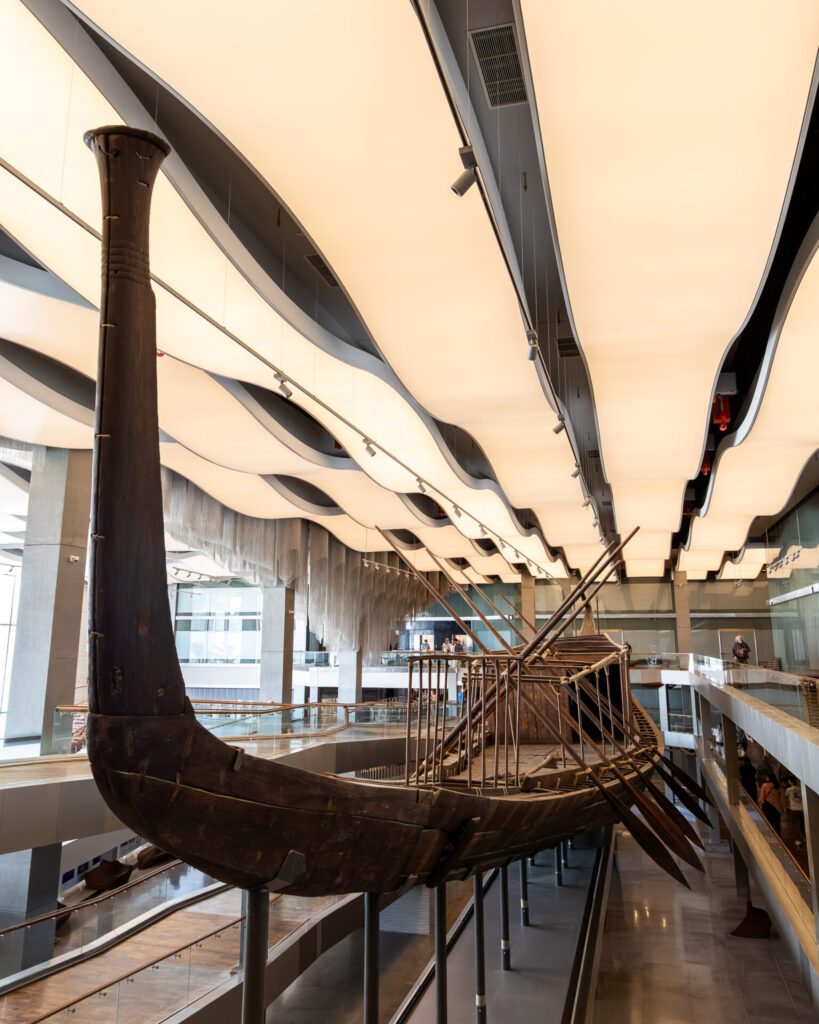
Begin your day at the Grand Egyptian Museum (GEM), the largest archaeological museum in the world dedicated to a single civilisation. Located beside the Giza Necropolis, this long-anticipated project FINALLY opened in full at the end of 2025.

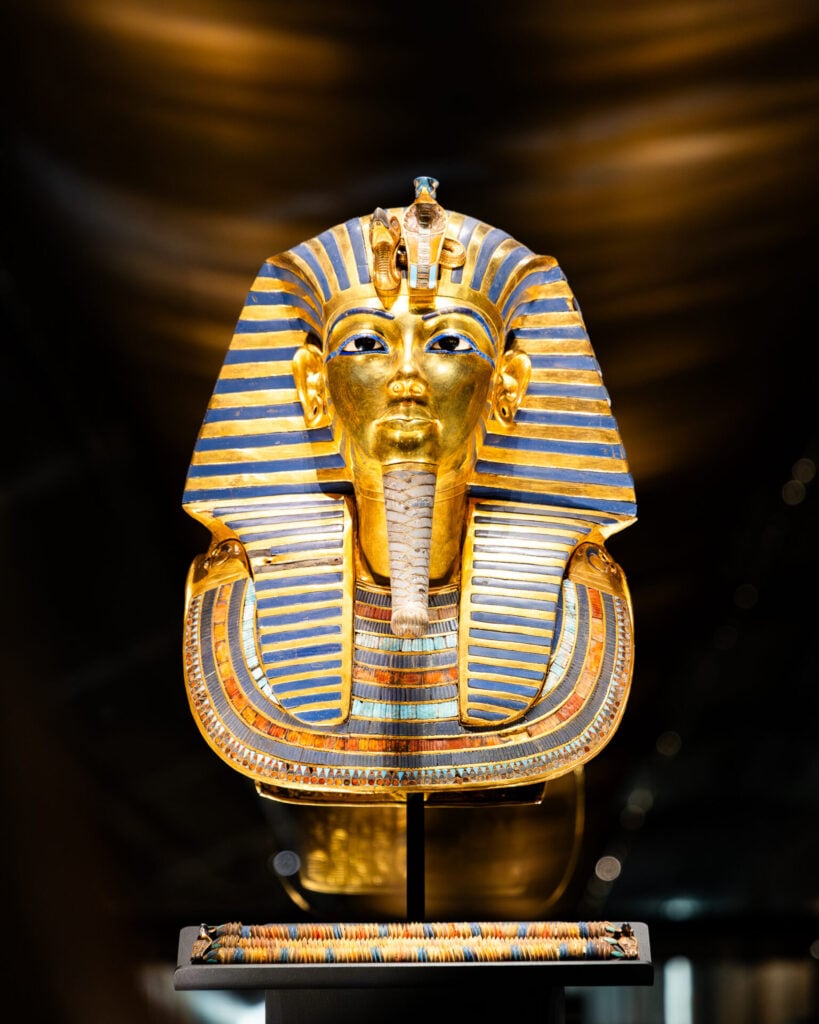
The headline attraction is the complete contents of Tutankhamun’s tomb. I first saw pieces of the collection circa 2001 as part of the travelling King Tut exhibition and later at the old Egyptian Museum in Cairo— but seeing all of these 3,300-year-old objects displayed together for the first time since the tomb’s discovery by Howard Carter in 1922 is beyond special.

Funerary mask and beaded netting of Hekaemsaf
Sarcophagus of King Ramesses I

The boy king is famous not for a particularly influential reign (he held the throne from age 9-19, before dying of unknown medical complications), but because his tomb eluded the mass-looting that stripped nearly every other royal burial in Egypt. 

As a result, his collection represents the most complete royal tomb EVER discovered: more than 5,000 artefacts, including the iconic gold funerary mask, nested coffins, ceremonial chariots, jewellery, and everyday objects intended to accompany him into the afterlife.

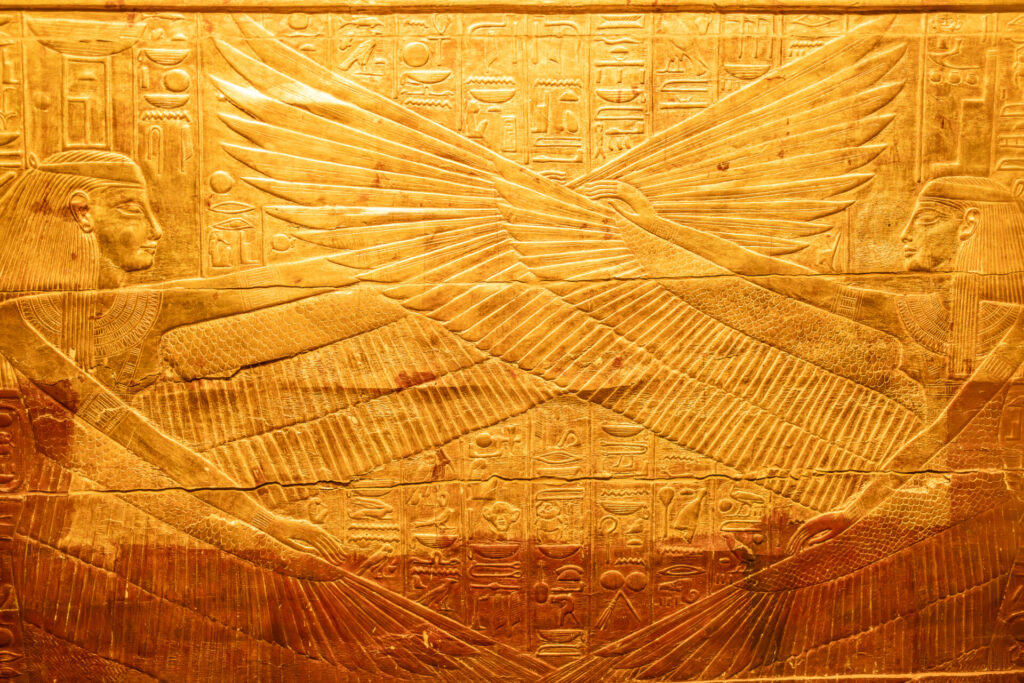
Ancient Egyptian hieroglyphics from the tomb of Meri-re
Relief panel from the tomb of Meri-re c. 1400 BCE

Beyond Tutankhamun, the GEM houses more than 100,000 artefacts spanning Egyptian history from the Predynastic period (before 3100 BCE) through the Greco-Roman era. The museum is actually a bit overwhelming, but just know you won’t be able to see it all and instead focus on the periods that interest you most!
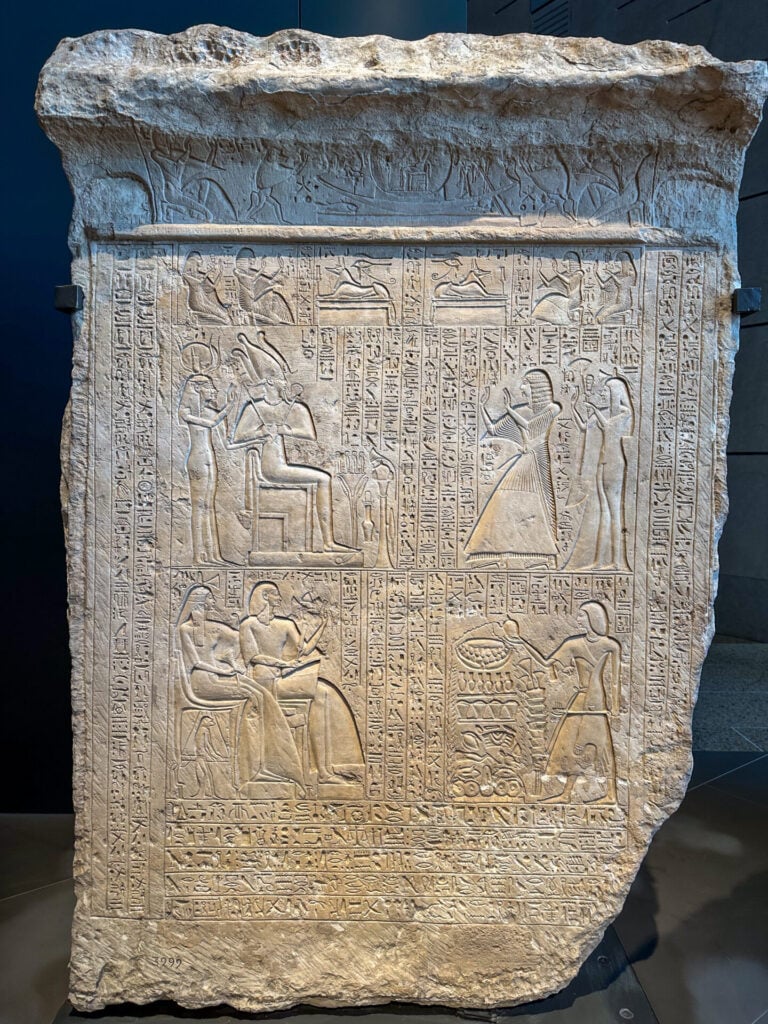
Ancient Egyptian wooden sarcophagus
Ancient Egyptian hieroglyphics at the Grand Egyptian Museum

Plan to spend around 3–4hrs at the GEM. Tickets can be pre-purchased in broad timed entry slots, just make sure to select “Arab or Other Nationality” for the correct tickets (a mistake we’ve made), currently priced at 1590 EGP ($30 USD).

If you’re interested in deeper context, the museum also offers small-group guided tours (2090 EGP / $39 USD for entry + tour). We’ve done this previously and found it well worth the modest additional price— the tour lasts about 2hrs, and you’re free to continue exploring independently afterward.

𓁀𓀀𓀇 IS IT STILL WORTH VISITING THE OLD EGYPTIAN MUSEUM?

With the recent opening of the Grand Egyptian Museum in Giza and the relocation of Tutankhamun’s entire collection to this new location, the old Egyptian Museum in Tahrir has lost pretty much of all of its formerly significant draws. It still offers a fascinating, old-school experience, but it’s only worth visiting if you have extra time and a VERY strong interest in archaeology.


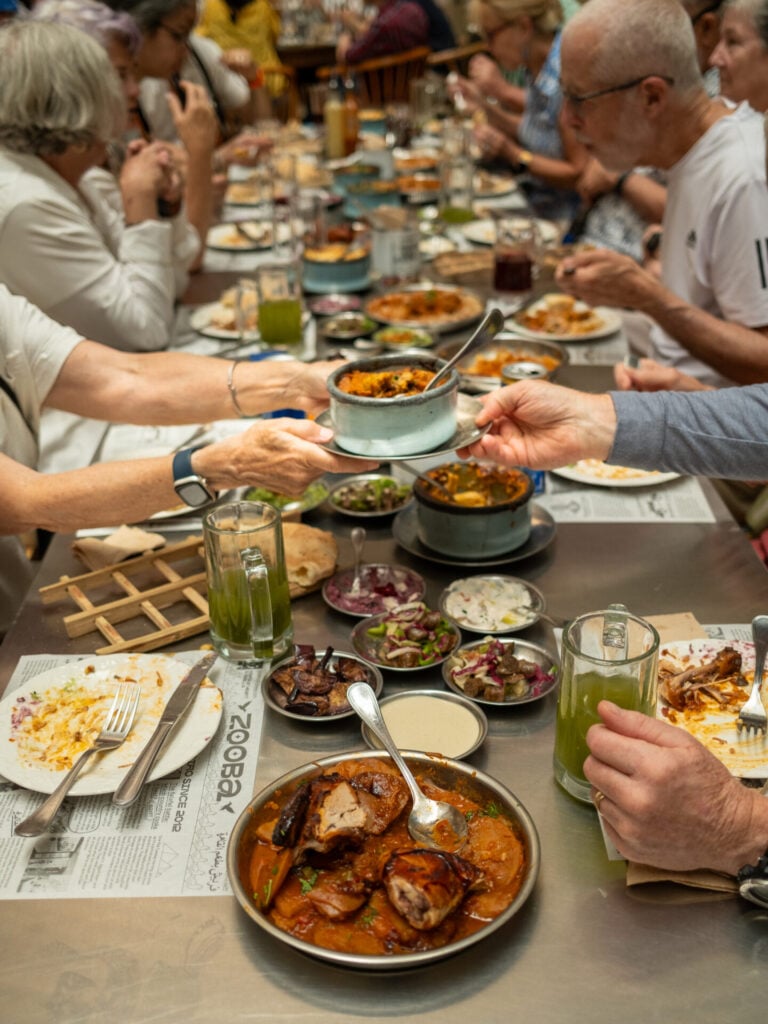
Lunch at Zooba (1-2pm)

After a morning immersed in ancient history, grab lunch at Zooba, one of Cairo’s most popular modern Egyptian eateries and a regular feature on the 50 Best Restaurants in the Middle East list!

Known for reinterpreting classic street food, it’s both delicious and extremely convenient, with a location right inside the GEM complex. We visit this restaurant every time we’re in Cairo and it’s a consistent favourite among the guests on our group trips, too!
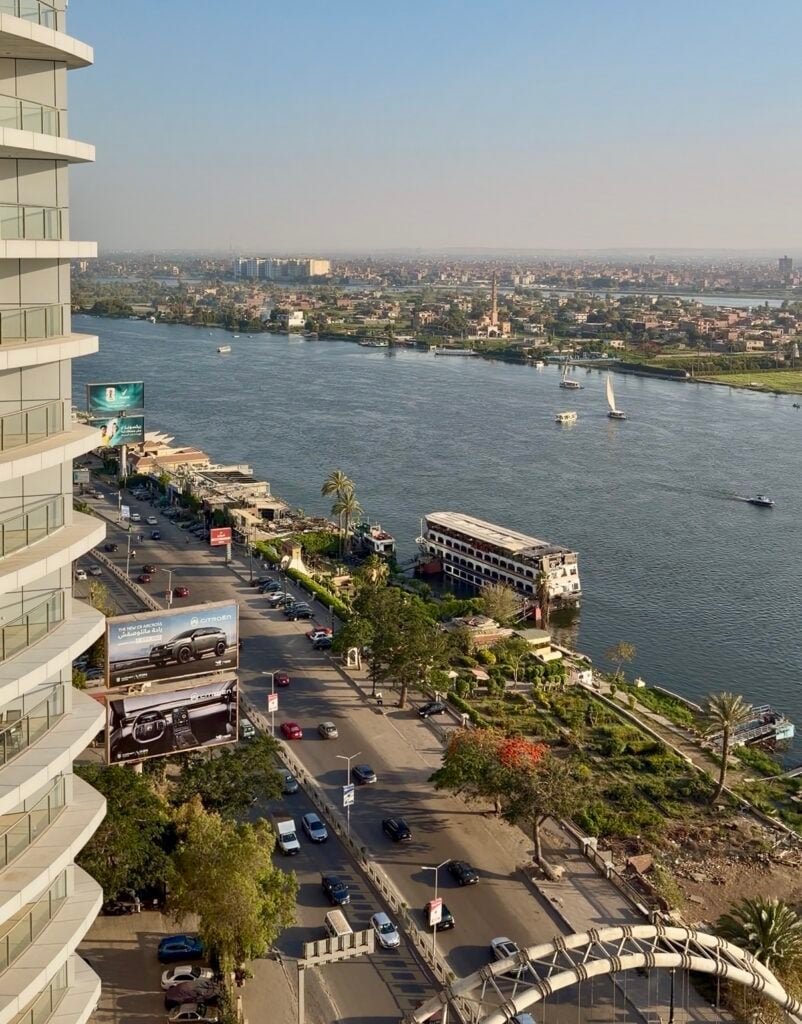

Transfer to your hotel in central Cairo (2-3pm)

After lunch at the GEM, return to your hotel in Giza to collect your bags and transfer into central Cairo via Uber or taxi. Depending on traffic, this might take anywhere from 1-1.5hrs, but it positions you closer to the historic districts you’ll explore this afternoon and tomorrow!
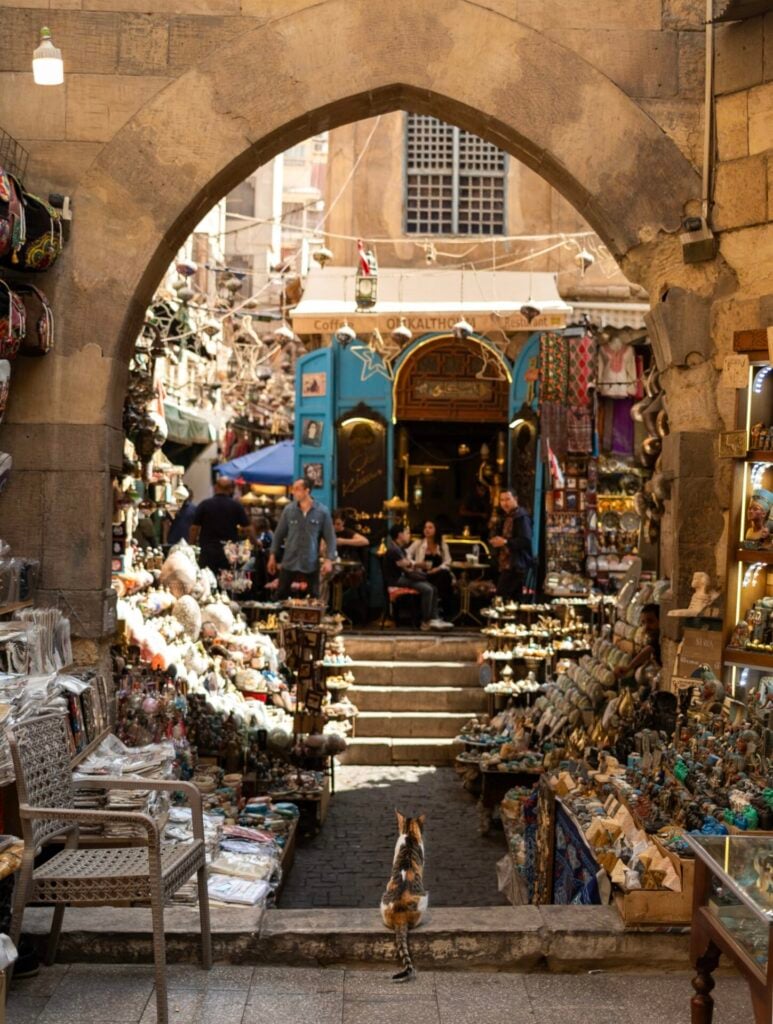

Khan el-Khalili Bazaar in Cairo
Khan el-Khalili Bazaar really comes alive after dark

Khan el-Khalili Bazaar (4-7pm)

Spend the rest of your afternoon exploring Khan el-Khalili, Cairo’s most famous market. Originally a major trading hub along regional caravan routes, the bazaar has operated continuously for more than 600 years!

Today, this is a dense network of narrow alleyways packed with shops selling everything from spices and perfumes to textiles, jewellery, lanterns, and souvenirs. James and I even got our wedding rings at Khan el-Khalili— priced by weight, my silver ring cost $15 and his cost $50!

Khan el-Khalili Bazaar in Cairo
Jewellery at the Khan el-Khalili Bazaar in Cairo
Rooftop cafe in the Khan el-Khalili Bazaar

You can easily spend hours wandering the maze of shops within the market, but if the chaos starts to get a bit overwhelming, I recommend retreating to a rooftop cafe to enjoy the bustle from above while sipping a fresh juice, hot tea, or smoking shisha.
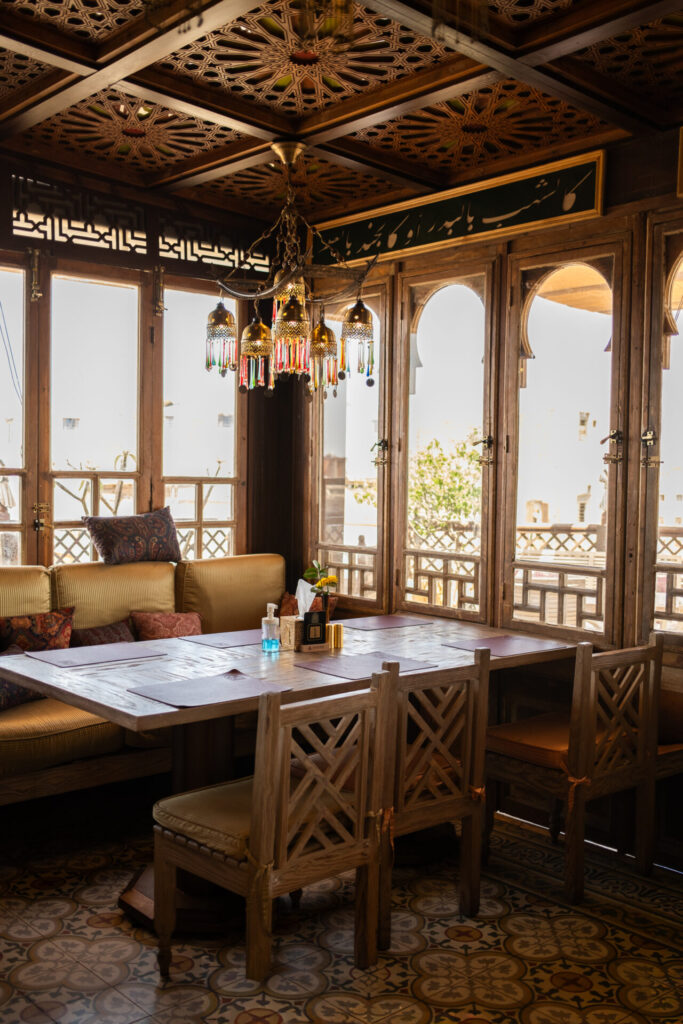

Dinner at Zeeyara Restaurant in Cairo (7-8pm)

Finish the day with dinner at Zeeyara just next to the market. This is the Cairo location of last night’s restaurant recommendation, serving traditional Egyptian cuisine in a refined setting— if you already ate at Zeeyara in Giza last night, there are countless alternatives nearby!

For something totally different, we adore Kohinoor Indian Restaurant just outside the bazaar. The interior is somewhat charmless, but the staff are wonderful and the food is honestly spectacular (and super inexpensive).
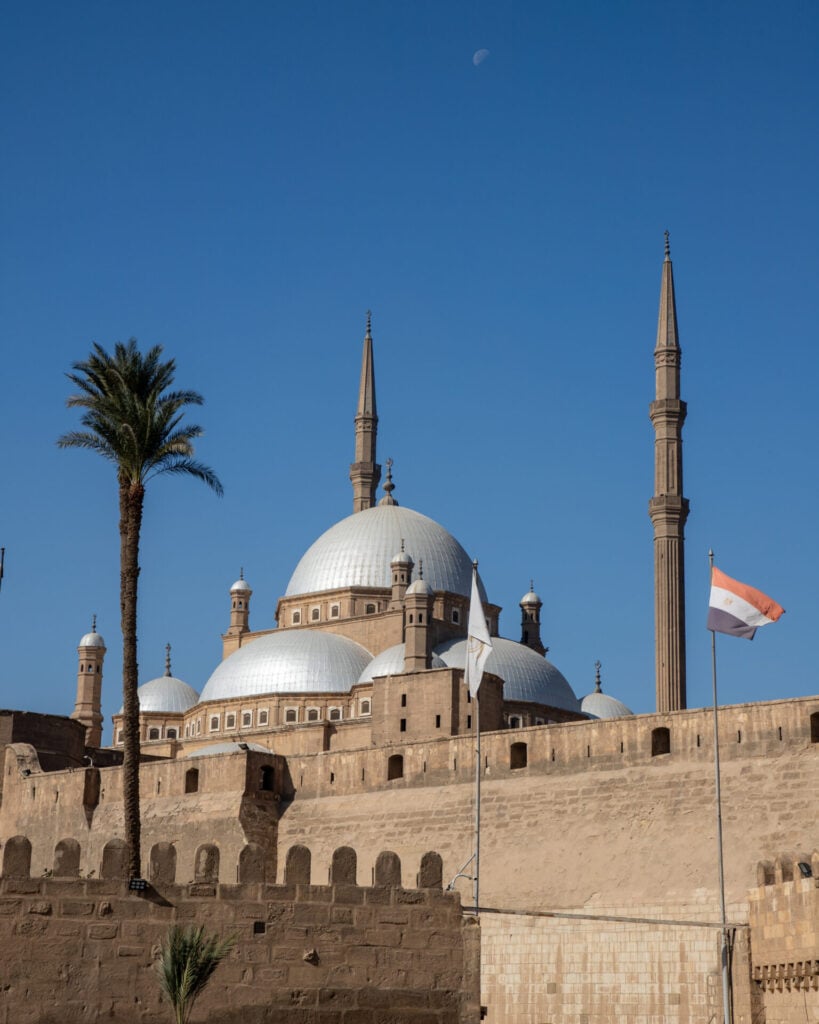

Mosque of Muhammad Ali in Cairo
Mosque of Muhammad Ali

Day 3: Coptic & Islamic Cairo with dinner in Maadi

Spend your final day exploring Cairo’s layered religious history, from some of the oldest Christian sites in the world through to the rise of Islam (in as-close-to-chronological order as makes geographical sense):

  • explore the highlights of Coptic Cairo, including the Hanging Church, Abu Serga, Ben Ezra Synagogue, and St. George’s Church
  • admire the Cave Church in Garbage City, one of Cairo’s most fascinating districts
  • visit the Saladin Citadel and the Mosque of Muhammad Ali for sweeping views over the city
  • explore the Mosque & Madrasa of Sultan Hassan, one of the greatest works of Mamluk architecture
  • finish the day with dinner and cocktails in Cairo’s trendiest neighbourhood, Maadi
Mosque of Sultan Hassan
St George's Church in Coptic Cairo
Hanging Church in Coptic Cairo

⚠️ DAY 3 CONSIDERATIONS

>>> I’ve organised Day 3 in almost perfect chronological order, first visiting older Christian sites in Coptic Cairo and then moving to Islamic Cairo. However, it’s worth noting you can visit these two areas in either order— most tours lead with Islamic Cairo because the mosques are more impressive right out of the gate, but it’s totally up to you!

>>> I’d strongly recommend hiring a local guide and private driver to provide meaningful context to the churches, mosques, and other historical sites you’ll visit today. Expect to pay around $50-70 USD for 2 people, excluding entrance fees (which amount to about $14USD per person).

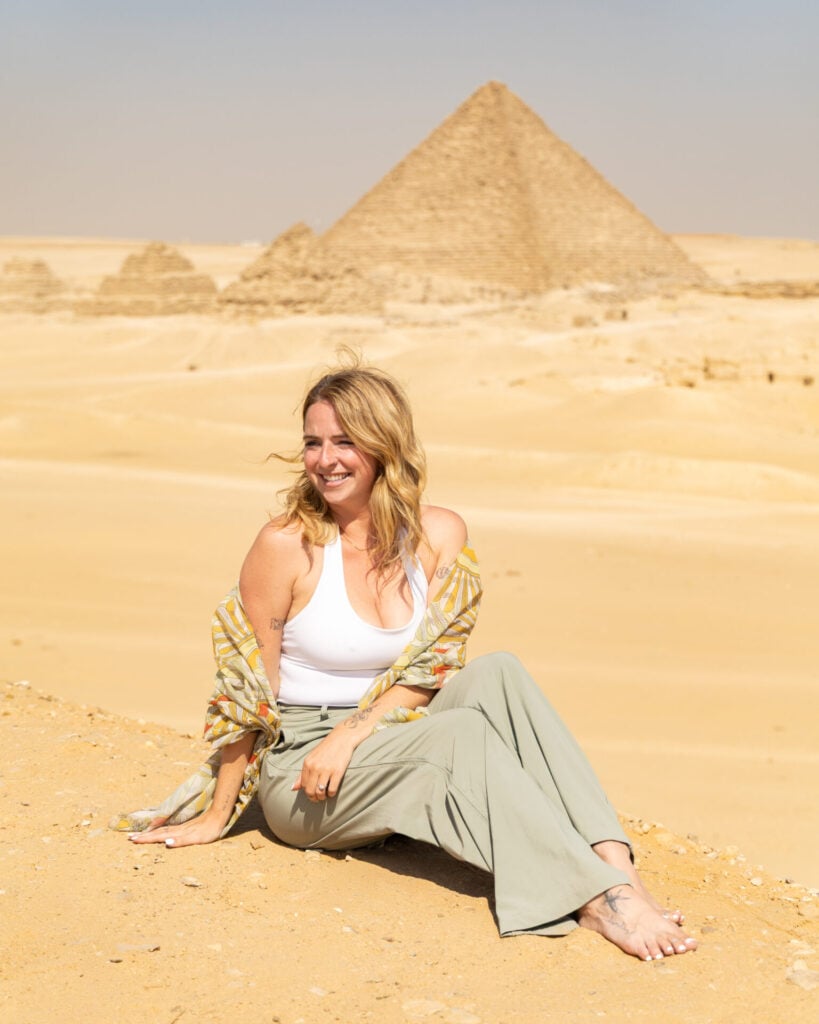
>>> Since you’ll be visiting several mosques and churches, dress modestly by covering shoulders and knees. For women, a long skirt or loose pants and a lightweight scarf works well!


Coptic Cairo (10-11.30am)

Start your morning in Coptic Cairo, a compact district that preserves some of the oldest Christian sites in Egypt. This area was once part of the Roman fortress of Babylon, and many of the churches here date back to the 4th–7th centuries!

The next few locations in Coptic Cairo can be visited in any order, as they’re all within easy walking distance of one another, and I’d allow 1-2hrs to see all four churches I’ve recommended below. Entrance is free.

🕌 CAIRO’S DIVERSE RELIGIOUS HISTORY

In just a few days, this itinerary moves through more than 5,000 years of Egyptian history, tracing the major shifts in belief systems that have shaped the country’s culture and identity:

>>> Ancient Egyptian polytheism (3100 BCE-1st century CE): a ritualised belief system centred around many gods and deep mythology — focus of Days 1 & 2 of this itinerary
>>> Christianity (1st–4th centuries CE): Egypt became one of the earliest centres of Christianity, gradually reshaping older traditions and forming what is now the Coptic Orthodox Church — focus of Day 3 AM of this itinerary
Islam (from 641 CE): following the Arab conquest, Egypt became predominantly Muslim, and particularly during the Mamluk period, Cairo reached its peak as one of the most powerful cities in the Islamic world — focus of Day 3 PM of this itinerary

Church of St. Sergius & St. Bacchus in Coptic Cairo

Abu Serga

Start your exploration of Coptic Cairo with Abu Serga, one of the oldest and most significant Christian sites in the city. Also known as the Church of St. Sergius and St. Bacchus, it’s believed to be built above the crypt where Mary, Joseph, and baby Jesus sought refuge while in Egypt.

The church itself dates back to the 4th–5th century, though it’s been rebuilt and restored several times over the centuries. Descend into the small underground crypt beneath the church to see the space associated with this story— it’s simple and atmospheric, and one of the most meaningful stops in Coptic Cairo for the religiously inclined.
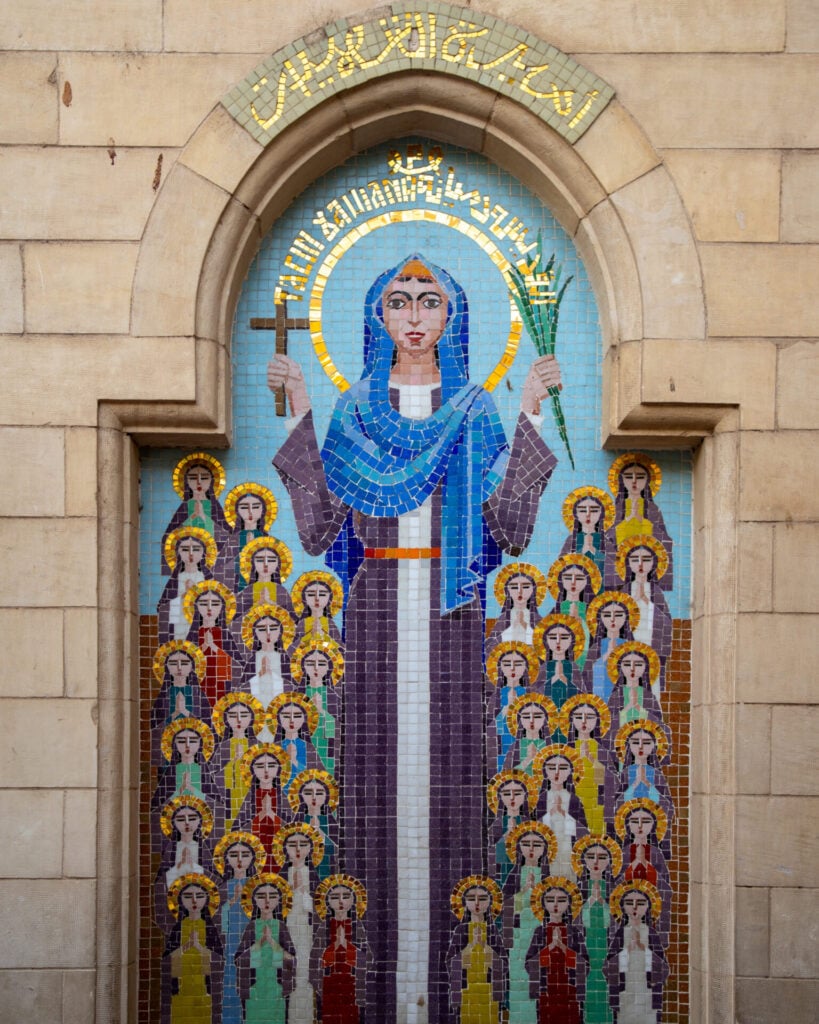
Hanging Church in Coptic Cairo
Beautiful mosaics at the Hanging Church in Coptic Cairo

Hanging Church in Old Cairo

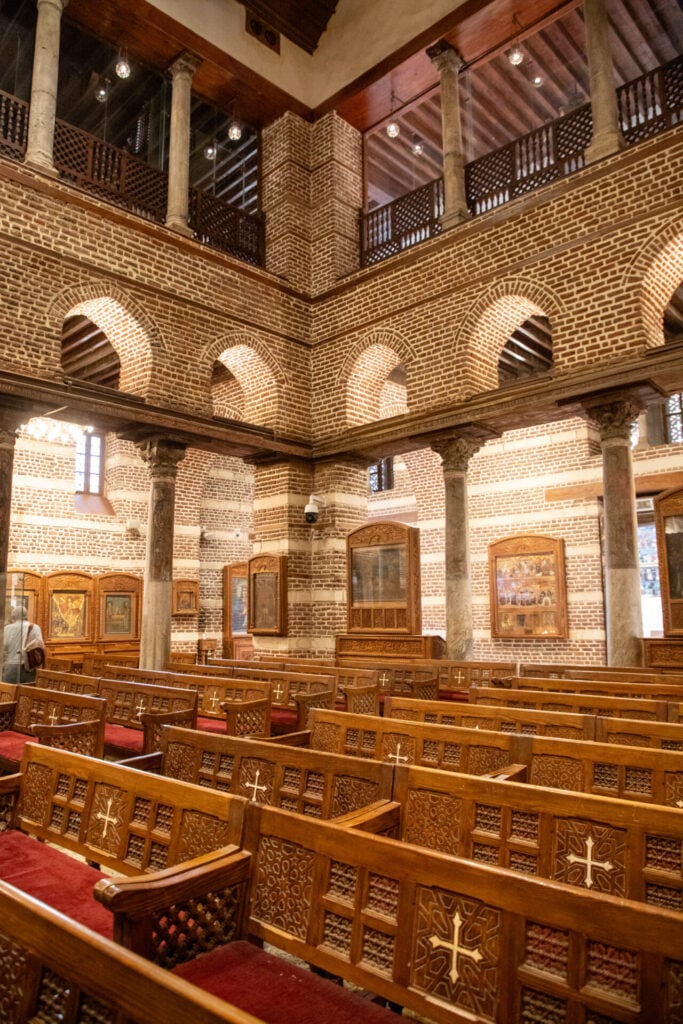
Head next to the Hanging Church, one of the most famous churches in Egypt built in the 7th century above the gatehouse of a Roman fortress. The colourful mosaic-work decorating the church entryway and courtyard make this my favourite stop in Coptic Cairo, and inside, you’ll find a beautifully crafted wooden ceiling shaped like Noah’s Ark.

Hanging Church in Coptic Cairo

Ben Ezra Synagogue

Nearby, the Ben Ezra Synagogue dates back to the 9th century and stands on what is traditionally believed to be the site where baby Moses was found in the Nile. It’s one of the oldest Jewish sites in Egypt and a quick stop on your walking tour of Coptic Cairo— no photos allowed inside. 
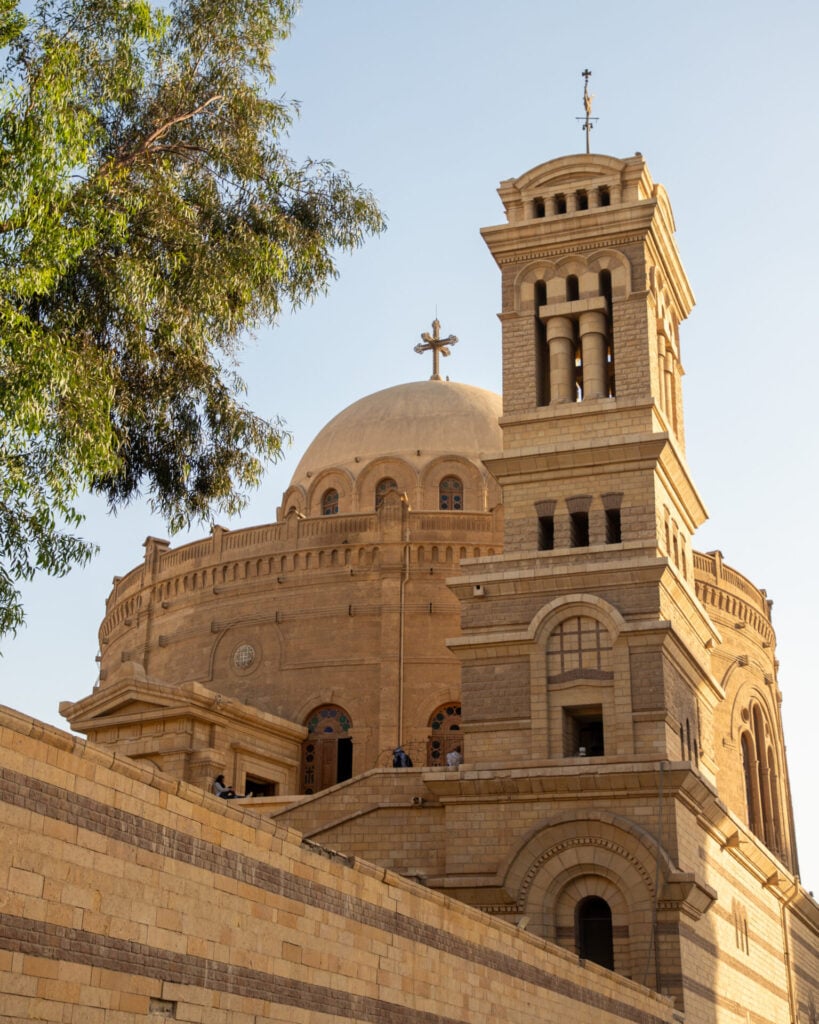
St. George’s Greek Orthodox church in Cairo

St. George’s Church

Finally, St. George’s is a Greek Orthodox church built in a rare circular design atop one of the towers of the ancient Roman fortress of Babylon. The current structure dates to the early 20th century, after the original 10th century church was destroyed by fire in 1904.

This is the last of the four churches I specifically recommend seeing in Coptic Cairo, but if you’re particularly interested in Egypt’s Christian history, you can also visit the nearby Coptic Museum. We haven’t been there personally (because this period isn’t the most fascinating to me), but entry is only 100EGP ($2USD) and we hear it’s an objectively good museum!
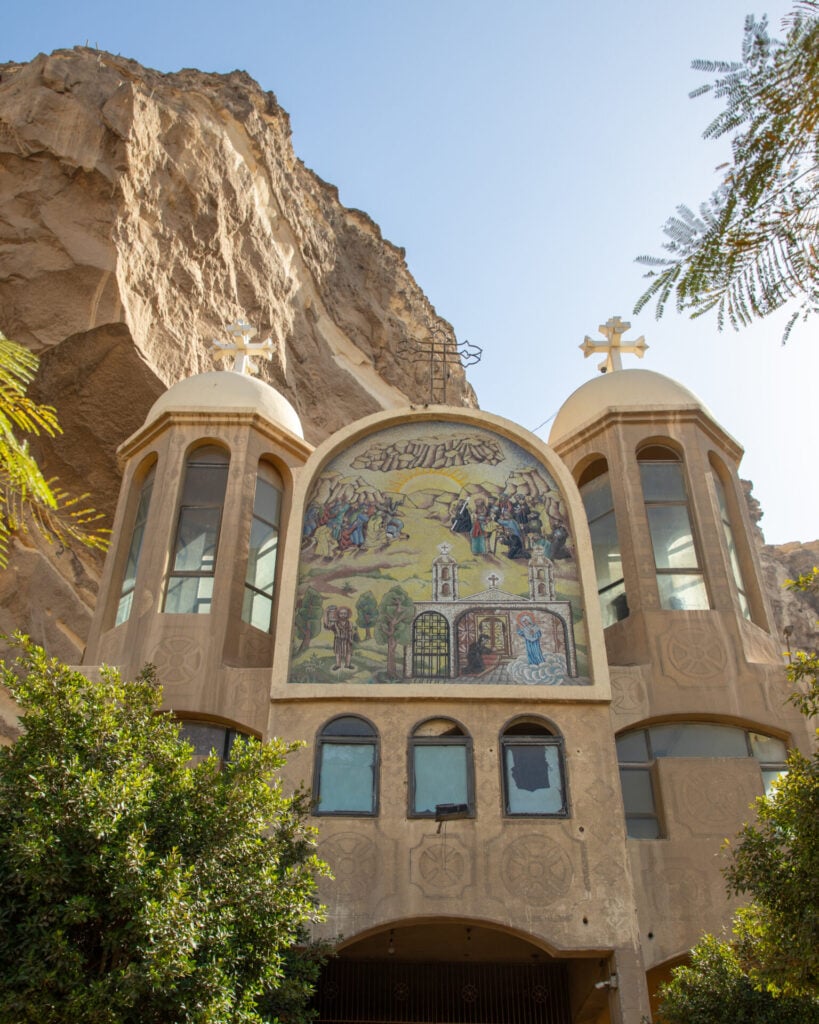

Cave Church in Cairo
The unique Cave Church built into Mokattam Mountain

Cave Church & the Monastery of St. Simon (12-1pm)

As you move from Coptic Cairo to Islamic Cairo, I’d recommend deviating from the chronological timeline to visit the Cave Church, one of the most unusual religious sites in Cairo. This isn’t classically featured on tours of Coptic Cairo, but after reading about it, I knew I had to visit.

Carved directly into the base of Mokattam Mountain in the 1970s, this massive amphitheatre-style church can hold up to 20,000 worshippers, making it the largest church in the Middle East. It serves the Zabbaleen, a Coptic Christian community known for their role in Cairo’s informal recycling system— and this history is as interesting as the church itself!
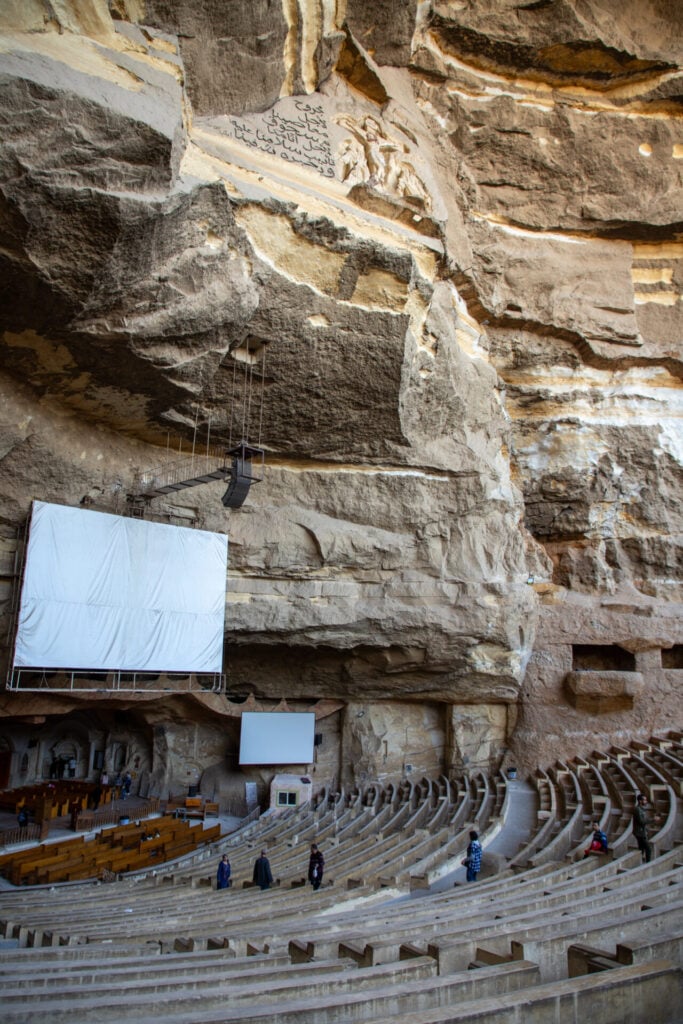
Cave Church in Cairo
The Cave Church is the largest church in the Middle East!

♻️ CAIRO’S INCREDIBLE “GARBAGE CITY”

The Cave Church lies within one of the most fascinating parts of Cairo: Manshiyat Naser, better known as Garbage City. Far from the insult it may seem to be, the city is so-named for the Coptic Zabbaleen community (literally: “garbage collectors”) who live here and have been recycling Cairo’s waste since the 1940s.

What might look chaotic at first is actually an incredibly sophisticated, decentralised system whereby families collect rubbish door-to-door across the city, bring it back to their homes, and sort it by hand into dozens of categories for resale or reuse. The result is astonishing: the Zabbaleen are estimated to recycle up to 80% of the waste they collect, far exceeding the rates of EVERY formal waste system in the world. 

For decades, this community has quietly managed a huge portion of Cairo’s waste with little government support, creating a circular economy that provides employment to tens of thousands of people and keeps the entire city functioning. It’s an incredible story of resourcefulness and ingenuity!
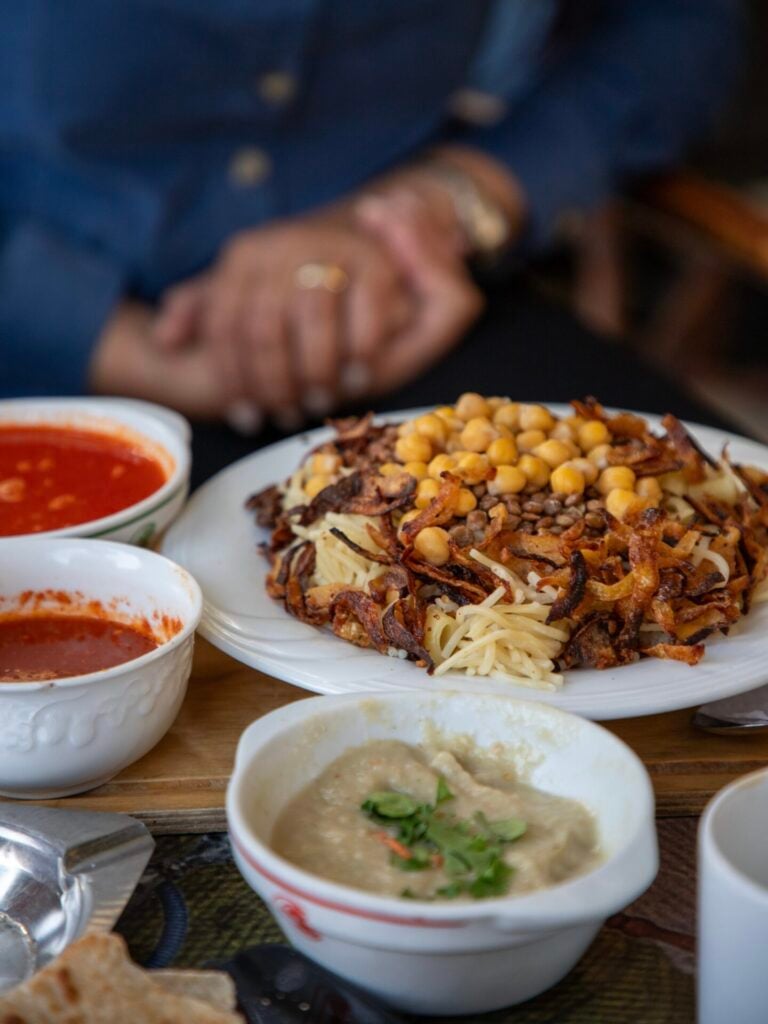

Egyptian koshari
Delicious Egyptian koshari for lunch

Lunch on the way: try Egyptian koshari (1-2pm)

On the way between Coptic and Islamic sites today, ask your guide to recommend a good lunch spot where you can try koshari, an Egyptian classic containing basically every carb under the sun: rice, lentils, pasta, and chickpeas topped with a tangy tomato sauce, crispy fried onions, and a sharp garlic-vinegar dressing. 

It might sound chaotic, but it’s absolutely delicious, and you’ll find it all over Egypt as a simple, inexpensive, and very filling “fast food”!

Islamic Cairo (2-4pm)

After lunch, leap forward again in Cairo’s long history, moving from the early Christian sites of Coptic Cairo into the Islamic era that continues to shape the city today.

Following the Arab conquest of 641, Egypt gradually transitioned into a predominantly Muslim society, and Cairo went on to become one of the most important centres of Islamic culture and learning in the world. Today, around 90% of Egyptians are Muslim, and the skyline is still defined by the mosques and monuments built during this period.

The two sites you’ll visit this afternoon showcase that legacy at its peak, on a scale and level of detail that feels completely different from the quieter, older churches of Coptic Cairo. Entry is 550EGP ($10USD) for Saladin Citadel and 220EGP ($4USD) for the Madrasa.
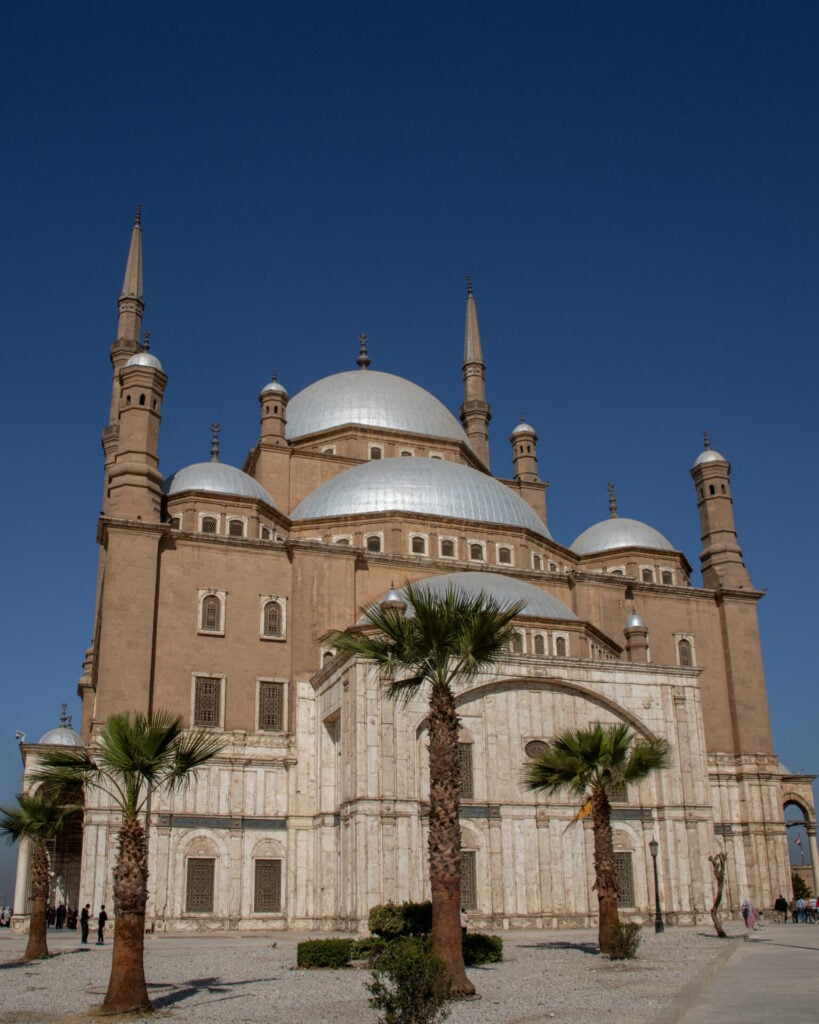
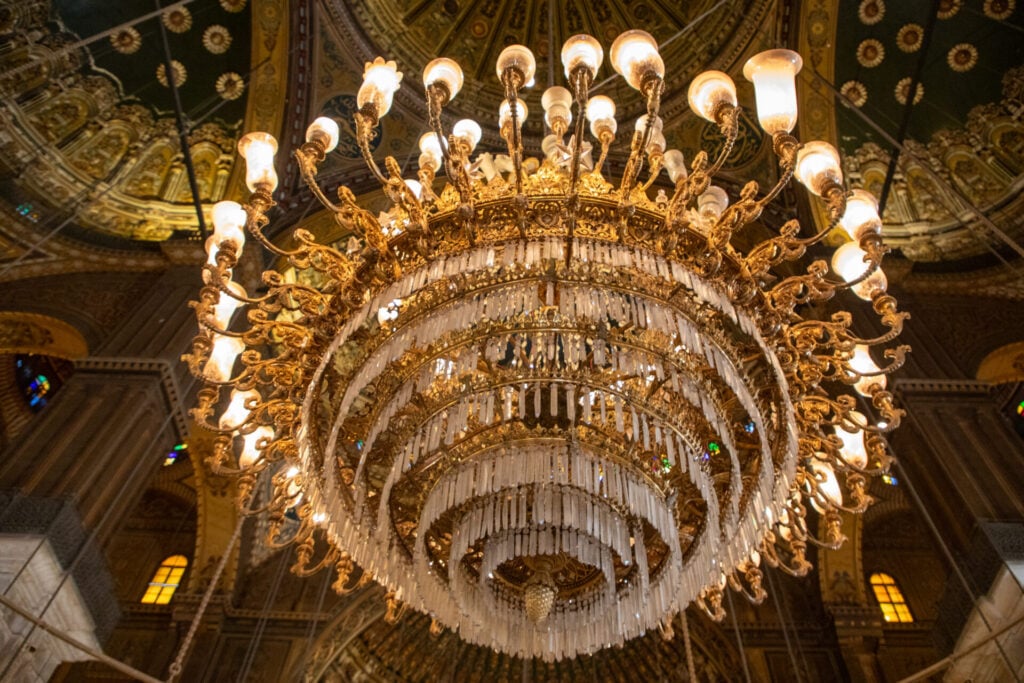
Mosque of Muhammad Ali in Cairo
The iconic Mosque of Muhammad Ali

Saladin Citadel 

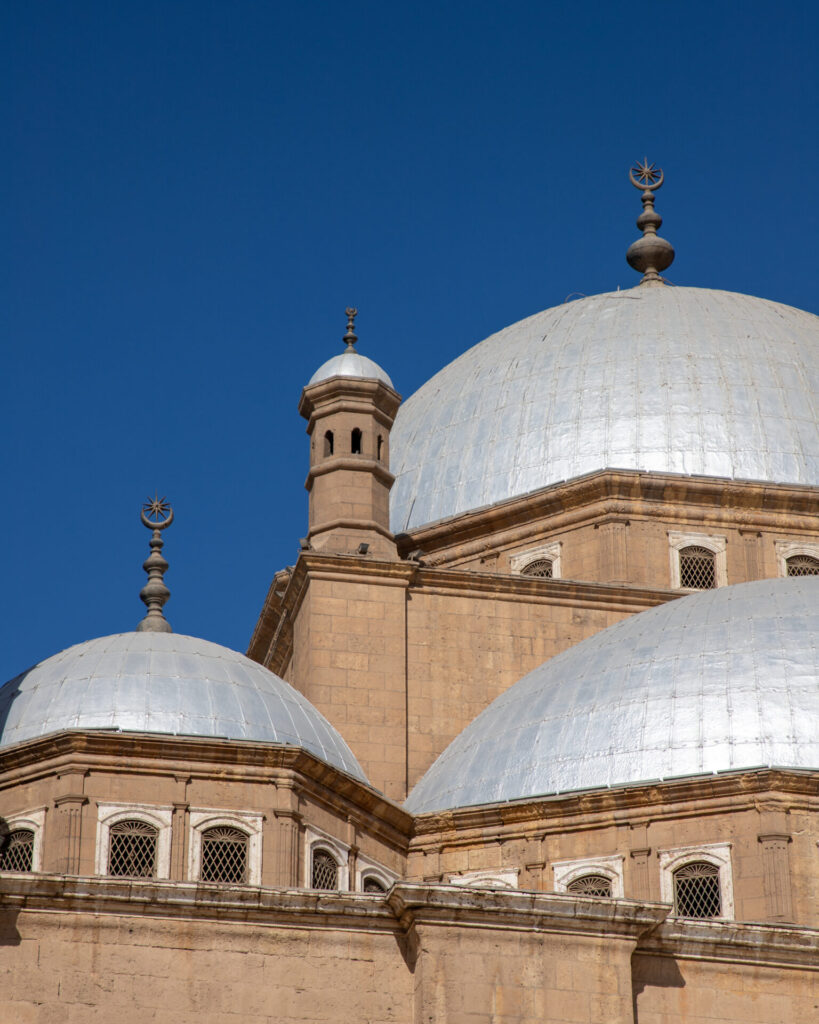
The Citadel of Saladin is a vast medieval fortress built in 1176 CE by Salah ad-Din (Saladin) to defend Cairo against the Crusaders. For nearly 700 years, this was the seat of power in Egypt!

Today, the citadel offers some of the best panoramic views over Cairo, but the real highlight is the Mosque of Muhammad Ali, built between 1830–1848 under Ottoman ruler Muhammad Ali Pasha, often considered the founder of modern Egypt.

Ornate interior of the Mosque of Muhammad Ali

You may notice that the mosque was heavily inspired by the Blue Mosque in Istanbul, reflecting Egypt’s place within the Ottoman Empire at the time. The interior is particularly stunning, and like the Blue Mosque, features soaring golden domes cornered by artful Arabic inscriptions.

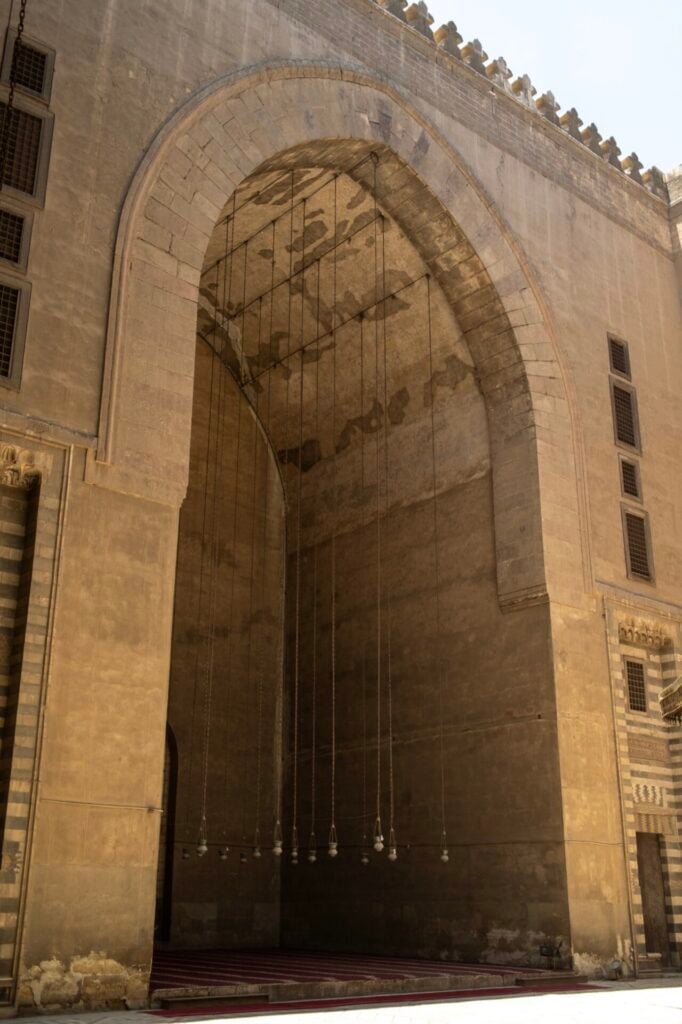
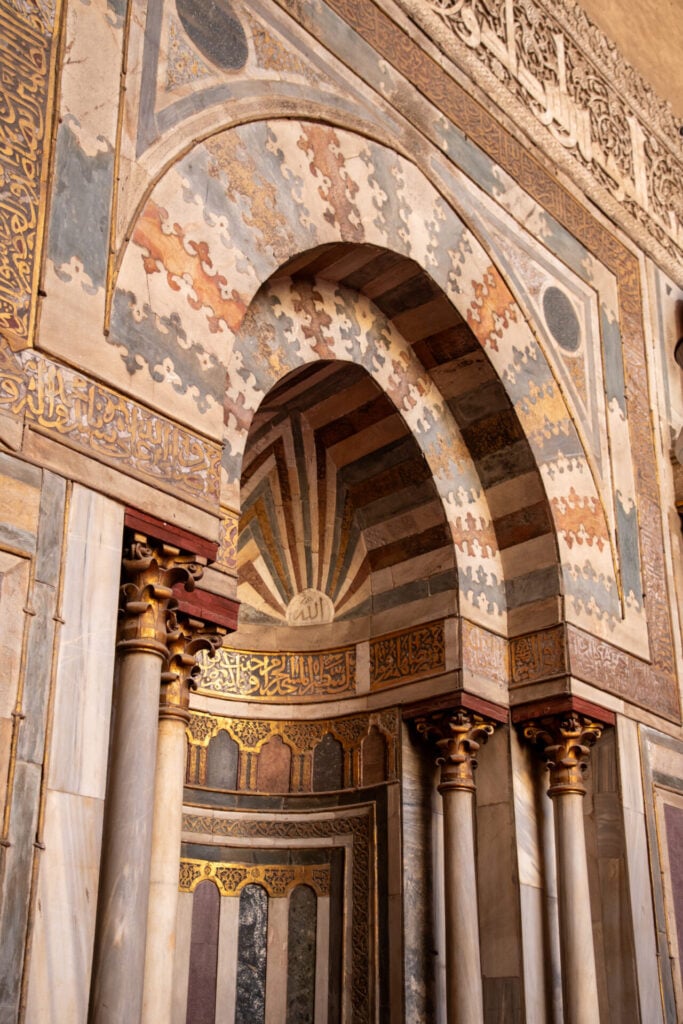
Mosque of Sultan Hassan in Cairo
Gorgeous artwork at the Mosque of Sultan Hassan

Mosque & Madrasa of Sultan Hassan

Just below the citadel sits the Mosque & Madrasa of Sultan Hassan, built between 1356–1363 CE during the Mamluk period. This is widely considered one of the greatest masterpieces of Islamic architecture anywhere in the world.

Kitty at the Mosque of Sultan Hassan
Mosque of Sultan Hassan in Cairo

The structure was designed as both a mosque and a madrasa (Islamic school), and its scale is extraordinary. The entrance portal rises nearly 40m high, one of the tallest of its kind, and the design details are absolutely striking— dominated by geometric patterns that represent a shift from Ottoman-style design towards something distinctly Egyptian.


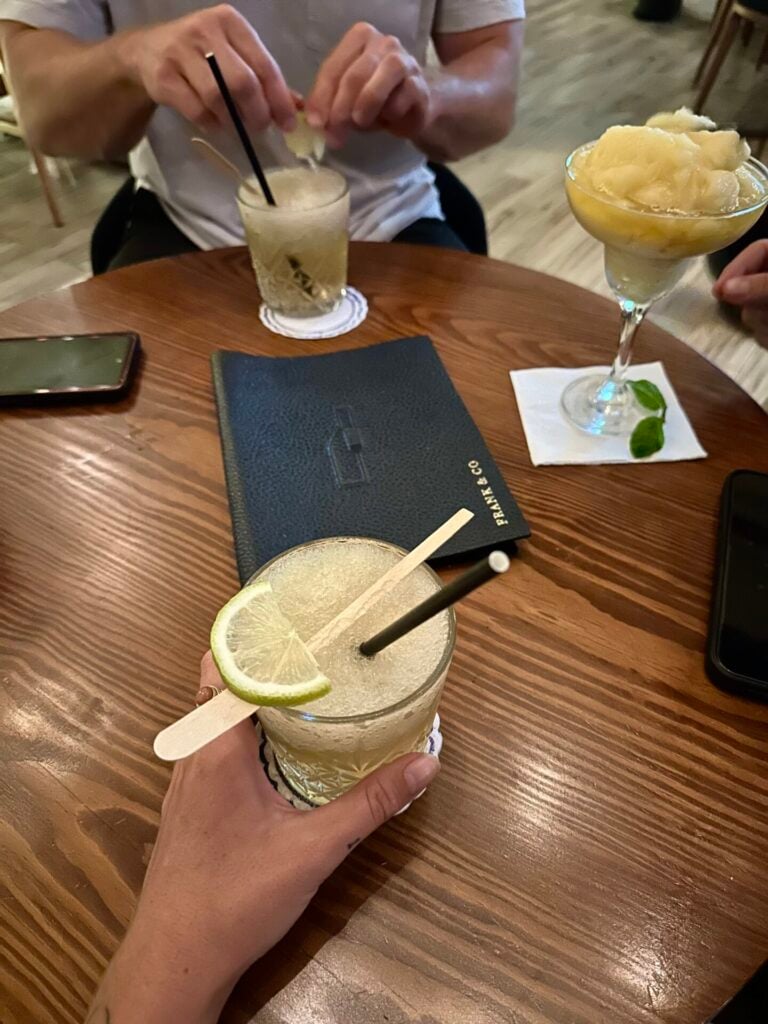
Cocktails in Maadi, Cairo
Cocktails at Frank & Co. in Maadi

Dinner & cocktails in Maadi (6-9pm)

After a full day of exploring the city’s religious and modern cultural highlights across Coptic & Islamic Cairo, we recommend spending your final evening in Maadi (even if you aren’t staying here, grab a taxi for dinner and drinks!). 

Located along the Nile just south of the city centre, this trendy neighbourhood offers a completely different atmosphere than the historic parts of Old Cairo and the dusty chaos of Giza, with leafy streets, excellent restaurants, and a more laid-back pace.

We love Frank & Co. for cocktails and the restaurant Villa Caracas for outstanding Lebanese/Middle Eastern cuisine, but there are dozens of amazing places to eat here, including another location of Zooba, Tenaya Riverside Dining, Estro, and many more. Cheers to an incredible 3 days in Cairo!

>>> Read my detailed 1 & 2-week itinerary for heaps of recommendations on where to go next, including Luxor, Aswan, or even on a Nile Cruise! COMING SOON

Nile scenery near Saqqara
Khafre's pyramid in Giza
Ancient Egyptian artefacts at the Grand Egyptian Museum

Read more of my Egypt travel guides

  • Luxor travel guide: best temples & tombs of the East & West Bank
  • 10 best temples in Egypt (from a 5-time visitor!)
  • Choosing the best Nile Cruise in Egypt: absolutely everything you need to know
  • Detailed 3-day Cairo & Giza itinerary for first-time visitors
  • What to do in Dahab: a guide to Egypt’s coolest beach town
  • Perfect 1 & 2-week Egypt itinerary: Giza, Luxor, Aswan & the Red Sea
TAGS:city guidestravel guides
0 Comments
Share
brooke beyond

Hey, I'm Brooke and I'm obsessed with getting off the beaten path, exploring backcountry gems & travelling beyond the ordinary! I left Australia 6 years ago after finishing a PhD in Biomechanics & have been travelling the world full-time ever since (joined by my husband/climbing partner, James). Whether it’s road-tripping through Mexico, climbing alpine peaks in the Andes, scuba diving in the Red Sea, or tackling epic via ferrata in the Dolomites, I hope this blog will inspire your future adventures & help you find wonder in every corner of the globe. xx bb

Leave a Comment Cancel Comment

You May Also Like

5 October 2024

Hiking the Jordan Trail from Dana to Petra: Jordan’s best 5-day hike

16 November 2024

Hiking Petra in 2 days: Backdoor Trail & the secret Al Madras Trail

26 April 2026

Luxor travel guide: best temples & tombs of the East & West Bank

hi, I’m brooke!

I’m a full-time traveller obsessed with exploring unique destinations, remote landscapes, and high-elevation summits around the world. As a former research scientist with a PhD in Biomechanics, I now put my academic background to use writing thesis-level travel itineraries & hiking guides designed to help you explore better, more deeply, and always beyond the ordinary! xx bb

about brooke beyond
currently exploring

currently exploring

finland

read our gear guides

🥾 hiking boots

🎒 hiking backpacks

🌨️ cold-weather layers

⛺️ backpacking & alpine tents

🛌 sleeping bag & pads

🍪 backcountry food

📸 travel camera gear

trail guides

summit guides

itineraries

outdoor gear

GPS maps

recent posts

  • Best view of the Sphinx

    Detailed 3-day Cairo & Giza itinerary for first-time visitors

    2 May 2026
  • Riding camels in Dahab

    What to do in Dahab: a guide to Egypt’s coolest beach town

    29 April 2026
  • Best Nile Cruise in Egypt

    Choosing the best Nile Cruise in Egypt: absolutely everything you need to know

    28 April 2026
  • Hypostyle Hall in Karnak Temple

    10 best temples in Egypt: must-see ancient sites from Luxor to Aswan

    28 April 2026
  • Tomb of Seti I in Valley of the Kings

    Luxor travel guide: best temples & tombs of the East & West Bank

    26 April 2026

@brookebeyond_
brooke ✨travel & mountain gal

@brookebeyond_

  • I always thought I was a summer gal… but we spent 3 months in Scandinavia this winter and it was, without question, one of the BEST trips I’ve done in nearly 6 years of full-time travel.

Turns out, winter is MAGICAL!!! 

We hiked popular summits without a single other person, saw Northern Lights on more than 30 different nights, made friends with local reindeer (then ate their friends & family for dinner, very sorry), witnessed midday sunsets and complete polar night, and spent literally hundreds of hours in the sauna. 

It’s hard to even describe how amazing this trip was, but we’re already booked to go back to Norway & Sweden for 3 months next winter to do it all over again 😅

—
#norway #lofoten #sweden #winterinnorway
  • Over a year since I’ve been able to climb in ANY capacity (since my very dramatic knee surgery last April), so I can’t tell you how sweet it was to go ice climbing in Sweden & Finland this winter. Like an enormous leap back to myself 🥰

Not setting any speed records or impressing anyone with my technique lol but just genuinely happy to be able to move my body again, to be outside, to spend even a few minutes focused on something other than the pain. Grateful for the progress I’ve made & hopefully for the progress still to come— we’ve got some big goals this year, an ice wall is only the beginning 🏔️⛏️

—
#iceclimbing #finland #finnishlapland #pyhä
  • 6 years of full-time travel and still not smart enough to correctly count 90 days within a 180-day period 😅

(also an unsponsored ad for 🔗 schengensimple.com which we downloaded PROMPTLY to avoid any future miscalculations)

This story is definitely part of a larger conversation about passport privilege— because I’m sure if we were holding a different country’s passport, we would have had a VASTLY different experience with this accidental overstay. All in all, I feel insanely fortunate to have only gotten a fine and I’m eager not to test the system a 2nd time 😳

—
#schengen #eu #travelstories #travelmistakes @schengen_simple
  • Finland photo dump 🇫🇮✨

We spent 5 weeks in Finland as part of our Nordic adventure this winter, and what a JOY it was to experience the beautiful north as it transitioned from -30C days where our eyelashes froze… all the way to the very beginnings of spring 🌸☀️

Thanks for all the sweet memories, the auroras, the moments of sisu, the tasty buns, and the friends we got to share it with!

—
#finland #finnishlapland #lapland #winterinfinland
  • sincerest apologies to the people of Norway for my pronunciation 😂
.
ABOUT THE FLÅM WINTER MAGIC PACKAGE ☃️✨
.
Several local companies have teamed up to offer the perfect bundle of winter activities: 
- RIB boat adventure with @fjordsafari 
- 1.5hr slot in the floating @fjordsauna 
- Viking Plank dinner + beer pairing at @aegirbrewco 
.
It was the perfect way to experience charming little Flåm and its beautiful fjord setting in a single day— easily accessible by scenic train from Bergen or Oslo!
.
Contact @fjordsafari to book
—
#flåm #norway #winterinnorway #flåmsbana #wintermagic
  • A few snapshots from one of our most unique adventures: a 4-day dogsledding trip through Sámi country (Sápmi) in Northern Sweden ❄️

For thousands of years, dogsledding has been an essential form of Arctic transport for Indigenous communities, used to travel, hunt, and survive in some of the harshest conditions on earth. Huskies are bred specifically for this environment, capable of running for hours across frozen landscapes + hauling several hundred kilos as a team.

To experience it for ourselves, we took a 15hr train from Stockholm to Kiruna, drove 2hrs deep into the wilderness, and then caught a snowmobile the final kilometres to reach a remote kennel with about 50 dogs. Our first day was spent learning the basics: how to harness the huskies, attach them to the sled, and steer + brake properly. 

And then, we set off into the wilderness with our team of 6 dogs, travelling through snowy forests + across frozen lakes. 

James + I shared the sled, taking turns driving while the other sat bundled up inside, eyelashes freezing into icicles in the -30°C (-22°F) chill for hours at a time.

It was unbelievably remote, the conditions were challenging, and the cold was brutal, but through it all, we formed a real bond with our team— particularly surprising given that I’m usually very scared of dogs (pictured several times here is my beloved Reisling, the best doggie 🐕🖤)

It was a surprising + unexpected adventure, but such a special way to experience wild + beautiful Sápmi*

*we learned that Sápmi is the traditional + often preferred term (over “Lapland”) for the region of northern Norway, Sweden, Finland, and Russia inhabited by the Indigenous Sámi people

—
#sweden #kiruna #dogsledding #sápmi #lapland
  • magical winter lighting delivering midday sunrises and northern lights before dinner ✨ 

—
#lofoten #winter #norway #northernlights #polarnight
  • With sufficient outdoor experience, sound judgement, and reasonable conditions, these 10 hikes are an excellent choice for safe winter hiking in Lofoten!

We personally completed all of these hikes in January 2026 with just microspikes + trekking poles (and no other technical climbing equipment), though it should be noted that conditions vary winter to winter— and even week to week. In the event of heavy snowfall, some trails may become impassable without snowshoes or simply unsafe altogether.

**It should ALSO go without saying that you are responsible for yourself in the outdoors; this list is based on our own personal experience and must be interpreted within the bounds of your own experience and current winter conditions.

For more on winter hiking safety and details on these 10 amazing winter hikes, check out my post 🔗 brookebeyond.com/lofoten-winter-hiking
  • a collection of some mind-blowing aurora moments from our 5 weeks in Norway 🤯 

*watch the videos with sound to hear me & @flyingcrepes screaming like it’s our first day on earth lol

—
#norway #northernlights #aurora #northernlightsphotos
follow @brookebeyond_

travel beyond the ordinary

Explore my travel guides, custom itineraries & blog posts with an interactive world map ✨

all destinations

  • I always thought I was a summer gal… but we spent 3 months in Scandinavia this winter and it was, without question, one of the BEST trips I’ve done in nearly 6 years of full-time travel.

Turns out, winter is MAGICAL!!! 

We hiked popular summits without a single other person, saw Northern Lights on more than 30 different nights, made friends with local reindeer (then ate their friends & family for dinner, very sorry), witnessed midday sunsets and complete polar night, and spent literally hundreds of hours in the sauna. 

It’s hard to even describe how amazing this trip was, but we’re already booked to go back to Norway & Sweden for 3 months next winter to do it all over again 😅

—
#norway #lofoten #sweden #winterinnorway
  • Over a year since I’ve been able to climb in ANY capacity (since my very dramatic knee surgery last April), so I can’t tell you how sweet it was to go ice climbing in Sweden & Finland this winter. Like an enormous leap back to myself 🥰

Not setting any speed records or impressing anyone with my technique lol but just genuinely happy to be able to move my body again, to be outside, to spend even a few minutes focused on something other than the pain. Grateful for the progress I’ve made & hopefully for the progress still to come— we’ve got some big goals this year, an ice wall is only the beginning 🏔️⛏️

—
#iceclimbing #finland #finnishlapland #pyhä
  • 6 years of full-time travel and still not smart enough to correctly count 90 days within a 180-day period 😅

(also an unsponsored ad for 🔗 schengensimple.com which we downloaded PROMPTLY to avoid any future miscalculations)

This story is definitely part of a larger conversation about passport privilege— because I’m sure if we were holding a different country’s passport, we would have had a VASTLY different experience with this accidental overstay. All in all, I feel insanely fortunate to have only gotten a fine and I’m eager not to test the system a 2nd time 😳

—
#schengen #eu #travelstories #travelmistakes @schengen_simple
  • Finland photo dump 🇫🇮✨

We spent 5 weeks in Finland as part of our Nordic adventure this winter, and what a JOY it was to experience the beautiful north as it transitioned from -30C days where our eyelashes froze… all the way to the very beginnings of spring 🌸☀️

Thanks for all the sweet memories, the auroras, the moments of sisu, the tasty buns, and the friends we got to share it with!

—
#finland #finnishlapland #lapland #winterinfinland
  • sincerest apologies to the people of Norway for my pronunciation 😂
.
ABOUT THE FLÅM WINTER MAGIC PACKAGE ☃️✨
.
Several local companies have teamed up to offer the perfect bundle of winter activities: 
- RIB boat adventure with @fjordsafari 
- 1.5hr slot in the floating @fjordsauna 
- Viking Plank dinner + beer pairing at @aegirbrewco 
.
It was the perfect way to experience charming little Flåm and its beautiful fjord setting in a single day— easily accessible by scenic train from Bergen or Oslo!
.
Contact @fjordsafari to book
—
#flåm #norway #winterinnorway #flåmsbana #wintermagic
  • A few snapshots from one of our most unique adventures: a 4-day dogsledding trip through Sámi country (Sápmi) in Northern Sweden ❄️

For thousands of years, dogsledding has been an essential form of Arctic transport for Indigenous communities, used to travel, hunt, and survive in some of the harshest conditions on earth. Huskies are bred specifically for this environment, capable of running for hours across frozen landscapes + hauling several hundred kilos as a team.

To experience it for ourselves, we took a 15hr train from Stockholm to Kiruna, drove 2hrs deep into the wilderness, and then caught a snowmobile the final kilometres to reach a remote kennel with about 50 dogs. Our first day was spent learning the basics: how to harness the huskies, attach them to the sled, and steer + brake properly. 

And then, we set off into the wilderness with our team of 6 dogs, travelling through snowy forests + across frozen lakes. 

James + I shared the sled, taking turns driving while the other sat bundled up inside, eyelashes freezing into icicles in the -30°C (-22°F) chill for hours at a time.

It was unbelievably remote, the conditions were challenging, and the cold was brutal, but through it all, we formed a real bond with our team— particularly surprising given that I’m usually very scared of dogs (pictured several times here is my beloved Reisling, the best doggie 🐕🖤)

It was a surprising + unexpected adventure, but such a special way to experience wild + beautiful Sápmi*

*we learned that Sápmi is the traditional + often preferred term (over “Lapland”) for the region of northern Norway, Sweden, Finland, and Russia inhabited by the Indigenous Sámi people

—
#sweden #kiruna #dogsledding #sápmi #lapland
@brookebeyond_
@brookebeyond_
•
Follow
I always thought I was a summer gal… but we spent 3 months in Scandinavia this winter and it was, without question, one of the BEST trips I’ve done in nearly 6 years of full-time travel. Turns out, winter is MAGICAL!!! We hiked popular summits without a single other person, saw Northern Lights on more than 30 different nights, made friends with local reindeer (then ate their friends & family for dinner, very sorry), witnessed midday sunsets and complete polar night, and spent literally hundreds of hours in the sauna. It’s hard to even describe how amazing this trip was, but we’re already booked to go back to Norway & Sweden for 3 months next winter to do it all over again 😅 — #norway #lofoten #sweden #winterinnorway
2 weeks ago
View on Instagram |
1/6
Over a year since I’ve been able to climb in ANY capacity (since my very dramatic knee surgery last April), so I can’t tell you how sweet it was to go ice climbing in Sweden & Finland this winter. Like an enormous leap back to myself 🥰

Not setting any speed records or impressing anyone with my technique lol but just genuinely happy to be able to move my body again, to be outside, to spend even a few minutes focused on something other than the pain. Grateful for the progress I’ve made & hopefully for the progress still to come— we’ve got some big goals this year, an ice wall is only the beginning 🏔️⛏️

—
#iceclimbing #finland #finnishlapland #pyhä
Over a year since I’ve been able to climb in ANY capacity (since my very dramatic knee surgery last April), so I can’t tell you how sweet it was to go ice climbing in Sweden & Finland this winter. Like an enormous leap back to myself 🥰

Not setting any speed records or impressing anyone with my technique lol but just genuinely happy to be able to move my body again, to be outside, to spend even a few minutes focused on something other than the pain. Grateful for the progress I’ve made & hopefully for the progress still to come— we’ve got some big goals this year, an ice wall is only the beginning 🏔️⛏️

—
#iceclimbing #finland #finnishlapland #pyhä
Over a year since I’ve been able to climb in ANY capacity (since my very dramatic knee surgery last April), so I can’t tell you how sweet it was to go ice climbing in Sweden & Finland this winter. Like an enormous leap back to myself 🥰

Not setting any speed records or impressing anyone with my technique lol but just genuinely happy to be able to move my body again, to be outside, to spend even a few minutes focused on something other than the pain. Grateful for the progress I’ve made & hopefully for the progress still to come— we’ve got some big goals this year, an ice wall is only the beginning 🏔️⛏️

—
#iceclimbing #finland #finnishlapland #pyhä
Over a year since I’ve been able to climb in ANY capacity (since my very dramatic knee surgery last April), so I can’t tell you how sweet it was to go ice climbing in Sweden & Finland this winter. Like an enormous leap back to myself 🥰

Not setting any speed records or impressing anyone with my technique lol but just genuinely happy to be able to move my body again, to be outside, to spend even a few minutes focused on something other than the pain. Grateful for the progress I’ve made & hopefully for the progress still to come— we’ve got some big goals this year, an ice wall is only the beginning 🏔️⛏️

—
#iceclimbing #finland #finnishlapland #pyhä
@brookebeyond_
@brookebeyond_
•
Follow
Over a year since I’ve been able to climb in ANY capacity (since my very dramatic knee surgery last April), so I can’t tell you how sweet it was to go ice climbing in Sweden & Finland this winter. Like an enormous leap back to myself 🥰 Not setting any speed records or impressing anyone with my technique lol but just genuinely happy to be able to move my body again, to be outside, to spend even a few minutes focused on something other than the pain. Grateful for the progress I’ve made & hopefully for the progress still to come— we’ve got some big goals this year, an ice wall is only the beginning 🏔️⛏️ — #iceclimbing #finland #finnishlapland #pyhä
2 weeks ago
View on Instagram |
2/6
@brookebeyond_
@brookebeyond_
•
Follow
6 years of full-time travel and still not smart enough to correctly count 90 days within a 180-day period 😅 (also an unsponsored ad for 🔗 schengensimple.com which we downloaded PROMPTLY to avoid any future miscalculations) This story is definitely part of a larger conversation about passport privilege— because I’m sure if we were holding a different country’s passport, we would have had a VASTLY different experience with this accidental overstay. All in all, I feel insanely fortunate to have only gotten a fine and I’m eager not to test the system a 2nd time 😳 — #schengen #eu #travelstories #travelmistakes @schengen_simple
3 weeks ago
View on Instagram |
3/6
Finland photo dump 🇫🇮✨

We spent 5 weeks in Finland as part of our Nordic adventure this winter, and what a JOY it was to experience the beautiful north as it transitioned from -30C days where our eyelashes froze… all the way to the very beginnings of spring 🌸☀️

Thanks for all the sweet memories, the auroras, the moments of sisu, the tasty buns, and the friends we got to share it with!

—
#finland #finnishlapland #lapland #winterinfinland
Finland photo dump 🇫🇮✨

We spent 5 weeks in Finland as part of our Nordic adventure this winter, and what a JOY it was to experience the beautiful north as it transitioned from -30C days where our eyelashes froze… all the way to the very beginnings of spring 🌸☀️

Thanks for all the sweet memories, the auroras, the moments of sisu, the tasty buns, and the friends we got to share it with!

—
#finland #finnishlapland #lapland #winterinfinland
Finland photo dump 🇫🇮✨

We spent 5 weeks in Finland as part of our Nordic adventure this winter, and what a JOY it was to experience the beautiful north as it transitioned from -30C days where our eyelashes froze… all the way to the very beginnings of spring 🌸☀️

Thanks for all the sweet memories, the auroras, the moments of sisu, the tasty buns, and the friends we got to share it with!

—
#finland #finnishlapland #lapland #winterinfinland
Finland photo dump 🇫🇮✨

We spent 5 weeks in Finland as part of our Nordic adventure this winter, and what a JOY it was to experience the beautiful north as it transitioned from -30C days where our eyelashes froze… all the way to the very beginnings of spring 🌸☀️

Thanks for all the sweet memories, the auroras, the moments of sisu, the tasty buns, and the friends we got to share it with!

—
#finland #finnishlapland #lapland #winterinfinland
Finland photo dump 🇫🇮✨

We spent 5 weeks in Finland as part of our Nordic adventure this winter, and what a JOY it was to experience the beautiful north as it transitioned from -30C days where our eyelashes froze… all the way to the very beginnings of spring 🌸☀️

Thanks for all the sweet memories, the auroras, the moments of sisu, the tasty buns, and the friends we got to share it with!

—
#finland #finnishlapland #lapland #winterinfinland
Finland photo dump 🇫🇮✨

We spent 5 weeks in Finland as part of our Nordic adventure this winter, and what a JOY it was to experience the beautiful north as it transitioned from -30C days where our eyelashes froze… all the way to the very beginnings of spring 🌸☀️

Thanks for all the sweet memories, the auroras, the moments of sisu, the tasty buns, and the friends we got to share it with!

—
#finland #finnishlapland #lapland #winterinfinland
Finland photo dump 🇫🇮✨

We spent 5 weeks in Finland as part of our Nordic adventure this winter, and what a JOY it was to experience the beautiful north as it transitioned from -30C days where our eyelashes froze… all the way to the very beginnings of spring 🌸☀️

Thanks for all the sweet memories, the auroras, the moments of sisu, the tasty buns, and the friends we got to share it with!

—
#finland #finnishlapland #lapland #winterinfinland
Finland photo dump 🇫🇮✨

We spent 5 weeks in Finland as part of our Nordic adventure this winter, and what a JOY it was to experience the beautiful north as it transitioned from -30C days where our eyelashes froze… all the way to the very beginnings of spring 🌸☀️

Thanks for all the sweet memories, the auroras, the moments of sisu, the tasty buns, and the friends we got to share it with!

—
#finland #finnishlapland #lapland #winterinfinland
Finland photo dump 🇫🇮✨

We spent 5 weeks in Finland as part of our Nordic adventure this winter, and what a JOY it was to experience the beautiful north as it transitioned from -30C days where our eyelashes froze… all the way to the very beginnings of spring 🌸☀️

Thanks for all the sweet memories, the auroras, the moments of sisu, the tasty buns, and the friends we got to share it with!

—
#finland #finnishlapland #lapland #winterinfinland
Finland photo dump 🇫🇮✨

We spent 5 weeks in Finland as part of our Nordic adventure this winter, and what a JOY it was to experience the beautiful north as it transitioned from -30C days where our eyelashes froze… all the way to the very beginnings of spring 🌸☀️

Thanks for all the sweet memories, the auroras, the moments of sisu, the tasty buns, and the friends we got to share it with!

—
#finland #finnishlapland #lapland #winterinfinland
Finland photo dump 🇫🇮✨

We spent 5 weeks in Finland as part of our Nordic adventure this winter, and what a JOY it was to experience the beautiful north as it transitioned from -30C days where our eyelashes froze… all the way to the very beginnings of spring 🌸☀️

Thanks for all the sweet memories, the auroras, the moments of sisu, the tasty buns, and the friends we got to share it with!

—
#finland #finnishlapland #lapland #winterinfinland
Finland photo dump 🇫🇮✨

We spent 5 weeks in Finland as part of our Nordic adventure this winter, and what a JOY it was to experience the beautiful north as it transitioned from -30C days where our eyelashes froze… all the way to the very beginnings of spring 🌸☀️

Thanks for all the sweet memories, the auroras, the moments of sisu, the tasty buns, and the friends we got to share it with!

—
#finland #finnishlapland #lapland #winterinfinland
Finland photo dump 🇫🇮✨

We spent 5 weeks in Finland as part of our Nordic adventure this winter, and what a JOY it was to experience the beautiful north as it transitioned from -30C days where our eyelashes froze… all the way to the very beginnings of spring 🌸☀️

Thanks for all the sweet memories, the auroras, the moments of sisu, the tasty buns, and the friends we got to share it with!

—
#finland #finnishlapland #lapland #winterinfinland
@brookebeyond_
@brookebeyond_
•
Follow
Finland photo dump 🇫🇮✨ We spent 5 weeks in Finland as part of our Nordic adventure this winter, and what a JOY it was to experience the beautiful north as it transitioned from -30C days where our eyelashes froze… all the way to the very beginnings of spring 🌸☀️ Thanks for all the sweet memories, the auroras, the moments of sisu, the tasty buns, and the friends we got to share it with! — #finland #finnishlapland #lapland #winterinfinland
3 weeks ago
View on Instagram |
4/6
@brookebeyond_
@brookebeyond_
•
Follow
sincerest apologies to the people of Norway for my pronunciation 😂 . ABOUT THE FLÅM WINTER MAGIC PACKAGE ☃️✨ . Several local companies have teamed up to offer the perfect bundle of winter activities: - RIB boat adventure with @fjordsafari - 1.5hr slot in the floating @fjordsauna - Viking Plank dinner + beer pairing at @aegirbrewco . It was the perfect way to experience charming little Flåm and its beautiful fjord setting in a single day— easily accessible by scenic train from Bergen or Oslo! . Contact @fjordsafari to book — #flåm #norway #winterinnorway #flåmsbana #wintermagic
3 weeks ago
View on Instagram |
5/6
A few snapshots from one of our most unique adventures: a 4-day dogsledding trip through Sámi country (Sápmi) in Northern Sweden ❄️

For thousands of years, dogsledding has been an essential form of Arctic transport for Indigenous communities, used to travel, hunt, and survive in some of the harshest conditions on earth. Huskies are bred specifically for this environment, capable of running for hours across frozen landscapes + hauling several hundred kilos as a team.

To experience it for ourselves, we took a 15hr train from Stockholm to Kiruna, drove 2hrs deep into the wilderness, and then caught a snowmobile the final kilometres to reach a remote kennel with about 50 dogs. Our first day was spent learning the basics: how to harness the huskies, attach them to the sled, and steer + brake properly. 

And then, we set off into the wilderness with our team of 6 dogs, travelling through snowy forests + across frozen lakes. 

James + I shared the sled, taking turns driving while the other sat bundled up inside, eyelashes freezing into icicles in the -30°C (-22°F) chill for hours at a time.

It was unbelievably remote, the conditions were challenging, and the cold was brutal, but through it all, we formed a real bond with our team— particularly surprising given that I’m usually very scared of dogs (pictured several times here is my beloved Reisling, the best doggie 🐕🖤)

It was a surprising + unexpected adventure, but such a special way to experience wild + beautiful Sápmi*

*we learned that Sápmi is the traditional + often preferred term (over “Lapland”) for the region of northern Norway, Sweden, Finland, and Russia inhabited by the Indigenous Sámi people

—
#sweden #kiruna #dogsledding #sápmi #lapland
A few snapshots from one of our most unique adventures: a 4-day dogsledding trip through Sámi country (Sápmi) in Northern Sweden ❄️

For thousands of years, dogsledding has been an essential form of Arctic transport for Indigenous communities, used to travel, hunt, and survive in some of the harshest conditions on earth. Huskies are bred specifically for this environment, capable of running for hours across frozen landscapes + hauling several hundred kilos as a team.

To experience it for ourselves, we took a 15hr train from Stockholm to Kiruna, drove 2hrs deep into the wilderness, and then caught a snowmobile the final kilometres to reach a remote kennel with about 50 dogs. Our first day was spent learning the basics: how to harness the huskies, attach them to the sled, and steer + brake properly. 

And then, we set off into the wilderness with our team of 6 dogs, travelling through snowy forests + across frozen lakes. 

James + I shared the sled, taking turns driving while the other sat bundled up inside, eyelashes freezing into icicles in the -30°C (-22°F) chill for hours at a time.

It was unbelievably remote, the conditions were challenging, and the cold was brutal, but through it all, we formed a real bond with our team— particularly surprising given that I’m usually very scared of dogs (pictured several times here is my beloved Reisling, the best doggie 🐕🖤)

It was a surprising + unexpected adventure, but such a special way to experience wild + beautiful Sápmi*

*we learned that Sápmi is the traditional + often preferred term (over “Lapland”) for the region of northern Norway, Sweden, Finland, and Russia inhabited by the Indigenous Sámi people

—
#sweden #kiruna #dogsledding #sápmi #lapland
A few snapshots from one of our most unique adventures: a 4-day dogsledding trip through Sámi country (Sápmi) in Northern Sweden ❄️

For thousands of years, dogsledding has been an essential form of Arctic transport for Indigenous communities, used to travel, hunt, and survive in some of the harshest conditions on earth. Huskies are bred specifically for this environment, capable of running for hours across frozen landscapes + hauling several hundred kilos as a team.

To experience it for ourselves, we took a 15hr train from Stockholm to Kiruna, drove 2hrs deep into the wilderness, and then caught a snowmobile the final kilometres to reach a remote kennel with about 50 dogs. Our first day was spent learning the basics: how to harness the huskies, attach them to the sled, and steer + brake properly. 

And then, we set off into the wilderness with our team of 6 dogs, travelling through snowy forests + across frozen lakes. 

James + I shared the sled, taking turns driving while the other sat bundled up inside, eyelashes freezing into icicles in the -30°C (-22°F) chill for hours at a time.

It was unbelievably remote, the conditions were challenging, and the cold was brutal, but through it all, we formed a real bond with our team— particularly surprising given that I’m usually very scared of dogs (pictured several times here is my beloved Reisling, the best doggie 🐕🖤)

It was a surprising + unexpected adventure, but such a special way to experience wild + beautiful Sápmi*

*we learned that Sápmi is the traditional + often preferred term (over “Lapland”) for the region of northern Norway, Sweden, Finland, and Russia inhabited by the Indigenous Sámi people

—
#sweden #kiruna #dogsledding #sápmi #lapland
A few snapshots from one of our most unique adventures: a 4-day dogsledding trip through Sámi country (Sápmi) in Northern Sweden ❄️

For thousands of years, dogsledding has been an essential form of Arctic transport for Indigenous communities, used to travel, hunt, and survive in some of the harshest conditions on earth. Huskies are bred specifically for this environment, capable of running for hours across frozen landscapes + hauling several hundred kilos as a team.

To experience it for ourselves, we took a 15hr train from Stockholm to Kiruna, drove 2hrs deep into the wilderness, and then caught a snowmobile the final kilometres to reach a remote kennel with about 50 dogs. Our first day was spent learning the basics: how to harness the huskies, attach them to the sled, and steer + brake properly. 

And then, we set off into the wilderness with our team of 6 dogs, travelling through snowy forests + across frozen lakes. 

James + I shared the sled, taking turns driving while the other sat bundled up inside, eyelashes freezing into icicles in the -30°C (-22°F) chill for hours at a time.

It was unbelievably remote, the conditions were challenging, and the cold was brutal, but through it all, we formed a real bond with our team— particularly surprising given that I’m usually very scared of dogs (pictured several times here is my beloved Reisling, the best doggie 🐕🖤)

It was a surprising + unexpected adventure, but such a special way to experience wild + beautiful Sápmi*

*we learned that Sápmi is the traditional + often preferred term (over “Lapland”) for the region of northern Norway, Sweden, Finland, and Russia inhabited by the Indigenous Sámi people

—
#sweden #kiruna #dogsledding #sápmi #lapland
A few snapshots from one of our most unique adventures: a 4-day dogsledding trip through Sámi country (Sápmi) in Northern Sweden ❄️

For thousands of years, dogsledding has been an essential form of Arctic transport for Indigenous communities, used to travel, hunt, and survive in some of the harshest conditions on earth. Huskies are bred specifically for this environment, capable of running for hours across frozen landscapes + hauling several hundred kilos as a team.

To experience it for ourselves, we took a 15hr train from Stockholm to Kiruna, drove 2hrs deep into the wilderness, and then caught a snowmobile the final kilometres to reach a remote kennel with about 50 dogs. Our first day was spent learning the basics: how to harness the huskies, attach them to the sled, and steer + brake properly. 

And then, we set off into the wilderness with our team of 6 dogs, travelling through snowy forests + across frozen lakes. 

James + I shared the sled, taking turns driving while the other sat bundled up inside, eyelashes freezing into icicles in the -30°C (-22°F) chill for hours at a time.

It was unbelievably remote, the conditions were challenging, and the cold was brutal, but through it all, we formed a real bond with our team— particularly surprising given that I’m usually very scared of dogs (pictured several times here is my beloved Reisling, the best doggie 🐕🖤)

It was a surprising + unexpected adventure, but such a special way to experience wild + beautiful Sápmi*

*we learned that Sápmi is the traditional + often preferred term (over “Lapland”) for the region of northern Norway, Sweden, Finland, and Russia inhabited by the Indigenous Sámi people

—
#sweden #kiruna #dogsledding #sápmi #lapland
A few snapshots from one of our most unique adventures: a 4-day dogsledding trip through Sámi country (Sápmi) in Northern Sweden ❄️

For thousands of years, dogsledding has been an essential form of Arctic transport for Indigenous communities, used to travel, hunt, and survive in some of the harshest conditions on earth. Huskies are bred specifically for this environment, capable of running for hours across frozen landscapes + hauling several hundred kilos as a team.

To experience it for ourselves, we took a 15hr train from Stockholm to Kiruna, drove 2hrs deep into the wilderness, and then caught a snowmobile the final kilometres to reach a remote kennel with about 50 dogs. Our first day was spent learning the basics: how to harness the huskies, attach them to the sled, and steer + brake properly. 

And then, we set off into the wilderness with our team of 6 dogs, travelling through snowy forests + across frozen lakes. 

James + I shared the sled, taking turns driving while the other sat bundled up inside, eyelashes freezing into icicles in the -30°C (-22°F) chill for hours at a time.

It was unbelievably remote, the conditions were challenging, and the cold was brutal, but through it all, we formed a real bond with our team— particularly surprising given that I’m usually very scared of dogs (pictured several times here is my beloved Reisling, the best doggie 🐕🖤)

It was a surprising + unexpected adventure, but such a special way to experience wild + beautiful Sápmi*

*we learned that Sápmi is the traditional + often preferred term (over “Lapland”) for the region of northern Norway, Sweden, Finland, and Russia inhabited by the Indigenous Sámi people

—
#sweden #kiruna #dogsledding #sápmi #lapland
A few snapshots from one of our most unique adventures: a 4-day dogsledding trip through Sámi country (Sápmi) in Northern Sweden ❄️

For thousands of years, dogsledding has been an essential form of Arctic transport for Indigenous communities, used to travel, hunt, and survive in some of the harshest conditions on earth. Huskies are bred specifically for this environment, capable of running for hours across frozen landscapes + hauling several hundred kilos as a team.

To experience it for ourselves, we took a 15hr train from Stockholm to Kiruna, drove 2hrs deep into the wilderness, and then caught a snowmobile the final kilometres to reach a remote kennel with about 50 dogs. Our first day was spent learning the basics: how to harness the huskies, attach them to the sled, and steer + brake properly. 

And then, we set off into the wilderness with our team of 6 dogs, travelling through snowy forests + across frozen lakes. 

James + I shared the sled, taking turns driving while the other sat bundled up inside, eyelashes freezing into icicles in the -30°C (-22°F) chill for hours at a time.

It was unbelievably remote, the conditions were challenging, and the cold was brutal, but through it all, we formed a real bond with our team— particularly surprising given that I’m usually very scared of dogs (pictured several times here is my beloved Reisling, the best doggie 🐕🖤)

It was a surprising + unexpected adventure, but such a special way to experience wild + beautiful Sápmi*

*we learned that Sápmi is the traditional + often preferred term (over “Lapland”) for the region of northern Norway, Sweden, Finland, and Russia inhabited by the Indigenous Sámi people

—
#sweden #kiruna #dogsledding #sápmi #lapland
A few snapshots from one of our most unique adventures: a 4-day dogsledding trip through Sámi country (Sápmi) in Northern Sweden ❄️

For thousands of years, dogsledding has been an essential form of Arctic transport for Indigenous communities, used to travel, hunt, and survive in some of the harshest conditions on earth. Huskies are bred specifically for this environment, capable of running for hours across frozen landscapes + hauling several hundred kilos as a team.

To experience it for ourselves, we took a 15hr train from Stockholm to Kiruna, drove 2hrs deep into the wilderness, and then caught a snowmobile the final kilometres to reach a remote kennel with about 50 dogs. Our first day was spent learning the basics: how to harness the huskies, attach them to the sled, and steer + brake properly. 

And then, we set off into the wilderness with our team of 6 dogs, travelling through snowy forests + across frozen lakes. 

James + I shared the sled, taking turns driving while the other sat bundled up inside, eyelashes freezing into icicles in the -30°C (-22°F) chill for hours at a time.

It was unbelievably remote, the conditions were challenging, and the cold was brutal, but through it all, we formed a real bond with our team— particularly surprising given that I’m usually very scared of dogs (pictured several times here is my beloved Reisling, the best doggie 🐕🖤)

It was a surprising + unexpected adventure, but such a special way to experience wild + beautiful Sápmi*

*we learned that Sápmi is the traditional + often preferred term (over “Lapland”) for the region of northern Norway, Sweden, Finland, and Russia inhabited by the Indigenous Sámi people

—
#sweden #kiruna #dogsledding #sápmi #lapland
A few snapshots from one of our most unique adventures: a 4-day dogsledding trip through Sámi country (Sápmi) in Northern Sweden ❄️

For thousands of years, dogsledding has been an essential form of Arctic transport for Indigenous communities, used to travel, hunt, and survive in some of the harshest conditions on earth. Huskies are bred specifically for this environment, capable of running for hours across frozen landscapes + hauling several hundred kilos as a team.

To experience it for ourselves, we took a 15hr train from Stockholm to Kiruna, drove 2hrs deep into the wilderness, and then caught a snowmobile the final kilometres to reach a remote kennel with about 50 dogs. Our first day was spent learning the basics: how to harness the huskies, attach them to the sled, and steer + brake properly. 

And then, we set off into the wilderness with our team of 6 dogs, travelling through snowy forests + across frozen lakes. 

James + I shared the sled, taking turns driving while the other sat bundled up inside, eyelashes freezing into icicles in the -30°C (-22°F) chill for hours at a time.

It was unbelievably remote, the conditions were challenging, and the cold was brutal, but through it all, we formed a real bond with our team— particularly surprising given that I’m usually very scared of dogs (pictured several times here is my beloved Reisling, the best doggie 🐕🖤)

It was a surprising + unexpected adventure, but such a special way to experience wild + beautiful Sápmi*

*we learned that Sápmi is the traditional + often preferred term (over “Lapland”) for the region of northern Norway, Sweden, Finland, and Russia inhabited by the Indigenous Sámi people

—
#sweden #kiruna #dogsledding #sápmi #lapland
A few snapshots from one of our most unique adventures: a 4-day dogsledding trip through Sámi country (Sápmi) in Northern Sweden ❄️

For thousands of years, dogsledding has been an essential form of Arctic transport for Indigenous communities, used to travel, hunt, and survive in some of the harshest conditions on earth. Huskies are bred specifically for this environment, capable of running for hours across frozen landscapes + hauling several hundred kilos as a team.

To experience it for ourselves, we took a 15hr train from Stockholm to Kiruna, drove 2hrs deep into the wilderness, and then caught a snowmobile the final kilometres to reach a remote kennel with about 50 dogs. Our first day was spent learning the basics: how to harness the huskies, attach them to the sled, and steer + brake properly. 

And then, we set off into the wilderness with our team of 6 dogs, travelling through snowy forests + across frozen lakes. 

James + I shared the sled, taking turns driving while the other sat bundled up inside, eyelashes freezing into icicles in the -30°C (-22°F) chill for hours at a time.

It was unbelievably remote, the conditions were challenging, and the cold was brutal, but through it all, we formed a real bond with our team— particularly surprising given that I’m usually very scared of dogs (pictured several times here is my beloved Reisling, the best doggie 🐕🖤)

It was a surprising + unexpected adventure, but such a special way to experience wild + beautiful Sápmi*

*we learned that Sápmi is the traditional + often preferred term (over “Lapland”) for the region of northern Norway, Sweden, Finland, and Russia inhabited by the Indigenous Sámi people

—
#sweden #kiruna #dogsledding #sápmi #lapland
@brookebeyond_
@brookebeyond_
•
Follow
A few snapshots from one of our most unique adventures: a 4-day dogsledding trip through Sámi country (Sápmi) in Northern Sweden ❄️ For thousands of years, dogsledding has been an essential form of Arctic transport for Indigenous communities, used to travel, hunt, and survive in some of the harshest conditions on earth. Huskies are bred specifically for this environment, capable of running for hours across frozen landscapes + hauling several hundred kilos as a team. To experience it for ourselves, we took a 15hr train from Stockholm to Kiruna, drove 2hrs deep into the wilderness, and then caught a snowmobile the final kilometres to reach a remote kennel with about 50 dogs. Our first day was spent learning the basics: how to harness the huskies, attach them to the sled, and steer + brake properly. And then, we set off into the wilderness with our team of 6 dogs, travelling through snowy forests + across frozen lakes. James + I shared the sled, taking turns driving while the other sat bundled up inside, eyelashes freezing into icicles in the -30°C (-22°F) chill for hours at a time. It was unbelievably remote, the conditions were challenging, and the cold was brutal, but through it all, we formed a real bond with our team— particularly surprising given that I’m usually very scared of dogs (pictured several times here is my beloved Reisling, the best doggie 🐕🖤) It was a surprising + unexpected adventure, but such a special way to experience wild + beautiful Sápmi* *we learned that Sápmi is the traditional + often preferred term (over “Lapland”) for the region of northern Norway, Sweden, Finland, and Russia inhabited by the Indigenous Sámi people — #sweden #kiruna #dogsledding #sápmi #lapland
1 month ago
View on Instagram |
6/6

  • start here
  • about
  • group trips
  • destinations
  • hiking guides
  • outdoor gear
  • custom GPS maps
  • privacy
  • contact

COPYRIGHT © 2025 BROOKE BEYOND. TRAVEL BEYOND THE ORDINARY. Site Powered by Pix & Hue.


Loading Comments...