
Choosing the best Nile Cruise in Egypt: absolutely everything you need to know
Last Updated on 5 June 2026
Cruising along the Nile has been a bucket-list travel experience for centuries, combining ancient temples, timeless river scenery, and the unique perspective of watching Upper Egypt unfold from the water. Even if you’re not a “cruise person”, this is hands-down the BEST way to experience the temples between Luxor and Aswan!
We’ve taken THREE different Nile Cruises in the last 3 years, experiencing different levels of luxury, varied itineraries, even different styles of boat— and paid for all of the trips ourselves, so you can trust our opinions to be entirely unbiased. Based on an almost obsessive amount of personal experience, this detailed guide will cover exactly what to expect from a Nile Cruise, different itinerary options, what’s included in the price, and ultimately how to choose the best option for you!
>>> Read all of my detailed Egypt travel guides & itineraries!
The Nile Cruise Experience
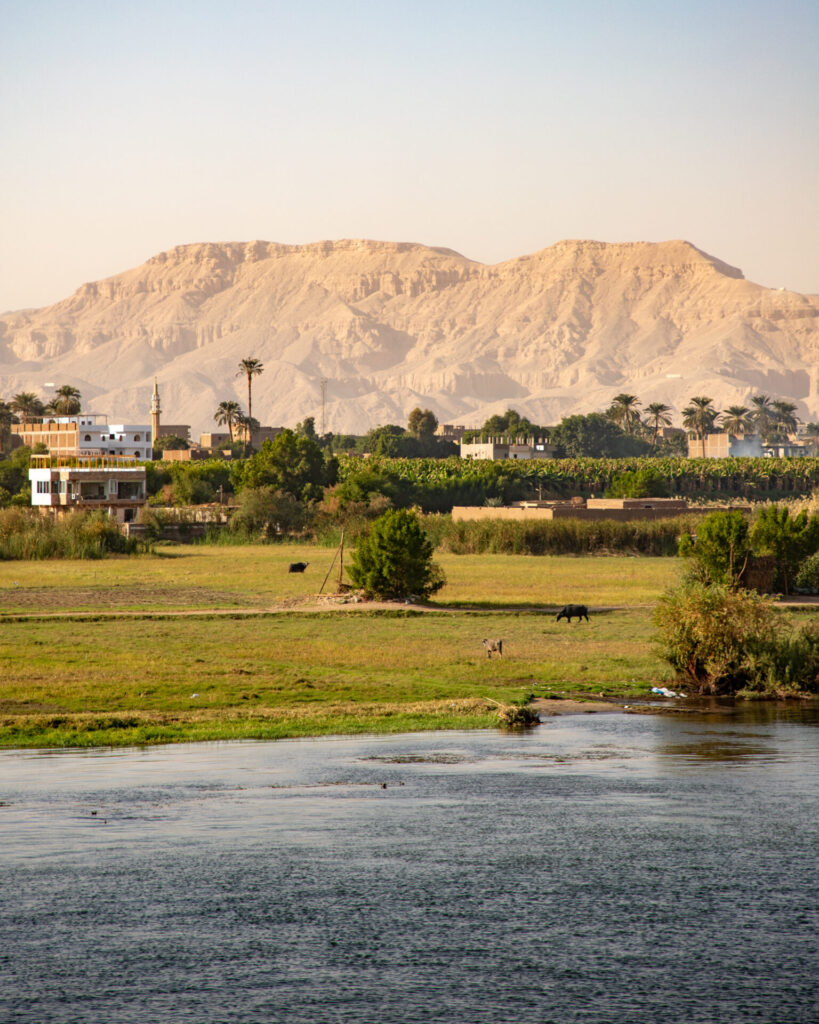
There’s something truly magical about sailing the Nile— drifting through palm-lined farmland, watching daily life unfold along the river, and stepping directly off the boat into some of the most extraordinary ancient sites in the world.


For many travellers, a Nile Cruise is a once-in-a-lifetime experience (for us, it’s been a three-times-and-counting experience…), but it can be surprisingly confusing to understand how these cruises actually work and what you’re getting when you book one.
Here’s the key thing to know: about 95% of Nile Cruises operate in exactly the same way, following the same route, visiting the same temples, and offering a very similar day-to-day structure. This post will break down both the classic Nile Cruise AND a selection of more unique boutique experiences (like sailing the river with Nour El Nil), so you can decide which is the best fit for your trip!
🛳️ NILE CRUISE OVERVIEW
* Nile Cruises operate on small river boats that carry ~20–120 passengers
* Cruises run both directions between Luxor and Aswan over 3–5 days
* Full board (3 meals per day) are provided on-board the ship
* All major temple visits are included, with guided tours at each stop
* Expect to pay anywhere from $500 to $3,000 USD per person, depending on the level of luxury
Is a Nile Cruise worth it?
I’ve had many people ask whether a Nile Cruise is worthwhile if you don’t usually enjoy cruise-style travel, and if the previous sections haven’t already convinced you: YES, a Nile Cruise is the absolute BEST way to explore the temples between Luxor and Aswan!
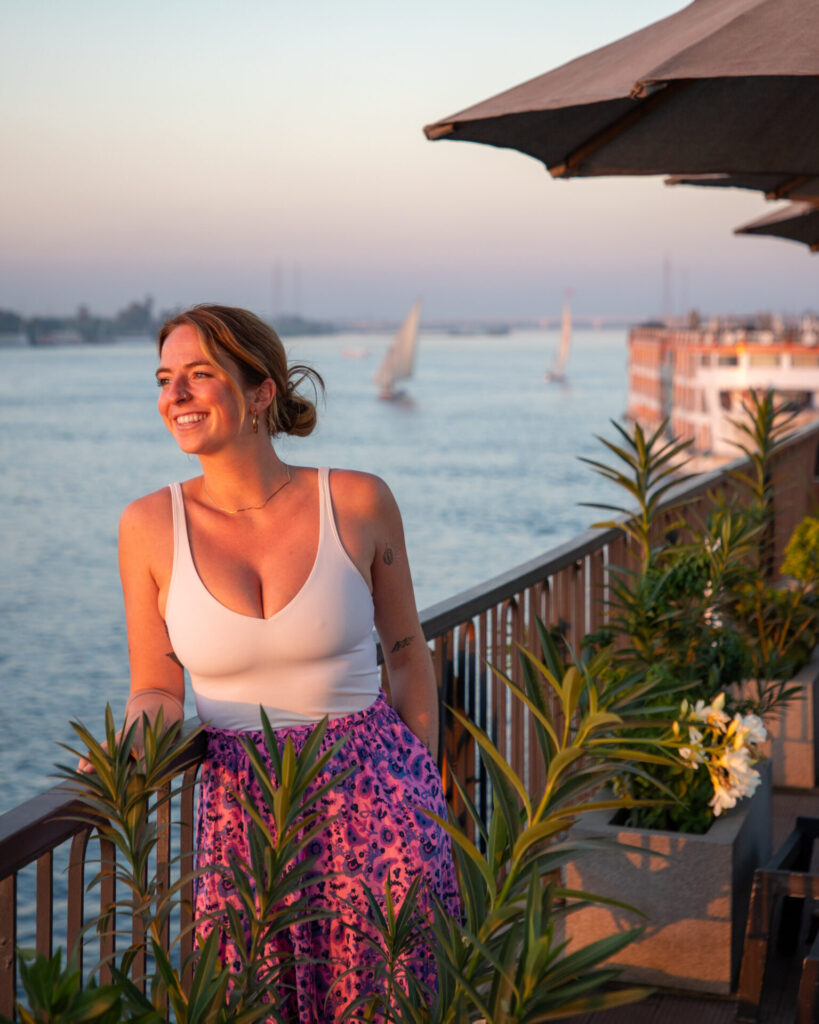
A Nile Cruise isn’t really about the boat— it’s about the way it allows you to experience Egypt. Instead of spending hours each day driving between temples, you move through the landscape at a slower pace, watching life unfold along the river and arriving directly at each site by water.
And unlike large ocean cruises, which can feel disconnected from the destination, Nile Cruises feel far more intimate and atmospheric, a truly classic way to explore this part of Egypt. I would strongly encourage you to include a Nile Cruise in your itinerary, and the rest of this guide will help you figure out how!
>>> After something even more intimate and unique? Read my complete review of our recent experience sailing the Nile from Esna to Aswan onboard a luxury wooden dahabiya with Nour El Nil!
Nile Cruise itinerary
Nile Cruise starting points
The vast majority of Nile Cruises begin in Luxor (sailing south to Aswan) or in Aswan (sailing north to Luxor), and both cities are easily accessible via domestic flight or overnight train from Cairo.
There are only a handful of exceptions to these starting points, but one notable example is Nour El Nil, whose small fleet of luxury wooden dahabiya sail from Esna, about 1hr south of Luxor. There are so many reasons to love this unique route— read my detailed review of the experience!
Nile Cruise departure dates
Boats depart from Luxor and Aswan every day of the week, but individual ships operate on fixed schedules. For example, a specific boat might only sail from Luxor on Mondays and from Aswan on Fridays.
If your travel dates are flexible, you can choose your boat first and plan your itinerary around its departure schedule, but if your dates are fixed, it’s best to contact a local agent who can identify the best available cruise options for your itinerary. I’ll give more recommendations in the booking section below!
Nile Cruise duration
Nile Cruises are commonly offered with 3, 4, or 7-night itineraries, but it’s important to understand that the route doesn’t change with trip length— and a longer cruise does NOT mean more temples!
In most cases, extra nights are simply spent docked in Luxor and/or Aswan, using the boat as a floating hotel while you explore on land (still with included meals and your private guide), and the 7-night option actually doubles back along the same stretch of river to return to your starting point, simply extending the experience without adding anything new.
For most travellers, the 4-night Nile Cruise is the perfect balance of pacing and cost— this itinerary adds an extra day in Luxor, which allows you to split the East Bank (Karnak, Luxor Temple) and West Bank (Valley of the Kings, Hatshepsut) across two separate days instead of rushing both into one.
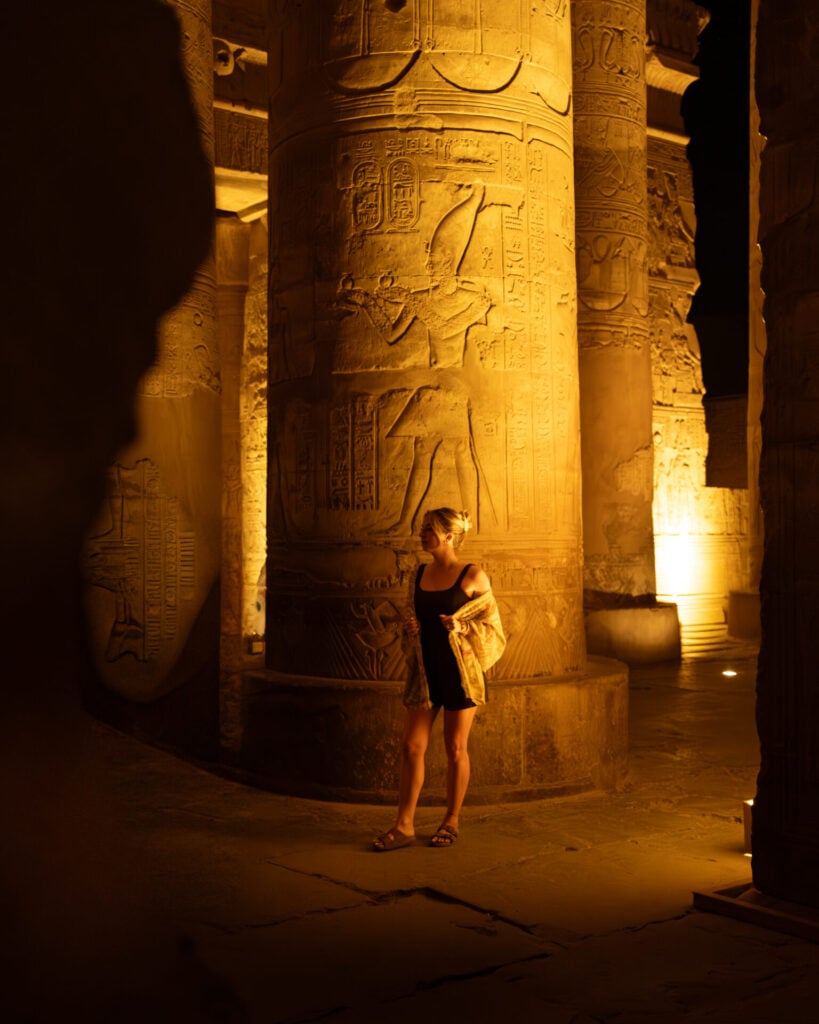
Nile Cruise itinerary
From Luxor to Aswan (sailing north to south), this is the classic 5-day/4-night Nile Cruise itinerary followed by the vast majority of boats:
- Day 1: Luxor East Bank (Karnak Temple, Luxor Temple), overnight in Luxor
- Day 2: Luxor West Bank (Valley of the Kings, Temple of Hatshepsut, Colossi of Memnon), overnight near Edfu
- Day 3: Edfu Temple, Kom Ombo, overnight in Aswan
- Day 4: Aswan (Philae Temple, Nubian Village), overnight in Aswan
- Day 5: Optional day-trip to Abu Simbel
Note: the 4-day/3-night itinerary condenses all of Luxor into a single day, while the 8-day/7-night option follows this exact itinerary, picks up new passengers, and then takes 3 days to return back to your starting port (with no new stops).
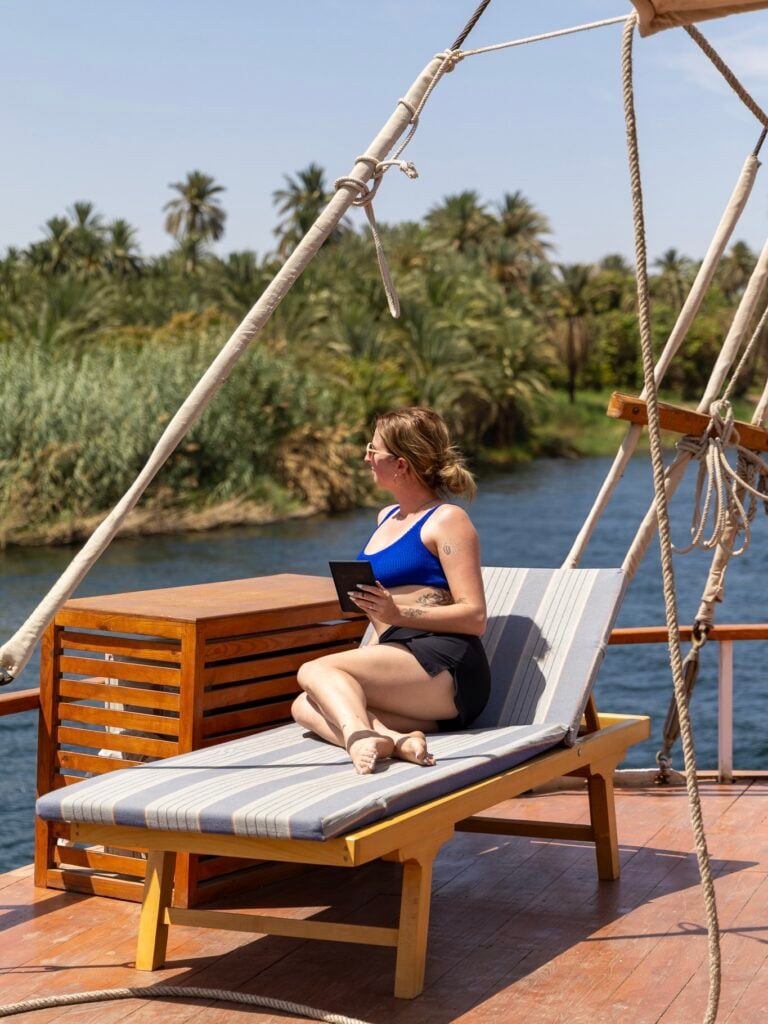
Exceptions to the classic Nile Cruise itinerary
We’ve previously done a classic 3-night Nile Cruise starting in Aswan and 4-night Nile Cruise starting in Luxor, and both experiences were consistent with 95% of the boats operating this route— but a small number of boutique operators DO offer something different.
On our most recent trip, we sailed with Nour El Nil from Esna to Aswan on a 5-night itinerary that included unique stops and a far more relaxed pace. Instead of moving in lockstep with every other boat on the river, we visited temples at quieter times, stopped at smaller, lesser-visited sites along the way, and even spent a day swimming along a secluded stretch of the Nile.
- Day 1: Temple of Khnum, sail from Esna
- Day 2: Temple of Nekhbet at El Kab + Edfu Temple
- Day 3: Full day sailing to Nile islands with swim stops
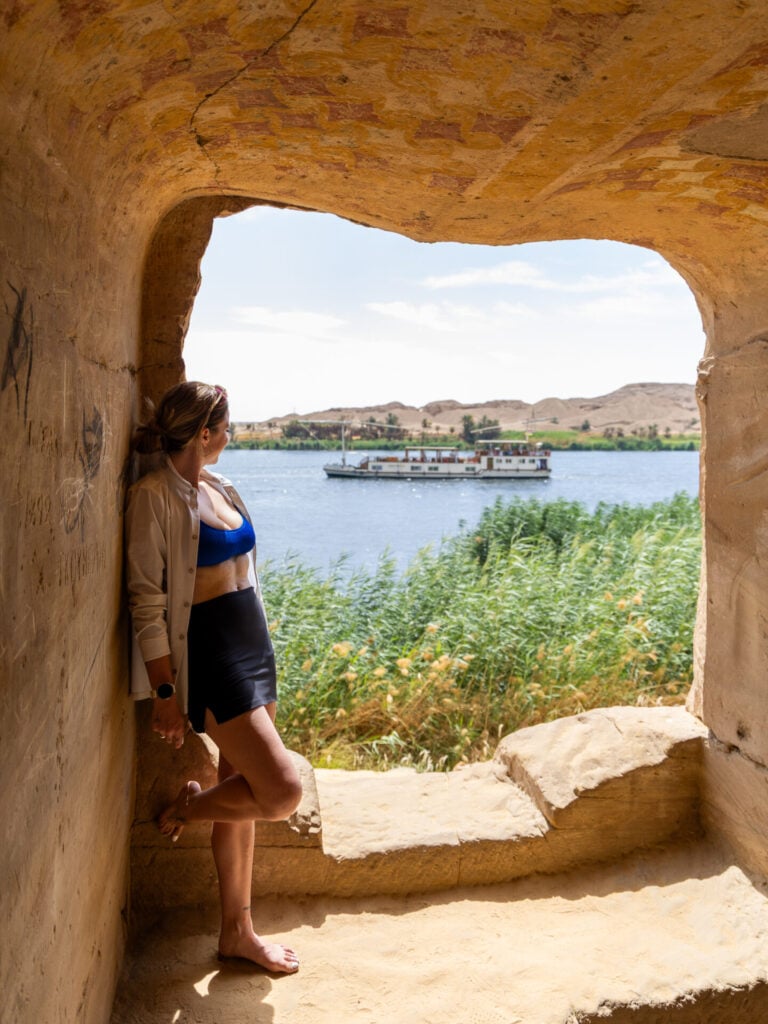
- Day 4: Speos of Horemheb + quarry at Gebel Silsileh
- Day 5: Kom Ombo
- Day 6: Disembark in Aswan
>>> Check out full details of the Nour El Nil itinerary in my complete review!
Nour El Nil was definitely our favourite Nile Cruise experience, but also by far the most expensive (rooms started at $5,000USD for 2 people sharing) and it doesn’t include any of the classic stops in Luxor or Aswan, which means you need to add 1-2 nights in each city to visit the temples here on your own. If you’re after something truly unique and have the extra time in your itinerary, I HIGHLY recommend Nour El Nil!
Booking a Nile Cruise
What’s included in the cost
Almost without exception, Nile Cruises all include the same core elements:
- Accommodation in a private cabin with ensuite bathroom
- Full board (3 meals per day) served on the boat
- Entrance fees for all major temples along the route
- A licensed Egyptologist guide at each stop (and driver, where needed)
What’s typically NOT included:
- Drinks (including soft drinks and alcohol)
- Tips for guides, drivers, and crew
- Optional excursions, including Abu Simbel and the hot air balloon in Luxor
Cost of a Nile Cruise
A 4-night Nile Cruise aboard a mid-tier boat typically costs around $500USD per person, while luxury boats can easily run $1,000-3,000USD per person for a more premium experience with better rooms, higher-quality food, and high-end amenities.
It’s worth noting that some boats charge per ROOM rather than per person, so you’ll pay a hefty single supplement if you’re travelling alone.
>>> Local agents typically get WAY better deals on Nile Cruises than are available through direct booking, so we recommend contacting Egylust through this form and they’ll get back to you with tailored suggestions!
Booking a Nile Cruise directly
Many Nile Cruises are listed on Booking.com or have their own websites where you can reserve cabins, inclusive of everything described previously (all meals, entrance fees, guide, etc). However, you’ll rarely get the best deal booking directly!
Also keep in mind that most ships operate on fixed weekly schedules— for example, a boat might only sail from Luxor on Mondays and from Aswan on Fridays—so your itinerary will need to align perfectly with these departure dates. In almost all cases, it’s better to work with a local agent who can pair you with the BEST boat depending on your dates and budget.
After three Nile Cruises, these are the specific boats we’d recommend checking out (or asking an agent to reserve):
- Le Fayan II— this was the first boat we ever sailed on and it’s still our top pick for the best value classic cruise route, with a beautiful rooftop pool and sundeck, luxurious rooms, and fantastic food and service
- Soleil— one of the most high-end river boats on the Nile, offering 5-star accommodation, fine dining, and spa facilities, while still following the standard route
- Nour El Nil— a fleet of luxury dahabiya boats (traditional Egyptian sail boats) offering a slower, more curated experience with just 20 passengers and a far more unique itinerary
Booking a Nile Cruise through a travel agent
I nearly always advocate organising your own travel, but when it comes to booking a Nile Cruise, using a local agent can actually be super helpful— particularly if your dates are fixed within a larger Egypt itinerary. Because each boat operates on specific departure days, a travel agent can quickly identify which cruises are available on your dates, recommend the best options based on your budget and travel style, AND access better deals than typically listed online!
We’ve worked several times with Mustafa and the team at Egylust, and they’ve been excellent at matching our group with the right cruise based on timing, budget, and travel style.
>>> Contact Egylust through this form and they’ll get back to you with tailored suggestions!
What to expect on a Nile Cruise
While the overall structure of a Nile Cruise is remarkably consistent across boats, the quality of the experience can vary quite a bit depending on the size of the ship, the number of passengers, and the level of service. Here’s a more detailed overview of what to expect on a Nile Cruise:
Rooms on the boat
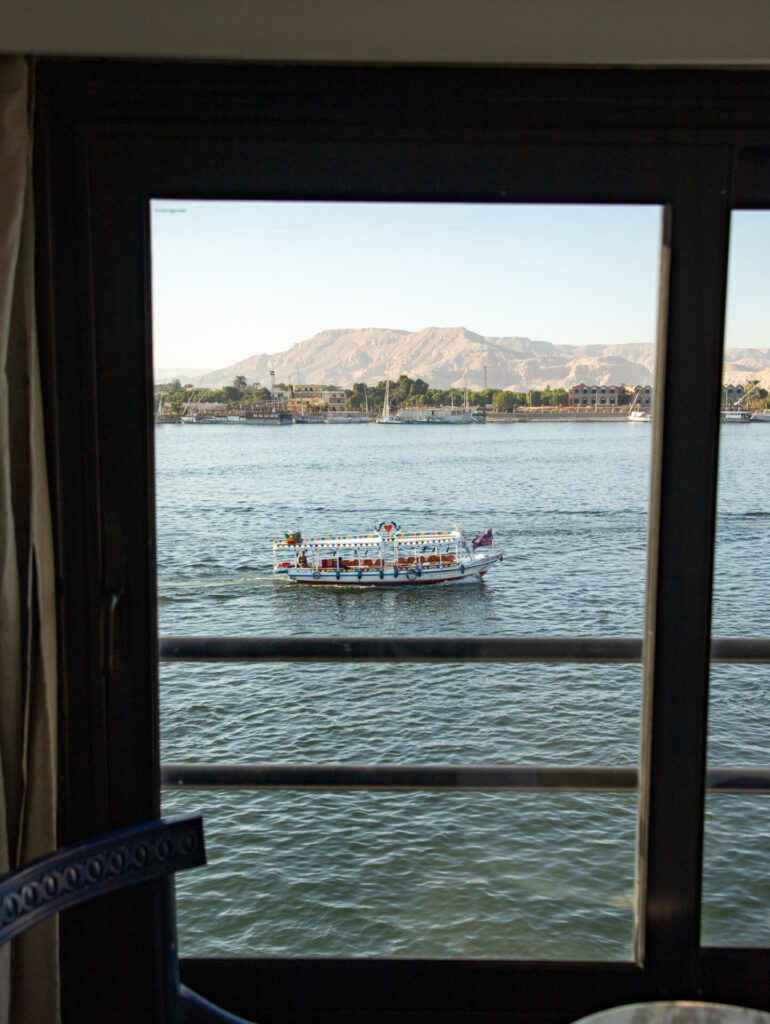
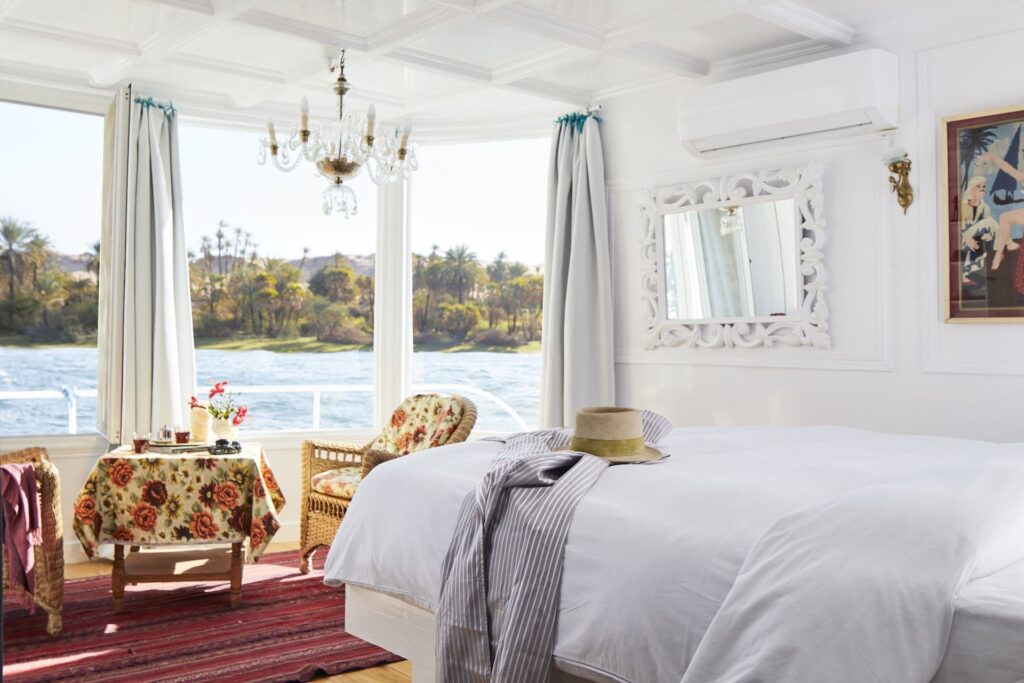
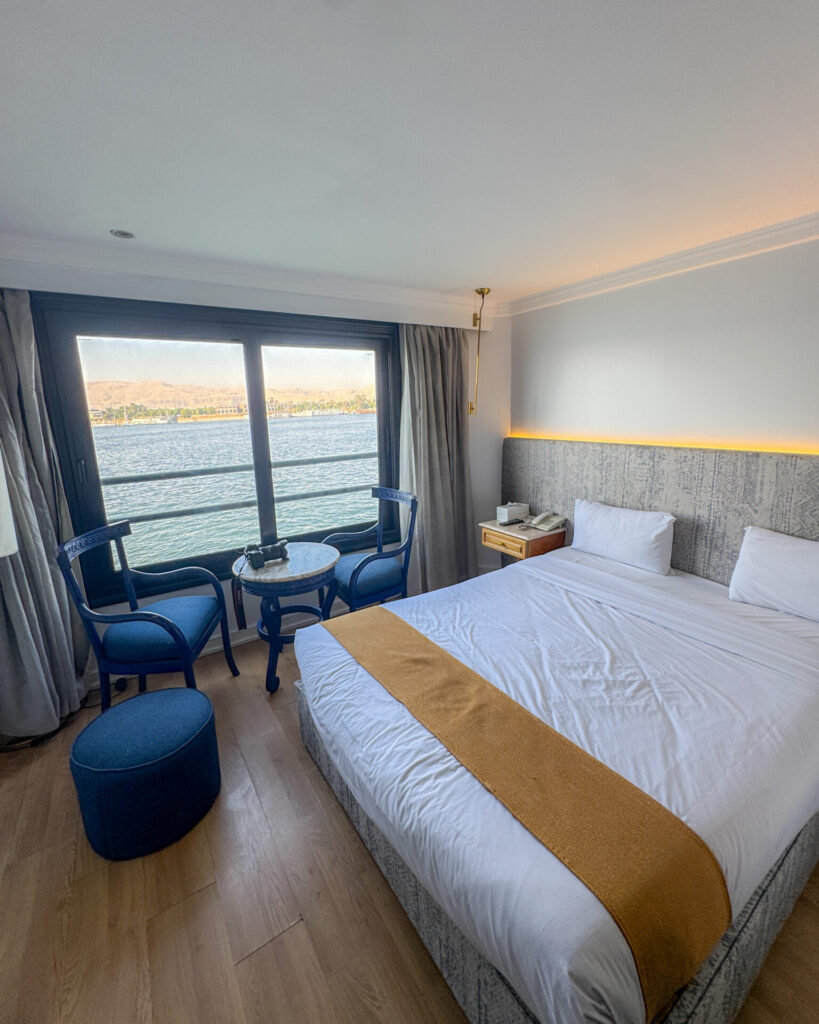
Cabins on a Nile Cruise are very similar to hotel rooms, with private bathrooms and varying levels of comfort depending on the price of the boat. On mid-range and higher-end cruises, rooms are often surprisingly spacious, with large windows overlooking the river— one of the highlights of the experience!
That said, you’ll likely spend most of your time outside the room, especially on boats with a well-designed sundeck and comfortable shared spaces. For that reason, I’d prioritise the quality of the common areas over cabin size when choosing a boat.
Shared spaces & onboard facilities
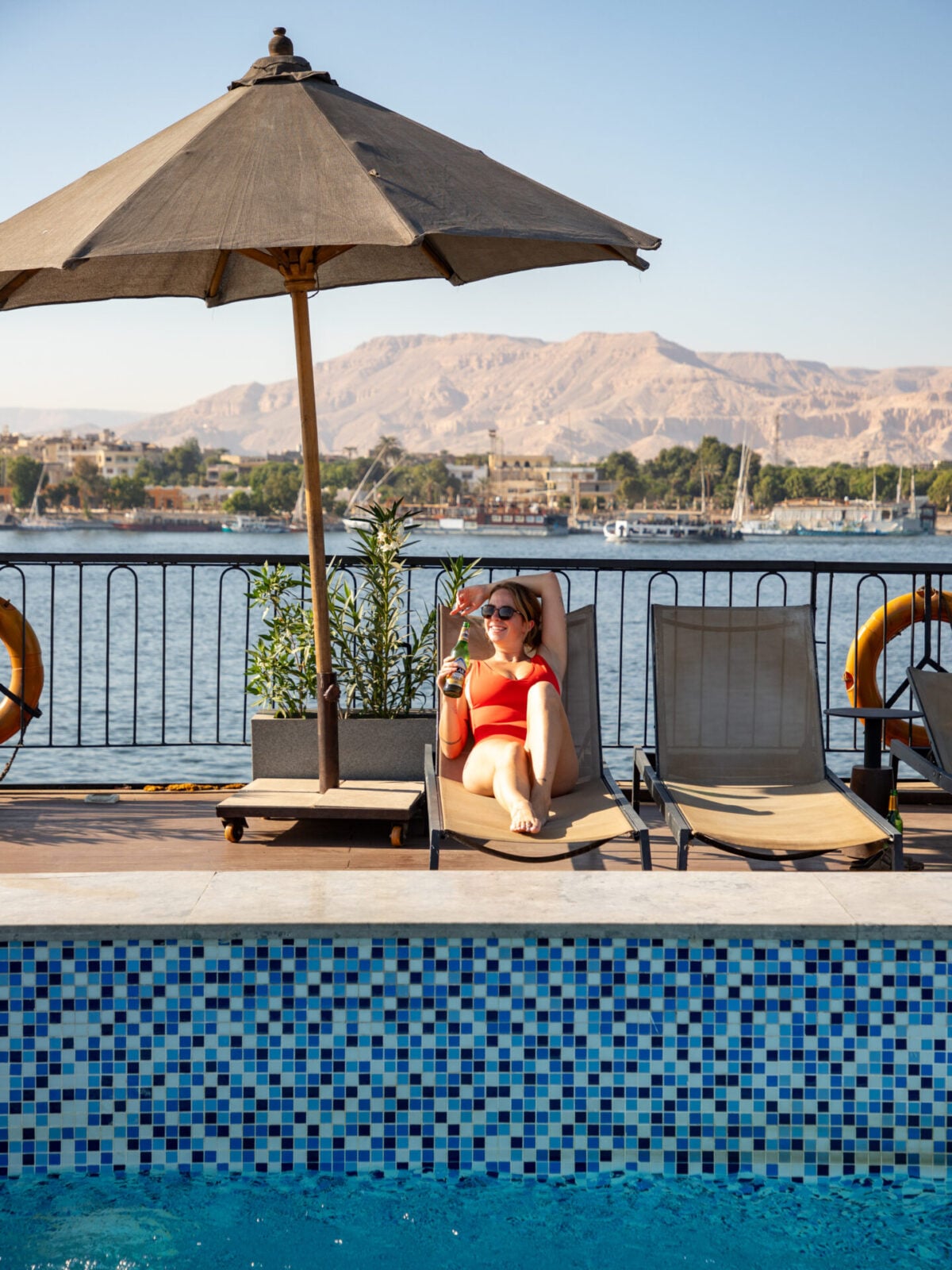
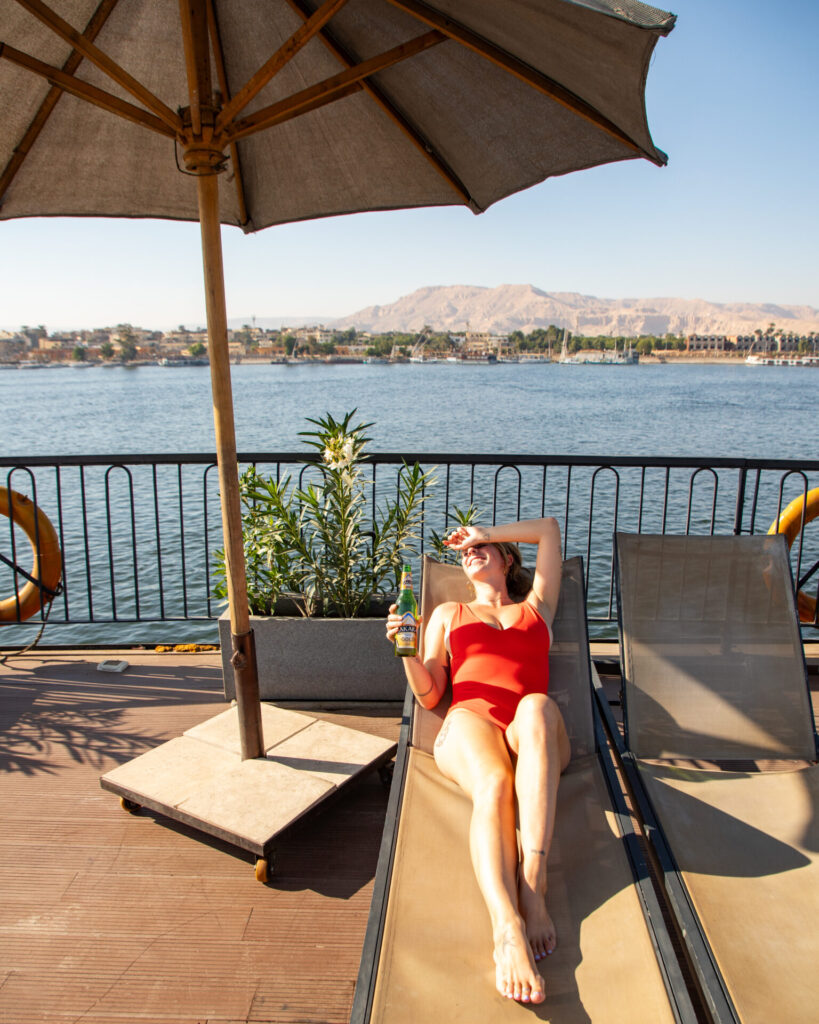
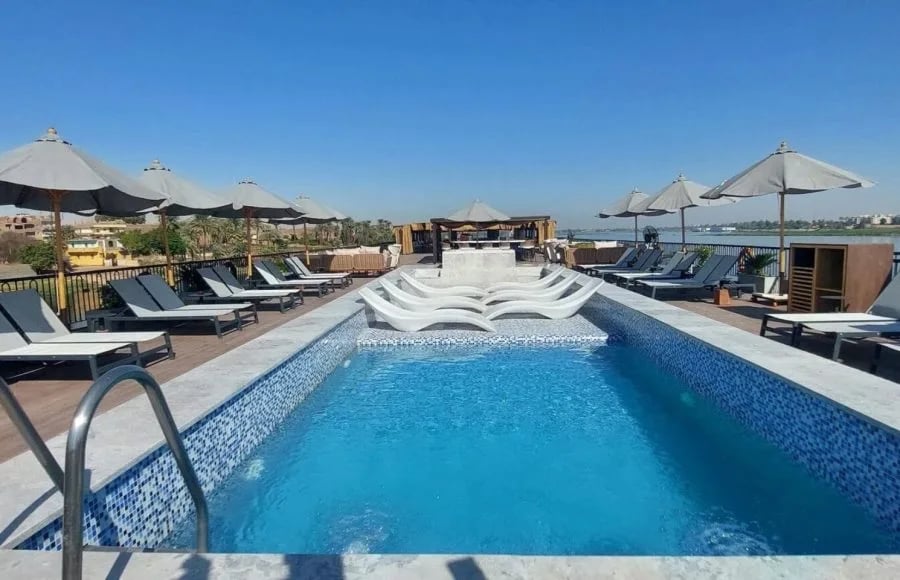
Most boats feature a sundeck with lounge chairs, a bar, and a swimming pool, but the overall comfort and design of these spaces can vary significantly.
On more premium boats, the sundeck is a genuinely enjoyable place to spend time between excursions— somewhere you’ll want to linger with a drink, watch the scenery drift by, and relax between temple visits. On more basic boats, these areas can feel more functional and sometimes crowded, which takes away from the experience a bit.
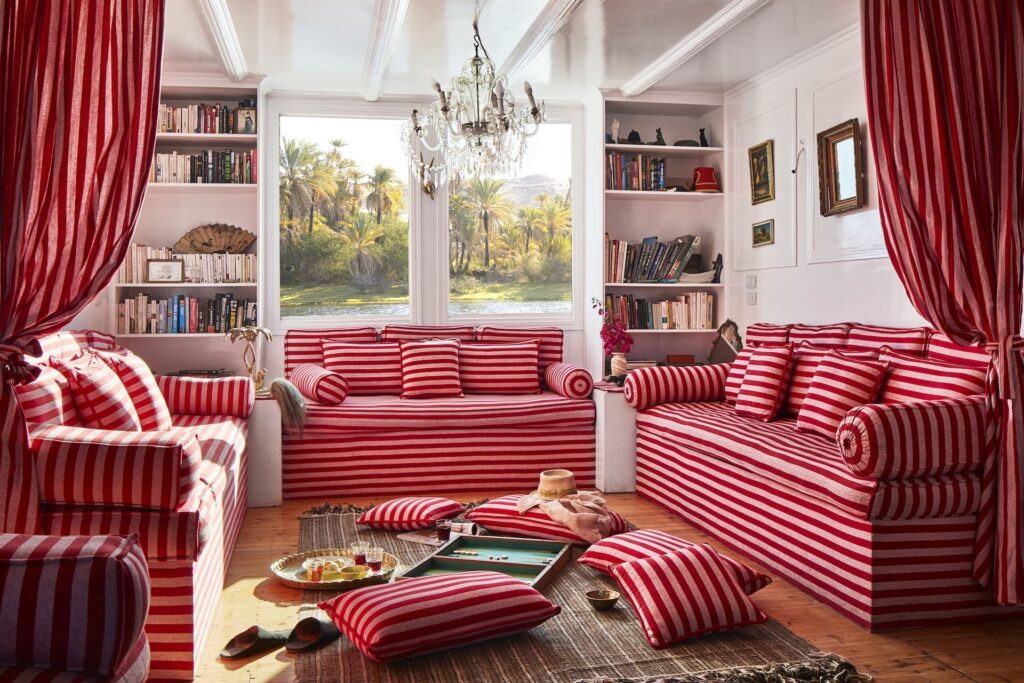
Inside the boat, you’ll typically find a few different lounge areas (and another inside bar), as well the dining area where meals are served each day. You’ll spend a majority of your time on a Nile Cruise moving between the sundeck, lounge areas, dining room, and temple visits, really only retreating to your room for bed, so I’d recommend prioritising a boat with appealing common spaces!
Many boats also have an onboard masseuse or small spa offering treatments at an additional cost, ranging from very basic to extremely luxurious depending on the vibe of your boat.
Food quality
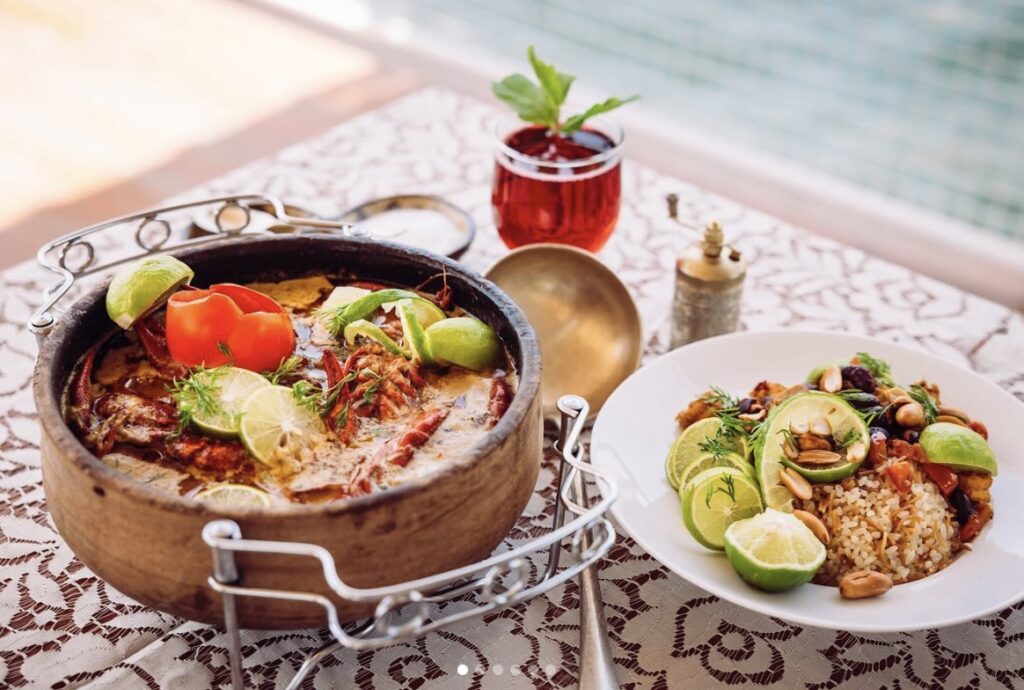
Across all Nile Cruises, three meals per day are included and served onboard, usually in a buffet format with a mix of Egyptian and international dishes.
Breakfast typically includes a spread of eggs, yoghurt, muesli, fresh fruit, bread, and pastries, alongside Egyptian staples like falafel and ful (fava beans). Lunch and dinner generally feature a rotating selection of salads, meats, vegetables, rice or pasta dishes, and simple desserts.
In our experience, food quality varies widely depending on the boat— budget cruises can be a bit inconsistent, while higher-end boats place more emphasis on food quality and presentation. That said, the overall variety of food at mealtimes is consistently strong, and even our gluten-free friend always had plenty of options— on several occasions, the chef even brought out a separate dish directly to the table!
Alcoholic drinks
Across the board, alcoholic drinks are excluded in the base cruise price but available for purchase on board. Expect to pay around $3 for local beer and $5–10 for cocktails, so it’s reasonably affordable to enjoy a few drinks on the sundeck or at dinner each night. Staff will add your drinks to a running tab on your room and you’ll pay the balance on check out.


You can also purchase alcohol in Luxor or Aswan (or at duty-free) to bring onto the boat, storing it in the mini-fridge in your room. Some boats don’t actively encourage this, but in our experience, it’s generally tolerated as long as you’re discreet. And in the case of Nour el Nil, guests are invited to bring their own alcohol with no corkage fee!
Daily temple visits
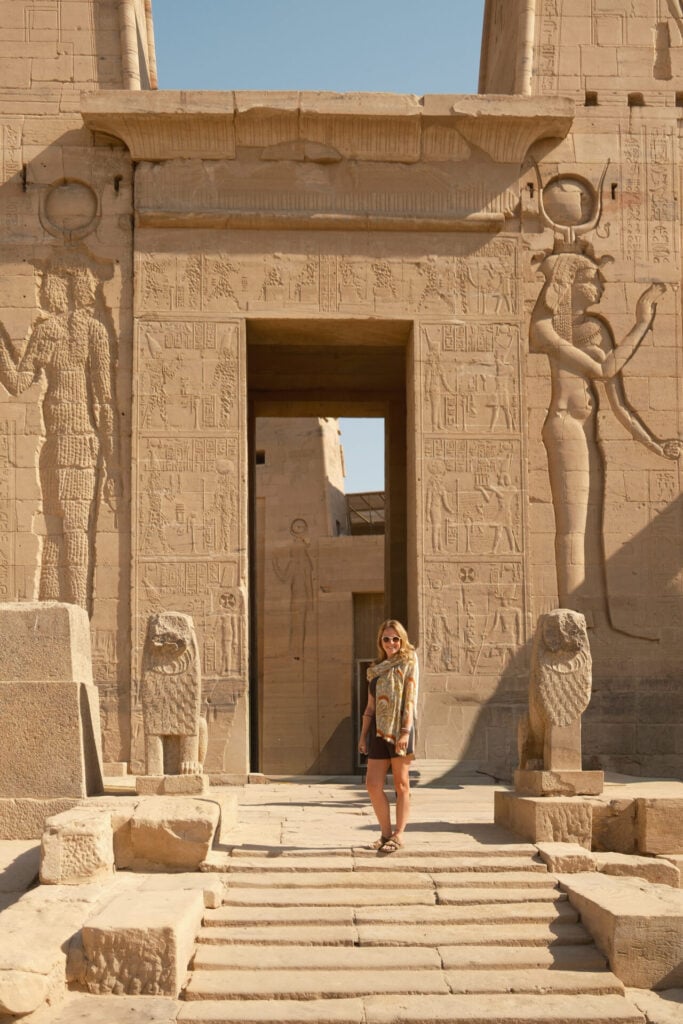
The highlight of any Nile Cruise experience is the series of disembarkations at riverside temples— the cruise itinerary typically includes 1-2 stops per day, nicely interspersed with rest time on the boat while you sail peacefully between locations.

You’ll be assigned a licensed Egyptologist guide, typically private even if you’re just travelling as a couple, at each stop along the route— one guide in Luxor (for multiple days) and separate guides in Edfu, Kom Ombo, and Aswan. This is a major advantage of cruising, as it removes the need to organise transport and guides independently in each location!
And because you have a private guide at your disposal, there’s often some flexibility in how you structure your day with your own guide (within the constraints of the sailing schedule). For example, if your boat arrives in Edfu in the late afternoon and departs the following morning, you can usually choose whether to visit the temple at sunset or early the next day— allowing you to avoid crowds and otherwise tailor the experience to your preferences.
>>> Book your Nile Cruise with Egylust and they’ll organise excellent local guides for you in each stop, totally private even if you’re just 2 people!
*Nile Cruise highlights
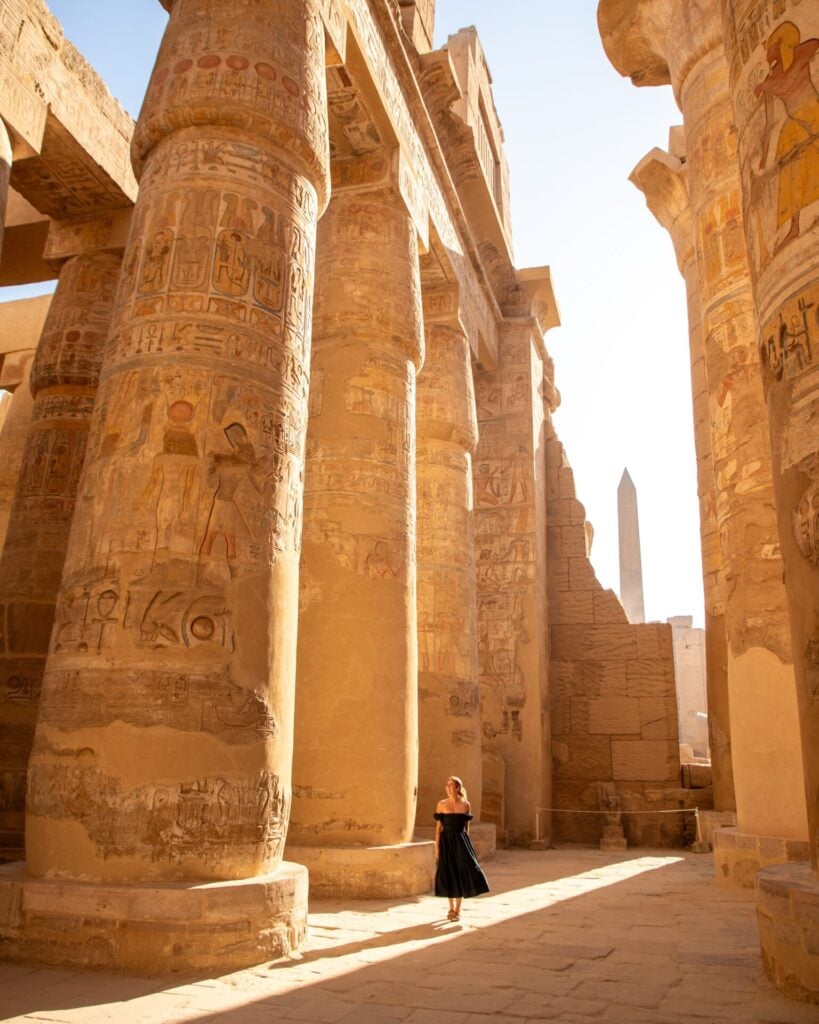
Here’s a quick look at the incredible temples and experiences you’ll encounter along a classic Nile Cruise, travelling from Luxor to Aswan.
>>> Read my MASSIVE guide to the 10 best temples in Egypt for way more detail!
Karnak Temple
If you’re starting in Luxor and sailing south, the first stop on your itinerary will typically be the East Bank of Luxor, which features two spectacular temples: Karnak and Luxor.
Karnak Temple was the most important religious site in ancient Egypt, dedicated primarily to Amun-Ra, and it remains the largest religious complex EVER constructed anywhere in the world. The scale is almost impossible to grasp, and the highlight is definitely the Great Hypostyle Hall, where 134 towering columns create a forest of ancient stone!
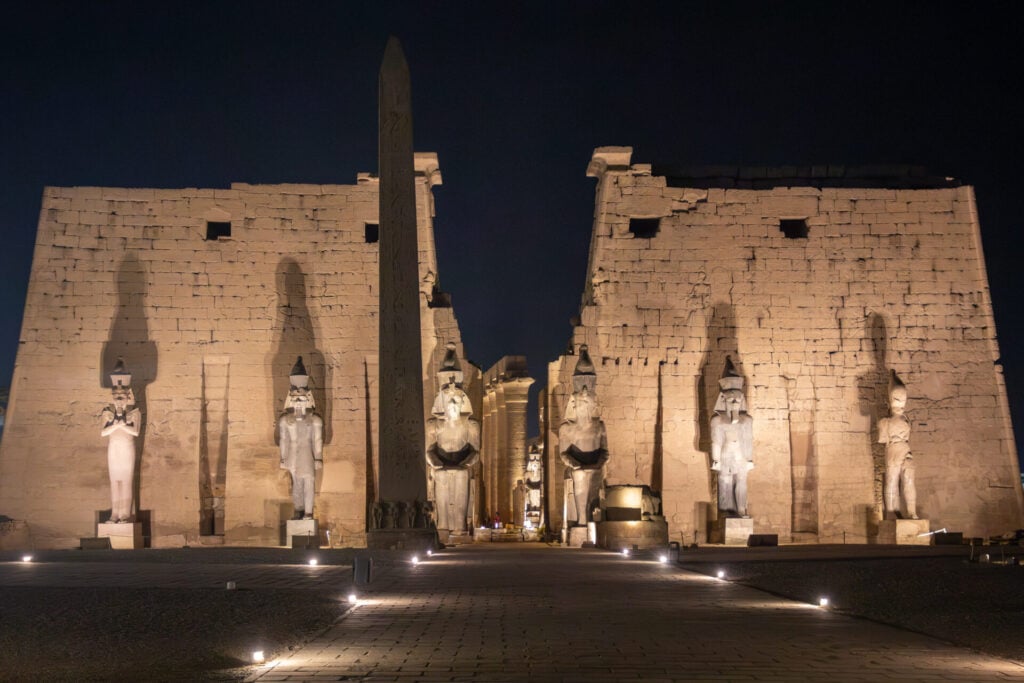
Luxor Temple
Connected to Karnak by the 3km Avenue of Sphinxes, Luxor Temple offers a completely different experience and is best visited after dark when the entire complex is beautifully illuminated.
Luxor Temple stands out for the six enormous and well-preserved statues lining the façade of the prolific Pharaoh Ramesses II, who built more monuments and temples than any other pharaoh during his 66-year reign!
>>> Read more about what to see in Luxor if you have extra time!
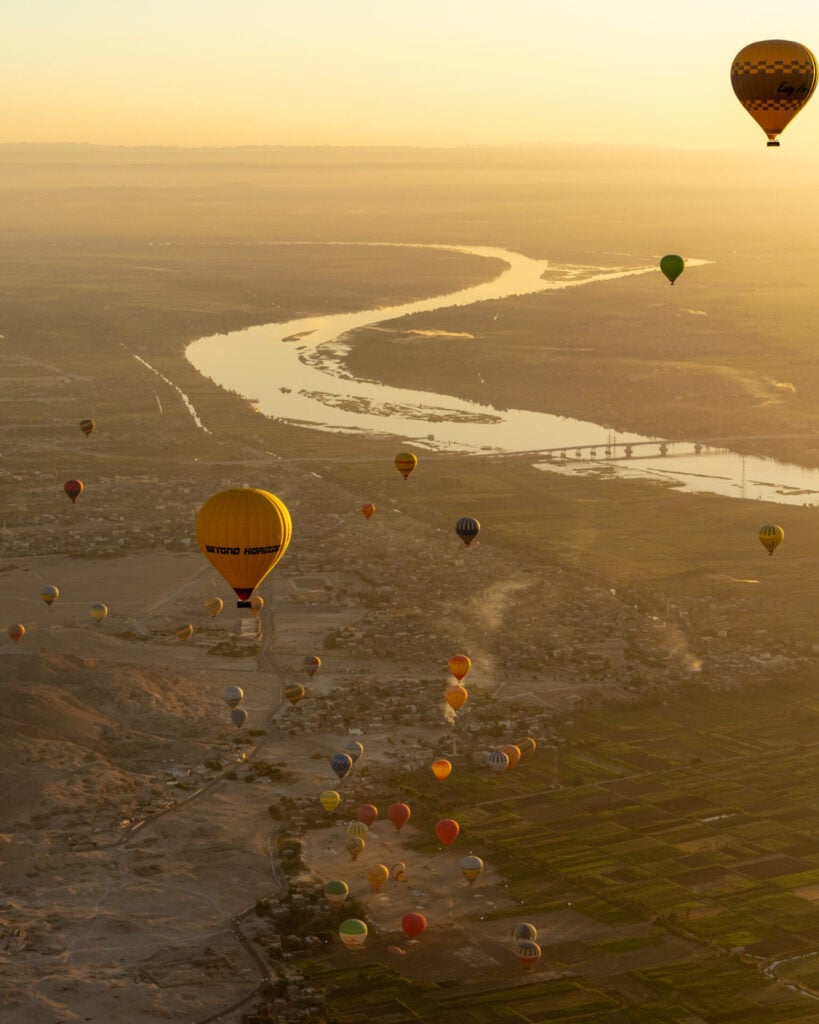
Sunrise hot air ballon (extra)
For an additional cost (usually $80-100), you can begin your tour of Luxor’s West Bank very early with a sunrise hot air balloon. Floating above the Nile, temples, and desert landscape at dawn is an incredible experience— and if you’ve been dreaming of a hot air balloon ride, this is one of the most affordable places in the world to do it!
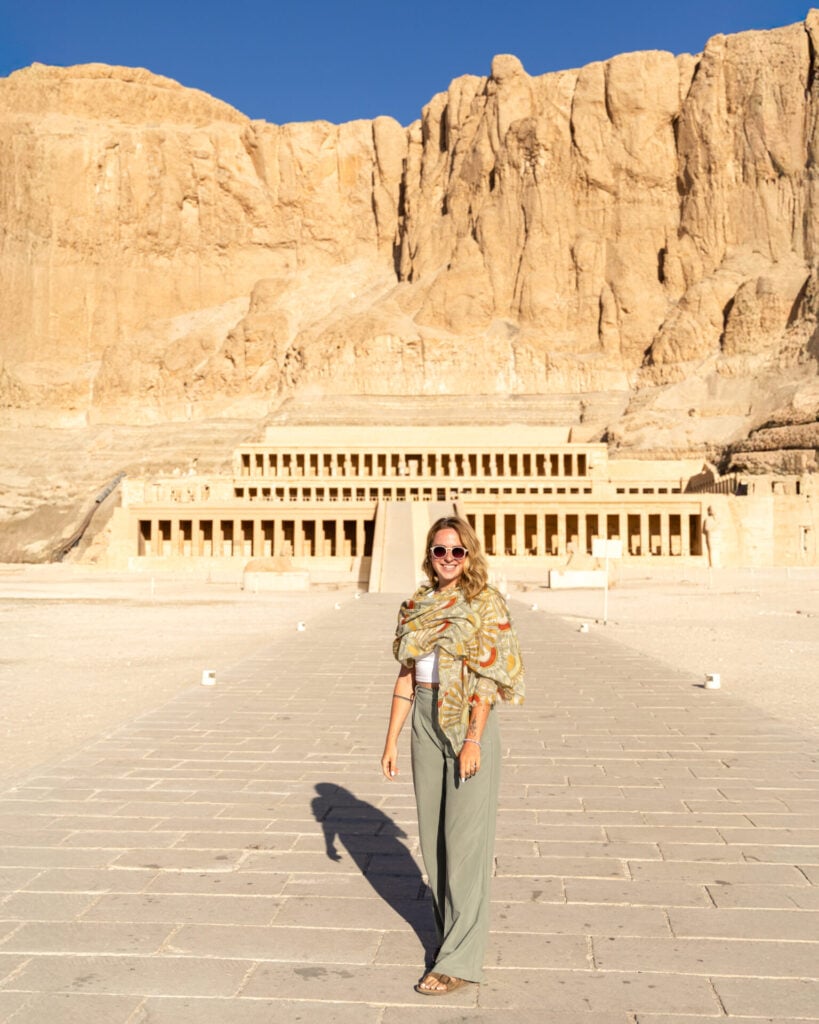
Temple of Hatshepsut
If your cruise itinerary includes 2 days in Luxor, you’ll usually visit the West Bank in the morning of your second day and the order can be largely dictated by you— start at Hatshepsut first for photos of the temple without the crowds or at the Valley of the Kings if you want to prioritise an unhurried experience in the tombs.
Set dramatically against the mountains of Deir al-Bahari, the Temple of Hatshepsut was built to honour Egypt’s most successful female pharaoh, rising in three elegant levels that seem to blend into the surrounding limestone cliffs.
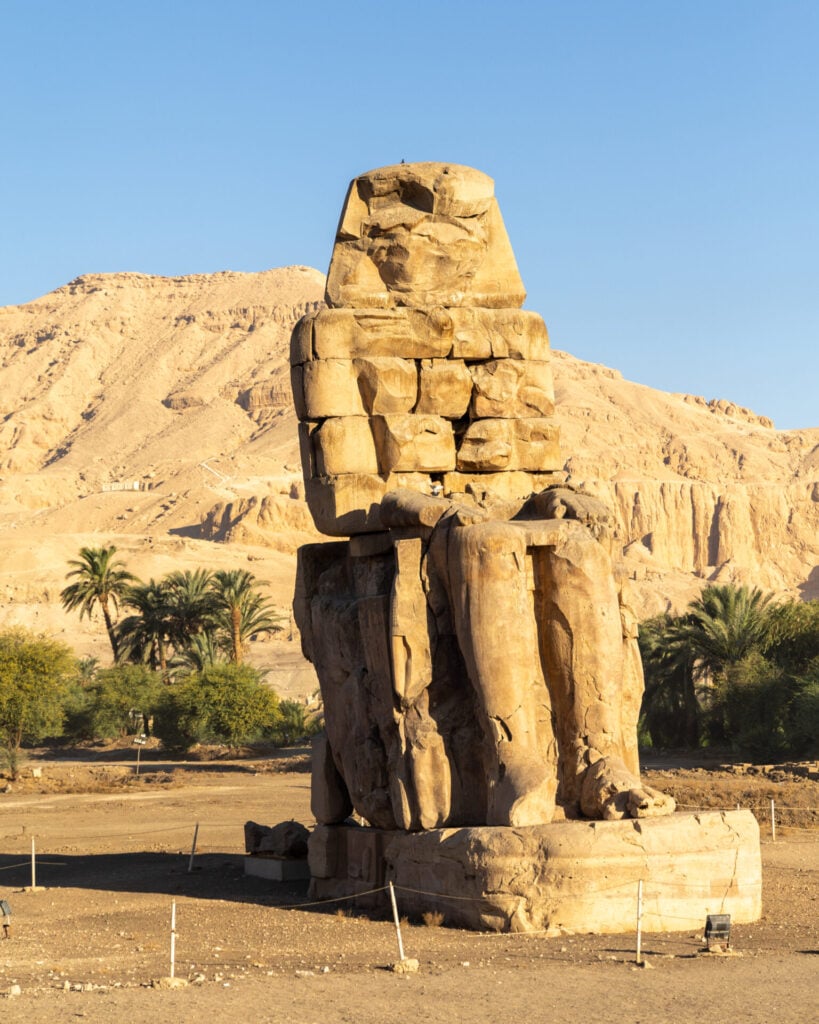
Colossi of Memnon
A quick stop between Hatshepsut and the Valley of the Kings, these two 18m-tall statues of Amenhotep III are all that remain of what was once the largest mortuary temple in Egypt. Today, the statues stand alone, offering a glimpse into the scale of monuments that once dominated this landscape.
Valley of the Kings
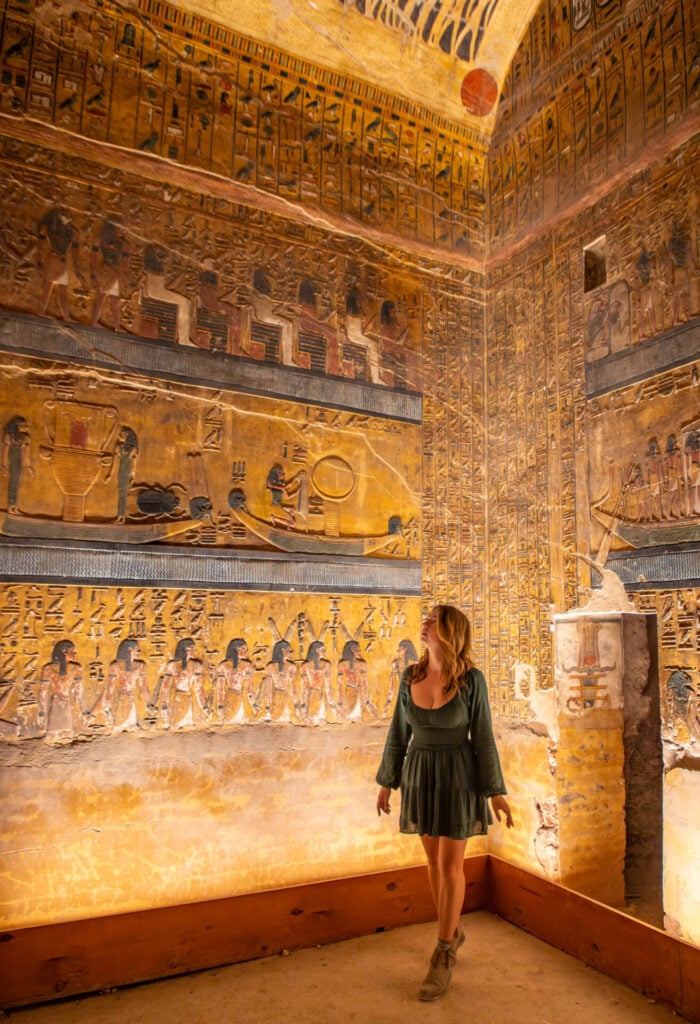
Carved into the cliffs of Luxor’s West Bank, the Valley of the Kings is an ancient necropolis where Egypt’s most powerful pharaohs were laid to rest more than 3,500 years ago. Of all the incredible ancient sites in Luxor, this is my personal favourite—where temples are about scale and spectacle, ancient Egyptian tombs are about finer detail and vivid artwork that feels almost alive.
More than 60 tombs are hidden here, and the standard ticket includes entry to three, with the option to upgrade to special tombs (we highly recommend Ramesses V/VI and Seti I).
>>> Read more about which tombs in Valley of the Kings we specifically recommend visiting!
Edfu Temple
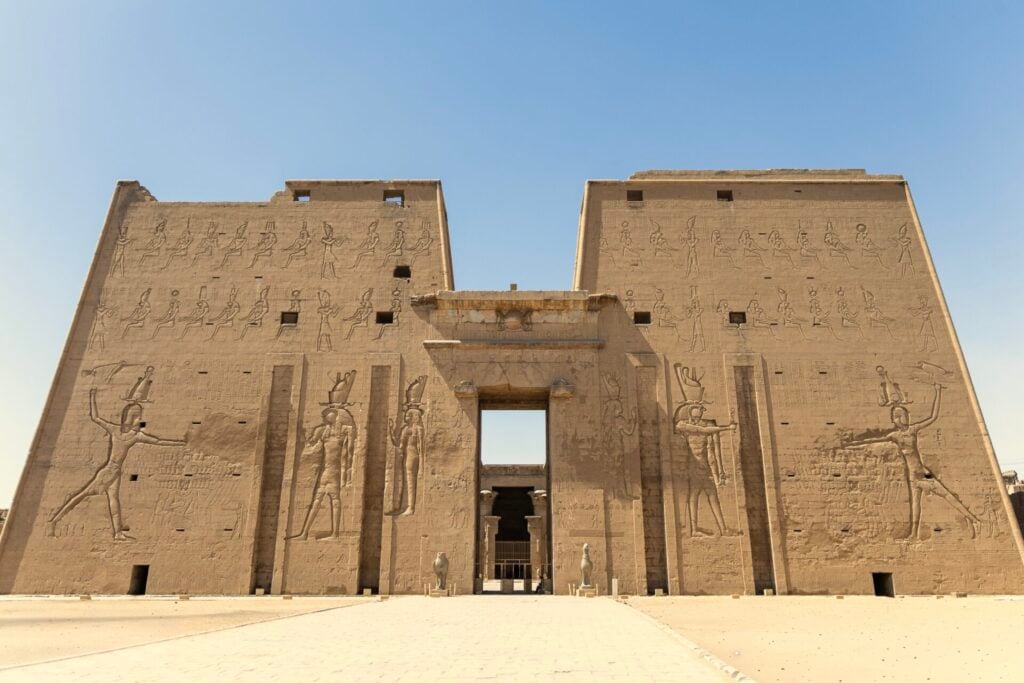
Once the cruise begins to move, your first stop along the river is at Edfu Temple, one of the most complete and best-preserved temples in all of Egypt. Because it spent thousands of years buried beneath the sand (protected against erosion and vandalism), almost every element of a traditional Egyptian temple is still standing.
Most visitors are transported from the boat to Edfu Temple by horse-drawn carriage, but conditions for the animals are often poor, so we’d highly recommend walking (15–20min) instead!
Kom Ombo
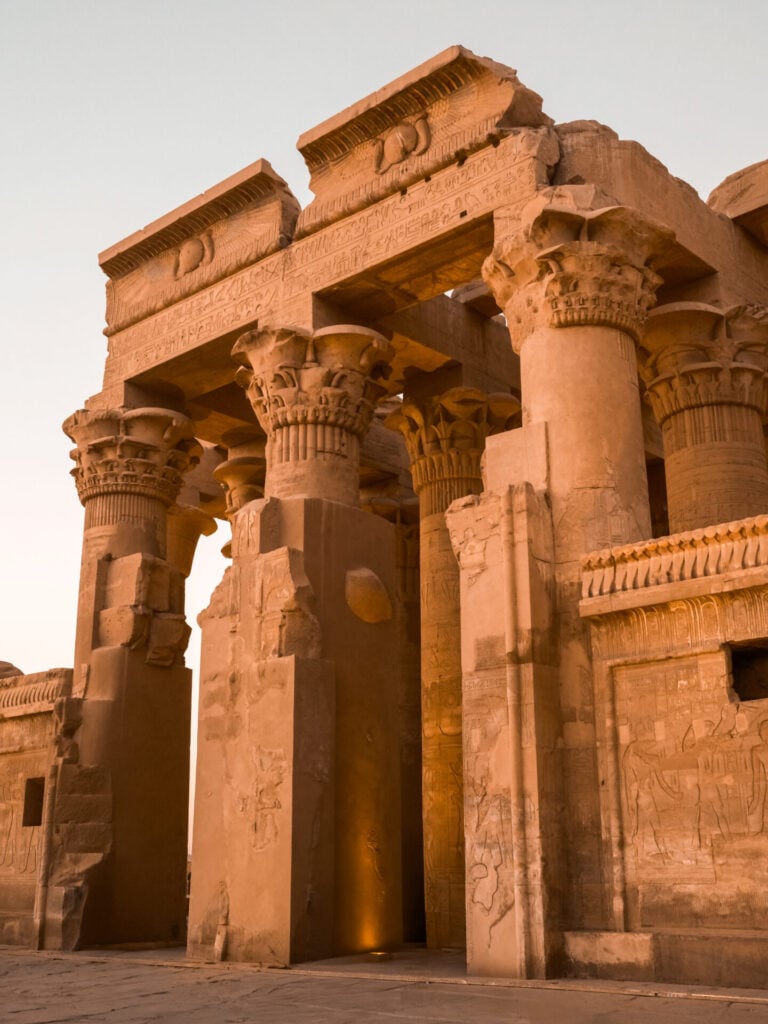
Sailing further south, Kom Ombo is the only temple in Egypt dedicated to two gods: Sobek, the crocodile god associated with the Nile and fertility, and Horus the Elder, the falcon-headed god of kingship. The entire structure is perfectly symmetrical, with mirrored halls and sanctuaries for each deity, and the reliefs here are some of the most striking you’ll see in Egypt.
Most boats dock in the late afternoon and depart the next morning, so you can choose your timing— we highly recommend visiting after sunset when the temple is beautifully illuminated!
Philae Temple
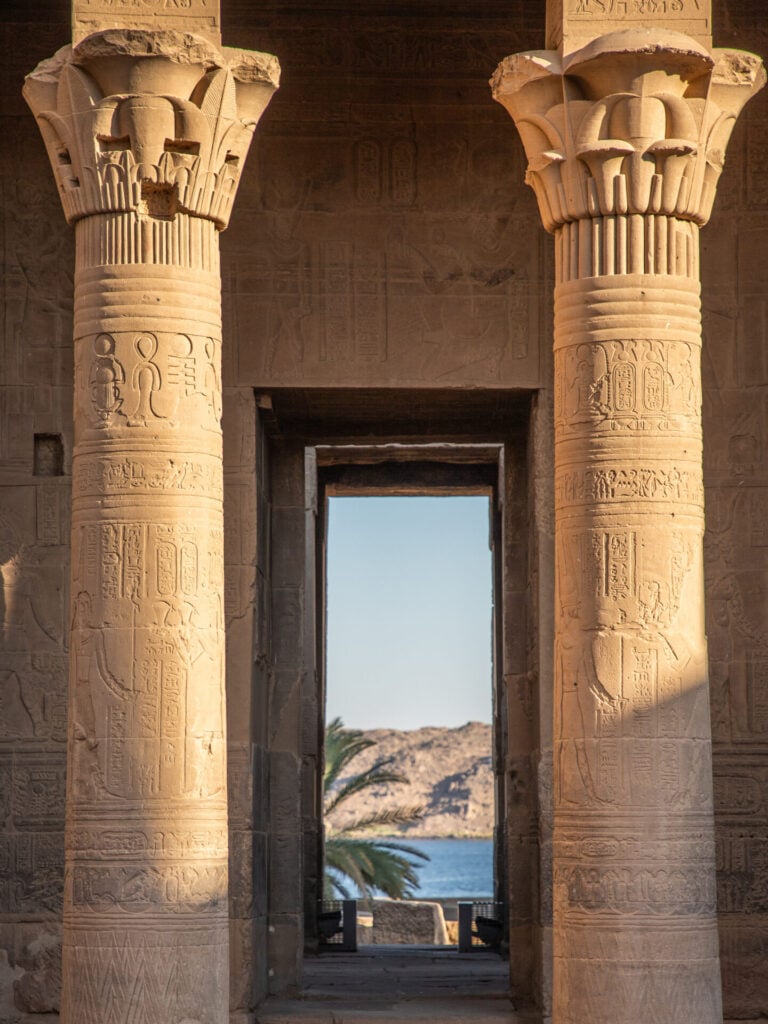
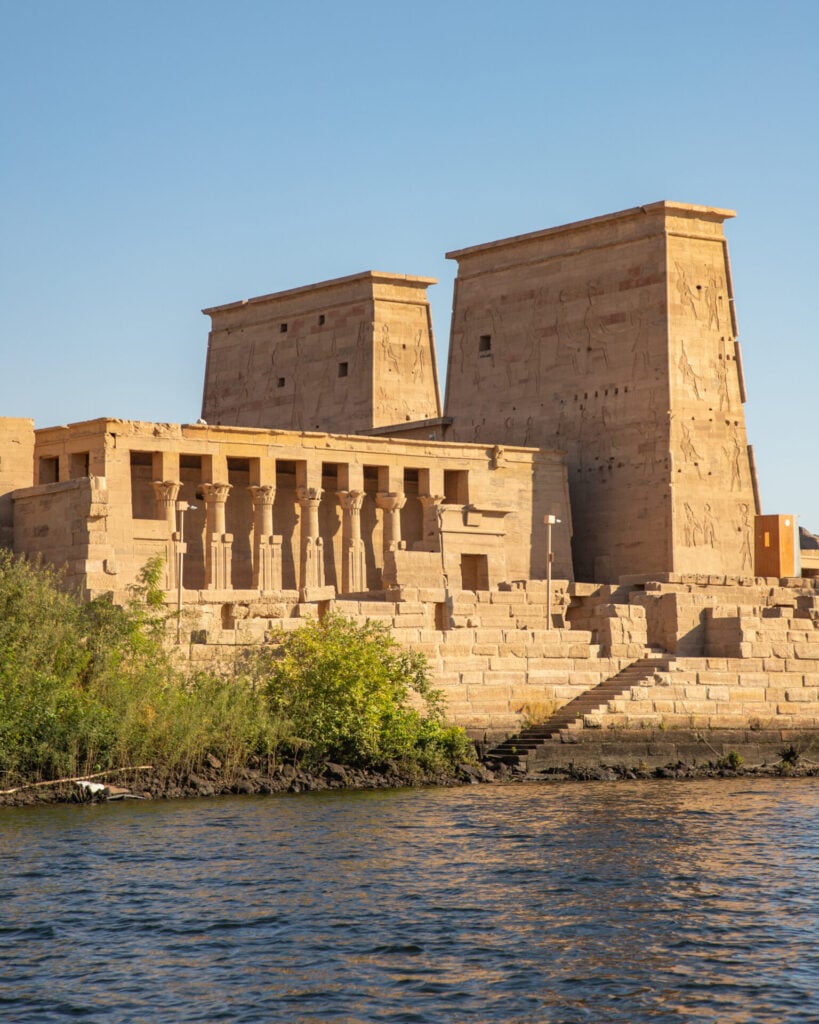
Once in Aswan, disembark from the cruise ship and board a smaller wooden boat to reach Philae Temple, set on a lush island in the middle of the Nile. The approach alone makes this one of the most atmospheric temples in Egypt, rising from the river amidst palm trees and granite boulders.
Dedicated to Isis, goddess of magic, motherhood, and healing, Philae was one of the last active religious centres in ancient Egypt. As Christianity spread in the 5th–6th centuries, many carvings of Isis were deliberately defaced and crosses etched into the stone walls are still visible today, offering a fascinating glimpse into a major cultural and religious transition.

Nubian Village
Many cruises include a visit to a Nubian village, a welcome cultural contrast to the ancient temples. Rooted in a distinct heritage from southern Egypt and northern Sudan, these colourful riverside communities offer insight into Nubian traditions, architecture, and daily life along the Nile.


Every visit is a little different, but we explored local spice markets, took many photos of the vibrant buildings, enjoyed tea in a local house, held a baby crocodile, and I even had my hands painted with henna!
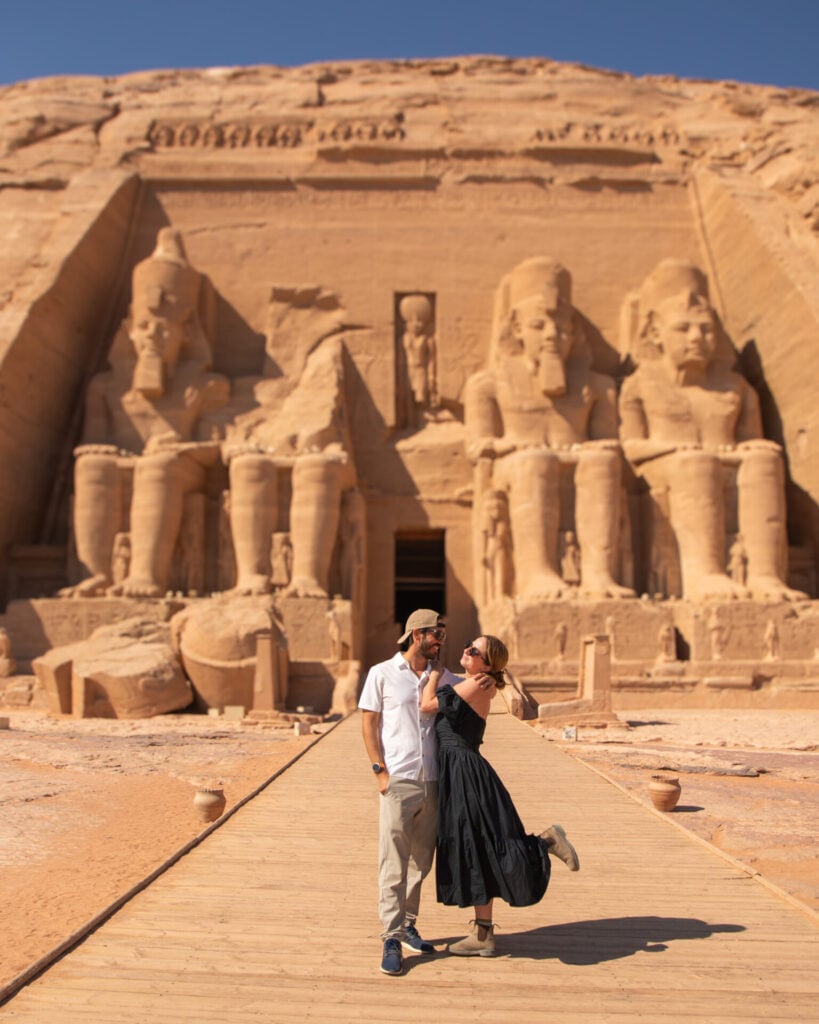
Abu Simbel (extra)
Offered as an optional extra to your cruise itinerary, Abu Simbel is located about 3hrs south of Aswan and can be reached by bus, private car, or short flight— we highly recommend the private car option, as it offers the most flexibility to visit outside of peak times and avoid large tour groups.
Abu Simbel is one of the most iconic temples in Egypt, instantly recognisable for its four colossal 20m-tall statues of Ramesses II carved directly into the rock face. Beyond the dramatic façade, the temple is also renowned for its precise solar alignment, when sunlight penetrates deep into the inner sanctuary on just two days each year!
>>> Read more about Abu Simbel in my detailed Egypt temples guide!


Read all of my Egypt travel guides
- Nour El Nil review: sailing from Luxor to Aswan on a luxury dahabiya
- Luxor travel guide: best temples & tombs of the East & West Bank
- 10 best temples in Egypt (from a 5-time visitor!)
- Detailed 3-day Cairo & Giza itinerary for first-time visitors
- What to do in Dahab: a guide to Egypt’s coolest beach town
- Perfect 1 & 2-week Egypt itinerary: Giza, Luxor, Aswan & the Red Sea
