
Last Updated on 5 October 2026
Once the illustrious capital of Upper Egypt (as ancient Thebes), Luxor is home to some of the most spectacular surviving archaeological sites anywhere on Earth. From the towering columns of Karnak Temple to the vividly painted burial chambers of the Valley of the Kings, more than 3,500 years of pharaonic history are beautifully preserved along the fertile banks of the Nile.
We’ve personally visited Luxor three times in the last three years, and have even run several group trips through Egypt that always include several days here! Over these trips, we’ve stayed on both the East and West Bank, worked with a variety of local Egyptologist guides, explored every site on this list multiple times, and really fallen in love with Luxor.
This guide brings together everything we’ve learned to help you plan your trip to Luxor— and I’ll warn you in advance, it’s a monster post with an insane amount of detail on each of the ancient sites! From the best temples and tombs to visit, photography tips, where to stay in Luxor, when to hire a guide, and how to buy entrance tickets to each of the sites, this travel guide will help you plan the perfect itinerary across the East and West Banks of Luxor.
>>> Read all of my detailed Egypt travel guides & itineraries!
This post contains affiliate links, which means I may earn a small commission if you book something I recommend, at no extra cost to you. I ONLY recommend tours, rentals and places I’ve personally used (or would happily book again) — your support helps keep this site going and the adventures rolling!
About Luxor, Egypt
Located on the banks of the Nile in southern Egypt, Luxor was once the ancient city of Thebes, the powerful capital of Upper Egypt during the New Kingdom (c. 1550-1070 BCE). Its modern name derives from the Arabic al-Uqṣur (“the palaces”), inspired by the monumental temple ruins that early Arab settlers believed were vast royal palaces.
More than 3,000 years later, it is still widely considered one of the most impressive archaeological regions on Earth!
While Cairo is home to iconic sites like the pyramids of Giza, Luxor offers something entirely different: a dense concentration of beautifully preserved temples, tombs, and monuments that offer a glimpse of life and death along the Nile. For anyone interested in ancient Egyptian history and the enduring legacy of one of the world’s greatest civilisations, Luxor is the single most important destination in Egypt.


East Bank vs West Bank
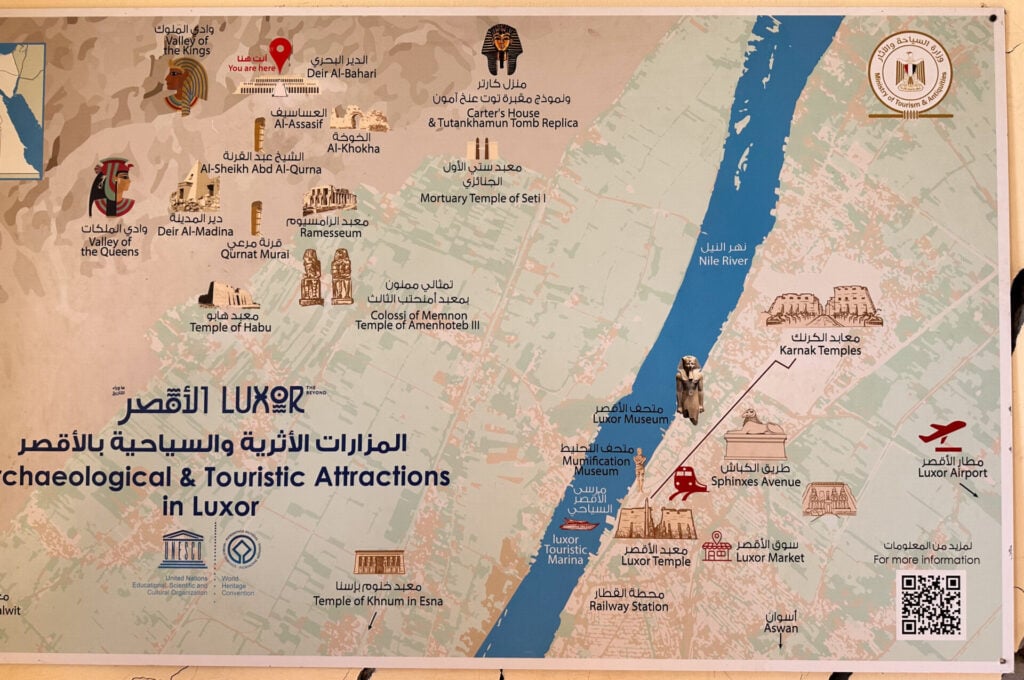
Luxor is divided into two distinct areas along the Nile, each with its own landscape, history, and atmosphere. Both are incredibly worth visiting and I’ll separate out all my recommendations between the East Bank and West Bank to help you explore both sides more efficiently.
East Bank
The modern city of Luxor is located on the East Bank, along with the airport and most of the city’s hotels and restaurants. In ancient times, the East Bank was associated with life and daily activity, which is why grand temples like Karnak and Luxor Temple were built here.
Today, this side of the river feels more commercial and touristy, with busy streets, local markets, and heavier traffic. Stay on the East Bank for convenience, easy airport access, and a wider range of dining options.
West Bank
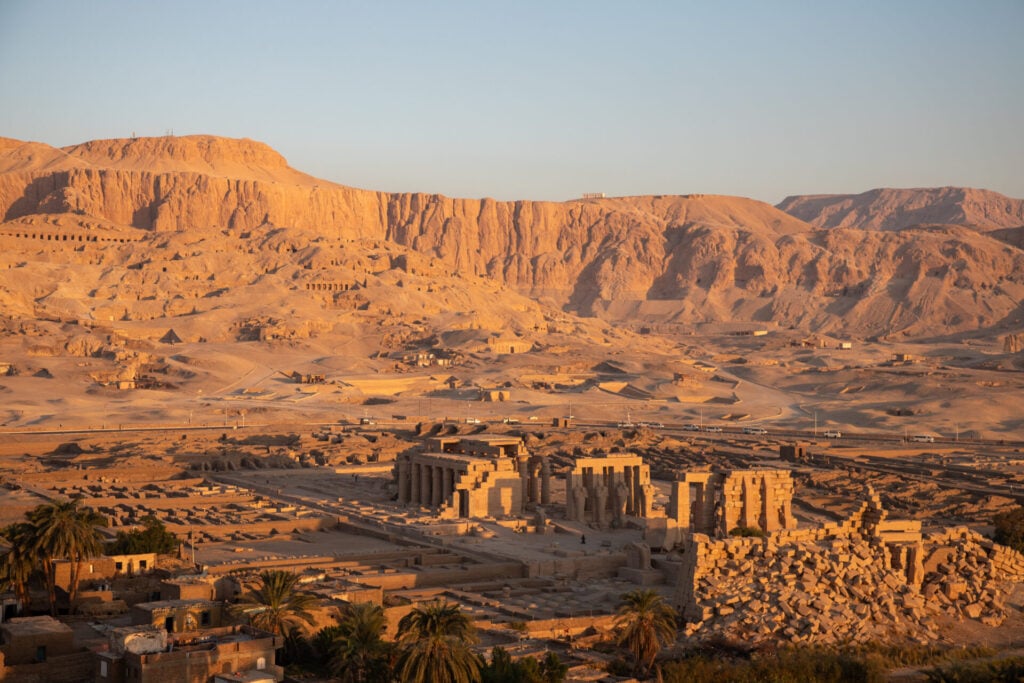
Across the river (just 5min by boat or 25min driving across the bridge), the West Bank is quieter and more rural, backed by desert hills and nestled between ancient sites. This side was historically associated with death and the afterlife, and it’s where the ancient Egyptians buried their pharaohs (including the Valley of the Kings and Queens), alongside impressive mortuary temples like Hatshepsut and Medinet Habu.
Today, the West Bank offers a more immersive and relaxed experience, with boutique hotels tucked among palm groves and farmland. Read more below about where to stay on the West Bank and our favourite boutique hotel, Malkata House!
*Perfect 3-day Luxor itinerary
After three visits to Luxor in the last few years, here’s exactly how we’d recommend spending 3 days and 2 nights in the former capital of Upper Egypt:
Day 1: East Bank
- Early morning arrival from Cairo (by flight or overnight train)
- Check-in and rest at Malkata House (on the West Bank)
- Walk through Luxor Souk
- Quick visit to the Mummification Museum
- Afternoon at Karnak Temple
- After-dark at Luxor Temple
Day 2: West Bank
- Sunrise hot air balloon over the West Bank
- Early morning at the Temple of Hatshepsut
- Quick photo stop at the Colossi of Memnon
- Visit the ancient tombs of Valley of the Kings
- And the colourful tombs of Valley of the Artisans (Deir el Medina)
- Afternoon rest at your hotel
- Sunset visit to Medinet Habu
Day 3: Beyond Luxor
- Day trip to Dendera Temple OR Esna Temple
- OR board a Nile Cruise from Luxor to Aswan!
>>> I’ve included an entire section on Luxor travel logistics below, including details on flying or taking the overnight train from Cairo, how to hire a private guide, entrance fees for the sites, the Luxor Pass, and more!
East Bank of Luxor
Symbolised by the rising sun, ancient Egyptians associated the east side of the Nile with life and rebirth, so this is where grand temples dedicated to the gods were built for daily worship.
Today, the East Bank is dominated by two enormous, interconnected complexes: Karnak Temple and Luxor Temple. Both of these religious sites were central to the cult of Amun-Ra, the chief god of ancient Thebes, and are among the most spectacular temples still standing in modern Egypt!
⏱️ RECOMMENDED EAST BANK ITINERARY
Depending on what time you arrive in Luxor, head over to the East Bank in the early afternoon to check out the Souk, the Mummification Museum, and then Karnak and Luxor Temples. The latter is open after dark, so usually arriving at Karnak around 4pm and then heading to Luxor around 6pm works well.
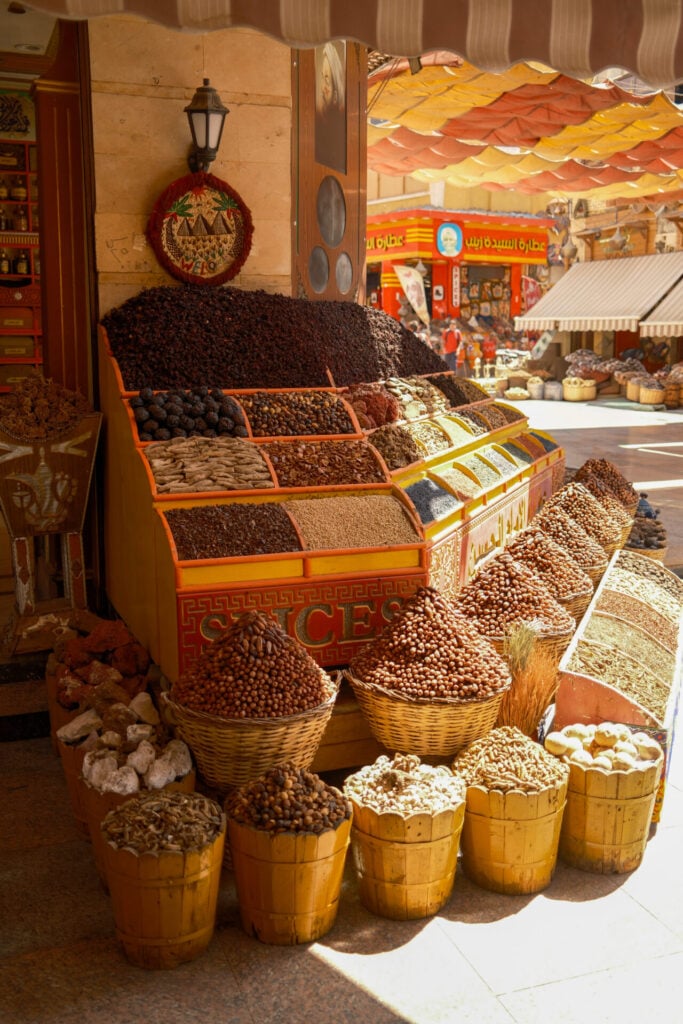
1 | Luxor Souk
Running for several blocks through the heart of the East Bank, the Luxor Souk is a lively local market where vendors sell everything from spices and scarves to lanterns, perfumes, and souvenirs. Although definitely touristy in places, it’s a great place to begin your exploration of Luxor!
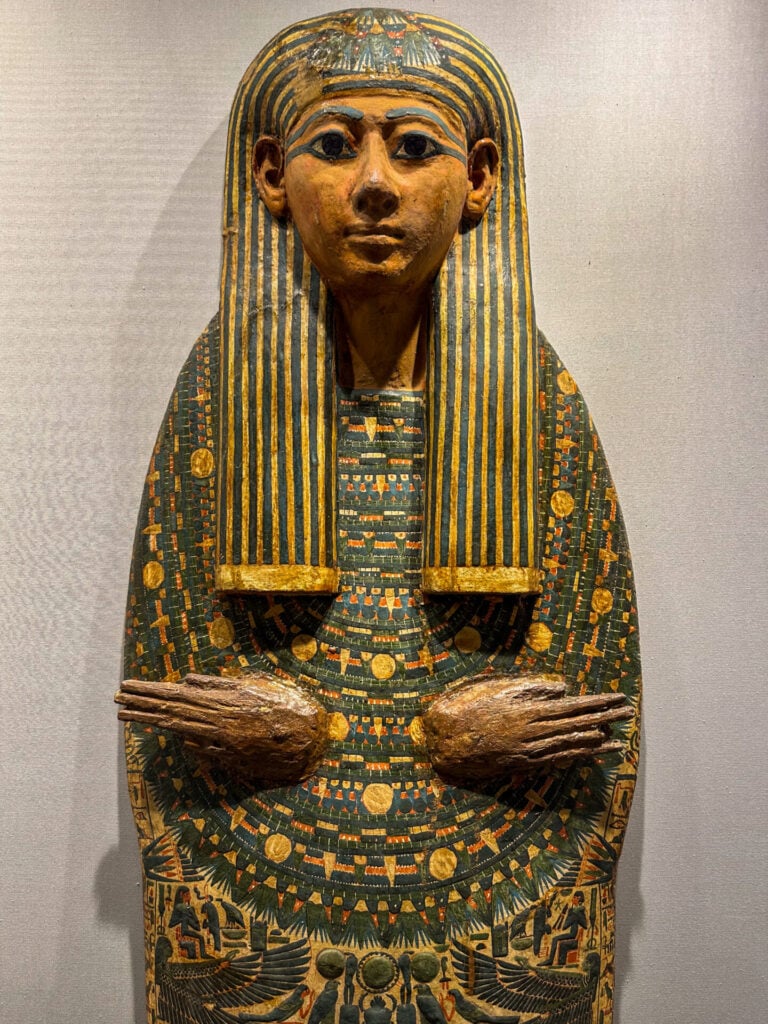
2 | Mummification Museum
Another quick stop on Luxor’s East Bank, the compact but fascinating Mummification Museum offers a deeper look into one of ancient Egypt’s most intriguing afterlife practices. I wouldn’t plan your whole itinerary around it, but if you have extra time before visiting Karnak and Luxor Temple, it’s absolutely worth popping in!


Inside, you’ll find several human mummies alongside mummified animals— sacred creatures like crocodiles, baboons, and cats, believed to embody specific gods. Many of these animals were bred specifically for religious offerings, and archaeologists have uncovered millions of animal mummies across Egypt.
You’ll also see mummification tools and detailed explanations of the embalming process, including how organs were removed and bodies prepared for the afterlife. Entry is 220EGP (~$4USD) and you only need about 20min to see the exhibits and read through the displays.
3 | Karnak Temple
Cost of entry: 600EGP | Best time to visit: 6-8am for lowest crowds
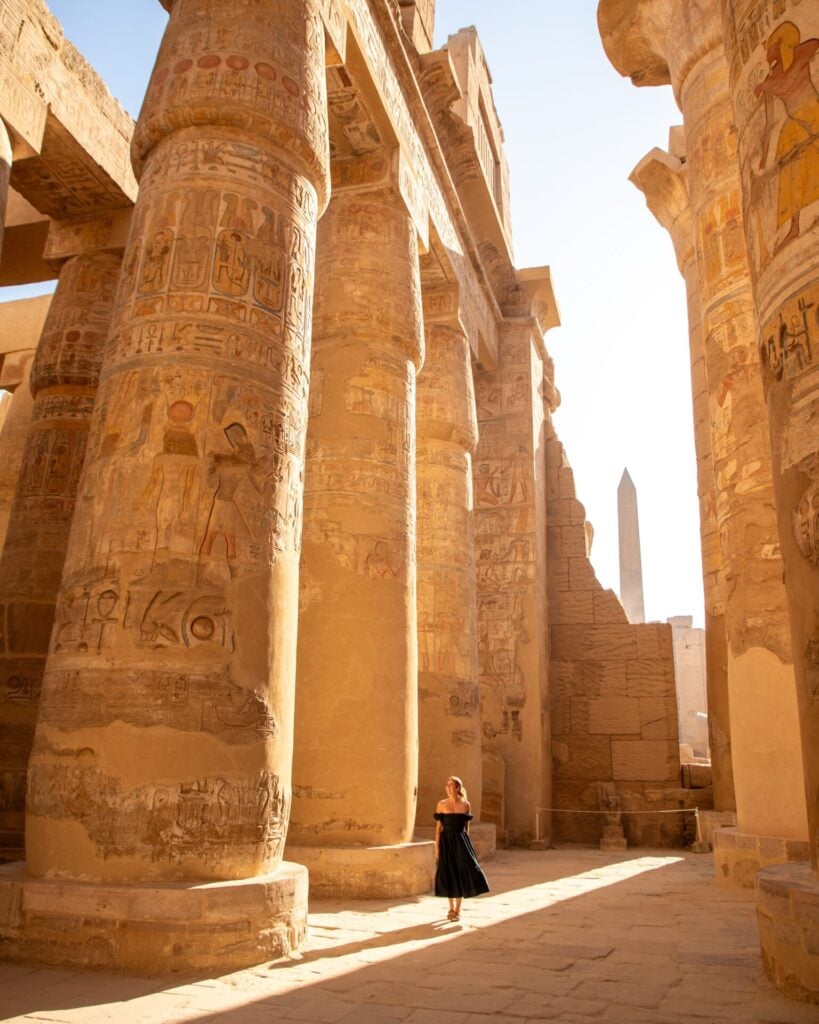
Karnak Temple was once the most important religious site in ancient Egypt, dedicated primarily to the god Amun-Ra, and remains even today the largest religious complex EVER constructed anywhere in the world!
This is not just a single temple, but a vast complex of sanctuaries, pylons, and chapels originally built 4,000 years ago and continually expanded over a period of more than 2,000 years by as many as 30 different pharaohs.
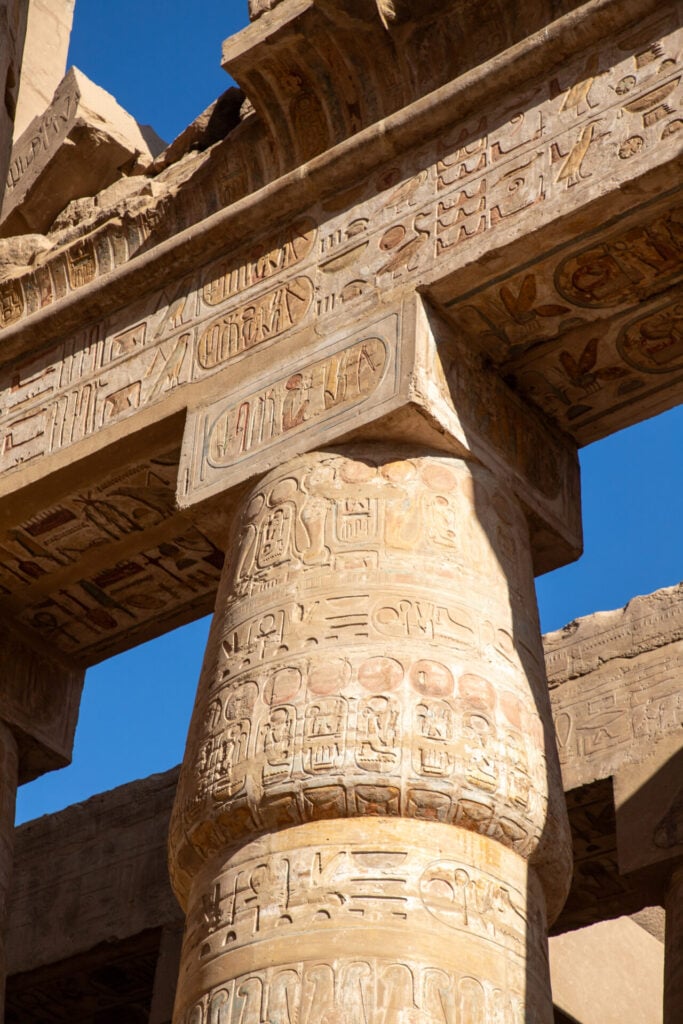
Easily one of the most breathtaking sites in Egypt, Karnak Temple is immense in scale, yet still remarkably intricate and well preserved. The Hypostyle Hall is its crown jewel, with 134 towering columns arranged in a monumental forest of stone unlike anything else in Egypt— photographers, prepare to lose your minds!
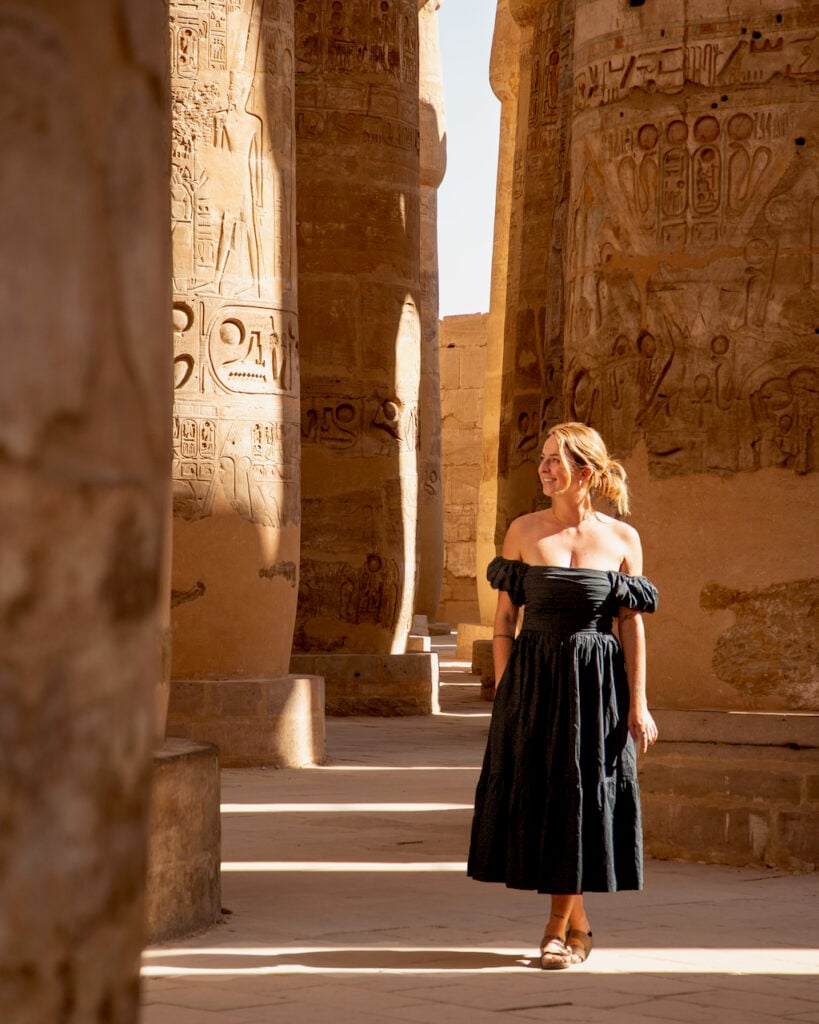
📸 PHOTOGRAPHY TIPS FOR KARNAK TEMPLE
Arrive close to opening (6–8am) to avoid crowds and take advantage of soft morning light— you might consider visiting straight from the airport while you’re still on the East Bank and then returning to Luxor Temple later in the day, after dark.
If photography isn’t your main goal, visiting mid–late afternoon pairs more conveniently with an evening visit to Luxor Temple, just expect larger crowds and know that it will require a bit of additional patience to get a decent photo.


Karnak Temple highlights
- Great Hypostyle Hall: the highlight of Karnak and one of the most extraordinary architectural spaces in the world, this vast hall contains 134 massive columns, each reaching over 20m high and covered in intricate carvings and hieroglyphs
- Obelisk of Hatshepsut: carved from a single piece of red granite, this 30m obelisk erected 3,500 years ago by Queen Hatshepsut is the tallest ancient obelisk still standing in Egypt, meant to symbolise the connection between the gods and the pharaohs
- Sacred Lake: a large ceremonial lake used by priests for ritual purification, offering a quieter and more reflective corner of the temple complex
- Scarab of Amenhotep III: near the Sacred Lake, this large stone scarab is associated with the morning form of the sun god, Atum-Khepri— walk 7 anti-clockwise circles around the beetle for luck!
4 | Luxor Temple
Cost of entry: 500EGP | Best time to visit: 6-8pm to see the temple lit up
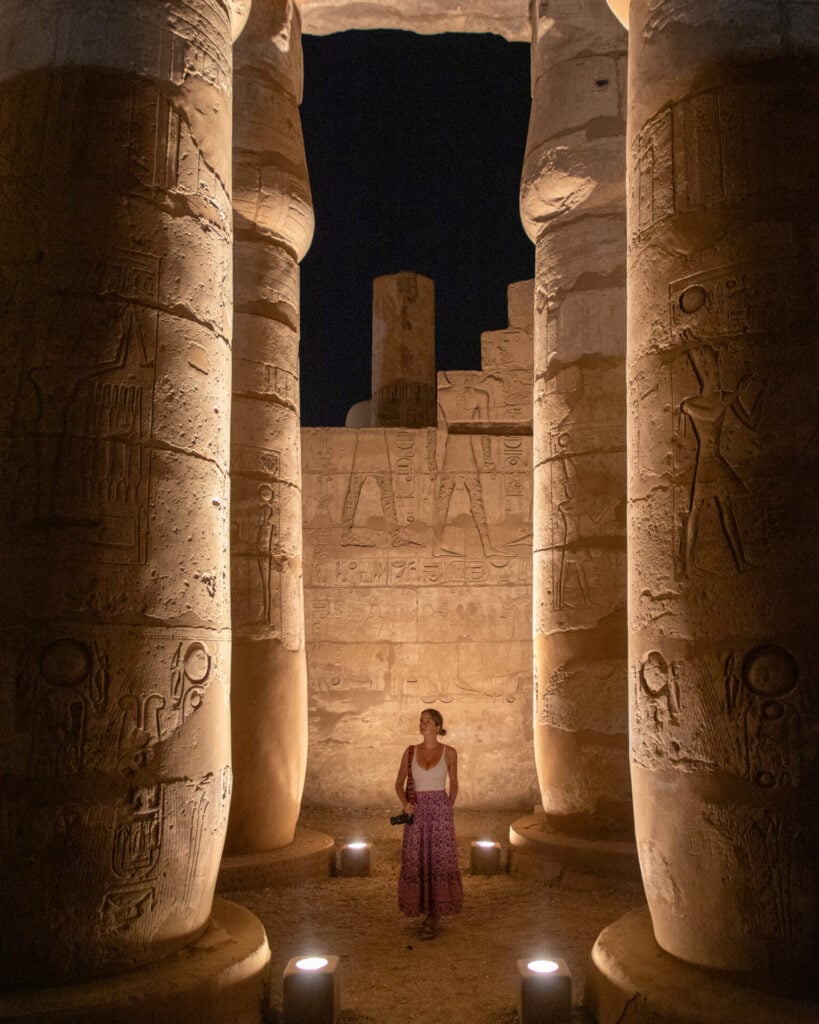
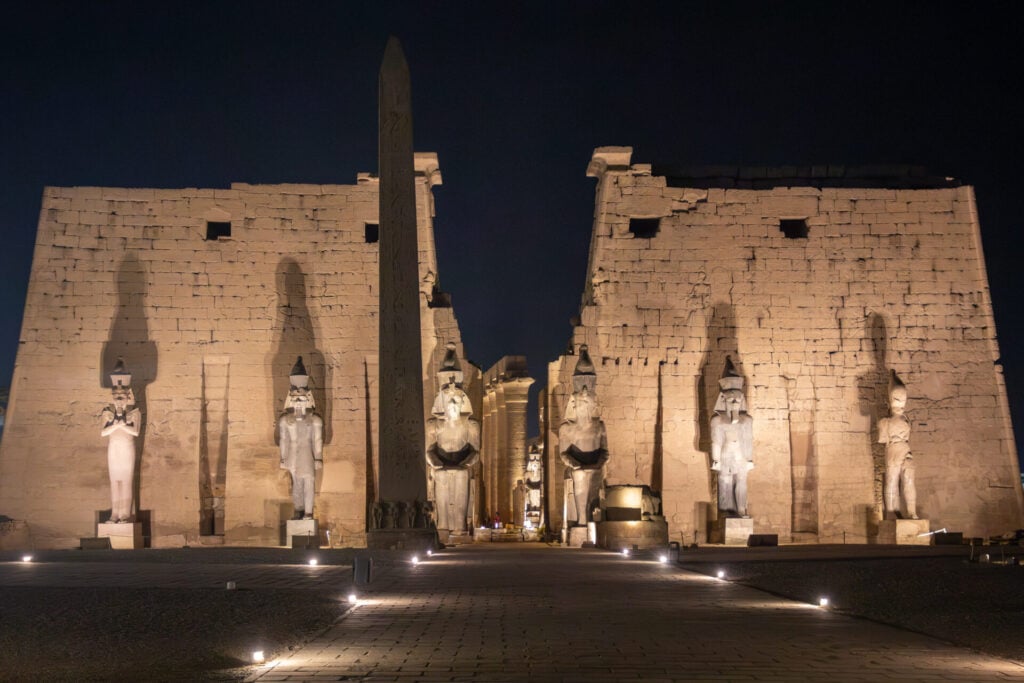
Located nearby, Luxor Temple is smaller than Karnak but offers a completely different experience. It’s the only major temple in Luxor open after sunset, and visiting after dark is by far the best way to see it— the entire complex is beautifully illuminated, temperatures are far more manageable, and the atmosphere is incredible! Last entry is around 7pm, but you can usually remain inside until about 8:30pm.
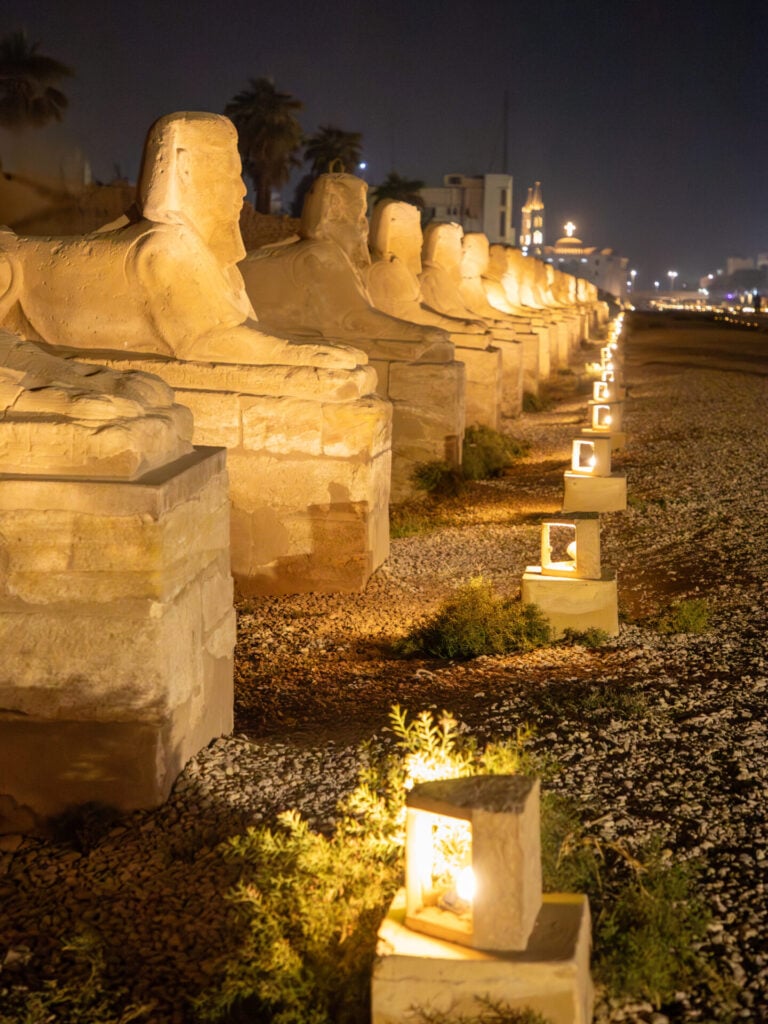
Built primarily by Amenhotep III (c. 1400 BCE) and expanded by Ramesses II, the temple was dedicated to the rejuvenation of kingship rather than a single god. It played a central role in the annual Opet Festival, when statues of Amun and other deities were paraded along the Avenue of Sphinxes, a 3km-long processional path that still connects Karnak and Luxor Temples.
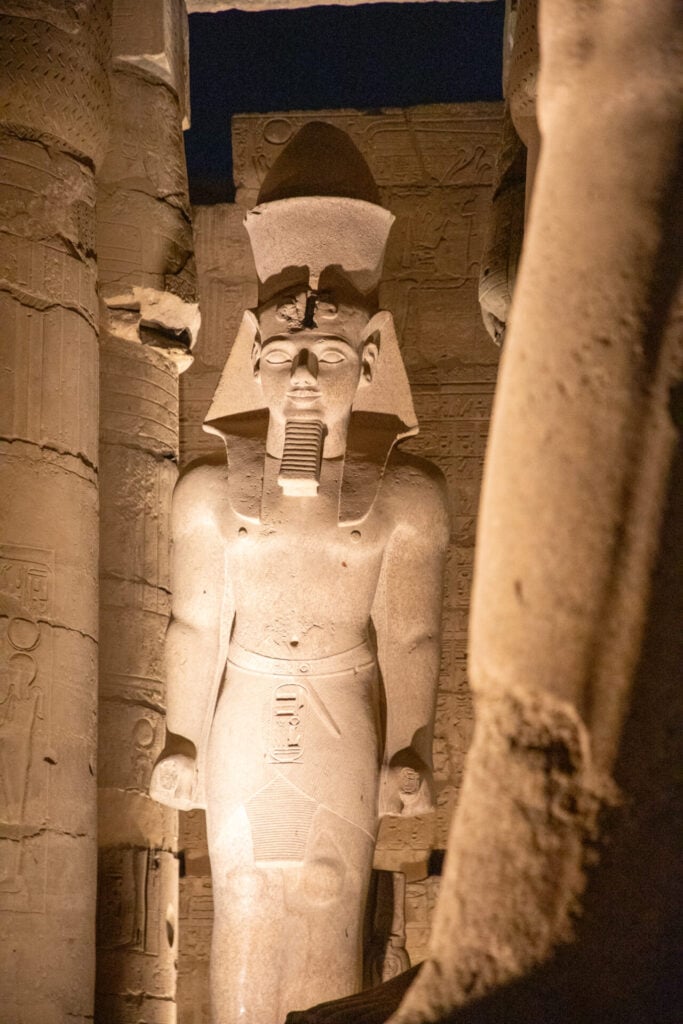
For me, Luxor Temples really stands out for its enormous and well-preserved statues of the prolific Pharaoh Ramesses II, who built more monuments and temples than any other pharaoh during his 66-year reign.
You’ll see him plastered all over ancient Egypt, including the famous façade of Abu Simbel in Aswan and an 83-ton granite statue now housed in the foyer of the Grand Egyptian Museum in Giza— Ramesses II may have been a self-aggrandising egomaniac, but you can’t deny he had a spectacular sense of style!
Luxor Temple highlights
- Avenue of Sphinxes: a 3km ceremonial road connecting Karnak and Luxor, lined with over 1,000 sphinx statues— a decades-long restoration project finally reopened the thoroughfare in 2021 and it’s truly spectacular to see from either Karnak or Luxor Temples!
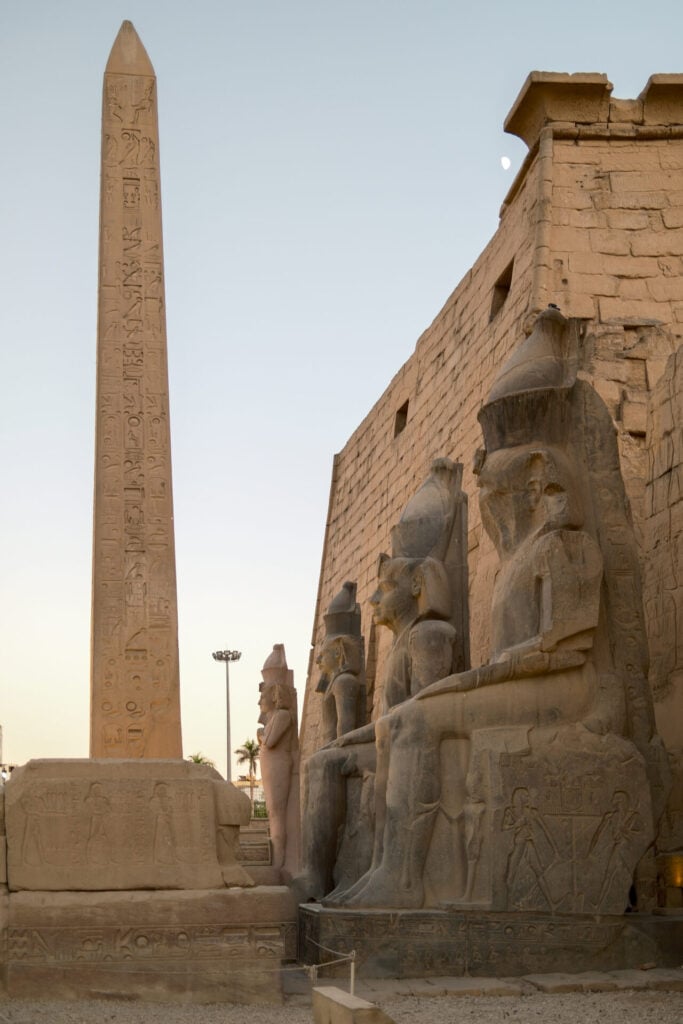
- Colossi of Ramesses II: the entrance to Luxor Temple is dominated by six 14m-tall statues of Ramesses II (two seated and four standing), with additional statues and towering columns continuing into the first courtyard
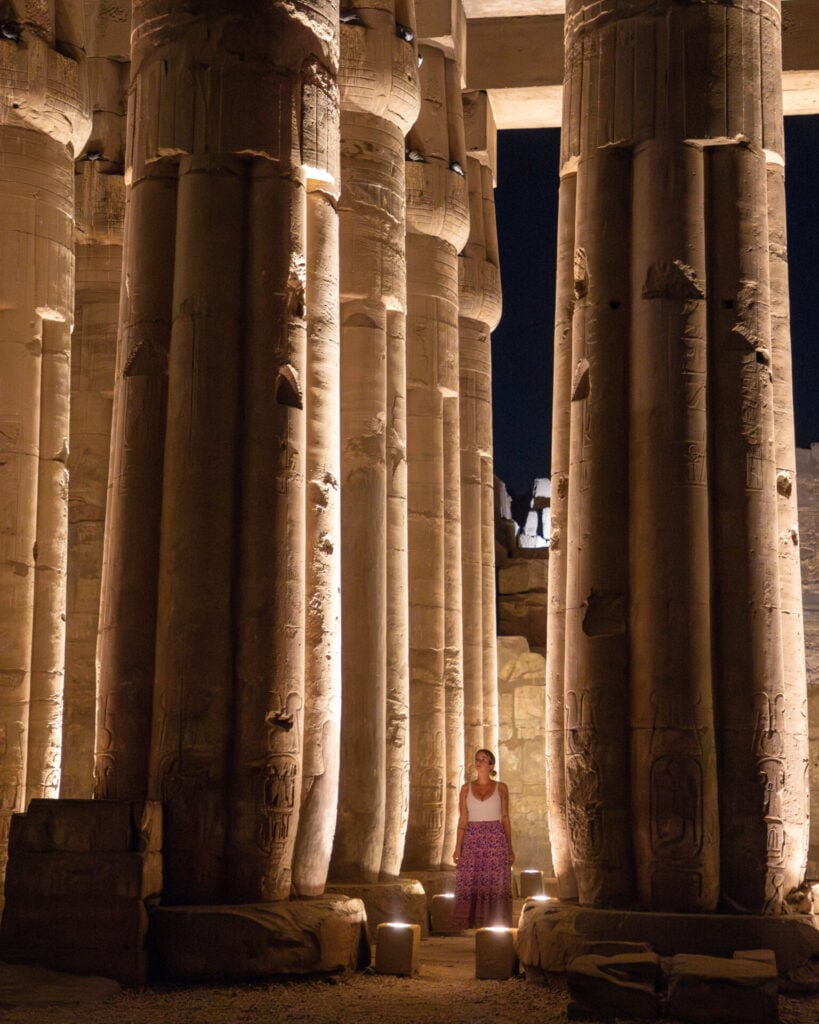
- Amenhotep III Court: the rear courtyard at Luxor contains a scenic perimeter of double columns and two square gardens of 16 columns each— this is a fantastic area to take photos, particularly with the after-dark lights illuminating the columns from below!
- Byzantine-era church frescoes: at the very back of the temple, you can spot faded Christian paintings from a church built during the Roman/Byzantine period, layered directly over the original Egyptian reliefs— a striking example of early Christianity seeking to erase religious imagery that didn’t align with their beliefs
🇫🇷 WHERE IS THE 2nd OBELISK AT LUXOR TEMPLE?
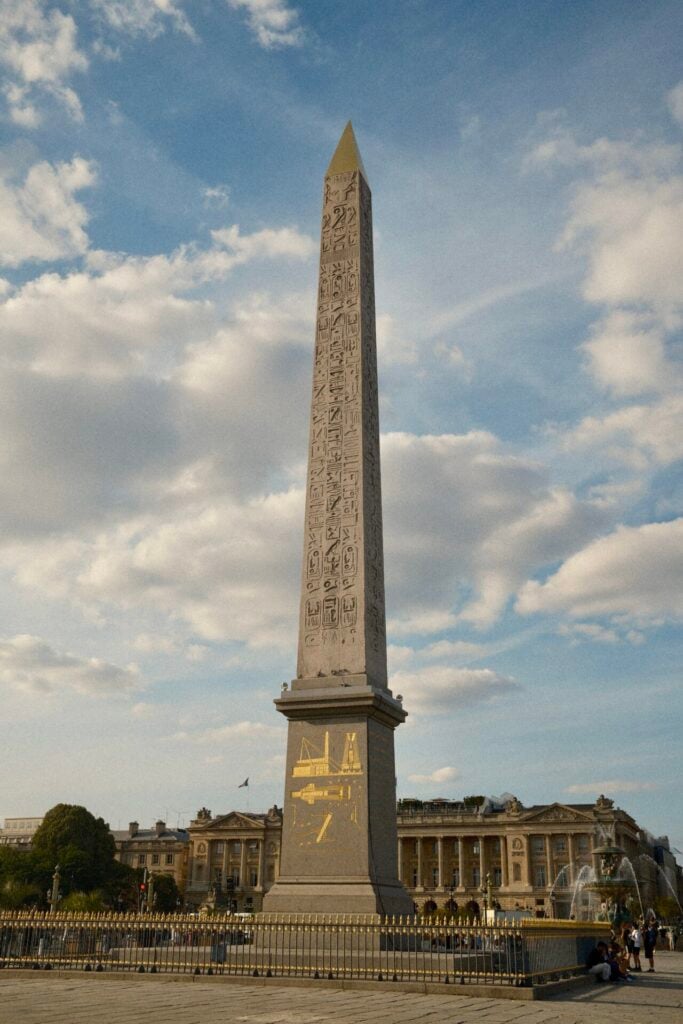
Ancient Egyptians traditionally constructed and erected obelisks in pairs, so you might notice the asymmetrical façade of Luxor Temple and wonder ‘what happened to the 2nd obelisk?!’ At the time of its initial construction by Ramesses II around 1250 BCE, Luxor Temple did indeed have two 25m-tall granite obelisks, but in the early 1800s, the right obelisk was gifted to France as a diplomatic gesture and now stands in the Place de la Concorde in Paris!
We stumbled across the obelisk wandering through Paris a few months after our first visit to Luxor, and it was so cool to see the missing twin in his new home—thankfully gifted and not stolen, unlike many other Egyptian artefacts.
>>> Sign the international petition to repatriate stolen Egyptian artefacts like the Bust of Nefertiti, Rosetta Stone, and Dendera Zodiac back to Egypt
West Bank of Luxor
The ancient Egyptians associated the West Bank of the Nile with death and the afterlife, symbolised by the setting sun disappearing behind the desert hills, so this is where they buried their pharaohs and built vast mortuary complexes designed to prepare them for eternity— entire landscapes dedicated to death, rebirth, and the journey beyond.
Today, the West Bank is home to some of the most extraordinary sites in all of Egypt, including the tombs of the Valley of the Kings, Valley of the Queens, and Valley of the Artisans, alongside monumental temples like Hatshepsut and Medinet Habu. Dominated by desert mountains and rural farmland, the landscape still feels deeply connected to its ancient past.
⏱️ RECOMMENDED WEST BANK ITINERARY
Everything recommended in this section can easily fit into a single day! Start with a sunrise hot air balloon over the West Bank, and then visit the Temple of Hatshepsut, Valley of the Kings, Valley of the Artisans, and Colossi of Memnon ALL before lunch. Then I’d recommend escaping the heat back at your hotel for a few hours and visiting Medinet Habu in the late afternoon.
5 | Sunrise hot air balloon over Luxor
Cost of activity: $80-100 | Best time: sunrise!
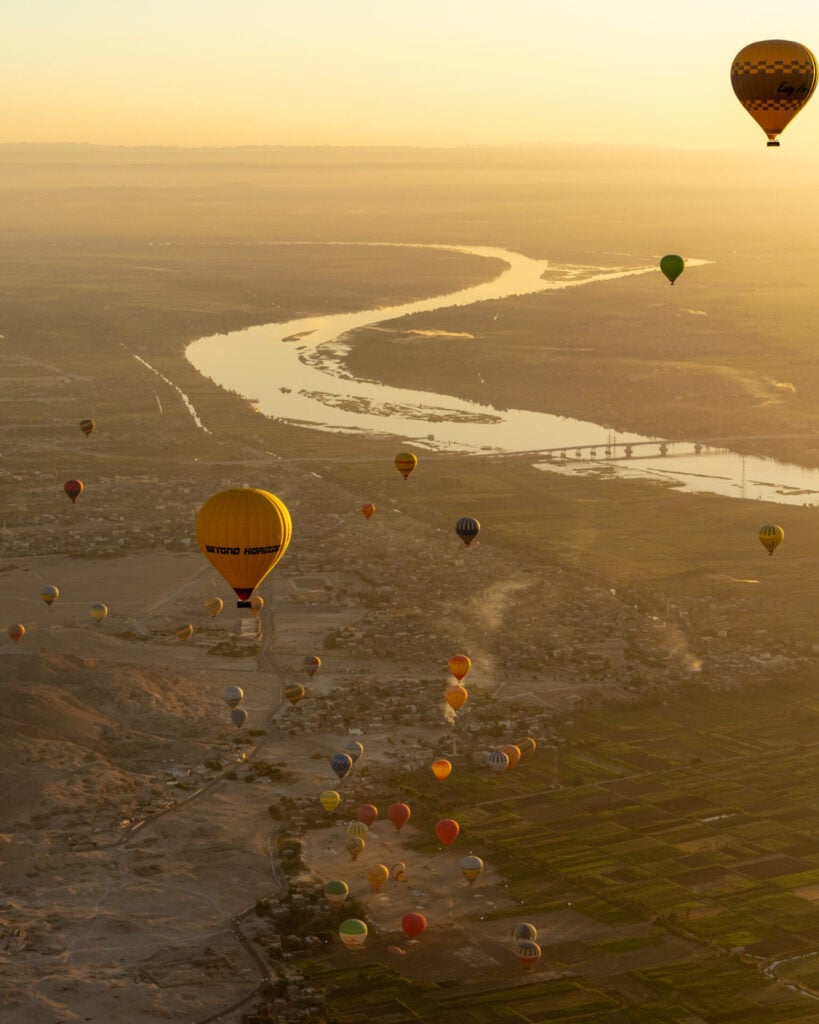
One of the most unforgettable experiences in Luxor is drifting over the West Bank in a hot air balloon as the sun rises over the Valley of the Kings, the Temple of Hatshepsut, and the patchwork of farmland along the Nile. We’ve done it twice now and, although James is a bit scared of heights, it’s definitely one of my favourite activities in Egypt!
Pick-up from your hotel is usually between 4.30-5.30am, with take-off just before sunrise— but it’s absolutely worth the early start! From the air, you get a completely different perspective on Luxor’s landscape, and it’s one of the few activities here that feels just as much about the setting as the history.


6 | Temple of Hatshepsut
Cost of entry: 440EGP | Best time to visit: early morning
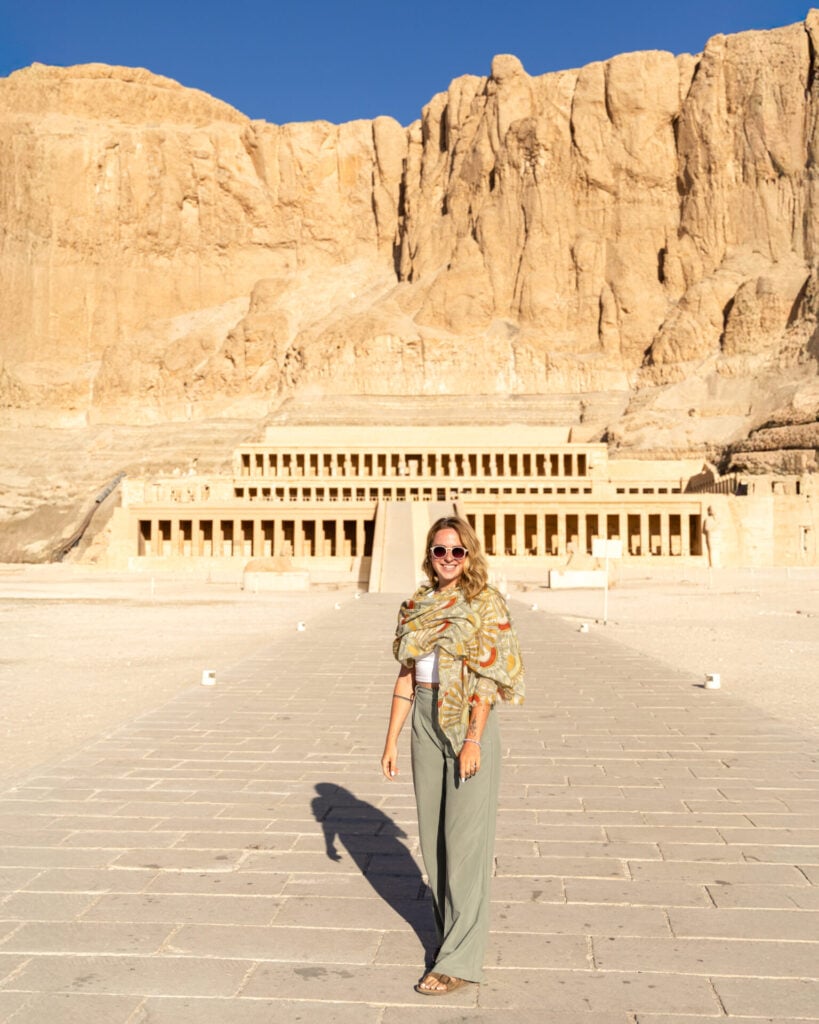
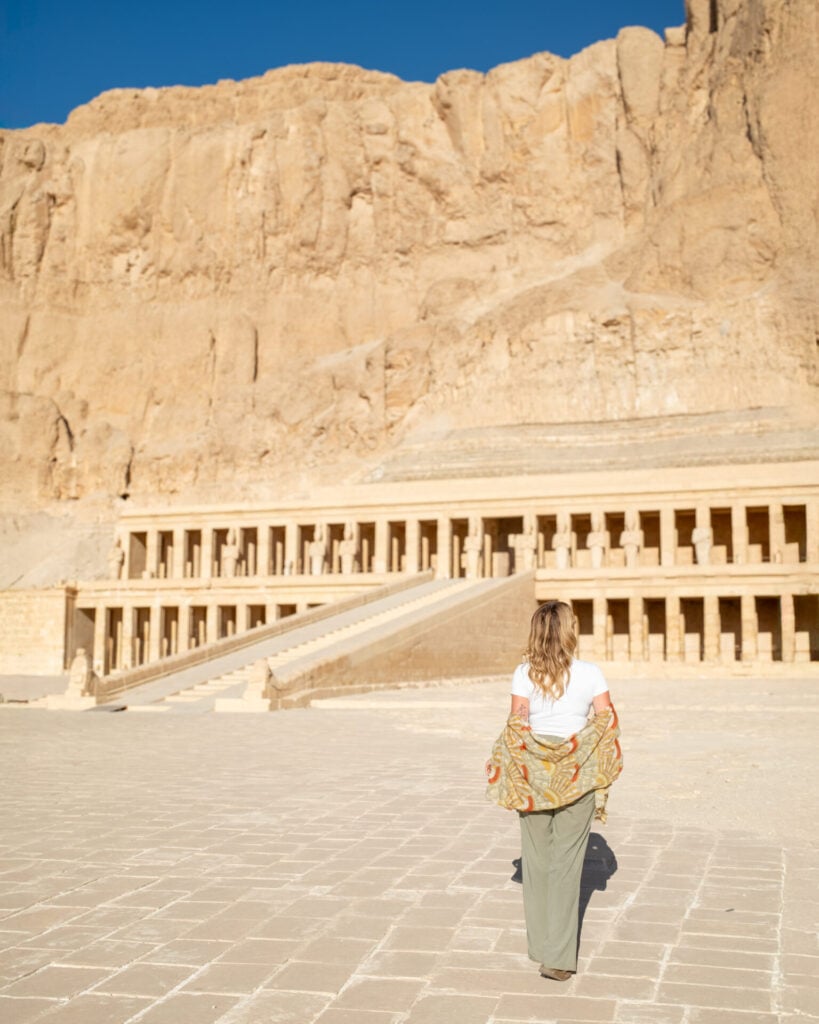
Set dramatically against the mountains of Deir al-Bahari, the Mortuary Temple of Hatshepsut is one of the most visually striking and distinctive monuments in Egypt, rising in three limestone levels that blend perfectly into the surrounding cliffs.
The temple is equally remarkable for the ruler it was built to honour: Hatshepsut, a powerful queen who assumed the throne as Egypt’s most significant female pharaoh in 1473 BCE.
Throughout her 20-year reign, she deliberately portrayed herself in monuments and inscriptions as a male king to align with the established image of pharaonic power. And although much of Hatshepsut’s legacy was deliberately dismantled by her successors in an effort to reinforce traditional male succession, archaeologists were able to reconstruct her story in the 19th century.
After deciphering hieroglyphs and uncovering her name across monuments that had been purposefully defaced, history will now remember Hatshepsut as a powerful female ruler who refused to bend to traditional power structures!


Hatshepsut Temple highlights
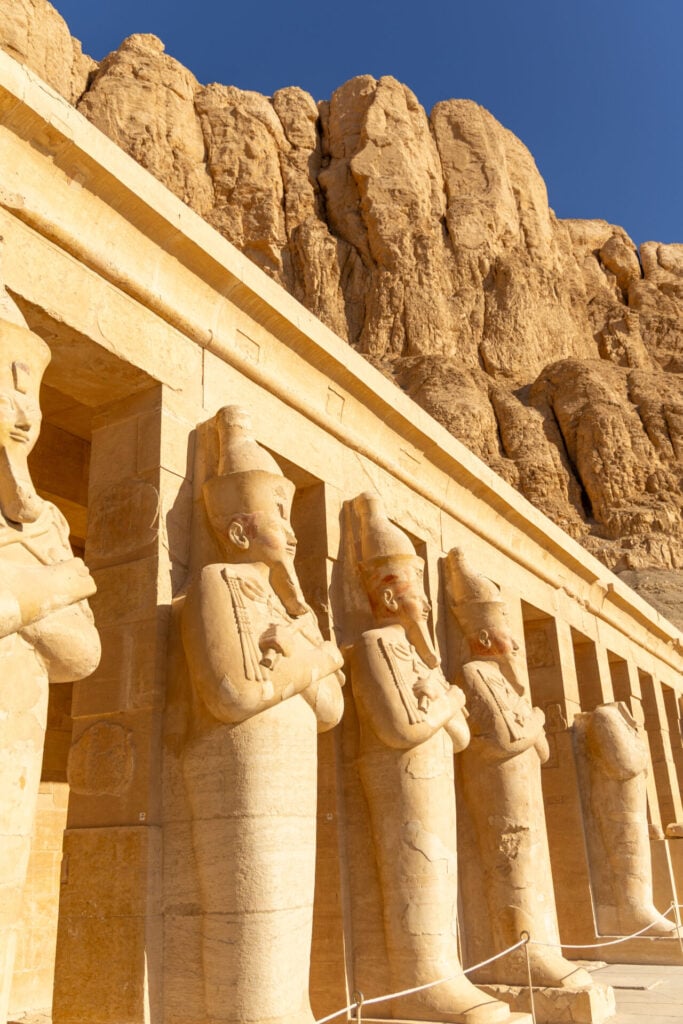
- Osiride Statues of Hatshepsut: the upper terrace features a long row of statues (only 10 remain of the original 26) depicting Hatshepsut standing with her arms crossed as a mummy, symbolising her union with Osiris, god of the underworld and resurrection
- Sanctuary of Amun: carved into the cliff on the upper terrace, this inner sanctuary features a few significant remnants of the vibrant painted reliefs and celestial ceilings that once covered the entire interior
- Reliefs of the Divine Birth & Punt Expedition: these detailed wall carvings on the middle terrace depict Hatshepsut’s divine origin story and her famous trading expedition to the Land of Punt, including ships, incense trees, and exotic goods
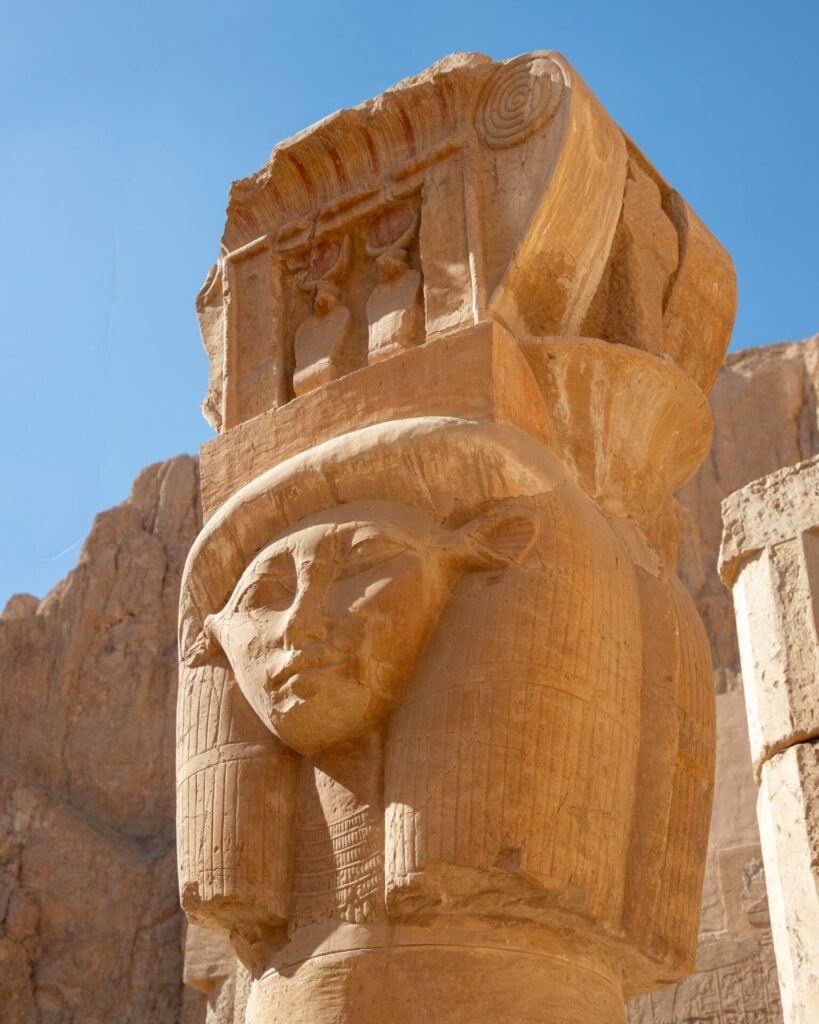
- Hathor Chapel: on the left side of the middle terrace, a small hypostyle hall is dedicated to Hathor, goddess of love, fertility, and joy— there are some beautifully preserved capitals here depicting Hathor as a round, smiling woman’s face with cow ears (you’ll see her similarly depicted at Dendera Temple and also Philae Temple in Aswan)
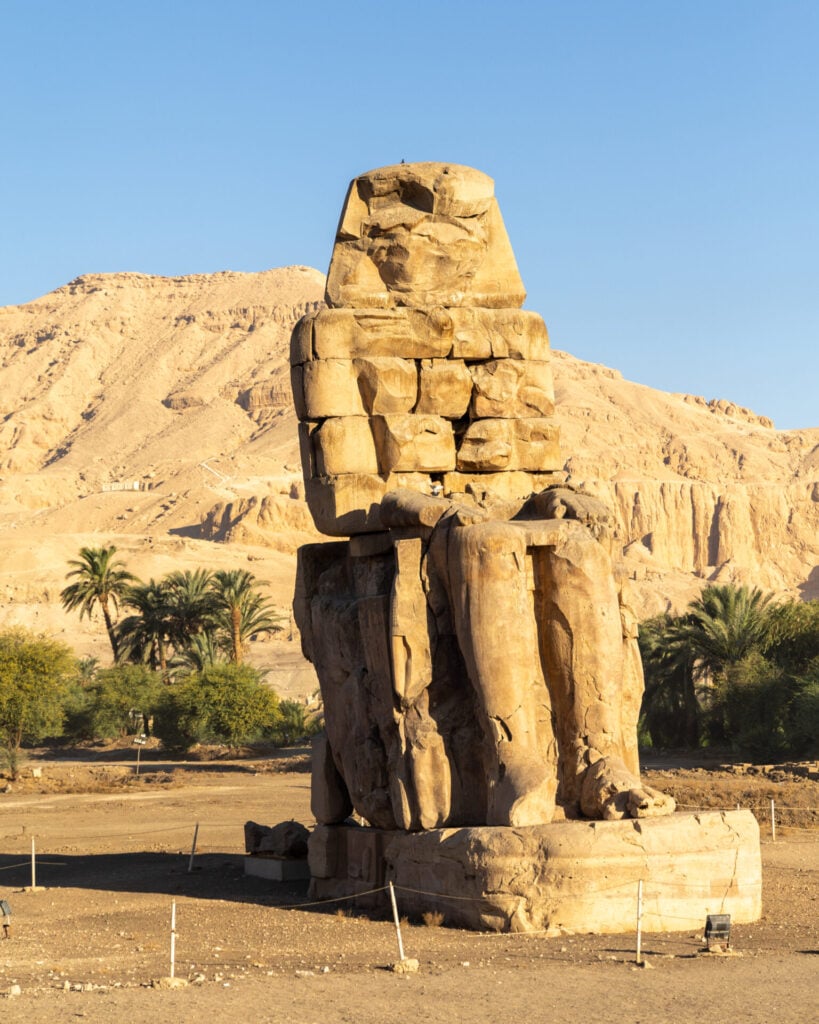
7 | Colossi of Memnon
Cost of entry: none | Best time to visit: before or after Temple of Hatshepsut
These two 18m statues of Amenhotep III seated in the throne once stood at the entrance to his vast mortuary temple, which was the largest temple complex in Egypt when it was built around 1350 BCE (but now almost completely destroyed by floods and time).
Today, the Colossi are all that remain above ground, making this a super quick but worthwhile stop either before or after visiting Hatshepsut’s temple just up the road!
8 | Valley of the Kings
Cost of entry: 750EGP | Best time to visit: mid-morning (before it gets too hot)
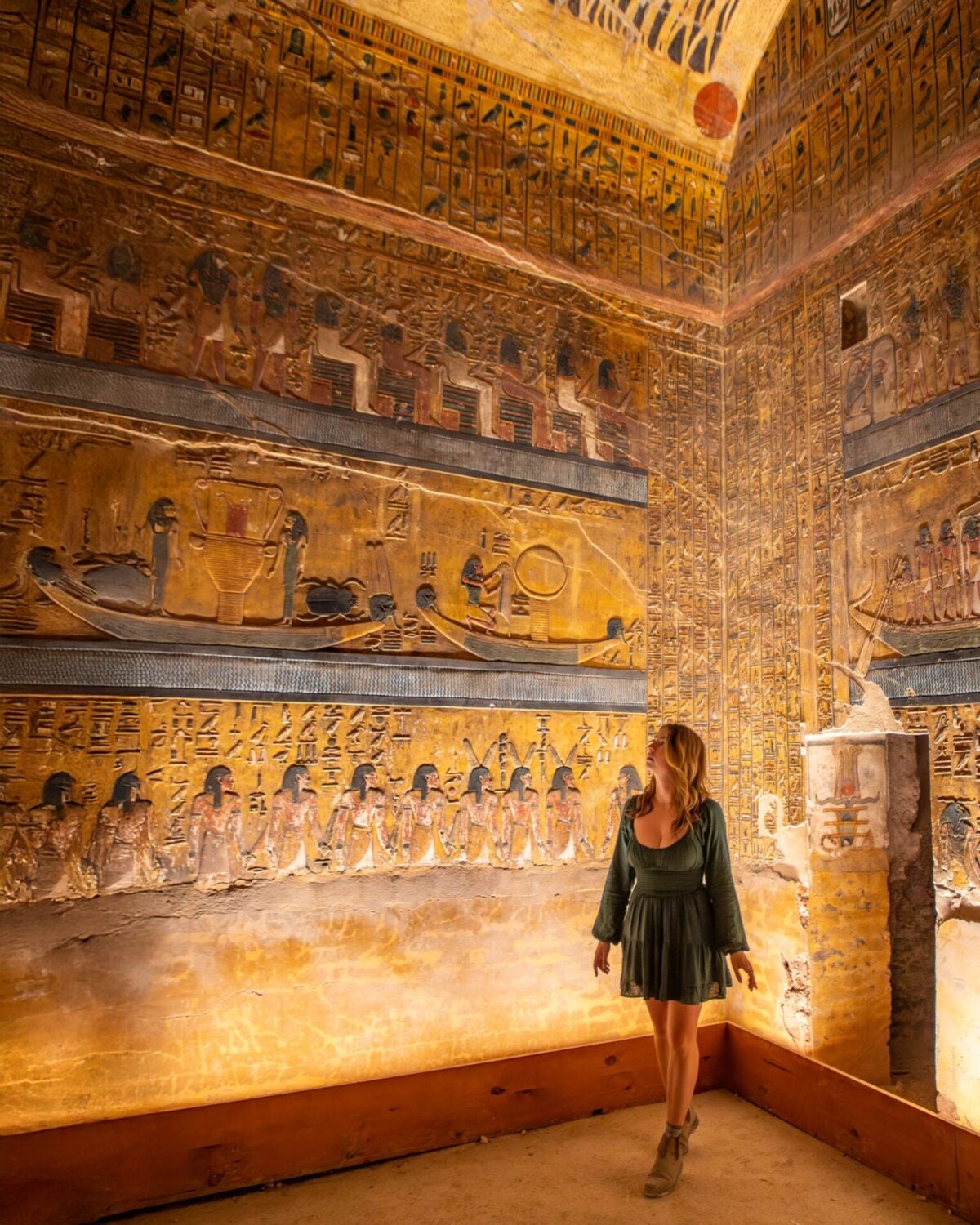
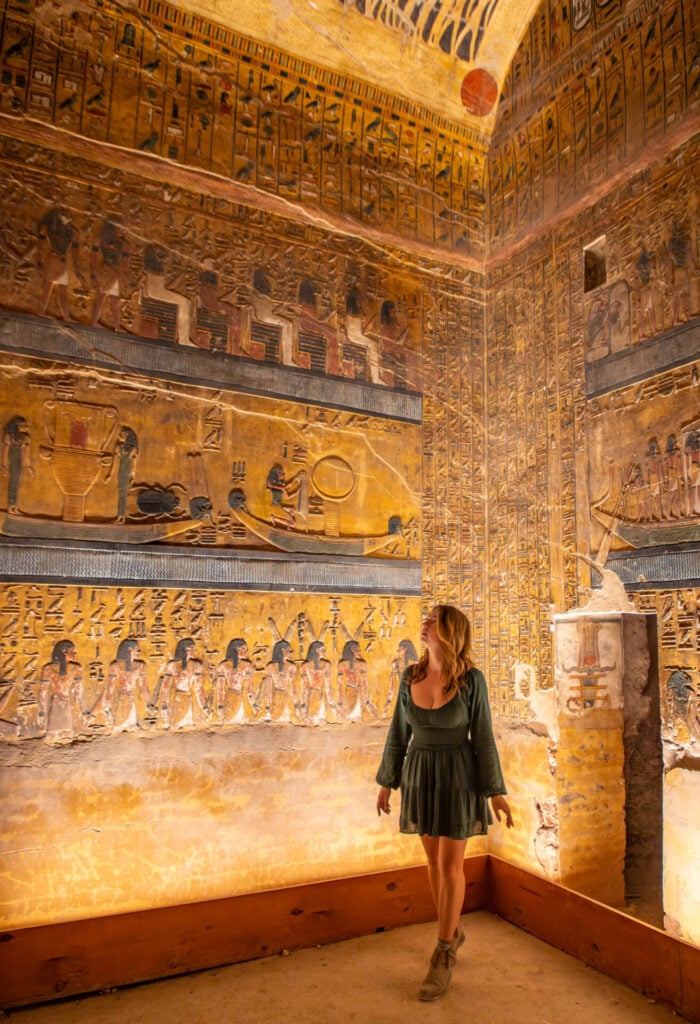
Carved into the cliffs of Luxor’s West Bank lies the Valley of the Kings, the ancient necropolis where Egypt’s most powerful pharaohs were laid to rest. From 1550–1070 BCE, more than 60 royal tombs were cut deep into the rock, their walls covered in vivid hieroglyphs and celestial maps designed to guide each ruler safely into the afterlife.
Of all the incredible ancient sites in Luxor, Valley of the Kings is my personal favourite. Where temples are about scale and spectacle, ancient Egyptian tombs are about finer detail— the colours are still unbelievably vivid and the artwork feels almost alive, like descending into a portal that’s preserved 3,500 years of history.
The first time I visited, it genuinely brought me to tears, and I’ve now watched countless guests on our Egypt group trips have the same visceral reaction to this magical place!


At any given time, around 10–12 tombs are open to the public, occasionally rotating to limit humidity and preserve the interiors from the stress of tourism. A standard ticket includes entry to 3 tombs, while a handful of the most spectacular require an additional fee (more on this below).
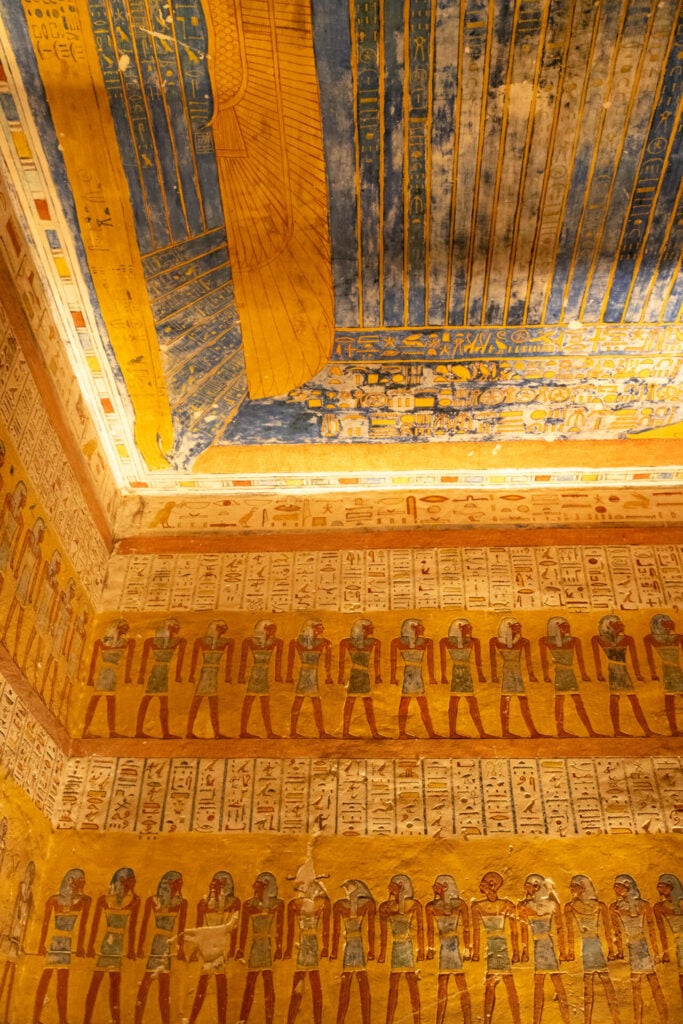
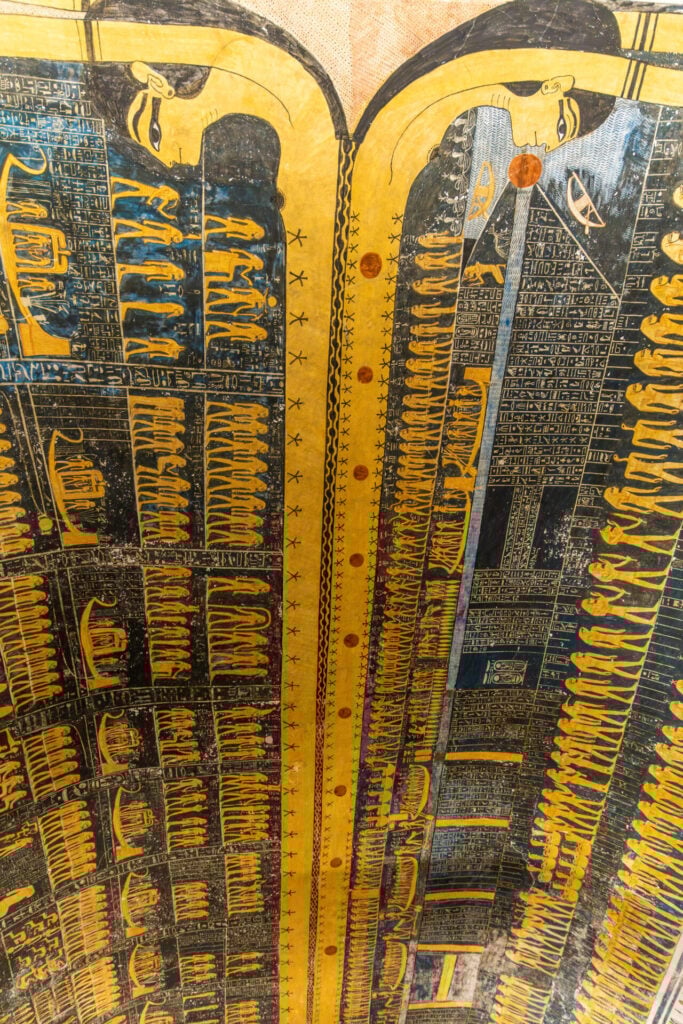
Best tombs in the Valley of the Kings
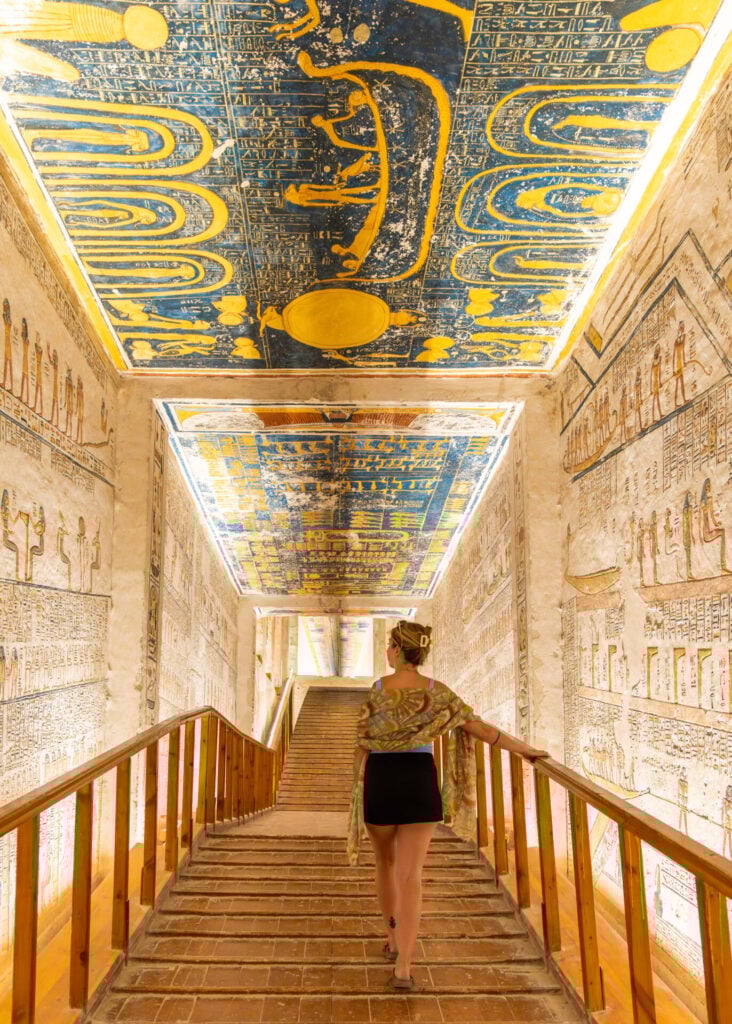
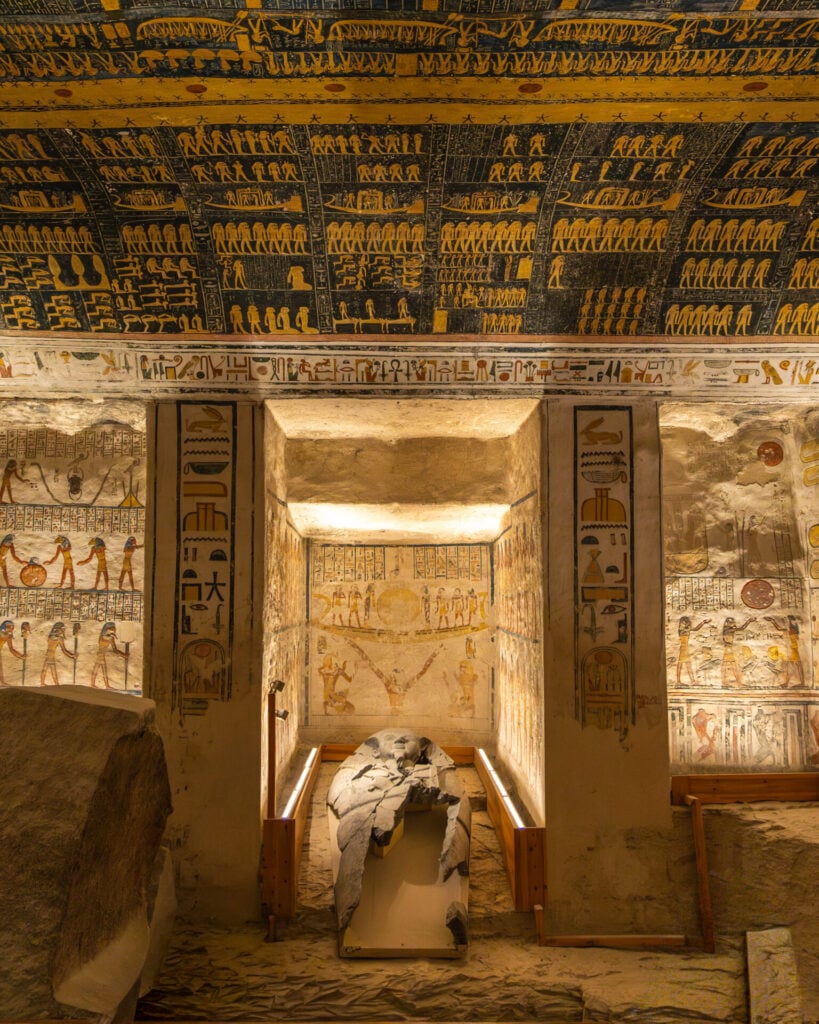
- Tomb of Ramesses IV (KV2): one of the most accessible and best-preserved tombs in the valley, with an enormous granite sarcophagus elevated at the bottom of the tomb and a gorgeous astronomical ceiling depicting Nut, goddess of the sky— this is the best of the standard tombs, in my opinion!
- Tomb of Ramesses III (KV11): decorated with vivid scenes of the pharaoh’s journey through the underworld, this is one of the few tombs with plexiglass wall protectors (a little harder to photograph), but still with fabulous artwork
- Tomb of Merneptah (KV8): one of the longest, deepest tombs with a granite sarcophagus at the bottom, its corridors lined with reliefs that still show traces of their original colour— perhaps my least favourite of those recommended here, so visit the other four first and see if you have time
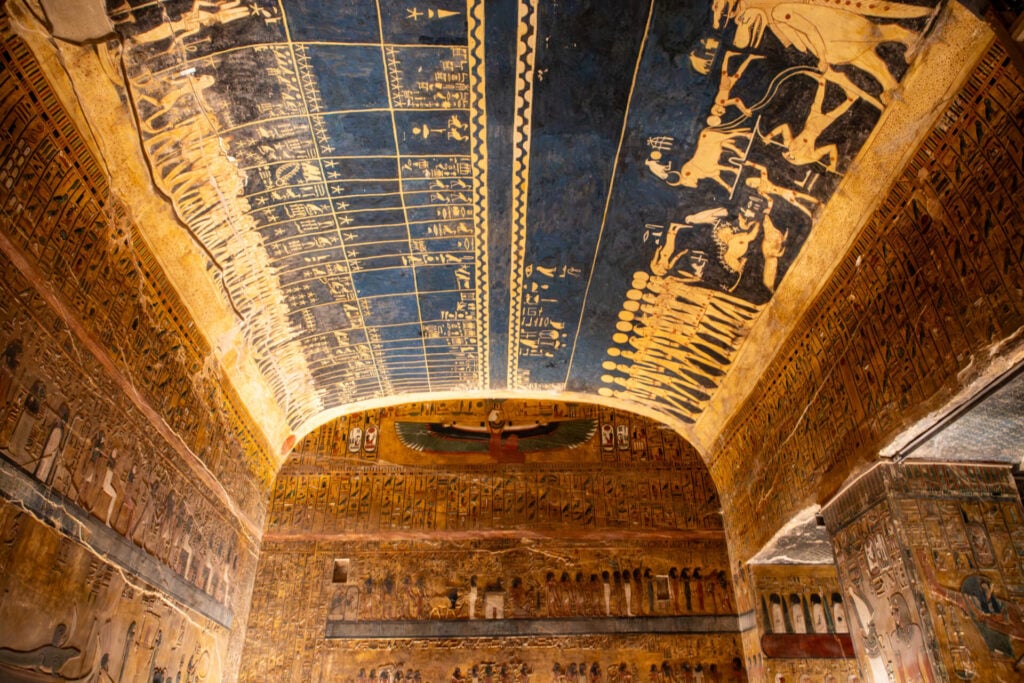
- Tomb of Ramesses V/VI (KV9): one of the most visually impressive tombs in the whole valley and the highest-value special ticket (not to be missed!!), with ceilings covered in intricate astronomical scenes from the Book of the Heavens (special ticket: 220EGP / $4USD)
- Tomb of Seti I (KV17): the finest tomb in Egypt and certainly my personal favourite, with extraordinary depth, vivid colour, and incredibly detailed carvings that make the artwork feel almost alive— it’s expensive, but if you love ancient Egypt, do not skip this! (special ticket: 2200EGP / $42USD)


👑 IS IT WORTH VISITING VALLEY OF THE QUEENS?
The Valley of the Queens served as the burial site for royal wives during the New Kingdom, and the undisputed highlight is the tomb of Nefertari, widely considered one of the most beautiful tombs in Egypt. However, it has been CLOSED since 2024 due to significant deterioration and experts are unsure when (or even if) it will ever reopen.
With Nefertari’s Tomb closed, it’s probably not worth visiting the Valley of the Queens unless you’ve already visited all the other temples and tombs on this list. Instead, we highly recommend visiting the Valley of the Artisans, a quiet, woefully underrated site with incredible artwork!
9 | Valley of the Artisans (Deir el Medina)
Cost of entry: 220EGP | Best time to visit: anytime (usually quiet)
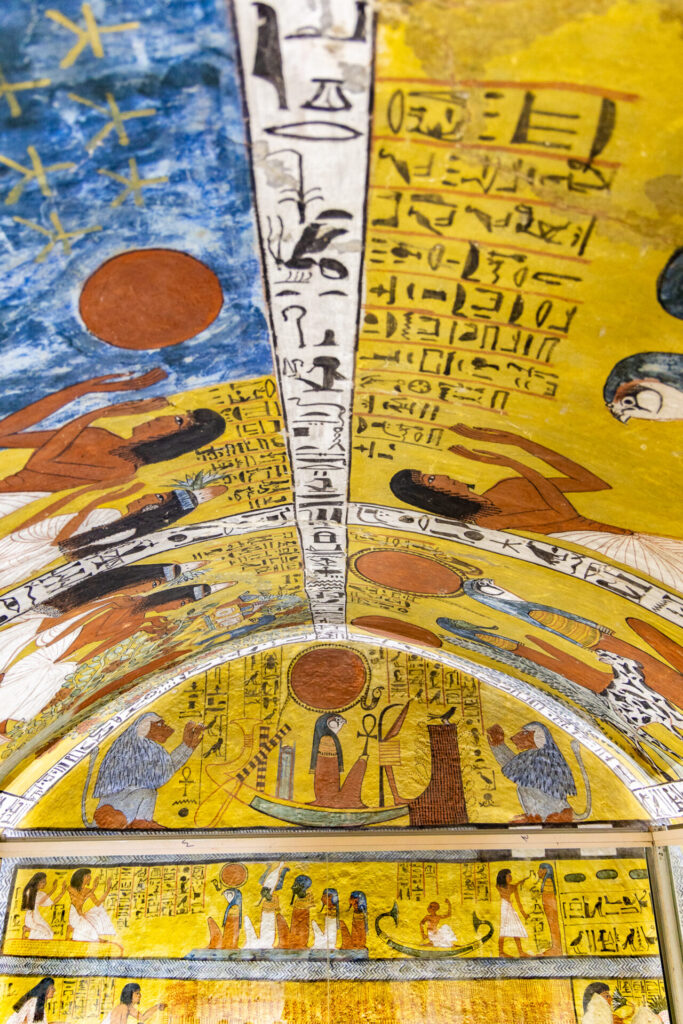
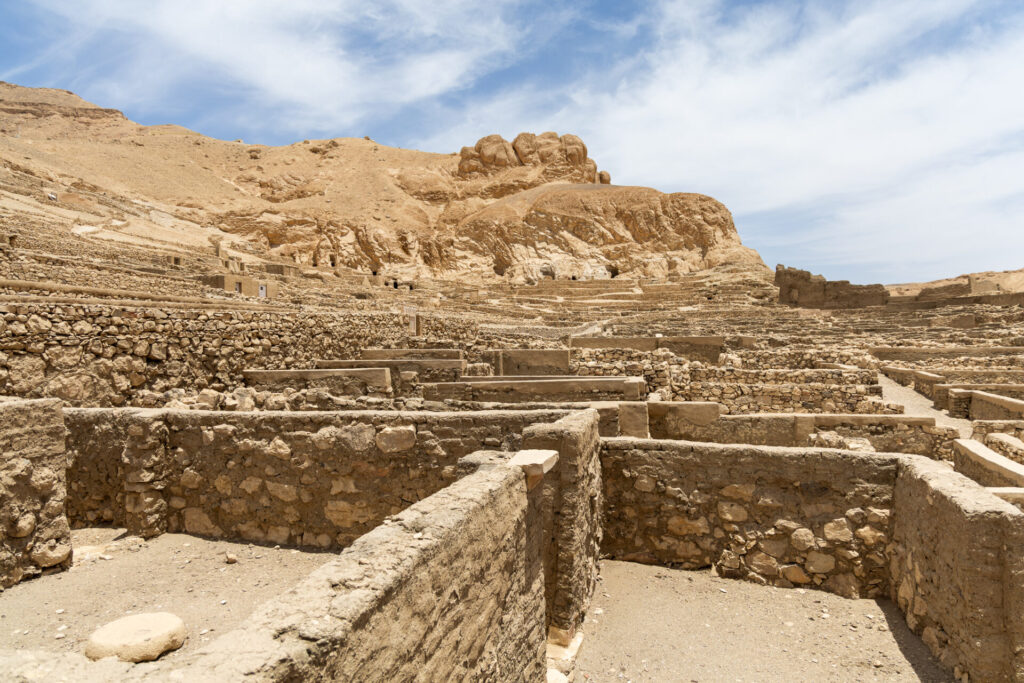
Tucked into the hills behind the Valley of the Kings, Deir el-Medina was home to the skilled artisans who built and decorated the royal tombs. On their rare days away from work, many of these craftsmen turned their talents toward their own burial chambers, believing that they too would make the journey into an eternal afterlife with the proper rituals in place.
Although smaller and far less extravagant than the Valley of the Kings or Queens, the tombs here are incredibly vibrant and even better preserved! Beyond the tombs, you can also explore the remarkably intact remains of the ancient village.


What makes this site so special is how personal it feels— the artwork is more intimate and expressive, offering a glimpse into daily life and beliefs beyond the royal elite. Particularly while the Tomb of Nefertari remains closed in the Valley of the Queens, the Valley of the Artisans is a fantastic addition to your West Bank itinerary and one of the best places in Luxor to appreciate detailed, colourful tomb paintings up close.
The site is woefully underrated, so you’ll likely have each tomb entirely to yourself, but do note that the entryways are VERY narrow and involve quite a few stairs. It’s worth it to get down there!


Best tombs at Deir el Medina
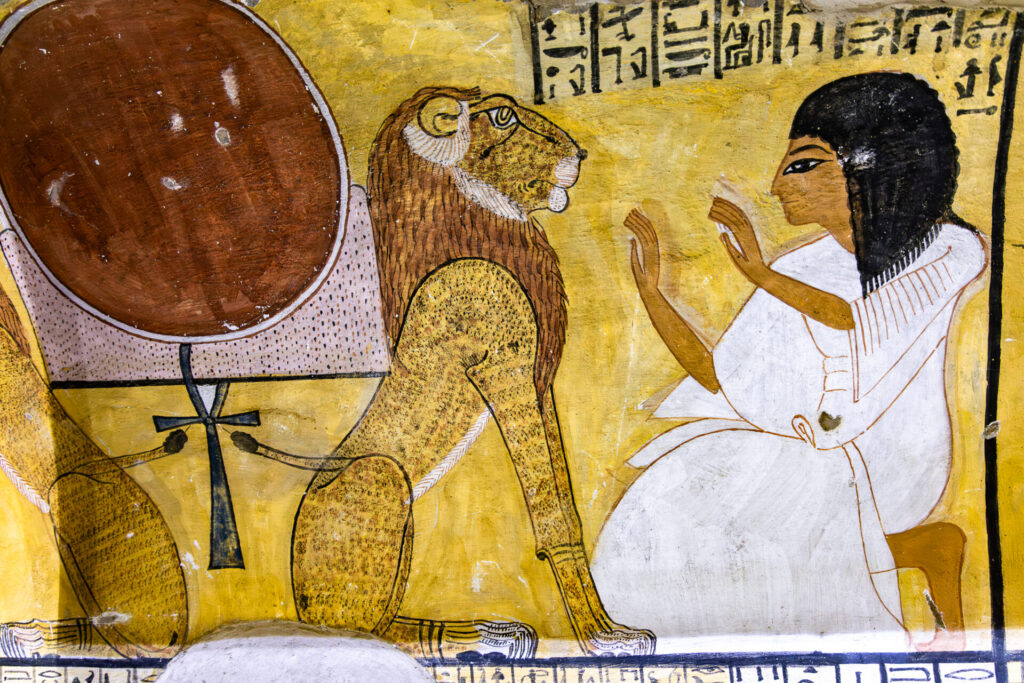
- Tomb of Sennutem (TT1): sometimes spelled Sennedjem, this is the highlight of the site, with brilliantly preserved paintings showing the artisan and his wife enjoying an idealised afterlife in lush agricultural scenes
- Tomb of Inherkhau (TT359): the next-most impressive tomb in the valley, featuring large religious scenes from the Book of the Dead and Book of the Gates, as well as colourful geometric patterns and exceptionally well-preserved painted ceilings
- Tomb of Pashedu (TT3): a smaller but vividly decorated tomb, known for its striking colours and well-preserved scenes, but with a very narrow entryway that does require some crouching
10 | Medinet Habu
Cost of entry: 220EGP | Best time to visit: late afternoon
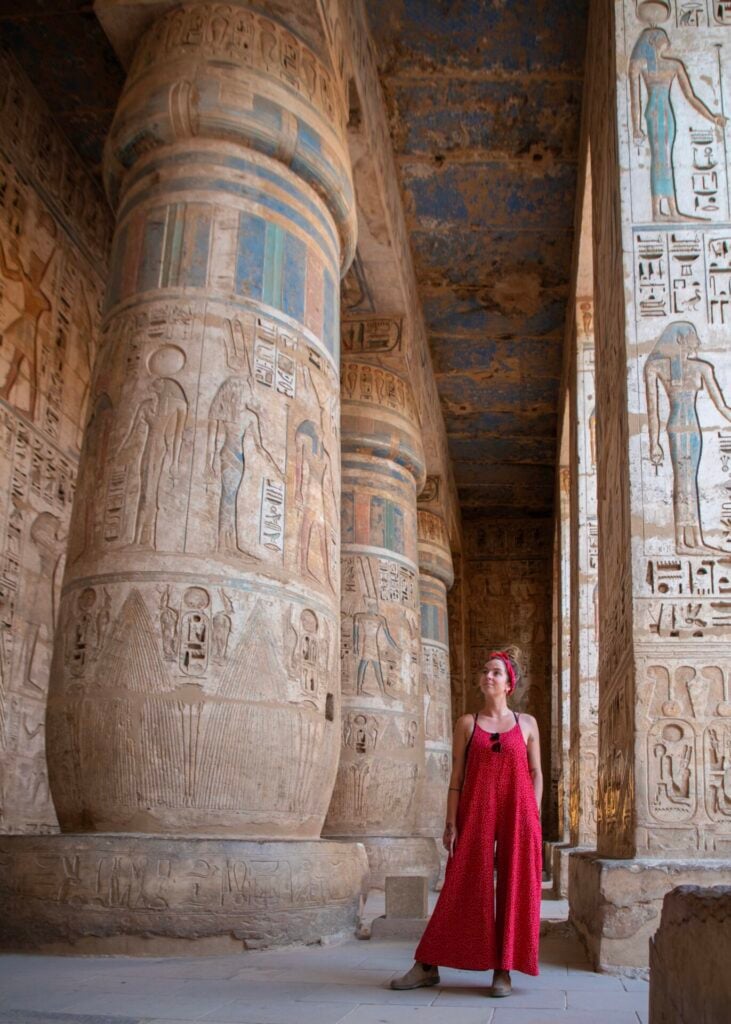
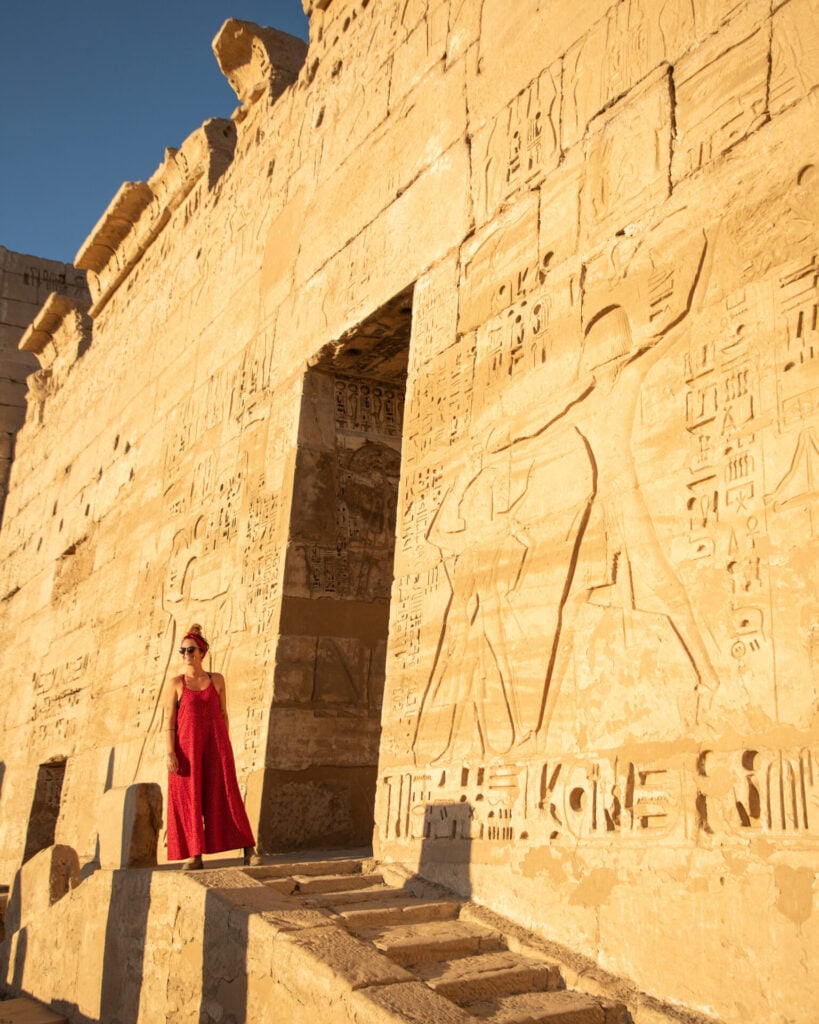
Often overlooked in favour of Luxor’s more famous temples, Medinet Habu is one of the least crowded and most impressive sites on the West Bank! Built around 1180 BCE by Ramesses III, this VAST mortuary temple is remarkably well preserved and offers a far more immersive, relaxed experience than the headline sites.
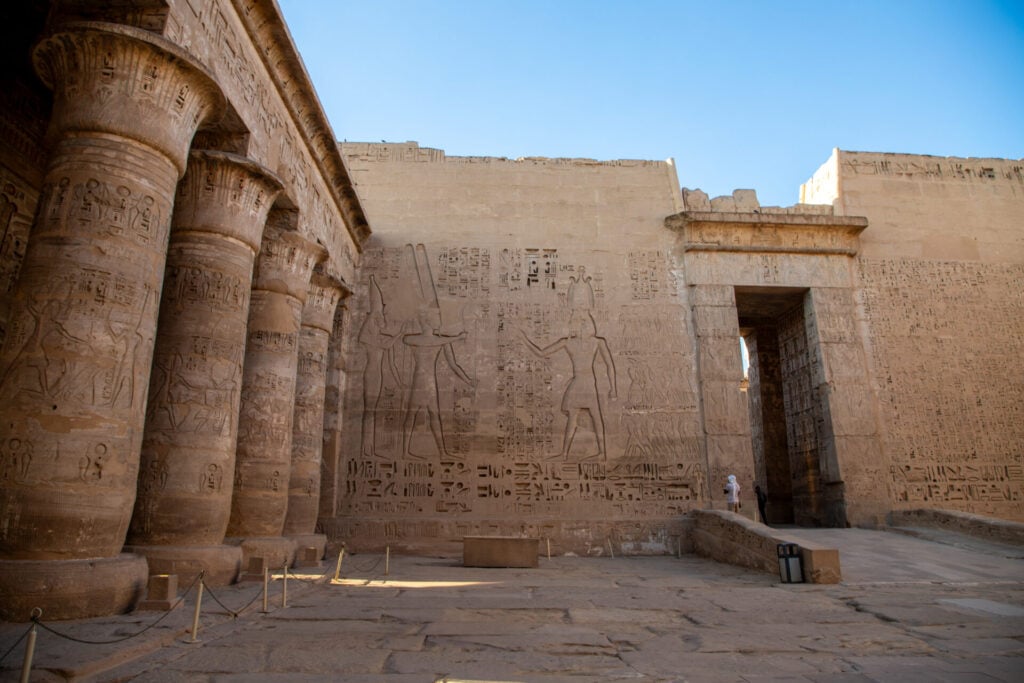
Other than the low crowds, what sets Medinet Habu apart is the level of detail: the walls are covered in deeply carved reliefs that still retain traces of colour, depicting military victories, religious rituals, and scenes of daily life with incredible clarity. It’s also just a short walk from our favourite hotel, Malkata House, so we’d highly recommend walking over after lunch and wandering through the complex with or without a guide.
Medinet Habu highlights
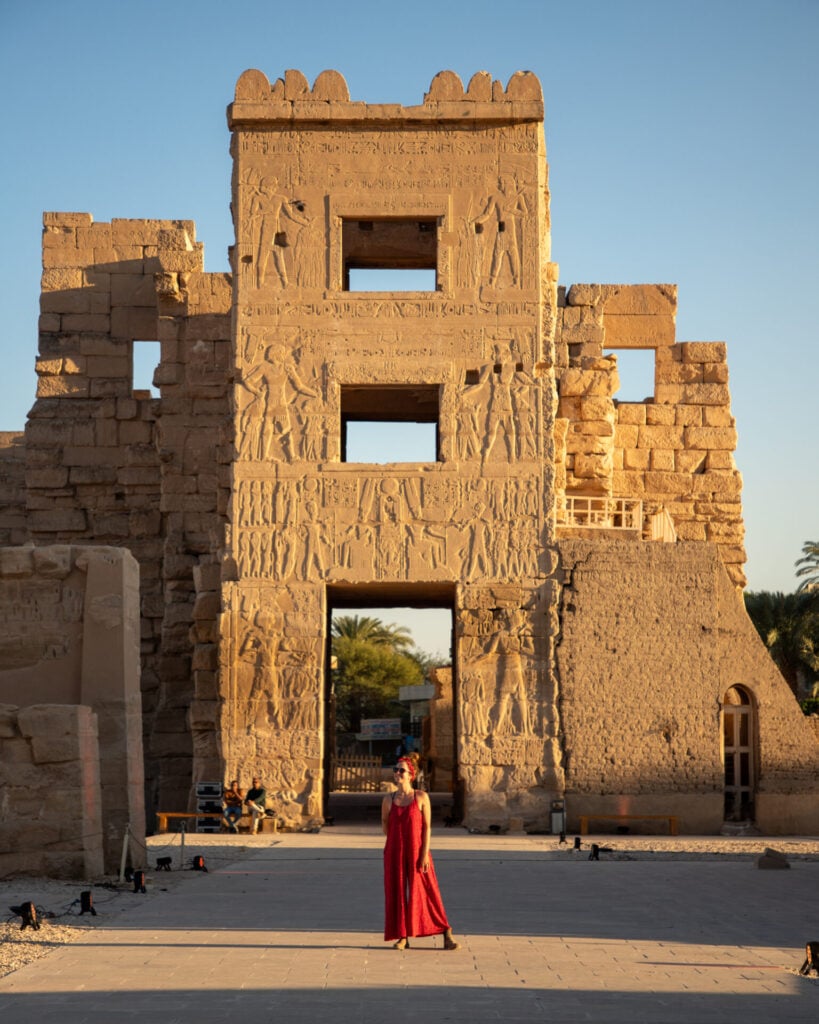
- First and Second Pylons: the temple’s rectangular entrance gateway (2 pylons separated by an inner courtyard) is covered in detailed reliefs of Ramesses III’s military victories, including scenes from his battles against the “Sea Peoples” carved along the outer walls
- Peristyle Hall: an open courtyard lined with columns and Osiride statues of Ramesses III (portraying the pharaoh in the form of Osiris, god of the afterlife, was meant to symbolise eternal rebirth)— this is where you’ll find some of the most vivid surviving colour on the ceilings and upper reliefs!
- Migdol Tower: a rare fortified entrance structure inspired by Syrian military architecture
Best temples near Luxor
Beyond the city, there are a few temples within driving distance of Luxor that make fantastic half-day trips. I’ve recommended two stand-out options below— and best of all, you’ll usually enjoy them with far fewer crowds than the main sites in Luxor!
>>> Read my complete list of the 10 best ancient temples in Egypt for more highlights beyond Luxor!
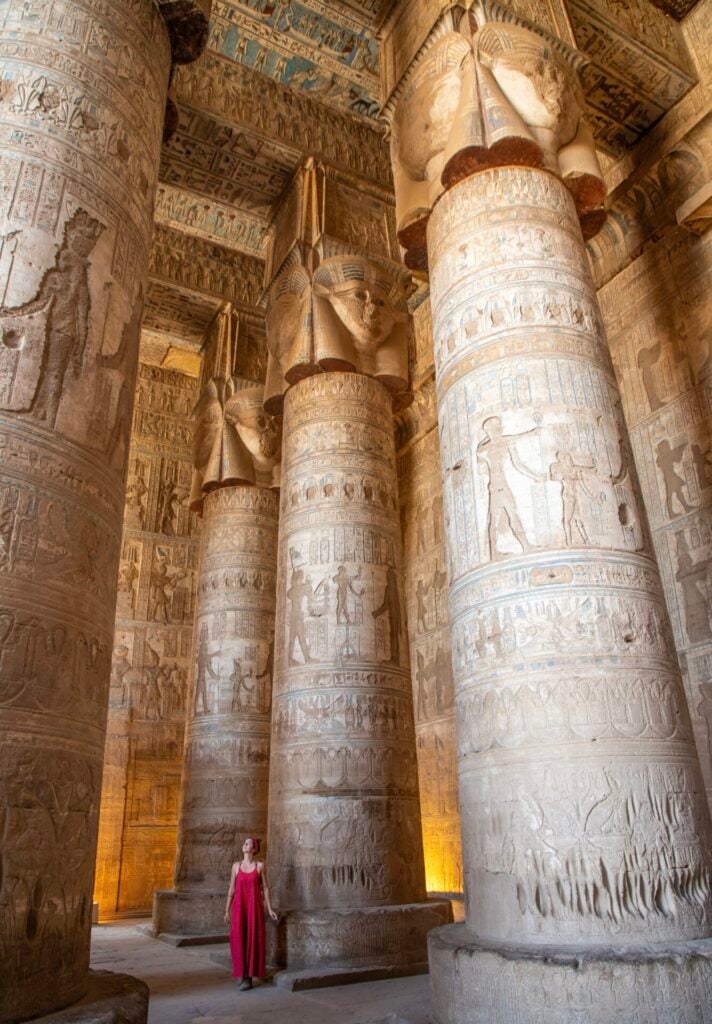
11 | Dendera Temple of Hathor
Cost of entry: 220EGP | Best time to visit: morning (open 7am-4pm)
Thanks to its position about 1hr north of Luxor (and blissfully off the Nile cruise route), Dendera Temple is something of a hidden gem— but it’s one of the best-preserved temples in Egypt and one of my absolute favourites!
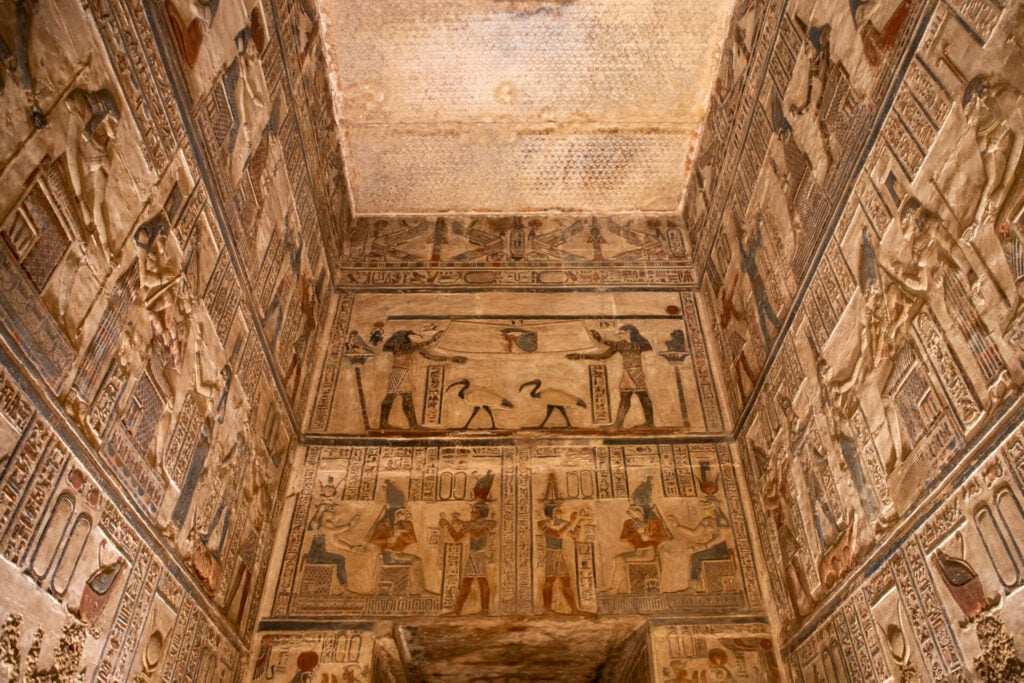
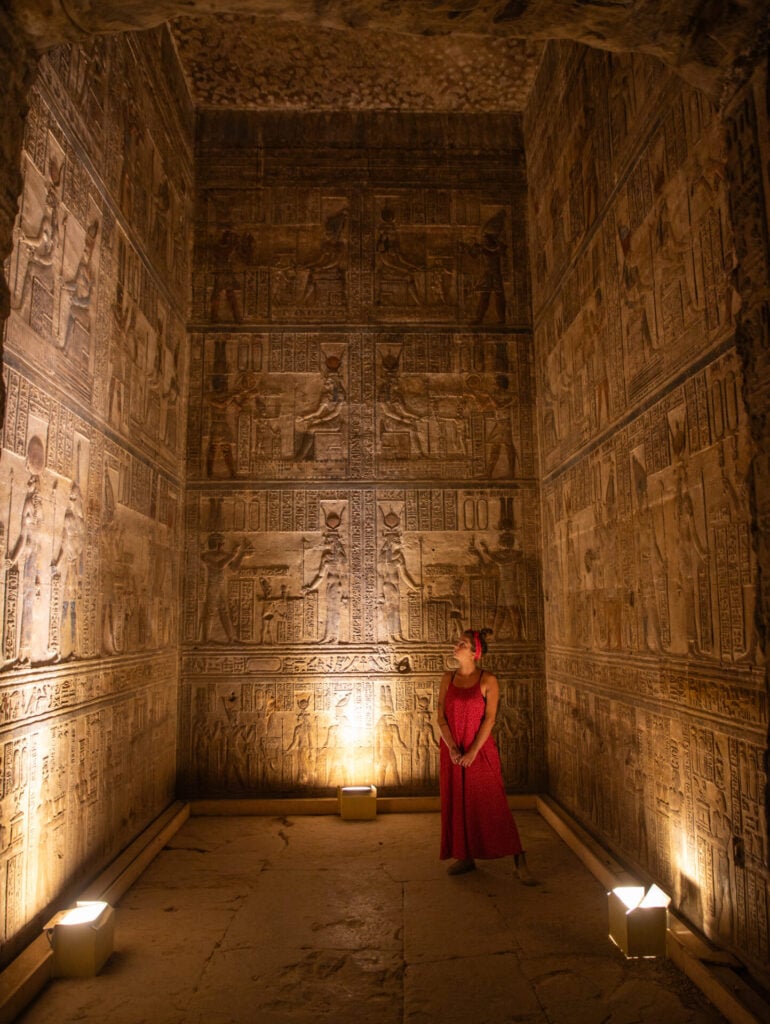
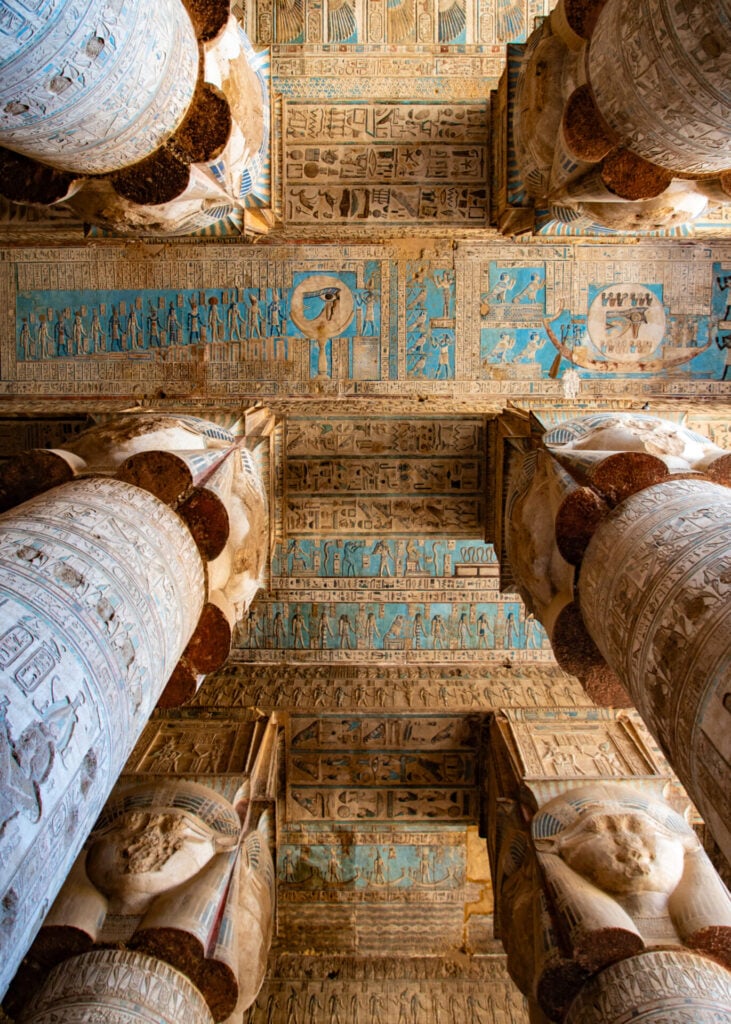
Built primarily during the Ptolemaic period around the 1st century BCE (making it over a thousand years younger than Karnak or Luxor), Dendera was an ancient healing sanctuary with its main temple dedicated to Hathor, the goddess of love, fertility, and joy. And just as she’s depicted at the Temple of Hatshepsut, Hathor adorns the top of capitals in the Hypostyle Hall as a serene, round-faced woman with the ears of a cow, intended to symbolise motherhood, protection, and divine femininity.
Where colours have largely faded from many other temples, Dendera still retains remarkably vivid artwork, especially on the ceilings and upper walls. Instead of simply imaging how these spaces once looked, you truly get to experience the vibrance and original detail yourself!


Dendera Temple highlights
- Hypostyle Hall: Dendera’s spectacular entrance hall features massive columns topped by Hathor-headed capitals and ceilings covered in vibrant astronomical scenes— by far one of the most colourful temple interiors you’ll see anywhere in Egypt!
- Inner Chamber reliefs: beyond the main hall, explore a series of smaller, semi-enclosed chambers that are completely covered in intricate carvings and hieroglyphs, many still retaining traces of their original colour
- Dendera Crypts: a network of hidden underground chambers and narrow passages used to store sacred statues and ritual objects, decorated with symbolic reliefs— you’ll need to crawl through a narrow entryway to access each crypt, but once inside, it’s comfortable to stand
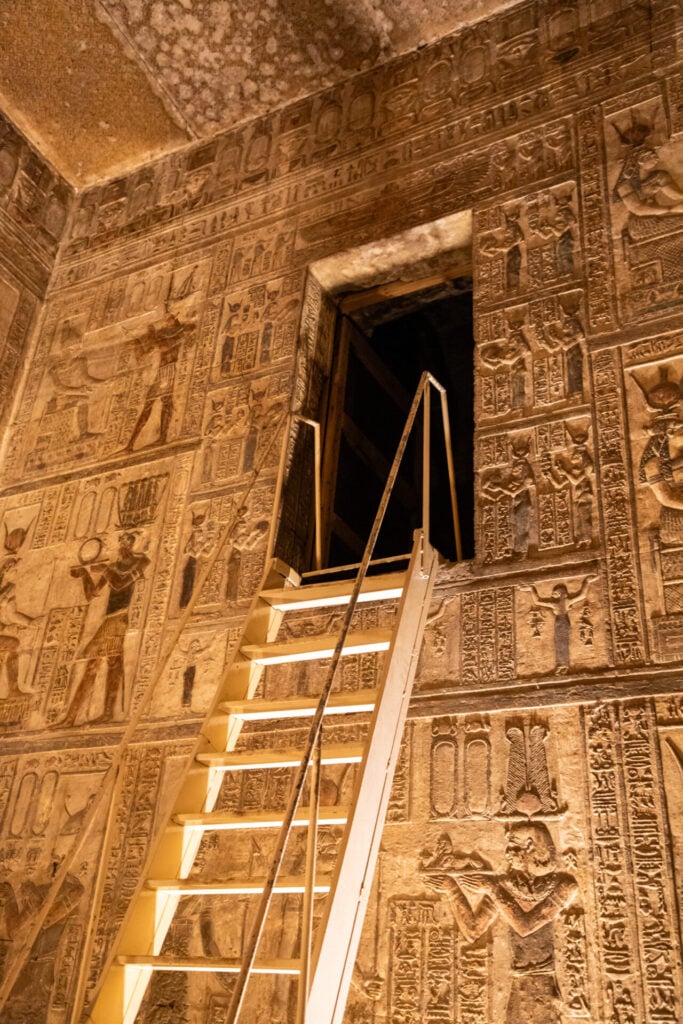
- Processional staircases: one of the most unique features of the temple is an enclosed staircase leading to the temple roof, its walls decorated in detailed scenes of these sacred rites
- Dendera Zodiac: in a small chapel dedicated to Osiris on the roof of the temple, the ceiling is covered by a detailed astronomical relief depicting constellations and zodiac signs— the artwork is incredible, but the version you see here is a actually replica, as the original was removed illegally in the 19th century and is currently housed in the Louvre in Paris
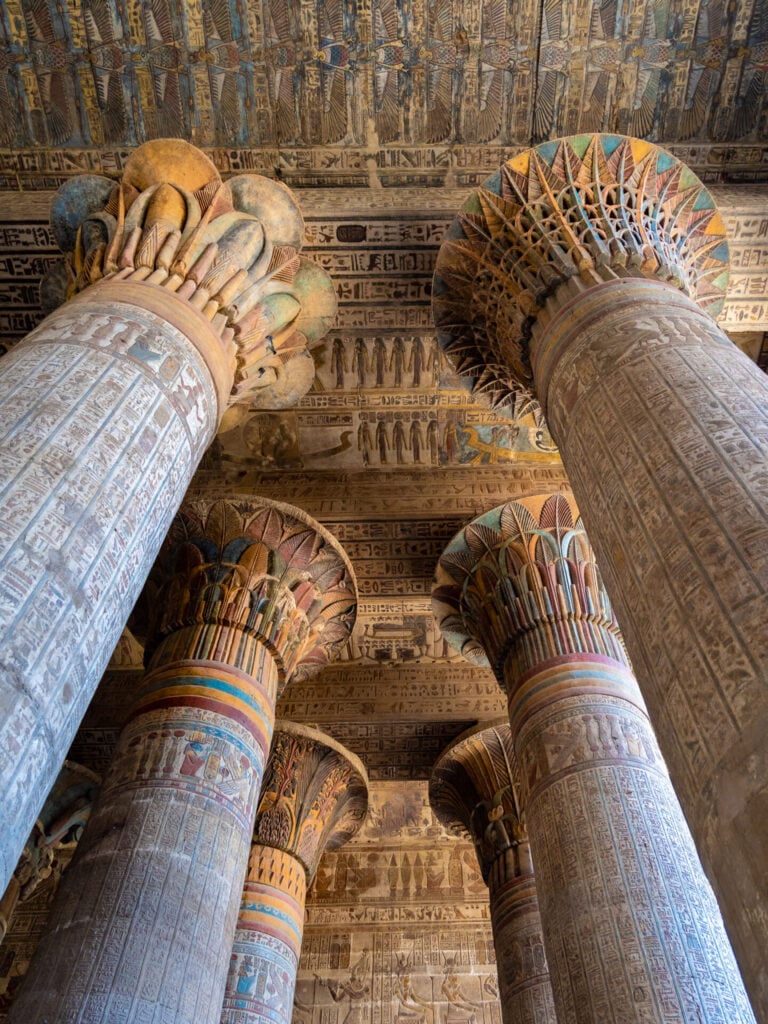
12 | Esna Temple of Khnum
Cost of entry: 200EGP | Best time to visit: morning (open 7am-4pm)
Located about 1hr south of Luxor, the Temple of Khnum is another spectacular and often overlooked site! Although the ancient temple is believed to have been massive, only the Hypostyle Hall is visible today, with the rest buried under the modern town of Esna.
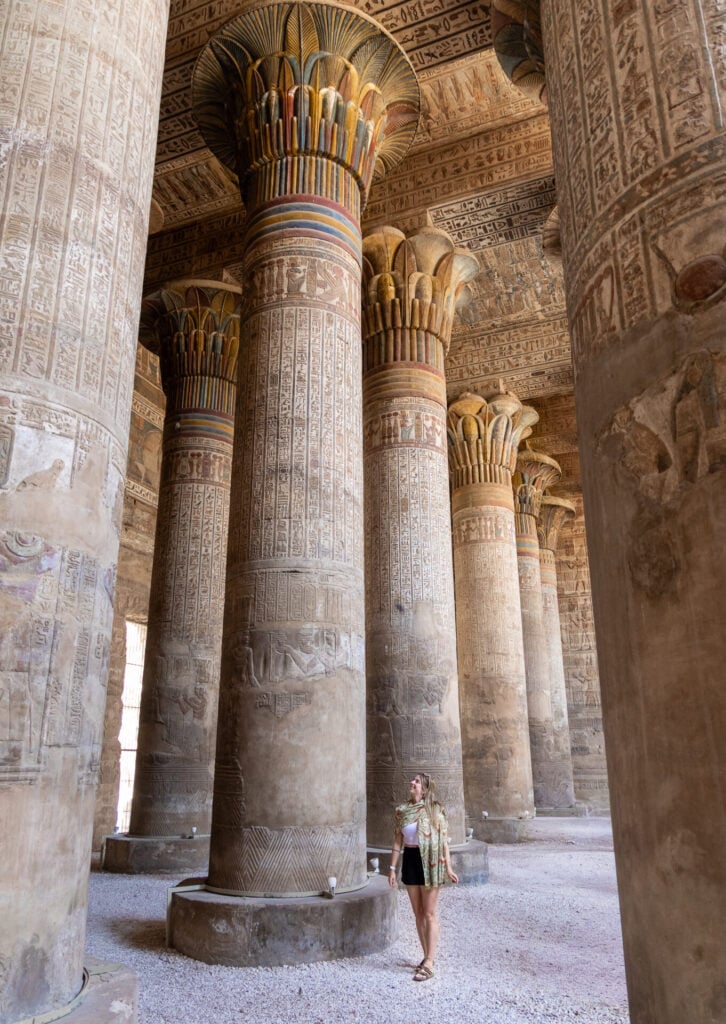
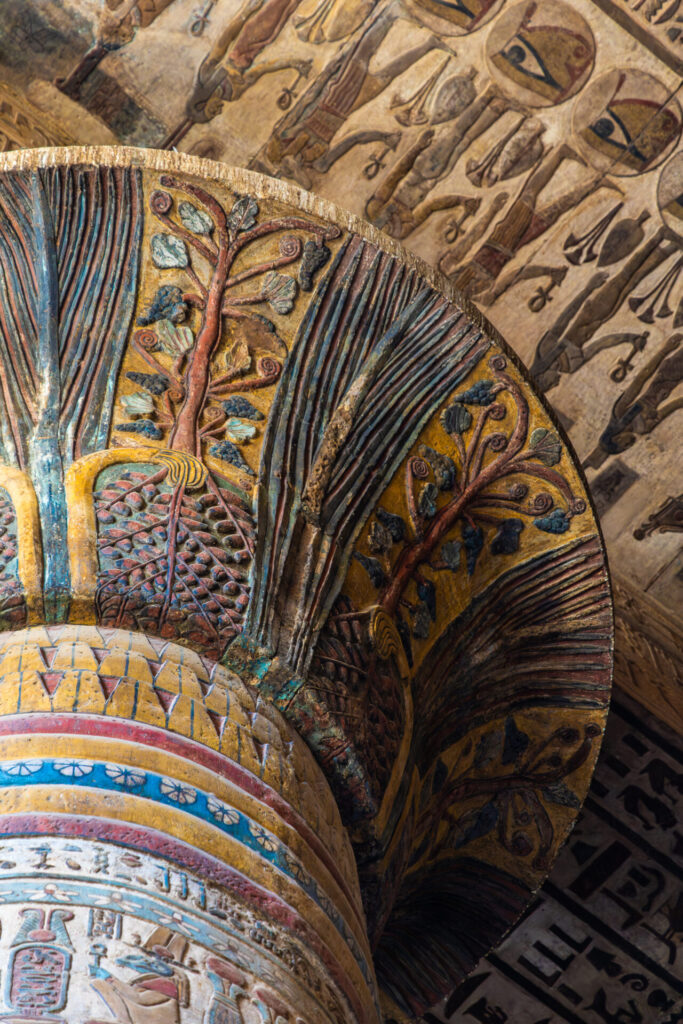
Built during the Ptolemaic and Roman periods (c. 2nd century BCE–2nd century CE) and dedicated to Khnum, the ram-headed god of creation (believed to have fashioned humans from clay on a potter’s wheel), the temple is best known for its extraordinary ceiling decorations and the ornate floral capitals crowning each column of the Hypostyle Hall
While early temples were coloured with pigments from fruit and flowers, the ancient Egyptians soon discovered that stones such as malachite, turquoise, and ochre could produce far richer and longer-lasting colours when ground into fine powder and mixed with egg whites to form paint.
Recent restoration work has removed centuries of dust and soot from Esna Temple to reveal the original deep blues, vivid reds, and bright yellows that make this the most colourful surviving temple in Egypt!


Esna isn’t a standard stop on most large Nile cruise itineraries, which is part of why it feels so quiet and overlooked. BUT you can see it on more curated journeys with Nour el Nil, who sail the Nile from Esna to Aswan by traditional dahabiya!
>>> We’ve done THREE different Nile Cruises in the last 3 years— read my complete guide to choosing the BEST Nile Cruise and my review of the luxury sailing experience with Nour El Nil!
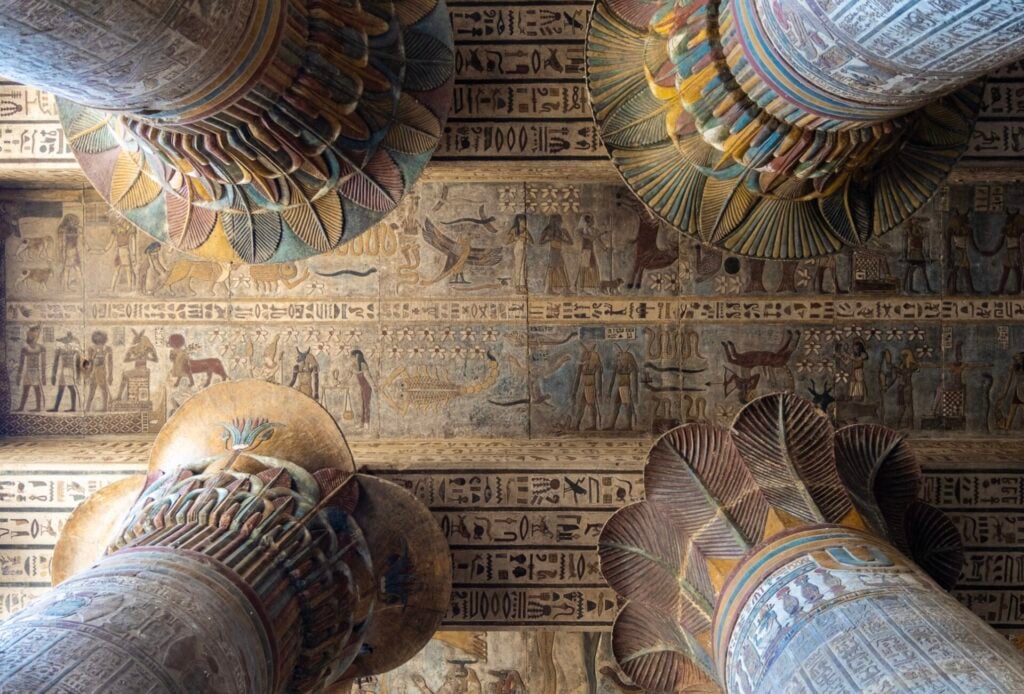
Esna Temple highlights
- Hypostyle Hall: the only excavated structure from the once-enormous Esna Temple is its courtyard, supported by 24 massive columns, each topped with uniquely decorated capitals and covered in detailed hieroglyphic inscriptions
- Esna Zodiac: look UP in the Hypostyle Hall to see the richly restored astronomical scenes in vibrant colours that make this temple so unique, including zodiac constellations, planets, and celestial deities
Planning your visit to Luxor
Best time to visit Luxor
The best time to visit Luxor is between October and April, when more moderate daytime temperatures make it possible to explore temples and tombs while exposed to the full desert sun. Luxor gets significantly hotter than Cairo, and summer temperatures regularly exceed 45°C (113°F), making sightseeing genuinely exhausting outside of sunrise and sunset hours.
Even the shoulder season can be brutal in Luxor— we’ve travelled during September, November, and May previously, and November was by far the best experience. During hotter months, it’s essential to plan your temple visits early (or right around sunset) so you can get back to your hotel and avoid peak midday heat.
Hiring a local guide or driver
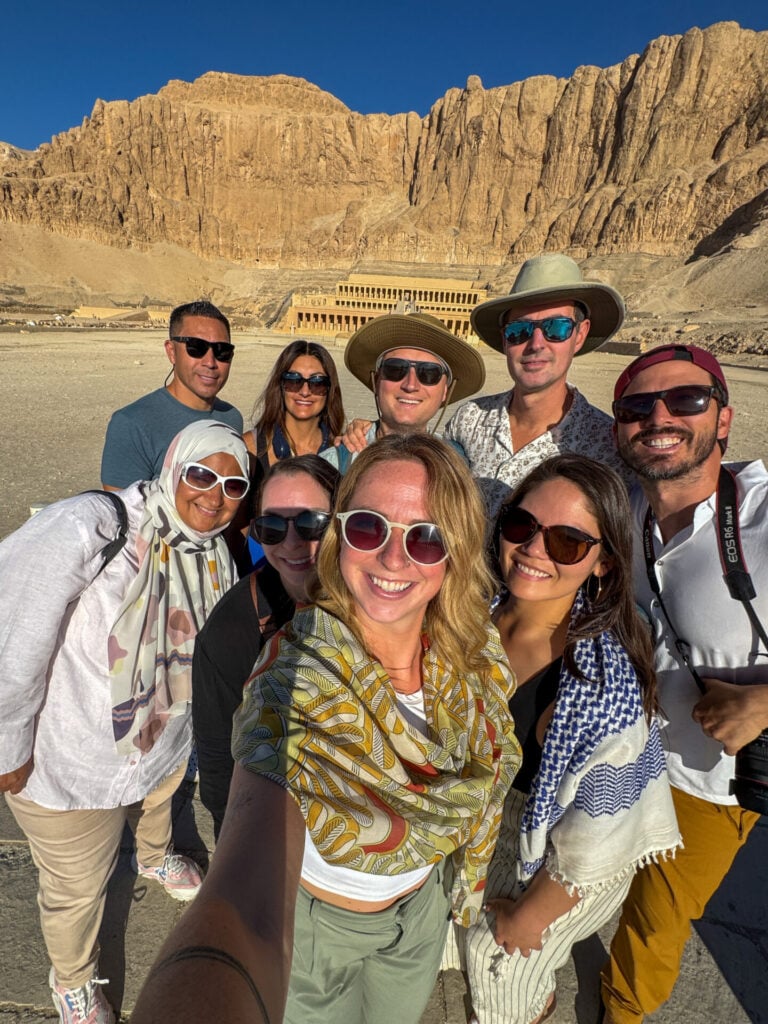
Although it’s possible to explore Luxor independently, we would STRONGLY recommend hiring a licensed Egyptologist to accompany you— it will completely transform your experience!
The sites in Luxor are incredibly layered, symbolic, and historically complex, and without proper context, it’s easy to miss the significance of what you’re seeing. A good guide brings the temples and tombs to life in a way that simply isn’t possible on your own, so we’d suggest visiting at least the key sites on the East and West Bank with a guide (and maybe then just hiring a driver to explore Dendera or Esna Temples farther afield).
Expect to pay $50-100USD for a full-day private guide + driver or around $30-60USD for just a driver. Our absolute favourite local guide is called Ghada, and she’s a spectacular source on ancient Egypt who’s been involved with all our group trips! Contact Ghada on WhatsApp at +20 101 999 8055, and she can also help coordinate a driver and entry tickets for you.
Entrance fees for Luxor temples & tombs
Current 2026 entrance fees are listed above for all 10 sites we specifically recommend visiting in and around Luxor— entry fees range quite reasonably from 200EGP ($4USD) to 750 EGP ($14USD), not including the special tombs (up to 2000EGP / $40USD for Seti I).
>>> If you visit all temples and tombs recommended in this post, expect to pay 3700EGP ($70USD) + an additional 2220EGP ($42USD) for the special tickets at Ramesses V&VI and Seti I tombs.
Tickets for all these sites can be purchased in advance on the official Ministry of Tourism and Antiquities website (Egymonuments) OR via credit card directly at each site entrance. As of 2026, no cash is accepted for ticket purchases.
Is the Luxor Pass worth it?
The Luxor Pass offers 5 consecutive days of access to most major archaeological sites in Luxor (excluding certain premium tombs), but in almost all cases, it’s NOT worth it.
As of 2026, the standard Luxor Pass costs $130USD, and even if you visit all 10 of the ancient sites on this list, you’ll only pay 3,700EGP ($70USD) in entrance fees per person. Consider also that the pass can only be purchased in person with crisp USD bills, and it’s both cheaper and far simpler to just pay for sites individually.
General tips for visiting sites in Luxor
- Most archaeological sites in Luxor open at 6am, with last entry around 5 or 6pm—unless noted otherwise, you can safely assume daylight hours apply
- It was once necessary to pay “photography fees” to bring ANY camera into the temples (even for personal use), but I’m happy to report the government decided to do away with these fees several years ago and it is now completely free to bring a DSLR camera into the temples and tombs of Egypt
- These are ancient sites, not active religious spaces, so there’s no strict dress code; modesty is appreciated (as anywhere in Egypt), but shoulders and knees don’t necessarily need to be covered
- Luxor is extremely hot for most of the year—we’ve visited in May, September, and November and it’s consistently 30°C+, so plan to visit most of these sites early in the morning or late in the afternoon, specifically avoiding the midday heat
- You’ll routinely see different spellings for the same sites (ex. Dendera/Dendarah, Medinet Habu/Madinat Habu), and this is due to the transliteration process from ancient Egyptian into Arabic and later into English— all similar spellings are referring to the same place, don’t overthink it!
Getting to Luxor
Flight from Cairo to Luxor
The fastest way to reach Luxor is a 1hr domestic flight from Cairo with EgyptAir or Air Cairo. We’ve flown with both airlines over the years and found either to be perfectly reliable.
The main drawback with these flights is timing, as departures are clustered in the early morning (~7am) or evening (after 6pm). This usually means either leaving Giza before 5am or arriving in Luxor after dark, with no opportunity to explore that day. Neither option is perfect, so the best choice just depends on your specific itinerary.
>>> Read my super-detailed 3-day Cairo & Giza itinerary to plan this leg of your trip!
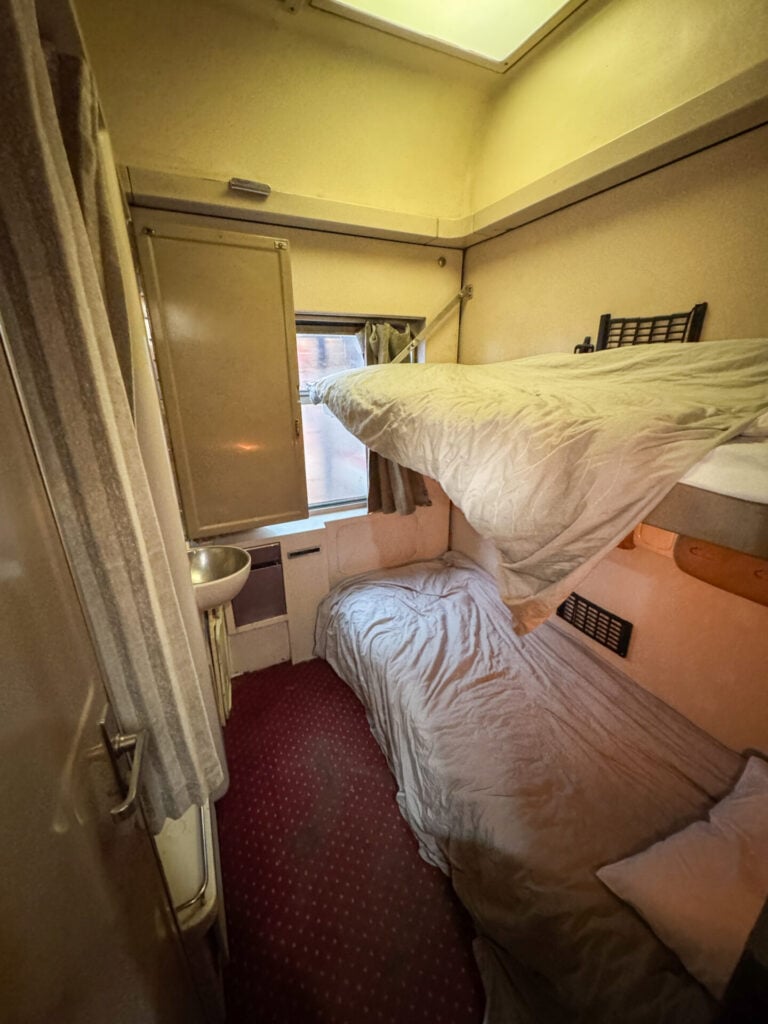
Overnight sleeper train from Cairo to Luxor
There’s also an overnight sleeper train from Cairo to Luxor, typically departing around 8pm and arriving around 6am the following morning. The train isn’t luxurious, but it’s reasonably comfortable and often more logistically convenient— it stops directly in Giza (saving a long transfer across Cairo) and you’ll arrive to Luxor with an entire day in front of you!
Ticket prices fluctuate with exchange rates, but we paid $100USD per person for a private 2-bed compartment in 2024. Unfortunately, the train website is notoriously challenging, so I’d recommend booking your tickets through a reliable third-party site like 12Go OR asking your hotel in Cairo to help organise tickets for you.
>>> Check out the Man in Seat 61 site for helpful information about train travel in Egypt
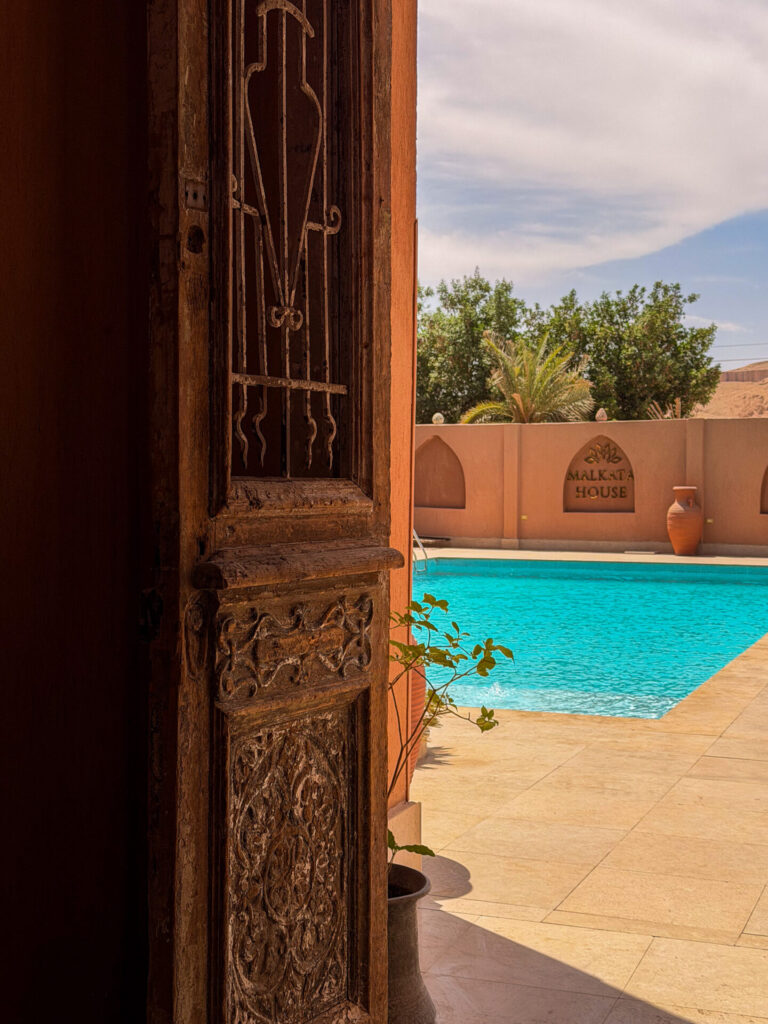
Where to stay in Luxor
After staying in multiple hotels on both the East Bank and West Bank of Luxor over the years, we strongly recommend basing yourself on the peaceful, atmospheric West Bank. This side of the river is far removed from the bustle and chaos of the city, instead situated alongside ancient ruins and sunlit mountains.
It’s a quick boat ride across the Nile or a 25min drive across the bridge, so you’ll still easily be able to visit the East Bank during your stay!
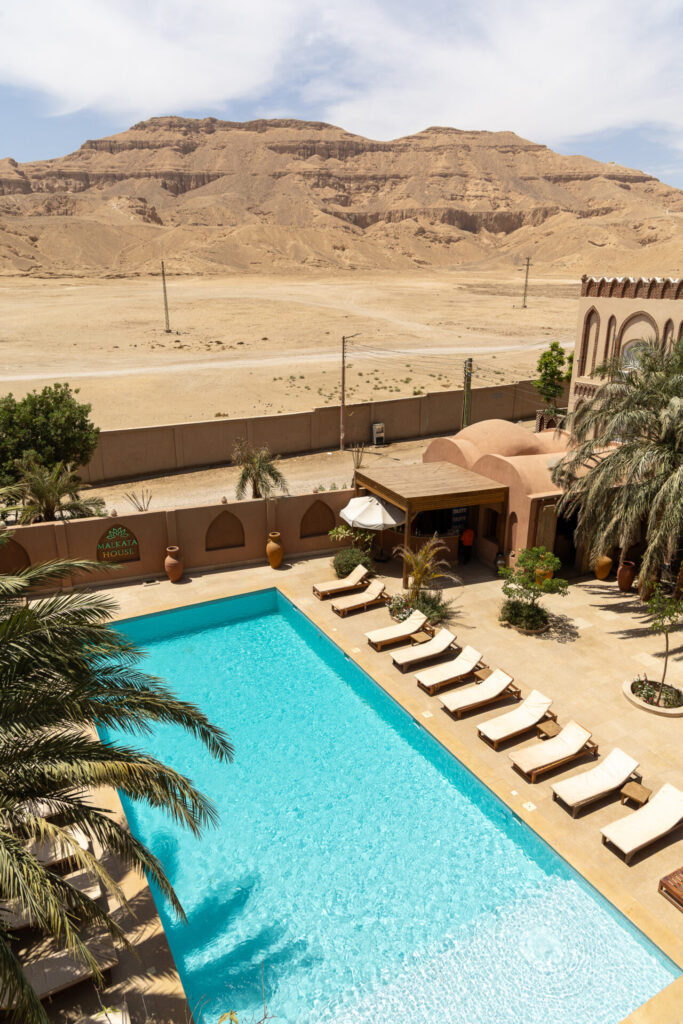
Best boutique hotel in Luxor: Malkata House
Our absolute favourite place to stay in Luxor is Malkata House, located right next to Medinet Habu on the West Bank. This small boutique hotel has a dozen suites overlooking a refreshing pool framed by palm and mango trees, with sweeping views of the Valley of the Queens, the ruins of Amenhotep’s palace, and the surrounding desert hills. Malkata House is like an oasis in the desert, and it’s by far the best hotel we’ve experienced in Egypt.


Rooms are very reasonably priced (starting at $130/night) and include a fantastic local breakfast served on the rooftop terrace. You can also opt for half-board or full-board, which I’d highly recommend— there aren’t many restaurants on the West Bank, and the on-site chef whips up gorgeous local dishes with a varied menu every day.
We can’t recommend this boutique highly enough!


Read all of my Egypt travel guides
- 10 best temples in Egypt (from a 5-time visitor!)
- Nour El Nil review: sailing from Luxor to Aswan on a luxury dahabiya
- Choosing the best Nile Cruise in Egypt: absolutely everything you need to know
- Detailed 3-day Cairo & Giza itinerary for first-time visitors
- What to do in Dahab: a guide to Egypt’s coolest beach town
- Perfect 1 & 2-week Egypt itinerary: Giza, Luxor, Aswan & the Red Sea
