• start here
  • about
  • itineraries
  • brooke beyond

  • hiking guides
  • outdoor gear
    • hiking boots
    • hiking backpacks
    • cold-weather layers
    • backpacking tent
    • outdoor sleep system
    • backcountry food
    • day-hike packing list
    • hut-to-hut packing list
    • via ferrata packing list
    • backpacking packing list
    • mountaineering packing list

brooke beyond

Africa / South Africa

Driving the Garden Route Day 1: Addo Elephant National Park

20 December 2017

Last Updated on 22 October 2021

After a few days of non-stop curry and downtown craziness, we return our rental car and say goodbye to Durban, hopping on an early flight to Port Elizabeth this morning to begin our road trip along the Eastern/Western Cape’s famous Garden Route. Although there is a pretty major hiccup when we arrive in PE to pick up our rental car and they’ve cancelled our booking because they “didn’t get confirmation from us” (despite the reservation email specifically saying that we didn’t need to contact them to confirm), we do get the last available car from the only one of a dozen car rental companies at the airport that still has anything and make it onto the road. I’m pretty livid about the rental fiasco, since we end up paying more than twice the price when I reserved months ago, but we both agree that it’s crazy lucky we were able to get a car at all at such last minute. The road trip could have so easily been derailed, so there is also a thankful twinge to our frustration.

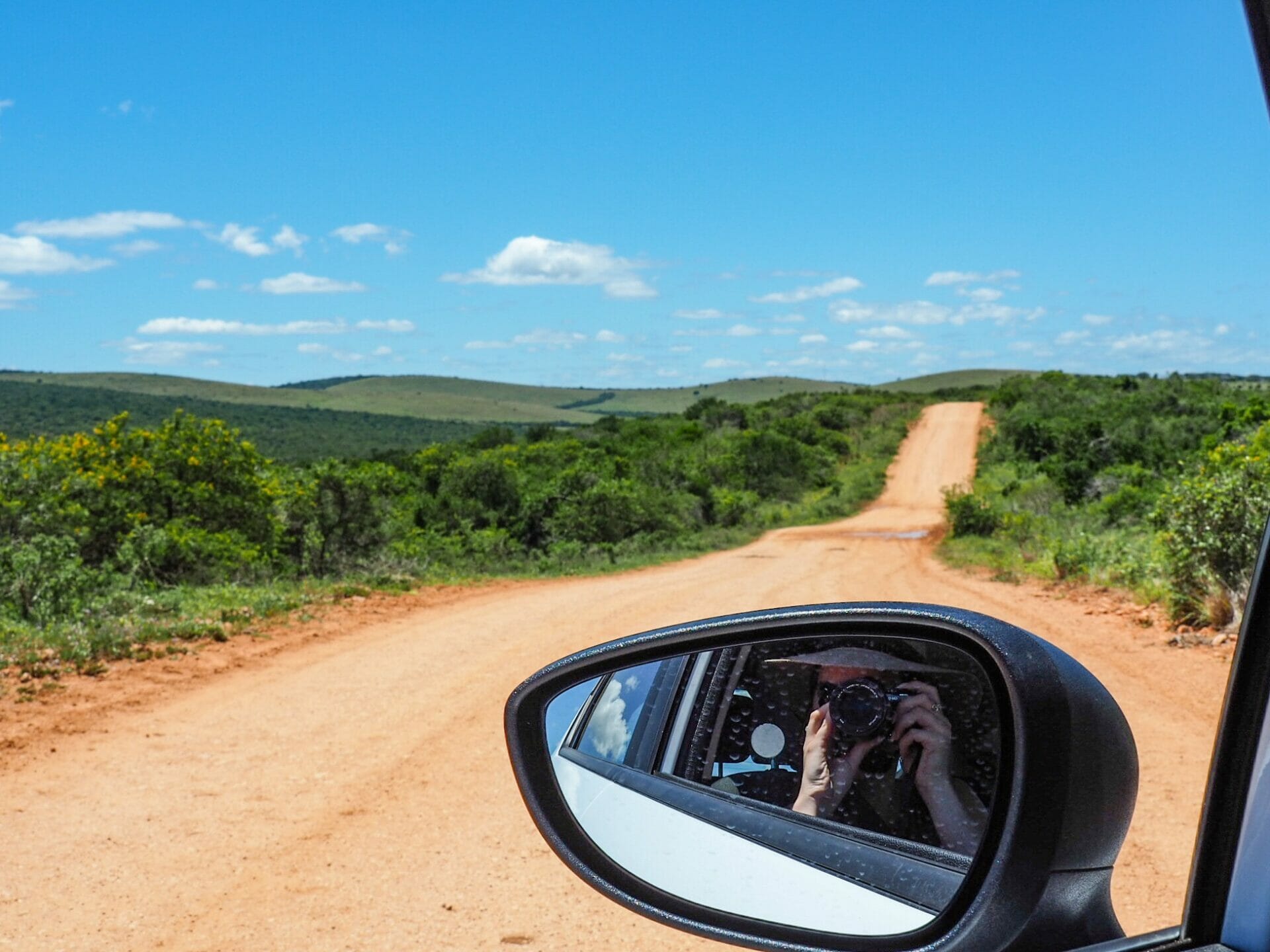
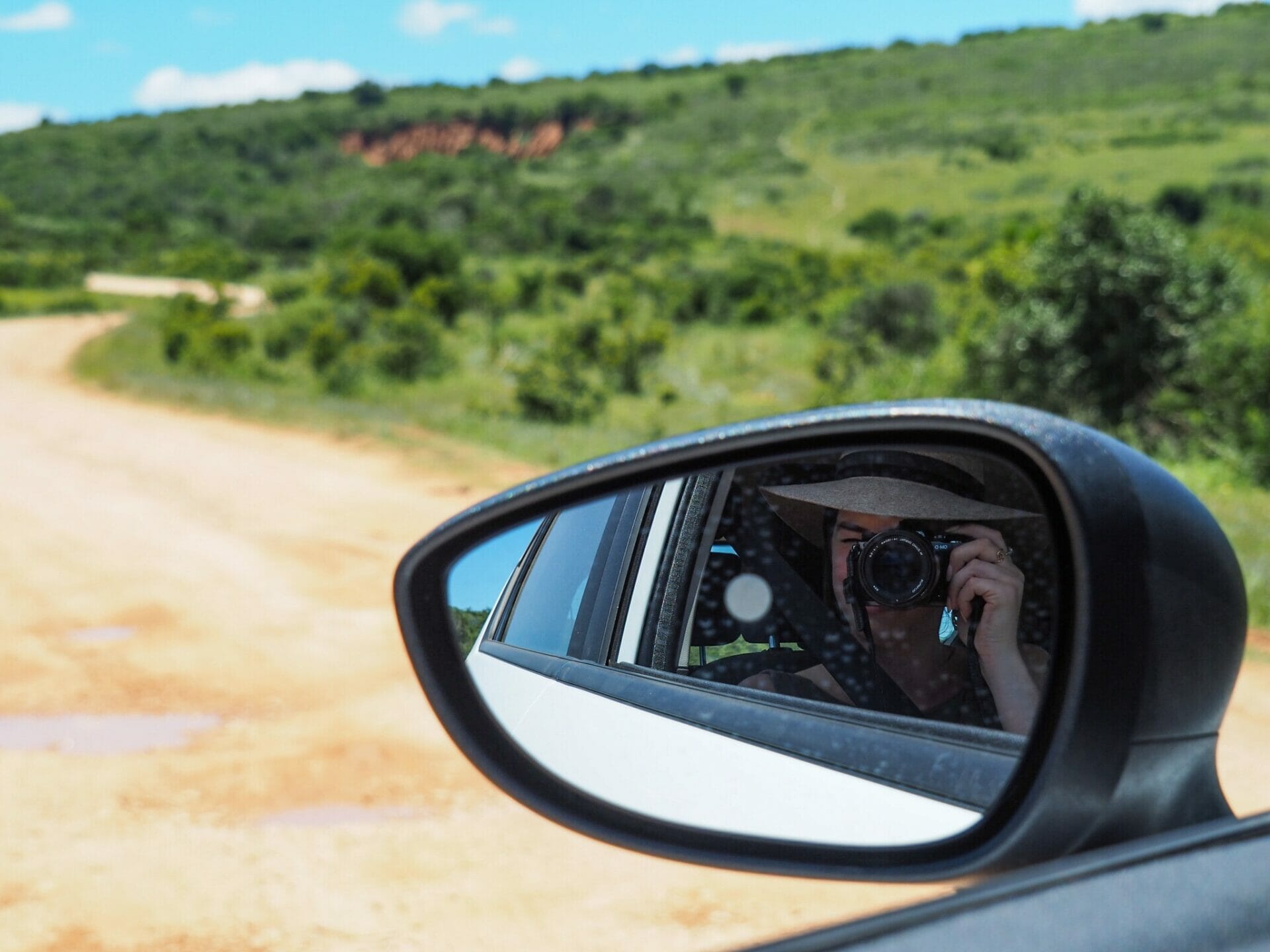
Once in the rental car, we point ourselves east and drive about 30 minutes to Addo Elephant National Park. Although we spent a few days on safari last week in Kruger, another SANPark (South African National Park), we were with a private guide, so this is our first experience self-driving and excitement levels are quite high. After paying about R270 (~$27AUD) and filling out a quick form, we drive our little car through the gate and into the National Park. Immediately, we are on the look out for animals, scanning the area underneath trees with particular fervour as it’s approaching midday and any cats would likely have taken to the shade for a catnap.

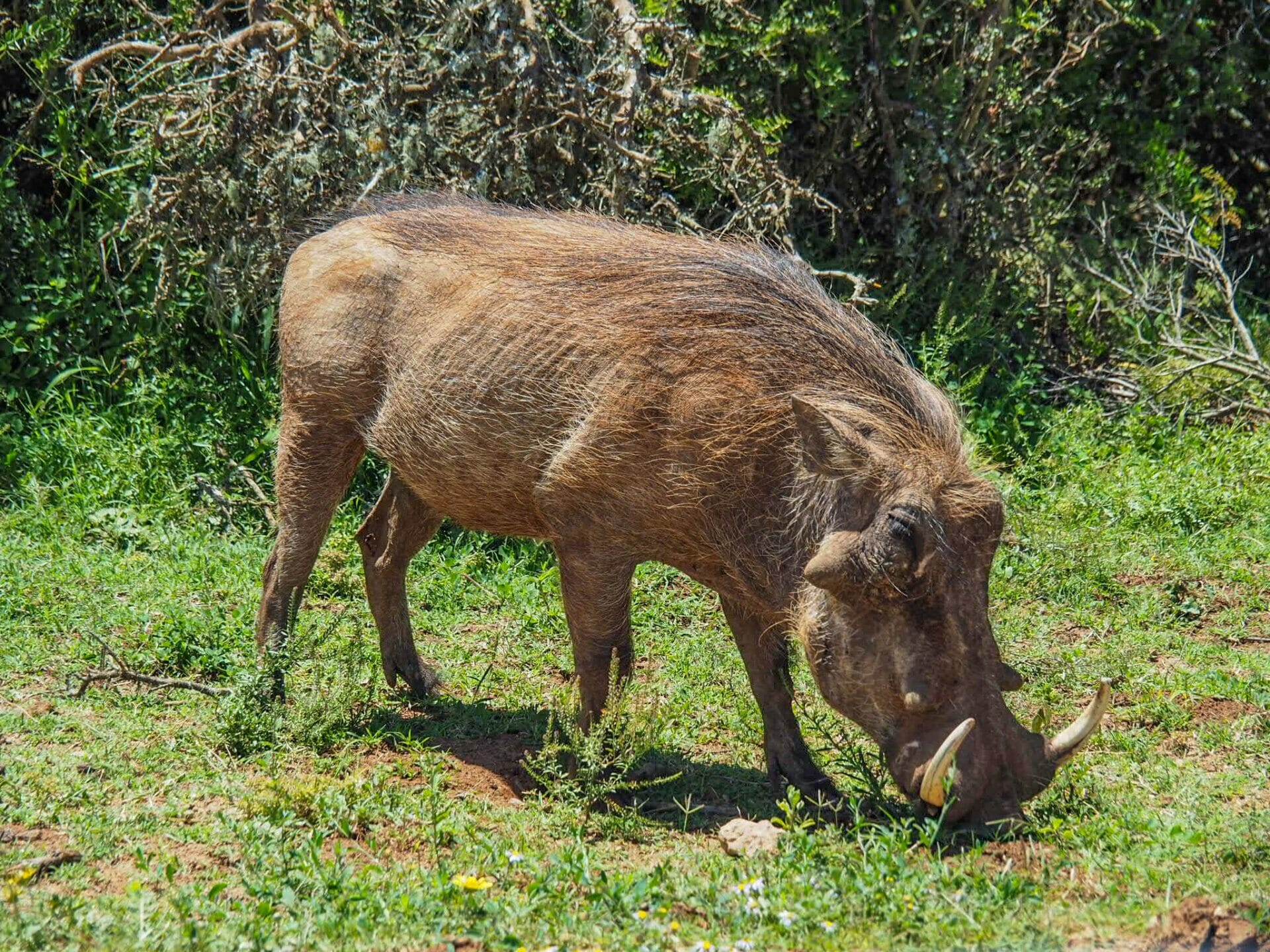
It isn’t a lion or a leopard, but we still squeal with delight to spot our first animal: a particularly rotund warthog nibbling on some low brush (over the next few hours, we manage to see more warthogs than in all our 5 previous days on safari). They are the strangest looking animals, sort of with the body of a staffy and the face of a space alien, but they are still cute, especially when they stick their skinny little tails straight up in the air and trot off across the bush. I’m not saying I’ll be adopting Pumba as a pet, but I do think he’s pretty adorable and more than a little hilarious.

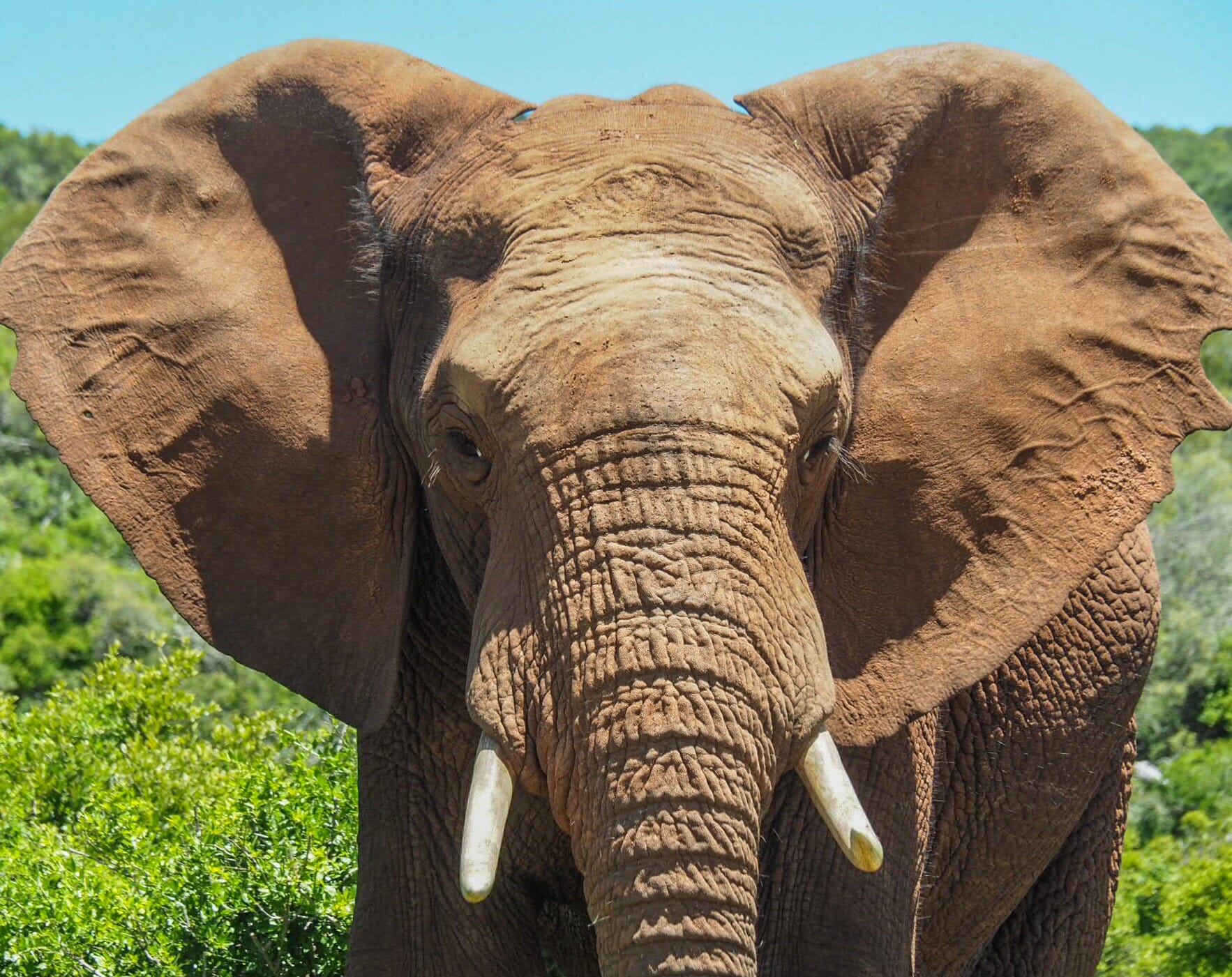
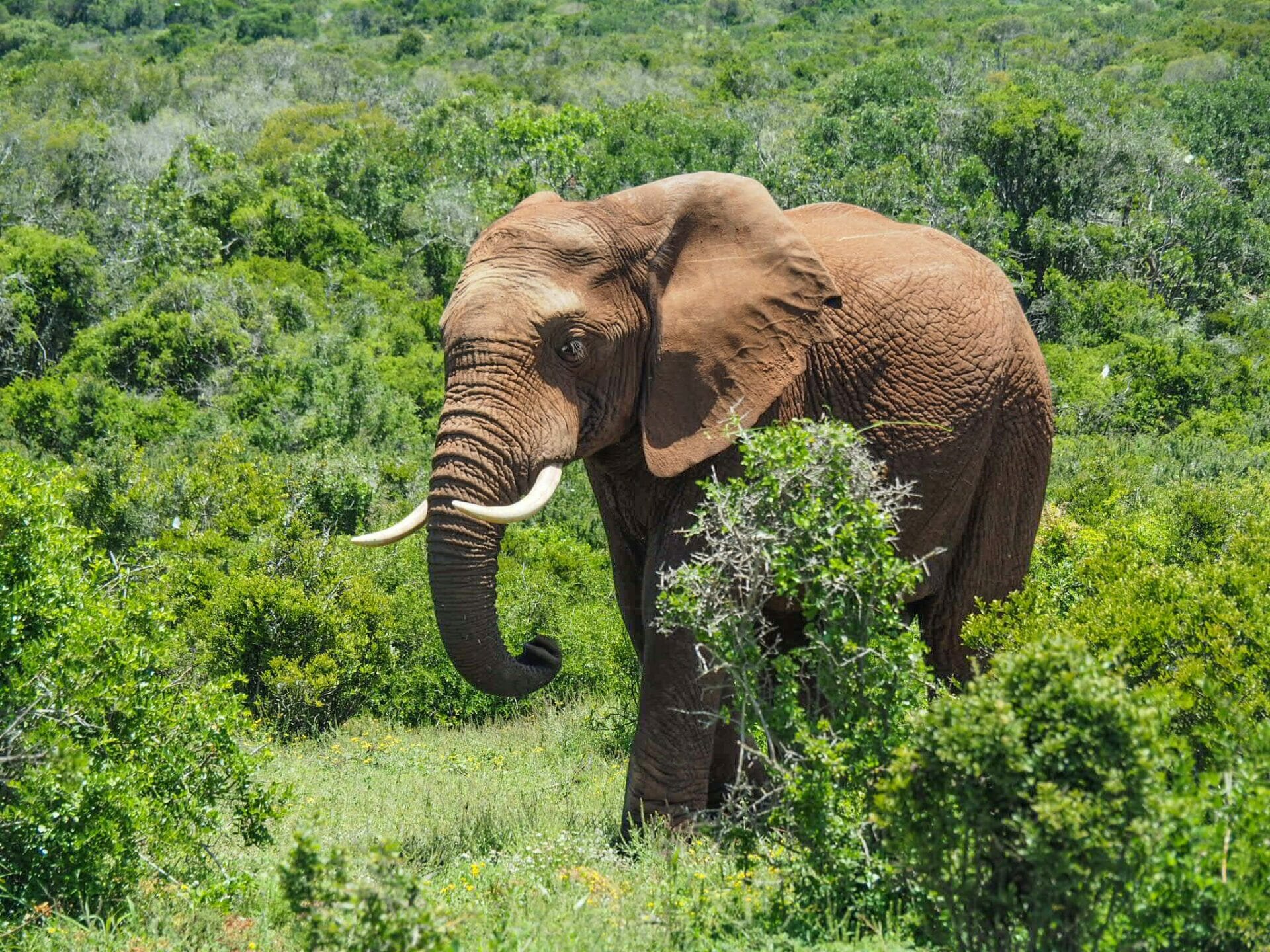
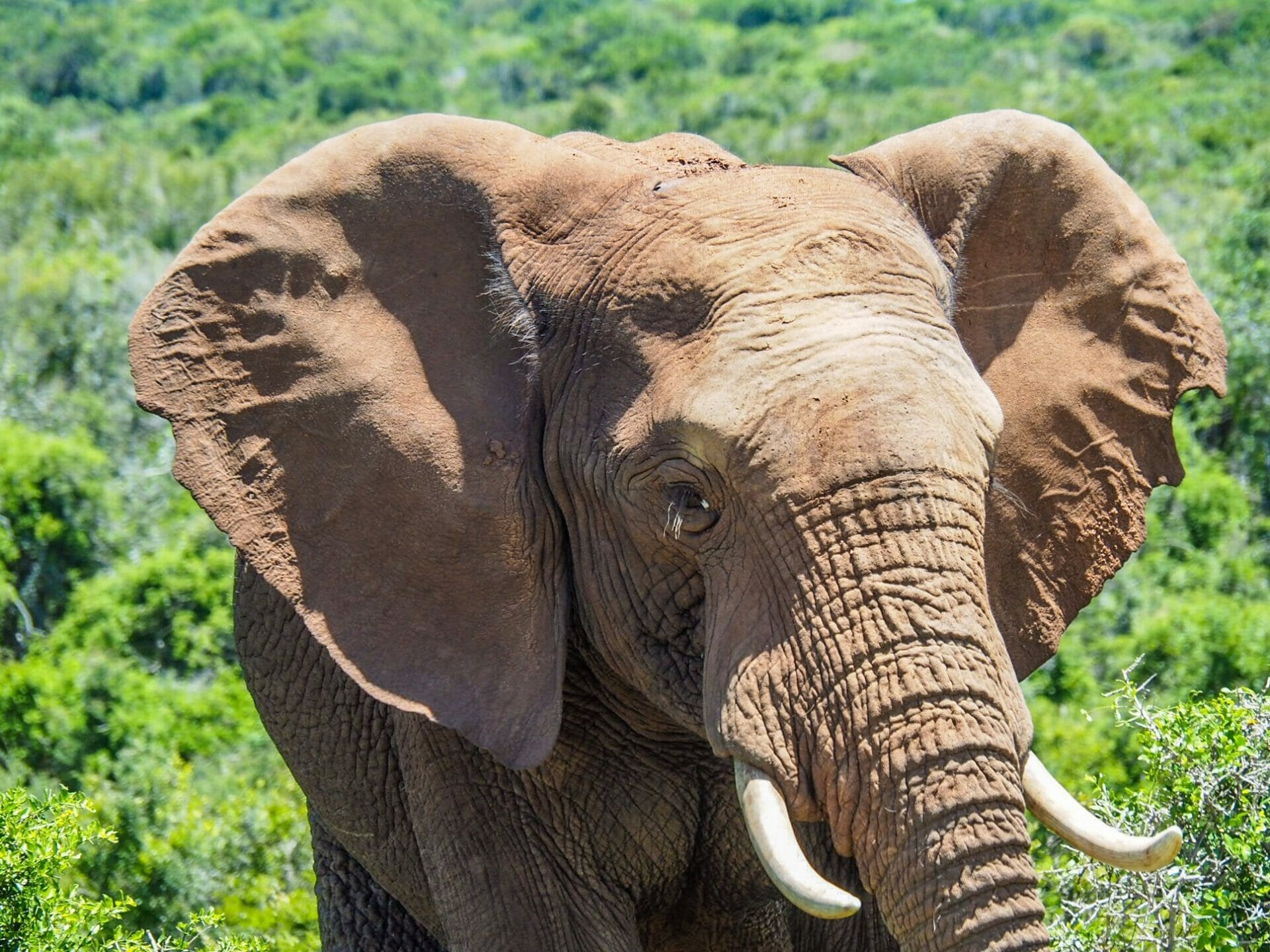
Not long after our warthog encounter, we come to our first pair of elephants, nibbling greenery just off the road and flapping their ears amicably at us. Mary-Anne, our (let’s say.. unique) private safari guide from Kruger told us that when elephants are flapping their ears, they are perfectly happy, it’s when they stick their ears out as far as possible that we need to be concerned, as they are sensing a threat and trying to intimidate us with their size before they charge. These elephants are far from charging, though, so we spend some time photographing them and just basking in the excitement of being this close before we drive on towards to north end of the park.

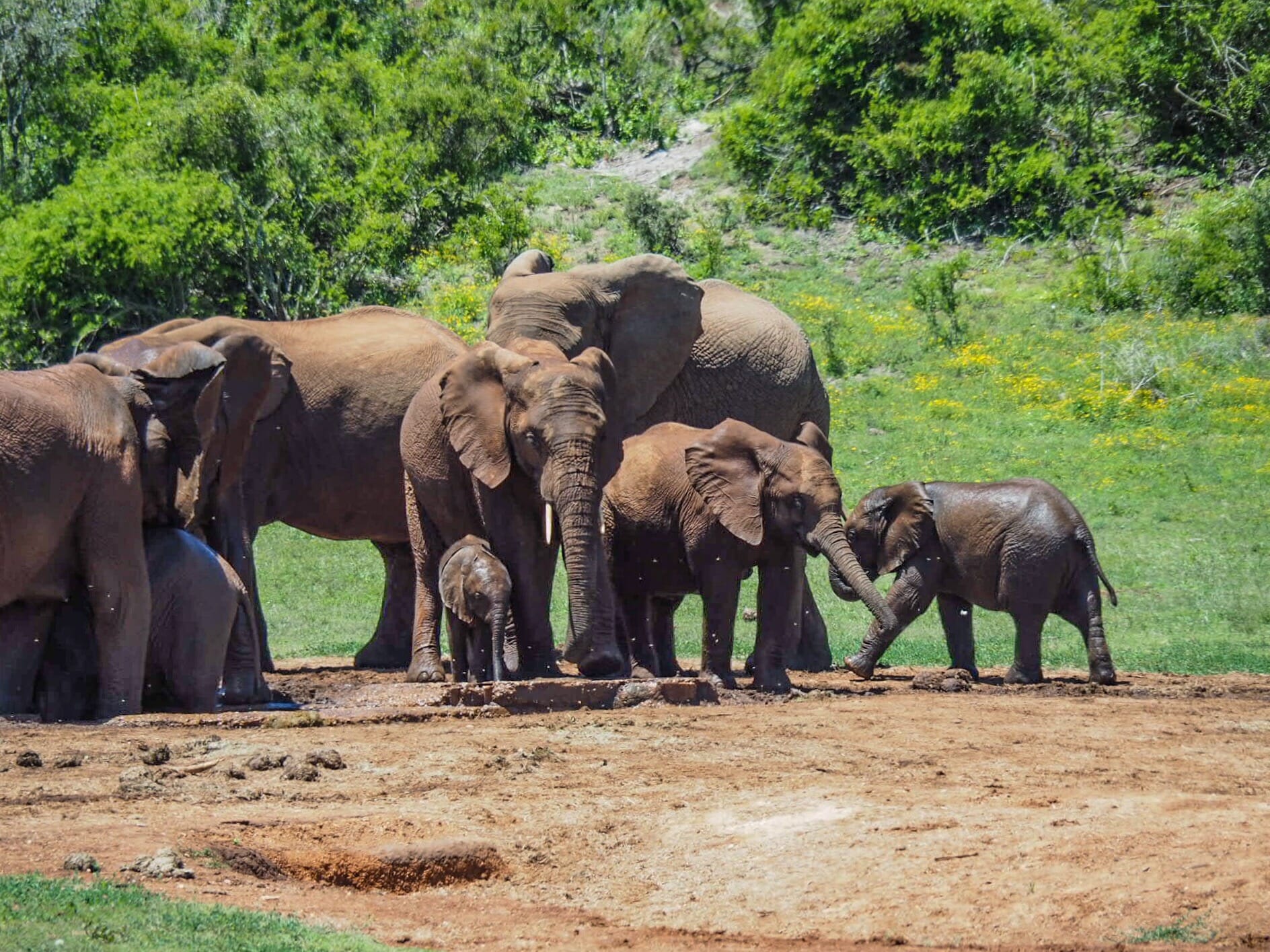
We stumble across elephants every few minutes throughout the rest of our drive (it is Addo Elephant National Park, after all) and soon we come across a huge herd of elephants bathing in a tiny water hole, blowing the water out their trunks at each other, the little ones even rolling around in the hole. The extra new baby elephants are by far the smallest we’ve seen yet, and they are so cute I can hardly handle it.

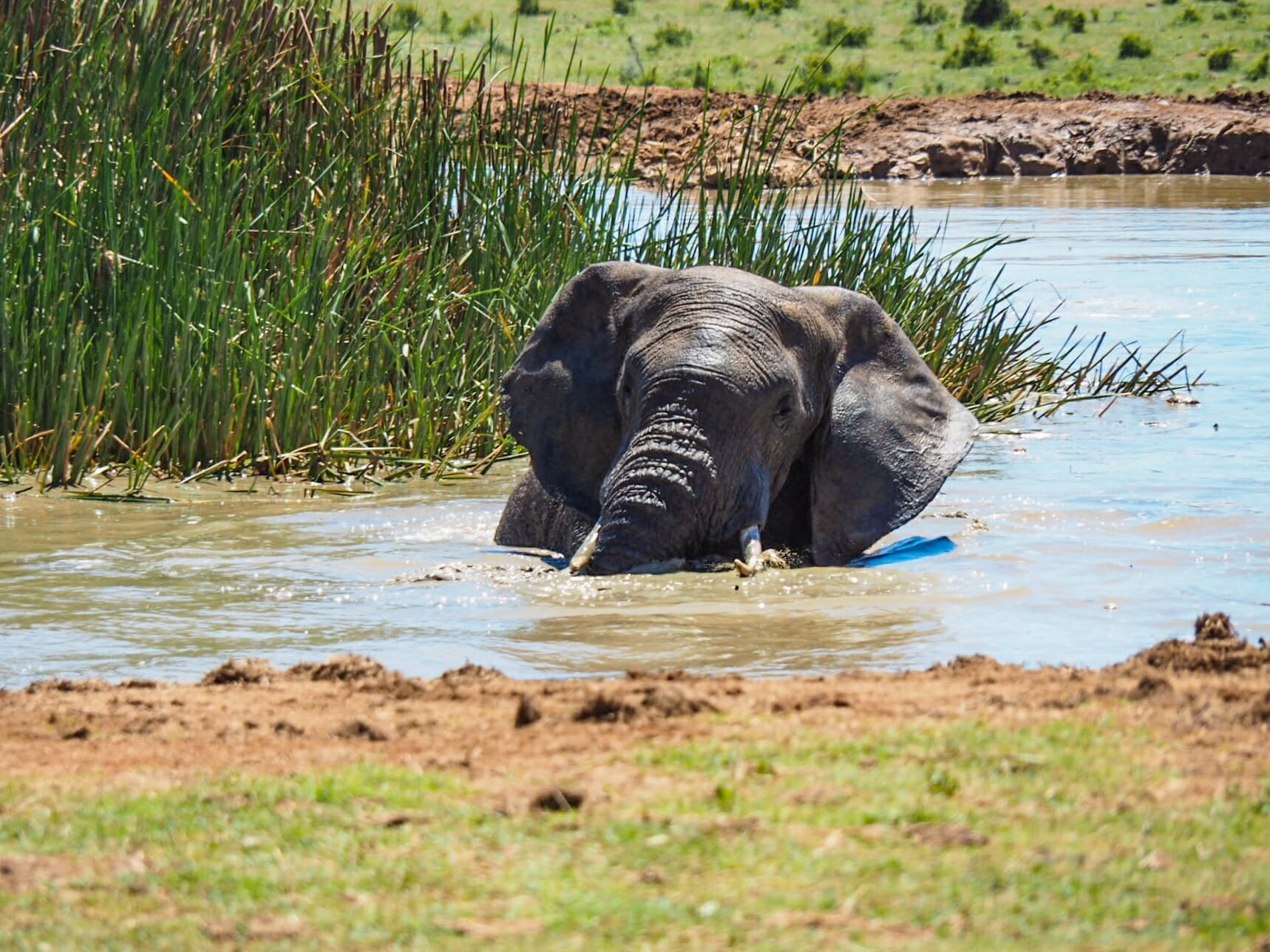
It’s difficult to break away, but we do eventually drive off to find another herd of elephants fully submerged in Hapoor Dam, getting up to plenty of summer fun. There are 4 adults horsing around and having the best time (one elephant even tried to hold another under the water at one point, which could have been innocent play or could have been attempted murder, one can never be too sure). We are content to watch the elephants for ages, but finally we do force ourselves to leave, make our way back to the gate, and drive on towards Plettenberg Bay, a little over 2.5 hours away.

https://brookebeyond.com/wp-content/uploads/2017/12/Elephants-in-Addo.mp4

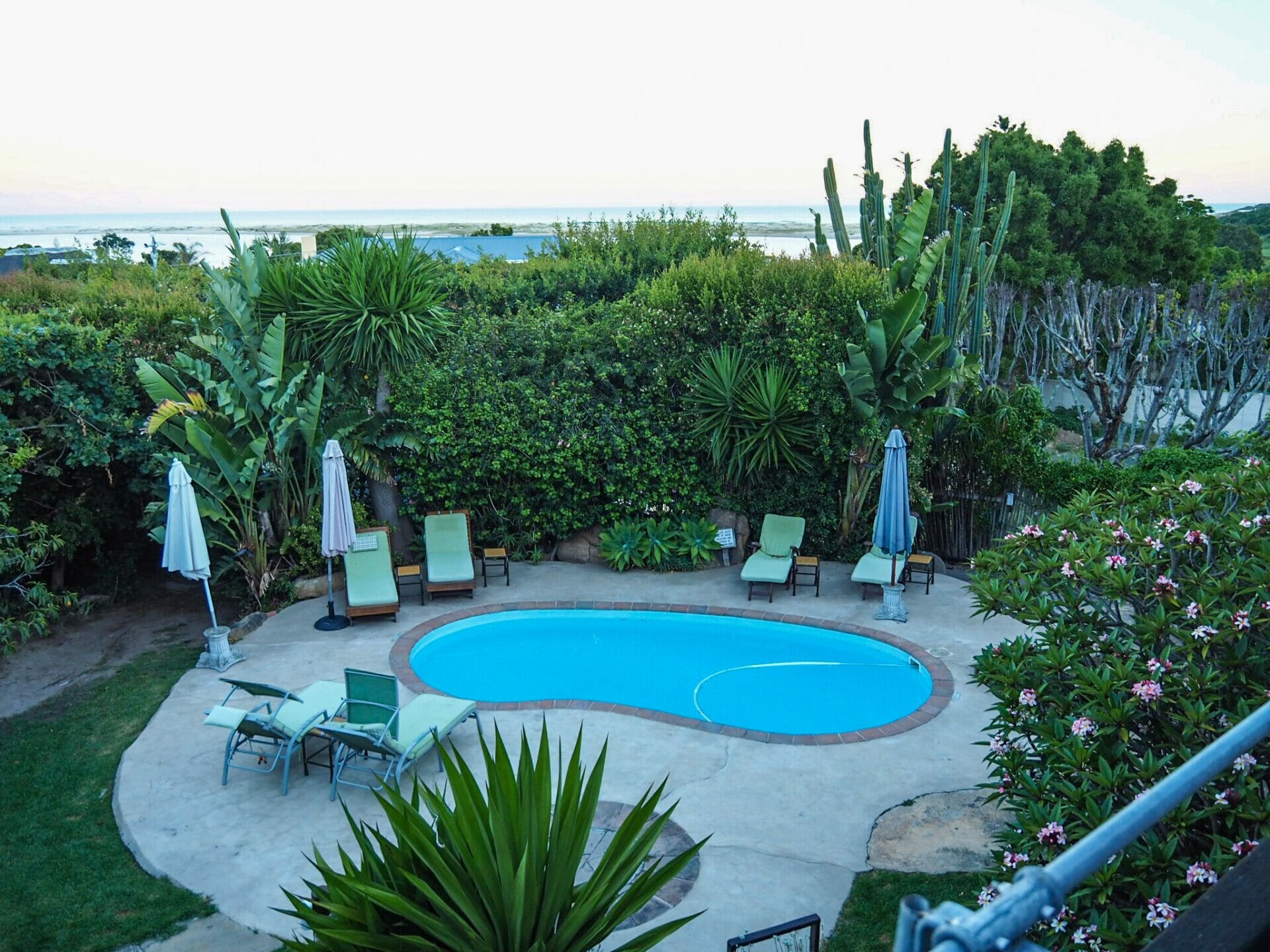
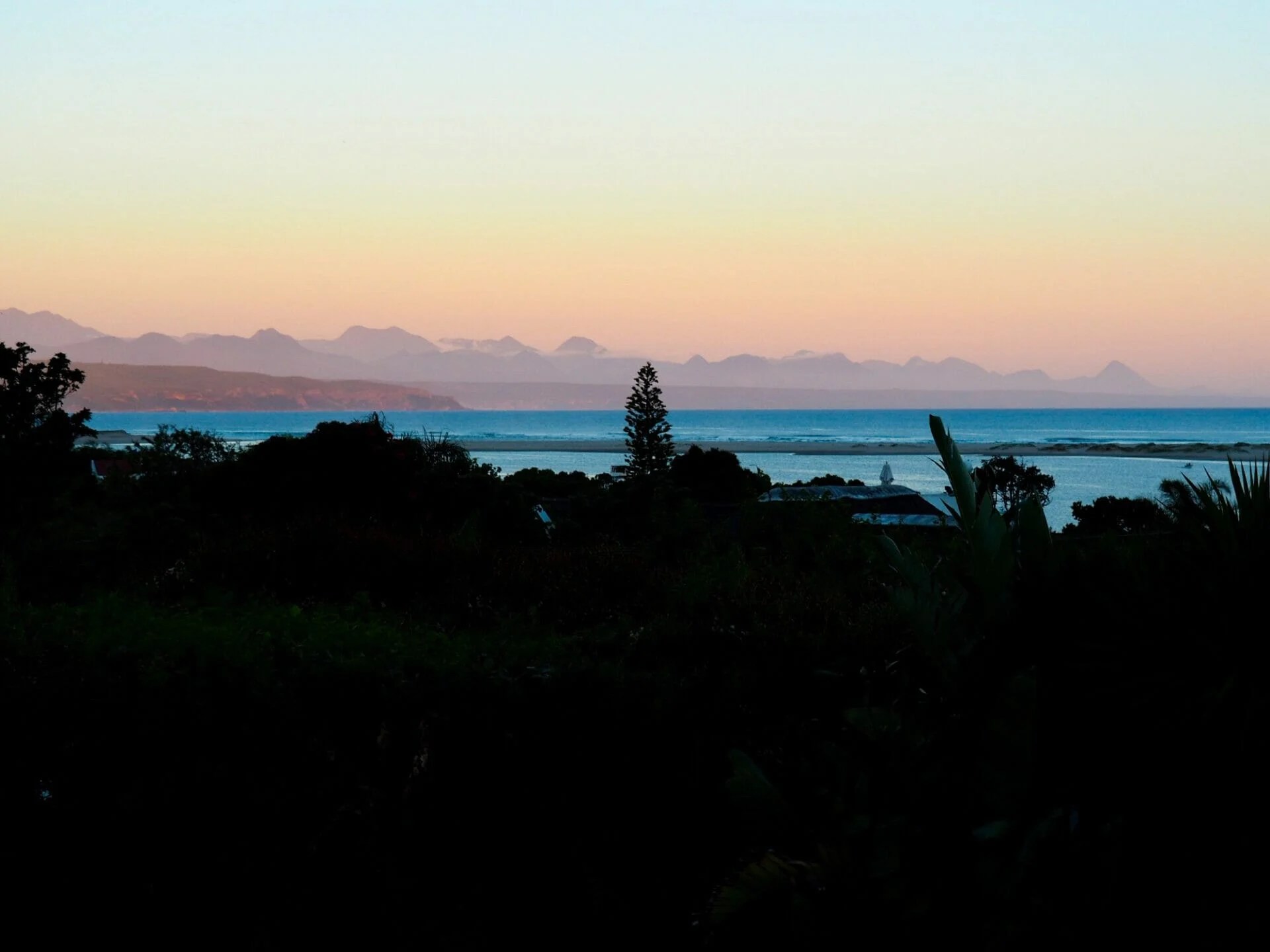
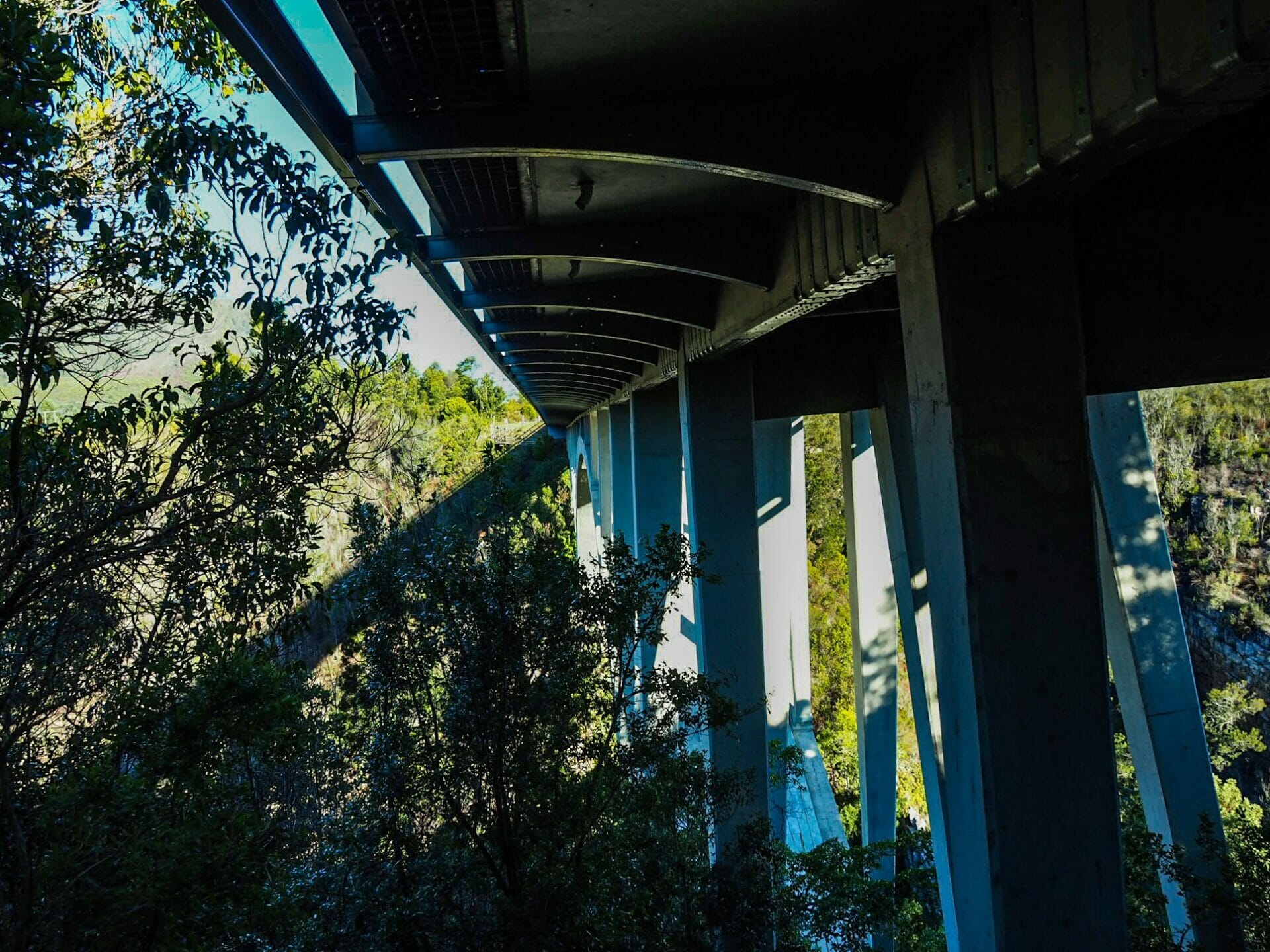
En route, we cross the stunning Storms River Bridge before arriving at our sweet little B&B and digging into a delicious seafood dinner, reminiscing over a wonderful day self-driving through Addo and the true end of our South African safari (although I’ve still got more African safari to come after mum leaves!). The excitement over seeing animals every day has far from worn off, and I’ll actually miss all this time in nature, but it’s on to new and exciting adventures. Not before visiting the cats at Tenikwa Wildlife Rehabilitation Centre tomorrow, though!
Read more about our road-trip along the Garden Route

DRIVING THE GARDEN ROUTE DAY 2: VISITING BIG CATS AT TENIKWA WILDLIFE REHABILITATION CENTRE

DRIVING THE GARDEN ROUTE DAY 3: HIKING THROUGH ROBBERG NATURE RESERVE

DRIVING THE GARDEN ROUTE DAY 4: WINE TASTING & OSTRICHES IN OUDTSHOORN

DRIVING THE GARDEN ROUTE DAY 5: SEASIDE IN MOSSEL BAY & HERMANUS

DRIVING THE GARDEN ROUTE DAY 6: EXPLORING HERMANUS & FERNKLOOF NATURE RESERVE

THE ULTIMATE GUIDE TO DRIVING SOUTH AFRICA’S GARDEN ROUTE

TAGS:road trips
2 Comments
Share
brooke beyond

Hey, I'm Brooke and I'm obsessed with getting off the beaten path, exploring backcountry gems & travelling beyond the ordinary! I left Australia 6 years ago after finishing a PhD in Biomechanics & have been travelling the world full-time ever since (joined by my husband/climbing partner, James). Whether it’s road-tripping through Mexico, climbing alpine peaks in the Andes, scuba diving in the Red Sea, or tackling epic via ferrata in the Dolomites, I hope this blog will inspire your future adventures & help you find wonder in every corner of the globe. xx bb

Leave a Comment Cancel Comment

The Comments

  • Tana Ndlovu
    27 April 2023

    Thank you Brooke, interesting read – loved it❤

    Reply
    • brooke brisbine
      Tana Ndlovu
      27 September 2023

      Thanks for reading, Tana, I’m so glad to hear you enjoyed it 🙂

      Happy travels!

      xx bb

      Reply

You May Also Like

18 December 2017

Photo journal: Highlights from my first South African safari

12 January 2018

Out on the town in Windhoek, Namibia

27 January 2018

Photo journal: Namibia, get here before the rest of the world finds out about it

hi, I’m brooke!

I'm obsessed with getting off the beaten path, exploring backcountry gems & travelling beyond the ordinary! I left Australia 6 years ago after finishing a PhD in Biomechanics & have been travelling the world full-time ever since (now joined by my husband/climbing partner, James). I hope this blog will inspire your future adventures & help you find wonder in every corner of the globe. xx bb

read my story
currently exploring

currently exploring

finland

read our gear guides

🥾 hiking boots

🎒 hiking backpacks

🌨️ cold-weather layers

⛺️ backpacking & alpine tents

🛌 sleeping bag & pads

🍪 backcountry food

📸 travel camera gear

trail guides

summit guides

itineraries

outdoor gear

GPS maps

recent posts

  • 2-week Norway winter itinerary: Arctic Circle to southern fjords

    20 February 2026
  • Tjeldbergtind winter hike

    Complete Lofoten winter packing list: what to wear for hiking in Arctic Norway

    8 February 2026
  • Ryten winter hike

    Best winter hikes in Lofoten: your guide to safe winter hiking in Arctic Norway

    30 January 2026
  • Laguna Humantay, Cusco Peru

    6 awesome day trips from Cusco, Peru

    24 November 2025
  • Adventure-ready picks from the REI Co-op Holiday Sale

    17 November 2025

@brookebeyond_
brooke ✨travel & mountain gal

@brookebeyond_

  • A few snapshots from one of our most unique adventures: a 4-day dogsledding trip through Sámi country (Sápmi) in Northern Sweden ❄️

For thousands of years, dogsledding has been an essential form of Arctic transport for Indigenous communities, used to travel, hunt, and survive in some of the harshest conditions on earth. Huskies are bred specifically for this environment, capable of running for hours across frozen landscapes + hauling several hundred kilos as a team.

To experience it for ourselves, we took a 15hr train from Stockholm to Kiruna, drove 2hrs deep into the wilderness, and then caught a snowmobile the final kilometres to reach a remote kennel with about 50 dogs. Our first day was spent learning the basics: how to harness the huskies, attach them to the sled, and steer + brake properly. 

And then, we set off into the wilderness with our team of 6 dogs, travelling through snowy forests + across frozen lakes. 

James + I shared the sled, taking turns driving while the other sat bundled up inside, eyelashes freezing into icicles in the -30°C (-22°F) chill for hours at a time.

It was unbelievably remote, the conditions were challenging, and the cold was brutal, but through it all, we formed a real bond with our team— particularly surprising given that I’m usually very scared of dogs (pictured several times here is my beloved Reisling, the best doggie 🐕🖤)

It was a surprising + unexpected adventure, but such a special way to experience wild + beautiful Sápmi*

*we learned that Sápmi is the traditional + often preferred term (over “Lapland”) for the region of northern Norway, Sweden, Finland, and Russia inhabited by the Indigenous Sámi people

—
#sweden #kiruna #dogsledding #sápmi #lapland
  • magical winter lighting delivering midday sunrises and northern lights before dinner ✨ 

—
#lofoten #winter #norway #northernlights #polarnight
  • With sufficient outdoor experience, sound judgement, and reasonable conditions, these 10 hikes are an excellent choice for safe winter hiking in Lofoten!

We personally completed all of these hikes in January 2026 with just microspikes + trekking poles (and no other technical climbing equipment), though it should be noted that conditions vary winter to winter— and even week to week. In the event of heavy snowfall, some trails may become impassable without snowshoes or simply unsafe altogether.

**It should ALSO go without saying that you are responsible for yourself in the outdoors; this list is based on our own personal experience and must be interpreted within the bounds of your own experience and current winter conditions.

For more on winter hiking safety and details on these 10 amazing winter hikes, check out my post 🔗 brookebeyond.com/lofoten-winter-hiking
  • a collection of some mind-blowing aurora moments from our 5 weeks in Norway 🤯 

*watch the videos with sound to hear me & @flyingcrepes screaming like it’s our first day on earth lol

—
#norway #northernlights #aurora #northernlightsphotos
  • The exact layers I wore for chilly winter hiking all through January in Lofoten ☃️

see the complete list at 🔗 brookebeyond.com/lofoten-winter-packing-list

——
#norway #lofoten #winterhiking #layering #winterstyle
  • Everything we spent for 2 people travelling around Norway for 5 weeks in January 2026:

**this is not meant to represent the cheapest way to explore Norway in winter, it’s just what we personally spent for one of the best trips of our whole lives!!

$6,388 ACCOMMODATION
🏡35 nights in apartments/cabins = $6,388

$2,785 TRANSPORTATION
✈️ airfare = $647
🚘 car hire = $1,807
⛽️ fuel + parking = $113
🚕 private transport (Uber) = $111
🚃 public transport (train) = $107

$1,699 FOOD & DRINKS
🧁 bakery treats = $103
🍹 drinks = $152
🌮 eating out = $611
🧀 groceries = $833

$1,155 ACTIVITIES
🔥 sauna entry = $302
🐋 tours = $853

$27 TRAVEL LOGISTICS
📲 eSIM = $27

TOTAL…
—> $12,054 USD for 2 people over 35 days
—> an average of $172/day per person

Is this more or less than you expected??

———
#norway #norwaytravel #lofoten #tromsø #travelbudget
  • Although sauna culture is shared across much of the Nordic region, Norway has put its own spin on the tradition with thousands of floating, fjord-side saunas (that I am truly obsessed with).

In many coastal towns, these wood-fired saunas are moored right in the harbour, with a hatch or ladder that drops straight into the icy fjord for a cold plunge. The result is a distinctly Norwegian winter ritual: alternating intense heat and 3C seawater while surrounded by dramatic mountain and fjord scenery 😍

a few of our favourite floating saunas in Norway:
📍 Fjordsauna, Flåm @fjordsauna 
📍 Vulkana Arctic Spa Boat, Tromsø @vulkana.adventure 
📍 Pust Lavvo Sauna, Tromsø @pust.lifestyle 
📍 KOK Langkaia, Oslo @kokoslo.no 
📍 Soria Moria Sauna, Dalen @dalenhotel 

———
#sauna #floatingsauna #norway #scandinavia #winterescape
  • Nearly 2,000 stone steps (installed by a Nepalese Sherpa team in 2021) have transformed Reinebringen from a notoriously dangerous ascent into a straightforward hike to the most iconic viewpoint in all of Lofoten!

In good winter conditions, it’s a steep but spectacular ~45min push.

But in POOR winter conditions? Or with no experience + insufficient winter gear?? It’s a drain on the Norwegian search & rescue teams who keep having to haul tourists off the mountain.

I’m expecting some criticism for even posting about hiking Reinebringen in winter, but I believe strongly in personal accountability + responsibility in the outdoors, so I hope this empowers you to make an informed decision, whether that means tackling routes like Reinebringen or finding equally beautiful but easier + safer hikes around the islands!

——
#lofoten #norway #reinebringen #reine #winterhiking
  • *me frantically sending Lofoten photos to every group chat I’m part of*

We spent the last 3 weeks exploring this dramatic archipelago off the northwestern coast of Norway, high above the Arctic Circle & almost never considered a winter destination.

Yet we turned to each other no less than 10 times a day to announce that THIS IS ONE OF THE BEST TRIPS WE’VE EVER TAKEN.

We hiked to empty summits without seeing another person, snapped photos on windy ridges, watched the aurora on 20 different nights, ate soup in the hot tub at 5am while it snowed around us, baked cardamom buns with our favourite friends, ran out of the sauna in towels to witness the strongest solar storm in 20 years, and had a lifetime worth of wow-moments in the span of just 22 days.

It was the kind of trip where everything just feels ✨special✨, like you already know you’re going to remember it forever.

——
#lofoten #norway #aurora #northernlights #arcticcircle
follow @brookebeyond_

travel beyond the ordinary

Explore my travel guides, custom itineraries & blog posts with an interactive world map ✨

all destinations

  • A few snapshots from one of our most unique adventures: a 4-day dogsledding trip through Sámi country (Sápmi) in Northern Sweden ❄️

For thousands of years, dogsledding has been an essential form of Arctic transport for Indigenous communities, used to travel, hunt, and survive in some of the harshest conditions on earth. Huskies are bred specifically for this environment, capable of running for hours across frozen landscapes + hauling several hundred kilos as a team.

To experience it for ourselves, we took a 15hr train from Stockholm to Kiruna, drove 2hrs deep into the wilderness, and then caught a snowmobile the final kilometres to reach a remote kennel with about 50 dogs. Our first day was spent learning the basics: how to harness the huskies, attach them to the sled, and steer + brake properly. 

And then, we set off into the wilderness with our team of 6 dogs, travelling through snowy forests + across frozen lakes. 

James + I shared the sled, taking turns driving while the other sat bundled up inside, eyelashes freezing into icicles in the -30°C (-22°F) chill for hours at a time.

It was unbelievably remote, the conditions were challenging, and the cold was brutal, but through it all, we formed a real bond with our team— particularly surprising given that I’m usually very scared of dogs (pictured several times here is my beloved Reisling, the best doggie 🐕🖤)

It was a surprising + unexpected adventure, but such a special way to experience wild + beautiful Sápmi*

*we learned that Sápmi is the traditional + often preferred term (over “Lapland”) for the region of northern Norway, Sweden, Finland, and Russia inhabited by the Indigenous Sámi people

—
#sweden #kiruna #dogsledding #sápmi #lapland
  • magical winter lighting delivering midday sunrises and northern lights before dinner ✨ 

—
#lofoten #winter #norway #northernlights #polarnight
  • With sufficient outdoor experience, sound judgement, and reasonable conditions, these 10 hikes are an excellent choice for safe winter hiking in Lofoten!

We personally completed all of these hikes in January 2026 with just microspikes + trekking poles (and no other technical climbing equipment), though it should be noted that conditions vary winter to winter— and even week to week. In the event of heavy snowfall, some trails may become impassable without snowshoes or simply unsafe altogether.

**It should ALSO go without saying that you are responsible for yourself in the outdoors; this list is based on our own personal experience and must be interpreted within the bounds of your own experience and current winter conditions.

For more on winter hiking safety and details on these 10 amazing winter hikes, check out my post 🔗 brookebeyond.com/lofoten-winter-hiking
  • a collection of some mind-blowing aurora moments from our 5 weeks in Norway 🤯 

*watch the videos with sound to hear me & @flyingcrepes screaming like it’s our first day on earth lol

—
#norway #northernlights #aurora #northernlightsphotos
  • The exact layers I wore for chilly winter hiking all through January in Lofoten ☃️

see the complete list at 🔗 brookebeyond.com/lofoten-winter-packing-list

——
#norway #lofoten #winterhiking #layering #winterstyle
A few snapshots from one of our most unique adventures: a 4-day dogsledding trip through Sámi country (Sápmi) in Northern Sweden ❄️

For thousands of years, dogsledding has been an essential form of Arctic transport for Indigenous communities, used to travel, hunt, and survive in some of the harshest conditions on earth. Huskies are bred specifically for this environment, capable of running for hours across frozen landscapes + hauling several hundred kilos as a team.

To experience it for ourselves, we took a 15hr train from Stockholm to Kiruna, drove 2hrs deep into the wilderness, and then caught a snowmobile the final kilometres to reach a remote kennel with about 50 dogs. Our first day was spent learning the basics: how to harness the huskies, attach them to the sled, and steer + brake properly. 

And then, we set off into the wilderness with our team of 6 dogs, travelling through snowy forests + across frozen lakes. 

James + I shared the sled, taking turns driving while the other sat bundled up inside, eyelashes freezing into icicles in the -30°C (-22°F) chill for hours at a time.

It was unbelievably remote, the conditions were challenging, and the cold was brutal, but through it all, we formed a real bond with our team— particularly surprising given that I’m usually very scared of dogs (pictured several times here is my beloved Reisling, the best doggie 🐕🖤)

It was a surprising + unexpected adventure, but such a special way to experience wild + beautiful Sápmi*

*we learned that Sápmi is the traditional + often preferred term (over “Lapland”) for the region of northern Norway, Sweden, Finland, and Russia inhabited by the Indigenous Sámi people

—
#sweden #kiruna #dogsledding #sápmi #lapland
A few snapshots from one of our most unique adventures: a 4-day dogsledding trip through Sámi country (Sápmi) in Northern Sweden ❄️

For thousands of years, dogsledding has been an essential form of Arctic transport for Indigenous communities, used to travel, hunt, and survive in some of the harshest conditions on earth. Huskies are bred specifically for this environment, capable of running for hours across frozen landscapes + hauling several hundred kilos as a team.

To experience it for ourselves, we took a 15hr train from Stockholm to Kiruna, drove 2hrs deep into the wilderness, and then caught a snowmobile the final kilometres to reach a remote kennel with about 50 dogs. Our first day was spent learning the basics: how to harness the huskies, attach them to the sled, and steer + brake properly. 

And then, we set off into the wilderness with our team of 6 dogs, travelling through snowy forests + across frozen lakes. 

James + I shared the sled, taking turns driving while the other sat bundled up inside, eyelashes freezing into icicles in the -30°C (-22°F) chill for hours at a time.

It was unbelievably remote, the conditions were challenging, and the cold was brutal, but through it all, we formed a real bond with our team— particularly surprising given that I’m usually very scared of dogs (pictured several times here is my beloved Reisling, the best doggie 🐕🖤)

It was a surprising + unexpected adventure, but such a special way to experience wild + beautiful Sápmi*

*we learned that Sápmi is the traditional + often preferred term (over “Lapland”) for the region of northern Norway, Sweden, Finland, and Russia inhabited by the Indigenous Sámi people

—
#sweden #kiruna #dogsledding #sápmi #lapland
A few snapshots from one of our most unique adventures: a 4-day dogsledding trip through Sámi country (Sápmi) in Northern Sweden ❄️

For thousands of years, dogsledding has been an essential form of Arctic transport for Indigenous communities, used to travel, hunt, and survive in some of the harshest conditions on earth. Huskies are bred specifically for this environment, capable of running for hours across frozen landscapes + hauling several hundred kilos as a team.

To experience it for ourselves, we took a 15hr train from Stockholm to Kiruna, drove 2hrs deep into the wilderness, and then caught a snowmobile the final kilometres to reach a remote kennel with about 50 dogs. Our first day was spent learning the basics: how to harness the huskies, attach them to the sled, and steer + brake properly. 

And then, we set off into the wilderness with our team of 6 dogs, travelling through snowy forests + across frozen lakes. 

James + I shared the sled, taking turns driving while the other sat bundled up inside, eyelashes freezing into icicles in the -30°C (-22°F) chill for hours at a time.

It was unbelievably remote, the conditions were challenging, and the cold was brutal, but through it all, we formed a real bond with our team— particularly surprising given that I’m usually very scared of dogs (pictured several times here is my beloved Reisling, the best doggie 🐕🖤)

It was a surprising + unexpected adventure, but such a special way to experience wild + beautiful Sápmi*

*we learned that Sápmi is the traditional + often preferred term (over “Lapland”) for the region of northern Norway, Sweden, Finland, and Russia inhabited by the Indigenous Sámi people

—
#sweden #kiruna #dogsledding #sápmi #lapland
A few snapshots from one of our most unique adventures: a 4-day dogsledding trip through Sámi country (Sápmi) in Northern Sweden ❄️

For thousands of years, dogsledding has been an essential form of Arctic transport for Indigenous communities, used to travel, hunt, and survive in some of the harshest conditions on earth. Huskies are bred specifically for this environment, capable of running for hours across frozen landscapes + hauling several hundred kilos as a team.

To experience it for ourselves, we took a 15hr train from Stockholm to Kiruna, drove 2hrs deep into the wilderness, and then caught a snowmobile the final kilometres to reach a remote kennel with about 50 dogs. Our first day was spent learning the basics: how to harness the huskies, attach them to the sled, and steer + brake properly. 

And then, we set off into the wilderness with our team of 6 dogs, travelling through snowy forests + across frozen lakes. 

James + I shared the sled, taking turns driving while the other sat bundled up inside, eyelashes freezing into icicles in the -30°C (-22°F) chill for hours at a time.

It was unbelievably remote, the conditions were challenging, and the cold was brutal, but through it all, we formed a real bond with our team— particularly surprising given that I’m usually very scared of dogs (pictured several times here is my beloved Reisling, the best doggie 🐕🖤)

It was a surprising + unexpected adventure, but such a special way to experience wild + beautiful Sápmi*

*we learned that Sápmi is the traditional + often preferred term (over “Lapland”) for the region of northern Norway, Sweden, Finland, and Russia inhabited by the Indigenous Sámi people

—
#sweden #kiruna #dogsledding #sápmi #lapland
A few snapshots from one of our most unique adventures: a 4-day dogsledding trip through Sámi country (Sápmi) in Northern Sweden ❄️

For thousands of years, dogsledding has been an essential form of Arctic transport for Indigenous communities, used to travel, hunt, and survive in some of the harshest conditions on earth. Huskies are bred specifically for this environment, capable of running for hours across frozen landscapes + hauling several hundred kilos as a team.

To experience it for ourselves, we took a 15hr train from Stockholm to Kiruna, drove 2hrs deep into the wilderness, and then caught a snowmobile the final kilometres to reach a remote kennel with about 50 dogs. Our first day was spent learning the basics: how to harness the huskies, attach them to the sled, and steer + brake properly. 

And then, we set off into the wilderness with our team of 6 dogs, travelling through snowy forests + across frozen lakes. 

James + I shared the sled, taking turns driving while the other sat bundled up inside, eyelashes freezing into icicles in the -30°C (-22°F) chill for hours at a time.

It was unbelievably remote, the conditions were challenging, and the cold was brutal, but through it all, we formed a real bond with our team— particularly surprising given that I’m usually very scared of dogs (pictured several times here is my beloved Reisling, the best doggie 🐕🖤)

It was a surprising + unexpected adventure, but such a special way to experience wild + beautiful Sápmi*

*we learned that Sápmi is the traditional + often preferred term (over “Lapland”) for the region of northern Norway, Sweden, Finland, and Russia inhabited by the Indigenous Sámi people

—
#sweden #kiruna #dogsledding #sápmi #lapland
A few snapshots from one of our most unique adventures: a 4-day dogsledding trip through Sámi country (Sápmi) in Northern Sweden ❄️

For thousands of years, dogsledding has been an essential form of Arctic transport for Indigenous communities, used to travel, hunt, and survive in some of the harshest conditions on earth. Huskies are bred specifically for this environment, capable of running for hours across frozen landscapes + hauling several hundred kilos as a team.

To experience it for ourselves, we took a 15hr train from Stockholm to Kiruna, drove 2hrs deep into the wilderness, and then caught a snowmobile the final kilometres to reach a remote kennel with about 50 dogs. Our first day was spent learning the basics: how to harness the huskies, attach them to the sled, and steer + brake properly. 

And then, we set off into the wilderness with our team of 6 dogs, travelling through snowy forests + across frozen lakes. 

James + I shared the sled, taking turns driving while the other sat bundled up inside, eyelashes freezing into icicles in the -30°C (-22°F) chill for hours at a time.

It was unbelievably remote, the conditions were challenging, and the cold was brutal, but through it all, we formed a real bond with our team— particularly surprising given that I’m usually very scared of dogs (pictured several times here is my beloved Reisling, the best doggie 🐕🖤)

It was a surprising + unexpected adventure, but such a special way to experience wild + beautiful Sápmi*

*we learned that Sápmi is the traditional + often preferred term (over “Lapland”) for the region of northern Norway, Sweden, Finland, and Russia inhabited by the Indigenous Sámi people

—
#sweden #kiruna #dogsledding #sápmi #lapland
A few snapshots from one of our most unique adventures: a 4-day dogsledding trip through Sámi country (Sápmi) in Northern Sweden ❄️

For thousands of years, dogsledding has been an essential form of Arctic transport for Indigenous communities, used to travel, hunt, and survive in some of the harshest conditions on earth. Huskies are bred specifically for this environment, capable of running for hours across frozen landscapes + hauling several hundred kilos as a team.

To experience it for ourselves, we took a 15hr train from Stockholm to Kiruna, drove 2hrs deep into the wilderness, and then caught a snowmobile the final kilometres to reach a remote kennel with about 50 dogs. Our first day was spent learning the basics: how to harness the huskies, attach them to the sled, and steer + brake properly. 

And then, we set off into the wilderness with our team of 6 dogs, travelling through snowy forests + across frozen lakes. 

James + I shared the sled, taking turns driving while the other sat bundled up inside, eyelashes freezing into icicles in the -30°C (-22°F) chill for hours at a time.

It was unbelievably remote, the conditions were challenging, and the cold was brutal, but through it all, we formed a real bond with our team— particularly surprising given that I’m usually very scared of dogs (pictured several times here is my beloved Reisling, the best doggie 🐕🖤)

It was a surprising + unexpected adventure, but such a special way to experience wild + beautiful Sápmi*

*we learned that Sápmi is the traditional + often preferred term (over “Lapland”) for the region of northern Norway, Sweden, Finland, and Russia inhabited by the Indigenous Sámi people

—
#sweden #kiruna #dogsledding #sápmi #lapland
A few snapshots from one of our most unique adventures: a 4-day dogsledding trip through Sámi country (Sápmi) in Northern Sweden ❄️

For thousands of years, dogsledding has been an essential form of Arctic transport for Indigenous communities, used to travel, hunt, and survive in some of the harshest conditions on earth. Huskies are bred specifically for this environment, capable of running for hours across frozen landscapes + hauling several hundred kilos as a team.

To experience it for ourselves, we took a 15hr train from Stockholm to Kiruna, drove 2hrs deep into the wilderness, and then caught a snowmobile the final kilometres to reach a remote kennel with about 50 dogs. Our first day was spent learning the basics: how to harness the huskies, attach them to the sled, and steer + brake properly. 

And then, we set off into the wilderness with our team of 6 dogs, travelling through snowy forests + across frozen lakes. 

James + I shared the sled, taking turns driving while the other sat bundled up inside, eyelashes freezing into icicles in the -30°C (-22°F) chill for hours at a time.

It was unbelievably remote, the conditions were challenging, and the cold was brutal, but through it all, we formed a real bond with our team— particularly surprising given that I’m usually very scared of dogs (pictured several times here is my beloved Reisling, the best doggie 🐕🖤)

It was a surprising + unexpected adventure, but such a special way to experience wild + beautiful Sápmi*

*we learned that Sápmi is the traditional + often preferred term (over “Lapland”) for the region of northern Norway, Sweden, Finland, and Russia inhabited by the Indigenous Sámi people

—
#sweden #kiruna #dogsledding #sápmi #lapland
A few snapshots from one of our most unique adventures: a 4-day dogsledding trip through Sámi country (Sápmi) in Northern Sweden ❄️

For thousands of years, dogsledding has been an essential form of Arctic transport for Indigenous communities, used to travel, hunt, and survive in some of the harshest conditions on earth. Huskies are bred specifically for this environment, capable of running for hours across frozen landscapes + hauling several hundred kilos as a team.

To experience it for ourselves, we took a 15hr train from Stockholm to Kiruna, drove 2hrs deep into the wilderness, and then caught a snowmobile the final kilometres to reach a remote kennel with about 50 dogs. Our first day was spent learning the basics: how to harness the huskies, attach them to the sled, and steer + brake properly. 

And then, we set off into the wilderness with our team of 6 dogs, travelling through snowy forests + across frozen lakes. 

James + I shared the sled, taking turns driving while the other sat bundled up inside, eyelashes freezing into icicles in the -30°C (-22°F) chill for hours at a time.

It was unbelievably remote, the conditions were challenging, and the cold was brutal, but through it all, we formed a real bond with our team— particularly surprising given that I’m usually very scared of dogs (pictured several times here is my beloved Reisling, the best doggie 🐕🖤)

It was a surprising + unexpected adventure, but such a special way to experience wild + beautiful Sápmi*

*we learned that Sápmi is the traditional + often preferred term (over “Lapland”) for the region of northern Norway, Sweden, Finland, and Russia inhabited by the Indigenous Sámi people

—
#sweden #kiruna #dogsledding #sápmi #lapland
A few snapshots from one of our most unique adventures: a 4-day dogsledding trip through Sámi country (Sápmi) in Northern Sweden ❄️

For thousands of years, dogsledding has been an essential form of Arctic transport for Indigenous communities, used to travel, hunt, and survive in some of the harshest conditions on earth. Huskies are bred specifically for this environment, capable of running for hours across frozen landscapes + hauling several hundred kilos as a team.

To experience it for ourselves, we took a 15hr train from Stockholm to Kiruna, drove 2hrs deep into the wilderness, and then caught a snowmobile the final kilometres to reach a remote kennel with about 50 dogs. Our first day was spent learning the basics: how to harness the huskies, attach them to the sled, and steer + brake properly. 

And then, we set off into the wilderness with our team of 6 dogs, travelling through snowy forests + across frozen lakes. 

James + I shared the sled, taking turns driving while the other sat bundled up inside, eyelashes freezing into icicles in the -30°C (-22°F) chill for hours at a time.

It was unbelievably remote, the conditions were challenging, and the cold was brutal, but through it all, we formed a real bond with our team— particularly surprising given that I’m usually very scared of dogs (pictured several times here is my beloved Reisling, the best doggie 🐕🖤)

It was a surprising + unexpected adventure, but such a special way to experience wild + beautiful Sápmi*

*we learned that Sápmi is the traditional + often preferred term (over “Lapland”) for the region of northern Norway, Sweden, Finland, and Russia inhabited by the Indigenous Sámi people

—
#sweden #kiruna #dogsledding #sápmi #lapland
@brookebeyond_
@brookebeyond_
•
Follow
A few snapshots from one of our most unique adventures: a 4-day dogsledding trip through Sámi country (Sápmi) in Northern Sweden ❄️ For thousands of years, dogsledding has been an essential form of Arctic transport for Indigenous communities, used to travel, hunt, and survive in some of the harshest conditions on earth. Huskies are bred specifically for this environment, capable of running for hours across frozen landscapes + hauling several hundred kilos as a team. To experience it for ourselves, we took a 15hr train from Stockholm to Kiruna, drove 2hrs deep into the wilderness, and then caught a snowmobile the final kilometres to reach a remote kennel with about 50 dogs. Our first day was spent learning the basics: how to harness the huskies, attach them to the sled, and steer + brake properly. And then, we set off into the wilderness with our team of 6 dogs, travelling through snowy forests + across frozen lakes. James + I shared the sled, taking turns driving while the other sat bundled up inside, eyelashes freezing into icicles in the -30°C (-22°F) chill for hours at a time. It was unbelievably remote, the conditions were challenging, and the cold was brutal, but through it all, we formed a real bond with our team— particularly surprising given that I’m usually very scared of dogs (pictured several times here is my beloved Reisling, the best doggie 🐕🖤) It was a surprising + unexpected adventure, but such a special way to experience wild + beautiful Sápmi* *we learned that Sápmi is the traditional + often preferred term (over “Lapland”) for the region of northern Norway, Sweden, Finland, and Russia inhabited by the Indigenous Sámi people — #sweden #kiruna #dogsledding #sápmi #lapland
2 weeks ago
View on Instagram |
1/5
magical winter lighting delivering midday sunrises and northern lights before dinner ✨ 

—
#lofoten #winter #norway #northernlights #polarnight
magical winter lighting delivering midday sunrises and northern lights before dinner ✨ 

—
#lofoten #winter #norway #northernlights #polarnight
magical winter lighting delivering midday sunrises and northern lights before dinner ✨ 

—
#lofoten #winter #norway #northernlights #polarnight
magical winter lighting delivering midday sunrises and northern lights before dinner ✨ 

—
#lofoten #winter #norway #northernlights #polarnight
magical winter lighting delivering midday sunrises and northern lights before dinner ✨ 

—
#lofoten #winter #norway #northernlights #polarnight
magical winter lighting delivering midday sunrises and northern lights before dinner ✨ 

—
#lofoten #winter #norway #northernlights #polarnight
magical winter lighting delivering midday sunrises and northern lights before dinner ✨ 

—
#lofoten #winter #norway #northernlights #polarnight
magical winter lighting delivering midday sunrises and northern lights before dinner ✨ 

—
#lofoten #winter #norway #northernlights #polarnight
magical winter lighting delivering midday sunrises and northern lights before dinner ✨ 

—
#lofoten #winter #norway #northernlights #polarnight
magical winter lighting delivering midday sunrises and northern lights before dinner ✨ 

—
#lofoten #winter #norway #northernlights #polarnight
magical winter lighting delivering midday sunrises and northern lights before dinner ✨ 

—
#lofoten #winter #norway #northernlights #polarnight
magical winter lighting delivering midday sunrises and northern lights before dinner ✨ 

—
#lofoten #winter #norway #northernlights #polarnight
magical winter lighting delivering midday sunrises and northern lights before dinner ✨ 

—
#lofoten #winter #norway #northernlights #polarnight
@brookebeyond_
@brookebeyond_
•
Follow
magical winter lighting delivering midday sunrises and northern lights before dinner ✨ — #lofoten #winter #norway #northernlights #polarnight
2 weeks ago
View on Instagram |
2/5
With sufficient outdoor experience, sound judgement, and reasonable conditions, these 10 hikes are an excellent choice for safe winter hiking in Lofoten!

We personally completed all of these hikes in January 2026 with just microspikes + trekking poles (and no other technical climbing equipment), though it should be noted that conditions vary winter to winter— and even week to week. In the event of heavy snowfall, some trails may become impassable without snowshoes or simply unsafe altogether.

**It should ALSO go without saying that you are responsible for yourself in the outdoors; this list is based on our own personal experience and must be interpreted within the bounds of your own experience and current winter conditions.

For more on winter hiking safety and details on these 10 amazing winter hikes, check out my post 🔗 brookebeyond.com/lofoten-winter-hiking
With sufficient outdoor experience, sound judgement, and reasonable conditions, these 10 hikes are an excellent choice for safe winter hiking in Lofoten!

We personally completed all of these hikes in January 2026 with just microspikes + trekking poles (and no other technical climbing equipment), though it should be noted that conditions vary winter to winter— and even week to week. In the event of heavy snowfall, some trails may become impassable without snowshoes or simply unsafe altogether.

**It should ALSO go without saying that you are responsible for yourself in the outdoors; this list is based on our own personal experience and must be interpreted within the bounds of your own experience and current winter conditions.

For more on winter hiking safety and details on these 10 amazing winter hikes, check out my post 🔗 brookebeyond.com/lofoten-winter-hiking
With sufficient outdoor experience, sound judgement, and reasonable conditions, these 10 hikes are an excellent choice for safe winter hiking in Lofoten!

We personally completed all of these hikes in January 2026 with just microspikes + trekking poles (and no other technical climbing equipment), though it should be noted that conditions vary winter to winter— and even week to week. In the event of heavy snowfall, some trails may become impassable without snowshoes or simply unsafe altogether.

**It should ALSO go without saying that you are responsible for yourself in the outdoors; this list is based on our own personal experience and must be interpreted within the bounds of your own experience and current winter conditions.

For more on winter hiking safety and details on these 10 amazing winter hikes, check out my post 🔗 brookebeyond.com/lofoten-winter-hiking
With sufficient outdoor experience, sound judgement, and reasonable conditions, these 10 hikes are an excellent choice for safe winter hiking in Lofoten!

We personally completed all of these hikes in January 2026 with just microspikes + trekking poles (and no other technical climbing equipment), though it should be noted that conditions vary winter to winter— and even week to week. In the event of heavy snowfall, some trails may become impassable without snowshoes or simply unsafe altogether.

**It should ALSO go without saying that you are responsible for yourself in the outdoors; this list is based on our own personal experience and must be interpreted within the bounds of your own experience and current winter conditions.

For more on winter hiking safety and details on these 10 amazing winter hikes, check out my post 🔗 brookebeyond.com/lofoten-winter-hiking
With sufficient outdoor experience, sound judgement, and reasonable conditions, these 10 hikes are an excellent choice for safe winter hiking in Lofoten!

We personally completed all of these hikes in January 2026 with just microspikes + trekking poles (and no other technical climbing equipment), though it should be noted that conditions vary winter to winter— and even week to week. In the event of heavy snowfall, some trails may become impassable without snowshoes or simply unsafe altogether.

**It should ALSO go without saying that you are responsible for yourself in the outdoors; this list is based on our own personal experience and must be interpreted within the bounds of your own experience and current winter conditions.

For more on winter hiking safety and details on these 10 amazing winter hikes, check out my post 🔗 brookebeyond.com/lofoten-winter-hiking
With sufficient outdoor experience, sound judgement, and reasonable conditions, these 10 hikes are an excellent choice for safe winter hiking in Lofoten!

We personally completed all of these hikes in January 2026 with just microspikes + trekking poles (and no other technical climbing equipment), though it should be noted that conditions vary winter to winter— and even week to week. In the event of heavy snowfall, some trails may become impassable without snowshoes or simply unsafe altogether.

**It should ALSO go without saying that you are responsible for yourself in the outdoors; this list is based on our own personal experience and must be interpreted within the bounds of your own experience and current winter conditions.

For more on winter hiking safety and details on these 10 amazing winter hikes, check out my post 🔗 brookebeyond.com/lofoten-winter-hiking
With sufficient outdoor experience, sound judgement, and reasonable conditions, these 10 hikes are an excellent choice for safe winter hiking in Lofoten!

We personally completed all of these hikes in January 2026 with just microspikes + trekking poles (and no other technical climbing equipment), though it should be noted that conditions vary winter to winter— and even week to week. In the event of heavy snowfall, some trails may become impassable without snowshoes or simply unsafe altogether.

**It should ALSO go without saying that you are responsible for yourself in the outdoors; this list is based on our own personal experience and must be interpreted within the bounds of your own experience and current winter conditions.

For more on winter hiking safety and details on these 10 amazing winter hikes, check out my post 🔗 brookebeyond.com/lofoten-winter-hiking
With sufficient outdoor experience, sound judgement, and reasonable conditions, these 10 hikes are an excellent choice for safe winter hiking in Lofoten!

We personally completed all of these hikes in January 2026 with just microspikes + trekking poles (and no other technical climbing equipment), though it should be noted that conditions vary winter to winter— and even week to week. In the event of heavy snowfall, some trails may become impassable without snowshoes or simply unsafe altogether.

**It should ALSO go without saying that you are responsible for yourself in the outdoors; this list is based on our own personal experience and must be interpreted within the bounds of your own experience and current winter conditions.

For more on winter hiking safety and details on these 10 amazing winter hikes, check out my post 🔗 brookebeyond.com/lofoten-winter-hiking
With sufficient outdoor experience, sound judgement, and reasonable conditions, these 10 hikes are an excellent choice for safe winter hiking in Lofoten!

We personally completed all of these hikes in January 2026 with just microspikes + trekking poles (and no other technical climbing equipment), though it should be noted that conditions vary winter to winter— and even week to week. In the event of heavy snowfall, some trails may become impassable without snowshoes or simply unsafe altogether.

**It should ALSO go without saying that you are responsible for yourself in the outdoors; this list is based on our own personal experience and must be interpreted within the bounds of your own experience and current winter conditions.

For more on winter hiking safety and details on these 10 amazing winter hikes, check out my post 🔗 brookebeyond.com/lofoten-winter-hiking
With sufficient outdoor experience, sound judgement, and reasonable conditions, these 10 hikes are an excellent choice for safe winter hiking in Lofoten!

We personally completed all of these hikes in January 2026 with just microspikes + trekking poles (and no other technical climbing equipment), though it should be noted that conditions vary winter to winter— and even week to week. In the event of heavy snowfall, some trails may become impassable without snowshoes or simply unsafe altogether.

**It should ALSO go without saying that you are responsible for yourself in the outdoors; this list is based on our own personal experience and must be interpreted within the bounds of your own experience and current winter conditions.

For more on winter hiking safety and details on these 10 amazing winter hikes, check out my post 🔗 brookebeyond.com/lofoten-winter-hiking
With sufficient outdoor experience, sound judgement, and reasonable conditions, these 10 hikes are an excellent choice for safe winter hiking in Lofoten!

We personally completed all of these hikes in January 2026 with just microspikes + trekking poles (and no other technical climbing equipment), though it should be noted that conditions vary winter to winter— and even week to week. In the event of heavy snowfall, some trails may become impassable without snowshoes or simply unsafe altogether.

**It should ALSO go without saying that you are responsible for yourself in the outdoors; this list is based on our own personal experience and must be interpreted within the bounds of your own experience and current winter conditions.

For more on winter hiking safety and details on these 10 amazing winter hikes, check out my post 🔗 brookebeyond.com/lofoten-winter-hiking
With sufficient outdoor experience, sound judgement, and reasonable conditions, these 10 hikes are an excellent choice for safe winter hiking in Lofoten!

We personally completed all of these hikes in January 2026 with just microspikes + trekking poles (and no other technical climbing equipment), though it should be noted that conditions vary winter to winter— and even week to week. In the event of heavy snowfall, some trails may become impassable without snowshoes or simply unsafe altogether.

**It should ALSO go without saying that you are responsible for yourself in the outdoors; this list is based on our own personal experience and must be interpreted within the bounds of your own experience and current winter conditions.

For more on winter hiking safety and details on these 10 amazing winter hikes, check out my post 🔗 brookebeyond.com/lofoten-winter-hiking
With sufficient outdoor experience, sound judgement, and reasonable conditions, these 10 hikes are an excellent choice for safe winter hiking in Lofoten!

We personally completed all of these hikes in January 2026 with just microspikes + trekking poles (and no other technical climbing equipment), though it should be noted that conditions vary winter to winter— and even week to week. In the event of heavy snowfall, some trails may become impassable without snowshoes or simply unsafe altogether.

**It should ALSO go without saying that you are responsible for yourself in the outdoors; this list is based on our own personal experience and must be interpreted within the bounds of your own experience and current winter conditions.

For more on winter hiking safety and details on these 10 amazing winter hikes, check out my post 🔗 brookebeyond.com/lofoten-winter-hiking
@brookebeyond_
@brookebeyond_
•
Follow
With sufficient outdoor experience, sound judgement, and reasonable conditions, these 10 hikes are an excellent choice for safe winter hiking in Lofoten! We personally completed all of these hikes in January 2026 with just microspikes + trekking poles (and no other technical climbing equipment), though it should be noted that conditions vary winter to winter— and even week to week. In the event of heavy snowfall, some trails may become impassable without snowshoes or simply unsafe altogether. **It should ALSO go without saying that you are responsible for yourself in the outdoors; this list is based on our own personal experience and must be interpreted within the bounds of your own experience and current winter conditions. For more on winter hiking safety and details on these 10 amazing winter hikes, check out my post 🔗 brookebeyond.com/lofoten-winter-hiking
4 weeks ago
View on Instagram |
3/5
a collection of some mind-blowing aurora moments from our 5 weeks in Norway 🤯 

*watch the videos with sound to hear me & @flyingcrepes screaming like it’s our first day on earth lol

—
#norway #northernlights #aurora #northernlightsphotos
a collection of some mind-blowing aurora moments from our 5 weeks in Norway 🤯 

*watch the videos with sound to hear me & @flyingcrepes screaming like it’s our first day on earth lol

—
#norway #northernlights #aurora #northernlightsphotos
a collection of some mind-blowing aurora moments from our 5 weeks in Norway 🤯 

*watch the videos with sound to hear me & @flyingcrepes screaming like it’s our first day on earth lol

—
#norway #northernlights #aurora #northernlightsphotos
a collection of some mind-blowing aurora moments from our 5 weeks in Norway 🤯 

*watch the videos with sound to hear me & @flyingcrepes screaming like it’s our first day on earth lol

—
#norway #northernlights #aurora #northernlightsphotos
a collection of some mind-blowing aurora moments from our 5 weeks in Norway 🤯 

*watch the videos with sound to hear me & @flyingcrepes screaming like it’s our first day on earth lol

—
#norway #northernlights #aurora #northernlightsphotos
a collection of some mind-blowing aurora moments from our 5 weeks in Norway 🤯 

*watch the videos with sound to hear me & @flyingcrepes screaming like it’s our first day on earth lol

—
#norway #northernlights #aurora #northernlightsphotos
a collection of some mind-blowing aurora moments from our 5 weeks in Norway 🤯 

*watch the videos with sound to hear me & @flyingcrepes screaming like it’s our first day on earth lol

—
#norway #northernlights #aurora #northernlightsphotos
a collection of some mind-blowing aurora moments from our 5 weeks in Norway 🤯 

*watch the videos with sound to hear me & @flyingcrepes screaming like it’s our first day on earth lol

—
#norway #northernlights #aurora #northernlightsphotos
a collection of some mind-blowing aurora moments from our 5 weeks in Norway 🤯 

*watch the videos with sound to hear me & @flyingcrepes screaming like it’s our first day on earth lol

—
#norway #northernlights #aurora #northernlightsphotos
a collection of some mind-blowing aurora moments from our 5 weeks in Norway 🤯 

*watch the videos with sound to hear me & @flyingcrepes screaming like it’s our first day on earth lol

—
#norway #northernlights #aurora #northernlightsphotos
@brookebeyond_
@brookebeyond_
•
Follow
a collection of some mind-blowing aurora moments from our 5 weeks in Norway 🤯 *watch the videos with sound to hear me & @flyingcrepes screaming like it’s our first day on earth lol — #norway #northernlights #aurora #northernlightsphotos
2 months ago
View on Instagram |
4/5
@brookebeyond_
@brookebeyond_
•
Follow
The exact layers I wore for chilly winter hiking all through January in Lofoten ☃️ see the complete list at 🔗 brookebeyond.com/lofoten-winter-packing-list —— #norway #lofoten #winterhiking #layering #winterstyle
2 months ago
View on Instagram |
5/5

  • start here
  • about
  • group trips
  • destinations
  • hiking guides
  • outdoor gear
  • custom GPS maps
  • privacy
  • contact

COPYRIGHT © 2025 BROOKE BEYOND. TRAVEL BEYOND THE ORDINARY. Site Powered by Pix & Hue.


Loading Comments...