
Last Updated on 5 October 2026
Welcome to Jordan, a magical Kingdom where ancient history and wild desert landscapes collide— Roman ruins, crusader castles, vibrant souqs, the spectacular archaeological wonder of Petra, and the endless Martian dunes of Wadi Rum are enough to delight even the most seasoned of travellers. Thanks to its small size and well-maintained roads, it’s also the PERFECT road trip destination, allowing you to access remote corners of the country on your own schedule!
We’ve spent more than 2 months exploring Jordan across several trips from 2024–2026, and have even hosted multiple group tours here with custom itineraries built entirely from our own adventures. After countless hours on the road (and trail), we’ve refined the perfect route through the country, balancing iconic highlights with lesser-known experiences and epic hikes that most travellers miss. In this guide, we’ve distilled all of that into the ultimate 2-week Jordan road-trip itinerary!
This post contains affiliate links, which means I may earn a small commission if you book something I recommend, at no extra cost to you. I ONLY recommend tours, rentals and places I’ve personally used (or would happily book again) — your support helps keep this site going and the adventures rolling!
Itinerary map
Explore the bustling streets of Amman and the Roman ruins of Jerash, float in the Dead Sea, scramble through Wadi Mujib, hike to hidden corners of Petra, sleep beneath the stars in Wadi Rum, dive into the colourful reefs of Aqaba, and enjoy the best of Jordan’s legendary cuisine in Madaba. Keep reading for trip logistics and a detailed day-by-day plan showcasing EXACTLY how we’d recommend spending 2-weeks in Jordan!
Road-trip logistics
When to go to Jordan
The best time to road trip Jordan is in the spring or autumn, when temperatures are warm (or at least moderately hot), but still not extreme. Summer can be blistering, especially in Petra and Wadi Rum, so we’d strongly recommend avoiding this time if you plan to do any hiking, while rain is likely during the winter months (and flooding closes slot canyons like Wadi Mujib).
- September: After the summer peak, daytime temps drop back to a pleasant 26–32°C (79–90°F). It’s one of the best months for weather and lower crowd levels, and it’s when we’ve visited on 2 of our previous trips, including the group trip we ran in 2025!
- October–November: Autumn brings warm temps around 20–28°C (68–82°F) with cooler nights. This is peak travel season in Jordan, so expect Petra and Wadi Rum to be livelier, but it’s also one of the most enjoyable times for hiking and camping.
- April–May: Comfortable spring weather, with daytime highs around 22–30°C (72–86°F) and cool nights. We recently visited in mid-May, and with all the spring greenery and blooming flowers, this might be our new-favourite time to travel Jordan!
- June: This used to be a hot month, but with seasons shifting slowly over time, our local friends say that June is more of a continuation of May weather rather than a true start of summer heat. It’s a little more of a gamble if you’re extremely sensitive to high temps, but the reward is fewer tourists!
Is it safe to visit Jordan in 2026?
Since the Israel–Gaza war broke out in October 2023 (and more recently, the Iran conflict in early 2026), tourism in Jordan has plummeted to record lows. Even during typically busy months like September and May, Petra and Wadi Rum are nearly empty— for travellers, it’s surreal to experience these iconic sites without crowds, but for Jordanians whose livelihoods depend heavily on tourism, the drop-off has been deeply challenging.
We’ve personally visited Jordan three times during the ongoing wars, most recently in May 2026, and have also continued running group trips with the support of our trusted local partners. Regional safety has been a constant topic of discussion for us over the last few years, but every update we receive from our guides (and EVERY experience we’ve personally had) continue to reinforce the same reality: Jordan is stable, welcoming, and safe for travellers, just as it has been through decades of regional conflict.
In many ways, this is actually the best time to visit Jordan. Not only for the once-in-a-lifetime experience of seeing Petra, Wadi Rum, and other highlights without the usual crowds, but also for the positive impact that your tourism dollars can have on local communities during this difficult time.
If you’re considering a trip to Jordan, we strongly encourage you to go now and prioritise spending with local operators. 💛
Getting to Jordan
This itinerary is designed as a loop from Queen Alia International Airport (AMM), located about halfway between Amman and Madaba. Pick up your rental car on the first day and head to Amman (45min), and after your adventure, spend a final night in Madaba (20min to the airport)— this eliminates the need for backtracking into Amman and also squeezes in another wonderful destination on the itinerary.
- Starting & ending point: Queen Alia International Airport (Amman)
Getting around Jordan
The easiest and most flexible way to explore Jordan is by rental car. Roads are generally in good condition, distances between major stops are short, and driving gives you the freedom to stop at castles, viewpoints, or villages along the King’s Highway at your leisure. We paid just $12USD/day for our (admittedly very tiny) rental car; explore the best current prices on DiscoverCars.
🚗 DRIVING IN AMMAN
The one exception to Jordan’s peaceful and stress-free driving is Amman, where we’d strongly recommend parking your car and NOT driving for the few days you’ll be exploring the city. It’s manageable to drive in and out for day trips (like Jerash or As-Salt), but there’s really no need to use your car to drive between sites within the city.
If you do want to explore more distant parts of Amman (or don’t feel like trekking up to the Amman Citadel on foot), we’d suggest Uber, which is extremely inexpensive and far less stressful.

Adding the Jordan Trail to this itinerary
After a lot of debate, I didn’t include the spectacular 5-day hike from Dana Biosphere Reserve to Petra in the final version of this itinerary because it doesn’t really fit into a “road trip”— hiking tours depart from Amman and end in Petra, rendering your rental car useless for nearly a week. BUT hiking the Jordan Trail is one of our all-time favourite experiences and such an incredibly unique way to experience remote corners of the country, so I’d be remiss not to at least mention it here!
We’ve hiked this section of the Jordan Trail multiple times, including at the end of a similar road-trip to the one described in this post, so here’s how we’d recommend managing the less than ideal logistics if this is a MUST for you:
- Start with a short northern road trip loop from Amman (Jerash, As-Salt, Dead Sea, Wadi Mujib, Madaba, Mt Nebo)
- Return to Amman to drop off your rental car and spend 1-2 days walking around the city (where driving is impractical anyway)
- Depart from Amman on a 5-day Jordan Trail hike from Dana Biosphere Reserve to Petra with our local bffs at Experience Jordan Adventures
- Spend an extra night in Petra to hike the Al Madras Trail (Day 7 of this itinerary)
- Catch the Jett Bus to Wadi Rum (all transport within the desert is handled by local camps anyway, so you won’t miss your car here)
- Continue by direct Jett Bus to Aqaba in the south OR back up to Amman in the north to end the trip

Where to stay in Jordan
This itinerary includes a mix of boutique hotels, luxury desert camps, and even a Bedouin cave stay! In every single one of these destinations, we’ve stayed in multiple accommodations over the years and have chosen our favourites to share in this itinerary:
- Amman (3 nights): Canary Boutique Hotel (budget-friendly stay in Weibdeh, my favourite location), Medusa’s House (charming guesthouse on Rainbow Street with a rooftop terrace), or House Boutique (spacious upscale suites between 1st–2nd Circle)
- Dead Sea (1 night): Mövenpick Resort & Spa (beautiful private beach & multiple dining options) or Kempinski Hotel Ishtar (most luxurious & peaceful resort on the Dead Sea)
- Little Petra (1 night): Little Petra Bedouin Camp (magical desert setting with incredible meals)
- Wadi Musa (2 nights): Silk Road Hotel (simple stay with an amazing, budget-friendly hammam) or Petra Guest House (mid-tier hotel built into the caves at the Petra entrance)
- Wadi Rum (3 nights): spend your 1st night at Wadi Rum Cave Camping (unforgettable Bedouin cave experience with a traditional zarb dinner) and your next 2 nights at Arabian Nights Camp (our favourite family-owned Bedouin camp with luxury ensuite tents in a stunning mountain setting)
- Aqaba (3 nights): Arab Divers (easy, well-run dive resort with pool) or April Hotel (boutique stay in the centre of Aqaba)
- Madaba (1 night): Tell Madaba (charming local hotel operated by the friendliest family in Jordan) or Aitch Boutique Guesthouse (small hotel with a shaded courtyard, pool & relaxed atmosphere just 20min from the airport)
🗺️ TRAVEL TIPS FOR JORDAN
→ Language: Arabic is the official language, but English is widely spoken in cities and tourist areas; language barrier is minimal for English-speakers
→ Currency: Jordanian Dinar (JOD), pegged to the USD at 1 JOD ≈ $1.4USD pretty consistently over the last couple years
→ Tourist visa: Most nationalities (AUS, USA, EU, UK, CAN) require a visa on arrival (40JOD / $57USD)— but this is waived if you purchase the Jordan Pass
→ SIM card: install an eSIM for Jordan via Airalo; service is reliable throughout the country, except on remote parts of the Jordan Trail
→ Entry fees: I highly recommend purchasing the Jordan Pass online before your trip— it waives the visa fee (saving 40 JOD) and includes entry to 40+ sites, including Petra, Jerash, Kerak Castle & Wadi Rum. At 75JOD / $105USD, the pass easily pays for itself; make sure you buy the “Jordan Explorer” that includes 2 days of entry into Petra!
→ Packing list: lightweight, loose-fitting shirts and pants; shorts and t-shirts are acceptable, just avoid cleavage or overly form-fitting shorts/skirts
→ Essential apps: Google Maps (download for offline use); Uber (useful for getting around Amman without driving); Google Translate (to decipher Arabic menus)


*Detailed Jordan road trip itinerary
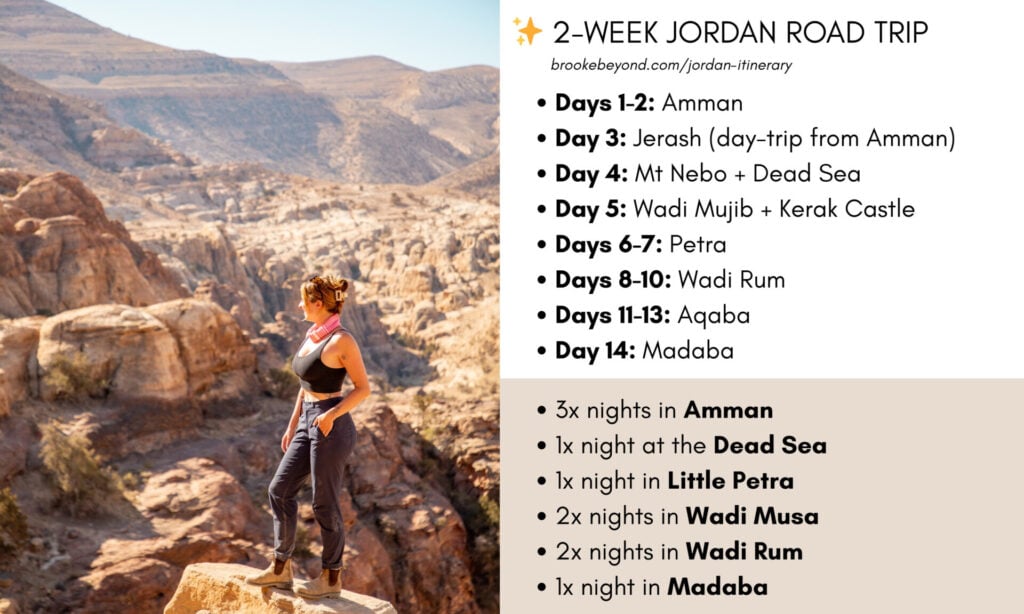
- Days 1-2: Amman
- Day 3: Jerash (day-trip from Amman)
- Day 4: Mt Nebo + Dead Sea
- Day 5: Wadi Mujib + Kerak Castle
- Day 6: Little Petra to Petra (Backdoor Trail)
- Day 7: Petra (Al Madras Trail)
- Days 8-10: Wadi Rum
- Day 11-13: Aqaba
- Day 14: Madaba
Day 1: Amman (downtown + Rainbow St)
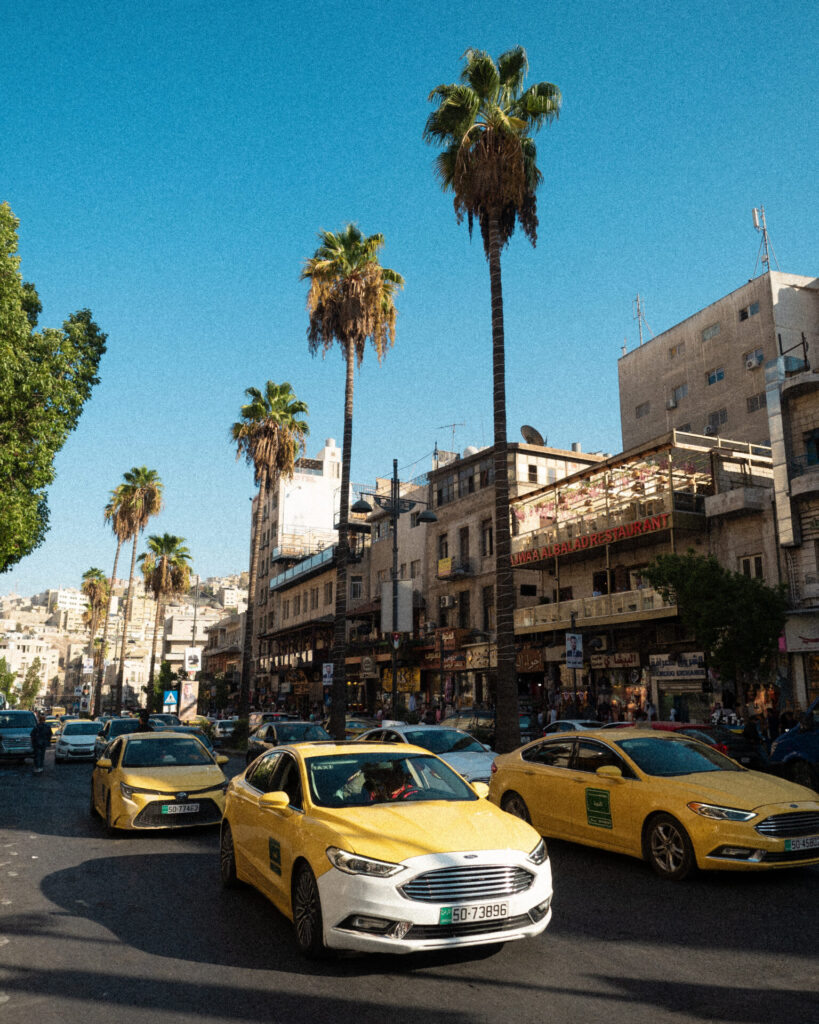
The perfect introduction to Jordan, Amman is an energetic capital where ancient history and modern culture collide. While so many blogs offer the misguided advice that “Amman can be seen in a day”, we’d HIGHLY recommend taking 3 days to experience the city & surrounds properly, and the next few sections will show you exactly how!
>>> Read my detailed Amman city guide for more recommendations!
AM: Explore downtown Amman
Start your first day in the Jordanian capital with a self-guided walking tour of downtown (Al Balad), the beating heart of old Amman— chaotic, colourful, and packed with local life! From most accommodation near the 1st or 2nd Circles, it’s a 15–20min walk downhill or a quick, inexpensive Uber/taxi.
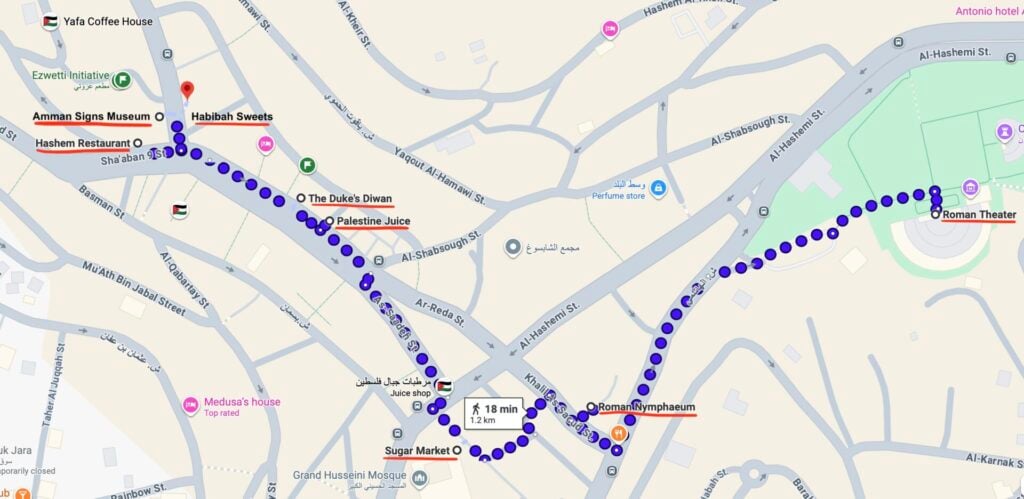
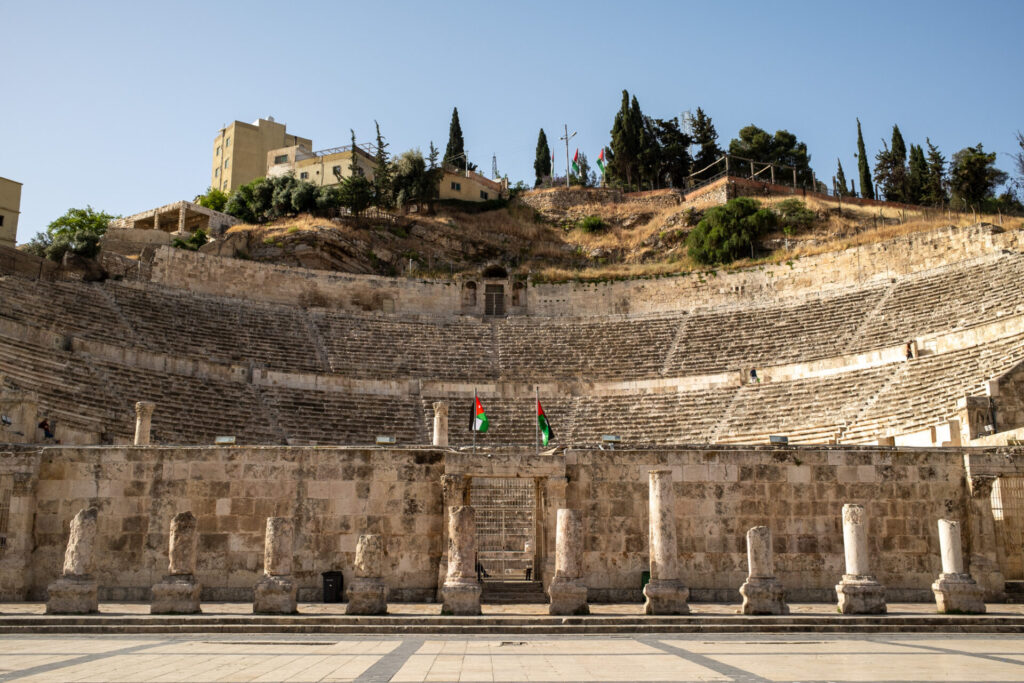
Head first to the Roman Theatre, a 2nd-century stone amphitheatre carved into the hillside and designed to seat around 6,000 spectators. This is one of the most impressive ancient landmarks in the city and entry is included with the Jordan Pass!


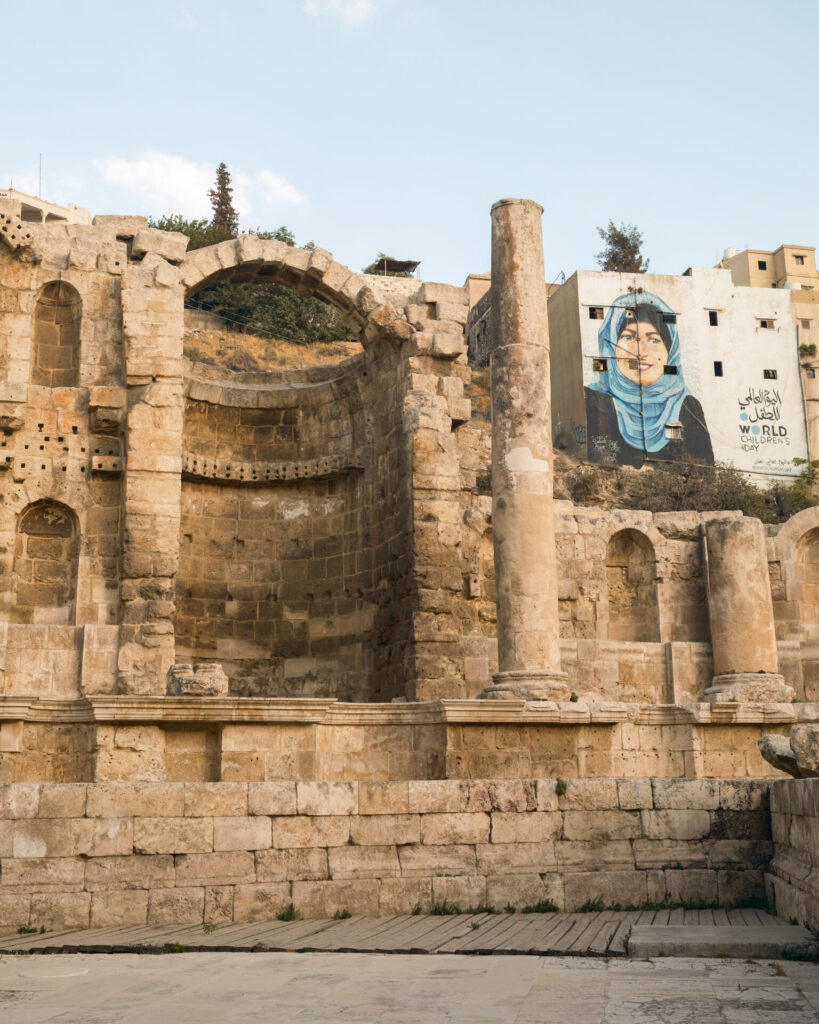
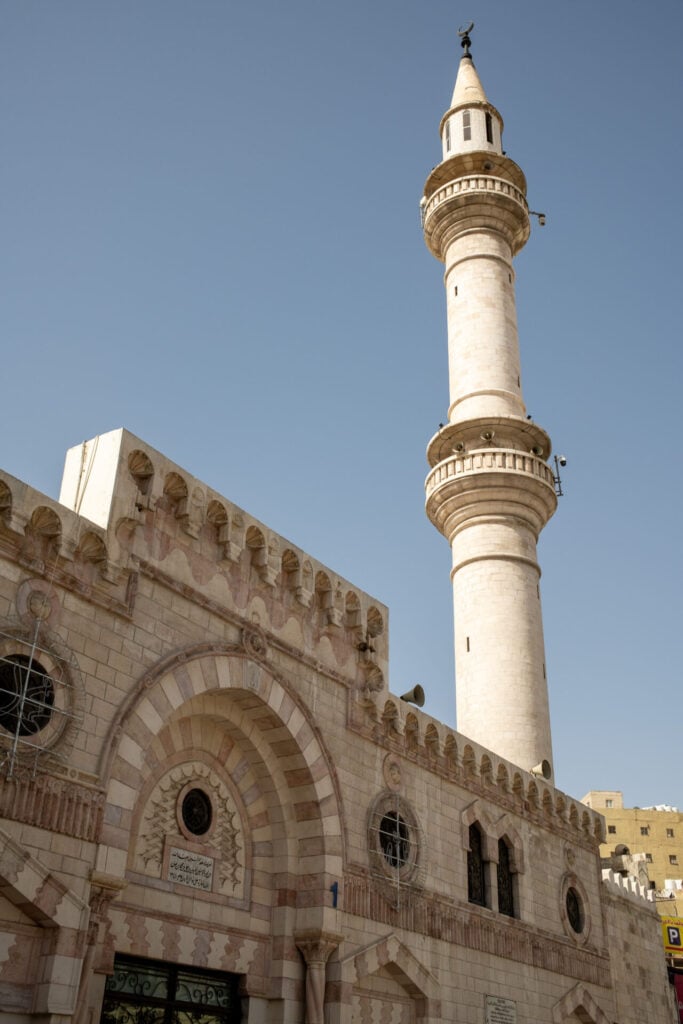
From here, wander to the nearby Nymphaeum, a partially restored Roman fountain that once served as a grand public water feature, and the Grand Husseini Mosque, built in 1924 on the site of an original Umayyad-era mosque from the 7th century.
Continue into the bustling street of Souq Al-Sukar (Sugar Market), a lively network of vendors selling fragrant herbs, towering piles of nuts, dried fruits, and local sweets. It’s common to be handed samples as you pass, with no pressure to buy— so take your time wandering with your camera and soaking up some of the most authentic energy in the city!


Within the next few blocks, you’ll find a cluster of excellent quick stops and local eateries (you can easily shuffle the order if you’re hungry). Step first into The Duke’s Diwan, a historic residence dating back to 1924 that now operates as a cultural salon, preserving a slice of old Amman. Entry is free, but you can donate to the project by purchasing a tea or coffee (totally optional).
Nearby, the Amman Signs Museum offers a quirky but fascinating look at vintage Arabic signage. This is also free and requires only 10-15min to explore!
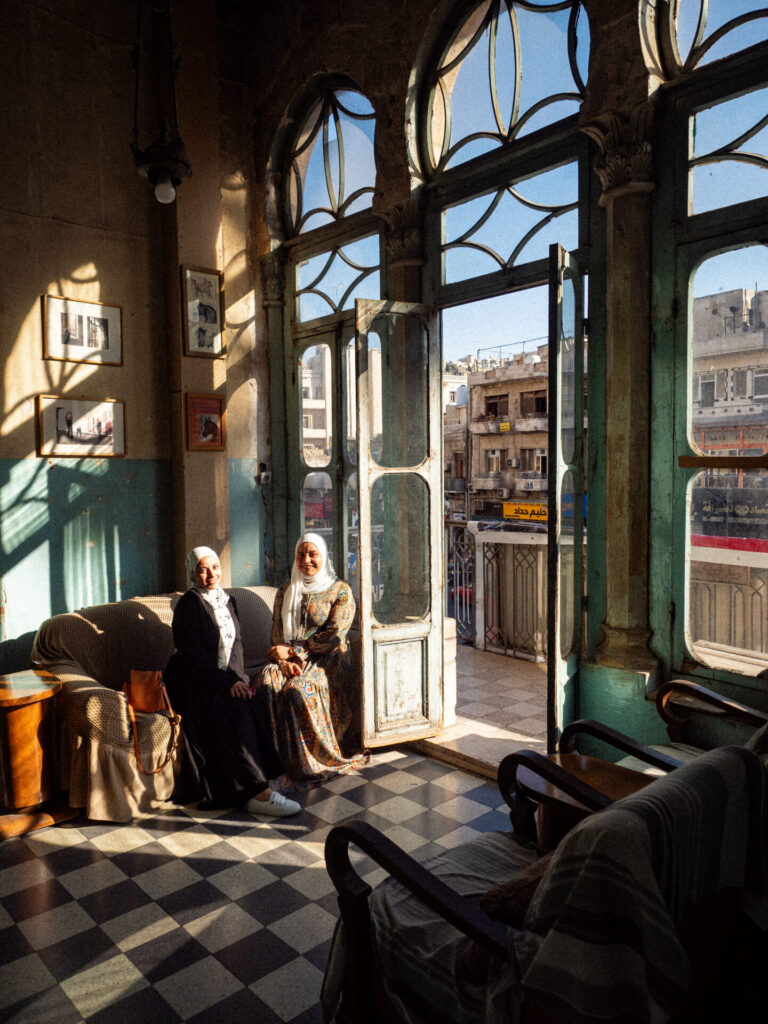
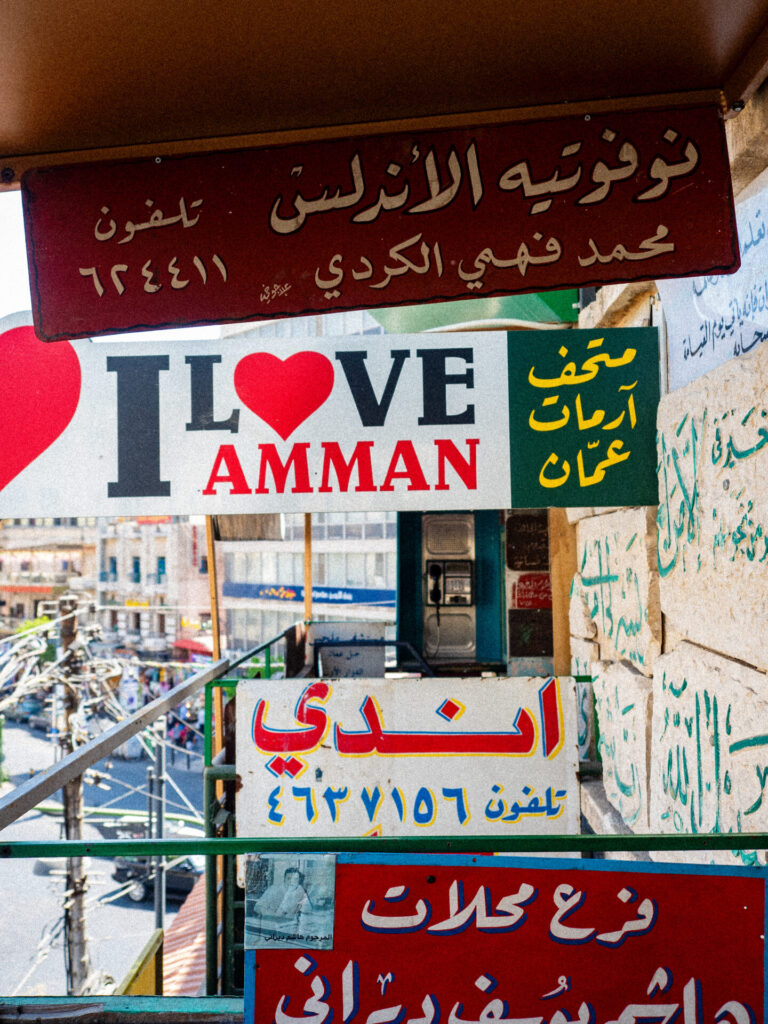
Right next door to the Duke’s Diwan, Palestine Juice is our favourite fresh juice spot in the city, where you can mix and match fruits into a custom blend before continuing on to lunch just down the road.
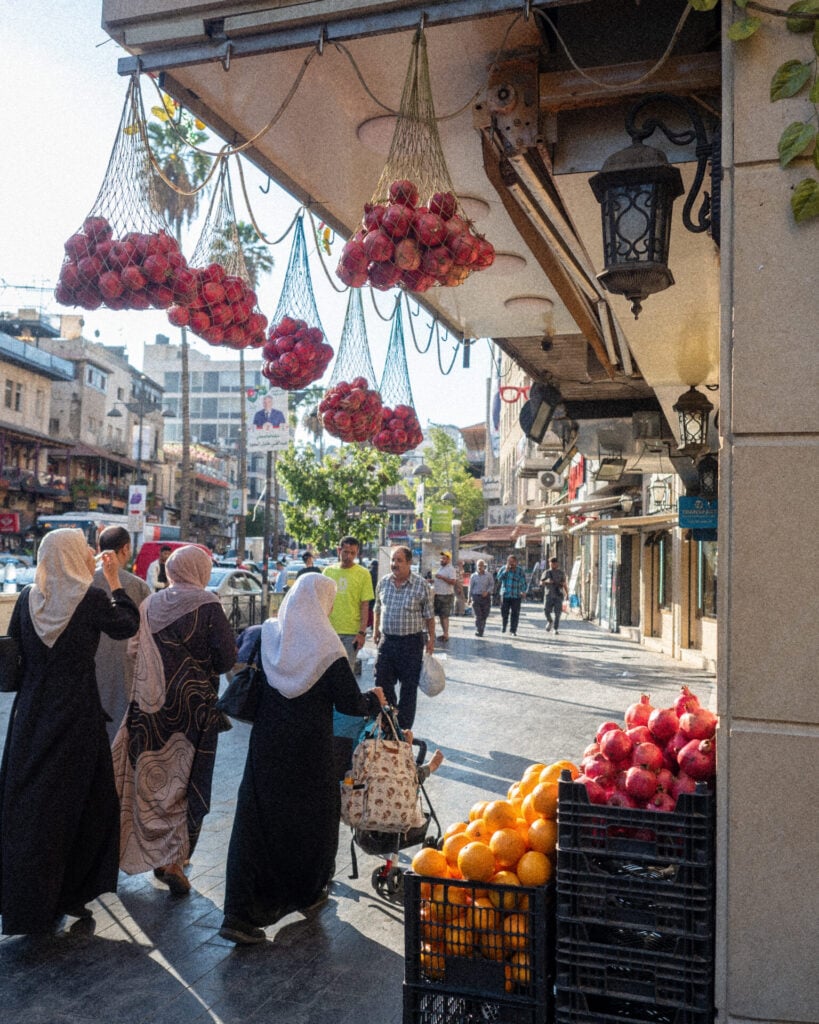
Lunch: Hashem + Habibah Sweets
When you’re ready for lunch, head to Hashem, one of the oldest and most iconic street food restaurants in Amman, for a quintessential lunch of falafel and hummus. There are only a few items on the menu and it’s very simple (and cheap), but they do what they do WELL. Even the Jordanian royal family loves Hashem!
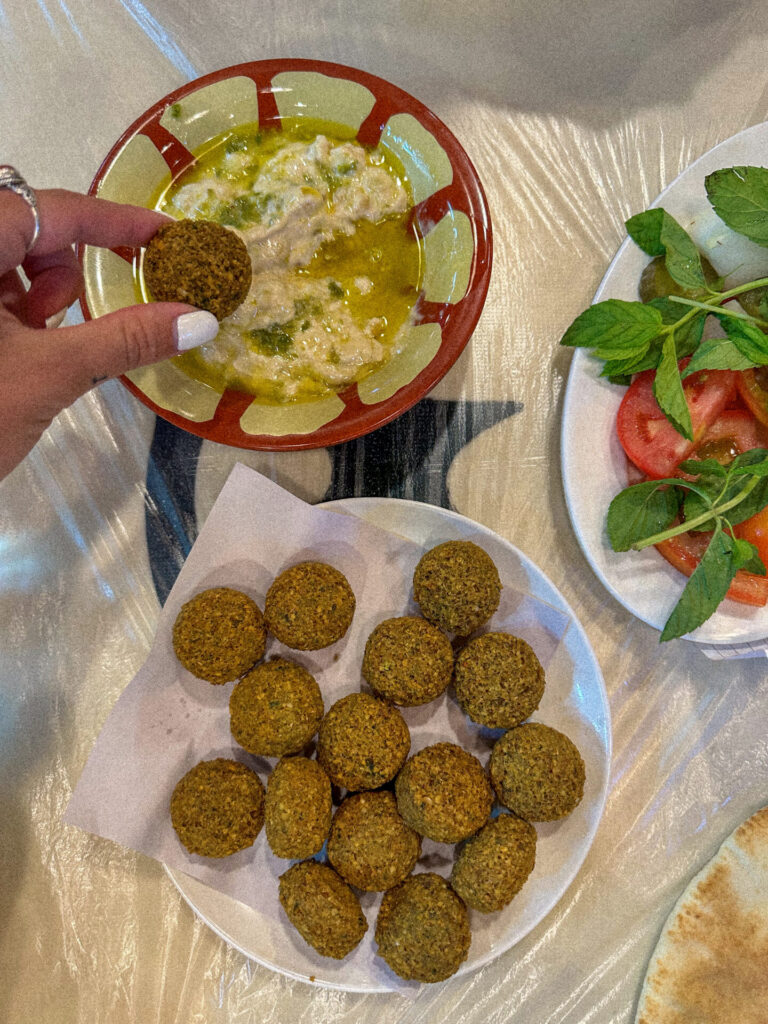
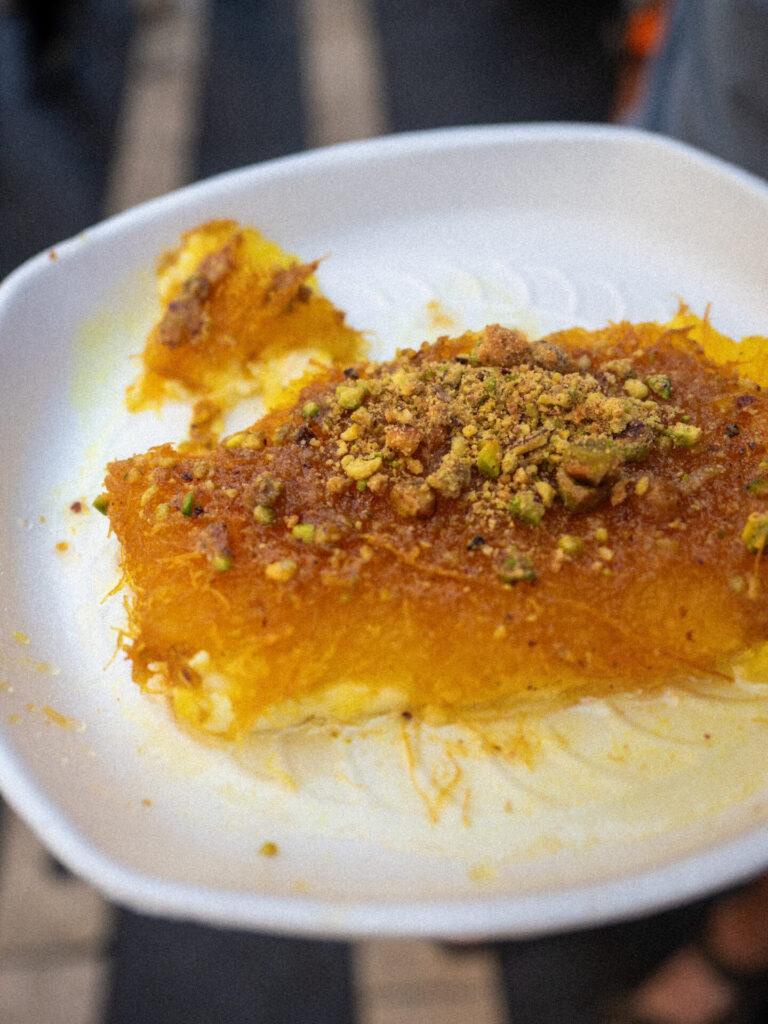
Just steps away, Habibah Sweets serves some of the best knafeh in the city. A beloved Jordanian dessert, knafeh is made with shredded kadayif pastry (the texture of shredded wheat) layered over soft cheese, then soaked in a sugar syrup and topped with crushed pistachios— if it sounds a little strange to put cheese in a dessert, I promise it’s absolutely delicious and definitely worth trying!
Portions are sold by weight (1.75JOD for a quarter-kilo, which is plenty for 2 people sharing), and although there’s almost always a queue at Habibah, it moves super quickly!
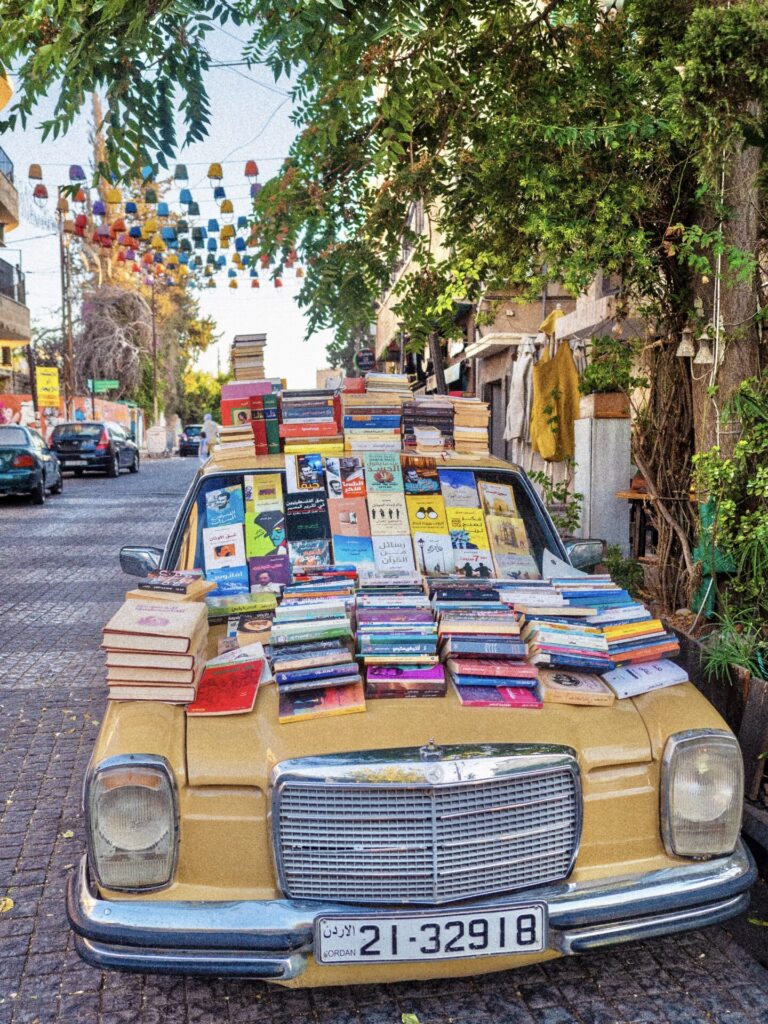
PM: Explore Rainbow Street
From downtown, begin the uphill walk to Rainbow Street, winding through narrow alleys and staircases that cut between neighbourhoods. After about 15min, you’ll arrive onto Rainbow Street, a lively stretch lined with cafés, boutique shops, rooftop bars, and some of the city’s best restaurants.


Seasonally on Fridays, you can also explore Souk Jara, a vibrant local craft market with wonderful handmade products and a selection of street food! Spend the afternoon wandering, browsing, and soaking up the atmosphere on Rainbow Street before heading to Cantaloupe for sunset drinks on the rooftop terrace— I’ll tell you honestly that the cocktails are overpriced and below-average, but the beer is cold and the views are great!
Dinner: Sufra Restaurant
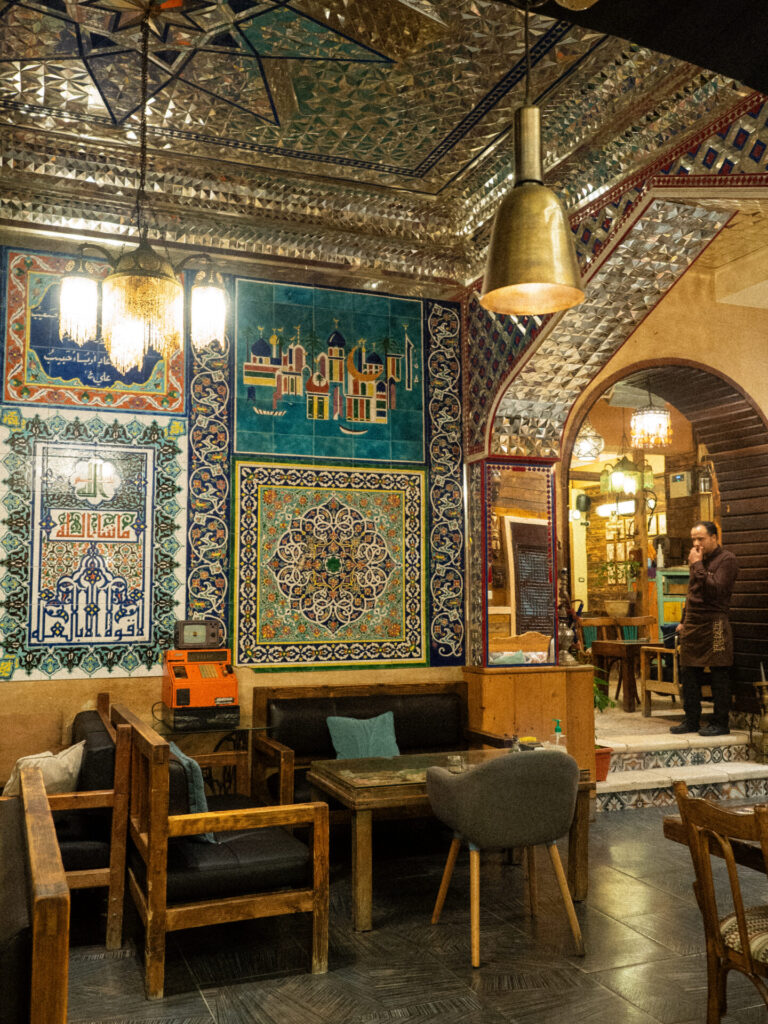
Finish your day with dinner at Sufra, a beautiful courtyard restaurant on Rainbow Street serving traditional Jordanian cuisine in an elegant outdoor setting. With excellent food, a relaxed ambience, and wine and beer available, it’s the perfect place to dig into some classic local dishes.


When I’m designing itineraries for our Jordan group trips, I always like to stick to more traditional restaurants on the first day so visitors can get a sense for the fundamental flavours of Jordanian cuisine before branching out to interesting interpretations and modern fusion.
Sufra delivers classic fare in a beautifully elevated setting, but if you’re looking for options, another wonderful restaurant for your first night in Jordan is Rakwet Arab in Weibdeh— particularly if you’re staying in that area!
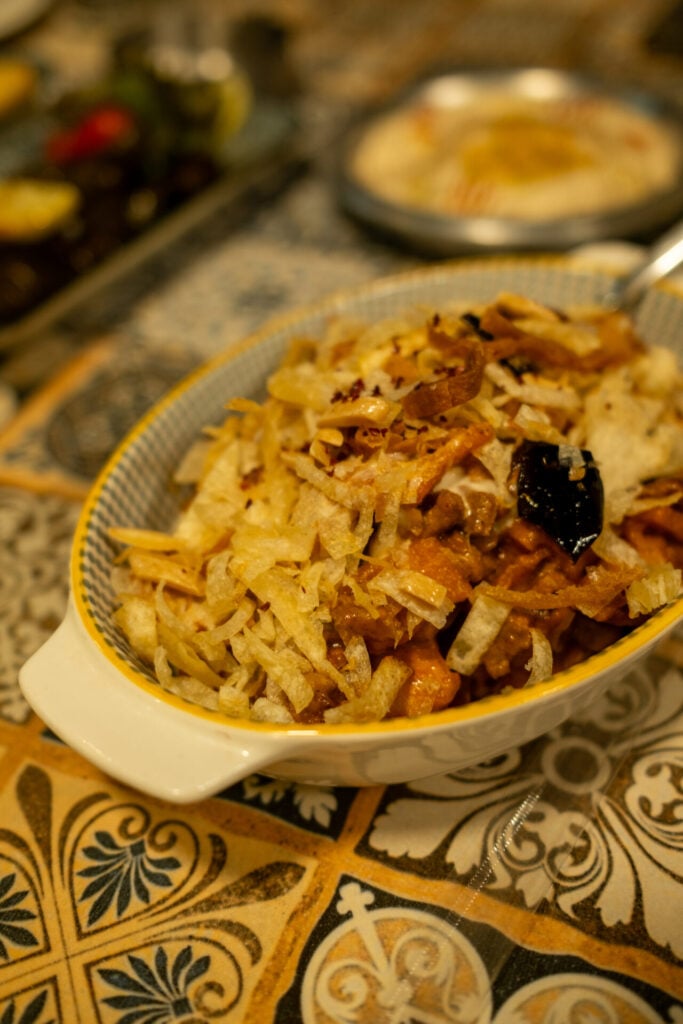
🧆 DELICIOUS JORDANIAN DISHES TO TRY
* falafel: crispy fried chickpea balls, usually served with hummus or in pita
* fatteh makdous: layers of crispy flatbread, yoghurt, tahini, and fried eggplant
* mansaf: Jordan’s national dish of lamb cooked in fermented yoghurt sauce and served over rice
* maklouba: an “upside-down” rice dish with chicken/meat and vegetables that’s flipped dramatically before serving (so moist and delicious!)
* fattoush: a fresh salad of vegetables, herbs, and toasted flatbread with a tangy sumac dressing
* shawarma: spit-roasted meat shaved into wraps with garlic sauce and pickles
Night 1: Amman
For this itinerary, I’d recommend booking your first 3 nights in Amman.
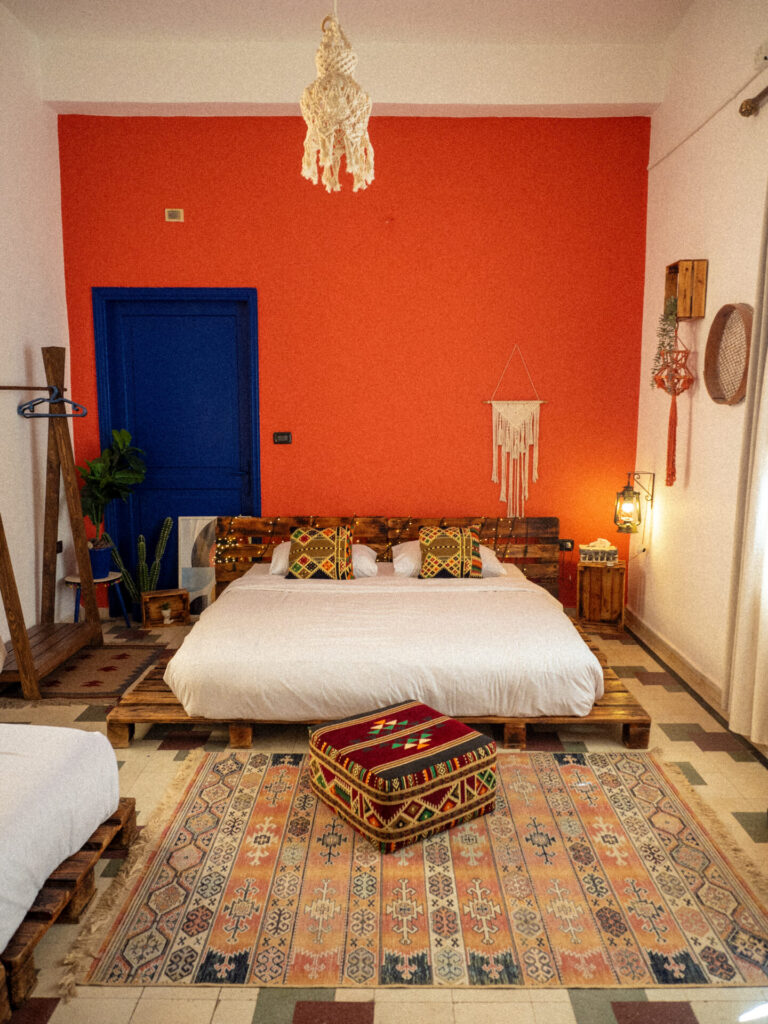
- Our personal favourite place to stay in Amman is Jabal Al Weibdeh, a hipster neighbourhood popular with artists and expats located on a hill above the downtown (still walking distance, but decidedly less hectic). Canary Boutique Hotel is a great, budget-friendly option in an excellent location and with a massive Middle Eastern breakfast.
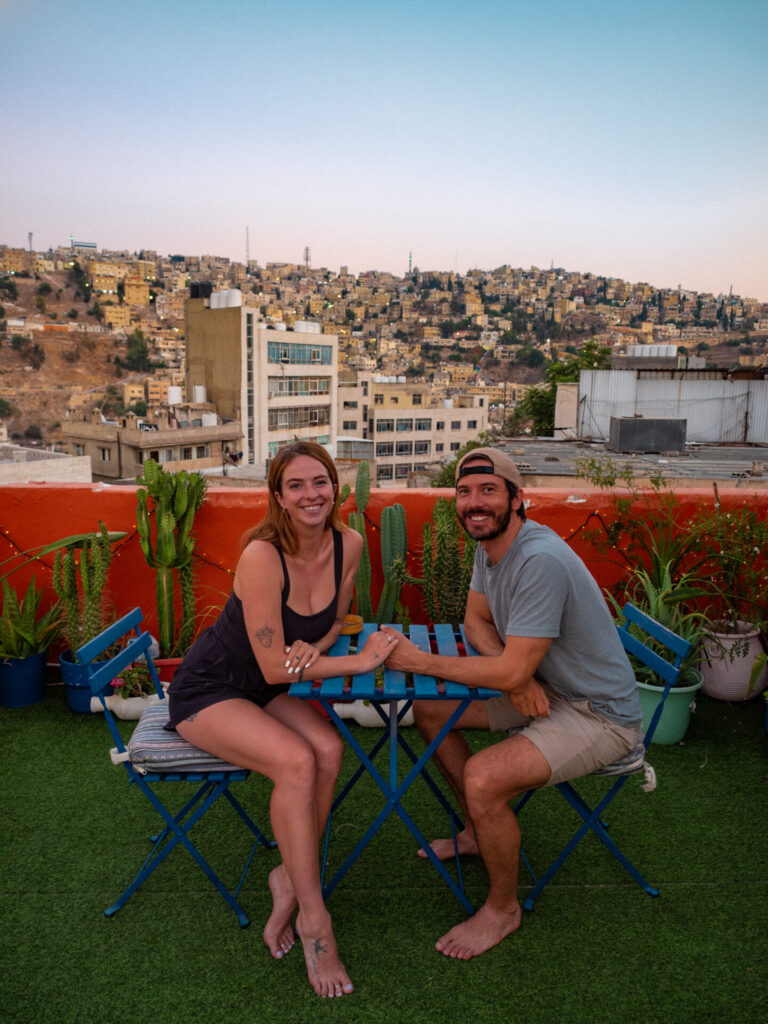
- For first-time visitors, another great area to stay is Rainbow Street in Jabal Amman, a lively area situated above the downtown. Like Weibdeh, it’s full of trendy cafes and restaurants, but you’ll have to brave a lot of steep stairs to get around. We love Medusa’s House, a charming local guesthouse with private rooms (en-suite or shared bathroom available), a communal kitchen, and a fantastic terrace overlooking the city.
- Finally, near the 2nd Circle, House Boutique is a more upscale option with spacious suite-style rooms that features kitchenettes, couches, and separate living areas, plus a pool and fitness centre in the building. It’s still walkable to Rainbow Street in about 15min, but you may want to Uber to Weibdeh or other parts of the city. We stayed here on our luxury group trip and the service was truly unbeatable!
>>> Read more about where to stay in my super-detailed Amman city guide!
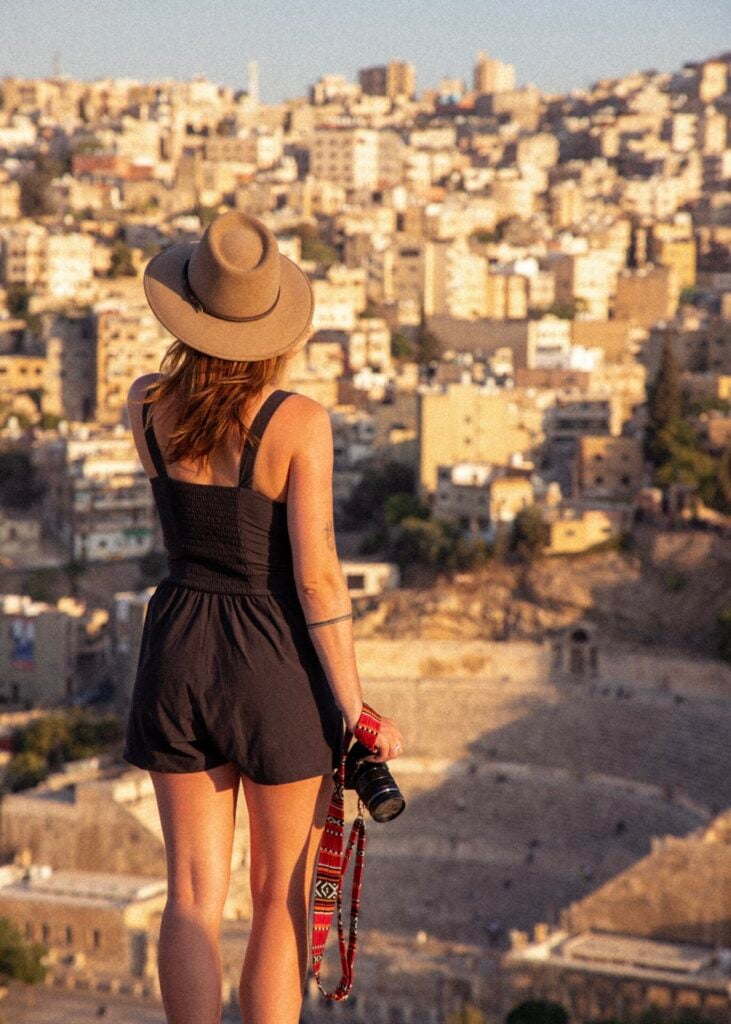
Day 2: Amman (Weibdeh, Citadel + cooking class)
After a full day exploring the chaos and colour of downtown, today offers a slower, more creative side of Amman, wandering through the trendy streets of Weibdeh, catching sunset from the Amman Citadel, and diving deeper into Jordanian culture through its food!
AM: explore Jabal Al Weibdeh
Start your morning in Jabal Al Weibdeh, one of Amman’s most charming neighbourhoods, known for its artistic energy and relaxed café culture. Spend a few hours wandering through the tree-lined streets, popping into small galleries, bookstores, and design shops as you go— this is one of the best areas in the city to slow down and explore without a strict plan!


Lunch: Rumi Café + Dali for beer/shisha
Grab a light lunch at Rumi Café, a charming local favourite known for its excellent manakeesh (sourdough flatbread topped with everything from za’atar to cheese, like a Jordanian pizza).
After lunch, head to Dali, a trendy local hangout that’s especially popular with artists, creatives, and remote workers— and easily one of our favourite places to chill in the city! Even in the middle of the afternoon, there’s a lively but relaxed buzz.
Order a local craft beer (we love Carakale Blue Valley) or settle in with a shisha and enjoy a slower pace for a couple of hours. There’s also a full menu here, so you could easily combine a low-key lunch and drinks at Dali (their hummus with meat is a crowd-pleaser).
💨 SHISHA CULTURE IN JORDAN
Shisha is deeply embedded in the social fabric of Jordan, and it’s something you’ll see everywhere in Amman. For those who haven’t tried it yet, shisha is a type of flavoured tobacco, typically infused with fruit or molasses, that’s smoked out of a hookah (water pipe)— the smoke is drawn through water before being inhaled through a hose, creating a smoother, more aromatic experience than traditional smoking.
When you pay for shisha (usually 8-10JOD), staff will bring out a hookah packed with your choice of shisha flavour and routinely come back around to rotate your coals, ensuring an even burn. One order can easily be shared among a group of friends for an hour or two, and it’s one of our favourite ways to slow down and enjoy the local vibe of the city!
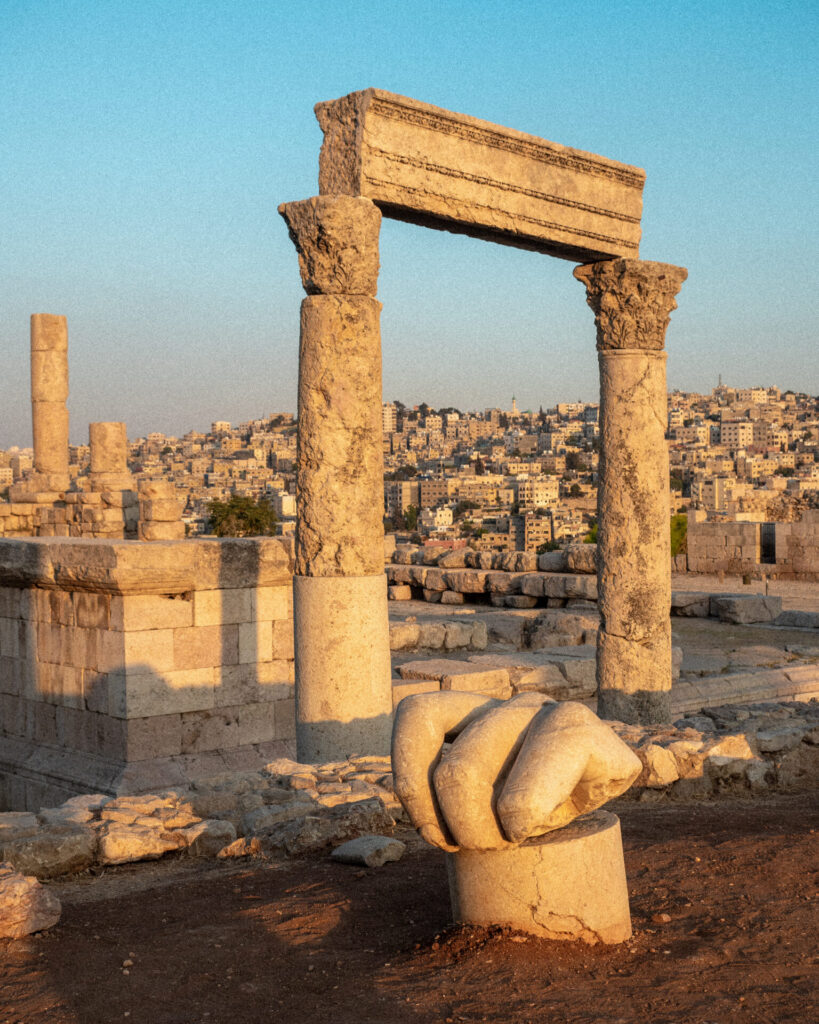
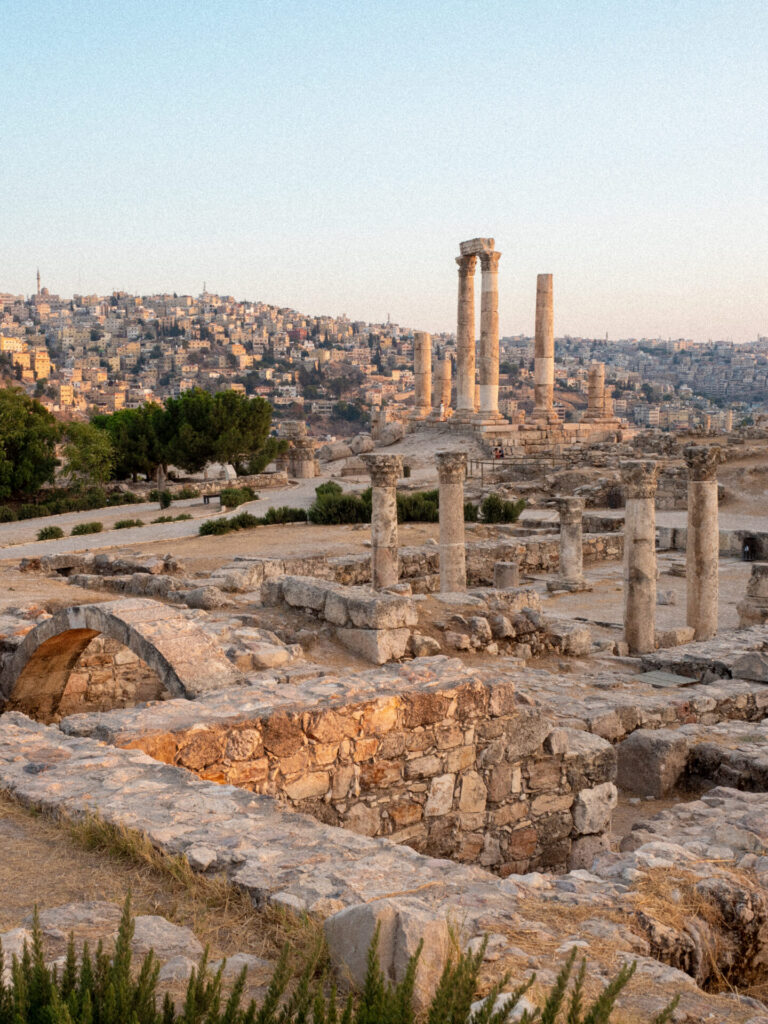
PM: Amman Citadel for golden hour
Around 4pm, grab an Uber to the Amman Citadel. Perched on a hill overlooking the entire city, the Citadel is home to ancient ruins spanning Roman, Byzantine, and Umayyad periods, and it is the best ancient site to see in Amman! (This itinerary purposefully builds from the Roman Theatre on Day 1, to the more impressive Citadel on Day 2, to the MOST impressive ruins at Jerash on Day 3!)
I definitely recommending timing your visit for golden hour, when the soft light casts a warm glow over the city’s rolling hills and white-stone buildings. Entry is free with the Jordan Pass and you can spend anywhere from 30min to 2hrs exploring the site, depending on how many photos you want to take and whether you want to hire a local guide to learn more about the history.
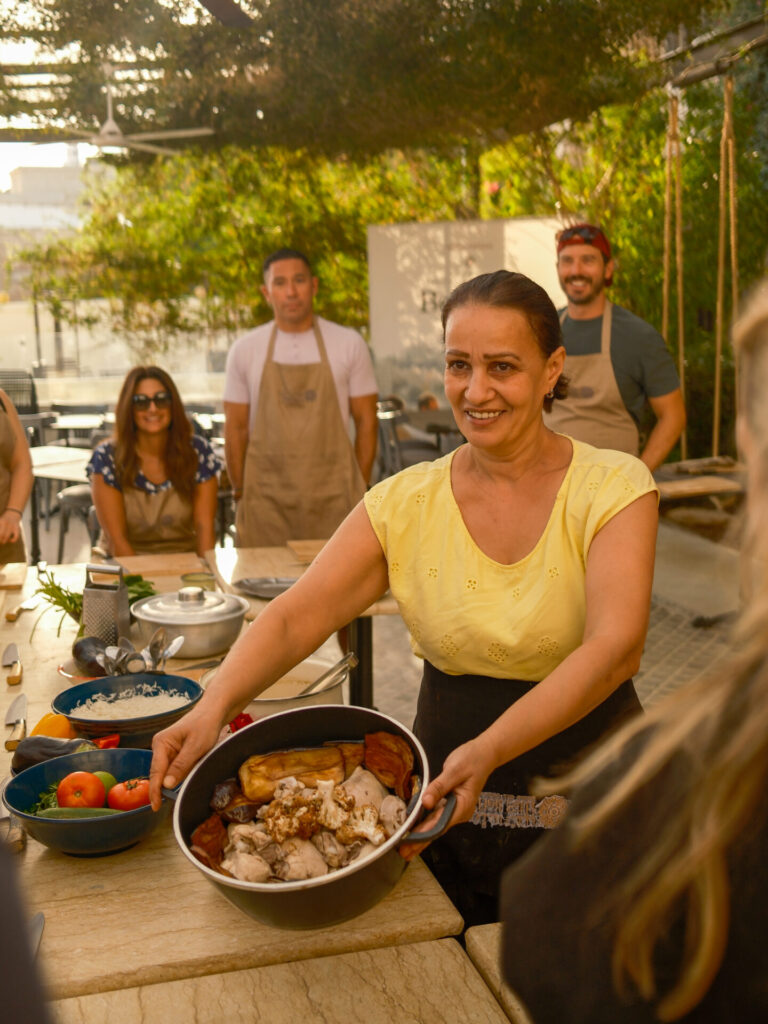


Dinner: cooking class at Beit Sitti
Finish the day with a Jordanian cooking class at Beit Sitti, set on the patio of a beautiful family home overlooking the city. Expertly guided by Maria and her aunts, all of whom are incredibly passionate about keeping their grandmother’s recipes alive, you’ll learn to prepare a selection of fresh mezze and classic Jordanian mains before sitting down to enjoy the meal together.
This is the best ways to experience the flavours of Jordan while learning about the country’s deep-rooted culinary traditions and the ritual of shared meals. We visit Beit Sitti on our Jordan group trips and it’s always a highlight, even for those who don’t spend much time in the kitchen (me). I truly can’t recommend the experience enough!
Night 2: Amman
Spend a 2nd night in Amman ahead of tomorrow’s exploration outside the city! See Night 1 above for my recommendations on where to stay in Amman OR check out my Amman City Guide.
Day 3: Jerash (day-trip from Amman)
After 2 full days exploring the bustling streets, historic landmarks, and café culture of Amman, hop into your rental car for a spectacular half-day excursion beyond the city— if you do only a single day trip from Amman, it absolutely has to be Jerash!
AM: Jerash
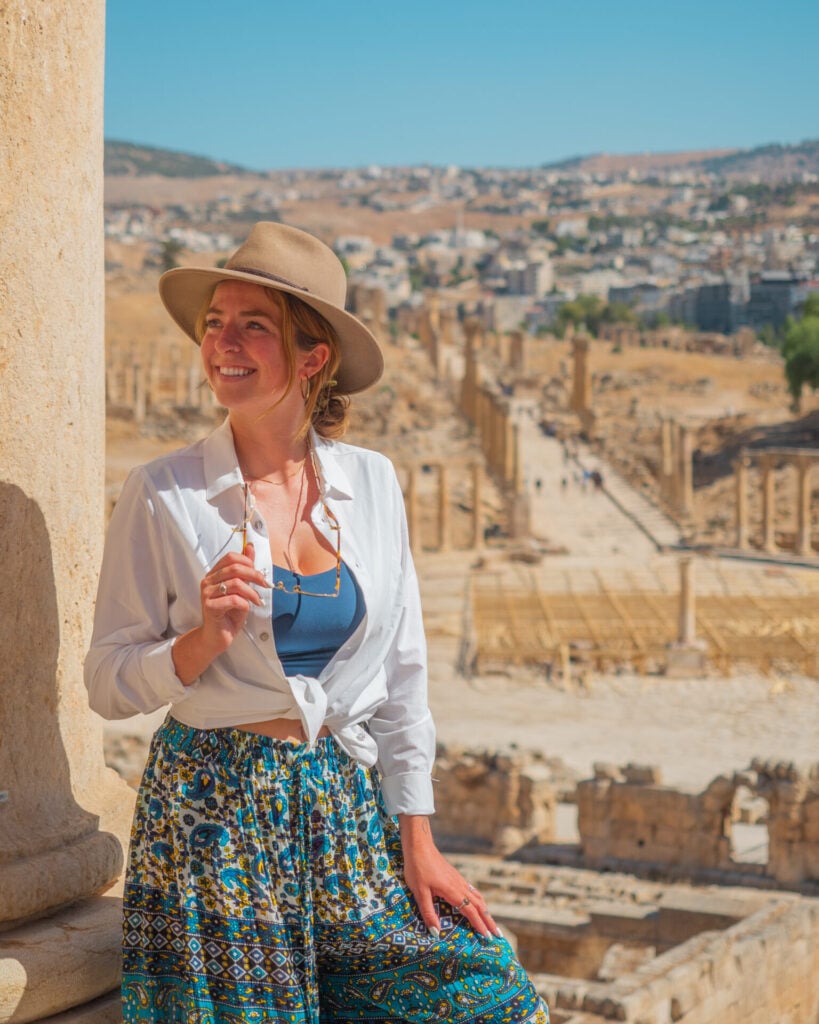
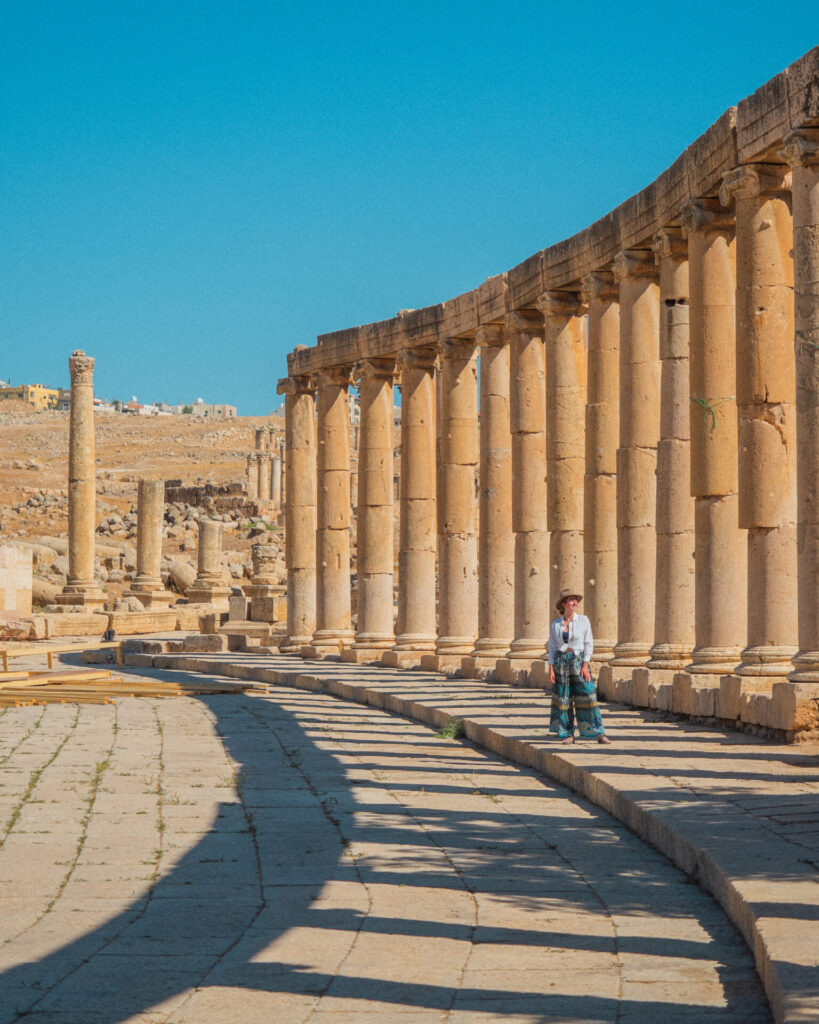
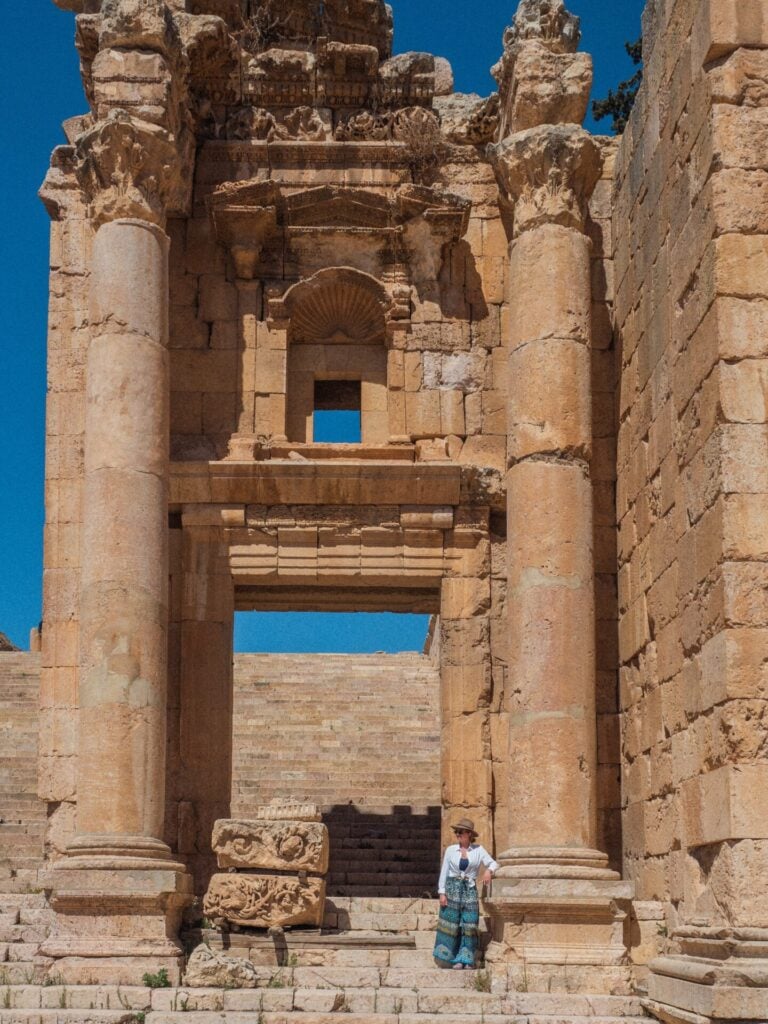
Located just an hour north of Amman, Jerash is the best-preserved Roman city outside of Italy and an absolutely essential historical site to visit in Jordan. We’ve seen a LOT of ruins over the years and were worried about being underwhelmed, but Jerash truly stands out as a uniquely spectacular and totally crowd-free site!
With colonnaded streets stretching into the distance, towering arches framing the horizon, and vast plazas and temples hinting at the scale of what was once a thriving Roman city, walking through Jerash feels like stepping back 2,000 years in time. Highlights include Hadrian’s Arch (before the ticket office), the Oval Plaza, and the long, column-lined Cardo Maximus, but the site boasts a thousand impressive angles!
🏛️ TIPS FOR VISITING JERASH
>>> To make the most of your visit, aim to arrive around 8am to beat both the heat and the modest influx of tour groups that tend to show up closer to 10am.
>>> Most people will find that around 2hrs is plenty of time to explore before the intense sun exposure starts to chase you out.
>>> Entry is included in the Jordan Pass and you can hire an English-speaking guide at the entrance (or join a guided tour from Amman) if you want more historical context.


PM: wine-tasting or craft beer sampler
Particularly if you get an early start at Jerash, you’ll be heading back to Amman around lunchtime with plenty of time up your sleeve! I’d recommend hitting up the tasting room at Jordan River Wines, the country’s first modern winery (about 30min from Jerash) or checking out the awesome Carakale Brewery, Jordan’s first craft brewery with a taproom about 20min outside the city.
You’ll need to pre-arrange tasting at Jordan River, but you can just show up at Carakale very casually!


There’s also the brand-new Cask & Cork tasting room in Amman (near the 4th Circle) offering a selection of local wines and a great lunch menu. This can be a super convenient way to experience Jordan River Wines alongside a variety of other options, all within easy Uber-distance from your hotel and with no need for advance booking.
Dinner + cocktails: Alee
For your final dinner in Amman, head to Alee, an award-winning modern Jordanian fusion restaurant with inventive dishes and equally creative cocktails, ranked on the list of 50 best restaurants in the Middle East & Africa multiple years in a row! The serve an AMAZING 14-course dinner that offers a taste of just about everything, and the restaurant has a gorgeous view.


>>> If you want to check out something more local and traditional for your last night, read my Amman City Guide for heaps more restaurant recommendations!
Night 3: Amman
Spend your 3rd and final night in Amman before hitting the road to the Dead Sea tomorrow! See Night 1 above for my recommendations on where to stay in Amman OR check out my Amman City Guide.
Day 4: Mt Nebo + Dead Sea
After a few days fully immersed in the energy of Amman, today marks the true start of your road-trip south through Jordan’s many spectacular highlights, winding through arid hills and desert valleys before dropping down to the shores of the Dead Sea, the lowest point on Earth!
AM: scenic drive south via Mt Nebo
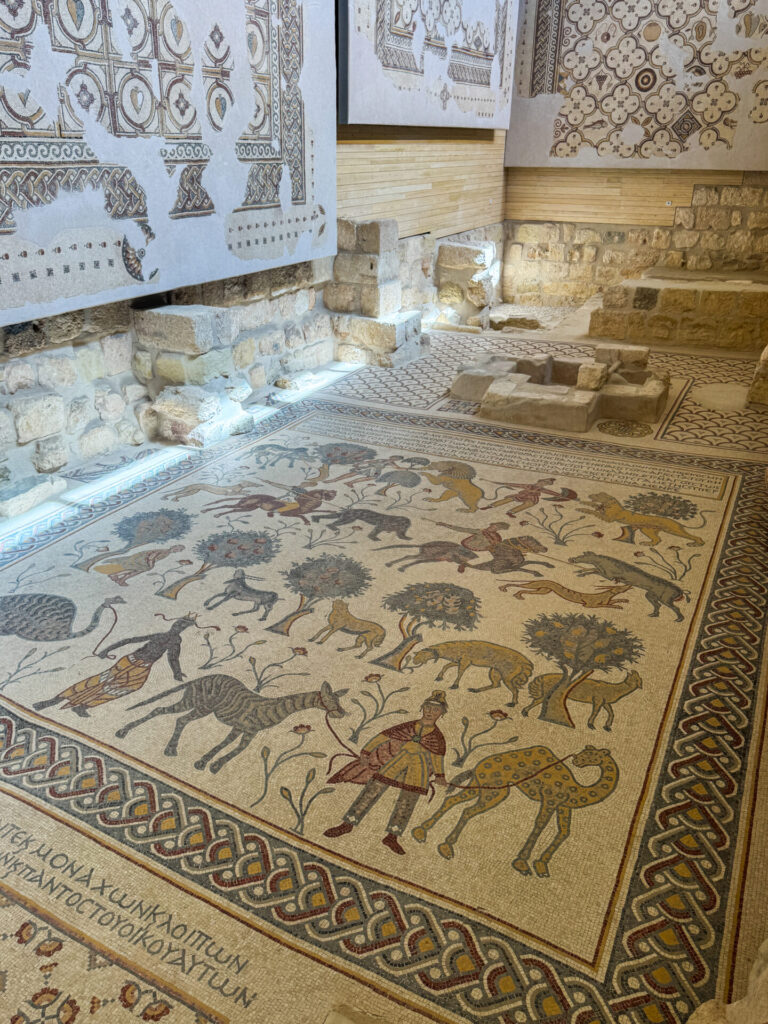
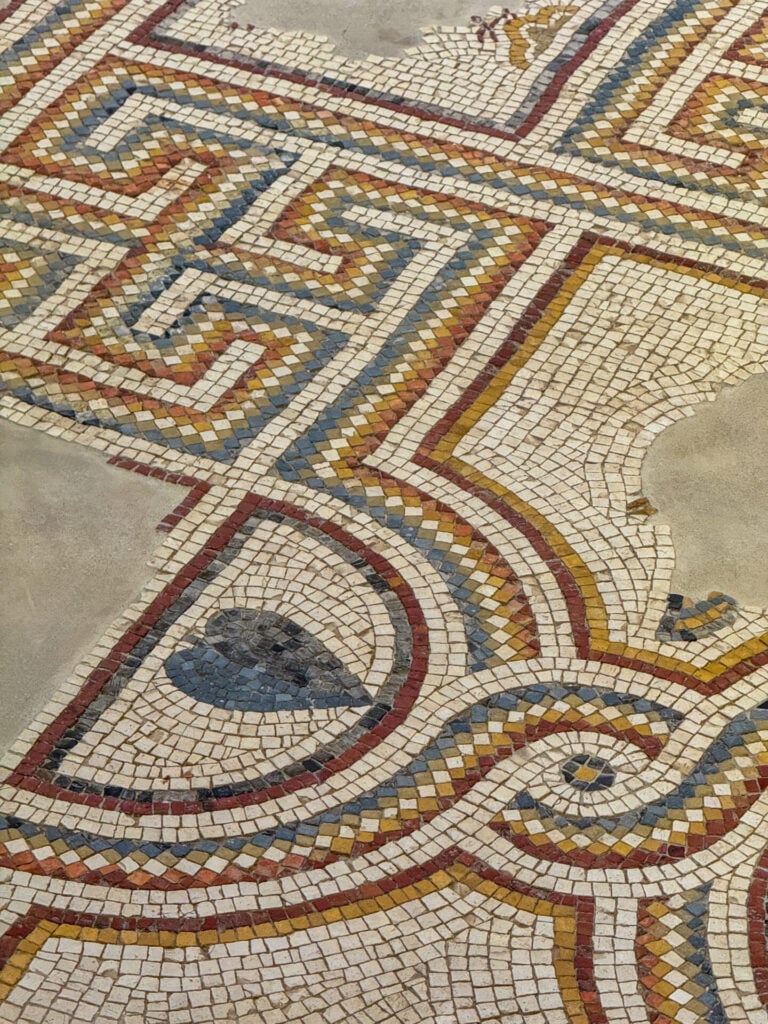
Set off from Amman around mid-morning for the easy 1hr drive to the Dead Sea, leaving time for an interesting detour along the route at Mt Nebo, believed to be the place where Moses first saw the Promised Land. The site is quick but rewarding, combining beautifully preserved Byzantine mosaics with sweeping views over the Jordan Valley.
You can comfortably explore Mt Nebo about 30min, and the detour adds just 25min of drive time on the way to the Dead Sea. You don’t necessarily need any special biblical interest to enjoy the art and the view, so this is a great stop for pretty much anyone! Entry is 3JOD.
⛪️ ALTERNATE STOPS BETWEEN AMMAN + DEAD SEA
>>> Bethany Beyond the Jordan: if you’re particularly interested in biblical history, visit Bethany Beyond the Jordan just above the northern shore of the Dead Sea, believed to be the site of Jesus’ baptism. The detour only adds 15min to overall drive time, but you’ll need about 2hrs at the site, inclusive of a shuttle bus and required guided tour, so make sure to leave Amman ~10am to allow adequate time.
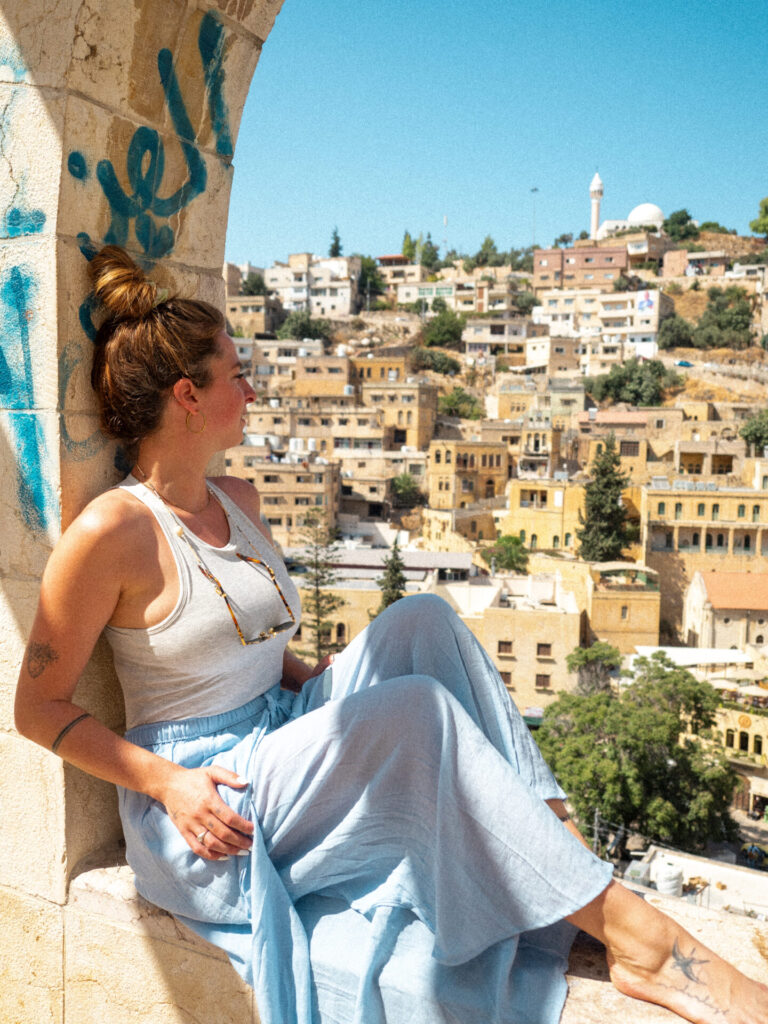
>>> As-Salt: for a more cultural detour, spend the morning wandering around this laid-back hillside town known for its golden stone architecture, historic homes, and friendly local atmosphere. You can spend as little or as much time as you want in As-Salt, but I’d particularly recommend stopping for lunch at Beit Aziz. The detour adds one hour to the total drive time.
PM: Float in the Dead Sea
Continue on to the Dead Sea resort area, with a majority of hotels clustered along the northern shore near the town of Swemeh. Aim to arrive and check in by around 3pm so you have time to experience the Dead Sea before the beaches close at sunset!
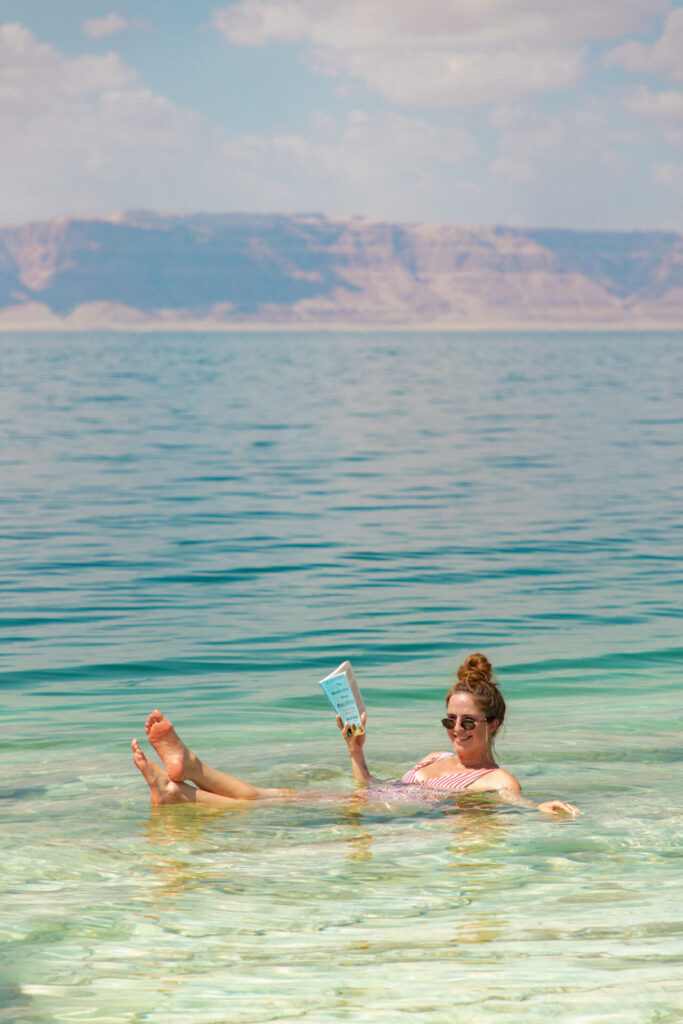
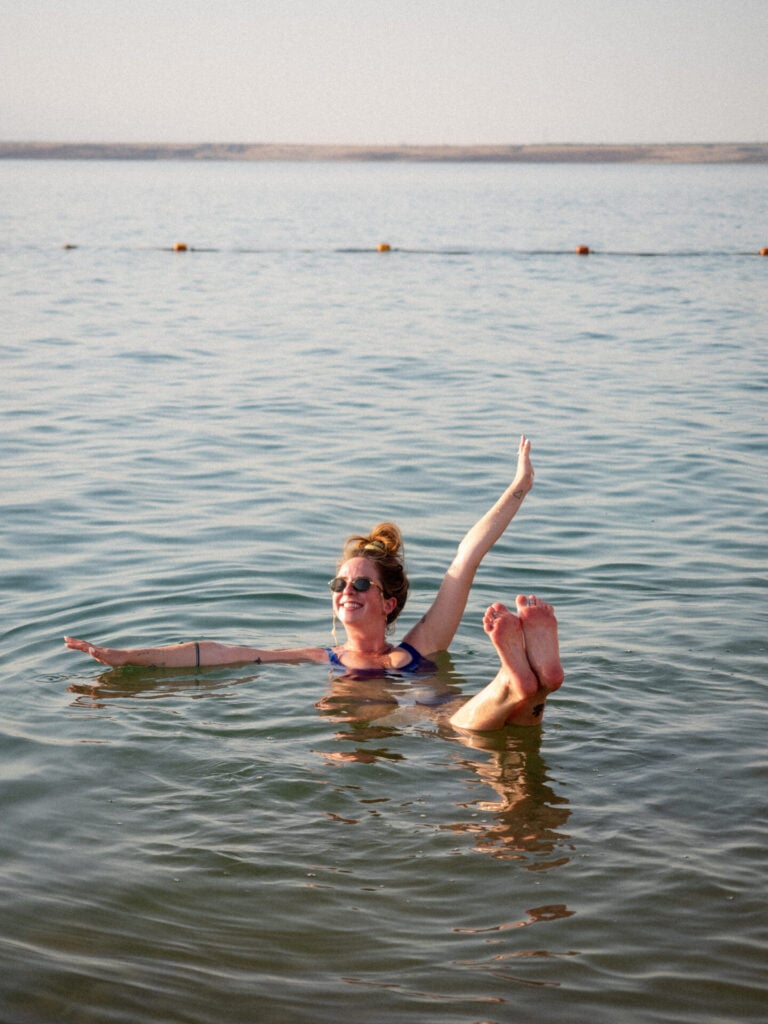
Most resorts offer private sea access, allowing you to lather up in mineral-rich mud, wade into the water, and experience the surreal sensation of floating effortlessly on the surface of water 10x saltier than the ocean! It’s unlike anything else and, although you only need a few minutes to really experience the buoyancy, it’s an essential experience in Jordan that you simply can’t miss.


💀 ESSENTIAL TIPS FOR VISITING THE DEAD SEA
>>> Avoid shaving anywhere in the 24hrs prior to floating in the Dead Sea or you will be STINGING! Make sure you don’t touch your face or get water anywhere near your eyes for the same reason.
>>> Shower immediately after getting out of the water in the beach-front showers provided by your resort. If you do venture to one of the free swimming areas, be sure to BYO water for a rinse! The salt starts to get very itchy on your skin.
>>> Bring water shoes— entry into the water can be sharp and painful due to salt formations, which are more pronounced on some beaches than others.
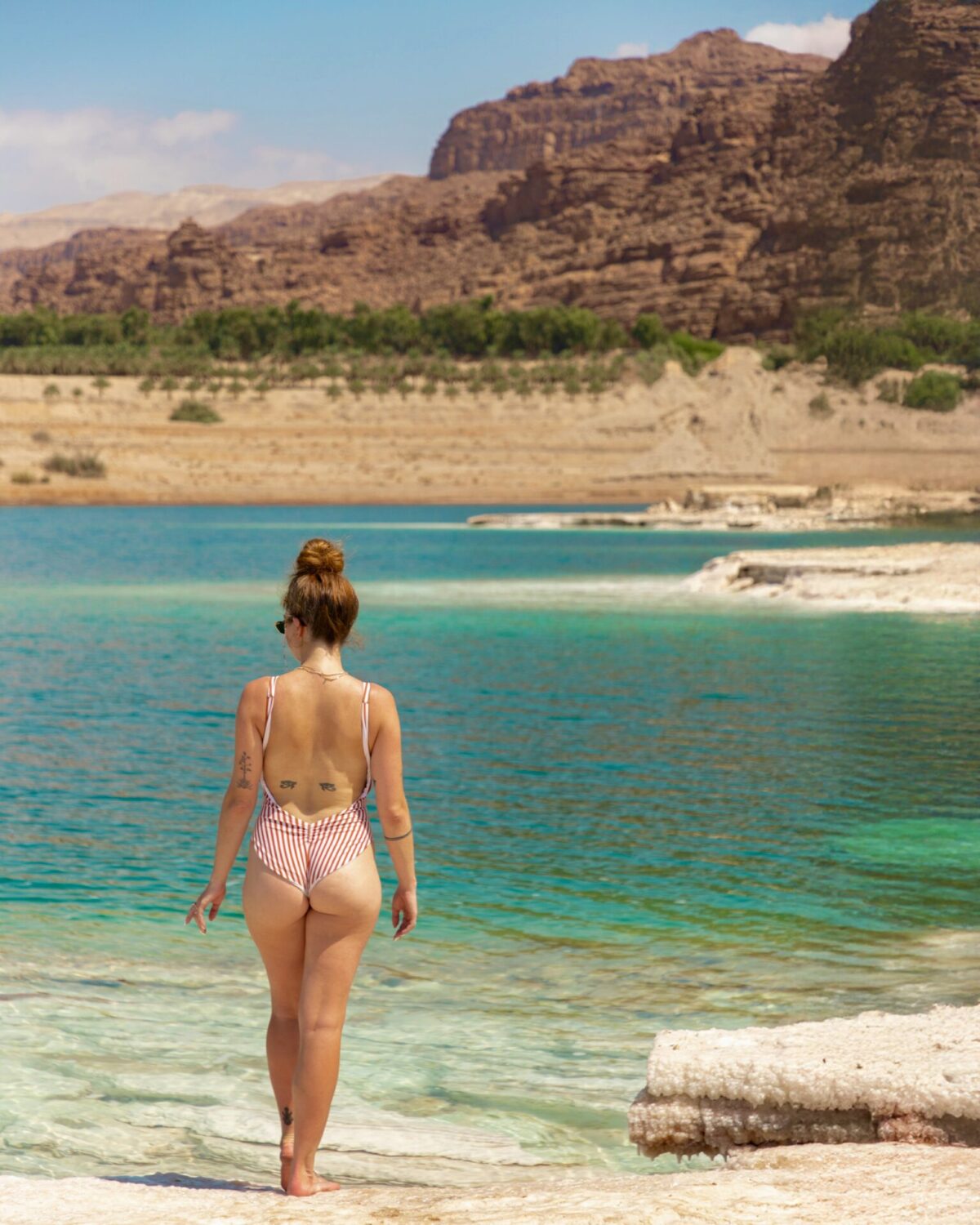
>>> The resorts with private beaches are very used to Western tourists, so it’s perfectly acceptable to wear a one-piece or two-piece swimsuit, I’d just recommend avoiding a g-string unless you want a lot of looks.


Night 4: Dead Sea
Nearly all accommodation at the Dead Sea is concentrated on the north shore, and your options are essentially limited to 4–5 star resorts. It’s neither the cheapest nor the most culturally authentic accommodation you’ll find in Jordan, so we’d highly recommend limiting your stay to just 1 night (or read my Amman City Guide for ideas about how to visit the Dead Sea as a day trip).
- We’ve previously stayed at the Mövenpick, which we loved for its beautiful private beach and multiple on-site dining options. At $180/night, it felt like good value for the experience relative to other hotels in the area. The Mövenpick also offers free golf carts down to the beach since it’s a bit of a walk (which is great for the mobility challenged).
- We’ve also stayed at the Crowne Plaza, but found the swimming area very small and the overall vibe much noisier and less relaxing. Because some of the larger Dead Sea resorts are popular with locals on weekend getaways, we’d STRONGLY recommend avoiding Thursday and Friday nights (the Arabic weekend falls on Friday–Saturday) if you’re after a relaxing experience!
- Most recently, we checked out the Holiday Inn, which is one of the more reasonably priced 5-star resorts (typically between $100-140USD) with a private beach accessible just a short walk from the hotel. We’d rate this as better than the Crowne Plaza, but not quite as nice as the Mövenpick!
- If you have the budget, Kempinski is widely considered the best property on the Dead Sea, with a more elevated and peaceful atmosphere.
Since there aren’t many dining options nearby, most resorts offer a large buffet or a small selection of on-site restaurants, but check in advance whether dinner is included (half-board) or comes at an additional cost.
Day 5: Wadi Mujib + Kerak Castle
Today is one of the most adventurous and genuinely FUN days of the entire itinerary! Making your way south, explore the beautiful slot canyon of Wadi Mujib on a slippery hike, stop off at our very favourite Dead Sea photo spot, wander through a medieval castle, and finally arrive to a charming Bedouin camp in Little Petra.
AM: Wadi Mujib
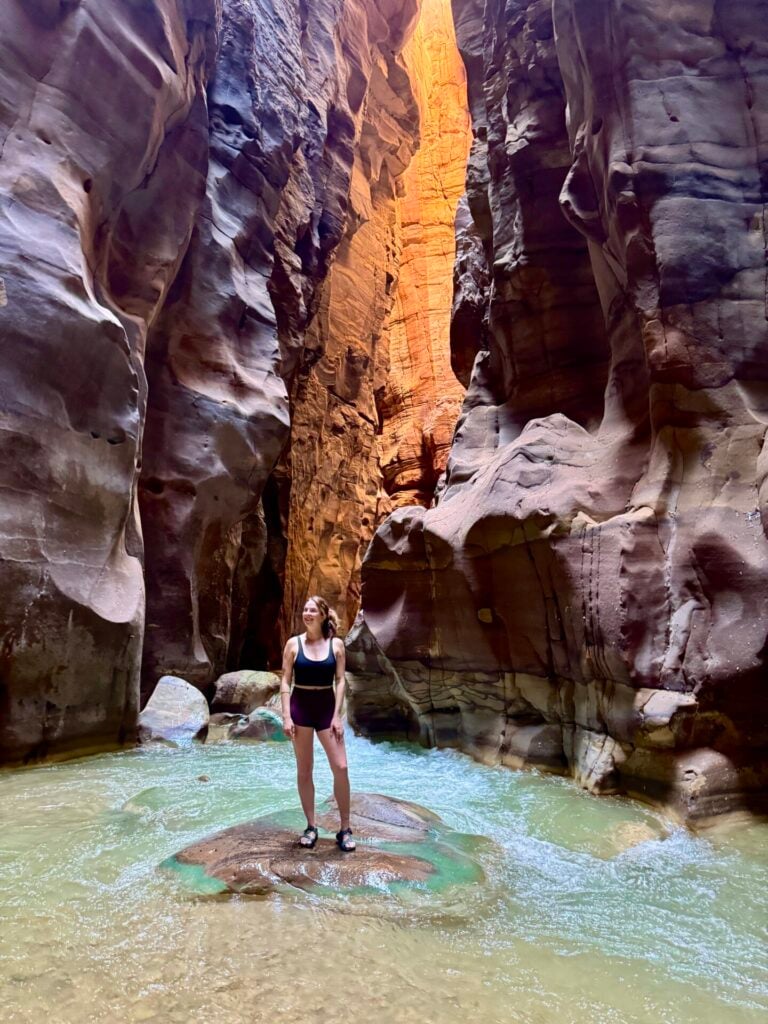
Head out by 8-9am this morning and drive just 30min down the eastern shore of the Dead Sea to the Mujib Adventure Centre for Jordan’s most delightful DIY adventure: climbing, splashing, and floating your way upstream through the towering canyon walls of Wadi Mujib to a hidden waterfall. It’s like a hike meets natural outdoor water park, and an absolute highlight for adventurous travellers!
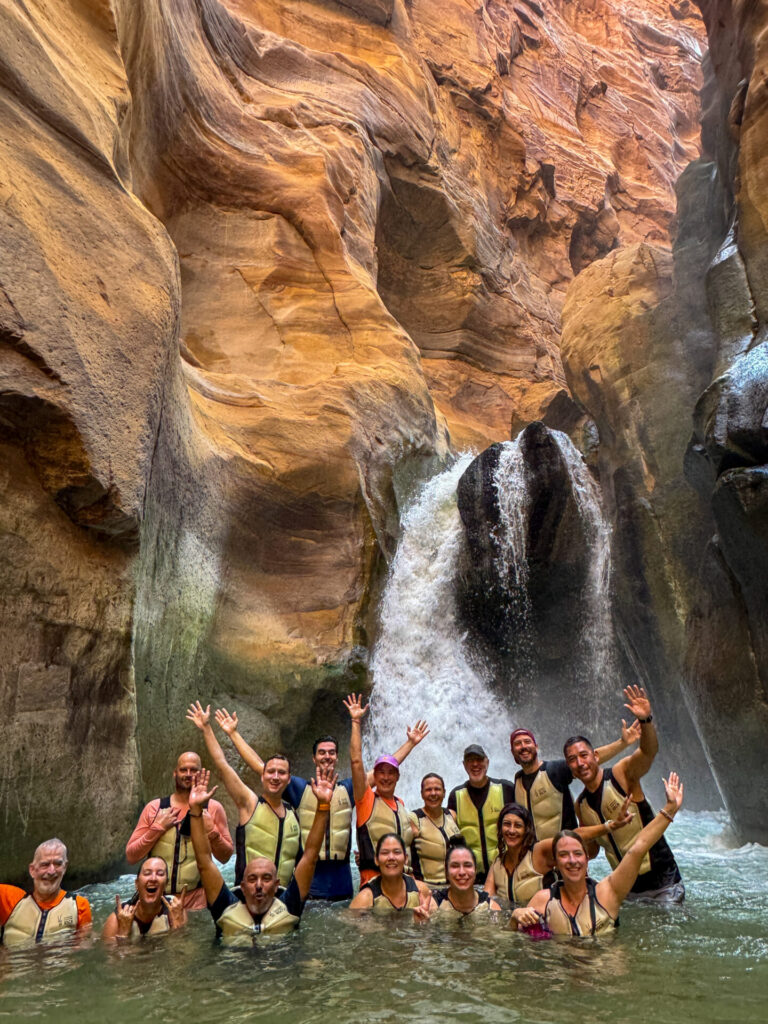
As of 2026, the Siq Trail is the only open route, and fortunately, it’s also the most famous and still realistic for anyone with a moderate level of fitness! The route follows the river directly through the canyon, with sections of easy scrambling, ladder-aided ascents, and plenty of splashing. It takes about 1hr to reach the waterfall at the end, but allow 2.5–3hrs for the entire experience, including gearing up and showering afterwards.
Entry costs 23JOD ($32USD) and includes a mandatory life jacket, but absolutely no guide or tour group necessary! Make sure to bring water shoes and a dry bag (also available to rent or purchase on-site if needed). *Note that Wadi Mujib is only accessible during the dry season from the start of April to the end of October.
midday: Dead Sea Coral Reefs
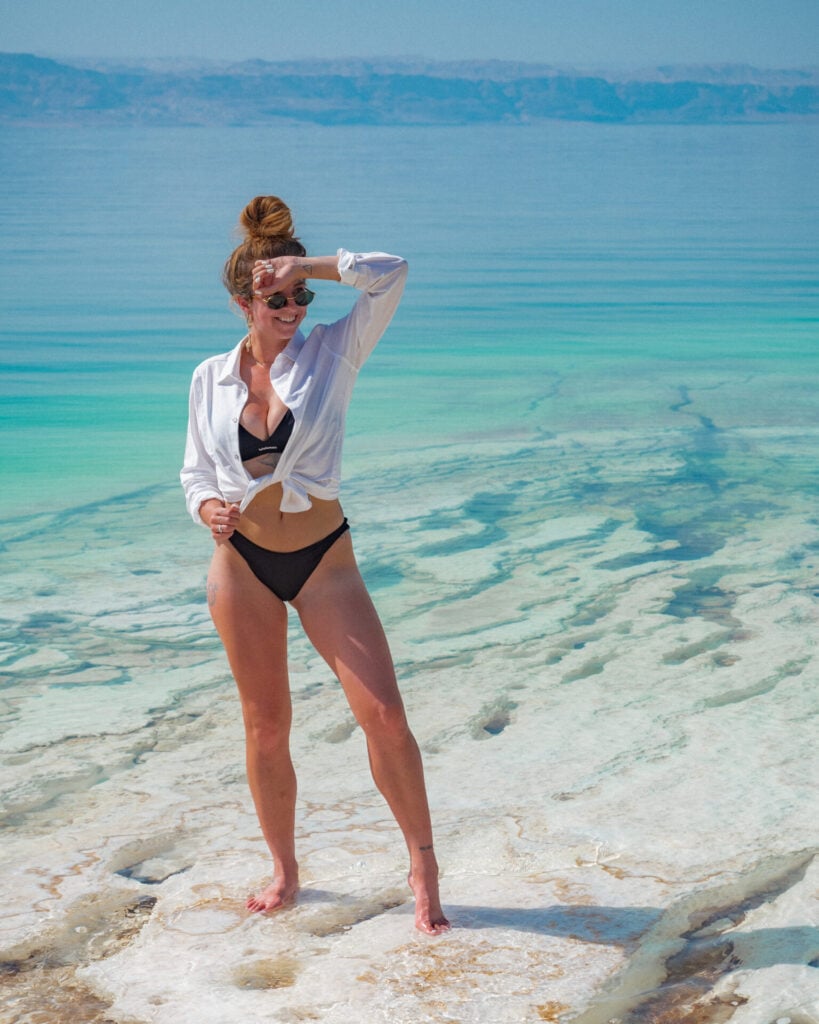
Just a few minutes away from the Mujib Adventure Centre, make a quick stop at one of the most unique (and underrated) spots along the Dead Sea!
Known as the “coral reefs”, this free-access beach is completely different from the sandy resort shoreline up north— here, the coast of the Dead Sea is lined with intricate salt formations that resemble frozen white coral. Large crystals jut out of the water and, beneath the surface, powder-fine white salt swirls around your feet, creating a totally surreal, almost ethereal landscape.


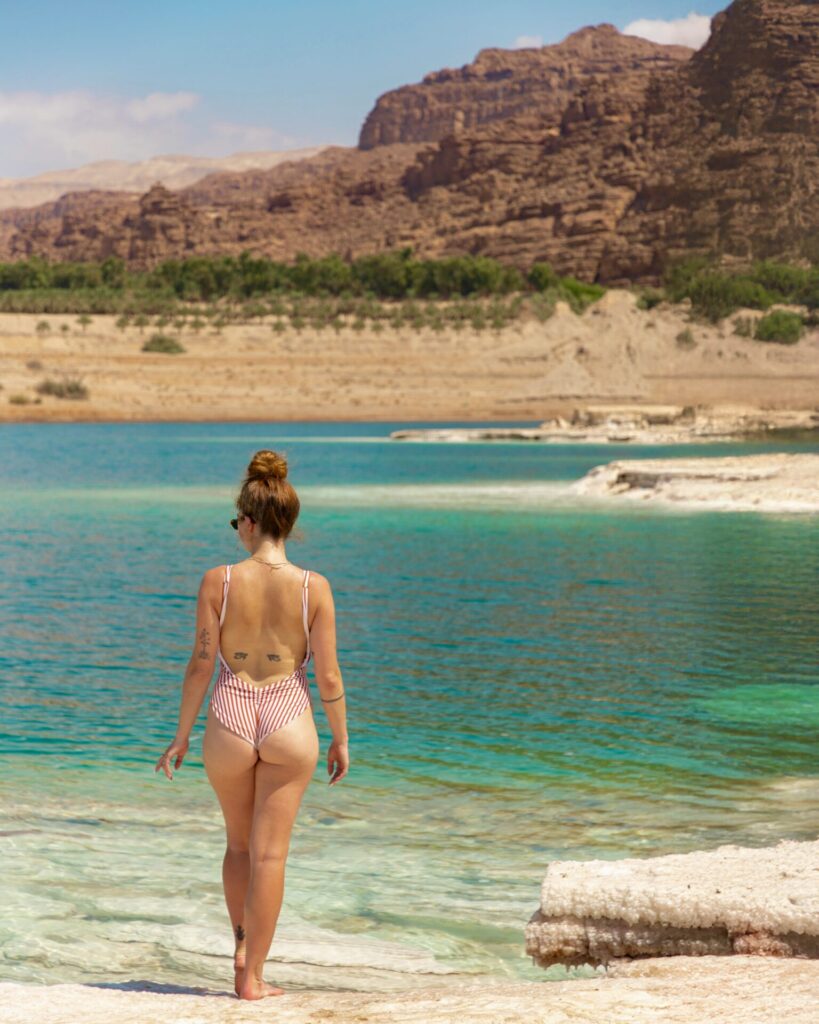
It’s also one of the best places to take photos in the Dead Sea without other people— 2 of the 3 times we’ve been here, we were entirely alone for over an hour!
There are sometimes locals selling very basic outdoor showers near the parking area for a few dinar, but it’s worth bringing some water with you just in case. If you do get in for a swim, you will 100% need to rinse the itchy salt off before getting back in the car for a long drive!
PM: Kerak Castle & King’s Highway
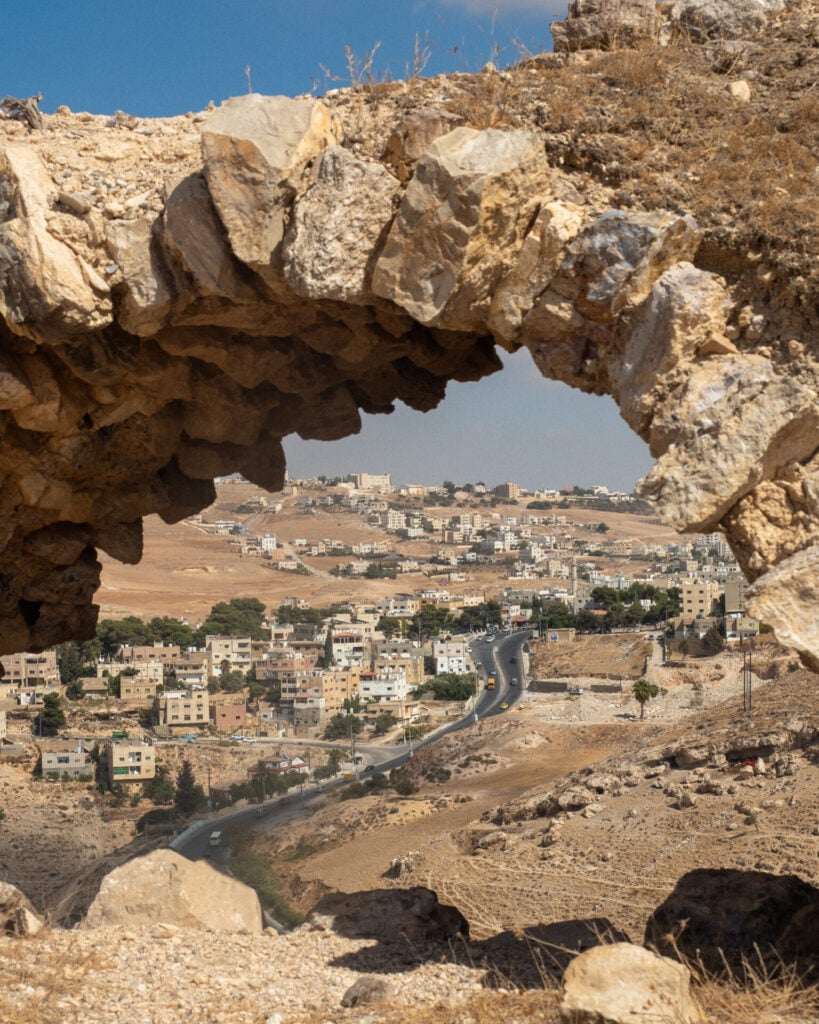
From Wadi Mujib and the “coral reefs”, begin the drive south towards Petra. The most direct route takes just under 3hrs, but we HIGHLY recommend detouring onto the more scenic King’s Highway (Route 35) to enjoy the views and gorgeous Kerak Castle!
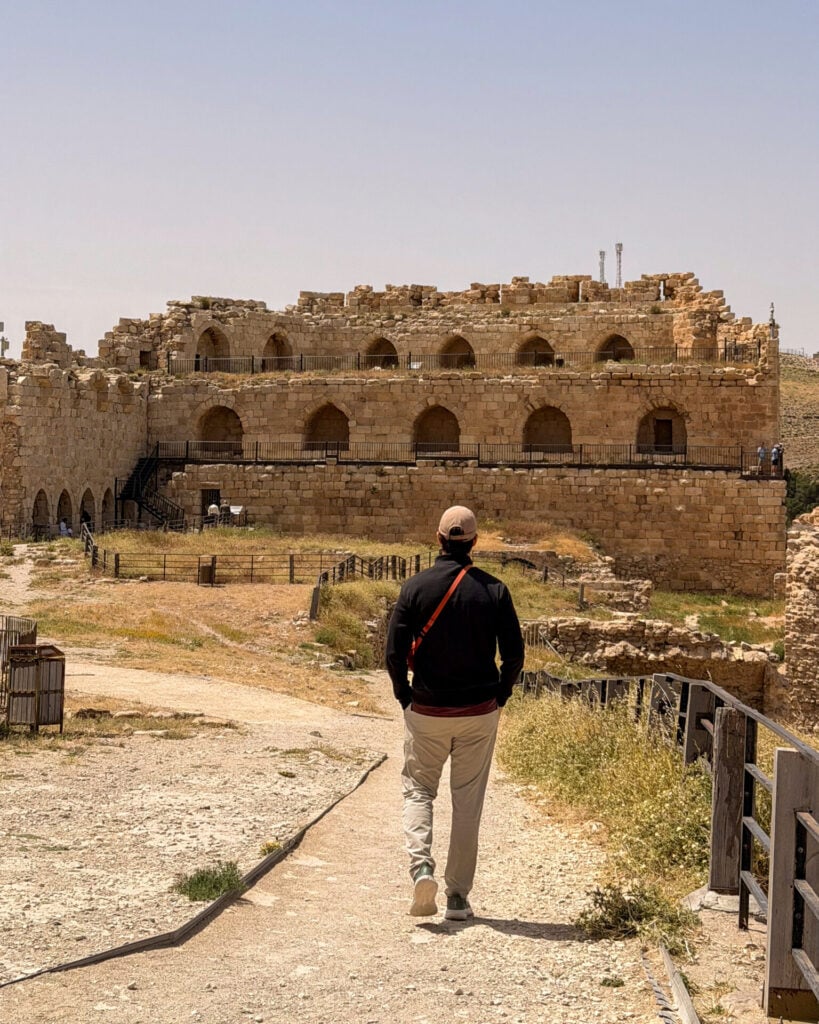
Located about 1hr from Wadi Mujib, Kerak Castle is a 12th-century Crusader castle dramatically perched above the surrounding valley. Its maze of stone corridors, underground halls, and sweeping views make it one of the most atmospheric historical sites in Jordan, and easily our favourite stop along this scenic stretch of road.
Allow 30–60min to explore (entry is included with the Jordan Pass), and then grab lunch in town before continuing on. It’s a further 2.5hr drive to Little Petra, so plan to depart Kerak by 3pm.
Night 5: Little Petra
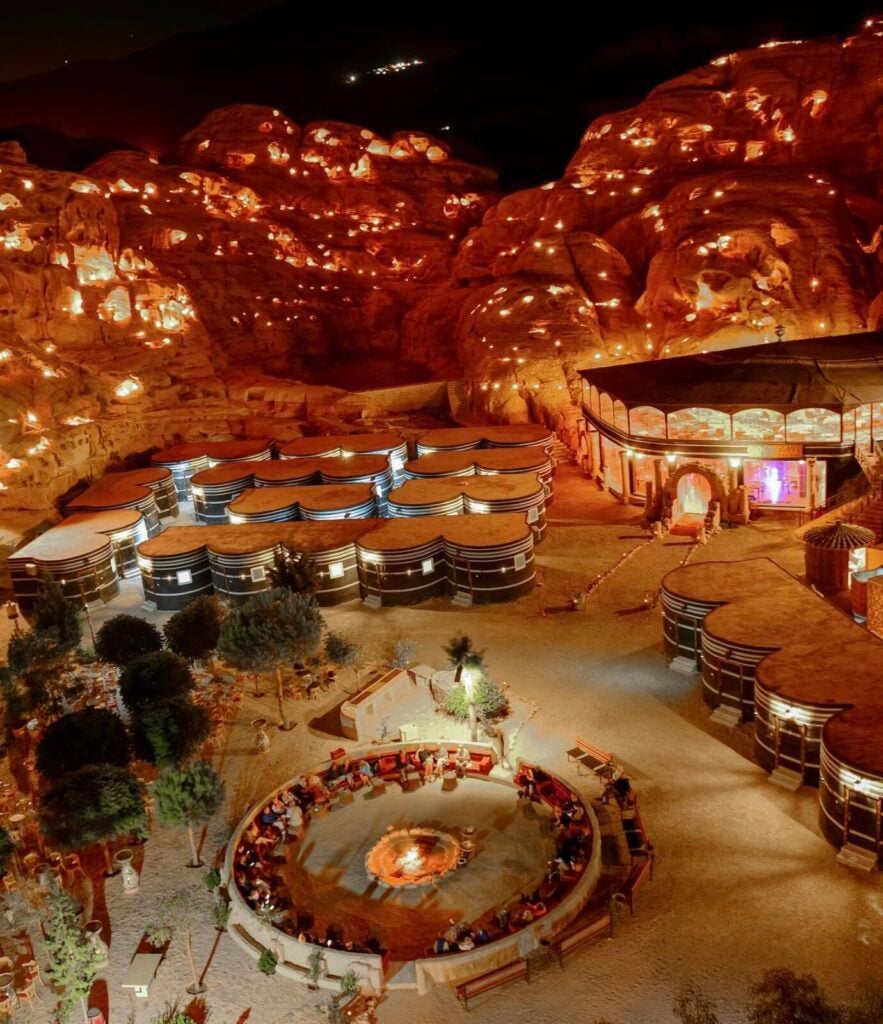
To set yourself up for an epic day of hiking the Backdoor Trail into Petra tomorrow, plan to spend 1 night in Little Petra. There are several camps in the area, but we always stay at Little Petra Bedouin Camp when running our adventure tours!
The setting is absolutely magical, the dinner and breakfast spreads are fantastic, and the owner Mohammed always goes above and beyond to ensure guests have the best experience. Little Petra Bedouin Camp offers a variety of room types, but we’d specifically recommend the luxury double tent— particularly in hot weather, since it has AC and an en suite bathroom.
🚗 WHERE TO PARK AT PETRA
For the purpose of this itinerary (and considering the late afternoon arrival time), I’d highly recommend driving directly to Little Petra and leaving your car parked here for the next 3 nights. On the morning of Day 8, you can catch the free shuttle (every 30min, 7am-3pm) from the Petra Visitor Centre in Wadi Musa back to Little Petra to retrieve your car and begin the drive south to Wadi Rum.
>>> You can read more about the shuttle logistics in my detailed Petra hiking post

Day 6: Little Petra to Petra (Backdoor Trail)
An ancient Nabatean city carved deep into the sandstone cliffs of southern Jordan, Petra is unquestionably one of the country’s most spectacular highlights. But few venture beyond the Treasury, and even those who do rarely allocate more than a half-day to explore what is (in my opinion) the most spectacular of all surviving Wonders of the World!


🥾 2-DAY PETRA HIKING ITINERARY
The next couple days of this Jordan itinerary closely follow my 2-day Petra hiking itinerary, specifically designed to showcase the sprawl, spectacle, and spirit of Petra— hitting all the main highlights, but also SO many kilometres of underrated trails to hidden gems and quiet viewpoints that still feel like a local secret!
Note that I’ve made a few small adaptations here to better fit into the overall itinerary (ex. staying a 2nd night in Wadi Musa so you don’t have to drive 3hrs to Wadi Rum right after a long day of hiking), but it still includes ALL the same spots I recommended in my original Petra post.
>>> Check out the full overview (and GPS tracks) directly in my Petra hiking guide
Backdoor Trail
Start early from Little Petra to begin one of the most spectacular approaches into the site, following a section of the Jordan Trail as it overlaps with the Backdoor Trail.
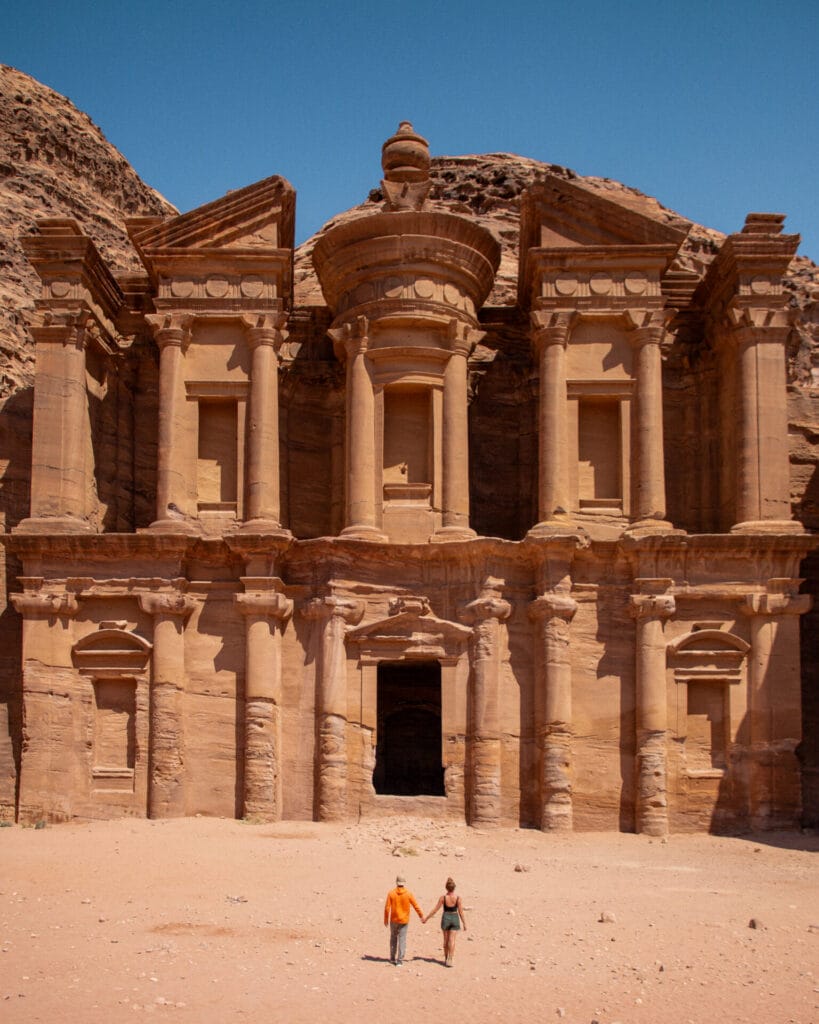
This route brings you into Petra from above, arriving first at the Monastery, one of the largest and most impressive monuments in the entire ancient city, without having to climb the usual 800+ steps from the main site!


From here, descend into central Petra via the Monastery Trail, continuing on to explore the Great Temple, wander through the Royal Tombs, and eventually make your way to the Treasury. After seeing Petra’s most iconic façade, exit through the Siq, a narrow slot canyon that leads back to the Petra Visitor Centre in Wadi Musa.
Without any shortcuts, today’s hike covers 13km with 600m of elevation gain. The distance isn’t extreme, but the combination of heat, sun exposure, and uneven terrain makes this a full and delightfully exhausting day. Most groups we’ve done this with finish around 5pm back in Wadi Musa, where you’ll have time to check into your hotel and get cleaned up (or even hammam!) before dinner.

Dinner: My Mom’s Recipe + The Cave Bar
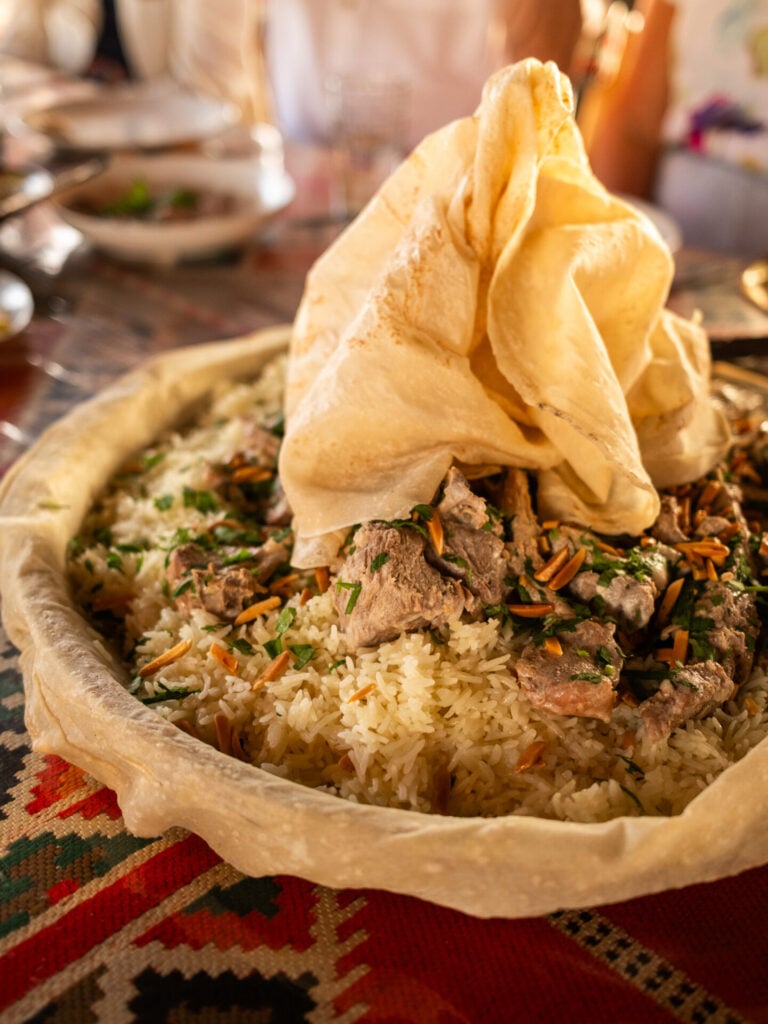
After checking into your hotel and freshening up, head to My Mom’s Recipe for dinner, our favourite local restaurant in Wadi Musa. The menu focuses on authentic Jordanian dishes, including excellent mansaf, the national dish of lamb cooked in fermented yogurt and served over rice.
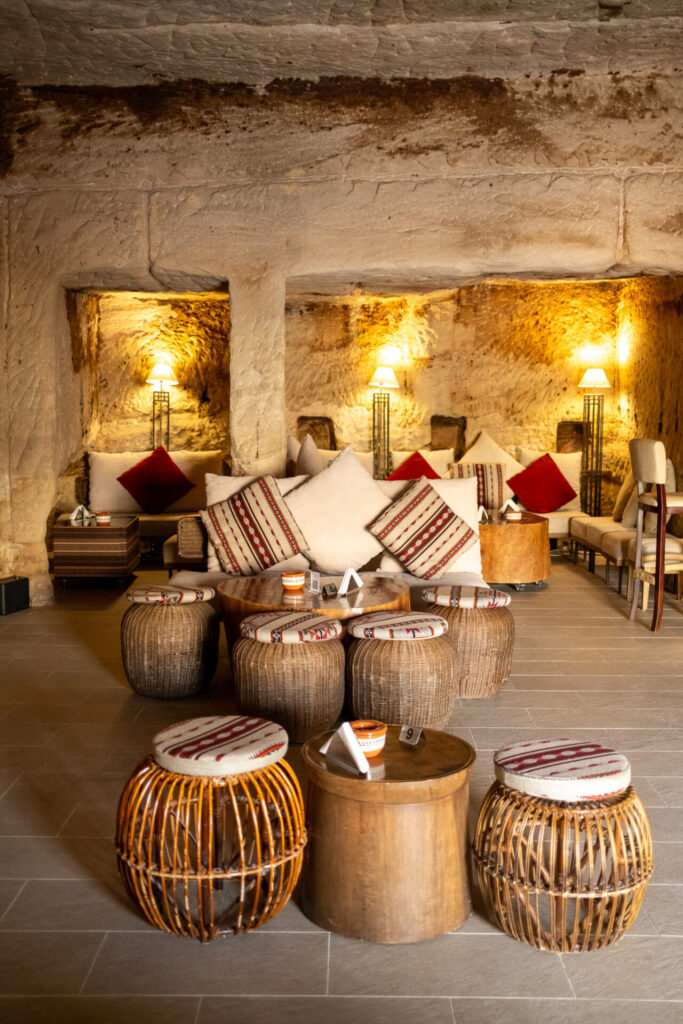
After dinner, grab a drink at The Cave Bar, set inside a 2,000-year-old Nabataean tomb just outside Petra’s main entrance. Drinks are a bit spendy by local standards ($10 beer, $15 cocktail), but the setting is SO unique that it’s absolutely worth it after a long day of hiking!
Night 6: Wadi Musa
I’d highly recommend spending the next 2 nights in Wadi Musa at one of the hotels within walking distance of the Petra Visitor Centre and main entrance:
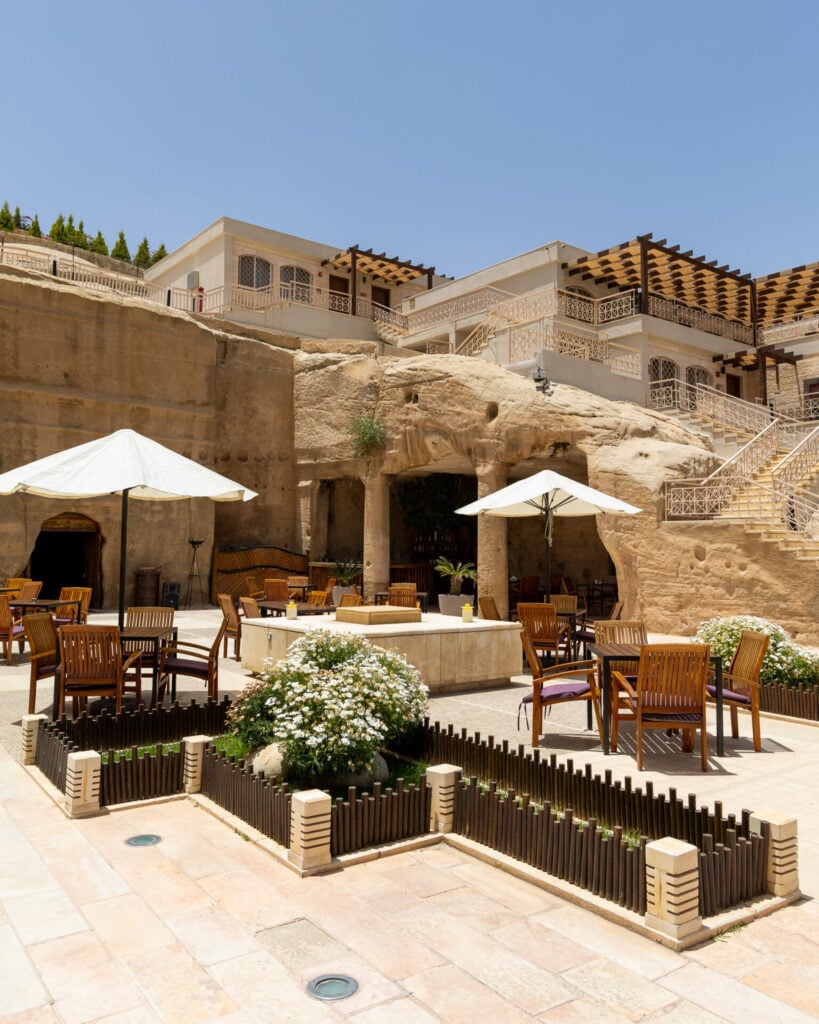
- Silk Road Hotel: located a 5min walk from the main entrance, Silk Road offers convenient access to restaurants in Wadi Musa and to the site itself. Rooms are simple and comfortable, but the absolute best thing about this hotel is the budget-friendly hammam located in the main building— for about 25JOD ($35USD), you can enjoy a traditional bathing house experience (same-gender steam room + soapy massage), which is truly amazing after a day of dusty hiking in Petra!
- Petra Guest House: The absolute closest accommodation to Petra , this 4-star hotel strikes a great balance between comfort and value: more upscale than Silk Road, but without the hefty price tag of the Mövenpick. Even if you don’t stay here, make sure to grab a drink at the Cave Bar, built right into a 1st century Nabatean cave home!
- Mövenpick: If your budget can handle it, this is by far the most luxurious hotel in Wadi Musa, conveniently located just in front of the Petra Visitor Centre and main entrance. It’s bougie to the max, but truly beautiful!
Day 7: Petra (Al Madras Trail + Petra by Night)
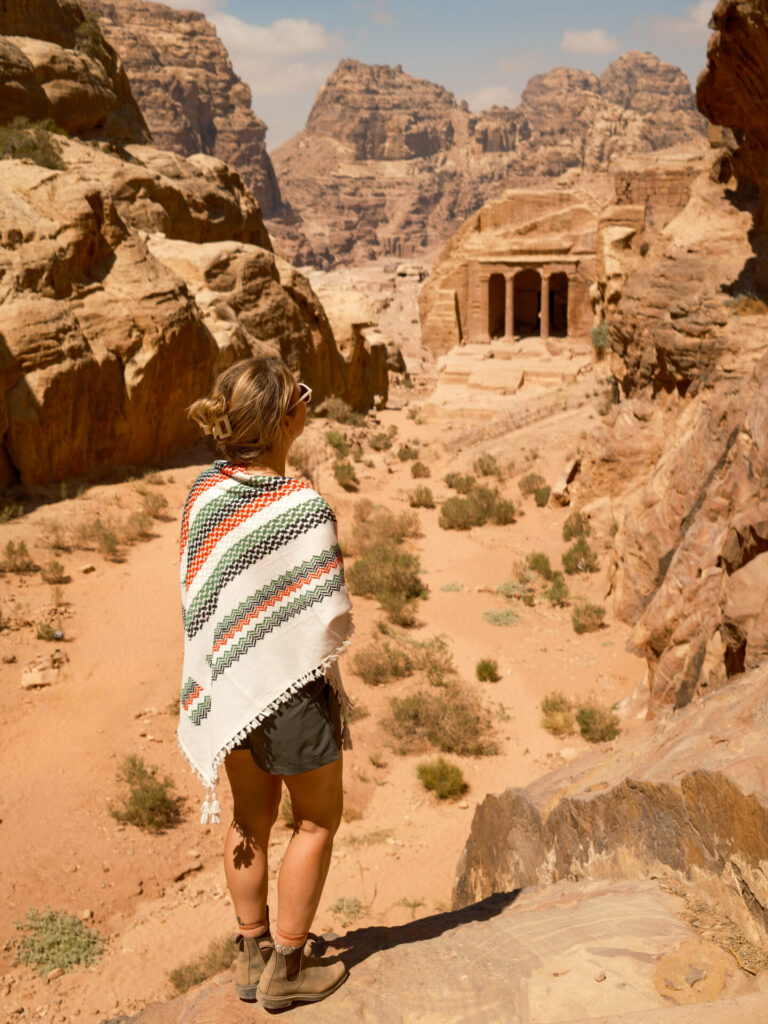
Having covered so many of the standard highlights (AND the incredible Backdoor Trail) on Day 1, this 2nd day in Petra is all about exploring corners of the site that feel like a well-kept secret. You can see full details of the route (including detailed maps) in my 2-day Petra hiking itinerary, but I’ll give you a general run-down here!


AM: Day 2 Petra hike
Enter Petra again in the morning (this time from the Petra Visitor Centre and main entrance in Wadi Musa) and branch quickly off onto the Al Madras Trail. This incredibly quiet route climbs ancient Nabataean stairs and traverses wild Wadi al-Qantarah to connect to the High Place of Sacrifice, one of the most spectacular viewpoints in the entire site.

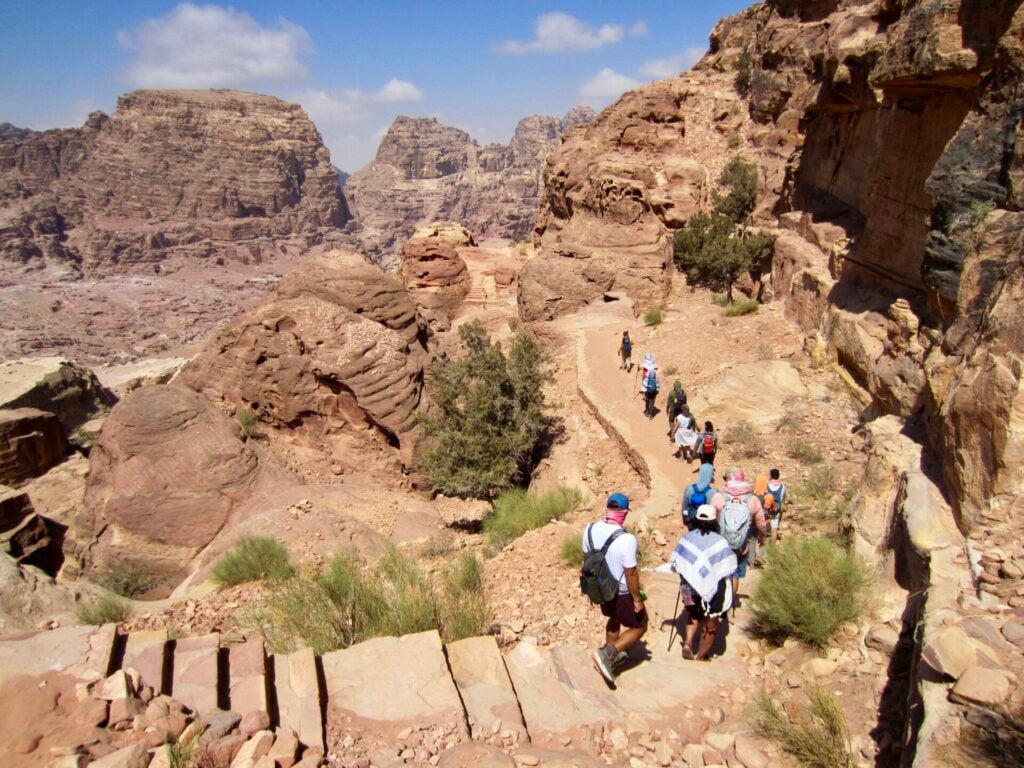
From the High Place, there are several different descent options available, depending on your energy. I’d recommend at least following the first half of the Wadi Farasa Trail, passing a series of rock-cut tombs and monuments that see almost no visitors! From the Lion Fountain and lush Garden Hall to the Roman Soldier’s Tomb and Renaissance Tomb, this is one of the most underrated areas of Petra and offers a completely different perspective on the site.
Eventually, reconnect with the Main Trail and exit towards the Treasury, making a quick stop to check out one of the newly re-opened high viewpoints.
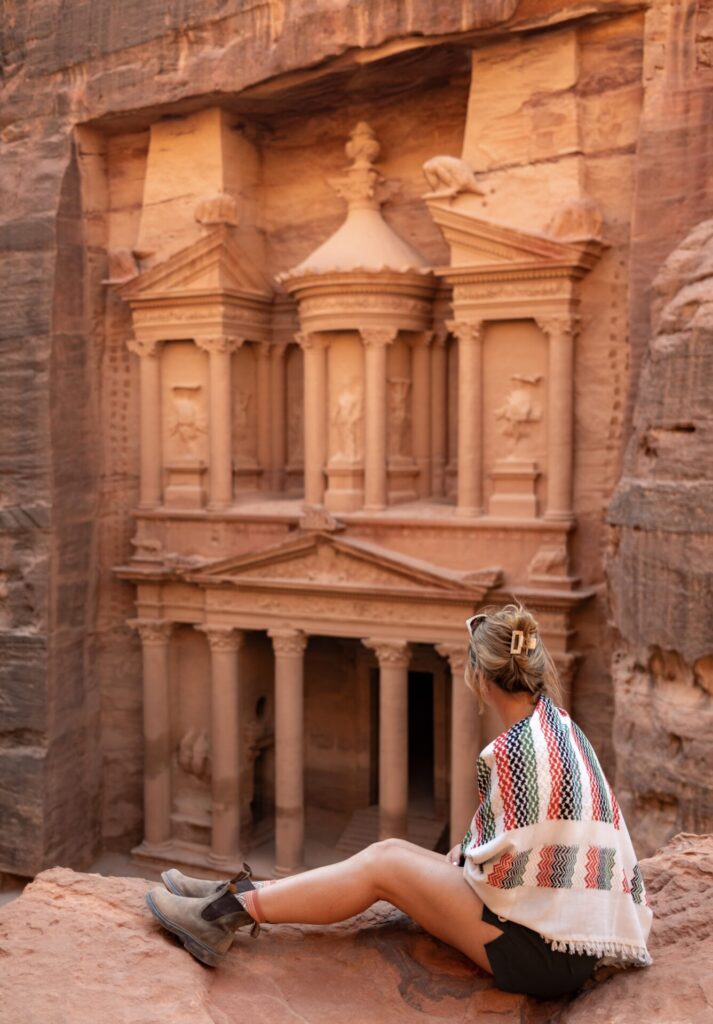
From the Treasury, simply follow the winding Siq slot canyon back to Wadi Musa. Today’s hike ranges from 7-10km with 450m of elevation gain; check out shortcut options in my Petra hiking post. Day 2 is notably less intense than Day 1 in Petra, so expect to be back in town by early afternoon with enough steam for Petra by Night after dinner!

Dinner: Sana’a Yemen Restaurant
For something a little different, this Yemeni restaurant is a short walk up the hill into Wadi Musa (less than 10min from the Visitor Centre), serving up delicious and authentic dishes from Yemen. We totally fell in love with the salta and the fresh bread here!
Of course, you can also go back to My Mom’s Recipe and order something different than last night— this remains our favourite Jordanian restaurant in town and there’s plenty of new flavours to explore!
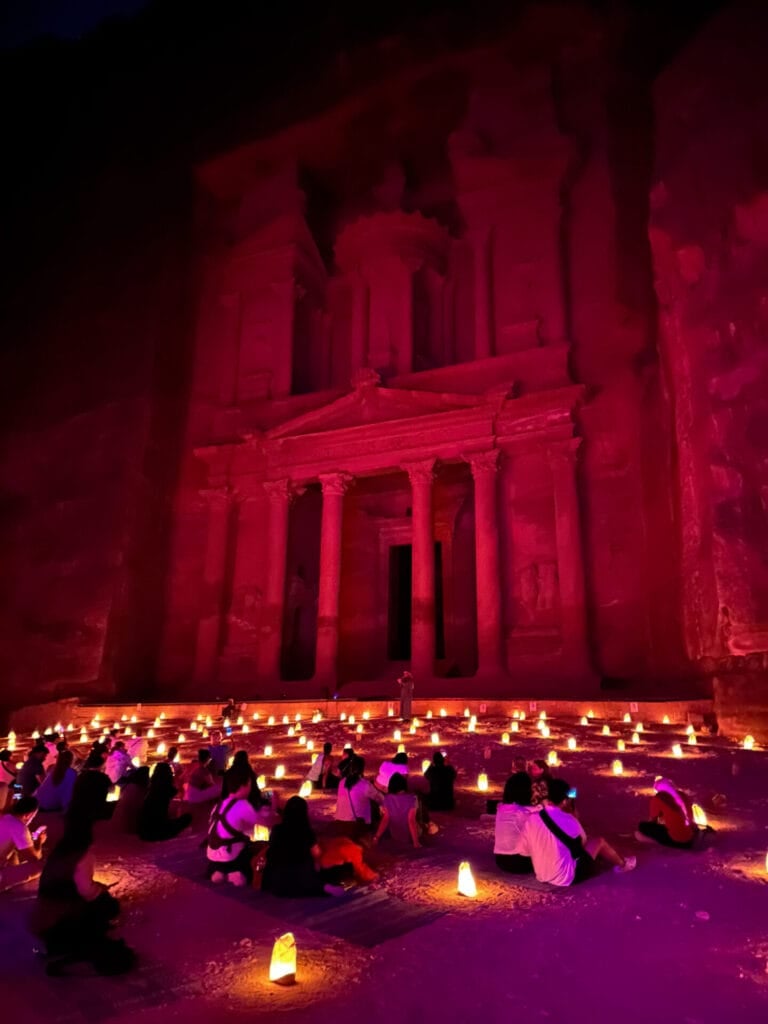
PM: Petra by Night
In the evening, return to Petra for a magical experience bringing the Treasury to life under the glow of 1,500 candles. Petra By Night is an incredibly unique way to experience this ancient wonder, beginning with a candlelit walk through the Siq slot canyon and culminating a live music performance at the Treasury.
The event runs every night (except Fri/Sat) from 8.30-10.30pm. Tickets are 17JOD ($24USD), not covered by the Jordan Pass or standard Petra Tickets, and can be purchased night-of at the Visitor Centre. Online booking is coming soon!
People always want to know if we think Petra by Night is worth it, but however much you enjoy the performance (which does vary seasonally, with some better than others), it’s amazing even to just SEE the Treasury under candlelight. So we say go for it! It’s about 3km return from the Petra Visitor Centre to the Treasury, or you can catch a golf cart transfer for 15JOD one-way or 25JOD return.
Night 7: Wadi Musa
Spend a 2nd night in Wadi Musa before driving south to Wadi Rum tomorrow! See Night 6 above for my recommendations on where to stay in Wadi Musa or check out my detailed Petra hiking guide.
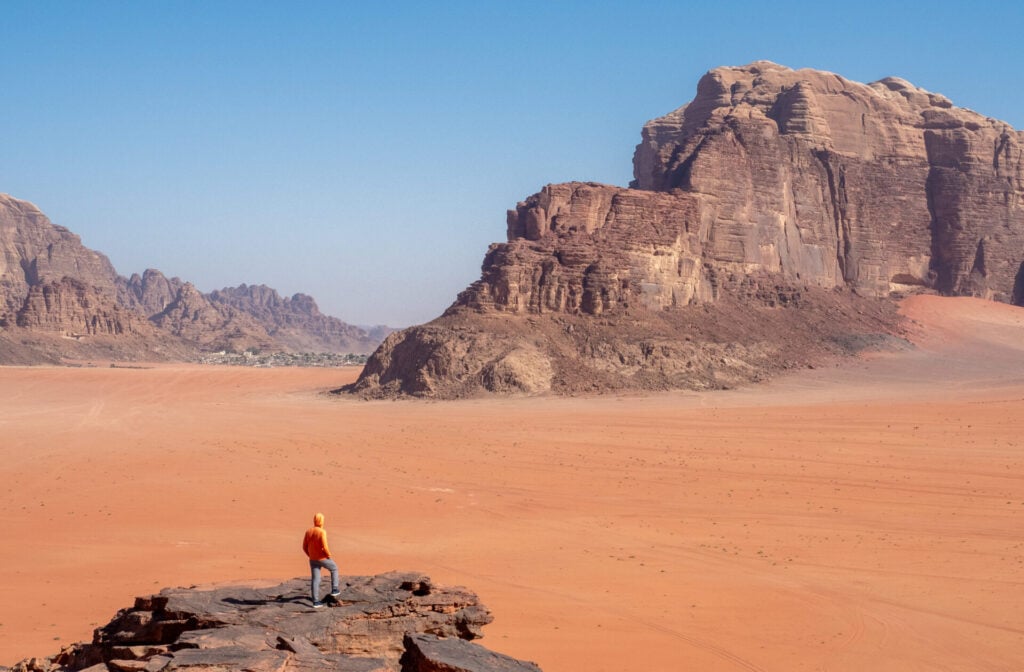
Day 8: drive to Wadi Rum + cave camping
After two incredible days exploring Petra, it’s time to head south into the otherworldly desert landscapes of Wadi Rum. With vast red dunes, towering sandstone cliffs, and a deep-rooted Bedouin culture, this Martian desert is easily one of the most spectacular destinations in Jordan— and somewhere that deserves several unhurried days on your itinerary!
midday: drive south to Wadi Rum
If you parked your car at Little Petra on Day 5 as recommended above, start your day by catching the free shuttle (every 30min, 7am-3pm) from the Petra Visitor Centre back to Little Petra to retrieve your car.
From Little Petra , it’s about a 2hr drive south to the Wadi Rum Visitor Centre. We’d recommend leaving Wadi Musa around midday and aiming to arrive by 3pm— this gives you plenty of time to grab lunch before hitting the road, while still arriving in the desert with enough daylight to enjoy the scenery before sunset!
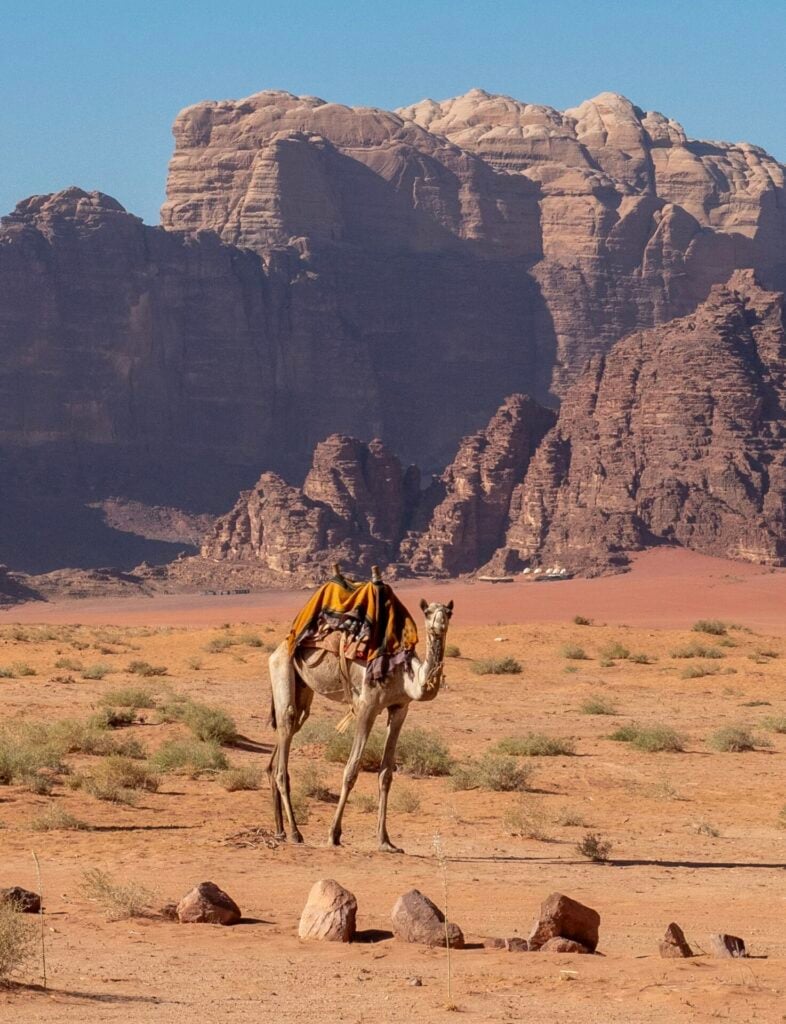
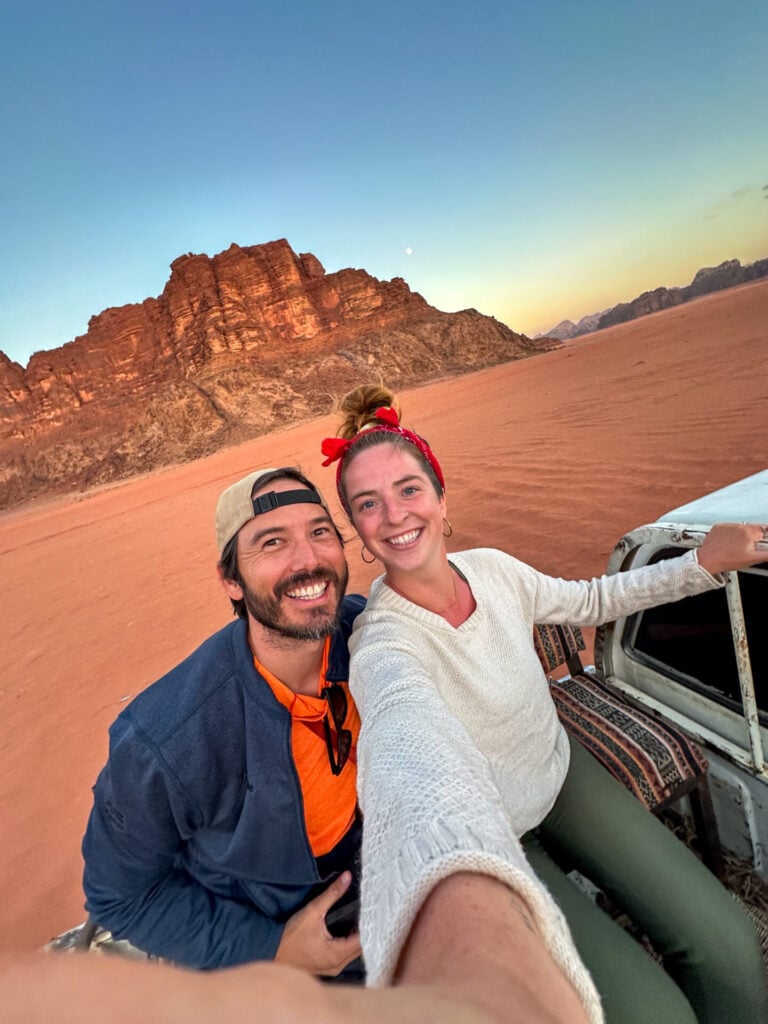
PM: transfer to Wadi Rum Protected Area
At the Wadi Rum Visitor Centre, camp staff will meet you to assist with registration and direct you to a designated parking area before transferring you into the protected area. This 4WD transfer is mandatory and included with your stay at most camps (certainly with both of the camps I recommend below).
And the transfer itself is a huge part of the experience! In the back of a well-worn Toyota pickup with open-air bench seating, speed through the sand for about 30min as towering rock formations rise around you, travelling deeper into this wild red desert towards camp.
>>> Read more: Wadi Rum adventure guide: how to plan an epic trip to Jordan’s red desert


Night 8: Wadi Rum Cave Camping
For a truly unique and authentic introduction to Wadi Rum, spend your first night in a Bedouin cave— easily one of the most memorable travel experiences we’ve EVER had!
For generations, nomadic Bedouin families have used natural caves as shelter while moving across the desert, and Wadi Rum Cave Camping offers a rare glimpse into that traditional way of life. The evening unfolds around the fire with Bedouin tea and a traditional zarb (an underground barbecue cooked beneath the sand), before settling into a comfortable bed in your private cave under an impossibly star-filled sky.
The experience is more upgraded than you’d imagine for “camping”, but it’s super special and guaranteed to be a trip highlight! A night in the caves starts at 55JOD per person (about $170USD for 2 people), with all transport and meals included.
>>> Not keen on the cave camping experience? Spend all 3 of your nights in Wadi Rum at the luxurious (and still very authentic!) Arabian Nights Bedouin Camp. See more details under Night 9 below.
Day 9: Wadi Rum (scramble + jeep tour)
Your first full day in Wadi Rum is all about getting out into the landscape, combining an adventurous mountain scramble with a classic sunset jeep tour through the desert. Both activities can be arranged directly through your camp (we HIGHLY recommend Arabian Nights)!
If you spent your first night at Wadi Rum Cave Camping, the owner Mohammad will coordinate directly with Shaker and the Arabian Nights team to transfer you between camps. The local community here is incredibly close-knit, so as long as both camps know your plans, the transfer is super smooth (and we’ve done this personally).
AM: Burdah Bridge scramble
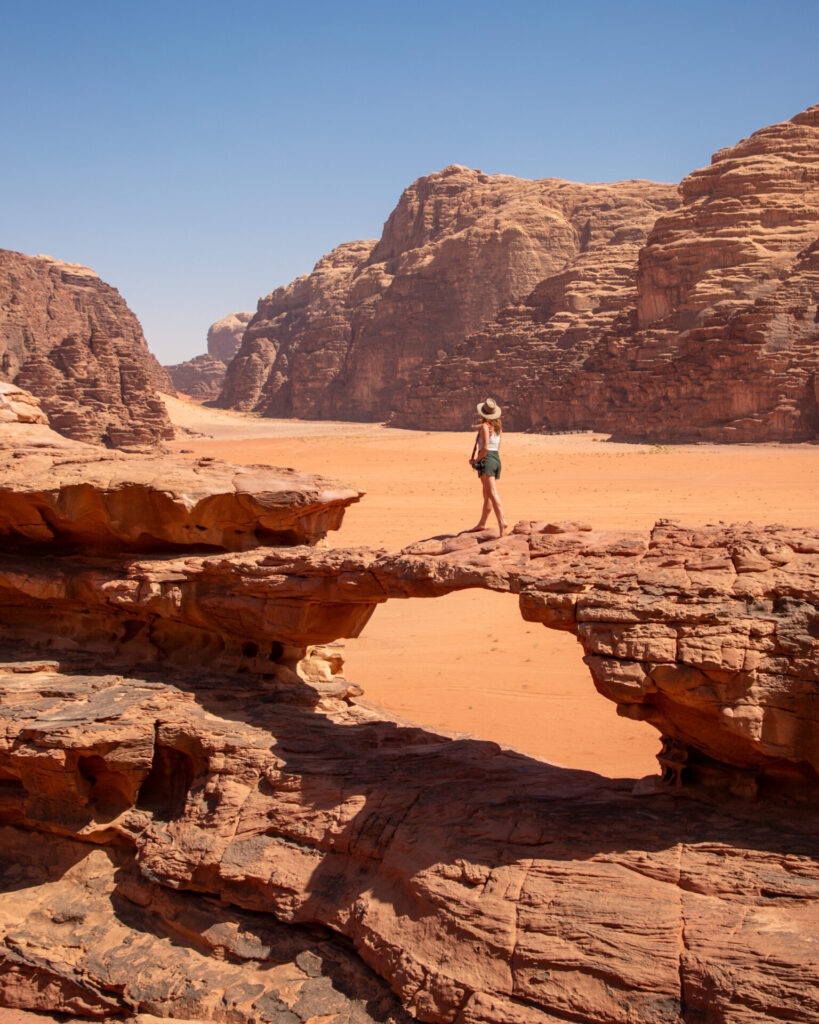
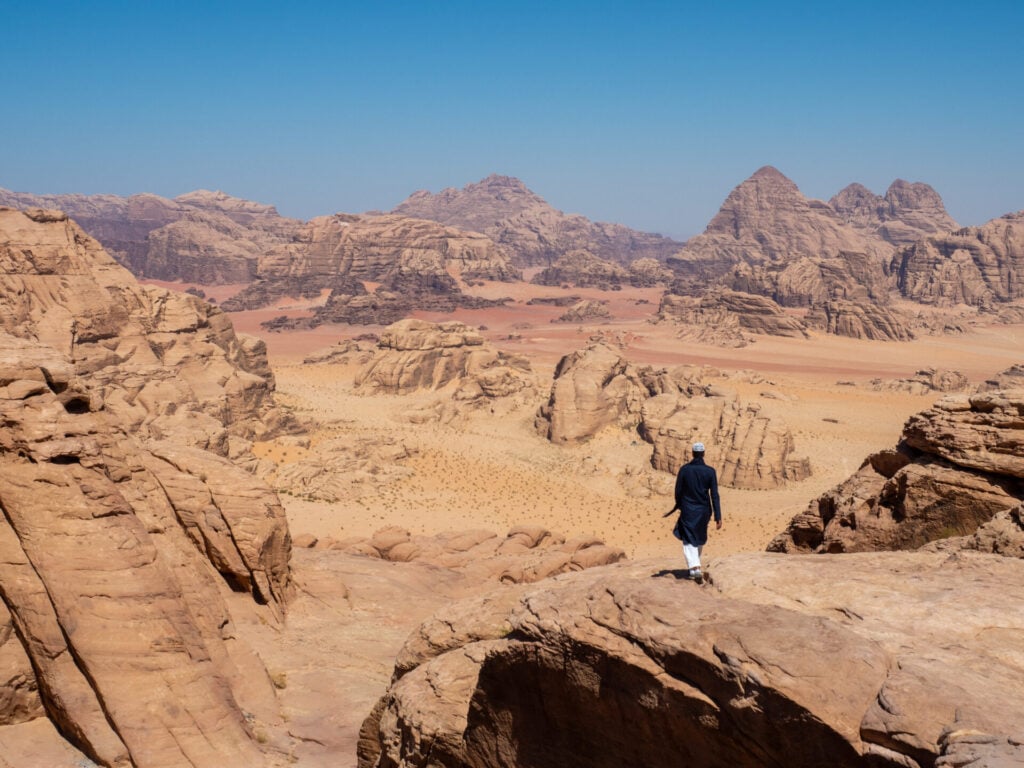
Wadi Rum’s sandstone mountains rise dramatically from the desert floor, with many peaks reaching 1,200–1,700m, and a number of summits, arches, and viewpoints are accessible via half-day scrambling routes. Our personal favourite is the climb to Burdah Bridge, a spectacular natural rock arch perched high above the desert with absolutely insane views.
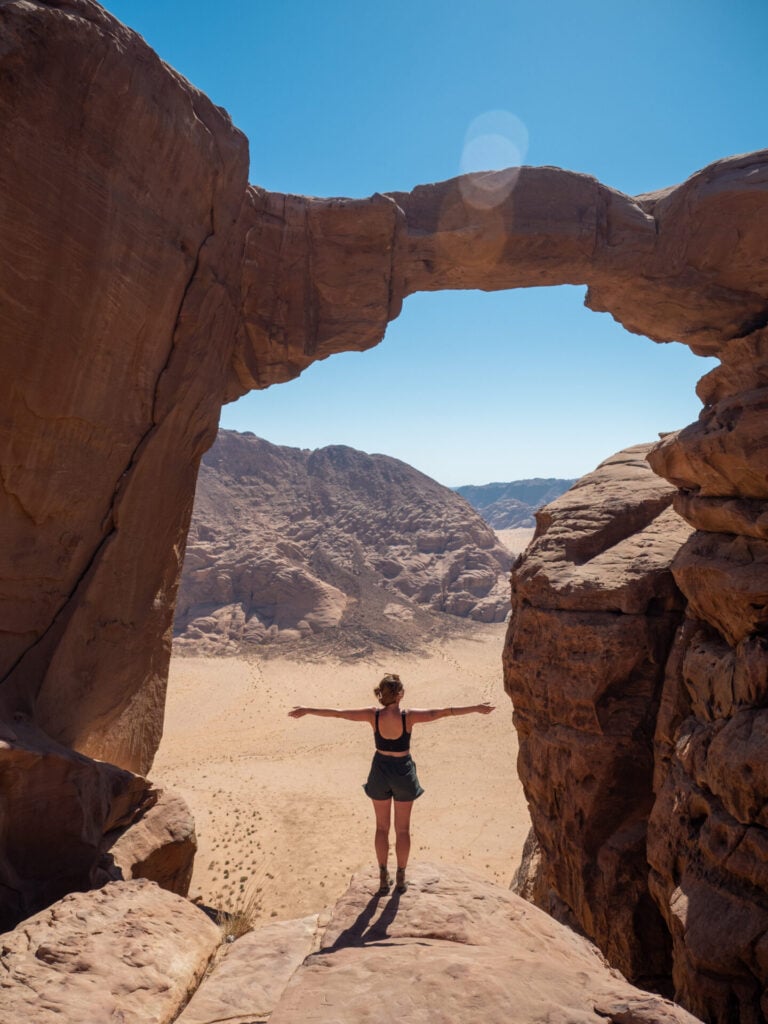
These are NOT marked trails, so the route-finding is tricky, access points are difficult to locate, and there are exposed sections (mostly Class 2, a bit of Class 3). Your camp can arrange an experienced Bedouin guide to take you out to Burdah Bridge (or any of several awesome hiking/scrambling route), usually around 9am-12pm to beat the afternoon heat.
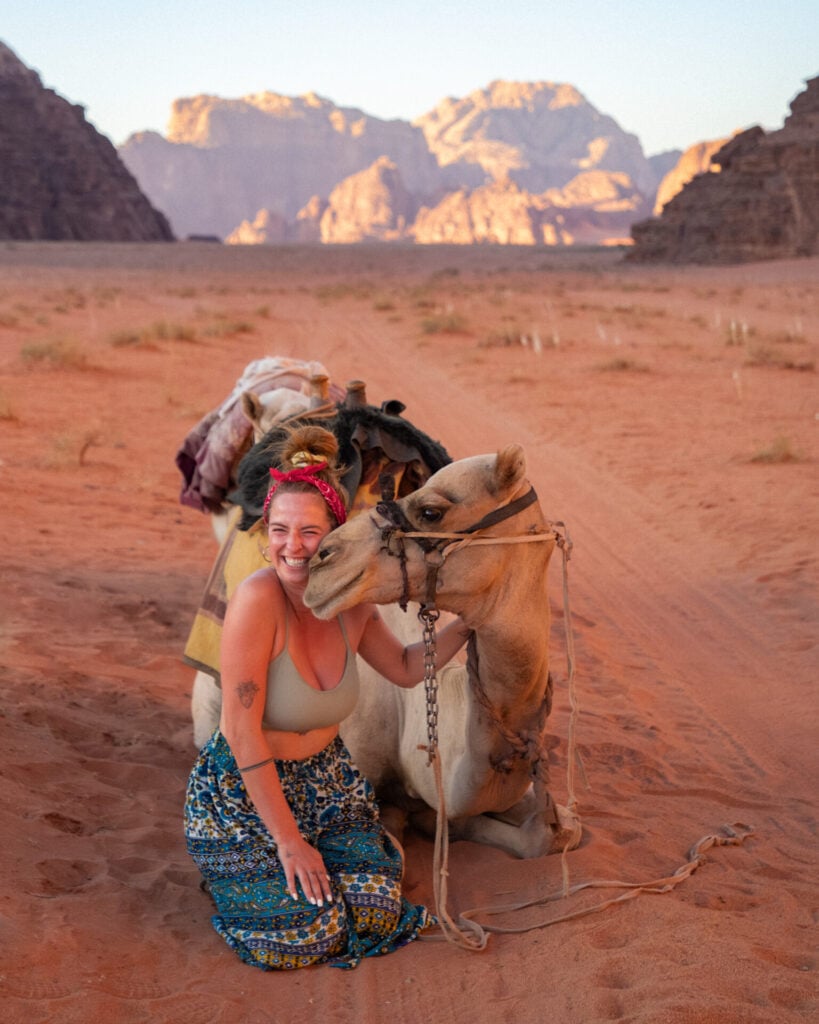
Alternative: camel ride
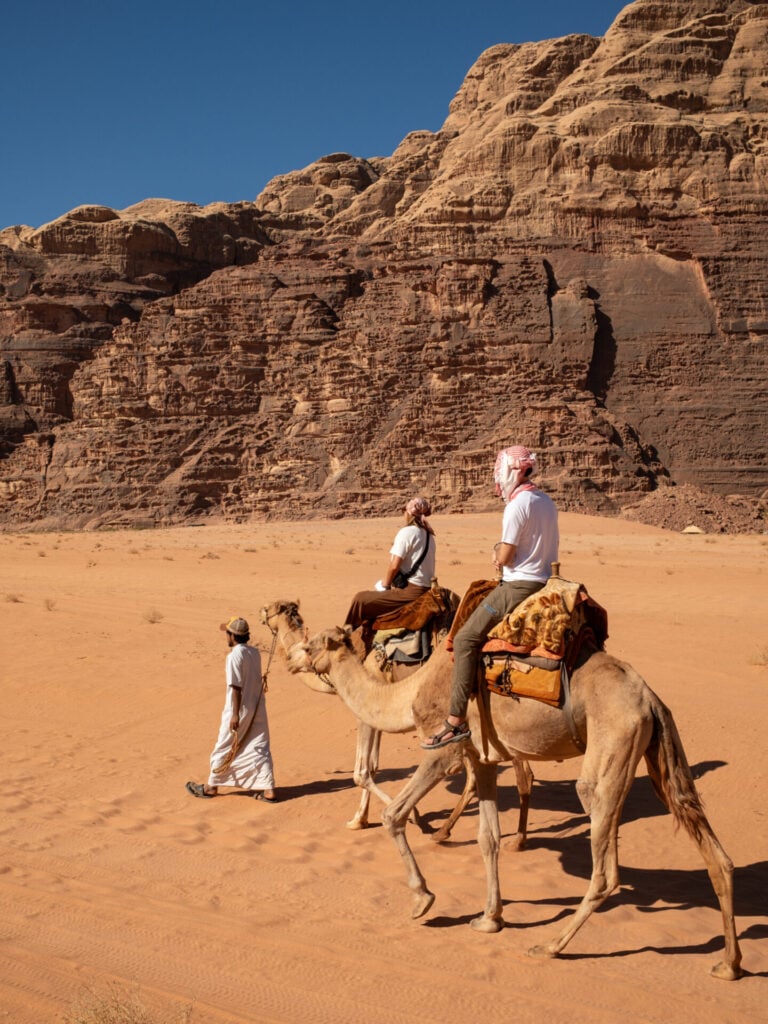
If you’re after a more relaxed morning, Wadi Rum is one of the best places in the Middle East to experience camel culture in a responsible and ethical way! Unlike heavily commercialised sites like Petra, camel tourism in Wadi Rum is shaped by the traditional relationship and deep respect between Bedouins and their animals. Camels are privately owned, live largely free-range, and are used for short, infrequent rides rather than continuous daily work.
The experience can be arranged through your camp, with a local Bedouin owner bringing the camels directly to you for a peaceful one-hour ride through the desert with incredible views of the surrounding sandstone mountains. Expect to pay 15–25 JOD per person.
PM: half-day jeep tour
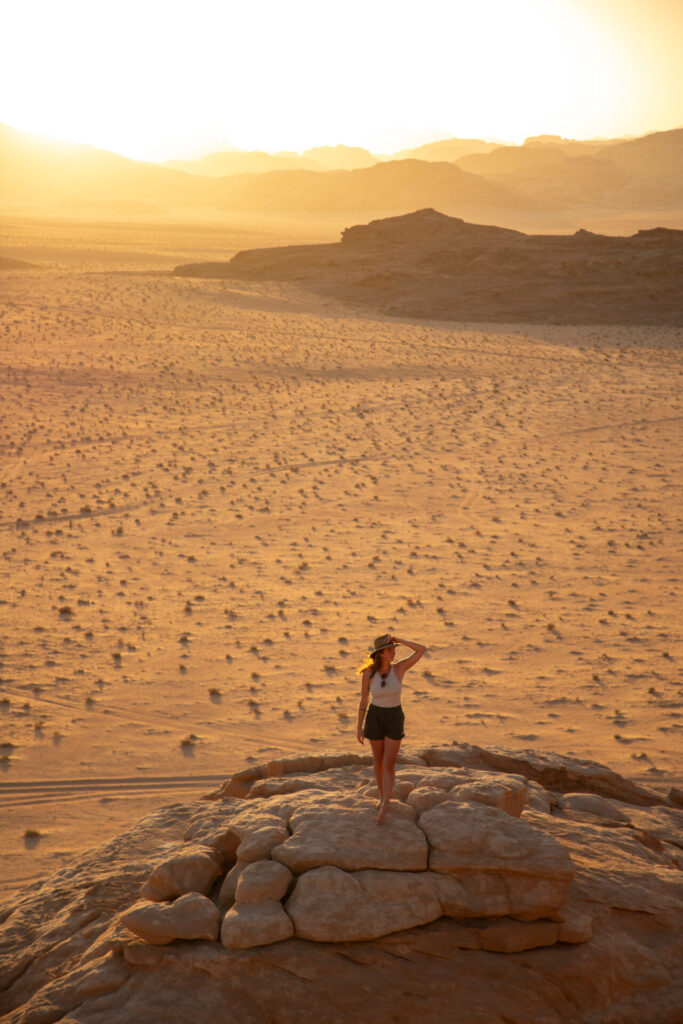
After enjoying a traditional lunch at camp, head back out into the desert in the early afternoon for a sunset jeep tour, one of the most essential Wadi Rum experiences that every visitor should have!
Tours are conducted in open-air 4WD vehicles, driving between major landmarks with time to hop out, explore, scramble, and take photos at each stop. With a mix of short walks, rock formations, cultural sites, and sweeping viewpoints, it’s a fantastic way to appreciate the diverse landscapes of Wadi Rum.
🐪 HALF VS FULL-DAY JEEP TOUR
Most camps offer half-day (4–5hrs) and full-day (8–10hrs) desert tours. Having done both, we’d recommend the half-day for most travellers, as it hits all the highlights without feeling overly long, while the full-day is better suited to photographers who want extra time at each location, a longer sunset window, and a few extra points of interest.
If you do want to experience the full-day jeep tour, we’d recommend doing the scramble and jeep tour on consecutive days of this itinerary.
>>> Want to know about other activities in Wadi Rum? We’ve spent weeks exploring this desert in search of the best things to do; check out my complete Wadi Rum adventure guide!


Night 9: Arabian Nights in Wadi Rum
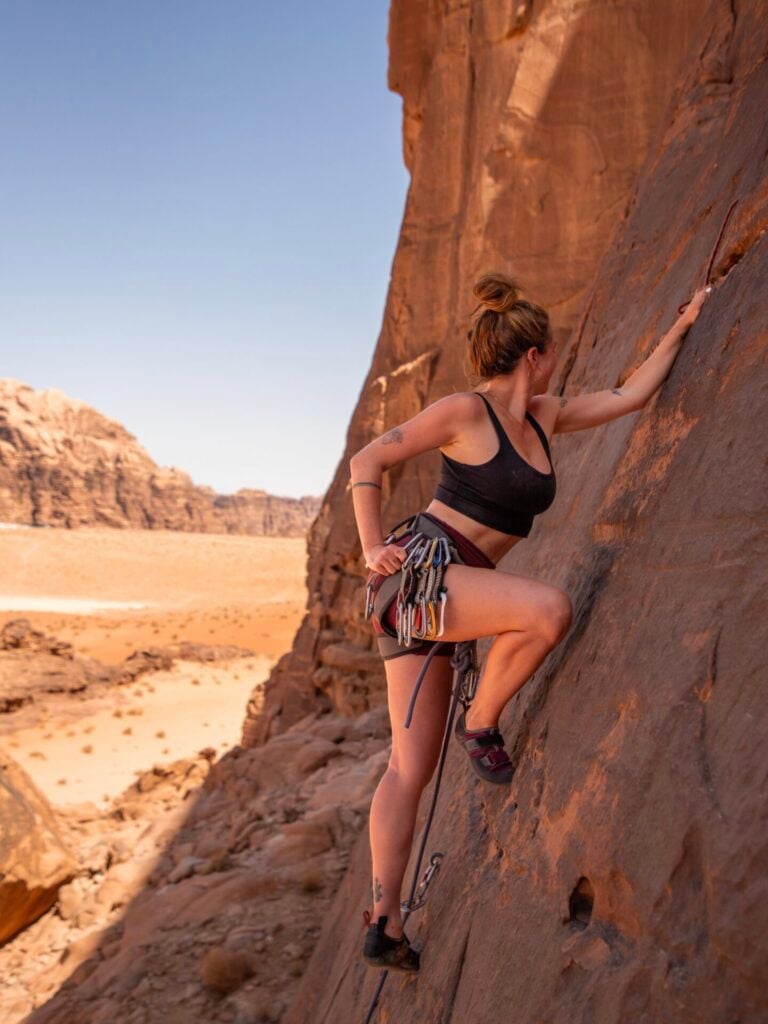
Spend the next 2 nights at our favourite Bedouin camp in Wadi Rum: Arabian Nights Camp. Owned by the friendly Shaker and supported by his wife, uncle, and cousins, Arabian Nights offers the best blend of traditional Bedouin hospitality and upgraded desert luxury in an absolutely jaw-dropping private setting against the mountains!
All stays include transportation within the Wadi Rum Protected Area (they can organise pick-up from the cave camping experience), plus delicious traditional meals! We’ve stayed in the luxury tent and traditional tent across different visits, and while both are comfortable, we’d definitely recommend upgrading to the luxury tent for a truly memorable stay.
I can’t say enough good things about Arabian Nights, which offers phenomenal value compared to other camps in Wadi Rum. The atmosphere is welcoming and intimate (we’ve experienced everything from 2-20 guests), and yet still manages to deliver an excellent program of optional activities and some of the BEST food in Jordan— especially the zarb, a traditional Bedouin barbecue cooked under the sand!
Day 10: Wadi Rum (hiking or climbing)
On your 2nd and final full-day in Wadi Rum, I’d recommend tackling a longer hiking route, going out for a day of climbing, or opting for a full-day jeep tour if you skipped it yesterday. All of these activities (and more) can be booked directly with your Bedouin camp!
Two of the best hiking options:
- Jebel Al Hash: one of the best summit hikes in Wadi Rum (considered fairly easy, with less exposure than Burdah), offering sweeping views across the desert and into Saudi Arabia
- Jebel Umm ad Dami: a mix of hiking and easy scrambling to reach the highest point in Jordan (1,854m), where the sense of scale and remoteness is incredible!
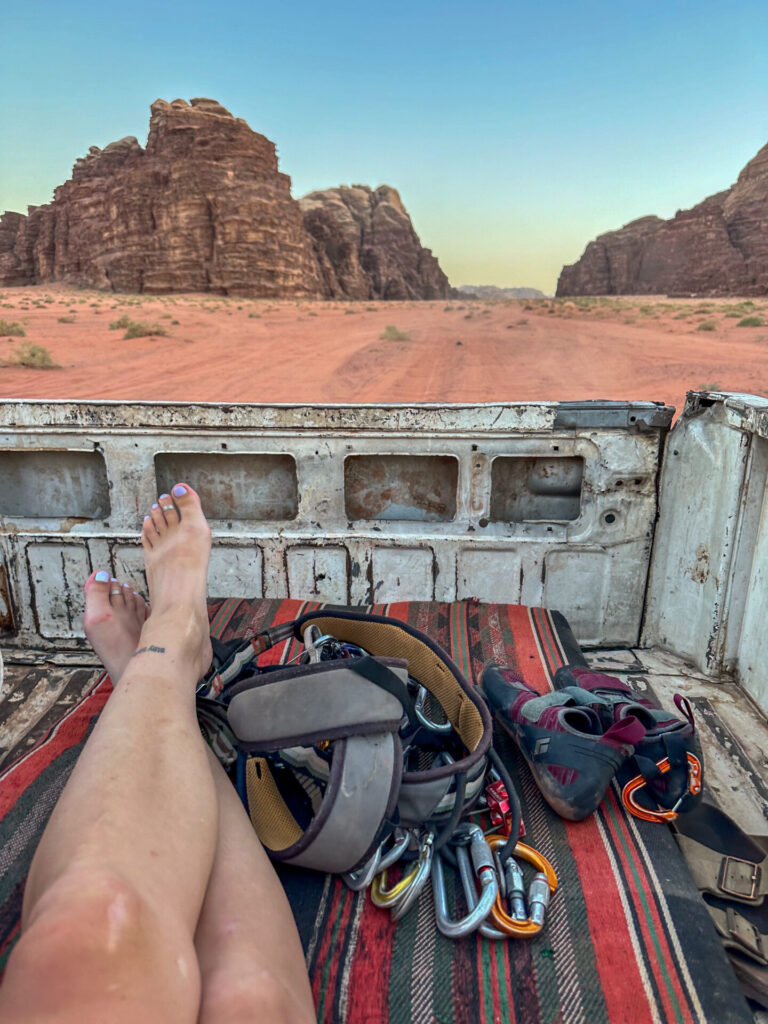
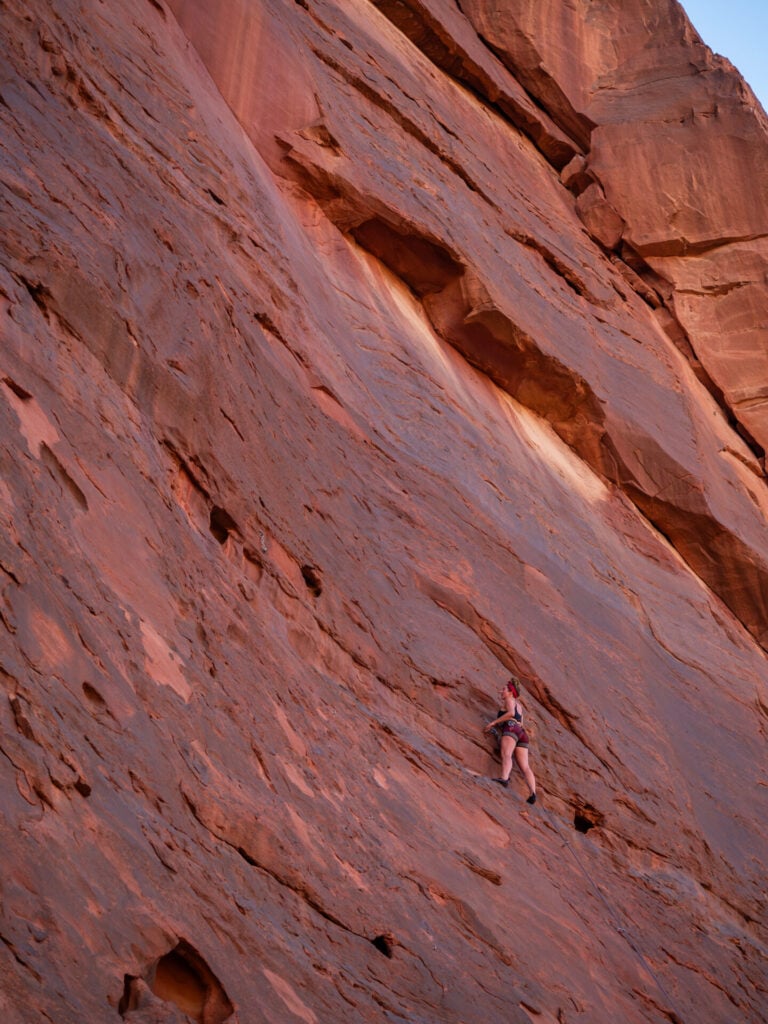
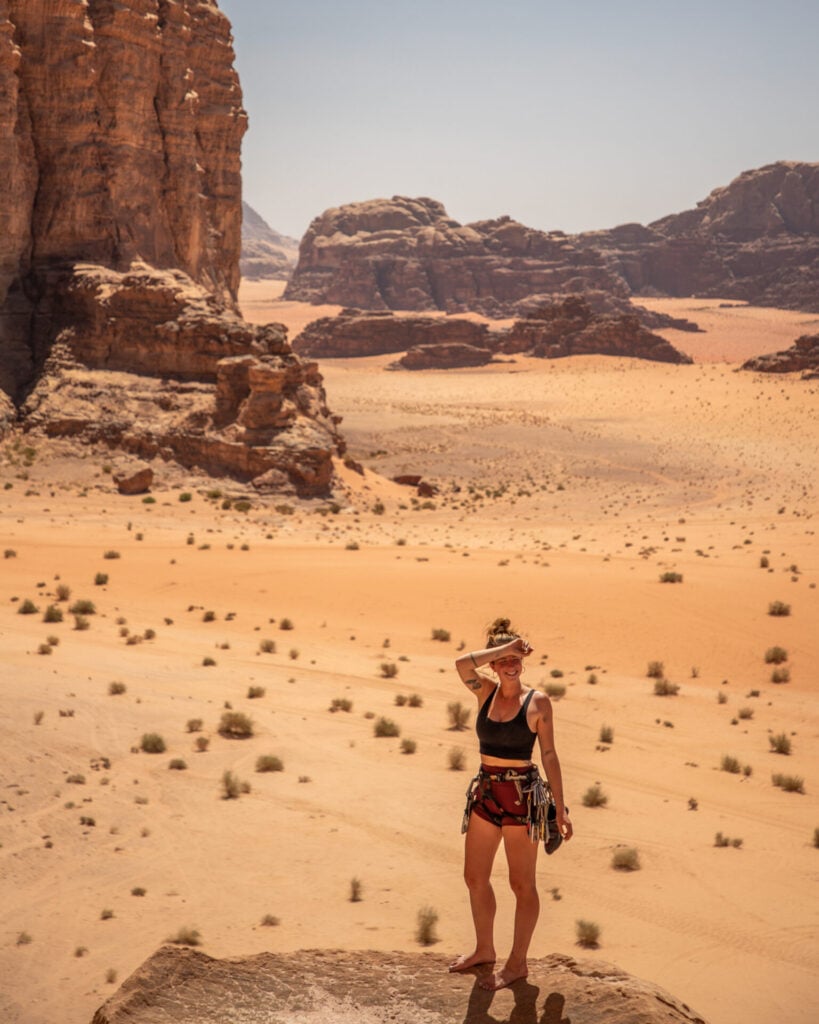
Personally, we LOVE the climbing in Wadi Rum! With high-quality sandstone, spectacular scenery, and total lack of crowds (we saw ZERO other people at the crag), it’s seriously one of the coolest places we’ve ever climbed.
Although it’s best-known for trad, there are about 30–40 impeccably-bolted sport routes and even a few spectacular multi-pitch climbs. Whether you’re a total novice or an experienced climber, you’re guaranteed to be super impressed! Chat to Shaker at Arabian Nights for help organising a guide (his cousin, Rakan, operates a climbing guide service).
>>> Read more about climbing in Wadi Rum!
Night 10: Arabian Nights in Wadi Rum
Spend a 3rd night in Wadi Rum before driving south to Aqaba tomorrow! See Night 9 above for my recommendations on where to stay in Wadi Rum or check out my detailed Wadi Rum adventure guide.
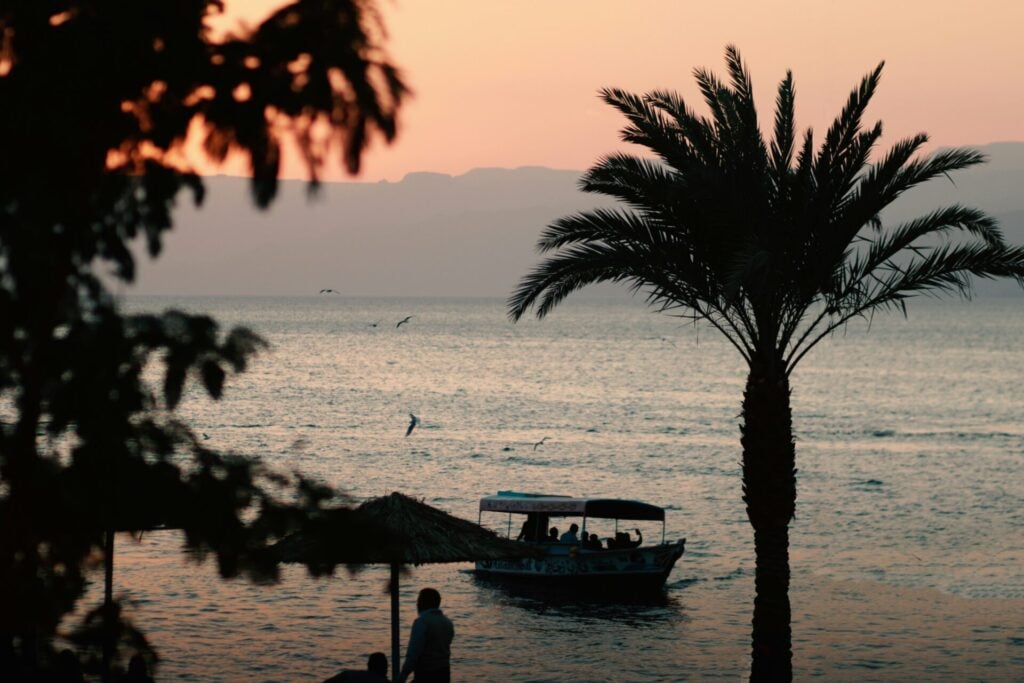
Days 11-13: Aqaba
Swap the dry, red desert of Wadi Rum for the warm waters of the Red Sea as you continue just one hour south to Jordan’s only coastal city! Aqaba is compact but surprisingly rich in marine life, with vibrant coral reefs, excellent visibility, and easy shore access to many dive sites.
This itinerary includes 2.5 days in Aqaba, giving you time for a handful of dives and some relaxed beach time, showcasing a totally different side to Jordan. If you’re not a diver, I’d say 1.5 days is probably plenty!
What to do in Aqaba
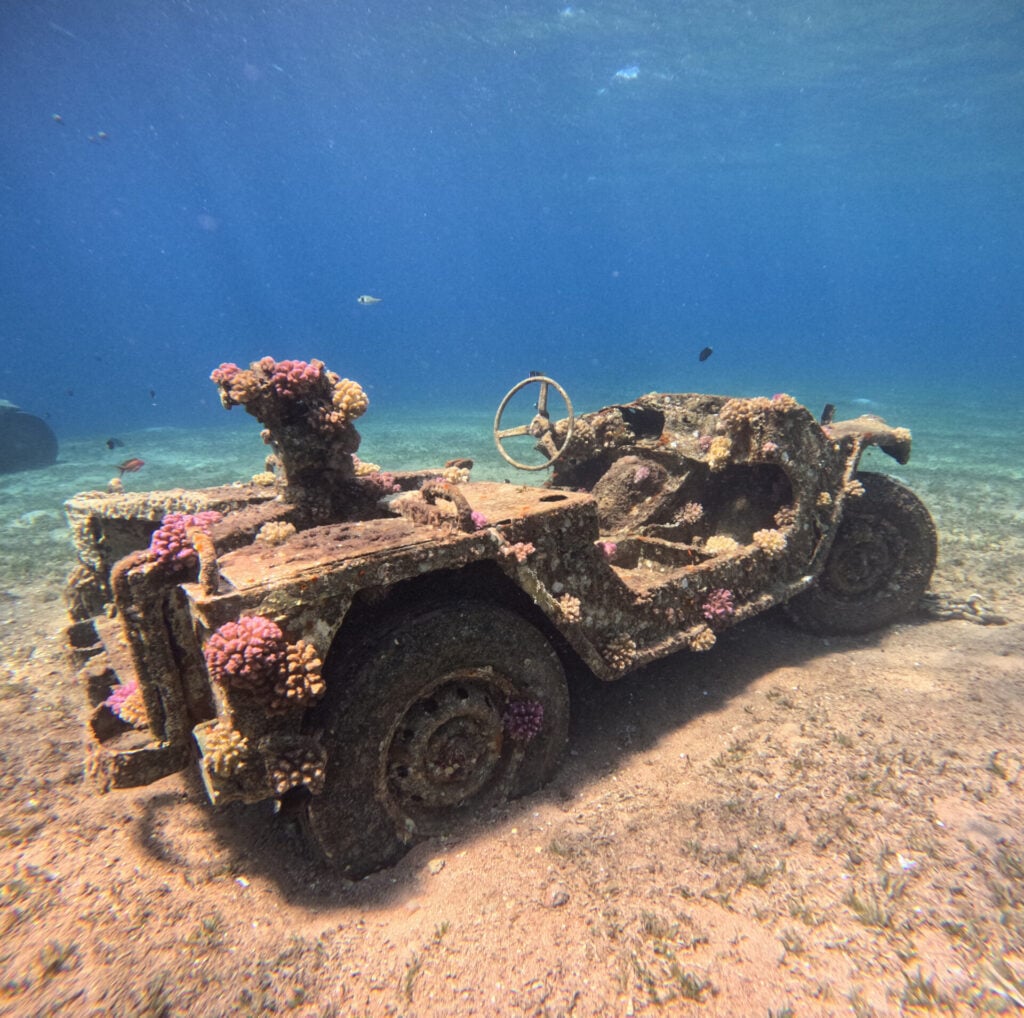
Jordan has just 26km of coastline, making Aqaba a small but special window into the Red Sea! While we’re partial to the diving on nearby Sinai, Aqaba still has a good range of relaxed dive sites stretching along the shore.
Some of the most popular dive sites include:
- Underwater Military Museum: a unique site featuring military vehicles submerged offshore, now fully integrated into the reef ecosystem (more interesting than it sounds!)
- Cedar Pride Wreck: a sunken Lebanese cargo ship turned artificial reef, now covered in coral and teeming with marine life
- Japanese Garden: one of the most colourful reef systems in Aqaba, with dense coral formations and excellent biodiversity
If you don’t dive, snorkelling is still fantastic, with several shallow reef areas accessible from the beach or via short boat trips. And out of the water, Aqaba is just generally a great place to slow down, with beach clubs, lazy pool days, sunset drinks by the Red Sea, and a break from the fast pace of the road trip!
Nights 11-13: Aqaba
Divers should spend 3 nights in Aqaba at one of the local dive shops with on-site accommodation, minimising logistics and maximising time in the water! We’ve personally stayed at Arab Divers, which offers comfortable private rooms, a relaxed atmosphere, and a stand-out local dive operation. Another popular option is Bedouin Garden Village, though we can’t comment on the exact experience.
If you’re after something more upscale or closer to the city centre, Aqaba also has a range of beachfront resorts with private beach access, pools, and full-service amenities. Check out the gorgeous new April Hotel for a boutique, high-value stay or the classically luxurious Mövenpick Aqaba Resort.
Day 14: Madaba
End your Jordan road trip in Madaba, a charming and historic city best known for its intricate Byzantine mosaics and relaxed, local atmosphere. Not only does Madaba offer a slower, more local feel than Amman, but it’s also just 20min from Queen Alia International Airport, making it the perfect final stop before departure!
AM: drive to Madaba
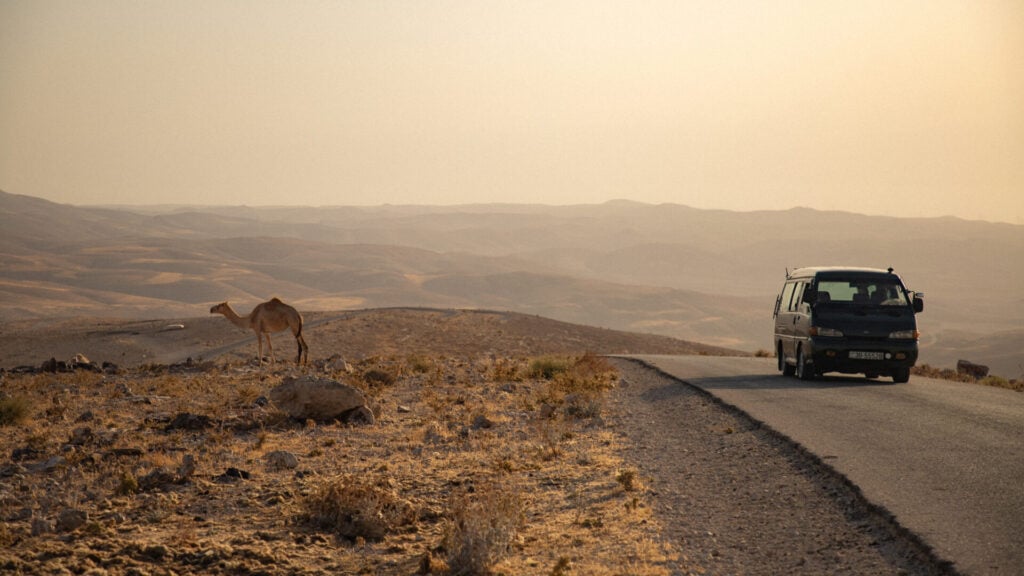
It takes about 4hrs to drive straight from Aqaba to Madaba on the Desert Highway (Route 15). If you didn’t get to experience the King’s Highway as recommend on Day 5 from the Dead Sea to Little Petra, it might be worth taking this more scenic route (Route 35) as you head north, but it’s generally much slower, even if Google quotes a similar time.
Either way, we’d recommend getting an early start from Aqaba so you can arrive in Madaba by early afternoon, leaving time to explore. If you’re hungry when you arrive, grab a cheap falafel wrap at local fave Shaheen on this corner!
PM: explore Madaba
With a few hours of remaining daylight, Madaba is easy to explore on foot. Start at St George’s Greek Orthodox Church, home to the famous 6th-century mosaic map of the Holy Land, and then walk less than 5min to St John the Baptist Roman Catholic Church to check out the bell tower and explore the small museum.
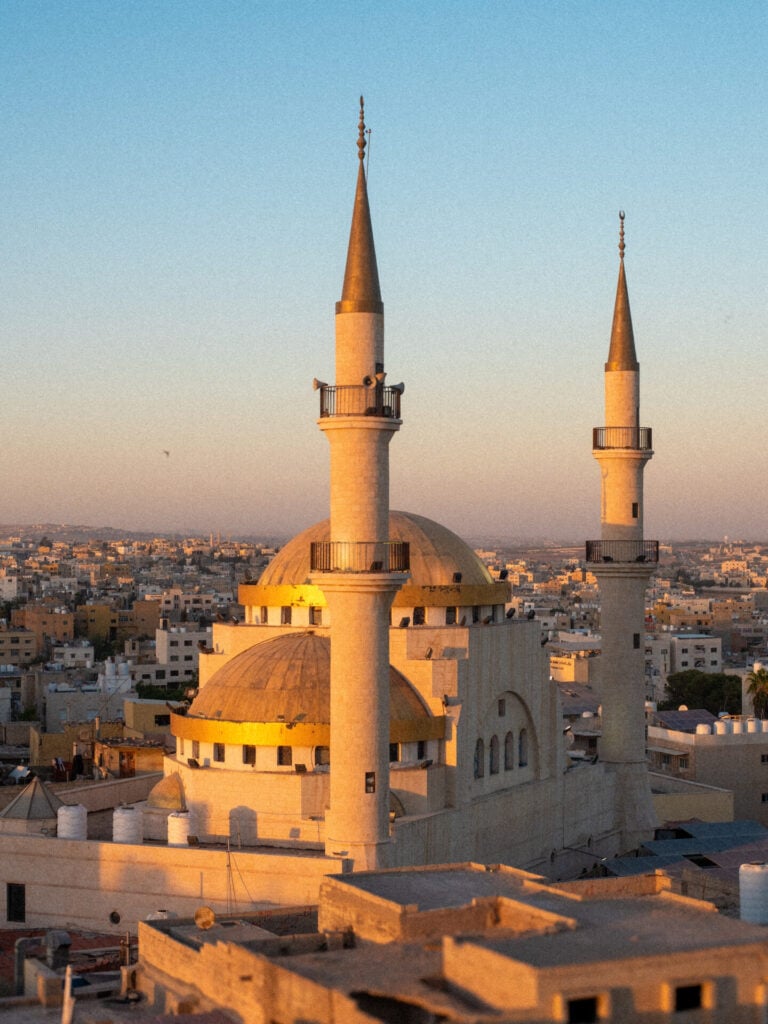
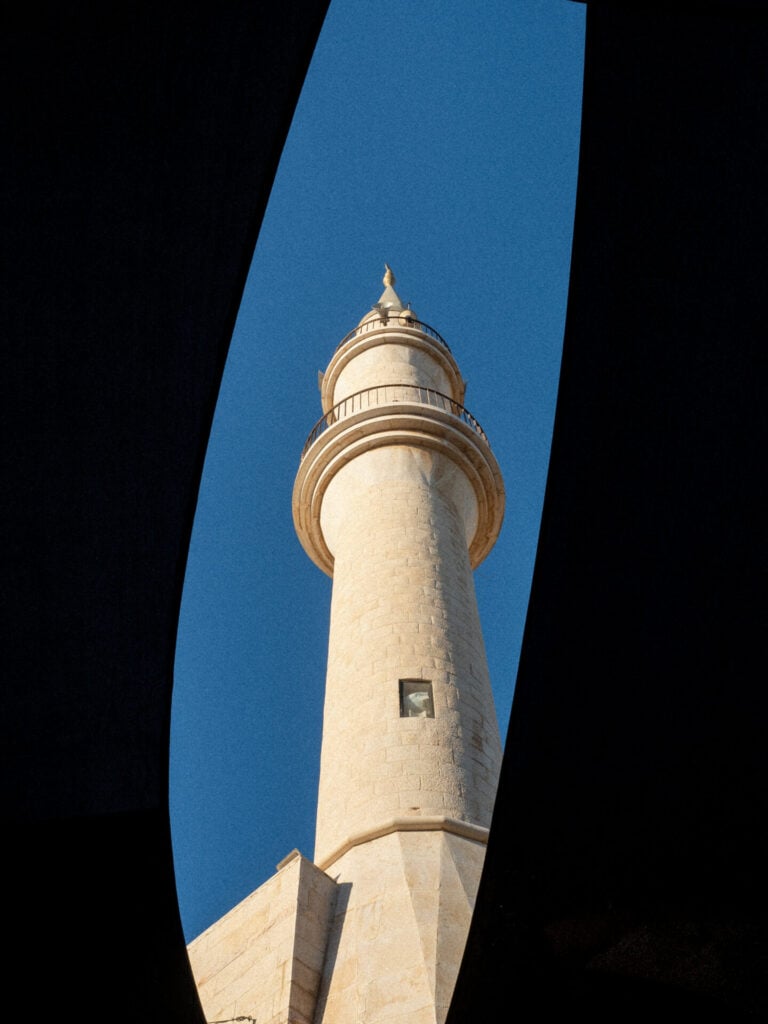
From there, wander through the local streets and small markets, soaking up the laid-back atmosphere that makes Madaba feel so special. In the late afternoon, head to the rooftop café at the Saint John Hotel for sunset views over the city, including the golden dome of the King Hussain Mosque.


Dinner: Carob House
For your final night in Jordan, book a table at Carob House, our favourite restaurant in the entire country! Set within a beautiful courtyard, this farm-to-table restaurant serves incredibly thoughtful, high-quality dishes made from local ingredients, paired with Jordanian wine and a wonderful atmosphere. It’s the perfect place for a memorable farewell dinner (and where I always take our group trips to celebrate the end of the journey!).


Night 14: Madaba
Spend your final night in Jordan at Tell Madaba, an incredibly charming guesthouse run by Edward and his mum who converted their large family home into a comfortable hotel. The rooms are lovely and super reasonably priced, but it’s the hosts who truly make the experience special— it genuinely feels like staying with family and we didn’t want to leave!
Alternatively, we usually stay at the Aitch Boutique Guesthouse when running our group trips, since it has an outdoor pool and a lovely shaded courtyard. Like Tell Madaba, the rooms are simple but comfortable!

Itinerary extensions & modifications
- With only 10-12 days? If you’re not interested in snorkelling or scuba diving, the easiest cut is Aqaba at the far southern tip of Jordan. Alternatively, if you’re less focused on hiking, you can save a few days by shortening Petra and/or Wadi Rum to a single full day each— but these are my personal FAVOURITE parts of the itinerary and they truly deserve the extra time!
- With more diving? Combine with a week on Egypt’s Sinai Peninsula, easily accessible by overnight ferry from Aqaba! We did this in 2024 and spent an entire month diving, swimming with dolphins, and climbing in Dahab and Sharm El-Sheikh, both of which offer far better scuba opportunities than Aqaba and (in the case of Dahab) a much cooler beach vibe overall.
- With even MORE hiking? Tackle the most spectacular 5-day section of the Jordan Trail from Dana Biosphere Reserve to Petra. We’ve done this route a couple times now and it is truly one of the most spectacular hikes in the entire world! See my notes on how to combine the Jordan Trail hike with a road-trip.
- Combined with other regional highlights? We always run Jordan and Egypt together on our group trips, and they fit seamlessly into a single itinerary! I’d recommend at LEAST 5-7 days in mainland Egypt to see the highlights, including Cairo/Giza, Luxor, and a Nile Cruise to Aswan. Read my recommended 1 & 2-week Egypt itinerary!
Read more about Jordan

The Comments
Sika
This was all super helpful for planning our next trip. Would love to know how you guys found driving in Jordan?
brooke beyond
SikaHi Sika,
We honestly found the driving completely comfortable in Jordan! With the exception of Amman (which can get very busy), there’s basically no traffic anywhere in the country, the roads are incredibly well-maintained, and distances are fairly short.
I’d definitely recommend a Jordan road-trip to anyone!
Hope you guys have an amazing trip,
xx bb