• start here
  • about
  • itineraries
  • brooke beyond

  • hiking guides
  • outdoor gear
    • hiking boots
    • hiking backpacks
    • cold-weather layers
    • backpacking tent
    • outdoor sleep system
    • backcountry food
    • day-hike packing list
    • hut-to-hut packing list
    • via ferrata packing list
    • backpacking packing list
    • mountaineering packing list

brooke beyond

Jordan / Middle East

Amman city guide: what to do + where to stay in Jordan’s capital

5 April 2026

Ancient ruins and sunset vistas, winding laneways and poignant street art, buzzing shisha cafés and some of the friendliest locals you’ll ever meet— Amman completely stole our hearts with its old-world-meets-hipster charm!

If you’re planning a trip to Petra or Wadi Rum, you’ll almost certainly fly into the Queen Alia Airport in Amman, but don’t make the mistake of rushing straight out of the city. Amman is a charming, walkable, and incredibly colourful capital that beautifully showcases the warmth and vibrance of Jordanian culture.

We’ve been to Amman 4 times over the last couple years, and it’s truly become one of our favourite cities in the region! This guide brings together everything we’ve learned from many repeat visits, including the best things to do in Amman, easy day trips beyond the city, our favourite restaurants, what local dishes to try, the best hotels, and a perfectly structured 3-day itinerary to tie it all together!

What's in this guide

Toggle
  • Overview of Amman 
    • Coolest areas to explore in Amman
    • *Perfect 3-day Amman itinerary
  • What to do in Amman 
    • Amman Citadel
    • Roman Theatre
    • Roman Nymphaeum
    • Jordanian cooking class 
    • Rainbow Street
    • Souq Al-Sukar (Spice Market)
    • Smoke shisha with the locals
    • Duke’s Diwan
    • Try knafeh at Habibah Sweets
    • Amman Signs Museum
    • Jordan Museum
    • Visit Carakale Craft Brewery
    • Winery tour at Jordan River Wines
  • Best day trips from Amman
    • Jerash
    • Umm Qais 
    • Dead Sea
    • Wadi Mujib
    • As-Salt
    • Mt Nebo + Madaba
    • Bethany Beyond the Jordan
    • Petra
  • Where to eat in Amman
    • Best restaurants in Amman
    • Best cafés in Amman
    • Best co-working cafes for digital nomads in Amman
    • Best bars in Amman
  • Where to stay in Amman
    • Best budget-friendly guesthouse: Medusa’s House
    • Best mid-range hotel: Canary Boutique Hotel
    • Best upgraded hotel: House Boutique Suites

Overview of Amman 

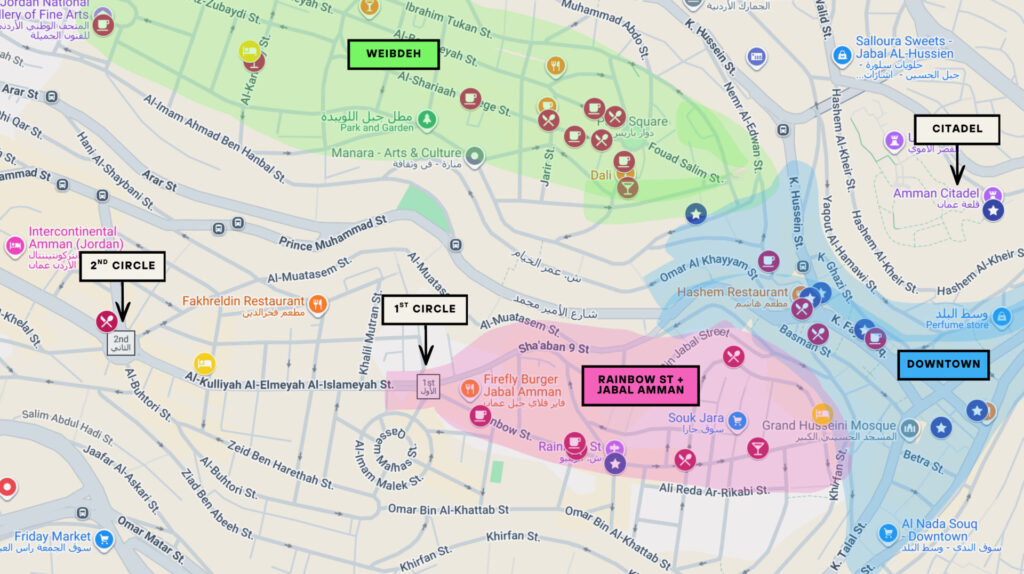
Amman is organised around 8 “Circles” (roundabouts) running from east to west, and these landmarks are widely used as reference points for navigating the city. 

Nearly all of the places you’ll visit as a traveller are clustered around the 1st–3rd Circles, where the main historic districts, cultural sights, and most of the city’s best cafés and restaurants are clustered. As you move further west (5th–8th Circles), the city becomes more modern and residential, with larger hotels, shopping malls, and wider roads— but it’s unlikely you’ll have any cause to venture out this far!

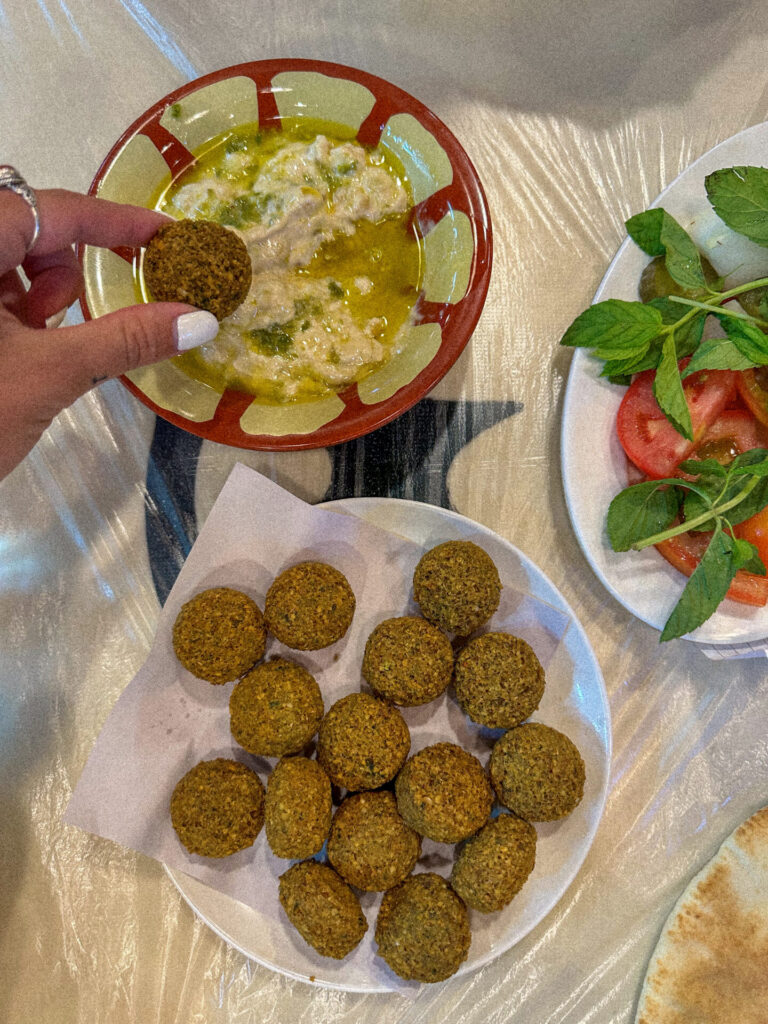
Falafel at Hashem's in Amman
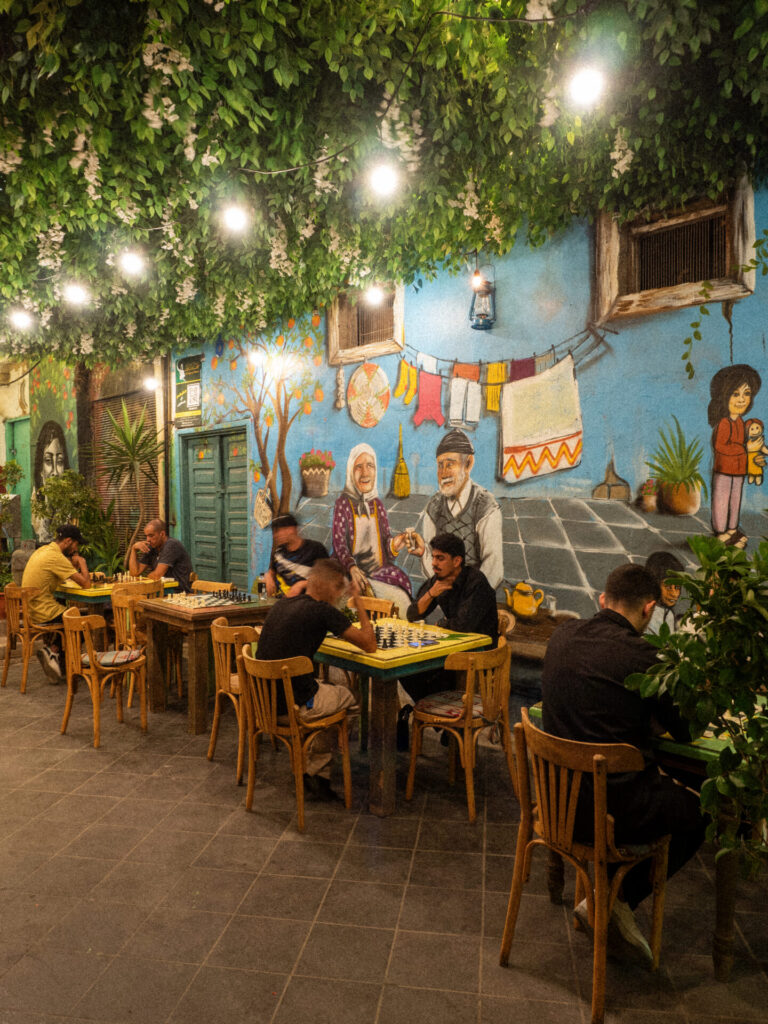
Cafe in Downtown Amman
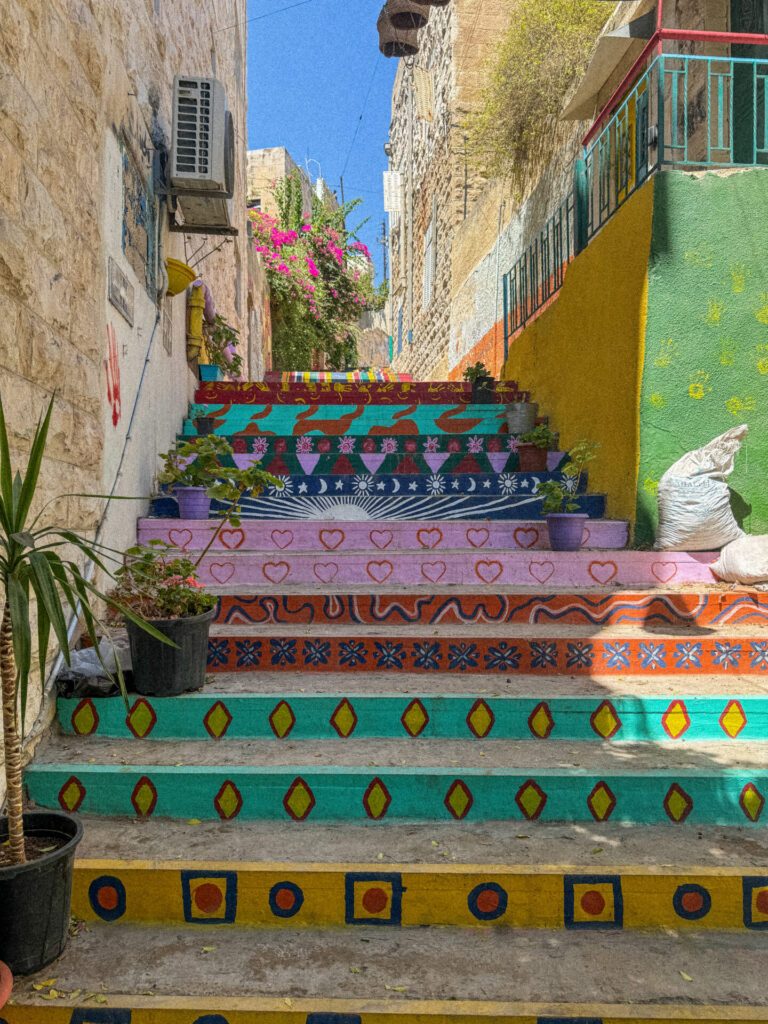
Rainbow St, Amman
colourful Souk Jara on Rainbow Street

Coolest areas to explore in Amman

If it’s your first time in Amman, these are the neighbourhoods you’ll want to focus on— walkable, full of character, and home to many of the city’s best cafés, restaurants, and cultural sights: 

  • Rainbow Street & Jabal Amman (1st Circle): A lively, café-lined street in one of the oldest parts of the city, known for its rooftop bars, boutique shops, and classic Jordanian restaurants. This is one of the most popular areas for visitors and a fantastic place to stay!
  • Downtown (Al-Balad, below 1st Circle): The beating heart of old Amman— chaotic, colourful, and packed with local life. Come here for street food, markets, historic sites like the Roman Theatre, and a more traditional side of the city, but I wouldn’t recommend staying downtown.
  • Jabal Al Weibdeh (2nd–3rd Circle): Weibdeh is Amman’s creative hub, filled with art galleries, independent cafés, and some of the city’s best restaurants. This is our personal favourite place to stay in Amman, still within walking distance of downtown but with a decidedly trendier, more youthful energy! 
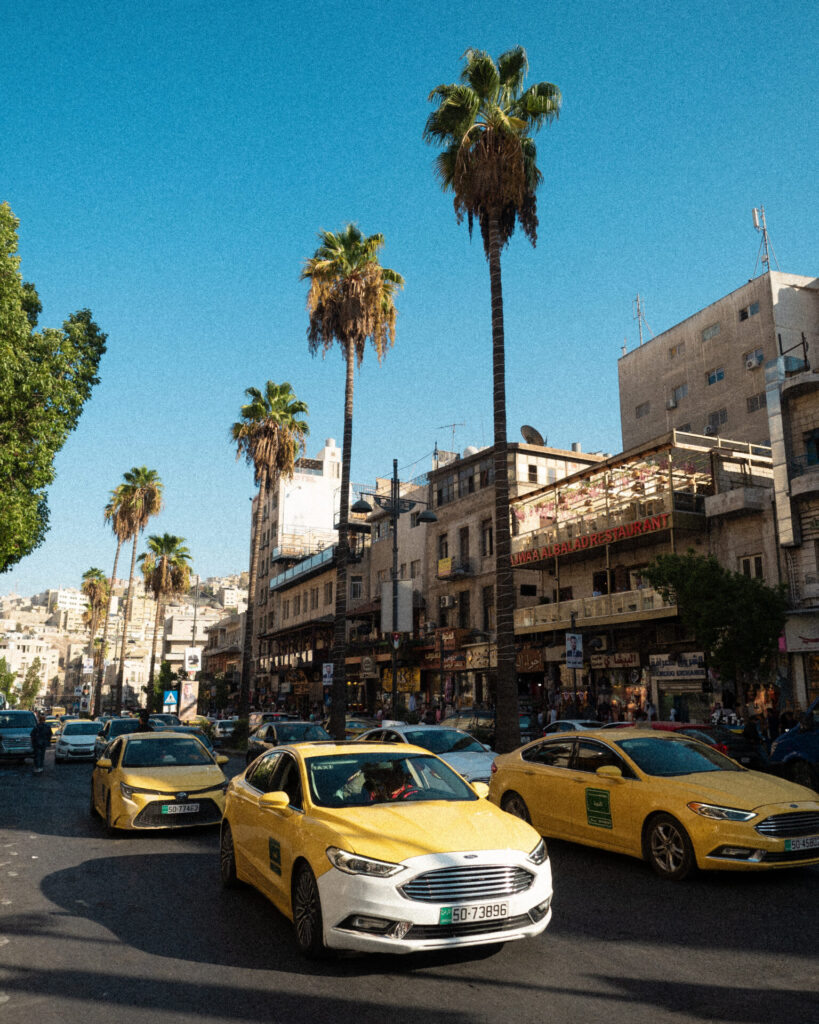
Amman is best explored on foot, with the occasional Uber to more distant locations!

If you plan to road-trip through Jordan, we highly parking your rental car and NOT driving for the few days you’ll be exploring Amman. It’s manageable to drive in and out for day trips, but there’s really no need to use your car to drive between sites within the city— it’s incredibly difficult to navigate the narrow, one-way streets and parking is a nightmare downtown or on Rainbow Street.

*Perfect 3-day Amman itinerary

If you’re looking for a plug-and-play itinerary that combines the very best of Amman with a few standout experiences beyond the city, here’s exactly how I’d recommend spending 3 days in Jordan’s capital:

Day 1: Downtown + Rainbow Street

  • Head downtown to explore the Roman Theatre, Nymphaeum + spice market
  • Sample knafeh (a traditional Jordanian dessert) at Habibah Sweets + grab fresh juice at Palestine Juice
  • Light lunch at Hashem’s, famous for their simple but spectacular falafel and hummus
  • Check out the Amman Signs Museum + Duke’s Diwan
  • Walk up the hill to Rainbow Street, and explore the cute shops, lively cafes, and street art (Souk Jara on Fridays)
  • Sunset drinks on the rooftop at Cantaloupe
  • Dinner at Sufra, a beautiful outdoor restaurant on Rainbow Street with traditional dishes

Day 2: Weibdeh + Jordanian cooking class

  • Brunch at Rumi Café
  • Stroll through Weibdeh, popping into galleries and shops
  • Lunch + shisha at Dali, a trendy local hang-out popular with artists and digital nomads
  • Amman Citadel for golden hour
  • Jordanian cooking class at Beit Sitti

Day 3: Day trip to Jerash + local wine/beer

  • Depart early for a day trip to Jerash, the best-preserved Roman ruins outside of Italy
  • Wine tasting at Jordan River Wines OR visit Jordan’s first local craft brewery, Carakale
  • Dinner back in Weibdeh at Rakwat Arab, Alee, or Chapters

Keep reading for heaps more detail and additional recommendations to make the most of your time in Amman!

downtown Amman
Wandering through downtown Amman

What to do in Amman 

From ancient ruins and historic viewpoints to cultural experiences and colourful street art, Amman offers a surprisingly diverse mix of things to do! After a lot of time spent exploring the city, these are our favourite activities in Amman:

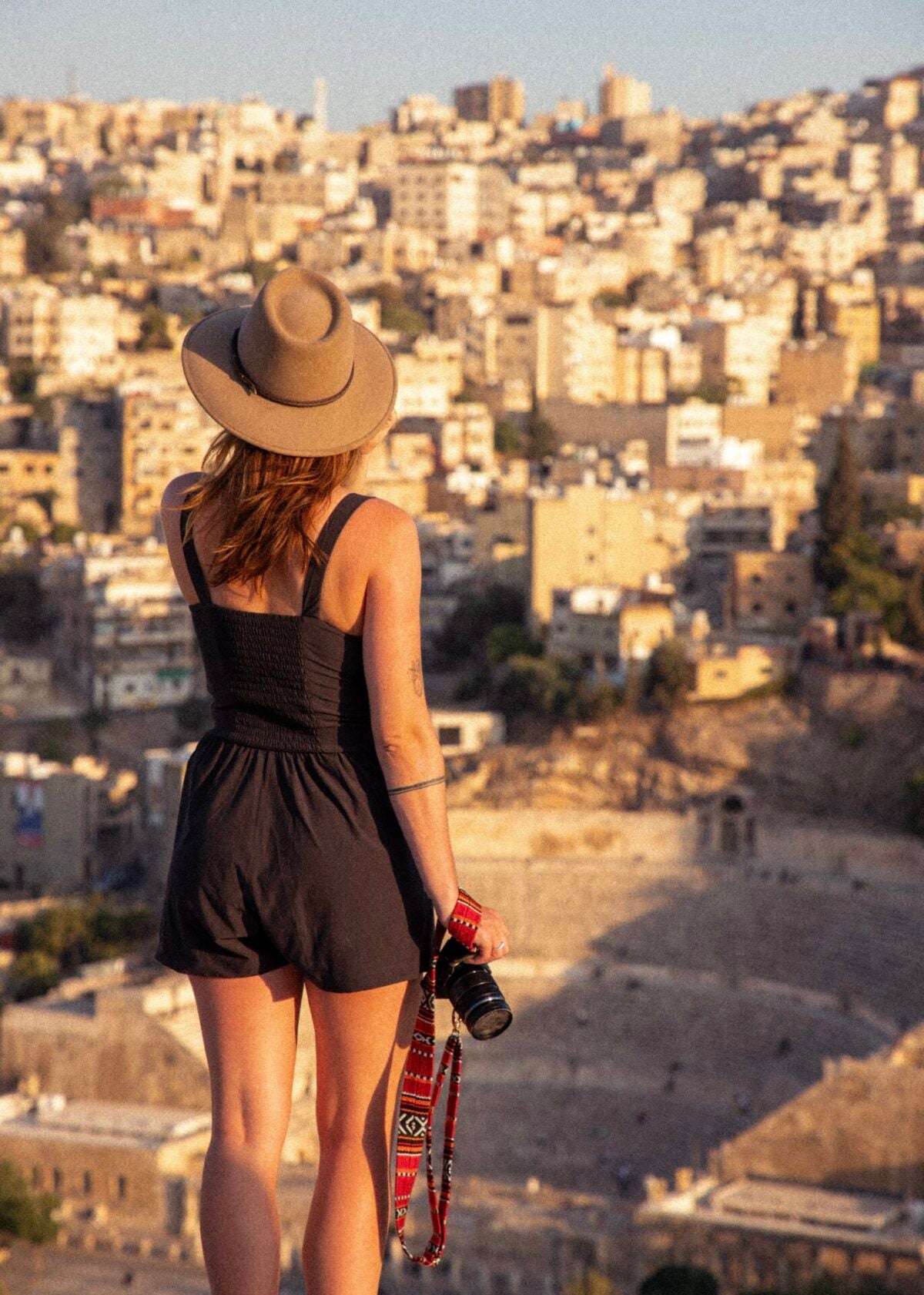
View of the Roman Theatre from Amman Citadel
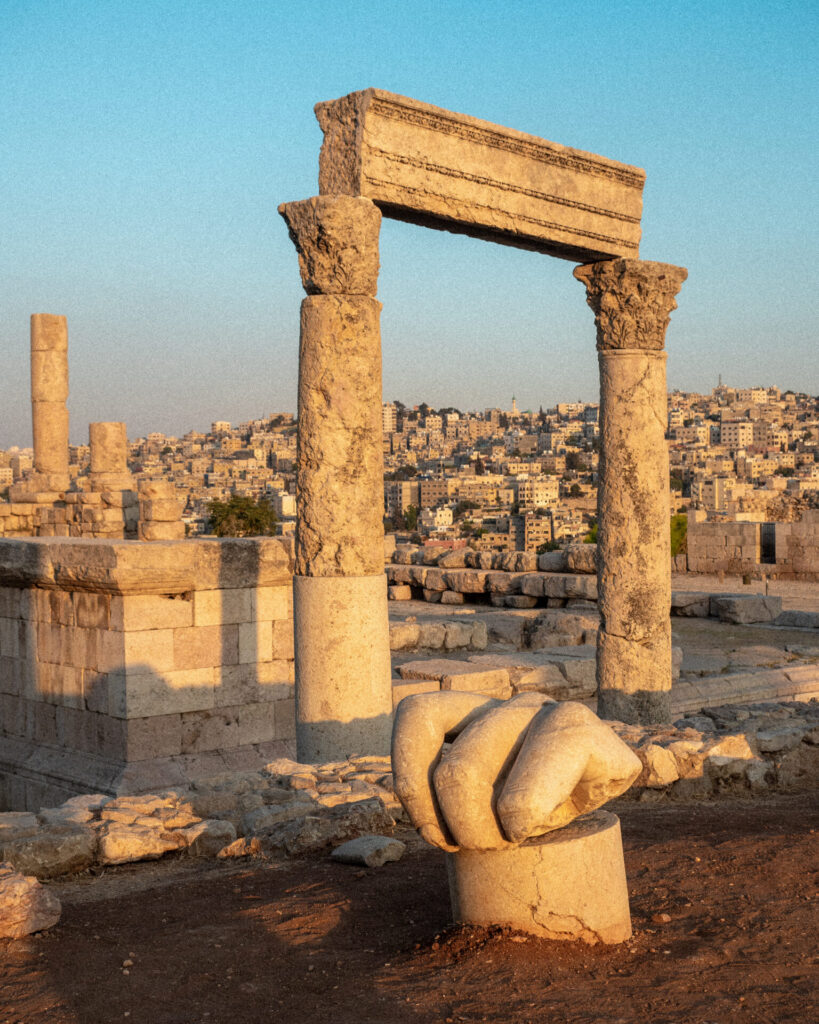
Hercules Hand at the Amman Citadel
Amman Citadel

Amman Citadel

The Amman Citadel is home to ancient ruins spanning Roman, Byzantine, and Umayyad periods, all set against a wide panorama of the city. The most iconic feature is the massive “Hercules Hand,” a remnant of a once-colossal statue, but it’s the aerial vantage point that really makes this spot worth visiting!

Visit in the late afternoon for golden hour light, cooler temperatures, and lower crowds. Depending on where you’re coming from, it might be worth catching an Uber to avoid a long uphill climb, but don’t skip the Citadel! Entry is included in the Jordan Pass.

🎟️ IS THE JORDAN PASS WORTH IT?

A resounding YES! The Jordan Pass packages together entrance to nearly all of the historical landmarks in Jordan (Amman Citadel, Jerash, Petra, Wadi Rum + 40 others) AND waives the cost of a Jordan visa, which is otherwise 40JOD ($60USD). The Jordan Pass costs 70JOD ($100USD) and it will pay for itself on almost ANY itinerary through Jordan!
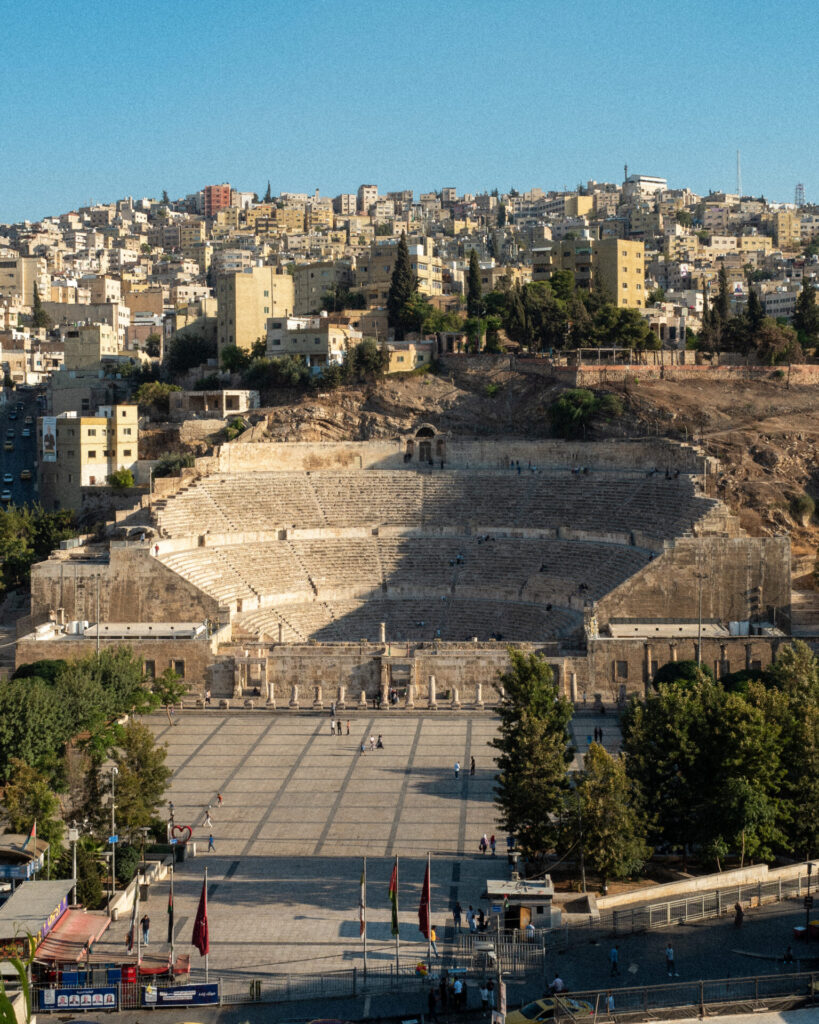
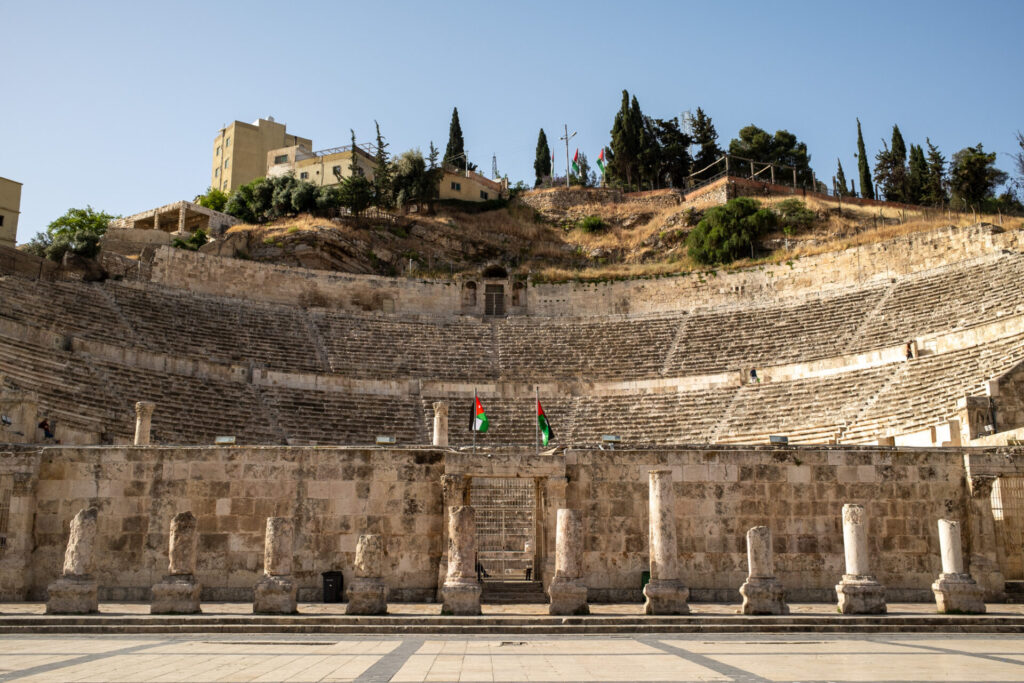
Amman Roman Theatre
View of the Roman Theatre from above

Roman Theatre

Located in the heart of downtown Amman, this beautifully preserved 2nd-century Roman amphitheatre once held up to 6,000 spectators and is still used for performances today. You only need a few minutes to wander through the theatre and, optionally, climb up to the top of the stands for a bird’s-eye view, making it an easy stop on any downtown walking route. Entry is included in the Jordan Pass!
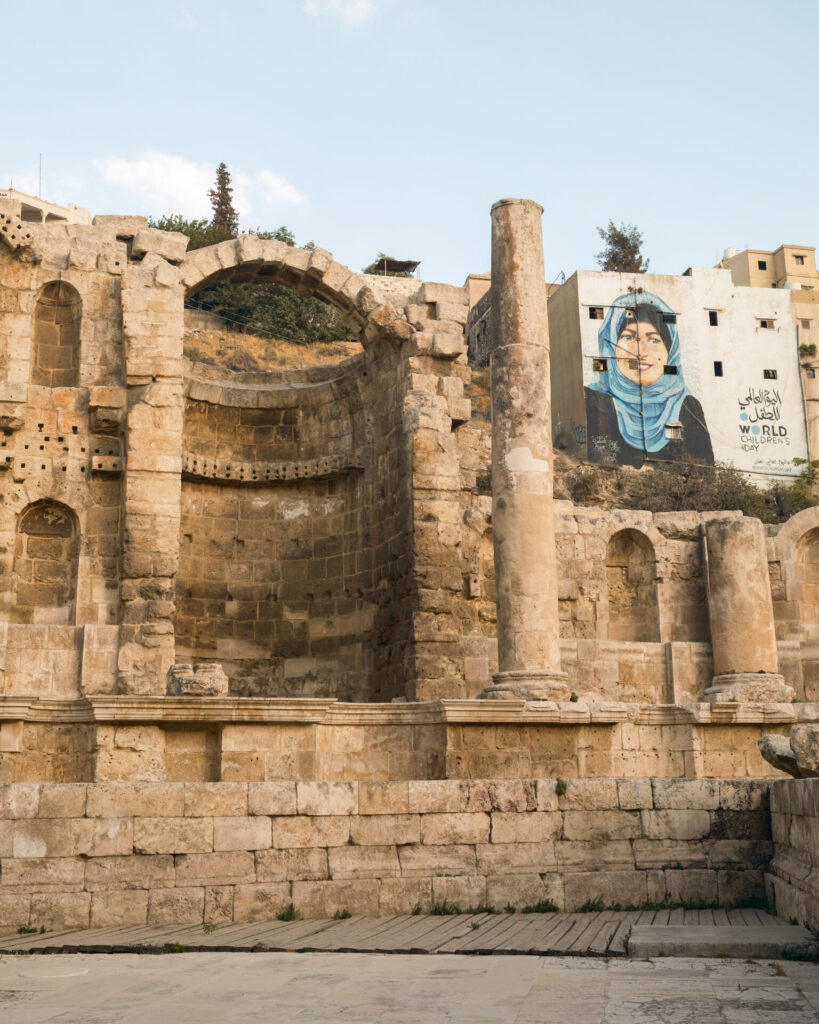
Roman Nymphaeum in Amman
Check out this 2nd century fountain in downtown Amman

Roman Nymphaeum

Near the Roman Theatre in downtown Amman, this partially restored 2nd-century public fountain was once one of the city’s most impressive civic monuments. Although not as well-preserved as other Roman sites, its towering arches and decorative remnants still hint at the scale and grandeur of ancient Philadelphia (Roman Amman).

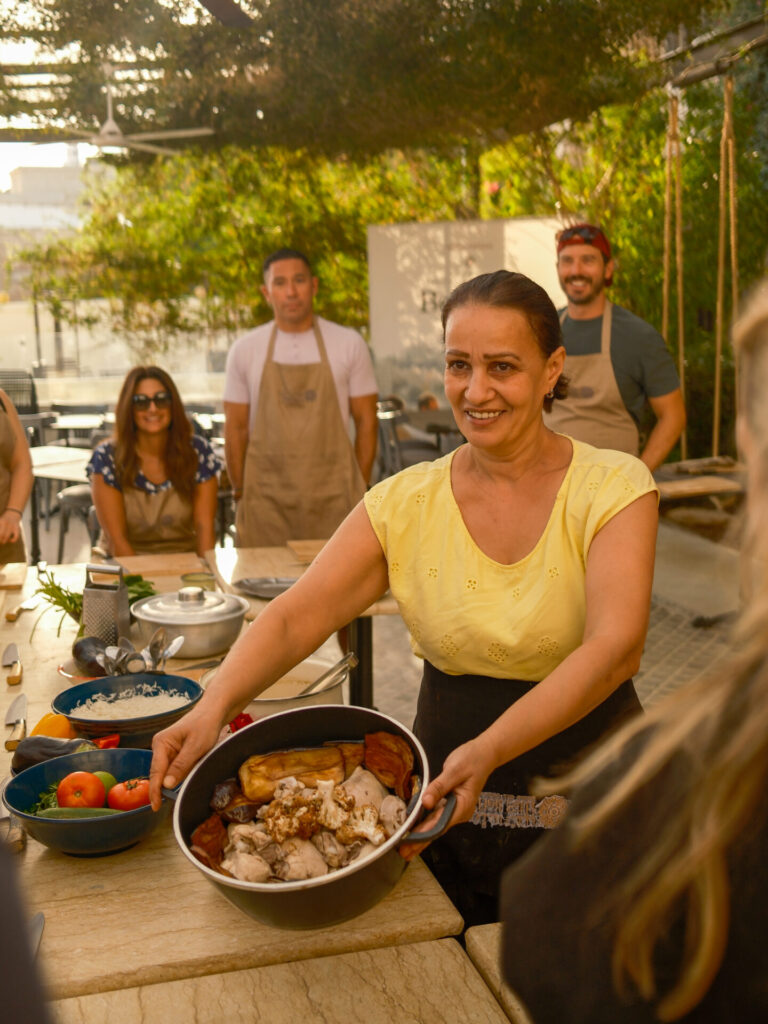
cooking class at Beit Sitti in Amman
The cooking class at Beit Sitti is amazing!
cooking class at Beit Sitti in Amman

Jordanian cooking class 

A hands-on cooking class at Beit Sitti is one of our favourite ways to experience the flavours of Jordan while learning about the country’s deep-rooted culinary traditions and the ritual of shared meals! Run by three sisters passionate about preserving their grandmother’s traditional recipes, this female-owned cooking school is also the kind of local business we’re extremely proud to support.

Over the course of 2.5–3 hours, you’ll typically prepare 8 classic dishes before sitting down to enjoy the meal together, accompanied by local wine (at extra cost) and lovely sunset views over Amman. We visit Beit Sitti on our Jordan group trips and it’s always a highlight, even for those who don’t spend much time in the kitchen (me), so I truly can’t recommend the experience enough!
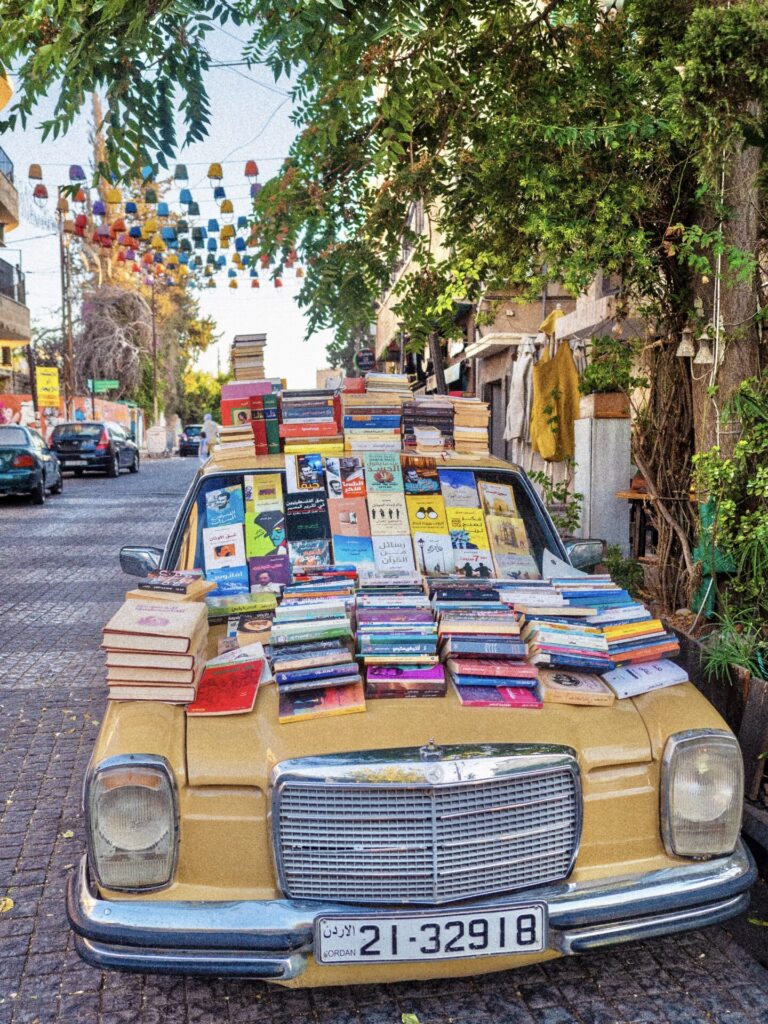
Rainbow St, Amman
Rainbow Street is one of the coolest parts of the city
Rainbow Street, Amman

Rainbow Street

Located in Jabal Amman near the 1st Circle, Rainbow Street is one of the city’s most popular areas for cafés, restaurants, and rooftop bars, an intriguing mix of historic buildings and lively street art. Come to Rainbow Street ready to wander, absorbing the colourful, creative feel of the neighbourhood with a camera in-hand!

If you’re visiting on a Friday, don’t miss Souk Jara, a lively market just off the street featuring local art, handmade crafts, and street food stalls. This is an excellent place to support local artisans and shop for unique souvenirs you’re unlikely to find elsewhere in Jordan!

Spice Market in Amman

Souq Al-Sukar (Spice Market)

Tucked into the bustling streets of Al-Balad (downtown), Amman’s spice market is a lively network of vendors selling fragrant herbs, towering piles of nuts, dried fruits, and local sweets— it’s common to be handed things to sample as you walk by, with no pressure to buy. 

Souq Al-Sukar is sensory overload in every possible way, with aromatic spices hanging heavy in the air and a constant bustle of locals going about their daily shopping. Wander with your camera and experience some of the most authentic energy in the city!

Shisha cafes function like bars in Amman– social spaces for those who don’t drink

Smoke shisha with the locals

Shisha is deeply embedded in the social fabric of Jordan, and it’s something you’ll see everywhere in Amman. For those who haven’t tried it yet, shisha is a type of flavoured tobacco, typically infused with fruit or molasses, that’s smoked out of a hookah (water pipe)— the smoke is drawn through water before being inhaled through a hose, creating a smoother, more aromatic experience than traditional smoking.

Neither of us have ever been smokers, but if we have one vice, it’s Middle Eastern shisha… And for me, it’s just as much about the cultural experience as it is the pleasant light buzz.

💨 SHISHA CULTURE IN JORDAN

In place of local pubs and bars (which are less common in predominantly Muslim countries like Jordan, where many people choose not to drink for religious reasons), shisha cafés function as a much-needed “third place”— somewhere between home and work where friends gather to talk, play cards, and spend hours lingering over tea, coffee, and a shared pipe. It’s a central part of everyday social life, and one of the most authentic ways to experience local culture in Amman.

Shisha is widely available at cafes and restaurants across the city, but these are some of our favourite spots:

  • Dali: a trendy local café/bar in Weibdeh with a great atmosphere, extensive menu, and reasonably priced shisha (plus alcohol, which is less common)
  • Rakwet Arab: one of our absolute favourite restaurants in the city, come for dinner and stay for shisha on the patio!
  • Jafra Café: a long-standing local favourite in downtown Amman, known for its traditional atmosphere, live music, and late-night energy
  • Hareem AlSultan: you’ll find locals smoking outside this Rainbow Street café most nights of the week, and despite having a pretty dismal menu otherwise, the shisha is good and the setting is very enjoyable
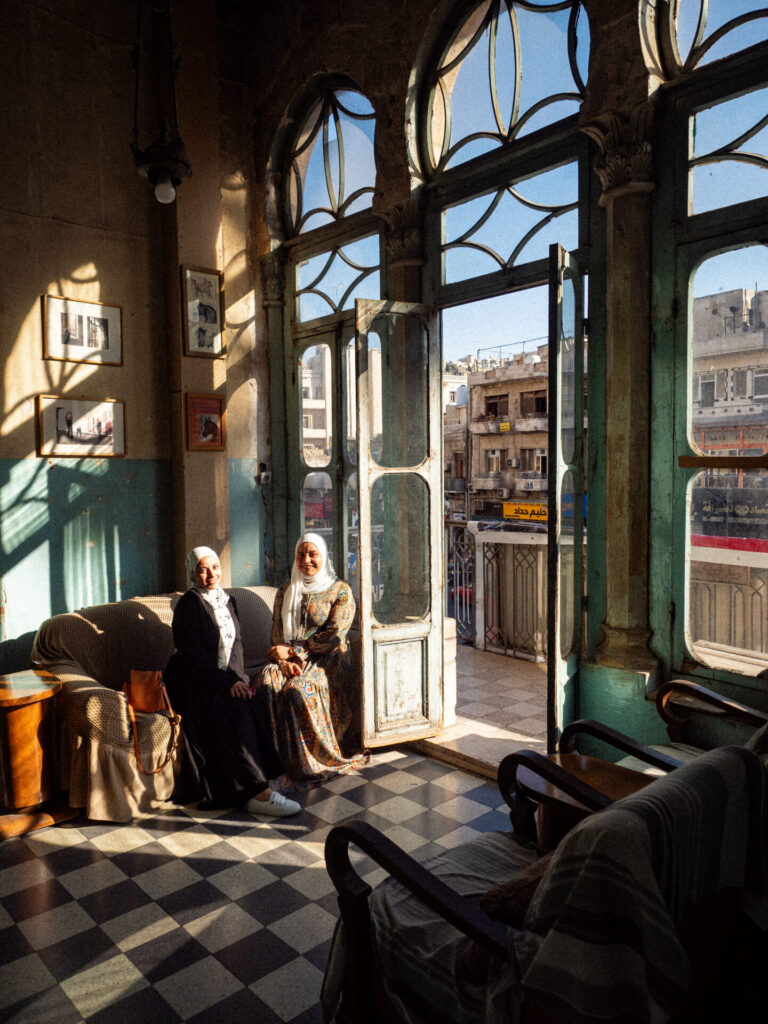
local ladies enjoying tea at Duke's Diwan
local ladies enjoying tea at Duke’s Diwan

Duke’s Diwan

Hidden in downtown Amman, this small historic home offers a glimpse into the city’s past through antique furnishings, old photographs, and preserved interiors. It’s free to visit, but you can also donate to the project by purchasing tea or coffee and spending a few quiet moments soaking up the atmosphere of this beautifully preserved slice of old Amman.
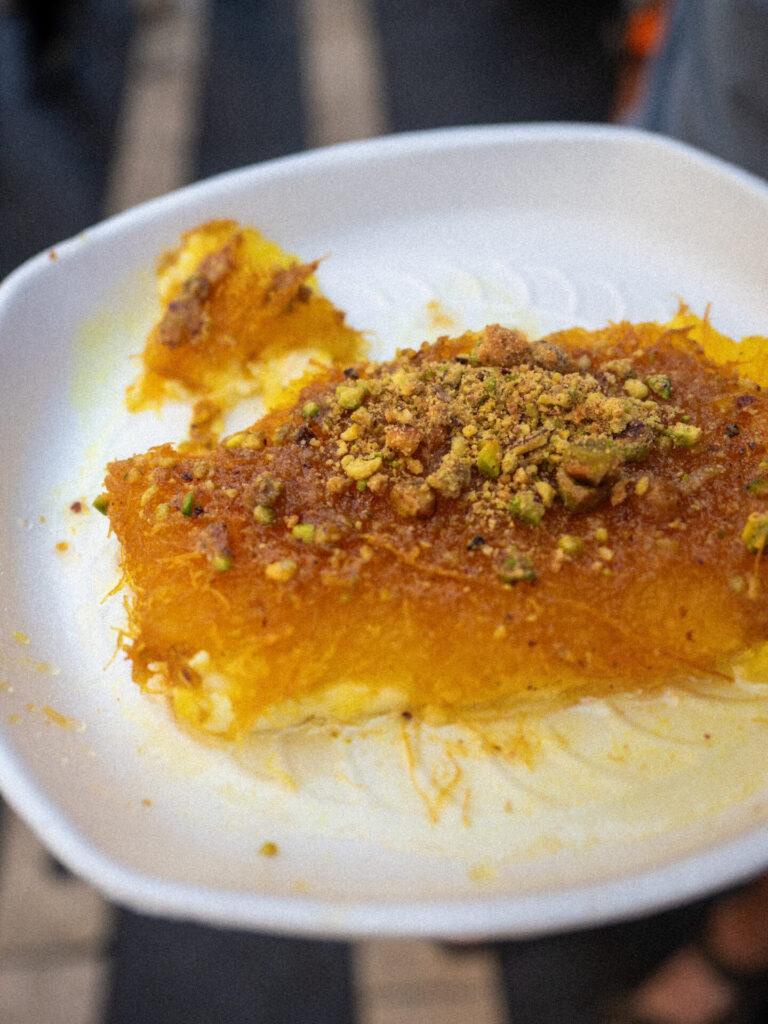
Knafeh from Habibah Sweets
Habibah Sweets is the best place to try delicious, sticky knafeh

Try knafeh at Habibah Sweets

One of Jordan’s most iconic desserts, knafeh is made with shredded kadayif pastry (the texture of shredded wheat) layered over soft cheese, then soaked in a fragrant sugar syrup and topped with crushed pistachios. It’s rich, sweet, and best eaten hot, when the cheese is perfectly melted and stretchy— if it sounds a little strange to put cheese in a dessert, I promise it’s absolutely delicious and definitely worth trying!

Habibah is the most famous place to try it in Amman, serving it fresh from enormous trays in the heart of downtown. Portions are sold by weight (1.75JOD for a quarter-kilo, which is plenty for 2 people sharing), and although there’s almost always a queue, it moves super quickly!

KNAFEH OR KUNAFA… OR KANAFEH?

You’ll often see the same words spelled a dozen different ways in Jordan— this is due to transliteration, the process of writing Arabic words using the English alphabet. Because certain Arabic sounds don’t have direct English equivalents, there’s no single standard system for spelling them.

Don’t get too hung up on Jebel vs Jabal or knafeh vs kunafa. You can safely assume that all these slight variations are referring to the same landmark, mountain… or even dessert!

Amman Signs Museum
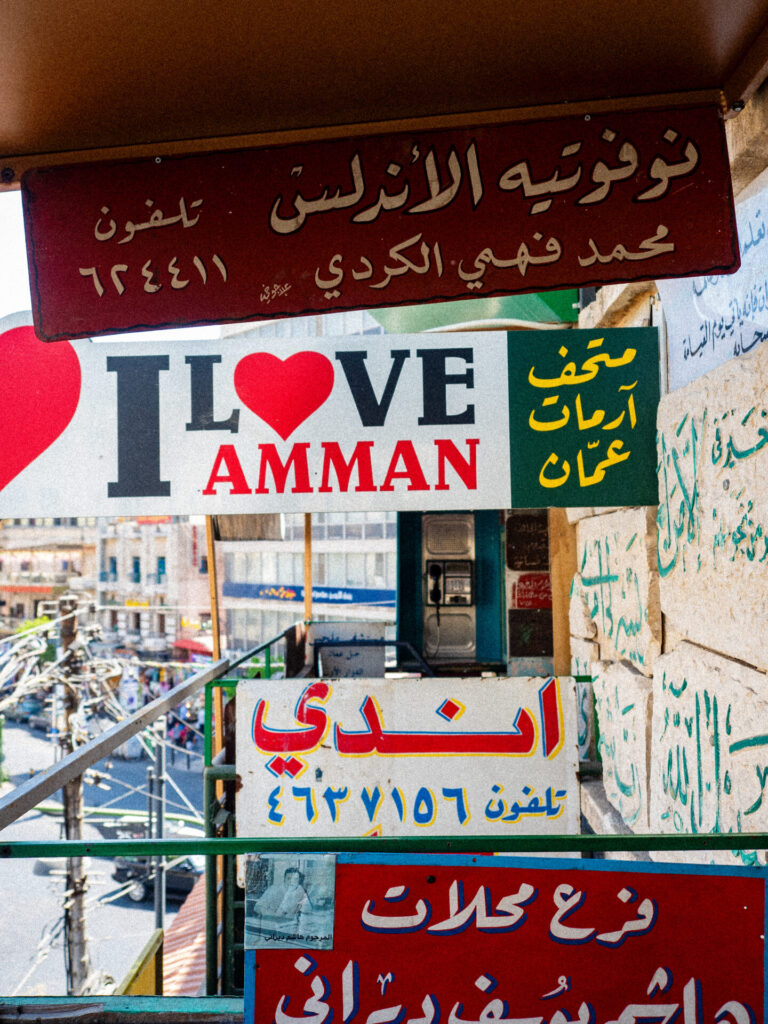
Vintage signs at the free Amman Signs Museum

Amman Signs Museum

This tiny, free museum showcases a collection of vintage shop signs from across Jordan, offering a quirky and nostalgic look at the country’s visual history. It’s a quick visit (15min will be enough for most people), but surprisingly enjoyable and very easy to combine into a half-day spent exploring downtown.

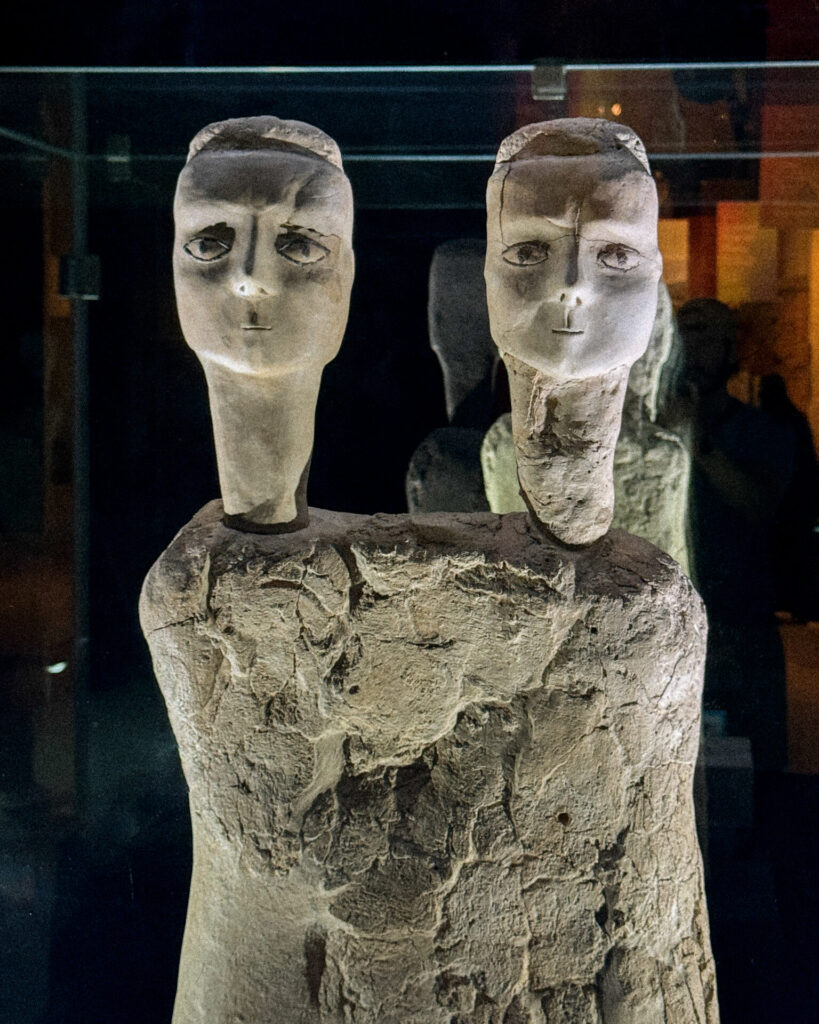
Two-headed Ain Ghazal statues at the Jordan Museum

Jordan Museum

As Jordan’s premier museum, this modern space offers a well-curated overview of the country’s history, from prehistoric artefacts to more recent cultural developments. Highlights include (some of) the Dead Sea Scrolls and the eerie Ain Ghazal statues, 8,500-year-old plaster figures considered among the oldest human statues ever discovered.

It’s not an essential stop for every itinerary, but if you’re interested in history, archaeology, or gaining deeper context before visiting sites like Jerash and Petra, check it out! Entry is 5JOD ($7USD), not included in the Jordan Pass.

Carakale Brewery in Amman

Visit Carakale Craft Brewery

Founded in 2010, Carakale is Jordan’s first craft brewery and still the leader of a very small but growing local beer scene. Brewing in the hills of Fuheis just outside Amman, they’ve built a reputation for creative, high-quality beers that go well beyond the typical lager you’ll find elsewhere in the country.

You’ll spot Carakale’s core range at some of the (fairly limited) bars and restaurants around Amman, but for the full line-up (including the fantastic sours Dead Sea-rious and Red Sea-rious), it’s well worth catching a 20-30min Uber to their taproom. It’s a fun, social atmosphere and a refreshing change of pace from the city!

🍻 DRINKING CULTURE IN JORDAN

Jordan is a predominantly Muslim country, and while Islam traditionally prohibits alcohol, observance varies. Alcohol certainly isn’t as central to social life here as it is in many Western countries (and you should generally assume a restaurant won’t serve alcohol unless it’s explicitly stated), but it’s also NOT illegal or entirely inaccessible like many other Middle Eastern countries.

You’ll typically find alcohol in international hotels, some licensed restaurants, and a handful of bars across Amman, along with a small local scene that includes breweries and wineries. It’s simply less visible and more low-key than you might be used to, with social life more commonly centred around cafés, restaurants, and shisha lounges.
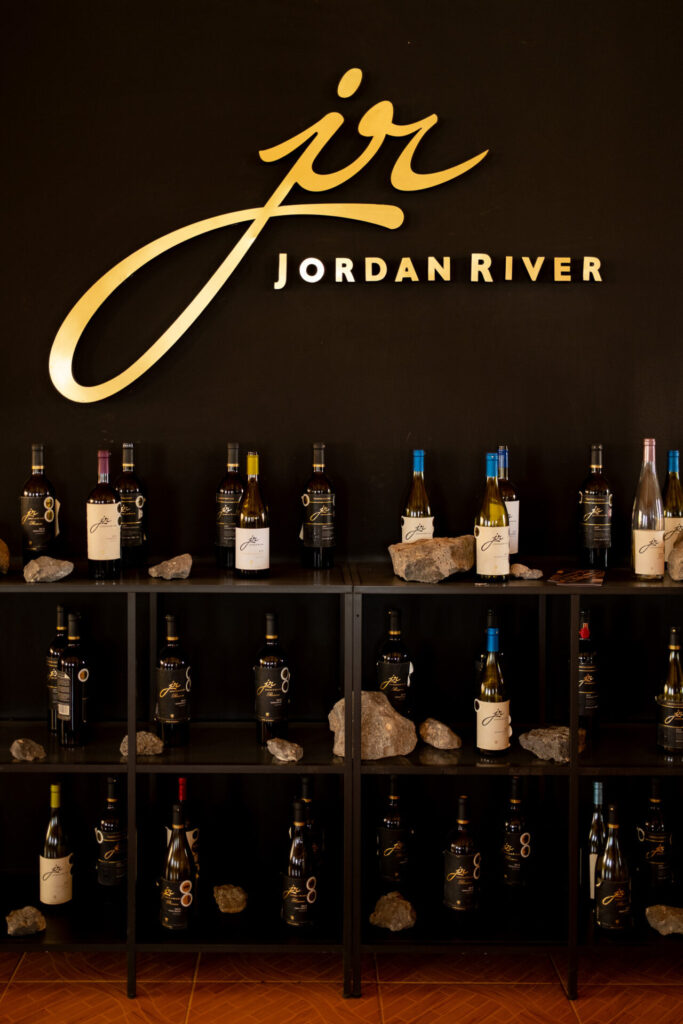
Winery tour at Jordan River Wines

Located just outside Amman, Jordan River Wines is the country’s first modern winery, producing a surprisingly diverse range of reds, whites, and rosés using grapes grown in the Jordan Valley. 

While Jordan might not be the first place that comes to mind as a wine destination (and I’ll be honest: it’s no Tuscany), winemaking in this region actually dates back thousands of years to the Nabateans, the civilisation who built Petra— and this project is part of a broader effort to revive that ancient tradition!

It’s unlikely to be the best wine you’ve ever tasted, but we do genuinely like the wine and LOVE the unique glimpse into Jordan’s evolving food and drink scene, with guided tastings, vineyard views, and insight into the challenges of producing wine in an arid climate. Tours and tastings should be arranged in advance.

Jerash is home to some of the best Roman ruins in the world!

Best day trips from Amman

Amman is the perfect base for exploring some of Jordan’s most incredible historical and natural sites— just a short drive in any direction, you’ll find ancient ruins, charming towns, and breathtaking landscapes! Whether you’ve got a rental car or you’re keen to join a guided tour, here are some of our top picks for day trips from the capital:

Jerash ruins in Jordan

Jerash

Drive time from Amman: 1hr | Time needed: Half-day

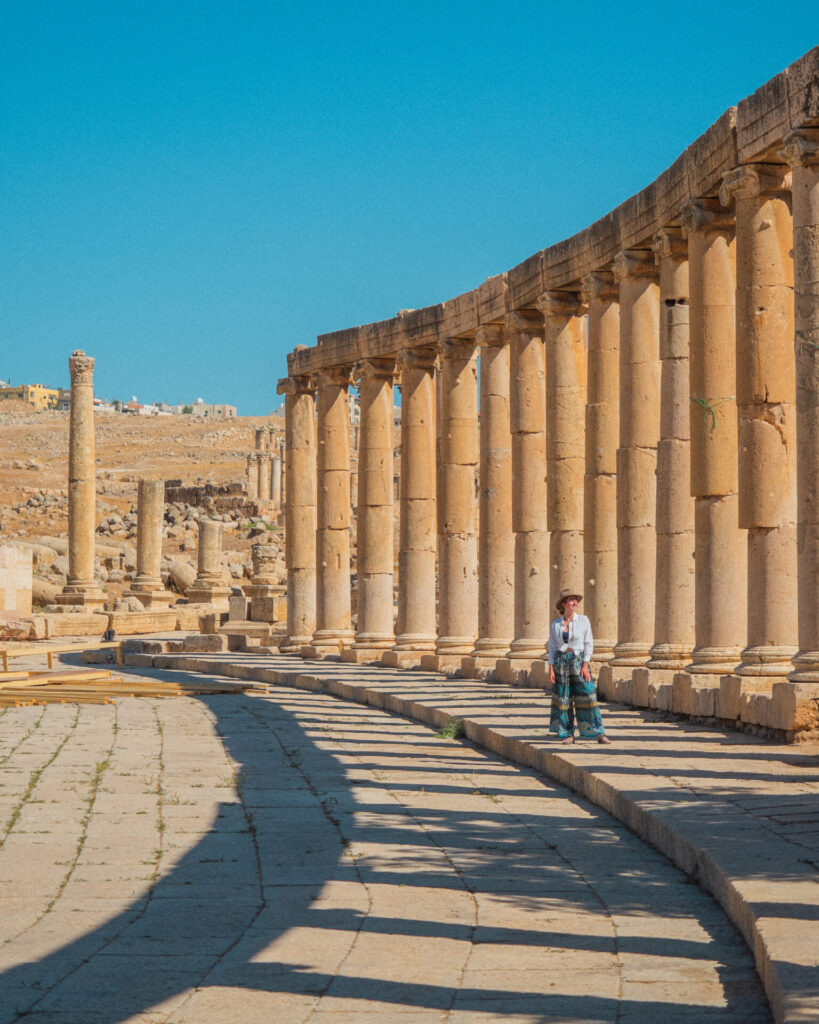
Spend a few hours exploring the best-preserved Roman ruins outside of Italy, where grand arches, colonnaded streets, and crumbling temples date back nearly 2,000 years. We’ve visited A LOT of ruins over the years, and we were totally blown away by Jerash— walking through its colonnaded streets feels like traveling back in time!

Tips for visiting Jerash:

  • Go early to beat the crowds and the heat! The site opens at 8am, but even when it’s busy, most people don’t show up until after 10am.
  • Allow about 2hrs to explore; you can also hire an English-speaking guide at the entrance for more context!
  • Entry is included in the Jordan Pass.
Umm Qais ruins in Jordan

Umm Qais 

Drive time: 2hr | Time needed: combine with Jerash for full-day

Perched high above the Jordan Valley, Umm Qais offers sweeping views over the Sea of Galilee alongside atmospheric Greco-Roman ruins. It’s a beautiful site, but honestly not quite worth the long drive on its own— best paired with Jerash for a day of exploring northern Jordan!

Tips for visiting Umm-Qais:

  • Due to proximity to the Israeli border, there’s a lot of signal jamming near Umm Qais, which means your GPS might not work; download offline maps if you’re driving yourself!
  • There’s no requirement to visit with a guide, but you can hire one for about 15JOD at the entrance if you’d like more context on the site.
  • Entry is included in the Jordan Pass.
Swimming in the Dead Sea, Jordan
Our favourite free swimming spot at the Dead Sea
Swimming in the Dead Sea, Jordan
Floating in the Dead Sea is absolutely effortless!

Dead Sea

Drive time from Amman: 1.5hr | Time needed: Full-day

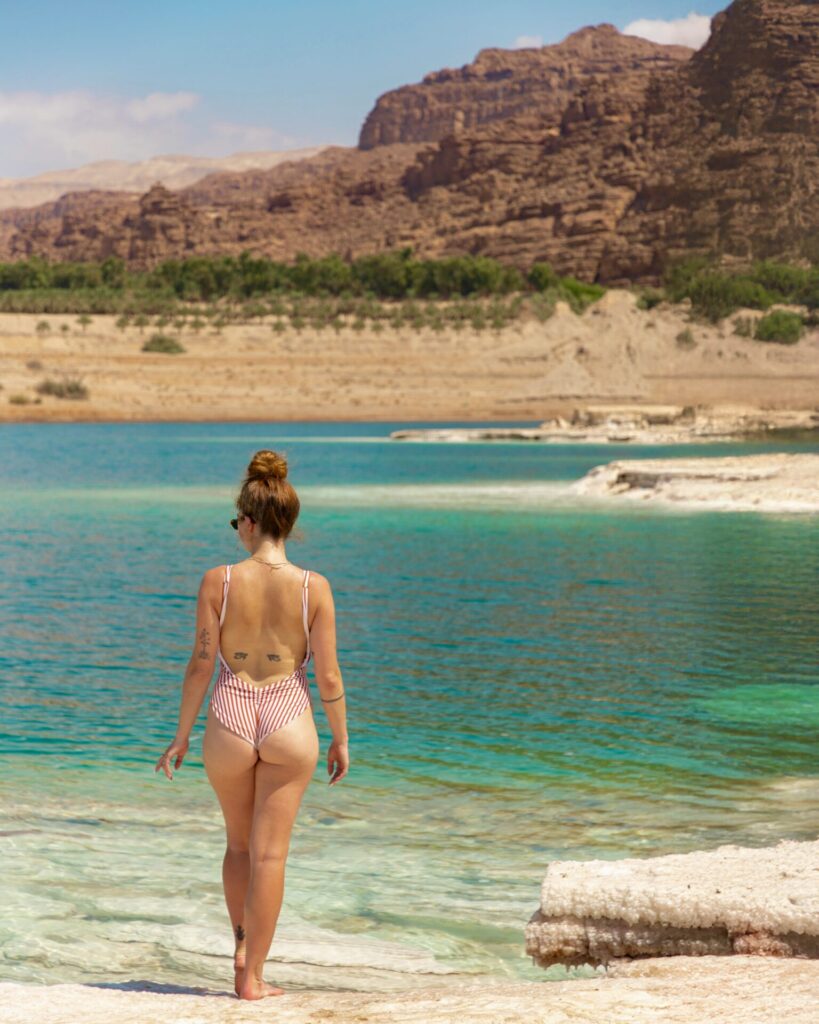
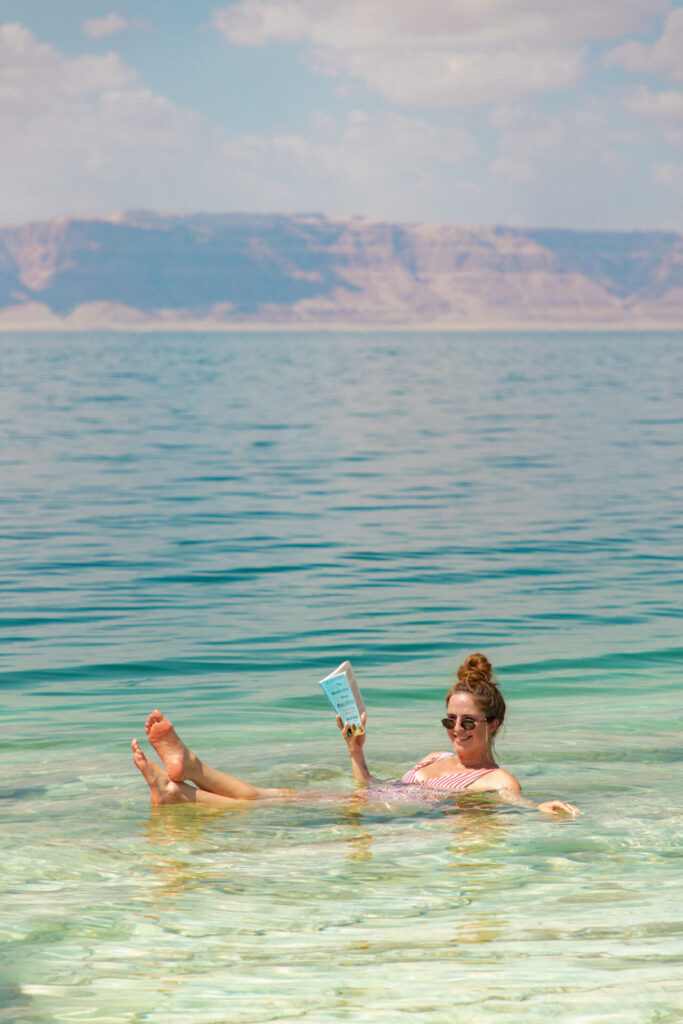
Floating in the Dead Sea is one of Jordan’s most iconic experiences, thanks to the extreme salinity (10x saltier than the ocean!) that makes it entirely effortless to stay buoyant. The surrounding desert landscapes are equally dramatic, with stark cliffs dropping onto the lowest point on Earth.

If you plan to visit the Dead Sea as a day-trip rather than an overnighter (not a bad idea, given how expensive the resorts are), head to the “coral reefs” for the best scenery and an amazing (free!) swimming spot OR purchase a day-pass from one of the local resorts, which will give you access to their facilities plus lunch for about $30-50USD. 

Tips for visiting the Dead Sea:

  • We’ve stayed overnight at 2 different Dead Sea resorts and more recently visited on a day-pass, and we’d honestly recommend the latter for most people— the resorts are expensive and rather tacky, the food is very average, and you simply don’t need an entire day to float in the Dead Sea. 
  • Avoid shaving (anywhere) in the 24hrs prior to visiting the Dead Sea or you will be STINGING!
  • Shower immediately after getting out of the water; if you’re swimming at a free road-side spot, make sure you BYO water to rinse off.
  • Bring water shoes— entry into the water can be incredibly sharp and painful due to salt formations.
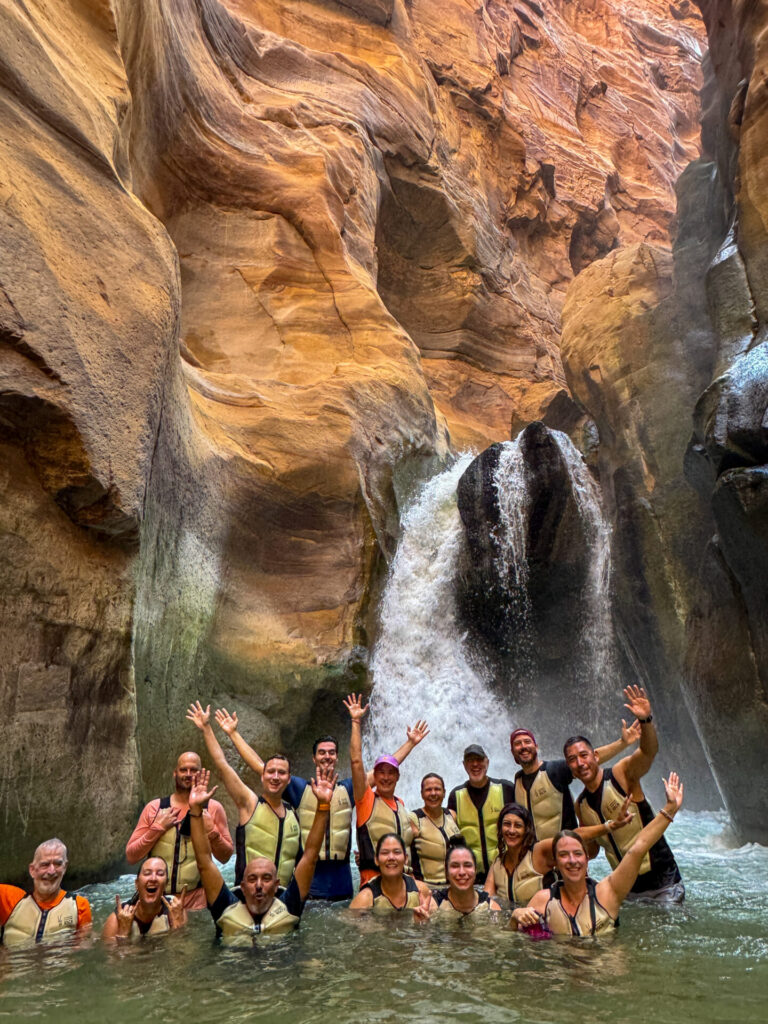
Wadi Mujib, Jordan
Canyoneering in Wadi Mujib on our adventure group trip to Jordan
Wadi Mujib, Jordan
Wadi Mujib, Jordan

Wadi Mujib

Drive time from Amman: 1.5hr | Time needed: Half–day (full-day combined with Dead Sea)

Only few minutes off the eastern side of the Dead Sea, this dramatic slot canyon offers Jordan’s most delightful DIY adventure: climbing, splashing, and floating your way upstream through towering canyon walls to a hidden waterfall. It’s equal parts hike and water park, and an absolute highlight for adventurous travellers— no guide needed!

There are several trails within Wadi Mujib, but as of 2026, The Siq Trail is the only open route— this is the most famous canyoneering trail and it’s doable for most anyone with basic fitness! It takes about 1hr to reach the waterfall at the end of The Siq, but allow 2.5-3hrs for the whole experience, including picking up gear and showering after.

Tips for visiting Wadi Mujib:

  • Arrive before 9am to beat the crowds (tour groups arrive around 10–11am).
  • Entry is 23JOD ($32USD) and includes a mandatory life jacket rental.
  • BYO water shoes and dry bag, or you can purchase plastic jelly sandals for 5JOD ($7USD) and rent a dry bag from the office.
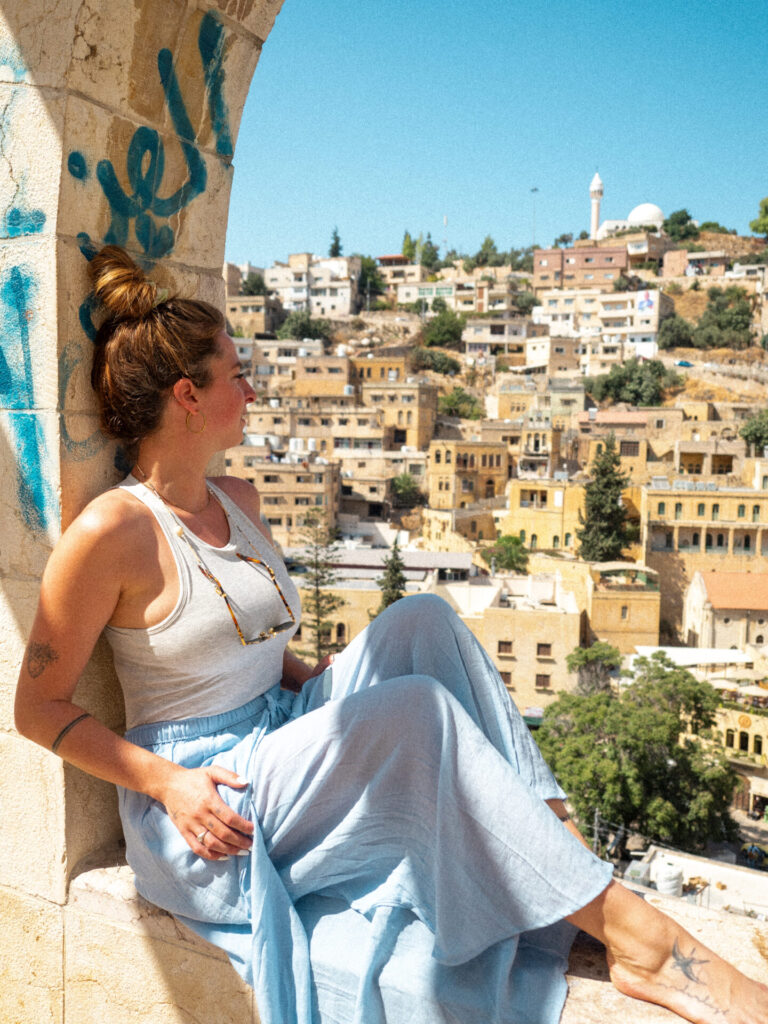
As-Salt, Jordan
Views over the little town of As-Salt

As-Salt

Drive time from Amman: 1hr | Time needed: Half-day

A laid-back hillside town known for its golden stone architecture, historic homes, and friendly local atmosphere, As-Salt is a great place to slow down and experience everyday Jordanian life. With far fewer tourists than elsewhere in the country, it’s more about the vibe than ticking off sites! We spent the night here, but it’s also easily experienced as a half-day excursion from Amman.

Tips for visiting As-Salt:

  • Wander the old town on foot to admire the Ottoman-era buildings.
  • Stop for lunch at Beit Aziz for incredible views over the hills.
  • Parking on the street can be a little challenging, but there are 2 paid parking lots near the plaza.
Madaba, Jordan
Mosaics in the church at Mt Nebo

Mt Nebo + Madaba

Drive time from Amman: 1hr | Time needed: Half-day

Believed to be the place where Moses first saw the Promised Land, combine a visit to Mt Nebo with a stop in nearby Madaba, a charming town known for its incredible Byzantine mosaics. From the summit of Mt Nebo, you’ll get sweeping views over the Jordan Valley (on a clear day, even to Jerusalem), before heading into Madaba to see the famous Madaba Map at St George’s Church.

Even without the slightest shred of biblical interest, we enjoyed visiting Mt Nebo for its gorgeous and impeccably preserved church mosaics! As for Madaba, Jordan’s “second city” feels more local and low-key than Amman, and it’s home to some of the BEST food in the country— locals will proudly tell you this, and we honestly agree!

Tips for visiting Madaba:

  • Mt Nebo + Madaba are easy to combine with the Dead Sea for a full-day excursion from Amman.
  • Entry to Mt Nebo is 3JOD ($4USD) and not included in the Jordan Pass.
  • Carob House is an absolute must, we’ve been multiple times and it’s still one of our all-time favourite restaurants!
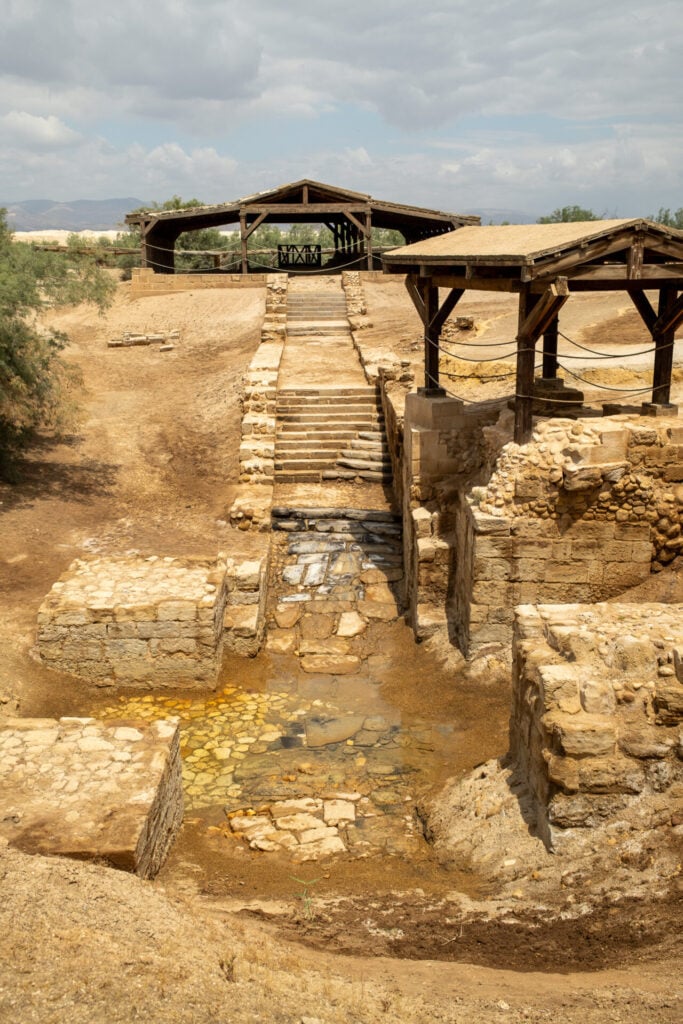
Bethany Beyond the Jordan

Drive time from Amman: 1hr | Time needed: Half-day

Located along the Jordan River just north of the Dead Sea, Bethany Beyond the Jordan is widely believed to be the site where Jesus was baptised, making it one of the most significant Christian pilgrimage sites in the world. The area itself is surprisingly understated, but a guided tour (required as part of site entrance) adds meaningful context. For the historically-minded or religious, this will be a must-see!

Tips for visiting Bethany Beyond the Jordan:

  • Allow 2-3hrs for the visit, including the shuttle bus from the parking area and the required guided tour.
  • As this is a religious site, it’s necessary to dress modestly— both men and women should cover knees and shoulders.
  • Bring your passport (this is a border zone and security is tight).
  • Easy to combine with the Dead Sea and/or Mt Nebo + Madaba for a full-day excrusion from Amman.
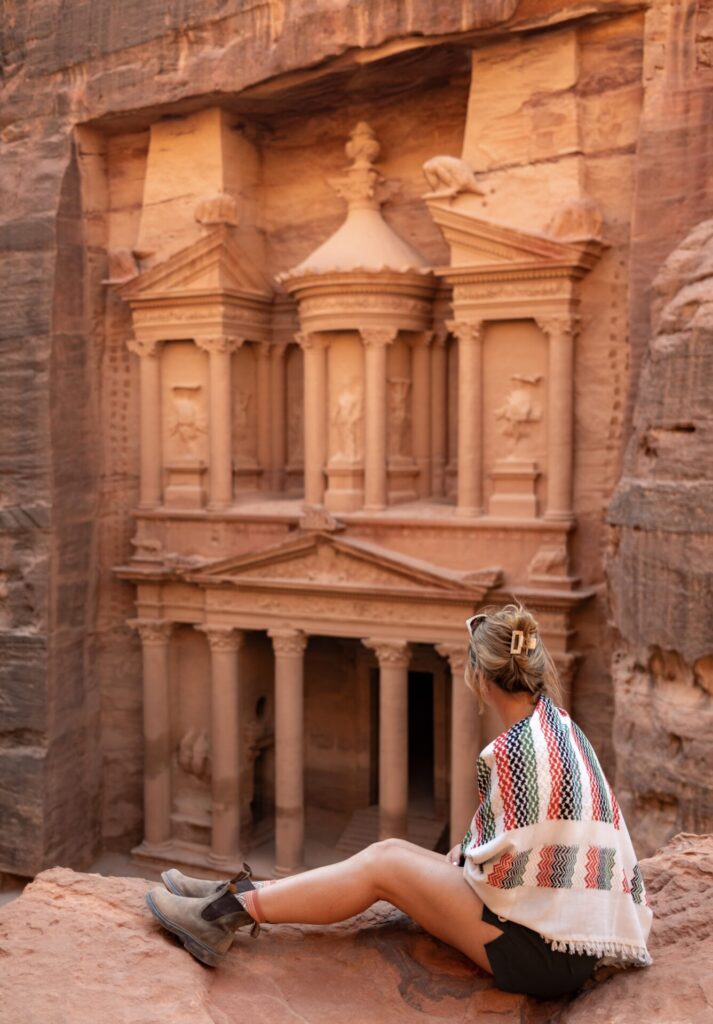
high viewpoint over the Treasury in Petra
Petra demands a minimum of 1-2 days– we don’t recommend this as a day-trip!

Petra

Drive time from Amman: 3hr | Time needed: 1–2 days (NOT a day trip)

Although it’s technically possible to visit Petra as a day-trip from Amman, I absolutely do NOT recommend it! To arrive to Petra around opening for the lowest crowds and coolest temperatures, you’d need to depart Amman around 4-5am… and then you’ll be rushed moving through the enormous site, which quite simply deserves a MINIMUM of 1 full day (but ideally 2 days) to really appreciate the hundreds of monuments, caves, temples, and trails within the ancient city.

If you’re planning a trip to Petra, check out >>> Hiking Petra in 2 days: Backdoor Trail & the secret Al Madras Trail
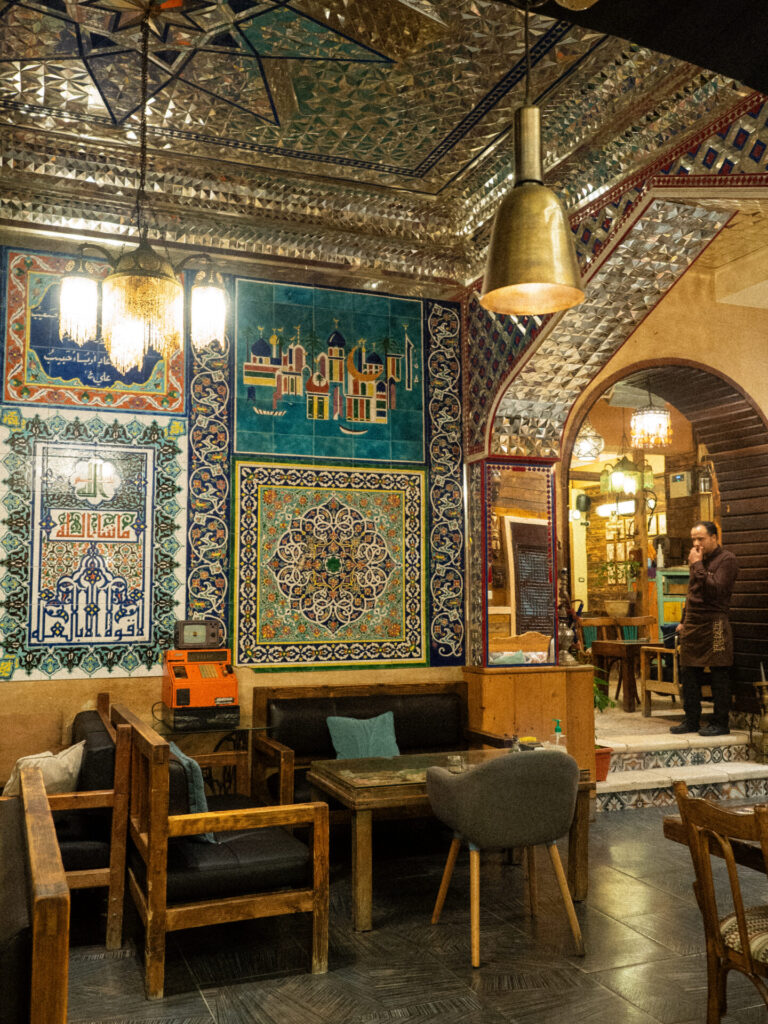
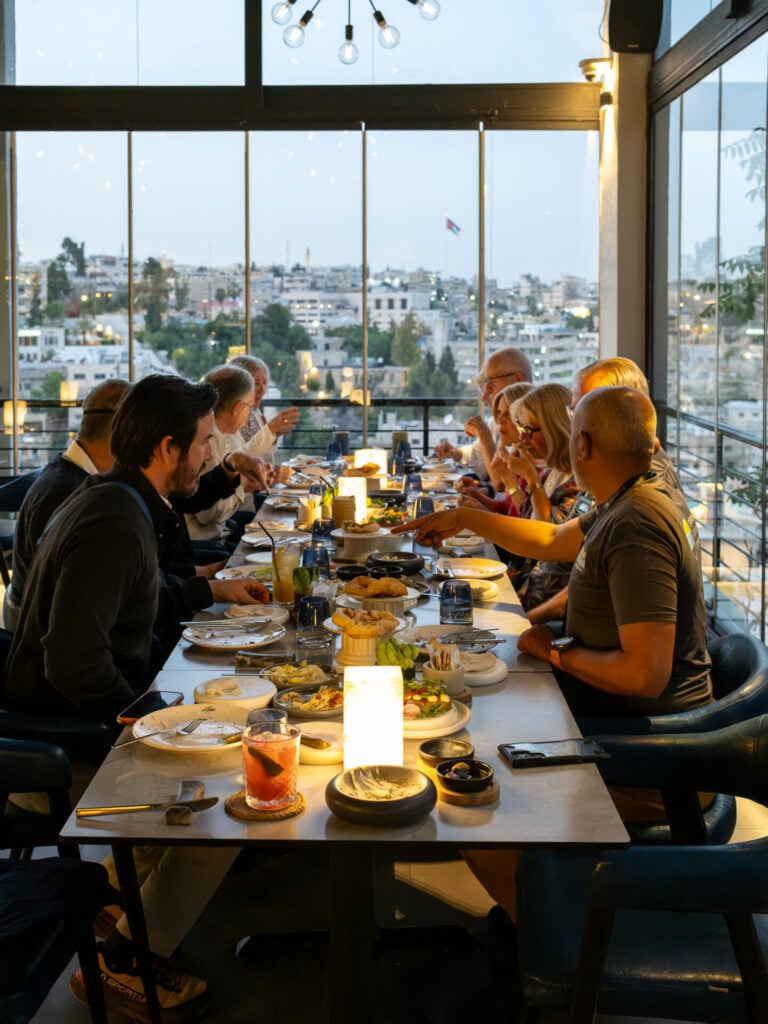
Rakwet Arab restaurant in Amman
Rakwet Arab restaurant in Weibdeh

Where to eat in Amman

Food is a HUGE part of the experience in Jordan, and Amman is one of the best places to dive into the country’s incredible culinary scene. Jordanian cuisine shares many flavours with the broader Levant (Jordan, Lebanon, Syria, Palestine), with an emphasis on fresh herbs, warm spices, olive oil, and vibrant mezze spreads. It’s easily one of my top cuisines and I’d bet it’ll become one of yours, too!

🧆 DELICIOUS JORDANIAN DISHES TO TRY

* falafel: crispy fried chickpea balls, usually served with hummus or in pita
* fatteh makdous: layers of crispy flatbread, yoghurt, tahini, and fried eggplant
* mansaf: Jordan’s national dish of lamb cooked in fermented yoghurt sauce and served over rice 
* maklouba: an “upside-down” rice dish with chicken/meat and vegetables that’s flipped dramatically before serving (so moist and delicious!)
* fattoush: a fresh salad of vegetables, herbs, and toasted flatbread with a tangy sumac dressing
* shawarma: spit-roasted meat shaved into wraps with garlic sauce and pickles

Best restaurants in Amman

Best restaurants in Amman

A few stand-out restaurants across the city that we return to again and again:

  • Rakwet Arab: our favourite spot for traditional Jordanian food (and always the first place we take our group trips!), with an extensive menu, great atmosphere, incredible eggplant fatteh, and shisha on the patio
  • Sufra Restaurant: beautiful courtyard restaurant on Rainbow Street serving authentic Jordanian mezze and mains in a more upscale setting, with wine and beer available
  • Alee: award-winning modern Jordanian fusion restaurant with inventive dishes and equally creative cocktails, ranked on the list of 50 best restaurants in the Middle East & Africa multiple years in a row!
  • Chapters: relaxed Weibdeh eatery serving excellent traditional dishes at a very reasonable price-point
  • Shahrazad: super casual downtown spot known for hearty local meat dishes— don’t miss the kofta tahini for just 3JOD
  • Hashem Restaurant: a true Amman institution serving some of the best hummus and falafel in the city, where you can eat an entire meal for just a couple dinars
  • Shawerma Reem: legendary roadside stall directly on the 2nd Circle serving the best shawarma in Amman for ~1 JOD per wrap
  • Al Quds Falafel: local favourite on Rainbow Street, with amazing crispy falafel sandwiches at just 0.6JOD (ask for spicy!)
Best cafes in Amman
Best cafes in Amman

Best cafés in Amman

Amman has a growing third-wave coffee scene (I don’t drink coffee, so all of these spots are James-approved!) alongside some of the best fresh juice stands you’ll find anywhere (my personal go-to). Here are our top picks for coffee, tea, juice, and light nibbles:

  • Rumi Cafe: charming spot in Weibdeh known for great coffee and manakeesh (sourdough flatbread with a variety of toppings, kind of like Jordanian pizza!)
  • Yafa Coffee House: charming, character-filled café covered in political art, located in an atmospheric alleyway between the downtown and Weibdeh 
  • Satar Coffee House: great menu of coffee and other tasty drinks, right on Rainbow Street
  • Jungle Fever: cozy, plant-filled café in Weibdeh with a relaxed vibe and excellent specialty coffee
  • Nest Coffee: one of the best spots in Amman for specialty coffee, with comfortable seating and a modern vibe
  • Palestine Juice: a downtown favourite for fresh fruit juice (~1.5 JOD), perfect for a quick refresh between sights
  • Juice Village: excellent juice and smoothie bar on Rainbow Street
  • We Farm: another great spot for fresh juices and assorted healthy smoothies in Weibdeh
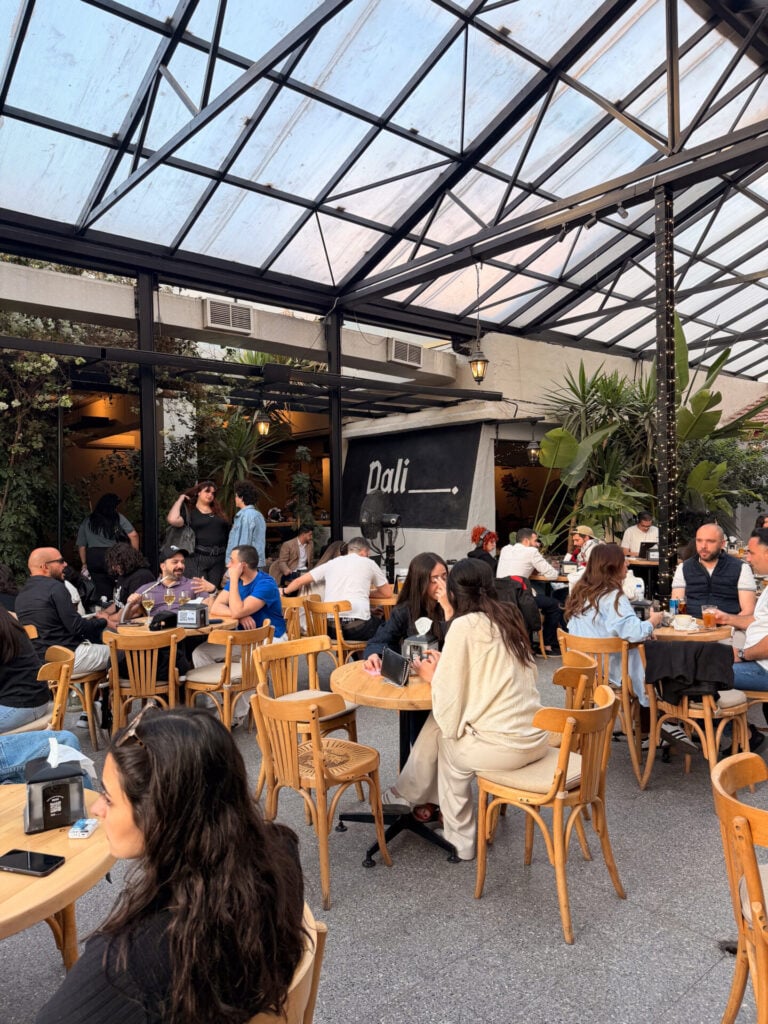
Best co-working cafes for digital nomads in Amman

Every time we visit Amman, we spend several days working on our laptops and have hauled them all over town in search of the best co-working cafes— strong wifi, charging outlets, comfortable seating, a good menu, and friendly staff who are happy to welcome remote workers! Here are our go-to spots for co-working in Amman:

  • Dali: simple but extensive food, drink, and shisha menu; outdoor seating in shade with large fans— our favourite spot to work for the entire day
  • Rumi Cafe: busy and hard to get a table, but classic working spot with excellent food; wifi only with access code (90min included with drink/food purchase)
  • Nest Specialty Coffee: comfy indoor seating with aircon, drinks and pastries only
  • Kan Coffee House and Tea Bar: no food, but great coffee and tea
  • La Folie: spacious, low-key café with good coffee, some food, and plenty of seating for focused work
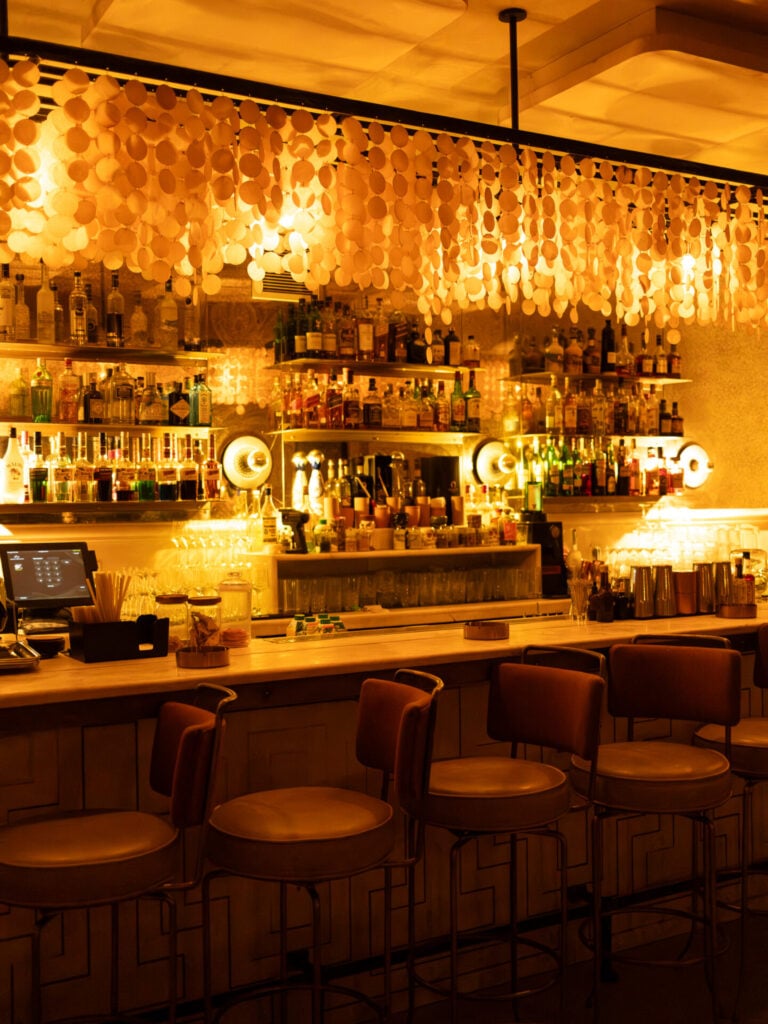
Dali, Amman
Dali is our favourite spot for a beer in Amman!

Best bars in Amman

While many establishments in Amman don’t serve alcohol, you can absolutely find bars around the city if you know where to look! These are our favourite places to grab a drink:

  • Dali: all-day café/bar with an awesome vibe and long list of local beer and basic cocktails— our favourite place to hang out in Weibdeh!
  • Canteloupe: rooftop bar on Rainbow Street with a great selection of beer, wine, and cocktails, plus excellent city views
  • Alee: creative high-end cocktails at one of the city’s most acclaimed restaurants, just above Rainbow Street
  • Biera: craft brewpub located out at the 6th Circle (inexpensive 15min taxi from the 1st), with heaps of beer on tap, plus a long list of wine and cocktails
  • Rustic Bar and Eatery: burger bar in Weibdeh right next to Canary Boutique Hotel (one of my recommended places to stay below), with a long cocktail and beer list
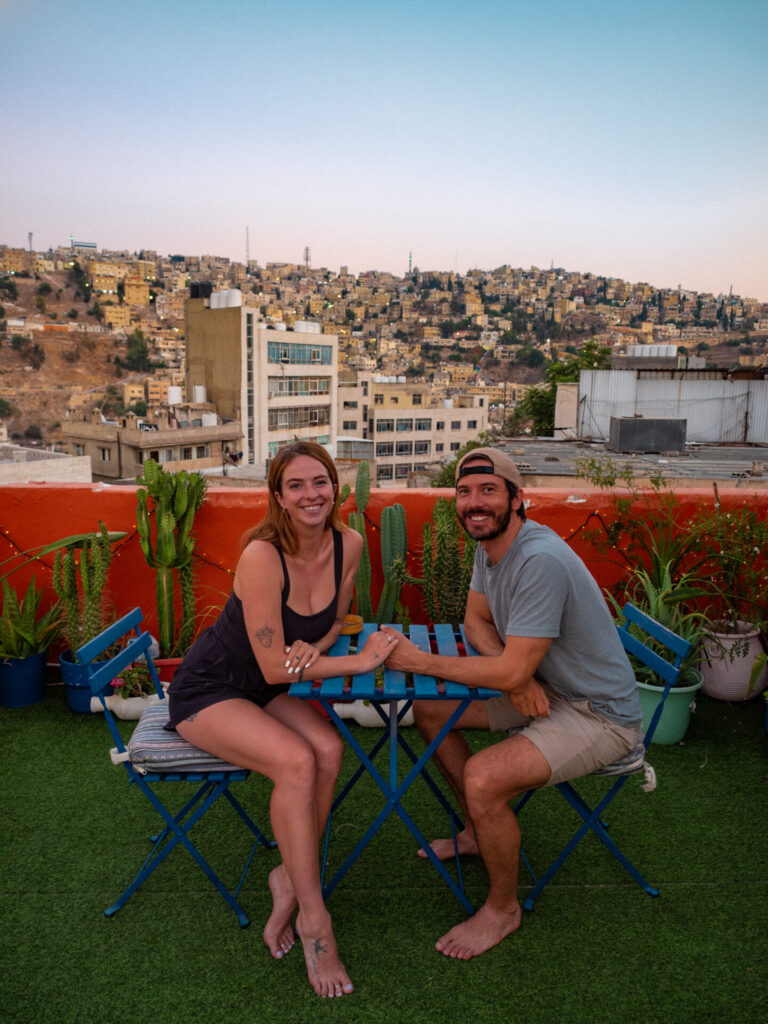
Medusa's House in Amman
View from the rooftop at Medusa’s House

Where to stay in Amman

For a majority of travellers, we’d highly recommend staying somewhere on (or very near) Rainbow Street OR Jabal Al Weibdeh. These are some of the most atmospheric and walkable parts of the city, with a great mix of local eateries, trendy cafés, and high-quality restaurants, along with a strong boutique hotel scene that we vastly prefer over the larger international chains. Here are our top picks for the best hotels in Amman:
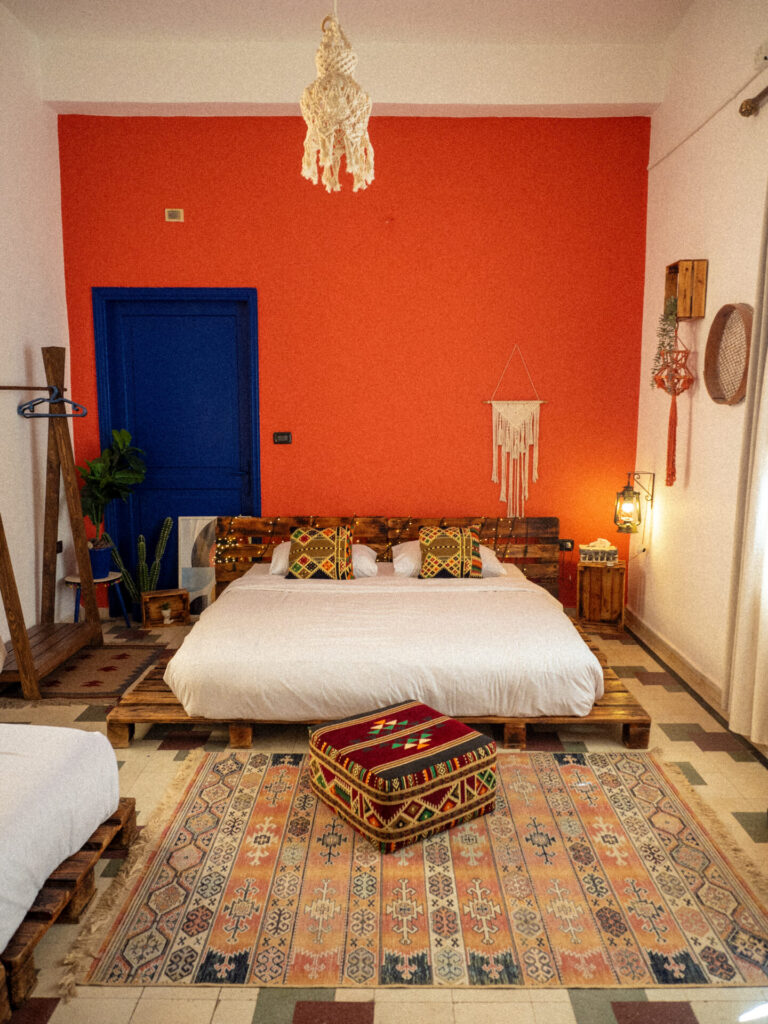
Medusa's House in Amman
Medusa’s House just off Rainbow Street

Best budget-friendly guesthouse: Medusa’s House

We stayed at Medusa’s House on our first trip to Amman in 2024, and it remains an absolute favourite! This is a truly special guesthouse run by the friendly Motaz (and his adorable kitty, Ashley), located just off Rainbow Street with unbeatable views from the rooftop terrace.

Rooms are comfortable and beautifully decorated, with the option of shared or private bathrooms, and all guests have access to a communal kitchen, dining area, and lounge. It feels like an elevated hostel: social and welcoming, but without crammed dorm beds or any obnoxious “party vibe.”  Expect to pay about $40/night for the privilege of staying at Medusa!
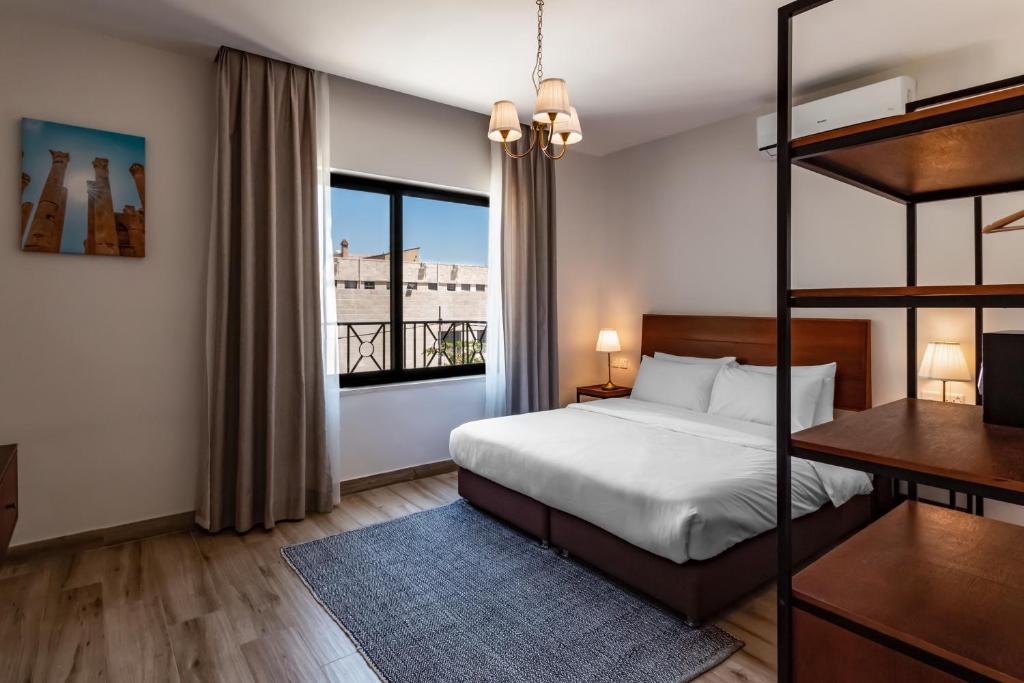
Canary Boutique Hotel in Amman
Comfortable rooms at the Canary Boutique Hotel in Weibdeh

Best mid-range hotel: Canary Boutique Hotel

Canary Boutique is a fairly simple hotel, but with an absolutely prime location right in the heart of Weibdeh (within easy walking distance of countless cafes, bars, and restaurants). At $100/night, it’s also great value for money!

Rooms are simple but very comfortable, and the included breakfast (served at the adjoining Mazzeh Lebanese restaurant) is genuinely exceptional— one of the most impressive spreads we’ve seen, with a huge variety of Middle Eastern dishes alongside Western options. If you want to stay in Weibdeh, Canary Hotel is the best spot.

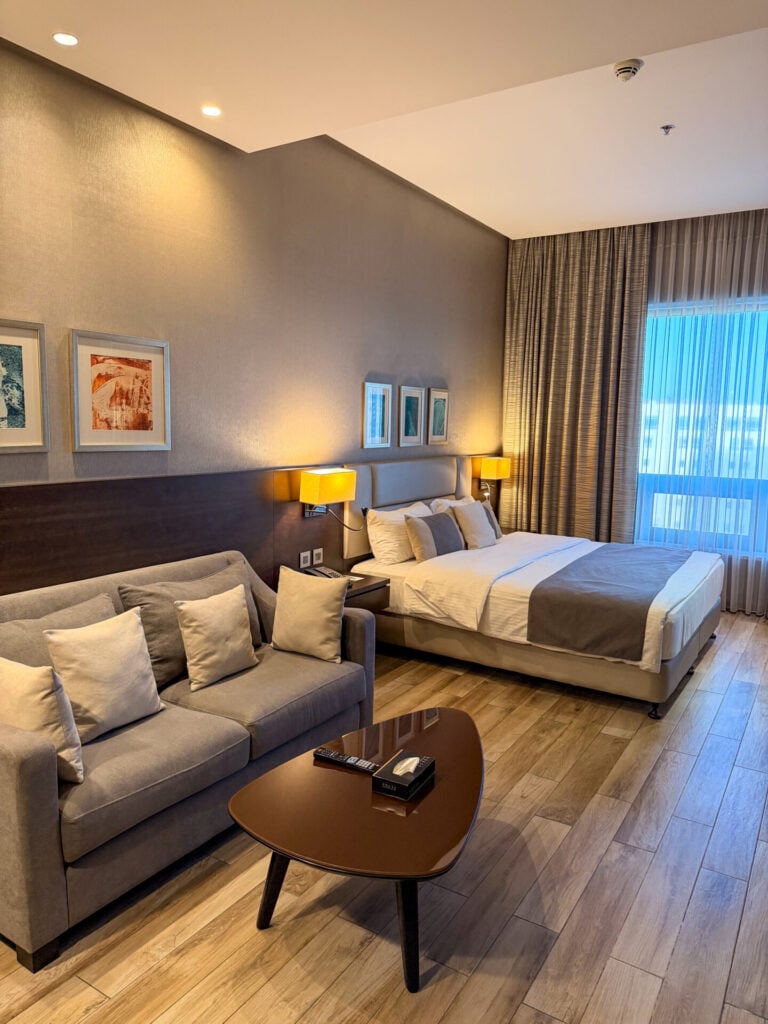
Luxury rooms at House Boutique Suites

Best upgraded hotel: House Boutique Suites

Finally, House Boutique is a more upscale option that still offers excellent value ($150/night), with spacious suite-style rooms featuring kitchenettes, couches, and separate living areas, plus a pool and fitness centre in the building.

The location (between 1st and 2nd Circle) is slightly less walkable than Rainbow Street or Weibdeh, but still convenient enough for a short visit— and the extra ammenities and overall comfort of House Boutique Suites do make up for it if you want a more “hotel-style” stay without sacrificing boutique charm.


Sunset at Amman Citadel
Downtown Amman
Cats in Amman

🗺️ TRAVEL TIPS FOR JORDAN

→ Language: Arabic is the official language, but English is widely spoken in cities and tourist areas; language barrier is minimal for English-speakers

→ Currency: Jordanian Dinar (JOD), pegged to the USD at 1 JOD ≈ $1.4USD pretty consistently over the last couple years

→ Tourist visa: Most nationalities (AUS, USA, EU, UK, CAN) require a visa on arrival (40JOD / $57USD)—but this is waived if you purchase the Jordan Pass, which also covers entry to 40+ sites including Petra and Jerash

→ SIM card: install an eSIM for Jordan via Airalo; service is reliable throughout the country, except on remote parts of the Jordan Trail

→ Entry fees: highly recommend purchasing the Jordan Pass online before your trip— it waives the visa fee (saving 40 JOD) and includes entry to 40+ sites, including Petra, Jerash, Kerak Castle & Wadi Rum. At 70JOD / $105USD, the pass easily pays for itself!

→ Packing list: most clothing (no cleavage or tight-fitting shorts) is appreciated; check out my specific packing list for Jordan to see more recommendations COMING SOON

→ Essential apps: Google Maps (download for offline use); Uber (useful for getting around Amman without driving); Google Translate (to decipher Arabic menus)

Read more about Jordan

The ultimate 2-week Jordan road-trip itinerary COMING SOON

Hiking Petra in 2 days: Backdoor Trail & the secret Al Madras Trail

Wadi Rum adventure guide: how to plan an epic trip to Jordan’s red desert

Hiking the Jordan Trail from Dana to Petra: Jordan’s best 5-day hike

TAGS:city guidestravel guides
0 Comments
Share
brooke beyond

Hey, I'm Brooke and I'm obsessed with getting off the beaten path, exploring backcountry gems & travelling beyond the ordinary! I left Australia 6 years ago after finishing a PhD in Biomechanics & have been travelling the world full-time ever since (joined by my husband/climbing partner, James). Whether it’s road-tripping through Mexico, climbing alpine peaks in the Andes, scuba diving in the Red Sea, or tackling epic via ferrata in the Dolomites, I hope this blog will inspire your future adventures & help you find wonder in every corner of the globe. xx bb

Leave a Comment Cancel Comment

You May Also Like

2 April 2026

Wadi Rum adventure guide: how to plan an epic trip to Jordan’s red desert

16 November 2024

Hiking Petra in 2 days: Backdoor Trail & the secret Al Madras Trail

5 October 2024

Hiking the Jordan Trail from Dana to Petra: Jordan’s best 5-day hike

hi, I’m brooke!

I'm obsessed with getting off the beaten path, exploring backcountry gems & travelling beyond the ordinary! I left Australia 6 years ago after finishing a PhD in Biomechanics & have been travelling the world full-time ever since (now joined by my husband/climbing partner, James). I hope this blog will inspire your future adventures & help you find wonder in every corner of the globe. xx bb

read my story
currently exploring

currently exploring

finland

read our gear guides

🥾 hiking boots

🎒 hiking backpacks

🌨️ cold-weather layers

⛺️ backpacking & alpine tents

🛌 sleeping bag & pads

🍪 backcountry food

📸 travel camera gear

trail guides

summit guides

itineraries

outdoor gear

GPS maps

recent posts

  • Amman city guide: what to do + where to stay in Jordan’s capital

    5 April 2026
  • Little Bridge, Wadi Rum

    Wadi Rum adventure guide: how to plan an epic trip to Jordan’s red desert

    2 April 2026
  • 2-week Norway winter itinerary: Arctic Circle to southern fjords

    20 February 2026
  • Tjeldbergtind winter hike

    Complete Lofoten winter packing list: what to wear for hiking in Arctic Norway

    8 February 2026
  • Ryten winter hike

    Best winter hikes in Lofoten: your guide to safe winter hiking in Arctic Norway

    30 January 2026

@brookebeyond_
brooke ✨travel & mountain gal

@brookebeyond_

  • A few snapshots from one of our most unique adventures: a 4-day dogsledding trip through Sámi country (Sápmi) in Northern Sweden ❄️

For thousands of years, dogsledding has been an essential form of Arctic transport for Indigenous communities, used to travel, hunt, and survive in some of the harshest conditions on earth. Huskies are bred specifically for this environment, capable of running for hours across frozen landscapes + hauling several hundred kilos as a team.

To experience it for ourselves, we took a 15hr train from Stockholm to Kiruna, drove 2hrs deep into the wilderness, and then caught a snowmobile the final kilometres to reach a remote kennel with about 50 dogs. Our first day was spent learning the basics: how to harness the huskies, attach them to the sled, and steer + brake properly. 

And then, we set off into the wilderness with our team of 6 dogs, travelling through snowy forests + across frozen lakes. 

James + I shared the sled, taking turns driving while the other sat bundled up inside, eyelashes freezing into icicles in the -30°C (-22°F) chill for hours at a time.

It was unbelievably remote, the conditions were challenging, and the cold was brutal, but through it all, we formed a real bond with our team— particularly surprising given that I’m usually very scared of dogs (pictured several times here is my beloved Reisling, the best doggie 🐕🖤)

It was a surprising + unexpected adventure, but such a special way to experience wild + beautiful Sápmi*

*we learned that Sápmi is the traditional + often preferred term (over “Lapland”) for the region of northern Norway, Sweden, Finland, and Russia inhabited by the Indigenous Sámi people

—
#sweden #kiruna #dogsledding #sápmi #lapland
  • magical winter lighting delivering midday sunrises and northern lights before dinner ✨ 

—
#lofoten #winter #norway #northernlights #polarnight
  • With sufficient outdoor experience, sound judgement, and reasonable conditions, these 10 hikes are an excellent choice for safe winter hiking in Lofoten!

We personally completed all of these hikes in January 2026 with just microspikes + trekking poles (and no other technical climbing equipment), though it should be noted that conditions vary winter to winter— and even week to week. In the event of heavy snowfall, some trails may become impassable without snowshoes or simply unsafe altogether.

**It should ALSO go without saying that you are responsible for yourself in the outdoors; this list is based on our own personal experience and must be interpreted within the bounds of your own experience and current winter conditions.

For more on winter hiking safety and details on these 10 amazing winter hikes, check out my post 🔗 brookebeyond.com/lofoten-winter-hiking
  • a collection of some mind-blowing aurora moments from our 5 weeks in Norway 🤯 

*watch the videos with sound to hear me & @flyingcrepes screaming like it’s our first day on earth lol

—
#norway #northernlights #aurora #northernlightsphotos
  • The exact layers I wore for chilly winter hiking all through January in Lofoten ☃️

see the complete list at 🔗 brookebeyond.com/lofoten-winter-packing-list

——
#norway #lofoten #winterhiking #layering #winterstyle
  • Everything we spent for 2 people travelling around Norway for 5 weeks in January 2026:

**this is not meant to represent the cheapest way to explore Norway in winter, it’s just what we personally spent for one of the best trips of our whole lives!!

$6,388 ACCOMMODATION
🏡35 nights in apartments/cabins = $6,388

$2,785 TRANSPORTATION
✈️ airfare = $647
🚘 car hire = $1,807
⛽️ fuel + parking = $113
🚕 private transport (Uber) = $111
🚃 public transport (train) = $107

$1,699 FOOD & DRINKS
🧁 bakery treats = $103
🍹 drinks = $152
🌮 eating out = $611
🧀 groceries = $833

$1,155 ACTIVITIES
🔥 sauna entry = $302
🐋 tours = $853

$27 TRAVEL LOGISTICS
📲 eSIM = $27

TOTAL…
—> $12,054 USD for 2 people over 35 days
—> an average of $172/day per person

Is this more or less than you expected??

———
#norway #norwaytravel #lofoten #tromsø #travelbudget
  • Although sauna culture is shared across much of the Nordic region, Norway has put its own spin on the tradition with thousands of floating, fjord-side saunas (that I am truly obsessed with).

In many coastal towns, these wood-fired saunas are moored right in the harbour, with a hatch or ladder that drops straight into the icy fjord for a cold plunge. The result is a distinctly Norwegian winter ritual: alternating intense heat and 3C seawater while surrounded by dramatic mountain and fjord scenery 😍

a few of our favourite floating saunas in Norway:
📍 Fjordsauna, Flåm @fjordsauna 
📍 Vulkana Arctic Spa Boat, Tromsø @vulkana.adventure 
📍 Pust Lavvo Sauna, Tromsø @pust.lifestyle 
📍 KOK Langkaia, Oslo @kokoslo.no 
📍 Soria Moria Sauna, Dalen @dalenhotel 

———
#sauna #floatingsauna #norway #scandinavia #winterescape
  • Nearly 2,000 stone steps (installed by a Nepalese Sherpa team in 2021) have transformed Reinebringen from a notoriously dangerous ascent into a straightforward hike to the most iconic viewpoint in all of Lofoten!

In good winter conditions, it’s a steep but spectacular ~45min push.

But in POOR winter conditions? Or with no experience + insufficient winter gear?? It’s a drain on the Norwegian search & rescue teams who keep having to haul tourists off the mountain.

I’m expecting some criticism for even posting about hiking Reinebringen in winter, but I believe strongly in personal accountability + responsibility in the outdoors, so I hope this empowers you to make an informed decision, whether that means tackling routes like Reinebringen or finding equally beautiful but easier + safer hikes around the islands!

——
#lofoten #norway #reinebringen #reine #winterhiking
  • *me frantically sending Lofoten photos to every group chat I’m part of*

We spent the last 3 weeks exploring this dramatic archipelago off the northwestern coast of Norway, high above the Arctic Circle & almost never considered a winter destination.

Yet we turned to each other no less than 10 times a day to announce that THIS IS ONE OF THE BEST TRIPS WE’VE EVER TAKEN.

We hiked to empty summits without seeing another person, snapped photos on windy ridges, watched the aurora on 20 different nights, ate soup in the hot tub at 5am while it snowed around us, baked cardamom buns with our favourite friends, ran out of the sauna in towels to witness the strongest solar storm in 20 years, and had a lifetime worth of wow-moments in the span of just 22 days.

It was the kind of trip where everything just feels ✨special✨, like you already know you’re going to remember it forever.

——
#lofoten #norway #aurora #northernlights #arcticcircle
follow @brookebeyond_

travel beyond the ordinary

Explore my travel guides, custom itineraries & blog posts with an interactive world map ✨

all destinations

  • A few snapshots from one of our most unique adventures: a 4-day dogsledding trip through Sámi country (Sápmi) in Northern Sweden ❄️

For thousands of years, dogsledding has been an essential form of Arctic transport for Indigenous communities, used to travel, hunt, and survive in some of the harshest conditions on earth. Huskies are bred specifically for this environment, capable of running for hours across frozen landscapes + hauling several hundred kilos as a team.

To experience it for ourselves, we took a 15hr train from Stockholm to Kiruna, drove 2hrs deep into the wilderness, and then caught a snowmobile the final kilometres to reach a remote kennel with about 50 dogs. Our first day was spent learning the basics: how to harness the huskies, attach them to the sled, and steer + brake properly. 

And then, we set off into the wilderness with our team of 6 dogs, travelling through snowy forests + across frozen lakes. 

James + I shared the sled, taking turns driving while the other sat bundled up inside, eyelashes freezing into icicles in the -30°C (-22°F) chill for hours at a time.

It was unbelievably remote, the conditions were challenging, and the cold was brutal, but through it all, we formed a real bond with our team— particularly surprising given that I’m usually very scared of dogs (pictured several times here is my beloved Reisling, the best doggie 🐕🖤)

It was a surprising + unexpected adventure, but such a special way to experience wild + beautiful Sápmi*

*we learned that Sápmi is the traditional + often preferred term (over “Lapland”) for the region of northern Norway, Sweden, Finland, and Russia inhabited by the Indigenous Sámi people

—
#sweden #kiruna #dogsledding #sápmi #lapland
  • magical winter lighting delivering midday sunrises and northern lights before dinner ✨ 

—
#lofoten #winter #norway #northernlights #polarnight
  • With sufficient outdoor experience, sound judgement, and reasonable conditions, these 10 hikes are an excellent choice for safe winter hiking in Lofoten!

We personally completed all of these hikes in January 2026 with just microspikes + trekking poles (and no other technical climbing equipment), though it should be noted that conditions vary winter to winter— and even week to week. In the event of heavy snowfall, some trails may become impassable without snowshoes or simply unsafe altogether.

**It should ALSO go without saying that you are responsible for yourself in the outdoors; this list is based on our own personal experience and must be interpreted within the bounds of your own experience and current winter conditions.

For more on winter hiking safety and details on these 10 amazing winter hikes, check out my post 🔗 brookebeyond.com/lofoten-winter-hiking
  • a collection of some mind-blowing aurora moments from our 5 weeks in Norway 🤯 

*watch the videos with sound to hear me & @flyingcrepes screaming like it’s our first day on earth lol

—
#norway #northernlights #aurora #northernlightsphotos
  • The exact layers I wore for chilly winter hiking all through January in Lofoten ☃️

see the complete list at 🔗 brookebeyond.com/lofoten-winter-packing-list

——
#norway #lofoten #winterhiking #layering #winterstyle
A few snapshots from one of our most unique adventures: a 4-day dogsledding trip through Sámi country (Sápmi) in Northern Sweden ❄️

For thousands of years, dogsledding has been an essential form of Arctic transport for Indigenous communities, used to travel, hunt, and survive in some of the harshest conditions on earth. Huskies are bred specifically for this environment, capable of running for hours across frozen landscapes + hauling several hundred kilos as a team.

To experience it for ourselves, we took a 15hr train from Stockholm to Kiruna, drove 2hrs deep into the wilderness, and then caught a snowmobile the final kilometres to reach a remote kennel with about 50 dogs. Our first day was spent learning the basics: how to harness the huskies, attach them to the sled, and steer + brake properly. 

And then, we set off into the wilderness with our team of 6 dogs, travelling through snowy forests + across frozen lakes. 

James + I shared the sled, taking turns driving while the other sat bundled up inside, eyelashes freezing into icicles in the -30°C (-22°F) chill for hours at a time.

It was unbelievably remote, the conditions were challenging, and the cold was brutal, but through it all, we formed a real bond with our team— particularly surprising given that I’m usually very scared of dogs (pictured several times here is my beloved Reisling, the best doggie 🐕🖤)

It was a surprising + unexpected adventure, but such a special way to experience wild + beautiful Sápmi*

*we learned that Sápmi is the traditional + often preferred term (over “Lapland”) for the region of northern Norway, Sweden, Finland, and Russia inhabited by the Indigenous Sámi people

—
#sweden #kiruna #dogsledding #sápmi #lapland
A few snapshots from one of our most unique adventures: a 4-day dogsledding trip through Sámi country (Sápmi) in Northern Sweden ❄️

For thousands of years, dogsledding has been an essential form of Arctic transport for Indigenous communities, used to travel, hunt, and survive in some of the harshest conditions on earth. Huskies are bred specifically for this environment, capable of running for hours across frozen landscapes + hauling several hundred kilos as a team.

To experience it for ourselves, we took a 15hr train from Stockholm to Kiruna, drove 2hrs deep into the wilderness, and then caught a snowmobile the final kilometres to reach a remote kennel with about 50 dogs. Our first day was spent learning the basics: how to harness the huskies, attach them to the sled, and steer + brake properly. 

And then, we set off into the wilderness with our team of 6 dogs, travelling through snowy forests + across frozen lakes. 

James + I shared the sled, taking turns driving while the other sat bundled up inside, eyelashes freezing into icicles in the -30°C (-22°F) chill for hours at a time.

It was unbelievably remote, the conditions were challenging, and the cold was brutal, but through it all, we formed a real bond with our team— particularly surprising given that I’m usually very scared of dogs (pictured several times here is my beloved Reisling, the best doggie 🐕🖤)

It was a surprising + unexpected adventure, but such a special way to experience wild + beautiful Sápmi*

*we learned that Sápmi is the traditional + often preferred term (over “Lapland”) for the region of northern Norway, Sweden, Finland, and Russia inhabited by the Indigenous Sámi people

—
#sweden #kiruna #dogsledding #sápmi #lapland
A few snapshots from one of our most unique adventures: a 4-day dogsledding trip through Sámi country (Sápmi) in Northern Sweden ❄️

For thousands of years, dogsledding has been an essential form of Arctic transport for Indigenous communities, used to travel, hunt, and survive in some of the harshest conditions on earth. Huskies are bred specifically for this environment, capable of running for hours across frozen landscapes + hauling several hundred kilos as a team.

To experience it for ourselves, we took a 15hr train from Stockholm to Kiruna, drove 2hrs deep into the wilderness, and then caught a snowmobile the final kilometres to reach a remote kennel with about 50 dogs. Our first day was spent learning the basics: how to harness the huskies, attach them to the sled, and steer + brake properly. 

And then, we set off into the wilderness with our team of 6 dogs, travelling through snowy forests + across frozen lakes. 

James + I shared the sled, taking turns driving while the other sat bundled up inside, eyelashes freezing into icicles in the -30°C (-22°F) chill for hours at a time.

It was unbelievably remote, the conditions were challenging, and the cold was brutal, but through it all, we formed a real bond with our team— particularly surprising given that I’m usually very scared of dogs (pictured several times here is my beloved Reisling, the best doggie 🐕🖤)

It was a surprising + unexpected adventure, but such a special way to experience wild + beautiful Sápmi*

*we learned that Sápmi is the traditional + often preferred term (over “Lapland”) for the region of northern Norway, Sweden, Finland, and Russia inhabited by the Indigenous Sámi people

—
#sweden #kiruna #dogsledding #sápmi #lapland
A few snapshots from one of our most unique adventures: a 4-day dogsledding trip through Sámi country (Sápmi) in Northern Sweden ❄️

For thousands of years, dogsledding has been an essential form of Arctic transport for Indigenous communities, used to travel, hunt, and survive in some of the harshest conditions on earth. Huskies are bred specifically for this environment, capable of running for hours across frozen landscapes + hauling several hundred kilos as a team.

To experience it for ourselves, we took a 15hr train from Stockholm to Kiruna, drove 2hrs deep into the wilderness, and then caught a snowmobile the final kilometres to reach a remote kennel with about 50 dogs. Our first day was spent learning the basics: how to harness the huskies, attach them to the sled, and steer + brake properly. 

And then, we set off into the wilderness with our team of 6 dogs, travelling through snowy forests + across frozen lakes. 

James + I shared the sled, taking turns driving while the other sat bundled up inside, eyelashes freezing into icicles in the -30°C (-22°F) chill for hours at a time.

It was unbelievably remote, the conditions were challenging, and the cold was brutal, but through it all, we formed a real bond with our team— particularly surprising given that I’m usually very scared of dogs (pictured several times here is my beloved Reisling, the best doggie 🐕🖤)

It was a surprising + unexpected adventure, but such a special way to experience wild + beautiful Sápmi*

*we learned that Sápmi is the traditional + often preferred term (over “Lapland”) for the region of northern Norway, Sweden, Finland, and Russia inhabited by the Indigenous Sámi people

—
#sweden #kiruna #dogsledding #sápmi #lapland
A few snapshots from one of our most unique adventures: a 4-day dogsledding trip through Sámi country (Sápmi) in Northern Sweden ❄️

For thousands of years, dogsledding has been an essential form of Arctic transport for Indigenous communities, used to travel, hunt, and survive in some of the harshest conditions on earth. Huskies are bred specifically for this environment, capable of running for hours across frozen landscapes + hauling several hundred kilos as a team.

To experience it for ourselves, we took a 15hr train from Stockholm to Kiruna, drove 2hrs deep into the wilderness, and then caught a snowmobile the final kilometres to reach a remote kennel with about 50 dogs. Our first day was spent learning the basics: how to harness the huskies, attach them to the sled, and steer + brake properly. 

And then, we set off into the wilderness with our team of 6 dogs, travelling through snowy forests + across frozen lakes. 

James + I shared the sled, taking turns driving while the other sat bundled up inside, eyelashes freezing into icicles in the -30°C (-22°F) chill for hours at a time.

It was unbelievably remote, the conditions were challenging, and the cold was brutal, but through it all, we formed a real bond with our team— particularly surprising given that I’m usually very scared of dogs (pictured several times here is my beloved Reisling, the best doggie 🐕🖤)

It was a surprising + unexpected adventure, but such a special way to experience wild + beautiful Sápmi*

*we learned that Sápmi is the traditional + often preferred term (over “Lapland”) for the region of northern Norway, Sweden, Finland, and Russia inhabited by the Indigenous Sámi people

—
#sweden #kiruna #dogsledding #sápmi #lapland
A few snapshots from one of our most unique adventures: a 4-day dogsledding trip through Sámi country (Sápmi) in Northern Sweden ❄️

For thousands of years, dogsledding has been an essential form of Arctic transport for Indigenous communities, used to travel, hunt, and survive in some of the harshest conditions on earth. Huskies are bred specifically for this environment, capable of running for hours across frozen landscapes + hauling several hundred kilos as a team.

To experience it for ourselves, we took a 15hr train from Stockholm to Kiruna, drove 2hrs deep into the wilderness, and then caught a snowmobile the final kilometres to reach a remote kennel with about 50 dogs. Our first day was spent learning the basics: how to harness the huskies, attach them to the sled, and steer + brake properly. 

And then, we set off into the wilderness with our team of 6 dogs, travelling through snowy forests + across frozen lakes. 

James + I shared the sled, taking turns driving while the other sat bundled up inside, eyelashes freezing into icicles in the -30°C (-22°F) chill for hours at a time.

It was unbelievably remote, the conditions were challenging, and the cold was brutal, but through it all, we formed a real bond with our team— particularly surprising given that I’m usually very scared of dogs (pictured several times here is my beloved Reisling, the best doggie 🐕🖤)

It was a surprising + unexpected adventure, but such a special way to experience wild + beautiful Sápmi*

*we learned that Sápmi is the traditional + often preferred term (over “Lapland”) for the region of northern Norway, Sweden, Finland, and Russia inhabited by the Indigenous Sámi people

—
#sweden #kiruna #dogsledding #sápmi #lapland
A few snapshots from one of our most unique adventures: a 4-day dogsledding trip through Sámi country (Sápmi) in Northern Sweden ❄️

For thousands of years, dogsledding has been an essential form of Arctic transport for Indigenous communities, used to travel, hunt, and survive in some of the harshest conditions on earth. Huskies are bred specifically for this environment, capable of running for hours across frozen landscapes + hauling several hundred kilos as a team.

To experience it for ourselves, we took a 15hr train from Stockholm to Kiruna, drove 2hrs deep into the wilderness, and then caught a snowmobile the final kilometres to reach a remote kennel with about 50 dogs. Our first day was spent learning the basics: how to harness the huskies, attach them to the sled, and steer + brake properly. 

And then, we set off into the wilderness with our team of 6 dogs, travelling through snowy forests + across frozen lakes. 

James + I shared the sled, taking turns driving while the other sat bundled up inside, eyelashes freezing into icicles in the -30°C (-22°F) chill for hours at a time.

It was unbelievably remote, the conditions were challenging, and the cold was brutal, but through it all, we formed a real bond with our team— particularly surprising given that I’m usually very scared of dogs (pictured several times here is my beloved Reisling, the best doggie 🐕🖤)

It was a surprising + unexpected adventure, but such a special way to experience wild + beautiful Sápmi*

*we learned that Sápmi is the traditional + often preferred term (over “Lapland”) for the region of northern Norway, Sweden, Finland, and Russia inhabited by the Indigenous Sámi people

—
#sweden #kiruna #dogsledding #sápmi #lapland
A few snapshots from one of our most unique adventures: a 4-day dogsledding trip through Sámi country (Sápmi) in Northern Sweden ❄️

For thousands of years, dogsledding has been an essential form of Arctic transport for Indigenous communities, used to travel, hunt, and survive in some of the harshest conditions on earth. Huskies are bred specifically for this environment, capable of running for hours across frozen landscapes + hauling several hundred kilos as a team.

To experience it for ourselves, we took a 15hr train from Stockholm to Kiruna, drove 2hrs deep into the wilderness, and then caught a snowmobile the final kilometres to reach a remote kennel with about 50 dogs. Our first day was spent learning the basics: how to harness the huskies, attach them to the sled, and steer + brake properly. 

And then, we set off into the wilderness with our team of 6 dogs, travelling through snowy forests + across frozen lakes. 

James + I shared the sled, taking turns driving while the other sat bundled up inside, eyelashes freezing into icicles in the -30°C (-22°F) chill for hours at a time.

It was unbelievably remote, the conditions were challenging, and the cold was brutal, but through it all, we formed a real bond with our team— particularly surprising given that I’m usually very scared of dogs (pictured several times here is my beloved Reisling, the best doggie 🐕🖤)

It was a surprising + unexpected adventure, but such a special way to experience wild + beautiful Sápmi*

*we learned that Sápmi is the traditional + often preferred term (over “Lapland”) for the region of northern Norway, Sweden, Finland, and Russia inhabited by the Indigenous Sámi people

—
#sweden #kiruna #dogsledding #sápmi #lapland
A few snapshots from one of our most unique adventures: a 4-day dogsledding trip through Sámi country (Sápmi) in Northern Sweden ❄️

For thousands of years, dogsledding has been an essential form of Arctic transport for Indigenous communities, used to travel, hunt, and survive in some of the harshest conditions on earth. Huskies are bred specifically for this environment, capable of running for hours across frozen landscapes + hauling several hundred kilos as a team.

To experience it for ourselves, we took a 15hr train from Stockholm to Kiruna, drove 2hrs deep into the wilderness, and then caught a snowmobile the final kilometres to reach a remote kennel with about 50 dogs. Our first day was spent learning the basics: how to harness the huskies, attach them to the sled, and steer + brake properly. 

And then, we set off into the wilderness with our team of 6 dogs, travelling through snowy forests + across frozen lakes. 

James + I shared the sled, taking turns driving while the other sat bundled up inside, eyelashes freezing into icicles in the -30°C (-22°F) chill for hours at a time.

It was unbelievably remote, the conditions were challenging, and the cold was brutal, but through it all, we formed a real bond with our team— particularly surprising given that I’m usually very scared of dogs (pictured several times here is my beloved Reisling, the best doggie 🐕🖤)

It was a surprising + unexpected adventure, but such a special way to experience wild + beautiful Sápmi*

*we learned that Sápmi is the traditional + often preferred term (over “Lapland”) for the region of northern Norway, Sweden, Finland, and Russia inhabited by the Indigenous Sámi people

—
#sweden #kiruna #dogsledding #sápmi #lapland
A few snapshots from one of our most unique adventures: a 4-day dogsledding trip through Sámi country (Sápmi) in Northern Sweden ❄️

For thousands of years, dogsledding has been an essential form of Arctic transport for Indigenous communities, used to travel, hunt, and survive in some of the harshest conditions on earth. Huskies are bred specifically for this environment, capable of running for hours across frozen landscapes + hauling several hundred kilos as a team.

To experience it for ourselves, we took a 15hr train from Stockholm to Kiruna, drove 2hrs deep into the wilderness, and then caught a snowmobile the final kilometres to reach a remote kennel with about 50 dogs. Our first day was spent learning the basics: how to harness the huskies, attach them to the sled, and steer + brake properly. 

And then, we set off into the wilderness with our team of 6 dogs, travelling through snowy forests + across frozen lakes. 

James + I shared the sled, taking turns driving while the other sat bundled up inside, eyelashes freezing into icicles in the -30°C (-22°F) chill for hours at a time.

It was unbelievably remote, the conditions were challenging, and the cold was brutal, but through it all, we formed a real bond with our team— particularly surprising given that I’m usually very scared of dogs (pictured several times here is my beloved Reisling, the best doggie 🐕🖤)

It was a surprising + unexpected adventure, but such a special way to experience wild + beautiful Sápmi*

*we learned that Sápmi is the traditional + often preferred term (over “Lapland”) for the region of northern Norway, Sweden, Finland, and Russia inhabited by the Indigenous Sámi people

—
#sweden #kiruna #dogsledding #sápmi #lapland
@brookebeyond_
@brookebeyond_
•
Follow
A few snapshots from one of our most unique adventures: a 4-day dogsledding trip through Sámi country (Sápmi) in Northern Sweden ❄️ For thousands of years, dogsledding has been an essential form of Arctic transport for Indigenous communities, used to travel, hunt, and survive in some of the harshest conditions on earth. Huskies are bred specifically for this environment, capable of running for hours across frozen landscapes + hauling several hundred kilos as a team. To experience it for ourselves, we took a 15hr train from Stockholm to Kiruna, drove 2hrs deep into the wilderness, and then caught a snowmobile the final kilometres to reach a remote kennel with about 50 dogs. Our first day was spent learning the basics: how to harness the huskies, attach them to the sled, and steer + brake properly. And then, we set off into the wilderness with our team of 6 dogs, travelling through snowy forests + across frozen lakes. James + I shared the sled, taking turns driving while the other sat bundled up inside, eyelashes freezing into icicles in the -30°C (-22°F) chill for hours at a time. It was unbelievably remote, the conditions were challenging, and the cold was brutal, but through it all, we formed a real bond with our team— particularly surprising given that I’m usually very scared of dogs (pictured several times here is my beloved Reisling, the best doggie 🐕🖤) It was a surprising + unexpected adventure, but such a special way to experience wild + beautiful Sápmi* *we learned that Sápmi is the traditional + often preferred term (over “Lapland”) for the region of northern Norway, Sweden, Finland, and Russia inhabited by the Indigenous Sámi people — #sweden #kiruna #dogsledding #sápmi #lapland
2 weeks ago
View on Instagram |
1/5
magical winter lighting delivering midday sunrises and northern lights before dinner ✨ 

—
#lofoten #winter #norway #northernlights #polarnight
magical winter lighting delivering midday sunrises and northern lights before dinner ✨ 

—
#lofoten #winter #norway #northernlights #polarnight
magical winter lighting delivering midday sunrises and northern lights before dinner ✨ 

—
#lofoten #winter #norway #northernlights #polarnight
magical winter lighting delivering midday sunrises and northern lights before dinner ✨ 

—
#lofoten #winter #norway #northernlights #polarnight
magical winter lighting delivering midday sunrises and northern lights before dinner ✨ 

—
#lofoten #winter #norway #northernlights #polarnight
magical winter lighting delivering midday sunrises and northern lights before dinner ✨ 

—
#lofoten #winter #norway #northernlights #polarnight
magical winter lighting delivering midday sunrises and northern lights before dinner ✨ 

—
#lofoten #winter #norway #northernlights #polarnight
magical winter lighting delivering midday sunrises and northern lights before dinner ✨ 

—
#lofoten #winter #norway #northernlights #polarnight
magical winter lighting delivering midday sunrises and northern lights before dinner ✨ 

—
#lofoten #winter #norway #northernlights #polarnight
magical winter lighting delivering midday sunrises and northern lights before dinner ✨ 

—
#lofoten #winter #norway #northernlights #polarnight
magical winter lighting delivering midday sunrises and northern lights before dinner ✨ 

—
#lofoten #winter #norway #northernlights #polarnight
magical winter lighting delivering midday sunrises and northern lights before dinner ✨ 

—
#lofoten #winter #norway #northernlights #polarnight
magical winter lighting delivering midday sunrises and northern lights before dinner ✨ 

—
#lofoten #winter #norway #northernlights #polarnight
@brookebeyond_
@brookebeyond_
•
Follow
magical winter lighting delivering midday sunrises and northern lights before dinner ✨ — #lofoten #winter #norway #northernlights #polarnight
3 weeks ago
View on Instagram |
2/5
With sufficient outdoor experience, sound judgement, and reasonable conditions, these 10 hikes are an excellent choice for safe winter hiking in Lofoten!

We personally completed all of these hikes in January 2026 with just microspikes + trekking poles (and no other technical climbing equipment), though it should be noted that conditions vary winter to winter— and even week to week. In the event of heavy snowfall, some trails may become impassable without snowshoes or simply unsafe altogether.

**It should ALSO go without saying that you are responsible for yourself in the outdoors; this list is based on our own personal experience and must be interpreted within the bounds of your own experience and current winter conditions.

For more on winter hiking safety and details on these 10 amazing winter hikes, check out my post 🔗 brookebeyond.com/lofoten-winter-hiking
With sufficient outdoor experience, sound judgement, and reasonable conditions, these 10 hikes are an excellent choice for safe winter hiking in Lofoten!

We personally completed all of these hikes in January 2026 with just microspikes + trekking poles (and no other technical climbing equipment), though it should be noted that conditions vary winter to winter— and even week to week. In the event of heavy snowfall, some trails may become impassable without snowshoes or simply unsafe altogether.

**It should ALSO go without saying that you are responsible for yourself in the outdoors; this list is based on our own personal experience and must be interpreted within the bounds of your own experience and current winter conditions.

For more on winter hiking safety and details on these 10 amazing winter hikes, check out my post 🔗 brookebeyond.com/lofoten-winter-hiking
With sufficient outdoor experience, sound judgement, and reasonable conditions, these 10 hikes are an excellent choice for safe winter hiking in Lofoten!

We personally completed all of these hikes in January 2026 with just microspikes + trekking poles (and no other technical climbing equipment), though it should be noted that conditions vary winter to winter— and even week to week. In the event of heavy snowfall, some trails may become impassable without snowshoes or simply unsafe altogether.

**It should ALSO go without saying that you are responsible for yourself in the outdoors; this list is based on our own personal experience and must be interpreted within the bounds of your own experience and current winter conditions.

For more on winter hiking safety and details on these 10 amazing winter hikes, check out my post 🔗 brookebeyond.com/lofoten-winter-hiking
With sufficient outdoor experience, sound judgement, and reasonable conditions, these 10 hikes are an excellent choice for safe winter hiking in Lofoten!

We personally completed all of these hikes in January 2026 with just microspikes + trekking poles (and no other technical climbing equipment), though it should be noted that conditions vary winter to winter— and even week to week. In the event of heavy snowfall, some trails may become impassable without snowshoes or simply unsafe altogether.

**It should ALSO go without saying that you are responsible for yourself in the outdoors; this list is based on our own personal experience and must be interpreted within the bounds of your own experience and current winter conditions.

For more on winter hiking safety and details on these 10 amazing winter hikes, check out my post 🔗 brookebeyond.com/lofoten-winter-hiking
With sufficient outdoor experience, sound judgement, and reasonable conditions, these 10 hikes are an excellent choice for safe winter hiking in Lofoten!

We personally completed all of these hikes in January 2026 with just microspikes + trekking poles (and no other technical climbing equipment), though it should be noted that conditions vary winter to winter— and even week to week. In the event of heavy snowfall, some trails may become impassable without snowshoes or simply unsafe altogether.

**It should ALSO go without saying that you are responsible for yourself in the outdoors; this list is based on our own personal experience and must be interpreted within the bounds of your own experience and current winter conditions.

For more on winter hiking safety and details on these 10 amazing winter hikes, check out my post 🔗 brookebeyond.com/lofoten-winter-hiking
With sufficient outdoor experience, sound judgement, and reasonable conditions, these 10 hikes are an excellent choice for safe winter hiking in Lofoten!

We personally completed all of these hikes in January 2026 with just microspikes + trekking poles (and no other technical climbing equipment), though it should be noted that conditions vary winter to winter— and even week to week. In the event of heavy snowfall, some trails may become impassable without snowshoes or simply unsafe altogether.

**It should ALSO go without saying that you are responsible for yourself in the outdoors; this list is based on our own personal experience and must be interpreted within the bounds of your own experience and current winter conditions.

For more on winter hiking safety and details on these 10 amazing winter hikes, check out my post 🔗 brookebeyond.com/lofoten-winter-hiking
With sufficient outdoor experience, sound judgement, and reasonable conditions, these 10 hikes are an excellent choice for safe winter hiking in Lofoten!

We personally completed all of these hikes in January 2026 with just microspikes + trekking poles (and no other technical climbing equipment), though it should be noted that conditions vary winter to winter— and even week to week. In the event of heavy snowfall, some trails may become impassable without snowshoes or simply unsafe altogether.

**It should ALSO go without saying that you are responsible for yourself in the outdoors; this list is based on our own personal experience and must be interpreted within the bounds of your own experience and current winter conditions.

For more on winter hiking safety and details on these 10 amazing winter hikes, check out my post 🔗 brookebeyond.com/lofoten-winter-hiking
With sufficient outdoor experience, sound judgement, and reasonable conditions, these 10 hikes are an excellent choice for safe winter hiking in Lofoten!

We personally completed all of these hikes in January 2026 with just microspikes + trekking poles (and no other technical climbing equipment), though it should be noted that conditions vary winter to winter— and even week to week. In the event of heavy snowfall, some trails may become impassable without snowshoes or simply unsafe altogether.

**It should ALSO go without saying that you are responsible for yourself in the outdoors; this list is based on our own personal experience and must be interpreted within the bounds of your own experience and current winter conditions.

For more on winter hiking safety and details on these 10 amazing winter hikes, check out my post 🔗 brookebeyond.com/lofoten-winter-hiking
With sufficient outdoor experience, sound judgement, and reasonable conditions, these 10 hikes are an excellent choice for safe winter hiking in Lofoten!

We personally completed all of these hikes in January 2026 with just microspikes + trekking poles (and no other technical climbing equipment), though it should be noted that conditions vary winter to winter— and even week to week. In the event of heavy snowfall, some trails may become impassable without snowshoes or simply unsafe altogether.

**It should ALSO go without saying that you are responsible for yourself in the outdoors; this list is based on our own personal experience and must be interpreted within the bounds of your own experience and current winter conditions.

For more on winter hiking safety and details on these 10 amazing winter hikes, check out my post 🔗 brookebeyond.com/lofoten-winter-hiking
With sufficient outdoor experience, sound judgement, and reasonable conditions, these 10 hikes are an excellent choice for safe winter hiking in Lofoten!

We personally completed all of these hikes in January 2026 with just microspikes + trekking poles (and no other technical climbing equipment), though it should be noted that conditions vary winter to winter— and even week to week. In the event of heavy snowfall, some trails may become impassable without snowshoes or simply unsafe altogether.

**It should ALSO go without saying that you are responsible for yourself in the outdoors; this list is based on our own personal experience and must be interpreted within the bounds of your own experience and current winter conditions.

For more on winter hiking safety and details on these 10 amazing winter hikes, check out my post 🔗 brookebeyond.com/lofoten-winter-hiking
With sufficient outdoor experience, sound judgement, and reasonable conditions, these 10 hikes are an excellent choice for safe winter hiking in Lofoten!

We personally completed all of these hikes in January 2026 with just microspikes + trekking poles (and no other technical climbing equipment), though it should be noted that conditions vary winter to winter— and even week to week. In the event of heavy snowfall, some trails may become impassable without snowshoes or simply unsafe altogether.

**It should ALSO go without saying that you are responsible for yourself in the outdoors; this list is based on our own personal experience and must be interpreted within the bounds of your own experience and current winter conditions.

For more on winter hiking safety and details on these 10 amazing winter hikes, check out my post 🔗 brookebeyond.com/lofoten-winter-hiking
With sufficient outdoor experience, sound judgement, and reasonable conditions, these 10 hikes are an excellent choice for safe winter hiking in Lofoten!

We personally completed all of these hikes in January 2026 with just microspikes + trekking poles (and no other technical climbing equipment), though it should be noted that conditions vary winter to winter— and even week to week. In the event of heavy snowfall, some trails may become impassable without snowshoes or simply unsafe altogether.

**It should ALSO go without saying that you are responsible for yourself in the outdoors; this list is based on our own personal experience and must be interpreted within the bounds of your own experience and current winter conditions.

For more on winter hiking safety and details on these 10 amazing winter hikes, check out my post 🔗 brookebeyond.com/lofoten-winter-hiking
With sufficient outdoor experience, sound judgement, and reasonable conditions, these 10 hikes are an excellent choice for safe winter hiking in Lofoten!

We personally completed all of these hikes in January 2026 with just microspikes + trekking poles (and no other technical climbing equipment), though it should be noted that conditions vary winter to winter— and even week to week. In the event of heavy snowfall, some trails may become impassable without snowshoes or simply unsafe altogether.

**It should ALSO go without saying that you are responsible for yourself in the outdoors; this list is based on our own personal experience and must be interpreted within the bounds of your own experience and current winter conditions.

For more on winter hiking safety and details on these 10 amazing winter hikes, check out my post 🔗 brookebeyond.com/lofoten-winter-hiking
@brookebeyond_
@brookebeyond_
•
Follow
With sufficient outdoor experience, sound judgement, and reasonable conditions, these 10 hikes are an excellent choice for safe winter hiking in Lofoten! We personally completed all of these hikes in January 2026 with just microspikes + trekking poles (and no other technical climbing equipment), though it should be noted that conditions vary winter to winter— and even week to week. In the event of heavy snowfall, some trails may become impassable without snowshoes or simply unsafe altogether. **It should ALSO go without saying that you are responsible for yourself in the outdoors; this list is based on our own personal experience and must be interpreted within the bounds of your own experience and current winter conditions. For more on winter hiking safety and details on these 10 amazing winter hikes, check out my post 🔗 brookebeyond.com/lofoten-winter-hiking
1 month ago
View on Instagram |
3/5
a collection of some mind-blowing aurora moments from our 5 weeks in Norway 🤯 

*watch the videos with sound to hear me & @flyingcrepes screaming like it’s our first day on earth lol

—
#norway #northernlights #aurora #northernlightsphotos
a collection of some mind-blowing aurora moments from our 5 weeks in Norway 🤯 

*watch the videos with sound to hear me & @flyingcrepes screaming like it’s our first day on earth lol

—
#norway #northernlights #aurora #northernlightsphotos
a collection of some mind-blowing aurora moments from our 5 weeks in Norway 🤯 

*watch the videos with sound to hear me & @flyingcrepes screaming like it’s our first day on earth lol

—
#norway #northernlights #aurora #northernlightsphotos
a collection of some mind-blowing aurora moments from our 5 weeks in Norway 🤯 

*watch the videos with sound to hear me & @flyingcrepes screaming like it’s our first day on earth lol

—
#norway #northernlights #aurora #northernlightsphotos
a collection of some mind-blowing aurora moments from our 5 weeks in Norway 🤯 

*watch the videos with sound to hear me & @flyingcrepes screaming like it’s our first day on earth lol

—
#norway #northernlights #aurora #northernlightsphotos
a collection of some mind-blowing aurora moments from our 5 weeks in Norway 🤯 

*watch the videos with sound to hear me & @flyingcrepes screaming like it’s our first day on earth lol

—
#norway #northernlights #aurora #northernlightsphotos
a collection of some mind-blowing aurora moments from our 5 weeks in Norway 🤯 

*watch the videos with sound to hear me & @flyingcrepes screaming like it’s our first day on earth lol

—
#norway #northernlights #aurora #northernlightsphotos
a collection of some mind-blowing aurora moments from our 5 weeks in Norway 🤯 

*watch the videos with sound to hear me & @flyingcrepes screaming like it’s our first day on earth lol

—
#norway #northernlights #aurora #northernlightsphotos
a collection of some mind-blowing aurora moments from our 5 weeks in Norway 🤯 

*watch the videos with sound to hear me & @flyingcrepes screaming like it’s our first day on earth lol

—
#norway #northernlights #aurora #northernlightsphotos
a collection of some mind-blowing aurora moments from our 5 weeks in Norway 🤯 

*watch the videos with sound to hear me & @flyingcrepes screaming like it’s our first day on earth lol

—
#norway #northernlights #aurora #northernlightsphotos
@brookebeyond_
@brookebeyond_
•
Follow
a collection of some mind-blowing aurora moments from our 5 weeks in Norway 🤯 *watch the videos with sound to hear me & @flyingcrepes screaming like it’s our first day on earth lol — #norway #northernlights #aurora #northernlightsphotos
2 months ago
View on Instagram |
4/5
@brookebeyond_
@brookebeyond_
•
Follow
The exact layers I wore for chilly winter hiking all through January in Lofoten ☃️ see the complete list at 🔗 brookebeyond.com/lofoten-winter-packing-list —— #norway #lofoten #winterhiking #layering #winterstyle
2 months ago
View on Instagram |
5/5

  • start here
  • about
  • group trips
  • destinations
  • hiking guides
  • outdoor gear
  • custom GPS maps
  • privacy
  • contact

COPYRIGHT © 2025 BROOKE BEYOND. TRAVEL BEYOND THE ORDINARY. Site Powered by Pix & Hue.


Loading Comments...