• start here
  • about
  • group trips
  • brooke beyond

  • hiking guides
  • outdoor gear
    • hiking boots
    • hiking backpacks
    • cold-weather layers
    • backpacking tent
    • outdoor sleep system
    • backcountry food
    • day-hike packing list
    • hut-to-hut packing list
    • via ferrata packing list
    • backpacking packing list
    • mountaineering packing list

brooke beyond

Africa / Morocco

Marrakech, Morocco: How to get incredibly lost in a souk and spend all your money on scarves

1 August 2017

This content has been archived. It may no longer be relevant

Last Updated on 23 May 2025

Touching down in Marrakech, I am instantly aware that I’m not in Europe anymore. The stifling heat, the noise, the intricate mosaic patterns covering the floors, the way everyone interprets road rules as a mere suggestion, the endless parade of stray animals, the unwanted attention of older men who propose to you with the promise of camels… It’s pure magic, even if it is a bit rougher around the edges than a western city. That’s the allure in the first place.

All the details: Marrakech

Getting there: From Marrakech Menara Airport, it’s easiest to take a taxi to the Medina (Old City) rather than troubling with buses. When you exit the airport, there is a large taxi rank out the front. Expect to pay about 15€ to get to the Old City, but be sure to agree upon this price before you get in! In all likelihood, the taxi won’t be able to carry you all the way to your riad, as the roads become too narrow in the Medina, but you can usually ask them to call your riad and one of the staff will meet you where the taxi stops to help you navigate through the maze.

Where to stay: Stay in one of the Medina’s amazing riads— we enjoyed Riad Dar Nael, which was 20€ per night for a large, 2-person room with aircon. The staff was also amazingly helpful, the food was great, and the setting was beautiful.

What to do: Explore the busy souks and shop for unique Moroccan handicrafts; check out the bustling main square, Jemaa al-Fnaa; walk through the beautiful Ben Youssef Madrasa; try your soon-to-be-favourite meal, chicken tajine at one of the many restaurants.

Top tips: Taxis, most tour agencies, and even some shops will accept either Euros or Moroccan Dirhams, but make sure not to carry too much money on you at one time. Similarly, be very wary of your possessions when in the chaotic souks— hold your handbag in front of you (better yet, don’t take a handbag) and don’t flash any expensive cameras around.

Read more: THE ULTIMATE ITINERARY FOR 1-2 WEEKS IN MOROCCO


Marrakech is actually a lot cleaner than I imagined, probably comparing it too readily to the only other Arab country I’ve ever been to, Egypt. Granted, I was a teenager when I visited Alexandria and Cairo, but I’ll never forget the mountains of garbage (and dead animals) floating along the Nile. That certainly doesn’t prevent me from wanting to revisit Egypt someday, since I’m still hopelessly obsessed with the ancient history, but Morocco has already exceeded expectations as a wonderful, glittering, magical place that is everything I always imagined northern Africa would be.

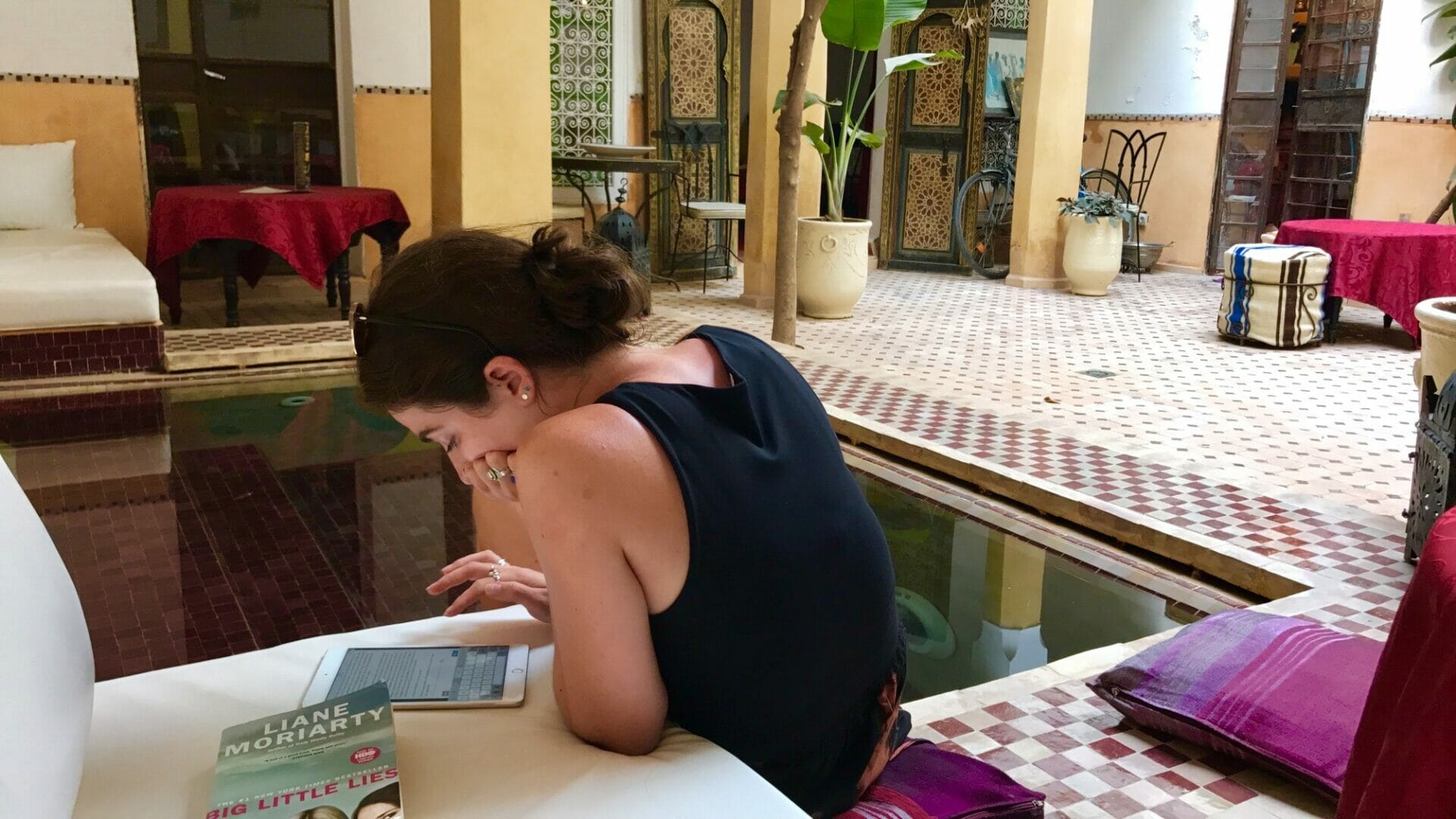
My friend Katy and I are staying within the walls of the old city, and have to navigate the final minutes towards our riad on foot, as the taxi can’t even pass through the narrow roads. Once inside, though, it’s a wonderful little Arabian paradise with an open courtyard in the middle and rooms lining the outside. We are the only guests staying, and for just 20€ total we have a spacious room with twin beds, aircon, and a lovely bathroom, plus the plunge pool in the courtyard all to ourselves. The staff at the riad are lovely and shower us with information; armed with a very carefully hand drawn map, we set out for the main square, Jemaa el-Fnaa.

Marrakech

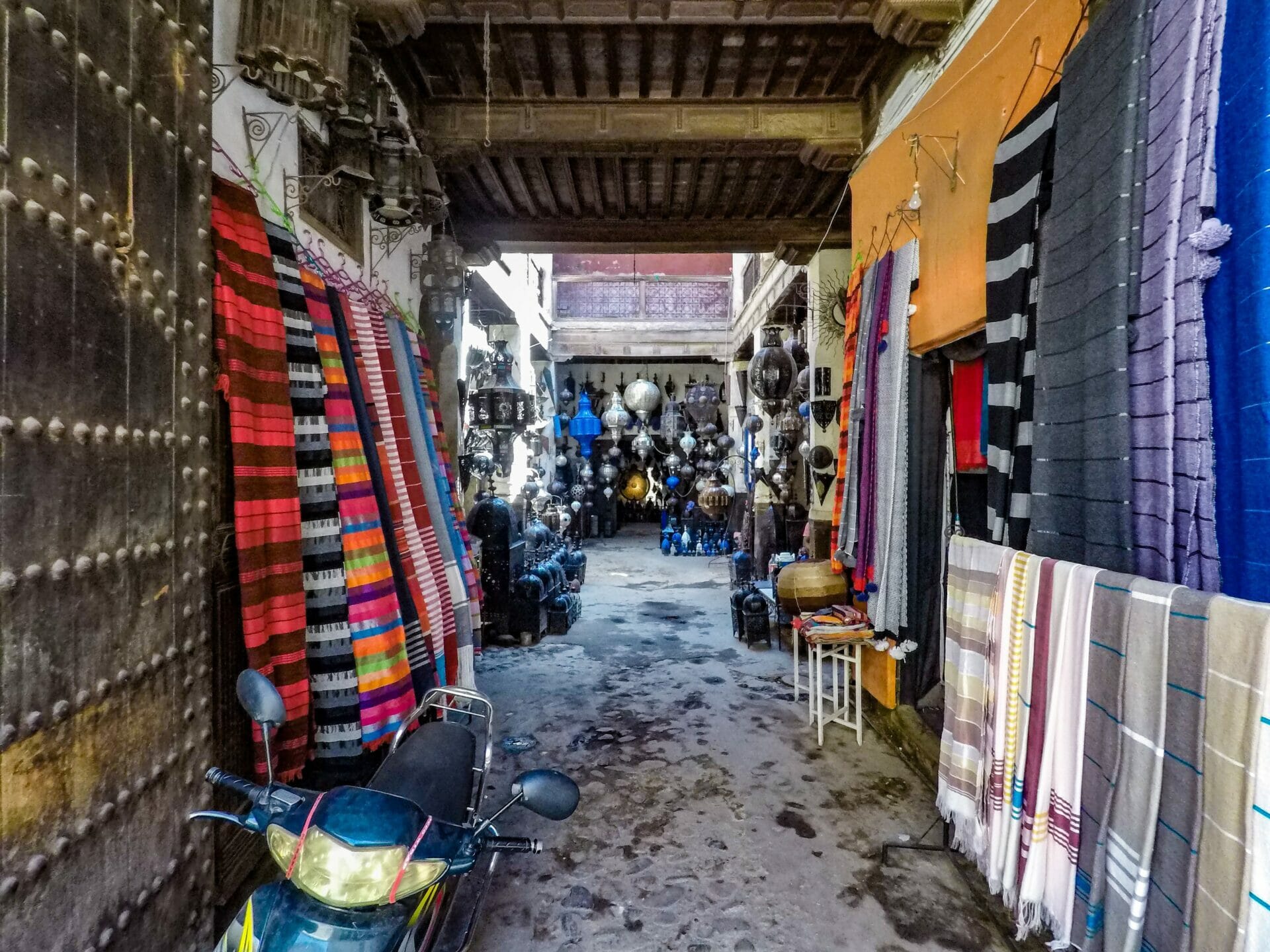
The map takes us through a tangled network of tiny roads and souks literally overflowing with all things sparkly. I absolutely love the hectic bustle of the bazaar— intricately patterned scarves in hundreds of colours, light glinting off silver lanterns, the smell of spices and perfumes heavy in the air— although I could certainly do without the pestering. It’s difficult to walk even a few steps without a stall owner calling out at you to step inside their shop, someone shoving their product in your face and following you when you walk away, a woman with a baby tapping you and asking for money, or men making any number of comments, ranging from creepy to offensive. We are still getting our sea legs in Morocco, having spent the last few weeks in rather affluent areas of Europe, and are overwhelmed by the harassment— Katy in particular, as she has never experienced it before.

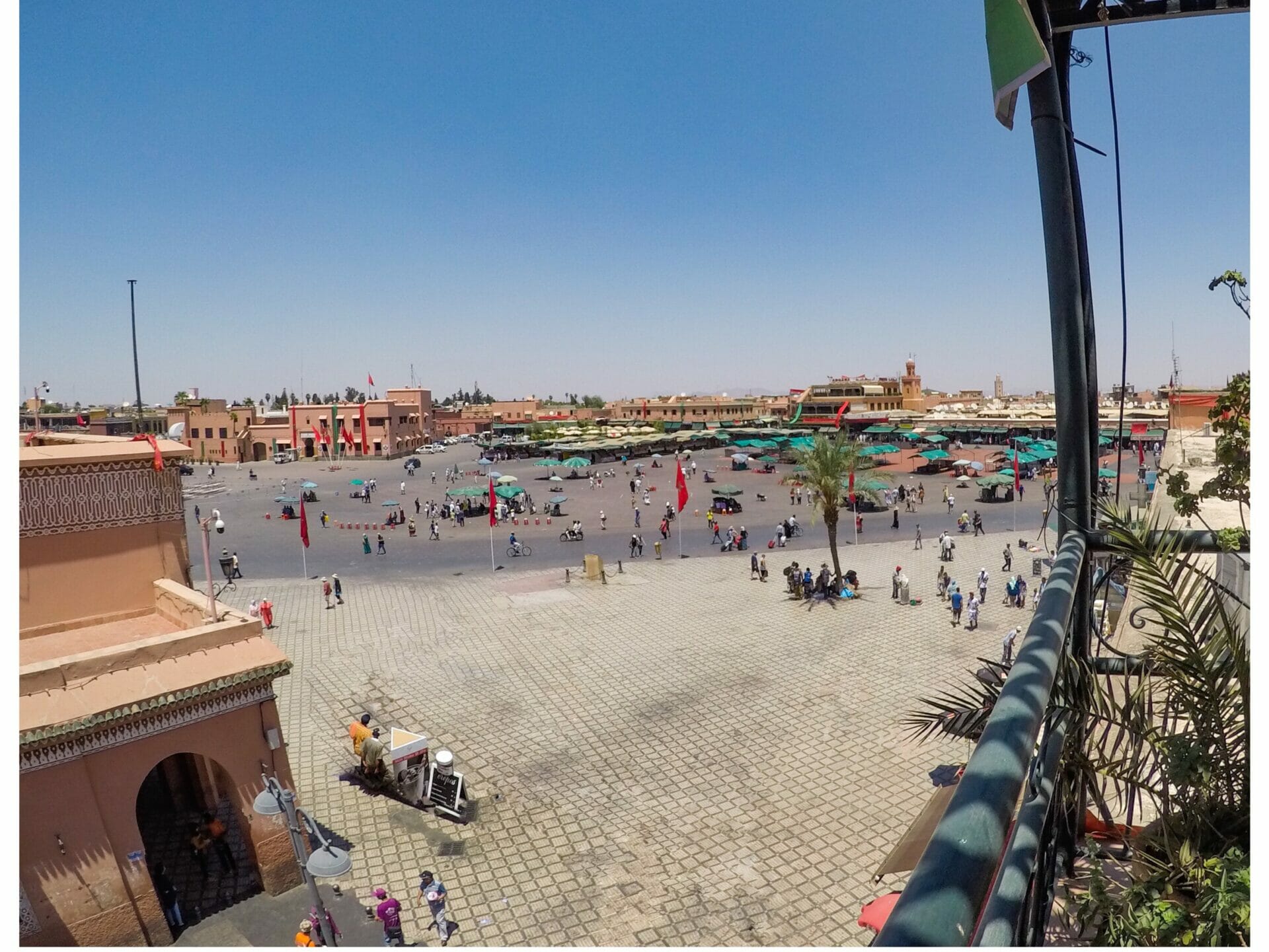
When we finally emerge into the main square, the sun beating down hard enough to make sweat drip down the back of my legs, we are somewhat relieved. The square is massive and lined with vendors, but it’s not as crowded as the souks, so it’s easier to avoid the badgering.

Here, women are set up doing henna and energetic young men advertise for excursions into the desert, but I’m most enchanted by the snake charmers, traditionally dressed old men with white hair and sun-wrinkled skin playing a pungi to half a dozen cobras that all sit attentively on a reed mat, necks puffed out and tails nicely coiled beneath them. The whole thing feels straight out of a movie.

We have lunch on a rooftop terrace, where we wrap up about half the meat from our meals into a napkin so we can feed the dozens of literally starving kittens we’ve seen all around the city. It’s truly heartbreaking just how many too-thin kitties are running around, all desperate for attention but obviously in horrible health, and we make it our mission to feed as many as possible today.

Distributing meat to all the kitties as we go, we make our way back into the souks for what becomes an afternoon/evening shopping extravaganza. We buy silver filigree lanterns, beautifully patterned light pants and scarves for the desert, small pouches embroidered like intricate rugs, and gifts to bring home for people. I am quite delighted to find a silver ring with a beautiful orange gemstone, since I try to bring rings home from most trips I take, but the most exciting purchases are our brightly coloured traditional Moroccan dresses.

They fit like muumuus, loose and flowing, and have amazing sparkly embroidery around the neckline. I’m not sure that I will ever find occasion to wear it back home, but it’s too beautiful for me to worry about that now. The man who sells them says we are now Fatima and Aisha, traditional Moroccan names for the desert princesses we have become, and he shows us how to tie the scarves to keep the sun and sand off our faces. Obviously he’s trying to make the sale, but we have so much fun trying on the kaftans and dancing around the tiny shop that it’s certainly worth it.

It’s past 10pm when we return to the riad, but the staff are still up prepare us amazing chicken tajine, which is a delicious Moroccan meal cooked in a clay pot of the same name, and khubz, a traditional round bread, for dinner. For somewhere that Katy was initially very wary of, we’ve had an incredible time in Marrakech and I’m actually a bit sad to be leaving for our desert tour tomorrow. But also very excited for camel riding in the Sahara!
Read more about our travels through Morocco

CAMELS & TAJINE: DESERT ADVENTURES FROM MARRAKECH TO MERZOUGA

MONKEYS & DATES: MERZOUGA TO FES THROUGH THE MIDDLE ATLAS MOUNTAINS

A GUIDE TO BOOKING THE BEST SAHARA DESERT TOUR

VISITING MY SISTER CITY, CHEFCHAOUEN, MOROCCO

THE MOST PHOTO-WORTHY SPOTS IN CHEFCHAOUEN, MOROCCO’S BLUE CITY

A VERY SWEATY HIKE TO AKCHOUR WATERFALL AND GOD’S BRIDGE

ON THE BEACH IN OUED LAOU

THE ULTIMATE ITINERARY FOR 1-2 WEEKS IN MOROCCO

1 Comment
Share
brooke beyond

Hey, I'm Brooke and I'm obsessed with getting off the beaten path, exploring backcountry gems & travelling beyond the ordinary! I left Australia 5 years ago after finishing a PhD in Biomechanics & have been travelling the world full-time ever since (joined by my life/climbing partner, James). Whether it’s road-tripping through Mexico, climbing alpine peaks in the Andes, scuba diving in the Red Sea, or tackling epic via ferrata in the Dolomites, I hope this blog will inspire your future adventures & help you find wonder in every corner of the globe. xx bb

Leave a Comment Cancel Comment

The Comments

  • Camels & Tajine: Desert adventures from Marrakech to Merzouga – brooke around town
    8 October 2017

    […] Marrakech, Morocco: How to get incredibly lost in a souk and spend all your money on scarves […]

    Reply

You May Also Like

13 February 2018

A guide to overlanding in Southern Africa, Part III: What to pack

15 December 2017

South African Safari Day 3: From Kruger National Park to Sabi Sands Game Reserve

6 August 2017

A guide to booking the best Sahara Desert Tour

hi, I’m brooke!

I'm obsessed with getting off the beaten path, exploring backcountry gems & travelling beyond the ordinary! I left Australia 5 years ago after finishing a PhD in Biomechanics & have been travelling the world full-time ever since (now joined by my life/climbing partner, James). I hope this blog will inspire your future adventures & help you find wonder in every corner of the globe. xx bb

read my story
currently exploring

currently exploring

iceland

read our gear guides

🥾 hiking boots

🎒 hiking backpacks

🌨️ cold-weather layers

⛺️ backpacking & alpine tents

🛌 sleeping bag & pads

🍪 backcountry food

📸 travel camera gear

✈️ travel clothing

trail guides

summit guides

itineraries

outdoor gear

GPS maps

recent posts

  • Laguna Humantay, Cusco Peru

    6 awesome day trips from Cusco, Peru

    24 November 2025
  • Adventure-ready picks from the REI Co-op Holiday Sale

    17 November 2025
  • 2-week Montenegro road-trip itinerary: epic hiking, Riviera beaches & wine country

    3 September 2025
  • 10-day Switzerland itinerary: Zermatt, Interlaken, Jungfrau & beyond!

    31 August 2025
  • Climbing Iztaccíhuatl volcano

    2-week Mexico volcanoes itinerary: climbing Pico de Orizaba, Izta, Malinche & Toluca

    3 June 2025

@brookebeyond_
brooke ✨travel & mountain gal

@brookebeyond_

  • WINTER IN TROMSØ, NORWAY: MINI TRAVEL GUIDE ❄️✨

Above the Arctic Circle at 69.6° North, Tromsø is one of the best places in the world to experience a true Arctic winter— explosive northern lights, snow-covered mountains, dramatic fjords, and cozy saunas after a day in the cold. 

🐋 WHAT TO DO
- Snowshoe in the Lyngen Alps
- Vulkana Spa Boat
- Pust Floating Sauna
- RIB boat whale watching in Skjervøy
- Northern Lights tour
- Arctic Cathedral
- Fjellheisen cable car

🥘 WHERE TO EAT
- Mors Mat
- Nitty Gritty
- Bardus Bistro
- Fiskekompaniet
- Svermeri Kafé
- Vervet Bakeri

📆 WHEN TO GO
Tromsø experiences *polar night* (where the sun literally doesn’t rise) from 27 Nov - 15 Jan— this is the absolute best time to see the aurora AND you still get gorgeous sunset colours for several hours in the middle of the day, which can make for incredible photos! From Jan to March, daylight increases quickly, which is better for skiing and longer outdoor adventures. 

⏱️ HOW MANY DAYS
Accounting for the often extreme winter weather and limited daylight that will prevent you from doing more than 1 activity per day (and sometimes even cancel tours for several days at a time), one week is the minimum amount of time I’d recommend in Tromsø during the winter to really maximise your experience.

🚗 GETTING AROUND
With so much snow on the roads, we’d recommend skipping the rental car and instead staying within walking distance of the city centre + choosing a few worthwhile tours who will handle the transport logistics.

——
#norway #tromsø #arcticcircle #northernlights #aurora
  • hi from arctic Norway!!!!! 🇳🇴❄️

I’ve spent the last 5 years of full-time travel chasing summer + basically avoiding winter at all costs, but this year we decided to do something TOTALLY different: 3 months in Norway, Sweden, and Finland. Basically the most winter that winter can be.

And already a month into Scandinavia, we’ve been absolutely loving it!!! 

We arrived in Tromsø at the end of December to -15C blizzards and *polar night* (where the sun literally doesn’t come over the horizon), but despite being absolutely FREEZING and completely dark for 22hrs a day, it’s insanely beautiful for the few hours of glowing sunset lighting around midday and the northern lights are out in full force as early as 3pm. It is, quite simply, MAGIC ✨

We can’t wait to share more of our adventures as we hike, ski, sauna, dogsled, and romp with our cameras through the glorious Nordics over the next few months!

——
#norway #tromsø #arcticcircle #winterwonderland #tromso
  • A friend asked me recently if I’d noticed a shift in my follower demographic here on Instagram (as it had been my goal over the last year to reach more women). According to the data, not really— I still have a majority male followers— but I have absolutely FELT a shift in the quality of people who choose to interact with my account. 

There was a time when posting a photo in a swimsuit or a sports bra would trigger a flood of angry villagers sprinting to the comments to tell me that I needed to leave more to the imagination, that I was sexualising myself (and therefore couldn’t expect others not to), that I was a wh*re … simply for existing in the body that I was born in. 

And I’ve always pushed back against the notion that my only solution was to wear baggy t-shirts or turtlenecks simply to make others feel more comfortable with MY BODY. 

The reality is that a woman’s worth CANNOT come down to what she’s wearing, her cup size, her willingness to cover herself up so that others don’t feel tempted to treat her like an object... If you only respect a woman when her body is entirely hidden, do you really respect her??

It’s been difficult to cling to these ideals amidst disparaging + often disgusting comments from strangers online, but it felt important to keep showing up as myself, in whatever I felt comfortable in, saying whatever I needed to say, if only to prove that wearing a swimsuit doesn’t make me less of a person, just like wearing sports bra doesn’t make me less of a climber and having breasts doesn’t automatically invalidate my opinions as a travel blogger. 

And somewhere along the way (after many feminist rants that cleaned out the undesirables & quite a bit of good ol fashioned blocking), I felt the shift I’d been waiting for. Comments this past year have been more about the content of my posts and the recommendations I make than what I’m wearing, and it feels SO FJKING GOOD to have made even a small degree of progress in this tiny corner of the internet. 

So please comment below if you don’t agree with any this and want to continue judging me based on what I wear so that I can block your account & protect my inner peace 🥰✌🏼
  • IS IT SAFE TO TRAVEL TO ETHIOPIA?? 🇪🇹

Since falling in love with Ethiopia and sharing so many spectacular, unique experiences here on insta, I’ve received a small flood of DMs asking about traveller safety— especially considering the US currently lists Ethiopia as “Level 3: Reconsider Travel”

So here’s some context and our personal experience 👇🏻

From 2020 to 2022, Ethiopia experienced a brutal civil war centred in the northern Tigray region that spilled over into some of the surrounds. The conflict claimed hundreds of thousands of lives and displaced millions, but by the grace of a peace agreement signed in late 2022, communities across northern Ethiopia have been actively rebuilding in the years since.

We travelled through Ethiopia twice in 2025 for several weeks at a time, visiting many regions that were directly affected by the war and, with our own eyes, experienced a country that felt stable, welcoming, generous, and deeply grateful for visitors returning. 

Perhaps most importantly, tourism here has REAL power. Every guesthouse stay, home-cooked meal, and local service directly injects money into communities recovering from the conflict, helping families restore their livelihoods, put food on the table, and send their children to school.

We absolutely adore Ethiopia and the beautiful people we’ve met here, so we’re passionate about sharing these experiences with fellow travellers— especially at a time when tourism dollars mean life and opportunity for so many. 

PLEASE don’t trust everything you read online. I would strongly encourage you to come discover this warm, unique, resilient country for yourself WITH the support of a trusted local guide and/or driver, who will always prioritise your safety based on real risk, not fear-mongering.

If you need a recommendation for a great guide/driver anywhere in the country, talk to our local friend Kiros @lucyethiopiatours and he will absolutely take care of you 🙏🏼

—
#ethiopia #travelsafety #travelethiopia #tigray
  • One of our last destinations of 2025: Djibouti, a country that hardly anyone seems to know anything about (but that surprised and delighted us in many ways!)

Perched on the Horn of Africa, where tectonic plates split the earth and salt flats stretch to the horizon, Djibouti feels raw, otherworldly + wildly alive. It’s home to Africa’s lowest point on land, volcanic deserts, crater lakes, pink flamingos, whale sharks, and landscapes that look more like another planet.

But it’s not just the scenery. There’s a fascinating blend of cultures here: Afar & Somali traditions, strong tribal identity, and layers of French influence that linger in language, architecture, and daily life. Standing at a crossroads between Africa, the Middle East & the Red Sea, Djibouti is truly a place shaped by movement— of people, of plates, of history.

The 3rd photo illustrates this perfectly (and it’s one of my favourite captures of the year): Afar people travelling on foot with a camel caravan across the desert borderlands, hauling bundles of palm fronds + Djiboutian salt hundreds of kilometres back towards home to Ethiopia.

Because we’ve spent so much time in Ethiopia lately (and have 2 sold-out group trips running this year!), Djibouti just felt like the next natural frontier for us, and certainly didn’t disappoint. We spent 5 days road-tripping across wild landscapes, swimming with whale sharks in the bay, camping on empty beaches, and discovering this untouched gem. 

Have you ever thought about visiting Djibouti??

—
#djibouti #afar #lacabbe #hornofafrica #travelbeyond
  • an entire year of my full-time travel expenses (365 days on the road!), from flights & hotels to healthcare & entrance fees to SIM cards & Spotify ↯

** these numbers are a reflection of my PERSONAL spending in 2025— not representative of the absolute cheapest long-term travel style, just intended to show how much I was able to experience this year for less than rent in a major city

$7,172 ACCOMMODATION
🏡 apartments = $2,415
🏕️ campsites = $121
🏨 hotels + hostels = $4,446
🛖 mountain huts = $190

$5,167 ACTIVITIES
🎟️ entrance fees + permits = $218
⛵️ experiences + tours = $4,217
🔥 hot springs + sauna = $733

$8,244 FOOD & DRINKS
🍹 drinks = $2,088
🌮 eating out = $4,999
🧀 groceries = $1,156

$4,807 PERSONAL EXPENSES 
🧴 consumables (ex. shampoo) = $981
💊 healthcare = $3,042
🧺 laundry = $69
📲 mobile data = $216
🗺️ subscriptions (ex. Garmin In-Reach, Spotify) = $500

$8,719 TRANSPORTATION
✈️ airfare = $3,826
🚘 car hire = $2,970
⛽️ fuel + parking = $659
🚕 private transport (ex. Uber) = $635
🚃 public transport (ex. train) = $627

$1,744 TRAVEL LOGISTICS
🚫 change fees + cancellations = $355
🧳 baggage fees + luggage storage = $385
🪪 ID (ex. licence renewal) = $255
💳 credit card annual fees = $448
💰 insurance = $72
🛂 travel visas = $229

= $35,852USD TOTAL LIVING EXPENSES
($98 per day)

—
#fulltimetravel #travelbudget #travelexpenses
  • HAPPY ETHIOPIAN CHRISTMAS (GENA ገና ) ✞🕯️✨

We were lucky enough to experience these celebrations last January (Christmas falls on the 7th according to the orthodox calendar), and it was truly one of the most incredible travel moments we’ve EVER had 🥹

We only saw 4 other foreigners during our 3 days in Lalibela, and we were welcomed so warmly into the churches, the festivities, and the traditions of Christmas by friendly locals who delighted in the opportunity to share their culture + customs with a couple of curious ferenjis 🤍

———

#ethiopia #gena #ethiopianchristmas #travelbeyond #lalibela
  • our cost of living as full-time travellers came in at $98/day this year (JUST UNDER OUR $100 daily goal) 💃🏻🍾✨

→ $$$ per person based on sharing rooms + joint travel costs with my partner— AND YES, THIS IS EVERY SINGLE DOLLAR SPENT ALL YEAR

this was the most expensive year I’ve had since starting full-time travel more than 5 years ago (!!), but it was also atypical in many ways...
- I had knee surgery in Mexico, which we paid for out of pocket
- because of the slow & terrible recovery from said surgery, we had to cancel most of our big hiking plans for the year, which meant extremely little camping and a lot more city time (= expensive)
- we splurged on a $5000+ campervan rental in Iceland because I’ve been trying to convince James (successfully!) that we should do van life— some of you will recall that I lived in a van for 1.5 years previously, which I LOVED, and the only thing missing was James 👩🏼‍❤️‍💋‍👨🏻
- I got a new MacBook, a new iPhone, AND we upgraded 2x cameras in 2025 (looking forward to no big upgrades in 2026 😅)

I always love chatting travel finance, so by all means— hit me with your questions in the comments! 

———

#2025 #fulltimetravel #travelfinance #costofliving
  • another year of prioritising memories > things 🔥

if you’re new here, I’m Brooke 👋🏻 and I’ve been travelling full-time for over 5 years, sharing unique experiences around the world, detailed adventure itineraries, financial breakdowns, and stories from the road.

follow @brookebeyond_ for more adventures in 2026!

———

#2025 #2025season #fulltimetravel
follow @brookebeyond_

travel beyond the ordinary

Explore my travel guides, custom itineraries & blog posts with an interactive world map ✨

all destinations

  • WINTER IN TROMSØ, NORWAY: MINI TRAVEL GUIDE ❄️✨

Above the Arctic Circle at 69.6° North, Tromsø is one of the best places in the world to experience a true Arctic winter— explosive northern lights, snow-covered mountains, dramatic fjords, and cozy saunas after a day in the cold. 

🐋 WHAT TO DO
- Snowshoe in the Lyngen Alps
- Vulkana Spa Boat
- Pust Floating Sauna
- RIB boat whale watching in Skjervøy
- Northern Lights tour
- Arctic Cathedral
- Fjellheisen cable car

🥘 WHERE TO EAT
- Mors Mat
- Nitty Gritty
- Bardus Bistro
- Fiskekompaniet
- Svermeri Kafé
- Vervet Bakeri

📆 WHEN TO GO
Tromsø experiences *polar night* (where the sun literally doesn’t rise) from 27 Nov - 15 Jan— this is the absolute best time to see the aurora AND you still get gorgeous sunset colours for several hours in the middle of the day, which can make for incredible photos! From Jan to March, daylight increases quickly, which is better for skiing and longer outdoor adventures. 

⏱️ HOW MANY DAYS
Accounting for the often extreme winter weather and limited daylight that will prevent you from doing more than 1 activity per day (and sometimes even cancel tours for several days at a time), one week is the minimum amount of time I’d recommend in Tromsø during the winter to really maximise your experience.

🚗 GETTING AROUND
With so much snow on the roads, we’d recommend skipping the rental car and instead staying within walking distance of the city centre + choosing a few worthwhile tours who will handle the transport logistics.

——
#norway #tromsø #arcticcircle #northernlights #aurora
  • hi from arctic Norway!!!!! 🇳🇴❄️

I’ve spent the last 5 years of full-time travel chasing summer + basically avoiding winter at all costs, but this year we decided to do something TOTALLY different: 3 months in Norway, Sweden, and Finland. Basically the most winter that winter can be.

And already a month into Scandinavia, we’ve been absolutely loving it!!! 

We arrived in Tromsø at the end of December to -15C blizzards and *polar night* (where the sun literally doesn’t come over the horizon), but despite being absolutely FREEZING and completely dark for 22hrs a day, it’s insanely beautiful for the few hours of glowing sunset lighting around midday and the northern lights are out in full force as early as 3pm. It is, quite simply, MAGIC ✨

We can’t wait to share more of our adventures as we hike, ski, sauna, dogsled, and romp with our cameras through the glorious Nordics over the next few months!

——
#norway #tromsø #arcticcircle #winterwonderland #tromso
  • A friend asked me recently if I’d noticed a shift in my follower demographic here on Instagram (as it had been my goal over the last year to reach more women). According to the data, not really— I still have a majority male followers— but I have absolutely FELT a shift in the quality of people who choose to interact with my account. 

There was a time when posting a photo in a swimsuit or a sports bra would trigger a flood of angry villagers sprinting to the comments to tell me that I needed to leave more to the imagination, that I was sexualising myself (and therefore couldn’t expect others not to), that I was a wh*re … simply for existing in the body that I was born in. 

And I’ve always pushed back against the notion that my only solution was to wear baggy t-shirts or turtlenecks simply to make others feel more comfortable with MY BODY. 

The reality is that a woman’s worth CANNOT come down to what she’s wearing, her cup size, her willingness to cover herself up so that others don’t feel tempted to treat her like an object... If you only respect a woman when her body is entirely hidden, do you really respect her??

It’s been difficult to cling to these ideals amidst disparaging + often disgusting comments from strangers online, but it felt important to keep showing up as myself, in whatever I felt comfortable in, saying whatever I needed to say, if only to prove that wearing a swimsuit doesn’t make me less of a person, just like wearing sports bra doesn’t make me less of a climber and having breasts doesn’t automatically invalidate my opinions as a travel blogger. 

And somewhere along the way (after many feminist rants that cleaned out the undesirables & quite a bit of good ol fashioned blocking), I felt the shift I’d been waiting for. Comments this past year have been more about the content of my posts and the recommendations I make than what I’m wearing, and it feels SO FJKING GOOD to have made even a small degree of progress in this tiny corner of the internet. 

So please comment below if you don’t agree with any this and want to continue judging me based on what I wear so that I can block your account & protect my inner peace 🥰✌🏼
  • IS IT SAFE TO TRAVEL TO ETHIOPIA?? 🇪🇹

Since falling in love with Ethiopia and sharing so many spectacular, unique experiences here on insta, I’ve received a small flood of DMs asking about traveller safety— especially considering the US currently lists Ethiopia as “Level 3: Reconsider Travel”

So here’s some context and our personal experience 👇🏻

From 2020 to 2022, Ethiopia experienced a brutal civil war centred in the northern Tigray region that spilled over into some of the surrounds. The conflict claimed hundreds of thousands of lives and displaced millions, but by the grace of a peace agreement signed in late 2022, communities across northern Ethiopia have been actively rebuilding in the years since.

We travelled through Ethiopia twice in 2025 for several weeks at a time, visiting many regions that were directly affected by the war and, with our own eyes, experienced a country that felt stable, welcoming, generous, and deeply grateful for visitors returning. 

Perhaps most importantly, tourism here has REAL power. Every guesthouse stay, home-cooked meal, and local service directly injects money into communities recovering from the conflict, helping families restore their livelihoods, put food on the table, and send their children to school.

We absolutely adore Ethiopia and the beautiful people we’ve met here, so we’re passionate about sharing these experiences with fellow travellers— especially at a time when tourism dollars mean life and opportunity for so many. 

PLEASE don’t trust everything you read online. I would strongly encourage you to come discover this warm, unique, resilient country for yourself WITH the support of a trusted local guide and/or driver, who will always prioritise your safety based on real risk, not fear-mongering.

If you need a recommendation for a great guide/driver anywhere in the country, talk to our local friend Kiros @lucyethiopiatours and he will absolutely take care of you 🙏🏼

—
#ethiopia #travelsafety #travelethiopia #tigray
  • One of our last destinations of 2025: Djibouti, a country that hardly anyone seems to know anything about (but that surprised and delighted us in many ways!)

Perched on the Horn of Africa, where tectonic plates split the earth and salt flats stretch to the horizon, Djibouti feels raw, otherworldly + wildly alive. It’s home to Africa’s lowest point on land, volcanic deserts, crater lakes, pink flamingos, whale sharks, and landscapes that look more like another planet.

But it’s not just the scenery. There’s a fascinating blend of cultures here: Afar & Somali traditions, strong tribal identity, and layers of French influence that linger in language, architecture, and daily life. Standing at a crossroads between Africa, the Middle East & the Red Sea, Djibouti is truly a place shaped by movement— of people, of plates, of history.

The 3rd photo illustrates this perfectly (and it’s one of my favourite captures of the year): Afar people travelling on foot with a camel caravan across the desert borderlands, hauling bundles of palm fronds + Djiboutian salt hundreds of kilometres back towards home to Ethiopia.

Because we’ve spent so much time in Ethiopia lately (and have 2 sold-out group trips running this year!), Djibouti just felt like the next natural frontier for us, and certainly didn’t disappoint. We spent 5 days road-tripping across wild landscapes, swimming with whale sharks in the bay, camping on empty beaches, and discovering this untouched gem. 

Have you ever thought about visiting Djibouti??

—
#djibouti #afar #lacabbe #hornofafrica #travelbeyond
WINTER IN TROMSØ, NORWAY: MINI TRAVEL GUIDE ❄️✨

Above the Arctic Circle at 69.6° North, Tromsø is one of the best places in the world to experience a true Arctic winter— explosive northern lights, snow-covered mountains, dramatic fjords, and cozy saunas after a day in the cold. 

🐋 WHAT TO DO
- Snowshoe in the Lyngen Alps
- Vulkana Spa Boat
- Pust Floating Sauna
- RIB boat whale watching in Skjervøy
- Northern Lights tour
- Arctic Cathedral
- Fjellheisen cable car

🥘 WHERE TO EAT
- Mors Mat
- Nitty Gritty
- Bardus Bistro
- Fiskekompaniet
- Svermeri Kafé
- Vervet Bakeri

📆 WHEN TO GO
Tromsø experiences *polar night* (where the sun literally doesn’t rise) from 27 Nov - 15 Jan— this is the absolute best time to see the aurora AND you still get gorgeous sunset colours for several hours in the middle of the day, which can make for incredible photos! From Jan to March, daylight increases quickly, which is better for skiing and longer outdoor adventures. 

⏱️ HOW MANY DAYS
Accounting for the often extreme winter weather and limited daylight that will prevent you from doing more than 1 activity per day (and sometimes even cancel tours for several days at a time), one week is the minimum amount of time I’d recommend in Tromsø during the winter to really maximise your experience.

🚗 GETTING AROUND
With so much snow on the roads, we’d recommend skipping the rental car and instead staying within walking distance of the city centre + choosing a few worthwhile tours who will handle the transport logistics.

——
#norway #tromsø #arcticcircle #northernlights #aurora
WINTER IN TROMSØ, NORWAY: MINI TRAVEL GUIDE ❄️✨

Above the Arctic Circle at 69.6° North, Tromsø is one of the best places in the world to experience a true Arctic winter— explosive northern lights, snow-covered mountains, dramatic fjords, and cozy saunas after a day in the cold. 

🐋 WHAT TO DO
- Snowshoe in the Lyngen Alps
- Vulkana Spa Boat
- Pust Floating Sauna
- RIB boat whale watching in Skjervøy
- Northern Lights tour
- Arctic Cathedral
- Fjellheisen cable car

🥘 WHERE TO EAT
- Mors Mat
- Nitty Gritty
- Bardus Bistro
- Fiskekompaniet
- Svermeri Kafé
- Vervet Bakeri

📆 WHEN TO GO
Tromsø experiences *polar night* (where the sun literally doesn’t rise) from 27 Nov - 15 Jan— this is the absolute best time to see the aurora AND you still get gorgeous sunset colours for several hours in the middle of the day, which can make for incredible photos! From Jan to March, daylight increases quickly, which is better for skiing and longer outdoor adventures. 

⏱️ HOW MANY DAYS
Accounting for the often extreme winter weather and limited daylight that will prevent you from doing more than 1 activity per day (and sometimes even cancel tours for several days at a time), one week is the minimum amount of time I’d recommend in Tromsø during the winter to really maximise your experience.

🚗 GETTING AROUND
With so much snow on the roads, we’d recommend skipping the rental car and instead staying within walking distance of the city centre + choosing a few worthwhile tours who will handle the transport logistics.

——
#norway #tromsø #arcticcircle #northernlights #aurora
WINTER IN TROMSØ, NORWAY: MINI TRAVEL GUIDE ❄️✨

Above the Arctic Circle at 69.6° North, Tromsø is one of the best places in the world to experience a true Arctic winter— explosive northern lights, snow-covered mountains, dramatic fjords, and cozy saunas after a day in the cold. 

🐋 WHAT TO DO
- Snowshoe in the Lyngen Alps
- Vulkana Spa Boat
- Pust Floating Sauna
- RIB boat whale watching in Skjervøy
- Northern Lights tour
- Arctic Cathedral
- Fjellheisen cable car

🥘 WHERE TO EAT
- Mors Mat
- Nitty Gritty
- Bardus Bistro
- Fiskekompaniet
- Svermeri Kafé
- Vervet Bakeri

📆 WHEN TO GO
Tromsø experiences *polar night* (where the sun literally doesn’t rise) from 27 Nov - 15 Jan— this is the absolute best time to see the aurora AND you still get gorgeous sunset colours for several hours in the middle of the day, which can make for incredible photos! From Jan to March, daylight increases quickly, which is better for skiing and longer outdoor adventures. 

⏱️ HOW MANY DAYS
Accounting for the often extreme winter weather and limited daylight that will prevent you from doing more than 1 activity per day (and sometimes even cancel tours for several days at a time), one week is the minimum amount of time I’d recommend in Tromsø during the winter to really maximise your experience.

🚗 GETTING AROUND
With so much snow on the roads, we’d recommend skipping the rental car and instead staying within walking distance of the city centre + choosing a few worthwhile tours who will handle the transport logistics.

——
#norway #tromsø #arcticcircle #northernlights #aurora
WINTER IN TROMSØ, NORWAY: MINI TRAVEL GUIDE ❄️✨

Above the Arctic Circle at 69.6° North, Tromsø is one of the best places in the world to experience a true Arctic winter— explosive northern lights, snow-covered mountains, dramatic fjords, and cozy saunas after a day in the cold. 

🐋 WHAT TO DO
- Snowshoe in the Lyngen Alps
- Vulkana Spa Boat
- Pust Floating Sauna
- RIB boat whale watching in Skjervøy
- Northern Lights tour
- Arctic Cathedral
- Fjellheisen cable car

🥘 WHERE TO EAT
- Mors Mat
- Nitty Gritty
- Bardus Bistro
- Fiskekompaniet
- Svermeri Kafé
- Vervet Bakeri

📆 WHEN TO GO
Tromsø experiences *polar night* (where the sun literally doesn’t rise) from 27 Nov - 15 Jan— this is the absolute best time to see the aurora AND you still get gorgeous sunset colours for several hours in the middle of the day, which can make for incredible photos! From Jan to March, daylight increases quickly, which is better for skiing and longer outdoor adventures. 

⏱️ HOW MANY DAYS
Accounting for the often extreme winter weather and limited daylight that will prevent you from doing more than 1 activity per day (and sometimes even cancel tours for several days at a time), one week is the minimum amount of time I’d recommend in Tromsø during the winter to really maximise your experience.

🚗 GETTING AROUND
With so much snow on the roads, we’d recommend skipping the rental car and instead staying within walking distance of the city centre + choosing a few worthwhile tours who will handle the transport logistics.

——
#norway #tromsø #arcticcircle #northernlights #aurora
WINTER IN TROMSØ, NORWAY: MINI TRAVEL GUIDE ❄️✨

Above the Arctic Circle at 69.6° North, Tromsø is one of the best places in the world to experience a true Arctic winter— explosive northern lights, snow-covered mountains, dramatic fjords, and cozy saunas after a day in the cold. 

🐋 WHAT TO DO
- Snowshoe in the Lyngen Alps
- Vulkana Spa Boat
- Pust Floating Sauna
- RIB boat whale watching in Skjervøy
- Northern Lights tour
- Arctic Cathedral
- Fjellheisen cable car

🥘 WHERE TO EAT
- Mors Mat
- Nitty Gritty
- Bardus Bistro
- Fiskekompaniet
- Svermeri Kafé
- Vervet Bakeri

📆 WHEN TO GO
Tromsø experiences *polar night* (where the sun literally doesn’t rise) from 27 Nov - 15 Jan— this is the absolute best time to see the aurora AND you still get gorgeous sunset colours for several hours in the middle of the day, which can make for incredible photos! From Jan to March, daylight increases quickly, which is better for skiing and longer outdoor adventures. 

⏱️ HOW MANY DAYS
Accounting for the often extreme winter weather and limited daylight that will prevent you from doing more than 1 activity per day (and sometimes even cancel tours for several days at a time), one week is the minimum amount of time I’d recommend in Tromsø during the winter to really maximise your experience.

🚗 GETTING AROUND
With so much snow on the roads, we’d recommend skipping the rental car and instead staying within walking distance of the city centre + choosing a few worthwhile tours who will handle the transport logistics.

——
#norway #tromsø #arcticcircle #northernlights #aurora
WINTER IN TROMSØ, NORWAY: MINI TRAVEL GUIDE ❄️✨

Above the Arctic Circle at 69.6° North, Tromsø is one of the best places in the world to experience a true Arctic winter— explosive northern lights, snow-covered mountains, dramatic fjords, and cozy saunas after a day in the cold. 

🐋 WHAT TO DO
- Snowshoe in the Lyngen Alps
- Vulkana Spa Boat
- Pust Floating Sauna
- RIB boat whale watching in Skjervøy
- Northern Lights tour
- Arctic Cathedral
- Fjellheisen cable car

🥘 WHERE TO EAT
- Mors Mat
- Nitty Gritty
- Bardus Bistro
- Fiskekompaniet
- Svermeri Kafé
- Vervet Bakeri

📆 WHEN TO GO
Tromsø experiences *polar night* (where the sun literally doesn’t rise) from 27 Nov - 15 Jan— this is the absolute best time to see the aurora AND you still get gorgeous sunset colours for several hours in the middle of the day, which can make for incredible photos! From Jan to March, daylight increases quickly, which is better for skiing and longer outdoor adventures. 

⏱️ HOW MANY DAYS
Accounting for the often extreme winter weather and limited daylight that will prevent you from doing more than 1 activity per day (and sometimes even cancel tours for several days at a time), one week is the minimum amount of time I’d recommend in Tromsø during the winter to really maximise your experience.

🚗 GETTING AROUND
With so much snow on the roads, we’d recommend skipping the rental car and instead staying within walking distance of the city centre + choosing a few worthwhile tours who will handle the transport logistics.

——
#norway #tromsø #arcticcircle #northernlights #aurora
WINTER IN TROMSØ, NORWAY: MINI TRAVEL GUIDE ❄️✨

Above the Arctic Circle at 69.6° North, Tromsø is one of the best places in the world to experience a true Arctic winter— explosive northern lights, snow-covered mountains, dramatic fjords, and cozy saunas after a day in the cold. 

🐋 WHAT TO DO
- Snowshoe in the Lyngen Alps
- Vulkana Spa Boat
- Pust Floating Sauna
- RIB boat whale watching in Skjervøy
- Northern Lights tour
- Arctic Cathedral
- Fjellheisen cable car

🥘 WHERE TO EAT
- Mors Mat
- Nitty Gritty
- Bardus Bistro
- Fiskekompaniet
- Svermeri Kafé
- Vervet Bakeri

📆 WHEN TO GO
Tromsø experiences *polar night* (where the sun literally doesn’t rise) from 27 Nov - 15 Jan— this is the absolute best time to see the aurora AND you still get gorgeous sunset colours for several hours in the middle of the day, which can make for incredible photos! From Jan to March, daylight increases quickly, which is better for skiing and longer outdoor adventures. 

⏱️ HOW MANY DAYS
Accounting for the often extreme winter weather and limited daylight that will prevent you from doing more than 1 activity per day (and sometimes even cancel tours for several days at a time), one week is the minimum amount of time I’d recommend in Tromsø during the winter to really maximise your experience.

🚗 GETTING AROUND
With so much snow on the roads, we’d recommend skipping the rental car and instead staying within walking distance of the city centre + choosing a few worthwhile tours who will handle the transport logistics.

——
#norway #tromsø #arcticcircle #northernlights #aurora
WINTER IN TROMSØ, NORWAY: MINI TRAVEL GUIDE ❄️✨

Above the Arctic Circle at 69.6° North, Tromsø is one of the best places in the world to experience a true Arctic winter— explosive northern lights, snow-covered mountains, dramatic fjords, and cozy saunas after a day in the cold. 

🐋 WHAT TO DO
- Snowshoe in the Lyngen Alps
- Vulkana Spa Boat
- Pust Floating Sauna
- RIB boat whale watching in Skjervøy
- Northern Lights tour
- Arctic Cathedral
- Fjellheisen cable car

🥘 WHERE TO EAT
- Mors Mat
- Nitty Gritty
- Bardus Bistro
- Fiskekompaniet
- Svermeri Kafé
- Vervet Bakeri

📆 WHEN TO GO
Tromsø experiences *polar night* (where the sun literally doesn’t rise) from 27 Nov - 15 Jan— this is the absolute best time to see the aurora AND you still get gorgeous sunset colours for several hours in the middle of the day, which can make for incredible photos! From Jan to March, daylight increases quickly, which is better for skiing and longer outdoor adventures. 

⏱️ HOW MANY DAYS
Accounting for the often extreme winter weather and limited daylight that will prevent you from doing more than 1 activity per day (and sometimes even cancel tours for several days at a time), one week is the minimum amount of time I’d recommend in Tromsø during the winter to really maximise your experience.

🚗 GETTING AROUND
With so much snow on the roads, we’d recommend skipping the rental car and instead staying within walking distance of the city centre + choosing a few worthwhile tours who will handle the transport logistics.

——
#norway #tromsø #arcticcircle #northernlights #aurora
@brookebeyond_
@brookebeyond_
•
Follow
WINTER IN TROMSØ, NORWAY: MINI TRAVEL GUIDE ❄️✨ Above the Arctic Circle at 69.6° North, Tromsø is one of the best places in the world to experience a true Arctic winter— explosive northern lights, snow-covered mountains, dramatic fjords, and cozy saunas after a day in the cold. 🐋 WHAT TO DO - Snowshoe in the Lyngen Alps - Vulkana Spa Boat - Pust Floating Sauna - RIB boat whale watching in Skjervøy - Northern Lights tour - Arctic Cathedral - Fjellheisen cable car 🥘 WHERE TO EAT - Mors Mat - Nitty Gritty - Bardus Bistro - Fiskekompaniet - Svermeri Kafé - Vervet Bakeri 📆 WHEN TO GO Tromsø experiences *polar night* (where the sun literally doesn’t rise) from 27 Nov - 15 Jan— this is the absolute best time to see the aurora AND you still get gorgeous sunset colours for several hours in the middle of the day, which can make for incredible photos! From Jan to March, daylight increases quickly, which is better for skiing and longer outdoor adventures. ⏱️ HOW MANY DAYS Accounting for the often extreme winter weather and limited daylight that will prevent you from doing more than 1 activity per day (and sometimes even cancel tours for several days at a time), one week is the minimum amount of time I’d recommend in Tromsø during the winter to really maximise your experience. 🚗 GETTING AROUND With so much snow on the roads, we’d recommend skipping the rental car and instead staying within walking distance of the city centre + choosing a few worthwhile tours who will handle the transport logistics. —— #norway #tromsø #arcticcircle #northernlights #aurora
17 hours ago
View on Instagram |
1/5
hi from arctic Norway!!!!! 🇳🇴❄️

I’ve spent the last 5 years of full-time travel chasing summer + basically avoiding winter at all costs, but this year we decided to do something TOTALLY different: 3 months in Norway, Sweden, and Finland. Basically the most winter that winter can be.

And already a month into Scandinavia, we’ve been absolutely loving it!!! 

We arrived in Tromsø at the end of December to -15C blizzards and *polar night* (where the sun literally doesn’t come over the horizon), but despite being absolutely FREEZING and completely dark for 22hrs a day, it’s insanely beautiful for the few hours of glowing sunset lighting around midday and the northern lights are out in full force as early as 3pm. It is, quite simply, MAGIC ✨

We can’t wait to share more of our adventures as we hike, ski, sauna, dogsled, and romp with our cameras through the glorious Nordics over the next few months!

——
#norway #tromsø #arcticcircle #winterwonderland #tromso
hi from arctic Norway!!!!! 🇳🇴❄️

I’ve spent the last 5 years of full-time travel chasing summer + basically avoiding winter at all costs, but this year we decided to do something TOTALLY different: 3 months in Norway, Sweden, and Finland. Basically the most winter that winter can be.

And already a month into Scandinavia, we’ve been absolutely loving it!!! 

We arrived in Tromsø at the end of December to -15C blizzards and *polar night* (where the sun literally doesn’t come over the horizon), but despite being absolutely FREEZING and completely dark for 22hrs a day, it’s insanely beautiful for the few hours of glowing sunset lighting around midday and the northern lights are out in full force as early as 3pm. It is, quite simply, MAGIC ✨

We can’t wait to share more of our adventures as we hike, ski, sauna, dogsled, and romp with our cameras through the glorious Nordics over the next few months!

——
#norway #tromsø #arcticcircle #winterwonderland #tromso
@brookebeyond_
@brookebeyond_
•
Follow
hi from arctic Norway!!!!! 🇳🇴❄️ I’ve spent the last 5 years of full-time travel chasing summer + basically avoiding winter at all costs, but this year we decided to do something TOTALLY different: 3 months in Norway, Sweden, and Finland. Basically the most winter that winter can be. And already a month into Scandinavia, we’ve been absolutely loving it!!! We arrived in Tromsø at the end of December to -15C blizzards and *polar night* (where the sun literally doesn’t come over the horizon), but despite being absolutely FREEZING and completely dark for 22hrs a day, it’s insanely beautiful for the few hours of glowing sunset lighting around midday and the northern lights are out in full force as early as 3pm. It is, quite simply, MAGIC ✨ We can’t wait to share more of our adventures as we hike, ski, sauna, dogsled, and romp with our cameras through the glorious Nordics over the next few months! —— #norway #tromsø #arcticcircle #winterwonderland #tromso
2 days ago
View on Instagram |
2/5
A friend asked me recently if I’d noticed a shift in my follower demographic here on Instagram (as it had been my goal over the last year to reach more women). According to the data, not really— I still have a majority male followers— but I have absolutely FELT a shift in the quality of people who choose to interact with my account. 

There was a time when posting a photo in a swimsuit or a sports bra would trigger a flood of angry villagers sprinting to the comments to tell me that I needed to leave more to the imagination, that I was sexualising myself (and therefore couldn’t expect others not to), that I was a wh*re … simply for existing in the body that I was born in. 

And I’ve always pushed back against the notion that my only solution was to wear baggy t-shirts or turtlenecks simply to make others feel more comfortable with MY BODY. 

The reality is that a woman’s worth CANNOT come down to what she’s wearing, her cup size, her willingness to cover herself up so that others don’t feel tempted to treat her like an object... If you only respect a woman when her body is entirely hidden, do you really respect her??

It’s been difficult to cling to these ideals amidst disparaging + often disgusting comments from strangers online, but it felt important to keep showing up as myself, in whatever I felt comfortable in, saying whatever I needed to say, if only to prove that wearing a swimsuit doesn’t make me less of a person, just like wearing sports bra doesn’t make me less of a climber and having breasts doesn’t automatically invalidate my opinions as a travel blogger. 

And somewhere along the way (after many feminist rants that cleaned out the undesirables & quite a bit of good ol fashioned blocking), I felt the shift I’d been waiting for. Comments this past year have been more about the content of my posts and the recommendations I make than what I’m wearing, and it feels SO FJKING GOOD to have made even a small degree of progress in this tiny corner of the internet. 

So please comment below if you don’t agree with any this and want to continue judging me based on what I wear so that I can block your account & protect my inner peace 🥰✌🏼
A friend asked me recently if I’d noticed a shift in my follower demographic here on Instagram (as it had been my goal over the last year to reach more women). According to the data, not really— I still have a majority male followers— but I have absolutely FELT a shift in the quality of people who choose to interact with my account. 

There was a time when posting a photo in a swimsuit or a sports bra would trigger a flood of angry villagers sprinting to the comments to tell me that I needed to leave more to the imagination, that I was sexualising myself (and therefore couldn’t expect others not to), that I was a wh*re … simply for existing in the body that I was born in. 

And I’ve always pushed back against the notion that my only solution was to wear baggy t-shirts or turtlenecks simply to make others feel more comfortable with MY BODY. 

The reality is that a woman’s worth CANNOT come down to what she’s wearing, her cup size, her willingness to cover herself up so that others don’t feel tempted to treat her like an object... If you only respect a woman when her body is entirely hidden, do you really respect her??

It’s been difficult to cling to these ideals amidst disparaging + often disgusting comments from strangers online, but it felt important to keep showing up as myself, in whatever I felt comfortable in, saying whatever I needed to say, if only to prove that wearing a swimsuit doesn’t make me less of a person, just like wearing sports bra doesn’t make me less of a climber and having breasts doesn’t automatically invalidate my opinions as a travel blogger. 

And somewhere along the way (after many feminist rants that cleaned out the undesirables & quite a bit of good ol fashioned blocking), I felt the shift I’d been waiting for. Comments this past year have been more about the content of my posts and the recommendations I make than what I’m wearing, and it feels SO FJKING GOOD to have made even a small degree of progress in this tiny corner of the internet. 

So please comment below if you don’t agree with any this and want to continue judging me based on what I wear so that I can block your account & protect my inner peace 🥰✌🏼
A friend asked me recently if I’d noticed a shift in my follower demographic here on Instagram (as it had been my goal over the last year to reach more women). According to the data, not really— I still have a majority male followers— but I have absolutely FELT a shift in the quality of people who choose to interact with my account. 

There was a time when posting a photo in a swimsuit or a sports bra would trigger a flood of angry villagers sprinting to the comments to tell me that I needed to leave more to the imagination, that I was sexualising myself (and therefore couldn’t expect others not to), that I was a wh*re … simply for existing in the body that I was born in. 

And I’ve always pushed back against the notion that my only solution was to wear baggy t-shirts or turtlenecks simply to make others feel more comfortable with MY BODY. 

The reality is that a woman’s worth CANNOT come down to what she’s wearing, her cup size, her willingness to cover herself up so that others don’t feel tempted to treat her like an object... If you only respect a woman when her body is entirely hidden, do you really respect her??

It’s been difficult to cling to these ideals amidst disparaging + often disgusting comments from strangers online, but it felt important to keep showing up as myself, in whatever I felt comfortable in, saying whatever I needed to say, if only to prove that wearing a swimsuit doesn’t make me less of a person, just like wearing sports bra doesn’t make me less of a climber and having breasts doesn’t automatically invalidate my opinions as a travel blogger. 

And somewhere along the way (after many feminist rants that cleaned out the undesirables & quite a bit of good ol fashioned blocking), I felt the shift I’d been waiting for. Comments this past year have been more about the content of my posts and the recommendations I make than what I’m wearing, and it feels SO FJKING GOOD to have made even a small degree of progress in this tiny corner of the internet. 

So please comment below if you don’t agree with any this and want to continue judging me based on what I wear so that I can block your account & protect my inner peace 🥰✌🏼
A friend asked me recently if I’d noticed a shift in my follower demographic here on Instagram (as it had been my goal over the last year to reach more women). According to the data, not really— I still have a majority male followers— but I have absolutely FELT a shift in the quality of people who choose to interact with my account. 

There was a time when posting a photo in a swimsuit or a sports bra would trigger a flood of angry villagers sprinting to the comments to tell me that I needed to leave more to the imagination, that I was sexualising myself (and therefore couldn’t expect others not to), that I was a wh*re … simply for existing in the body that I was born in. 

And I’ve always pushed back against the notion that my only solution was to wear baggy t-shirts or turtlenecks simply to make others feel more comfortable with MY BODY. 

The reality is that a woman’s worth CANNOT come down to what she’s wearing, her cup size, her willingness to cover herself up so that others don’t feel tempted to treat her like an object... If you only respect a woman when her body is entirely hidden, do you really respect her??

It’s been difficult to cling to these ideals amidst disparaging + often disgusting comments from strangers online, but it felt important to keep showing up as myself, in whatever I felt comfortable in, saying whatever I needed to say, if only to prove that wearing a swimsuit doesn’t make me less of a person, just like wearing sports bra doesn’t make me less of a climber and having breasts doesn’t automatically invalidate my opinions as a travel blogger. 

And somewhere along the way (after many feminist rants that cleaned out the undesirables & quite a bit of good ol fashioned blocking), I felt the shift I’d been waiting for. Comments this past year have been more about the content of my posts and the recommendations I make than what I’m wearing, and it feels SO FJKING GOOD to have made even a small degree of progress in this tiny corner of the internet. 

So please comment below if you don’t agree with any this and want to continue judging me based on what I wear so that I can block your account & protect my inner peace 🥰✌🏼
A friend asked me recently if I’d noticed a shift in my follower demographic here on Instagram (as it had been my goal over the last year to reach more women). According to the data, not really— I still have a majority male followers— but I have absolutely FELT a shift in the quality of people who choose to interact with my account. 

There was a time when posting a photo in a swimsuit or a sports bra would trigger a flood of angry villagers sprinting to the comments to tell me that I needed to leave more to the imagination, that I was sexualising myself (and therefore couldn’t expect others not to), that I was a wh*re … simply for existing in the body that I was born in. 

And I’ve always pushed back against the notion that my only solution was to wear baggy t-shirts or turtlenecks simply to make others feel more comfortable with MY BODY. 

The reality is that a woman’s worth CANNOT come down to what she’s wearing, her cup size, her willingness to cover herself up so that others don’t feel tempted to treat her like an object... If you only respect a woman when her body is entirely hidden, do you really respect her??

It’s been difficult to cling to these ideals amidst disparaging + often disgusting comments from strangers online, but it felt important to keep showing up as myself, in whatever I felt comfortable in, saying whatever I needed to say, if only to prove that wearing a swimsuit doesn’t make me less of a person, just like wearing sports bra doesn’t make me less of a climber and having breasts doesn’t automatically invalidate my opinions as a travel blogger. 

And somewhere along the way (after many feminist rants that cleaned out the undesirables & quite a bit of good ol fashioned blocking), I felt the shift I’d been waiting for. Comments this past year have been more about the content of my posts and the recommendations I make than what I’m wearing, and it feels SO FJKING GOOD to have made even a small degree of progress in this tiny corner of the internet. 

So please comment below if you don’t agree with any this and want to continue judging me based on what I wear so that I can block your account & protect my inner peace 🥰✌🏼
A friend asked me recently if I’d noticed a shift in my follower demographic here on Instagram (as it had been my goal over the last year to reach more women). According to the data, not really— I still have a majority male followers— but I have absolutely FELT a shift in the quality of people who choose to interact with my account. 

There was a time when posting a photo in a swimsuit or a sports bra would trigger a flood of angry villagers sprinting to the comments to tell me that I needed to leave more to the imagination, that I was sexualising myself (and therefore couldn’t expect others not to), that I was a wh*re … simply for existing in the body that I was born in. 

And I’ve always pushed back against the notion that my only solution was to wear baggy t-shirts or turtlenecks simply to make others feel more comfortable with MY BODY. 

The reality is that a woman’s worth CANNOT come down to what she’s wearing, her cup size, her willingness to cover herself up so that others don’t feel tempted to treat her like an object... If you only respect a woman when her body is entirely hidden, do you really respect her??

It’s been difficult to cling to these ideals amidst disparaging + often disgusting comments from strangers online, but it felt important to keep showing up as myself, in whatever I felt comfortable in, saying whatever I needed to say, if only to prove that wearing a swimsuit doesn’t make me less of a person, just like wearing sports bra doesn’t make me less of a climber and having breasts doesn’t automatically invalidate my opinions as a travel blogger. 

And somewhere along the way (after many feminist rants that cleaned out the undesirables & quite a bit of good ol fashioned blocking), I felt the shift I’d been waiting for. Comments this past year have been more about the content of my posts and the recommendations I make than what I’m wearing, and it feels SO FJKING GOOD to have made even a small degree of progress in this tiny corner of the internet. 

So please comment below if you don’t agree with any this and want to continue judging me based on what I wear so that I can block your account & protect my inner peace 🥰✌🏼
A friend asked me recently if I’d noticed a shift in my follower demographic here on Instagram (as it had been my goal over the last year to reach more women). According to the data, not really— I still have a majority male followers— but I have absolutely FELT a shift in the quality of people who choose to interact with my account. 

There was a time when posting a photo in a swimsuit or a sports bra would trigger a flood of angry villagers sprinting to the comments to tell me that I needed to leave more to the imagination, that I was sexualising myself (and therefore couldn’t expect others not to), that I was a wh*re … simply for existing in the body that I was born in. 

And I’ve always pushed back against the notion that my only solution was to wear baggy t-shirts or turtlenecks simply to make others feel more comfortable with MY BODY. 

The reality is that a woman’s worth CANNOT come down to what she’s wearing, her cup size, her willingness to cover herself up so that others don’t feel tempted to treat her like an object... If you only respect a woman when her body is entirely hidden, do you really respect her??

It’s been difficult to cling to these ideals amidst disparaging + often disgusting comments from strangers online, but it felt important to keep showing up as myself, in whatever I felt comfortable in, saying whatever I needed to say, if only to prove that wearing a swimsuit doesn’t make me less of a person, just like wearing sports bra doesn’t make me less of a climber and having breasts doesn’t automatically invalidate my opinions as a travel blogger. 

And somewhere along the way (after many feminist rants that cleaned out the undesirables & quite a bit of good ol fashioned blocking), I felt the shift I’d been waiting for. Comments this past year have been more about the content of my posts and the recommendations I make than what I’m wearing, and it feels SO FJKING GOOD to have made even a small degree of progress in this tiny corner of the internet. 

So please comment below if you don’t agree with any this and want to continue judging me based on what I wear so that I can block your account & protect my inner peace 🥰✌🏼
A friend asked me recently if I’d noticed a shift in my follower demographic here on Instagram (as it had been my goal over the last year to reach more women). According to the data, not really— I still have a majority male followers— but I have absolutely FELT a shift in the quality of people who choose to interact with my account. 

There was a time when posting a photo in a swimsuit or a sports bra would trigger a flood of angry villagers sprinting to the comments to tell me that I needed to leave more to the imagination, that I was sexualising myself (and therefore couldn’t expect others not to), that I was a wh*re … simply for existing in the body that I was born in. 

And I’ve always pushed back against the notion that my only solution was to wear baggy t-shirts or turtlenecks simply to make others feel more comfortable with MY BODY. 

The reality is that a woman’s worth CANNOT come down to what she’s wearing, her cup size, her willingness to cover herself up so that others don’t feel tempted to treat her like an object... If you only respect a woman when her body is entirely hidden, do you really respect her??

It’s been difficult to cling to these ideals amidst disparaging + often disgusting comments from strangers online, but it felt important to keep showing up as myself, in whatever I felt comfortable in, saying whatever I needed to say, if only to prove that wearing a swimsuit doesn’t make me less of a person, just like wearing sports bra doesn’t make me less of a climber and having breasts doesn’t automatically invalidate my opinions as a travel blogger. 

And somewhere along the way (after many feminist rants that cleaned out the undesirables & quite a bit of good ol fashioned blocking), I felt the shift I’d been waiting for. Comments this past year have been more about the content of my posts and the recommendations I make than what I’m wearing, and it feels SO FJKING GOOD to have made even a small degree of progress in this tiny corner of the internet. 

So please comment below if you don’t agree with any this and want to continue judging me based on what I wear so that I can block your account & protect my inner peace 🥰✌🏼
A friend asked me recently if I’d noticed a shift in my follower demographic here on Instagram (as it had been my goal over the last year to reach more women). According to the data, not really— I still have a majority male followers— but I have absolutely FELT a shift in the quality of people who choose to interact with my account. 

There was a time when posting a photo in a swimsuit or a sports bra would trigger a flood of angry villagers sprinting to the comments to tell me that I needed to leave more to the imagination, that I was sexualising myself (and therefore couldn’t expect others not to), that I was a wh*re … simply for existing in the body that I was born in. 

And I’ve always pushed back against the notion that my only solution was to wear baggy t-shirts or turtlenecks simply to make others feel more comfortable with MY BODY. 

The reality is that a woman’s worth CANNOT come down to what she’s wearing, her cup size, her willingness to cover herself up so that others don’t feel tempted to treat her like an object... If you only respect a woman when her body is entirely hidden, do you really respect her??

It’s been difficult to cling to these ideals amidst disparaging + often disgusting comments from strangers online, but it felt important to keep showing up as myself, in whatever I felt comfortable in, saying whatever I needed to say, if only to prove that wearing a swimsuit doesn’t make me less of a person, just like wearing sports bra doesn’t make me less of a climber and having breasts doesn’t automatically invalidate my opinions as a travel blogger. 

And somewhere along the way (after many feminist rants that cleaned out the undesirables & quite a bit of good ol fashioned blocking), I felt the shift I’d been waiting for. Comments this past year have been more about the content of my posts and the recommendations I make than what I’m wearing, and it feels SO FJKING GOOD to have made even a small degree of progress in this tiny corner of the internet. 

So please comment below if you don’t agree with any this and want to continue judging me based on what I wear so that I can block your account & protect my inner peace 🥰✌🏼
@brookebeyond_
@brookebeyond_
•
Follow
A friend asked me recently if I’d noticed a shift in my follower demographic here on Instagram (as it had been my goal over the last year to reach more women). According to the data, not really— I still have a majority male followers— but I have absolutely FELT a shift in the quality of people who choose to interact with my account. There was a time when posting a photo in a swimsuit or a sports bra would trigger a flood of angry villagers sprinting to the comments to tell me that I needed to leave more to the imagination, that I was sexualising myself (and therefore couldn’t expect others not to), that I was a wh*re … simply for existing in the body that I was born in. And I’ve always pushed back against the notion that my only solution was to wear baggy t-shirts or turtlenecks simply to make others feel more comfortable with MY BODY. The reality is that a woman’s worth CANNOT come down to what she’s wearing, her cup size, her willingness to cover herself up so that others don’t feel tempted to treat her like an object... If you only respect a woman when her body is entirely hidden, do you really respect her?? It’s been difficult to cling to these ideals amidst disparaging + often disgusting comments from strangers online, but it felt important to keep showing up as myself, in whatever I felt comfortable in, saying whatever I needed to say, if only to prove that wearing a swimsuit doesn’t make me less of a person, just like wearing sports bra doesn’t make me less of a climber and having breasts doesn’t automatically invalidate my opinions as a travel blogger. And somewhere along the way (after many feminist rants that cleaned out the undesirables & quite a bit of good ol fashioned blocking), I felt the shift I’d been waiting for. Comments this past year have been more about the content of my posts and the recommendations I make than what I’m wearing, and it feels SO FJKING GOOD to have made even a small degree of progress in this tiny corner of the internet. So please comment below if you don’t agree with any this and want to continue judging me based on what I wear so that I can block your account & protect my inner peace 🥰✌🏼
1 week ago
View on Instagram |
3/5
IS IT SAFE TO TRAVEL TO ETHIOPIA?? 🇪🇹

Since falling in love with Ethiopia and sharing so many spectacular, unique experiences here on insta, I’ve received a small flood of DMs asking about traveller safety— especially considering the US currently lists Ethiopia as “Level 3: Reconsider Travel”

So here’s some context and our personal experience 👇🏻

From 2020 to 2022, Ethiopia experienced a brutal civil war centred in the northern Tigray region that spilled over into some of the surrounds. The conflict claimed hundreds of thousands of lives and displaced millions, but by the grace of a peace agreement signed in late 2022, communities across northern Ethiopia have been actively rebuilding in the years since.

We travelled through Ethiopia twice in 2025 for several weeks at a time, visiting many regions that were directly affected by the war and, with our own eyes, experienced a country that felt stable, welcoming, generous, and deeply grateful for visitors returning. 

Perhaps most importantly, tourism here has REAL power. Every guesthouse stay, home-cooked meal, and local service directly injects money into communities recovering from the conflict, helping families restore their livelihoods, put food on the table, and send their children to school.

We absolutely adore Ethiopia and the beautiful people we’ve met here, so we’re passionate about sharing these experiences with fellow travellers— especially at a time when tourism dollars mean life and opportunity for so many. 

PLEASE don’t trust everything you read online. I would strongly encourage you to come discover this warm, unique, resilient country for yourself WITH the support of a trusted local guide and/or driver, who will always prioritise your safety based on real risk, not fear-mongering.

If you need a recommendation for a great guide/driver anywhere in the country, talk to our local friend Kiros @lucyethiopiatours and he will absolutely take care of you 🙏🏼

—
#ethiopia #travelsafety #travelethiopia #tigray
IS IT SAFE TO TRAVEL TO ETHIOPIA?? 🇪🇹

Since falling in love with Ethiopia and sharing so many spectacular, unique experiences here on insta, I’ve received a small flood of DMs asking about traveller safety— especially considering the US currently lists Ethiopia as “Level 3: Reconsider Travel”

So here’s some context and our personal experience 👇🏻

From 2020 to 2022, Ethiopia experienced a brutal civil war centred in the northern Tigray region that spilled over into some of the surrounds. The conflict claimed hundreds of thousands of lives and displaced millions, but by the grace of a peace agreement signed in late 2022, communities across northern Ethiopia have been actively rebuilding in the years since.

We travelled through Ethiopia twice in 2025 for several weeks at a time, visiting many regions that were directly affected by the war and, with our own eyes, experienced a country that felt stable, welcoming, generous, and deeply grateful for visitors returning. 

Perhaps most importantly, tourism here has REAL power. Every guesthouse stay, home-cooked meal, and local service directly injects money into communities recovering from the conflict, helping families restore their livelihoods, put food on the table, and send their children to school.

We absolutely adore Ethiopia and the beautiful people we’ve met here, so we’re passionate about sharing these experiences with fellow travellers— especially at a time when tourism dollars mean life and opportunity for so many. 

PLEASE don’t trust everything you read online. I would strongly encourage you to come discover this warm, unique, resilient country for yourself WITH the support of a trusted local guide and/or driver, who will always prioritise your safety based on real risk, not fear-mongering.

If you need a recommendation for a great guide/driver anywhere in the country, talk to our local friend Kiros @lucyethiopiatours and he will absolutely take care of you 🙏🏼

—
#ethiopia #travelsafety #travelethiopia #tigray
IS IT SAFE TO TRAVEL TO ETHIOPIA?? 🇪🇹

Since falling in love with Ethiopia and sharing so many spectacular, unique experiences here on insta, I’ve received a small flood of DMs asking about traveller safety— especially considering the US currently lists Ethiopia as “Level 3: Reconsider Travel”

So here’s some context and our personal experience 👇🏻

From 2020 to 2022, Ethiopia experienced a brutal civil war centred in the northern Tigray region that spilled over into some of the surrounds. The conflict claimed hundreds of thousands of lives and displaced millions, but by the grace of a peace agreement signed in late 2022, communities across northern Ethiopia have been actively rebuilding in the years since.

We travelled through Ethiopia twice in 2025 for several weeks at a time, visiting many regions that were directly affected by the war and, with our own eyes, experienced a country that felt stable, welcoming, generous, and deeply grateful for visitors returning. 

Perhaps most importantly, tourism here has REAL power. Every guesthouse stay, home-cooked meal, and local service directly injects money into communities recovering from the conflict, helping families restore their livelihoods, put food on the table, and send their children to school.

We absolutely adore Ethiopia and the beautiful people we’ve met here, so we’re passionate about sharing these experiences with fellow travellers— especially at a time when tourism dollars mean life and opportunity for so many. 

PLEASE don’t trust everything you read online. I would strongly encourage you to come discover this warm, unique, resilient country for yourself WITH the support of a trusted local guide and/or driver, who will always prioritise your safety based on real risk, not fear-mongering.

If you need a recommendation for a great guide/driver anywhere in the country, talk to our local friend Kiros @lucyethiopiatours and he will absolutely take care of you 🙏🏼

—
#ethiopia #travelsafety #travelethiopia #tigray
IS IT SAFE TO TRAVEL TO ETHIOPIA?? 🇪🇹

Since falling in love with Ethiopia and sharing so many spectacular, unique experiences here on insta, I’ve received a small flood of DMs asking about traveller safety— especially considering the US currently lists Ethiopia as “Level 3: Reconsider Travel”

So here’s some context and our personal experience 👇🏻

From 2020 to 2022, Ethiopia experienced a brutal civil war centred in the northern Tigray region that spilled over into some of the surrounds. The conflict claimed hundreds of thousands of lives and displaced millions, but by the grace of a peace agreement signed in late 2022, communities across northern Ethiopia have been actively rebuilding in the years since.

We travelled through Ethiopia twice in 2025 for several weeks at a time, visiting many regions that were directly affected by the war and, with our own eyes, experienced a country that felt stable, welcoming, generous, and deeply grateful for visitors returning. 

Perhaps most importantly, tourism here has REAL power. Every guesthouse stay, home-cooked meal, and local service directly injects money into communities recovering from the conflict, helping families restore their livelihoods, put food on the table, and send their children to school.

We absolutely adore Ethiopia and the beautiful people we’ve met here, so we’re passionate about sharing these experiences with fellow travellers— especially at a time when tourism dollars mean life and opportunity for so many. 

PLEASE don’t trust everything you read online. I would strongly encourage you to come discover this warm, unique, resilient country for yourself WITH the support of a trusted local guide and/or driver, who will always prioritise your safety based on real risk, not fear-mongering.

If you need a recommendation for a great guide/driver anywhere in the country, talk to our local friend Kiros @lucyethiopiatours and he will absolutely take care of you 🙏🏼

—
#ethiopia #travelsafety #travelethiopia #tigray
IS IT SAFE TO TRAVEL TO ETHIOPIA?? 🇪🇹

Since falling in love with Ethiopia and sharing so many spectacular, unique experiences here on insta, I’ve received a small flood of DMs asking about traveller safety— especially considering the US currently lists Ethiopia as “Level 3: Reconsider Travel”

So here’s some context and our personal experience 👇🏻

From 2020 to 2022, Ethiopia experienced a brutal civil war centred in the northern Tigray region that spilled over into some of the surrounds. The conflict claimed hundreds of thousands of lives and displaced millions, but by the grace of a peace agreement signed in late 2022, communities across northern Ethiopia have been actively rebuilding in the years since.

We travelled through Ethiopia twice in 2025 for several weeks at a time, visiting many regions that were directly affected by the war and, with our own eyes, experienced a country that felt stable, welcoming, generous, and deeply grateful for visitors returning. 

Perhaps most importantly, tourism here has REAL power. Every guesthouse stay, home-cooked meal, and local service directly injects money into communities recovering from the conflict, helping families restore their livelihoods, put food on the table, and send their children to school.

We absolutely adore Ethiopia and the beautiful people we’ve met here, so we’re passionate about sharing these experiences with fellow travellers— especially at a time when tourism dollars mean life and opportunity for so many. 

PLEASE don’t trust everything you read online. I would strongly encourage you to come discover this warm, unique, resilient country for yourself WITH the support of a trusted local guide and/or driver, who will always prioritise your safety based on real risk, not fear-mongering.

If you need a recommendation for a great guide/driver anywhere in the country, talk to our local friend Kiros @lucyethiopiatours and he will absolutely take care of you 🙏🏼

—
#ethiopia #travelsafety #travelethiopia #tigray
IS IT SAFE TO TRAVEL TO ETHIOPIA?? 🇪🇹

Since falling in love with Ethiopia and sharing so many spectacular, unique experiences here on insta, I’ve received a small flood of DMs asking about traveller safety— especially considering the US currently lists Ethiopia as “Level 3: Reconsider Travel”

So here’s some context and our personal experience 👇🏻

From 2020 to 2022, Ethiopia experienced a brutal civil war centred in the northern Tigray region that spilled over into some of the surrounds. The conflict claimed hundreds of thousands of lives and displaced millions, but by the grace of a peace agreement signed in late 2022, communities across northern Ethiopia have been actively rebuilding in the years since.

We travelled through Ethiopia twice in 2025 for several weeks at a time, visiting many regions that were directly affected by the war and, with our own eyes, experienced a country that felt stable, welcoming, generous, and deeply grateful for visitors returning. 

Perhaps most importantly, tourism here has REAL power. Every guesthouse stay, home-cooked meal, and local service directly injects money into communities recovering from the conflict, helping families restore their livelihoods, put food on the table, and send their children to school.

We absolutely adore Ethiopia and the beautiful people we’ve met here, so we’re passionate about sharing these experiences with fellow travellers— especially at a time when tourism dollars mean life and opportunity for so many. 

PLEASE don’t trust everything you read online. I would strongly encourage you to come discover this warm, unique, resilient country for yourself WITH the support of a trusted local guide and/or driver, who will always prioritise your safety based on real risk, not fear-mongering.

If you need a recommendation for a great guide/driver anywhere in the country, talk to our local friend Kiros @lucyethiopiatours and he will absolutely take care of you 🙏🏼

—
#ethiopia #travelsafety #travelethiopia #tigray
IS IT SAFE TO TRAVEL TO ETHIOPIA?? 🇪🇹

Since falling in love with Ethiopia and sharing so many spectacular, unique experiences here on insta, I’ve received a small flood of DMs asking about traveller safety— especially considering the US currently lists Ethiopia as “Level 3: Reconsider Travel”

So here’s some context and our personal experience 👇🏻

From 2020 to 2022, Ethiopia experienced a brutal civil war centred in the northern Tigray region that spilled over into some of the surrounds. The conflict claimed hundreds of thousands of lives and displaced millions, but by the grace of a peace agreement signed in late 2022, communities across northern Ethiopia have been actively rebuilding in the years since.

We travelled through Ethiopia twice in 2025 for several weeks at a time, visiting many regions that were directly affected by the war and, with our own eyes, experienced a country that felt stable, welcoming, generous, and deeply grateful for visitors returning. 

Perhaps most importantly, tourism here has REAL power. Every guesthouse stay, home-cooked meal, and local service directly injects money into communities recovering from the conflict, helping families restore their livelihoods, put food on the table, and send their children to school.

We absolutely adore Ethiopia and the beautiful people we’ve met here, so we’re passionate about sharing these experiences with fellow travellers— especially at a time when tourism dollars mean life and opportunity for so many. 

PLEASE don’t trust everything you read online. I would strongly encourage you to come discover this warm, unique, resilient country for yourself WITH the support of a trusted local guide and/or driver, who will always prioritise your safety based on real risk, not fear-mongering.

If you need a recommendation for a great guide/driver anywhere in the country, talk to our local friend Kiros @lucyethiopiatours and he will absolutely take care of you 🙏🏼

—
#ethiopia #travelsafety #travelethiopia #tigray
IS IT SAFE TO TRAVEL TO ETHIOPIA?? 🇪🇹

Since falling in love with Ethiopia and sharing so many spectacular, unique experiences here on insta, I’ve received a small flood of DMs asking about traveller safety— especially considering the US currently lists Ethiopia as “Level 3: Reconsider Travel”

So here’s some context and our personal experience 👇🏻

From 2020 to 2022, Ethiopia experienced a brutal civil war centred in the northern Tigray region that spilled over into some of the surrounds. The conflict claimed hundreds of thousands of lives and displaced millions, but by the grace of a peace agreement signed in late 2022, communities across northern Ethiopia have been actively rebuilding in the years since.

We travelled through Ethiopia twice in 2025 for several weeks at a time, visiting many regions that were directly affected by the war and, with our own eyes, experienced a country that felt stable, welcoming, generous, and deeply grateful for visitors returning. 

Perhaps most importantly, tourism here has REAL power. Every guesthouse stay, home-cooked meal, and local service directly injects money into communities recovering from the conflict, helping families restore their livelihoods, put food on the table, and send their children to school.

We absolutely adore Ethiopia and the beautiful people we’ve met here, so we’re passionate about sharing these experiences with fellow travellers— especially at a time when tourism dollars mean life and opportunity for so many. 

PLEASE don’t trust everything you read online. I would strongly encourage you to come discover this warm, unique, resilient country for yourself WITH the support of a trusted local guide and/or driver, who will always prioritise your safety based on real risk, not fear-mongering.

If you need a recommendation for a great guide/driver anywhere in the country, talk to our local friend Kiros @lucyethiopiatours and he will absolutely take care of you 🙏🏼

—
#ethiopia #travelsafety #travelethiopia #tigray
IS IT SAFE TO TRAVEL TO ETHIOPIA?? 🇪🇹

Since falling in love with Ethiopia and sharing so many spectacular, unique experiences here on insta, I’ve received a small flood of DMs asking about traveller safety— especially considering the US currently lists Ethiopia as “Level 3: Reconsider Travel”

So here’s some context and our personal experience 👇🏻

From 2020 to 2022, Ethiopia experienced a brutal civil war centred in the northern Tigray region that spilled over into some of the surrounds. The conflict claimed hundreds of thousands of lives and displaced millions, but by the grace of a peace agreement signed in late 2022, communities across northern Ethiopia have been actively rebuilding in the years since.

We travelled through Ethiopia twice in 2025 for several weeks at a time, visiting many regions that were directly affected by the war and, with our own eyes, experienced a country that felt stable, welcoming, generous, and deeply grateful for visitors returning. 

Perhaps most importantly, tourism here has REAL power. Every guesthouse stay, home-cooked meal, and local service directly injects money into communities recovering from the conflict, helping families restore their livelihoods, put food on the table, and send their children to school.

We absolutely adore Ethiopia and the beautiful people we’ve met here, so we’re passionate about sharing these experiences with fellow travellers— especially at a time when tourism dollars mean life and opportunity for so many. 

PLEASE don’t trust everything you read online. I would strongly encourage you to come discover this warm, unique, resilient country for yourself WITH the support of a trusted local guide and/or driver, who will always prioritise your safety based on real risk, not fear-mongering.

If you need a recommendation for a great guide/driver anywhere in the country, talk to our local friend Kiros @lucyethiopiatours and he will absolutely take care of you 🙏🏼

—
#ethiopia #travelsafety #travelethiopia #tigray
IS IT SAFE TO TRAVEL TO ETHIOPIA?? 🇪🇹

Since falling in love with Ethiopia and sharing so many spectacular, unique experiences here on insta, I’ve received a small flood of DMs asking about traveller safety— especially considering the US currently lists Ethiopia as “Level 3: Reconsider Travel”

So here’s some context and our personal experience 👇🏻

From 2020 to 2022, Ethiopia experienced a brutal civil war centred in the northern Tigray region that spilled over into some of the surrounds. The conflict claimed hundreds of thousands of lives and displaced millions, but by the grace of a peace agreement signed in late 2022, communities across northern Ethiopia have been actively rebuilding in the years since.

We travelled through Ethiopia twice in 2025 for several weeks at a time, visiting many regions that were directly affected by the war and, with our own eyes, experienced a country that felt stable, welcoming, generous, and deeply grateful for visitors returning. 

Perhaps most importantly, tourism here has REAL power. Every guesthouse stay, home-cooked meal, and local service directly injects money into communities recovering from the conflict, helping families restore their livelihoods, put food on the table, and send their children to school.

We absolutely adore Ethiopia and the beautiful people we’ve met here, so we’re passionate about sharing these experiences with fellow travellers— especially at a time when tourism dollars mean life and opportunity for so many. 

PLEASE don’t trust everything you read online. I would strongly encourage you to come discover this warm, unique, resilient country for yourself WITH the support of a trusted local guide and/or driver, who will always prioritise your safety based on real risk, not fear-mongering.

If you need a recommendation for a great guide/driver anywhere in the country, talk to our local friend Kiros @lucyethiopiatours and he will absolutely take care of you 🙏🏼

—
#ethiopia #travelsafety #travelethiopia #tigray
IS IT SAFE TO TRAVEL TO ETHIOPIA?? 🇪🇹

Since falling in love with Ethiopia and sharing so many spectacular, unique experiences here on insta, I’ve received a small flood of DMs asking about traveller safety— especially considering the US currently lists Ethiopia as “Level 3: Reconsider Travel”

So here’s some context and our personal experience 👇🏻

From 2020 to 2022, Ethiopia experienced a brutal civil war centred in the northern Tigray region that spilled over into some of the surrounds. The conflict claimed hundreds of thousands of lives and displaced millions, but by the grace of a peace agreement signed in late 2022, communities across northern Ethiopia have been actively rebuilding in the years since.

We travelled through Ethiopia twice in 2025 for several weeks at a time, visiting many regions that were directly affected by the war and, with our own eyes, experienced a country that felt stable, welcoming, generous, and deeply grateful for visitors returning. 

Perhaps most importantly, tourism here has REAL power. Every guesthouse stay, home-cooked meal, and local service directly injects money into communities recovering from the conflict, helping families restore their livelihoods, put food on the table, and send their children to school.

We absolutely adore Ethiopia and the beautiful people we’ve met here, so we’re passionate about sharing these experiences with fellow travellers— especially at a time when tourism dollars mean life and opportunity for so many. 

PLEASE don’t trust everything you read online. I would strongly encourage you to come discover this warm, unique, resilient country for yourself WITH the support of a trusted local guide and/or driver, who will always prioritise your safety based on real risk, not fear-mongering.

If you need a recommendation for a great guide/driver anywhere in the country, talk to our local friend Kiros @lucyethiopiatours and he will absolutely take care of you 🙏🏼

—
#ethiopia #travelsafety #travelethiopia #tigray
IS IT SAFE TO TRAVEL TO ETHIOPIA?? 🇪🇹

Since falling in love with Ethiopia and sharing so many spectacular, unique experiences here on insta, I’ve received a small flood of DMs asking about traveller safety— especially considering the US currently lists Ethiopia as “Level 3: Reconsider Travel”

So here’s some context and our personal experience 👇🏻

From 2020 to 2022, Ethiopia experienced a brutal civil war centred in the northern Tigray region that spilled over into some of the surrounds. The conflict claimed hundreds of thousands of lives and displaced millions, but by the grace of a peace agreement signed in late 2022, communities across northern Ethiopia have been actively rebuilding in the years since.

We travelled through Ethiopia twice in 2025 for several weeks at a time, visiting many regions that were directly affected by the war and, with our own eyes, experienced a country that felt stable, welcoming, generous, and deeply grateful for visitors returning. 

Perhaps most importantly, tourism here has REAL power. Every guesthouse stay, home-cooked meal, and local service directly injects money into communities recovering from the conflict, helping families restore their livelihoods, put food on the table, and send their children to school.

We absolutely adore Ethiopia and the beautiful people we’ve met here, so we’re passionate about sharing these experiences with fellow travellers— especially at a time when tourism dollars mean life and opportunity for so many. 

PLEASE don’t trust everything you read online. I would strongly encourage you to come discover this warm, unique, resilient country for yourself WITH the support of a trusted local guide and/or driver, who will always prioritise your safety based on real risk, not fear-mongering.

If you need a recommendation for a great guide/driver anywhere in the country, talk to our local friend Kiros @lucyethiopiatours and he will absolutely take care of you 🙏🏼

—
#ethiopia #travelsafety #travelethiopia #tigray
@brookebeyond_
@brookebeyond_
•
Follow
IS IT SAFE TO TRAVEL TO ETHIOPIA?? 🇪🇹 Since falling in love with Ethiopia and sharing so many spectacular, unique experiences here on insta, I’ve received a small flood of DMs asking about traveller safety— especially considering the US currently lists Ethiopia as “Level 3: Reconsider Travel” So here’s some context and our personal experience 👇🏻 From 2020 to 2022, Ethiopia experienced a brutal civil war centred in the northern Tigray region that spilled over into some of the surrounds. The conflict claimed hundreds of thousands of lives and displaced millions, but by the grace of a peace agreement signed in late 2022, communities across northern Ethiopia have been actively rebuilding in the years since. We travelled through Ethiopia twice in 2025 for several weeks at a time, visiting many regions that were directly affected by the war and, with our own eyes, experienced a country that felt stable, welcoming, generous, and deeply grateful for visitors returning. Perhaps most importantly, tourism here has REAL power. Every guesthouse stay, home-cooked meal, and local service directly injects money into communities recovering from the conflict, helping families restore their livelihoods, put food on the table, and send their children to school. We absolutely adore Ethiopia and the beautiful people we’ve met here, so we’re passionate about sharing these experiences with fellow travellers— especially at a time when tourism dollars mean life and opportunity for so many. PLEASE don’t trust everything you read online. I would strongly encourage you to come discover this warm, unique, resilient country for yourself WITH the support of a trusted local guide and/or driver, who will always prioritise your safety based on real risk, not fear-mongering. If you need a recommendation for a great guide/driver anywhere in the country, talk to our local friend Kiros @lucyethiopiatours and he will absolutely take care of you 🙏🏼 — #ethiopia #travelsafety #travelethiopia #tigray
1 week ago
View on Instagram |
4/5
One of our last destinations of 2025: Djibouti, a country that hardly anyone seems to know anything about (but that surprised and delighted us in many ways!)

Perched on the Horn of Africa, where tectonic plates split the earth and salt flats stretch to the horizon, Djibouti feels raw, otherworldly + wildly alive. It’s home to Africa’s lowest point on land, volcanic deserts, crater lakes, pink flamingos, whale sharks, and landscapes that look more like another planet.

But it’s not just the scenery. There’s a fascinating blend of cultures here: Afar & Somali traditions, strong tribal identity, and layers of French influence that linger in language, architecture, and daily life. Standing at a crossroads between Africa, the Middle East & the Red Sea, Djibouti is truly a place shaped by movement— of people, of plates, of history.

The 3rd photo illustrates this perfectly (and it’s one of my favourite captures of the year): Afar people travelling on foot with a camel caravan across the desert borderlands, hauling bundles of palm fronds + Djiboutian salt hundreds of kilometres back towards home to Ethiopia.

Because we’ve spent so much time in Ethiopia lately (and have 2 sold-out group trips running this year!), Djibouti just felt like the next natural frontier for us, and certainly didn’t disappoint. We spent 5 days road-tripping across wild landscapes, swimming with whale sharks in the bay, camping on empty beaches, and discovering this untouched gem. 

Have you ever thought about visiting Djibouti??

—
#djibouti #afar #lacabbe #hornofafrica #travelbeyond
One of our last destinations of 2025: Djibouti, a country that hardly anyone seems to know anything about (but that surprised and delighted us in many ways!)

Perched on the Horn of Africa, where tectonic plates split the earth and salt flats stretch to the horizon, Djibouti feels raw, otherworldly + wildly alive. It’s home to Africa’s lowest point on land, volcanic deserts, crater lakes, pink flamingos, whale sharks, and landscapes that look more like another planet.

But it’s not just the scenery. There’s a fascinating blend of cultures here: Afar & Somali traditions, strong tribal identity, and layers of French influence that linger in language, architecture, and daily life. Standing at a crossroads between Africa, the Middle East & the Red Sea, Djibouti is truly a place shaped by movement— of people, of plates, of history.

The 3rd photo illustrates this perfectly (and it’s one of my favourite captures of the year): Afar people travelling on foot with a camel caravan across the desert borderlands, hauling bundles of palm fronds + Djiboutian salt hundreds of kilometres back towards home to Ethiopia.

Because we’ve spent so much time in Ethiopia lately (and have 2 sold-out group trips running this year!), Djibouti just felt like the next natural frontier for us, and certainly didn’t disappoint. We spent 5 days road-tripping across wild landscapes, swimming with whale sharks in the bay, camping on empty beaches, and discovering this untouched gem. 

Have you ever thought about visiting Djibouti??

—
#djibouti #afar #lacabbe #hornofafrica #travelbeyond
One of our last destinations of 2025: Djibouti, a country that hardly anyone seems to know anything about (but that surprised and delighted us in many ways!)

Perched on the Horn of Africa, where tectonic plates split the earth and salt flats stretch to the horizon, Djibouti feels raw, otherworldly + wildly alive. It’s home to Africa’s lowest point on land, volcanic deserts, crater lakes, pink flamingos, whale sharks, and landscapes that look more like another planet.

But it’s not just the scenery. There’s a fascinating blend of cultures here: Afar & Somali traditions, strong tribal identity, and layers of French influence that linger in language, architecture, and daily life. Standing at a crossroads between Africa, the Middle East & the Red Sea, Djibouti is truly a place shaped by movement— of people, of plates, of history.

The 3rd photo illustrates this perfectly (and it’s one of my favourite captures of the year): Afar people travelling on foot with a camel caravan across the desert borderlands, hauling bundles of palm fronds + Djiboutian salt hundreds of kilometres back towards home to Ethiopia.

Because we’ve spent so much time in Ethiopia lately (and have 2 sold-out group trips running this year!), Djibouti just felt like the next natural frontier for us, and certainly didn’t disappoint. We spent 5 days road-tripping across wild landscapes, swimming with whale sharks in the bay, camping on empty beaches, and discovering this untouched gem. 

Have you ever thought about visiting Djibouti??

—
#djibouti #afar #lacabbe #hornofafrica #travelbeyond
One of our last destinations of 2025: Djibouti, a country that hardly anyone seems to know anything about (but that surprised and delighted us in many ways!)

Perched on the Horn of Africa, where tectonic plates split the earth and salt flats stretch to the horizon, Djibouti feels raw, otherworldly + wildly alive. It’s home to Africa’s lowest point on land, volcanic deserts, crater lakes, pink flamingos, whale sharks, and landscapes that look more like another planet.

But it’s not just the scenery. There’s a fascinating blend of cultures here: Afar & Somali traditions, strong tribal identity, and layers of French influence that linger in language, architecture, and daily life. Standing at a crossroads between Africa, the Middle East & the Red Sea, Djibouti is truly a place shaped by movement— of people, of plates, of history.

The 3rd photo illustrates this perfectly (and it’s one of my favourite captures of the year): Afar people travelling on foot with a camel caravan across the desert borderlands, hauling bundles of palm fronds + Djiboutian salt hundreds of kilometres back towards home to Ethiopia.

Because we’ve spent so much time in Ethiopia lately (and have 2 sold-out group trips running this year!), Djibouti just felt like the next natural frontier for us, and certainly didn’t disappoint. We spent 5 days road-tripping across wild landscapes, swimming with whale sharks in the bay, camping on empty beaches, and discovering this untouched gem. 

Have you ever thought about visiting Djibouti??

—
#djibouti #afar #lacabbe #hornofafrica #travelbeyond
One of our last destinations of 2025: Djibouti, a country that hardly anyone seems to know anything about (but that surprised and delighted us in many ways!)

Perched on the Horn of Africa, where tectonic plates split the earth and salt flats stretch to the horizon, Djibouti feels raw, otherworldly + wildly alive. It’s home to Africa’s lowest point on land, volcanic deserts, crater lakes, pink flamingos, whale sharks, and landscapes that look more like another planet.

But it’s not just the scenery. There’s a fascinating blend of cultures here: Afar & Somali traditions, strong tribal identity, and layers of French influence that linger in language, architecture, and daily life. Standing at a crossroads between Africa, the Middle East & the Red Sea, Djibouti is truly a place shaped by movement— of people, of plates, of history.

The 3rd photo illustrates this perfectly (and it’s one of my favourite captures of the year): Afar people travelling on foot with a camel caravan across the desert borderlands, hauling bundles of palm fronds + Djiboutian salt hundreds of kilometres back towards home to Ethiopia.

Because we’ve spent so much time in Ethiopia lately (and have 2 sold-out group trips running this year!), Djibouti just felt like the next natural frontier for us, and certainly didn’t disappoint. We spent 5 days road-tripping across wild landscapes, swimming with whale sharks in the bay, camping on empty beaches, and discovering this untouched gem. 

Have you ever thought about visiting Djibouti??

—
#djibouti #afar #lacabbe #hornofafrica #travelbeyond
One of our last destinations of 2025: Djibouti, a country that hardly anyone seems to know anything about (but that surprised and delighted us in many ways!)

Perched on the Horn of Africa, where tectonic plates split the earth and salt flats stretch to the horizon, Djibouti feels raw, otherworldly + wildly alive. It’s home to Africa’s lowest point on land, volcanic deserts, crater lakes, pink flamingos, whale sharks, and landscapes that look more like another planet.

But it’s not just the scenery. There’s a fascinating blend of cultures here: Afar & Somali traditions, strong tribal identity, and layers of French influence that linger in language, architecture, and daily life. Standing at a crossroads between Africa, the Middle East & the Red Sea, Djibouti is truly a place shaped by movement— of people, of plates, of history.

The 3rd photo illustrates this perfectly (and it’s one of my favourite captures of the year): Afar people travelling on foot with a camel caravan across the desert borderlands, hauling bundles of palm fronds + Djiboutian salt hundreds of kilometres back towards home to Ethiopia.

Because we’ve spent so much time in Ethiopia lately (and have 2 sold-out group trips running this year!), Djibouti just felt like the next natural frontier for us, and certainly didn’t disappoint. We spent 5 days road-tripping across wild landscapes, swimming with whale sharks in the bay, camping on empty beaches, and discovering this untouched gem. 

Have you ever thought about visiting Djibouti??

—
#djibouti #afar #lacabbe #hornofafrica #travelbeyond
One of our last destinations of 2025: Djibouti, a country that hardly anyone seems to know anything about (but that surprised and delighted us in many ways!)

Perched on the Horn of Africa, where tectonic plates split the earth and salt flats stretch to the horizon, Djibouti feels raw, otherworldly + wildly alive. It’s home to Africa’s lowest point on land, volcanic deserts, crater lakes, pink flamingos, whale sharks, and landscapes that look more like another planet.

But it’s not just the scenery. There’s a fascinating blend of cultures here: Afar & Somali traditions, strong tribal identity, and layers of French influence that linger in language, architecture, and daily life. Standing at a crossroads between Africa, the Middle East & the Red Sea, Djibouti is truly a place shaped by movement— of people, of plates, of history.

The 3rd photo illustrates this perfectly (and it’s one of my favourite captures of the year): Afar people travelling on foot with a camel caravan across the desert borderlands, hauling bundles of palm fronds + Djiboutian salt hundreds of kilometres back towards home to Ethiopia.

Because we’ve spent so much time in Ethiopia lately (and have 2 sold-out group trips running this year!), Djibouti just felt like the next natural frontier for us, and certainly didn’t disappoint. We spent 5 days road-tripping across wild landscapes, swimming with whale sharks in the bay, camping on empty beaches, and discovering this untouched gem. 

Have you ever thought about visiting Djibouti??

—
#djibouti #afar #lacabbe #hornofafrica #travelbeyond
One of our last destinations of 2025: Djibouti, a country that hardly anyone seems to know anything about (but that surprised and delighted us in many ways!)

Perched on the Horn of Africa, where tectonic plates split the earth and salt flats stretch to the horizon, Djibouti feels raw, otherworldly + wildly alive. It’s home to Africa’s lowest point on land, volcanic deserts, crater lakes, pink flamingos, whale sharks, and landscapes that look more like another planet.

But it’s not just the scenery. There’s a fascinating blend of cultures here: Afar & Somali traditions, strong tribal identity, and layers of French influence that linger in language, architecture, and daily life. Standing at a crossroads between Africa, the Middle East & the Red Sea, Djibouti is truly a place shaped by movement— of people, of plates, of history.

The 3rd photo illustrates this perfectly (and it’s one of my favourite captures of the year): Afar people travelling on foot with a camel caravan across the desert borderlands, hauling bundles of palm fronds + Djiboutian salt hundreds of kilometres back towards home to Ethiopia.

Because we’ve spent so much time in Ethiopia lately (and have 2 sold-out group trips running this year!), Djibouti just felt like the next natural frontier for us, and certainly didn’t disappoint. We spent 5 days road-tripping across wild landscapes, swimming with whale sharks in the bay, camping on empty beaches, and discovering this untouched gem. 

Have you ever thought about visiting Djibouti??

—
#djibouti #afar #lacabbe #hornofafrica #travelbeyond
One of our last destinations of 2025: Djibouti, a country that hardly anyone seems to know anything about (but that surprised and delighted us in many ways!)

Perched on the Horn of Africa, where tectonic plates split the earth and salt flats stretch to the horizon, Djibouti feels raw, otherworldly + wildly alive. It’s home to Africa’s lowest point on land, volcanic deserts, crater lakes, pink flamingos, whale sharks, and landscapes that look more like another planet.

But it’s not just the scenery. There’s a fascinating blend of cultures here: Afar & Somali traditions, strong tribal identity, and layers of French influence that linger in language, architecture, and daily life. Standing at a crossroads between Africa, the Middle East & the Red Sea, Djibouti is truly a place shaped by movement— of people, of plates, of history.

The 3rd photo illustrates this perfectly (and it’s one of my favourite captures of the year): Afar people travelling on foot with a camel caravan across the desert borderlands, hauling bundles of palm fronds + Djiboutian salt hundreds of kilometres back towards home to Ethiopia.

Because we’ve spent so much time in Ethiopia lately (and have 2 sold-out group trips running this year!), Djibouti just felt like the next natural frontier for us, and certainly didn’t disappoint. We spent 5 days road-tripping across wild landscapes, swimming with whale sharks in the bay, camping on empty beaches, and discovering this untouched gem. 

Have you ever thought about visiting Djibouti??

—
#djibouti #afar #lacabbe #hornofafrica #travelbeyond
One of our last destinations of 2025: Djibouti, a country that hardly anyone seems to know anything about (but that surprised and delighted us in many ways!)

Perched on the Horn of Africa, where tectonic plates split the earth and salt flats stretch to the horizon, Djibouti feels raw, otherworldly + wildly alive. It’s home to Africa’s lowest point on land, volcanic deserts, crater lakes, pink flamingos, whale sharks, and landscapes that look more like another planet.

But it’s not just the scenery. There’s a fascinating blend of cultures here: Afar & Somali traditions, strong tribal identity, and layers of French influence that linger in language, architecture, and daily life. Standing at a crossroads between Africa, the Middle East & the Red Sea, Djibouti is truly a place shaped by movement— of people, of plates, of history.

The 3rd photo illustrates this perfectly (and it’s one of my favourite captures of the year): Afar people travelling on foot with a camel caravan across the desert borderlands, hauling bundles of palm fronds + Djiboutian salt hundreds of kilometres back towards home to Ethiopia.

Because we’ve spent so much time in Ethiopia lately (and have 2 sold-out group trips running this year!), Djibouti just felt like the next natural frontier for us, and certainly didn’t disappoint. We spent 5 days road-tripping across wild landscapes, swimming with whale sharks in the bay, camping on empty beaches, and discovering this untouched gem. 

Have you ever thought about visiting Djibouti??

—
#djibouti #afar #lacabbe #hornofafrica #travelbeyond
One of our last destinations of 2025: Djibouti, a country that hardly anyone seems to know anything about (but that surprised and delighted us in many ways!)

Perched on the Horn of Africa, where tectonic plates split the earth and salt flats stretch to the horizon, Djibouti feels raw, otherworldly + wildly alive. It’s home to Africa’s lowest point on land, volcanic deserts, crater lakes, pink flamingos, whale sharks, and landscapes that look more like another planet.

But it’s not just the scenery. There’s a fascinating blend of cultures here: Afar & Somali traditions, strong tribal identity, and layers of French influence that linger in language, architecture, and daily life. Standing at a crossroads between Africa, the Middle East & the Red Sea, Djibouti is truly a place shaped by movement— of people, of plates, of history.

The 3rd photo illustrates this perfectly (and it’s one of my favourite captures of the year): Afar people travelling on foot with a camel caravan across the desert borderlands, hauling bundles of palm fronds + Djiboutian salt hundreds of kilometres back towards home to Ethiopia.

Because we’ve spent so much time in Ethiopia lately (and have 2 sold-out group trips running this year!), Djibouti just felt like the next natural frontier for us, and certainly didn’t disappoint. We spent 5 days road-tripping across wild landscapes, swimming with whale sharks in the bay, camping on empty beaches, and discovering this untouched gem. 

Have you ever thought about visiting Djibouti??

—
#djibouti #afar #lacabbe #hornofafrica #travelbeyond
One of our last destinations of 2025: Djibouti, a country that hardly anyone seems to know anything about (but that surprised and delighted us in many ways!)

Perched on the Horn of Africa, where tectonic plates split the earth and salt flats stretch to the horizon, Djibouti feels raw, otherworldly + wildly alive. It’s home to Africa’s lowest point on land, volcanic deserts, crater lakes, pink flamingos, whale sharks, and landscapes that look more like another planet.

But it’s not just the scenery. There’s a fascinating blend of cultures here: Afar & Somali traditions, strong tribal identity, and layers of French influence that linger in language, architecture, and daily life. Standing at a crossroads between Africa, the Middle East & the Red Sea, Djibouti is truly a place shaped by movement— of people, of plates, of history.

The 3rd photo illustrates this perfectly (and it’s one of my favourite captures of the year): Afar people travelling on foot with a camel caravan across the desert borderlands, hauling bundles of palm fronds + Djiboutian salt hundreds of kilometres back towards home to Ethiopia.

Because we’ve spent so much time in Ethiopia lately (and have 2 sold-out group trips running this year!), Djibouti just felt like the next natural frontier for us, and certainly didn’t disappoint. We spent 5 days road-tripping across wild landscapes, swimming with whale sharks in the bay, camping on empty beaches, and discovering this untouched gem. 

Have you ever thought about visiting Djibouti??

—
#djibouti #afar #lacabbe #hornofafrica #travelbeyond
One of our last destinations of 2025: Djibouti, a country that hardly anyone seems to know anything about (but that surprised and delighted us in many ways!)

Perched on the Horn of Africa, where tectonic plates split the earth and salt flats stretch to the horizon, Djibouti feels raw, otherworldly + wildly alive. It’s home to Africa’s lowest point on land, volcanic deserts, crater lakes, pink flamingos, whale sharks, and landscapes that look more like another planet.

But it’s not just the scenery. There’s a fascinating blend of cultures here: Afar & Somali traditions, strong tribal identity, and layers of French influence that linger in language, architecture, and daily life. Standing at a crossroads between Africa, the Middle East & the Red Sea, Djibouti is truly a place shaped by movement— of people, of plates, of history.

The 3rd photo illustrates this perfectly (and it’s one of my favourite captures of the year): Afar people travelling on foot with a camel caravan across the desert borderlands, hauling bundles of palm fronds + Djiboutian salt hundreds of kilometres back towards home to Ethiopia.

Because we’ve spent so much time in Ethiopia lately (and have 2 sold-out group trips running this year!), Djibouti just felt like the next natural frontier for us, and certainly didn’t disappoint. We spent 5 days road-tripping across wild landscapes, swimming with whale sharks in the bay, camping on empty beaches, and discovering this untouched gem. 

Have you ever thought about visiting Djibouti??

—
#djibouti #afar #lacabbe #hornofafrica #travelbeyond
One of our last destinations of 2025: Djibouti, a country that hardly anyone seems to know anything about (but that surprised and delighted us in many ways!)

Perched on the Horn of Africa, where tectonic plates split the earth and salt flats stretch to the horizon, Djibouti feels raw, otherworldly + wildly alive. It’s home to Africa’s lowest point on land, volcanic deserts, crater lakes, pink flamingos, whale sharks, and landscapes that look more like another planet.

But it’s not just the scenery. There’s a fascinating blend of cultures here: Afar & Somali traditions, strong tribal identity, and layers of French influence that linger in language, architecture, and daily life. Standing at a crossroads between Africa, the Middle East & the Red Sea, Djibouti is truly a place shaped by movement— of people, of plates, of history.

The 3rd photo illustrates this perfectly (and it’s one of my favourite captures of the year): Afar people travelling on foot with a camel caravan across the desert borderlands, hauling bundles of palm fronds + Djiboutian salt hundreds of kilometres back towards home to Ethiopia.

Because we’ve spent so much time in Ethiopia lately (and have 2 sold-out group trips running this year!), Djibouti just felt like the next natural frontier for us, and certainly didn’t disappoint. We spent 5 days road-tripping across wild landscapes, swimming with whale sharks in the bay, camping on empty beaches, and discovering this untouched gem. 

Have you ever thought about visiting Djibouti??

—
#djibouti #afar #lacabbe #hornofafrica #travelbeyond
One of our last destinations of 2025: Djibouti, a country that hardly anyone seems to know anything about (but that surprised and delighted us in many ways!)

Perched on the Horn of Africa, where tectonic plates split the earth and salt flats stretch to the horizon, Djibouti feels raw, otherworldly + wildly alive. It’s home to Africa’s lowest point on land, volcanic deserts, crater lakes, pink flamingos, whale sharks, and landscapes that look more like another planet.

But it’s not just the scenery. There’s a fascinating blend of cultures here: Afar & Somali traditions, strong tribal identity, and layers of French influence that linger in language, architecture, and daily life. Standing at a crossroads between Africa, the Middle East & the Red Sea, Djibouti is truly a place shaped by movement— of people, of plates, of history.

The 3rd photo illustrates this perfectly (and it’s one of my favourite captures of the year): Afar people travelling on foot with a camel caravan across the desert borderlands, hauling bundles of palm fronds + Djiboutian salt hundreds of kilometres back towards home to Ethiopia.

Because we’ve spent so much time in Ethiopia lately (and have 2 sold-out group trips running this year!), Djibouti just felt like the next natural frontier for us, and certainly didn’t disappoint. We spent 5 days road-tripping across wild landscapes, swimming with whale sharks in the bay, camping on empty beaches, and discovering this untouched gem. 

Have you ever thought about visiting Djibouti??

—
#djibouti #afar #lacabbe #hornofafrica #travelbeyond
@brookebeyond_
@brookebeyond_
•
Follow
One of our last destinations of 2025: Djibouti, a country that hardly anyone seems to know anything about (but that surprised and delighted us in many ways!) Perched on the Horn of Africa, where tectonic plates split the earth and salt flats stretch to the horizon, Djibouti feels raw, otherworldly + wildly alive. It’s home to Africa’s lowest point on land, volcanic deserts, crater lakes, pink flamingos, whale sharks, and landscapes that look more like another planet. But it’s not just the scenery. There’s a fascinating blend of cultures here: Afar & Somali traditions, strong tribal identity, and layers of French influence that linger in language, architecture, and daily life. Standing at a crossroads between Africa, the Middle East & the Red Sea, Djibouti is truly a place shaped by movement— of people, of plates, of history. The 3rd photo illustrates this perfectly (and it’s one of my favourite captures of the year): Afar people travelling on foot with a camel caravan across the desert borderlands, hauling bundles of palm fronds + Djiboutian salt hundreds of kilometres back towards home to Ethiopia. Because we’ve spent so much time in Ethiopia lately (and have 2 sold-out group trips running this year!), Djibouti just felt like the next natural frontier for us, and certainly didn’t disappoint. We spent 5 days road-tripping across wild landscapes, swimming with whale sharks in the bay, camping on empty beaches, and discovering this untouched gem. Have you ever thought about visiting Djibouti?? — #djibouti #afar #lacabbe #hornofafrica #travelbeyond
2 weeks ago
View on Instagram |
5/5

  • start here
  • about
  • group trips
  • destinations
  • hiking guides
  • outdoor gear
  • custom GPS maps
  • privacy
  • contact

COPYRIGHT © 2025 BROOKE BEYOND. TRAVEL BEYOND THE ORDINARY. Site Powered by Pix & Hue.


Loading Comments...