
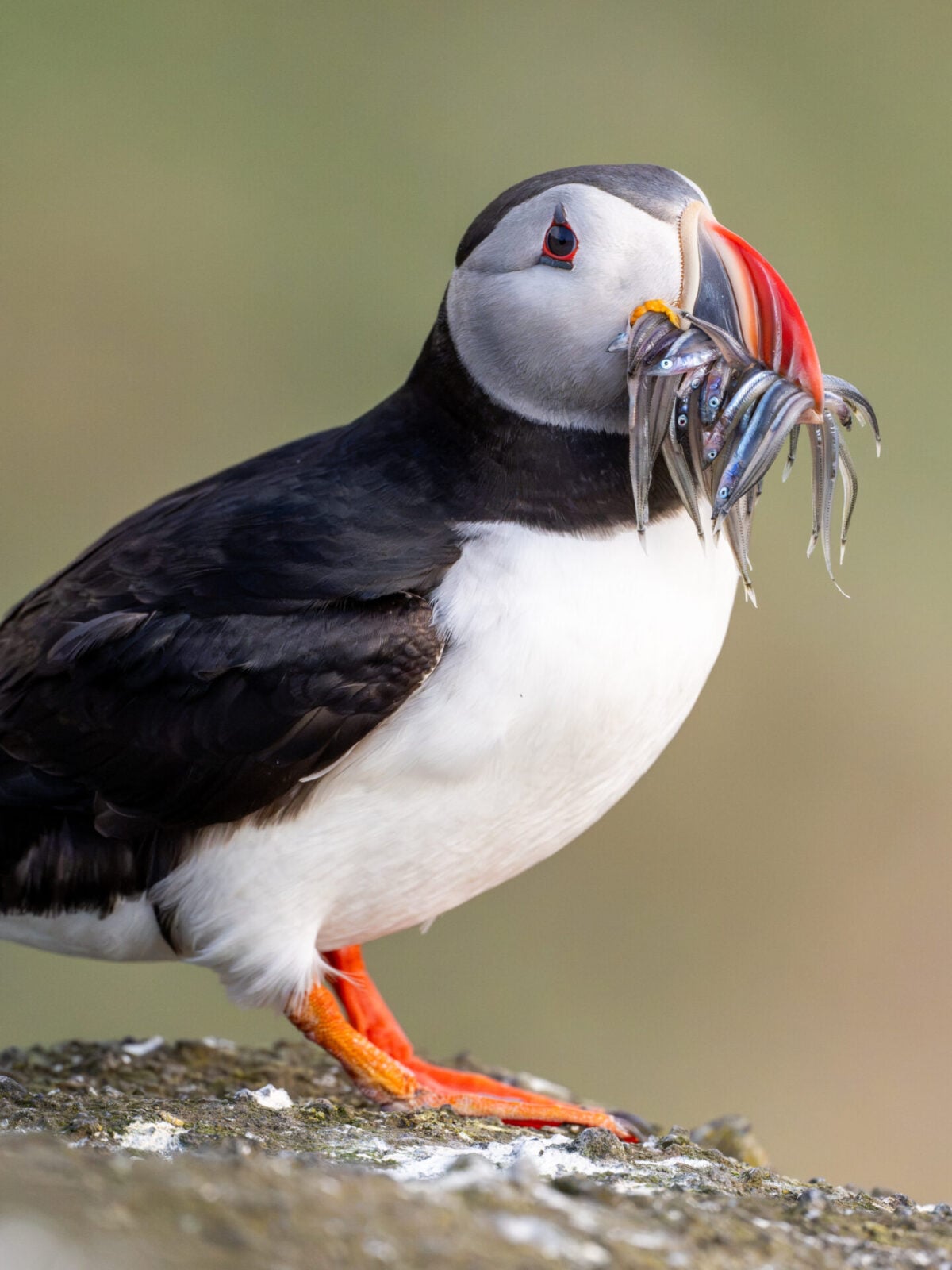
More than half of the world’s Atlantic puffin population visits Iceland each summer, with an estimated 5 million breeding pairs returning to their nesting burrows between April and August. Nowhere else on Earth offers so many opportunities to observe puffins up close, whether that’s from accessible viewing platforms, towering sea cliffs, or remote islands where thousands of birds nest only a few metres away.
We’ve spent months travelling around Iceland across half a dozen trips, photographing famous puffin colonies like Dyrhólaey near Vík and Stórhöfði in Vestmannaeyjar, as well as remote locations like Drangey Island in North Iceland and Grímsey Island in the Westfjords where the experience feels almost impossibly wild. In this guide, I’ll share the very best places to see puffins in Iceland, plus everything you need to know about when to visit and how to get the best photos!
This post contains affiliate links, which means I may earn a small commission if you book something I recommend, at no extra cost to you. I ONLY recommend tours, rentals and places I’ve personally used (or would happily book again) — your support helps keep this site going and the adventures rolling!


About Icelandic puffins
The Atlantic puffin is Iceland’s most iconic and beloved bird. Spending nearly their entire lives at sea and only returning to land each spring to breed, puffins nest in burrows dug into grassy coastal cliffs. Such landscapes are plentiful in Iceland!
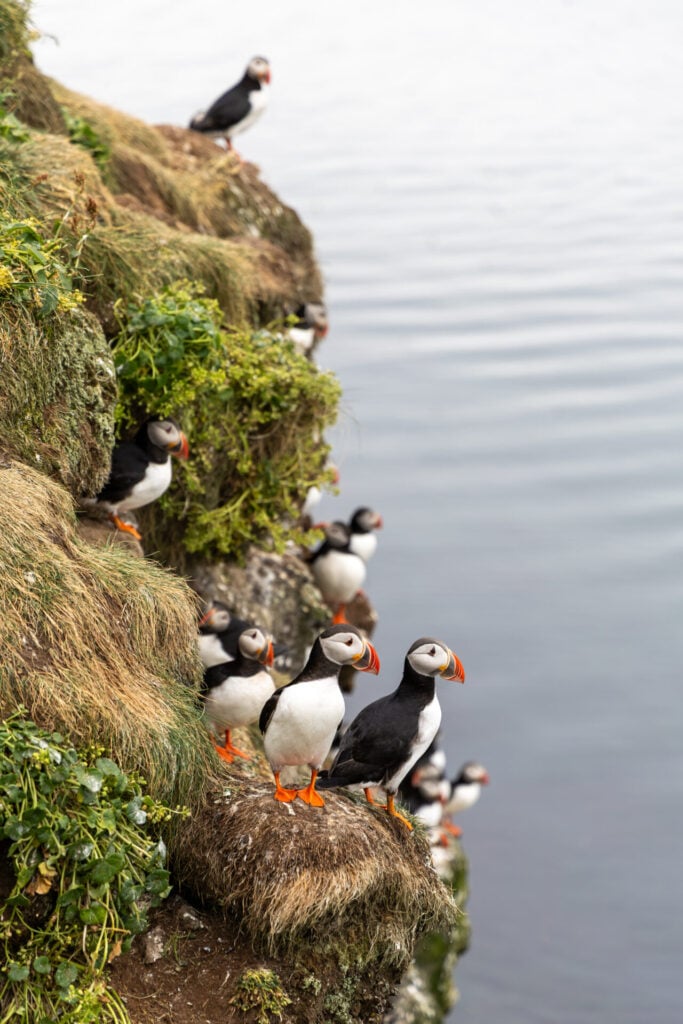
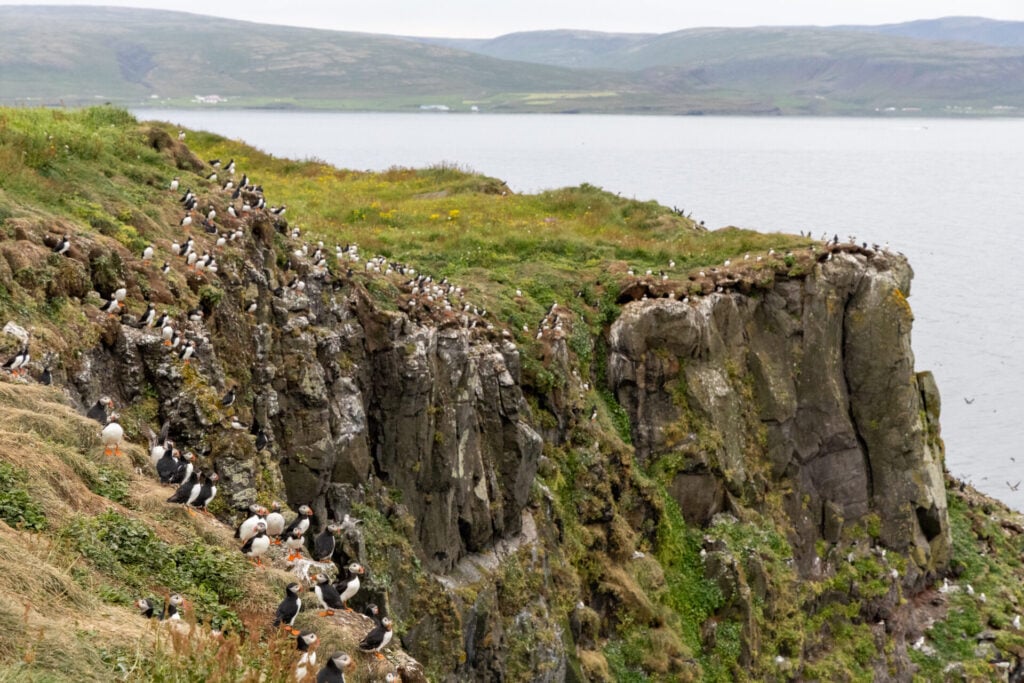
Puffins are famously monogamous, forming long-term pair bonds and returning to the same mate and nesting burrow year after year. Once on land, each pair of bonded puffins raises a single puffling, with both parents sharing the work of incubating the egg and making fishing trips to bring food back to the burrow.
During the breeding season, it’s common to see puffins returning from the sea with beaks packed full of sand eels before disappearing underground to feed their chick!
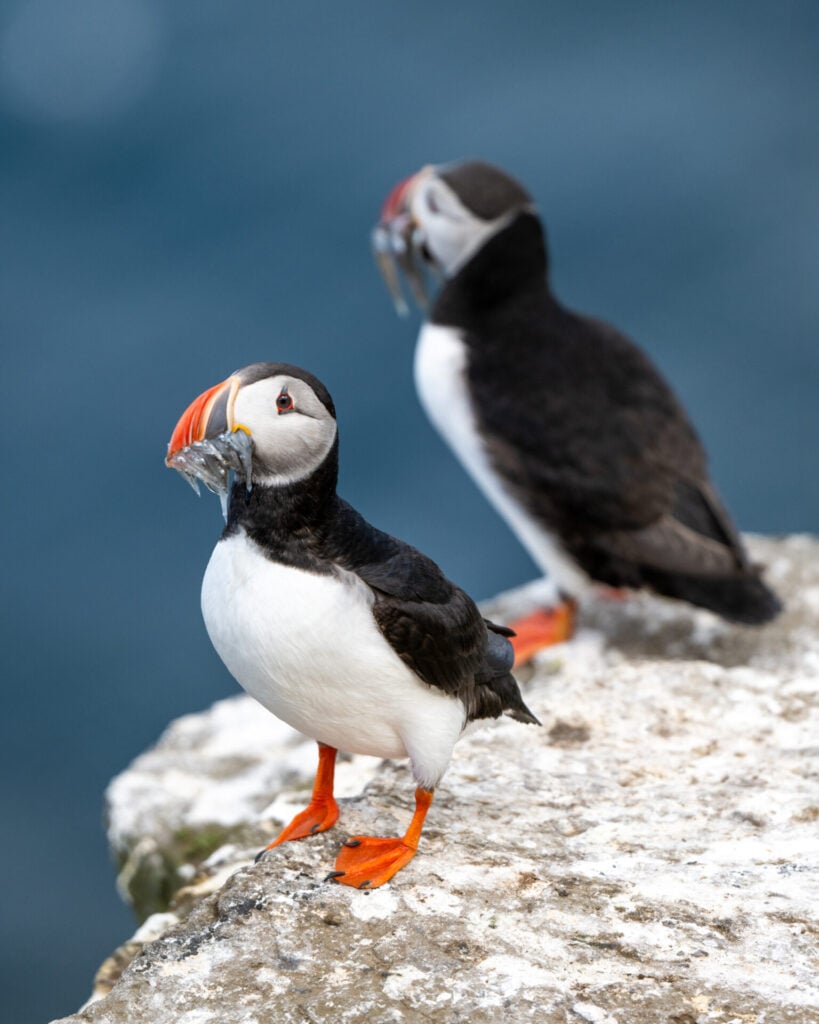
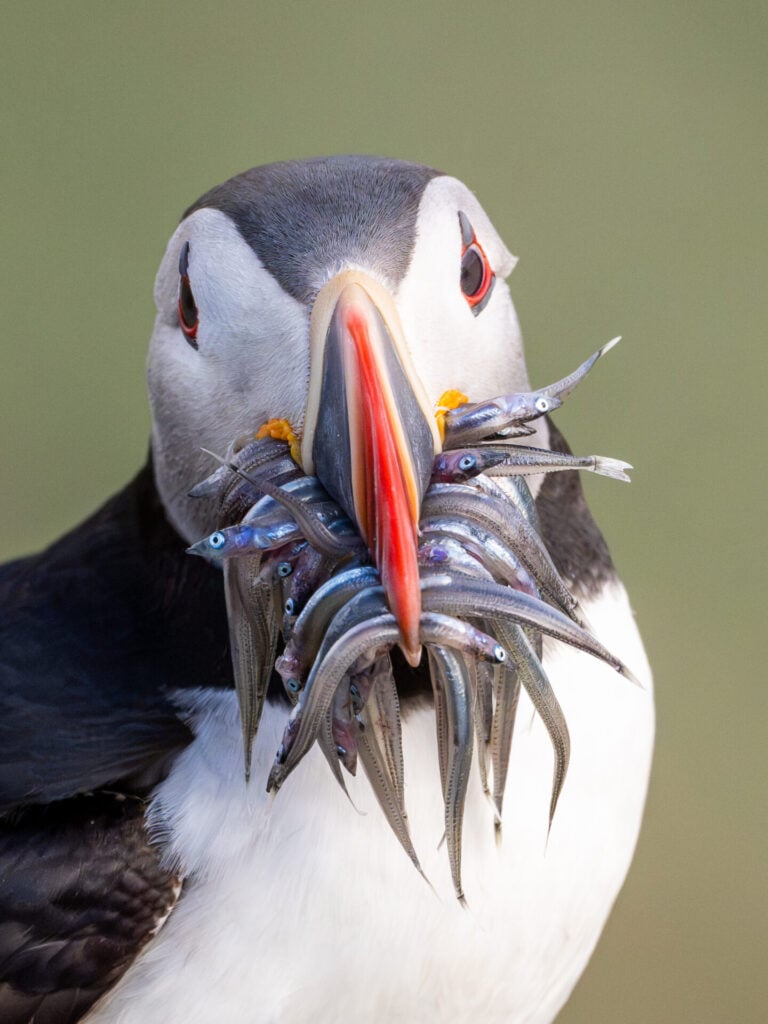
Once the puffling is fully grown, adult puffins depart the burrow to spend the next 8 months almost entirely at sea, encouraging the puffling to fledge on its own under the cover of darkness. This beautiful cycle repeats every year— there’s truly no better place in the world to experience wild puffins than Iceland!
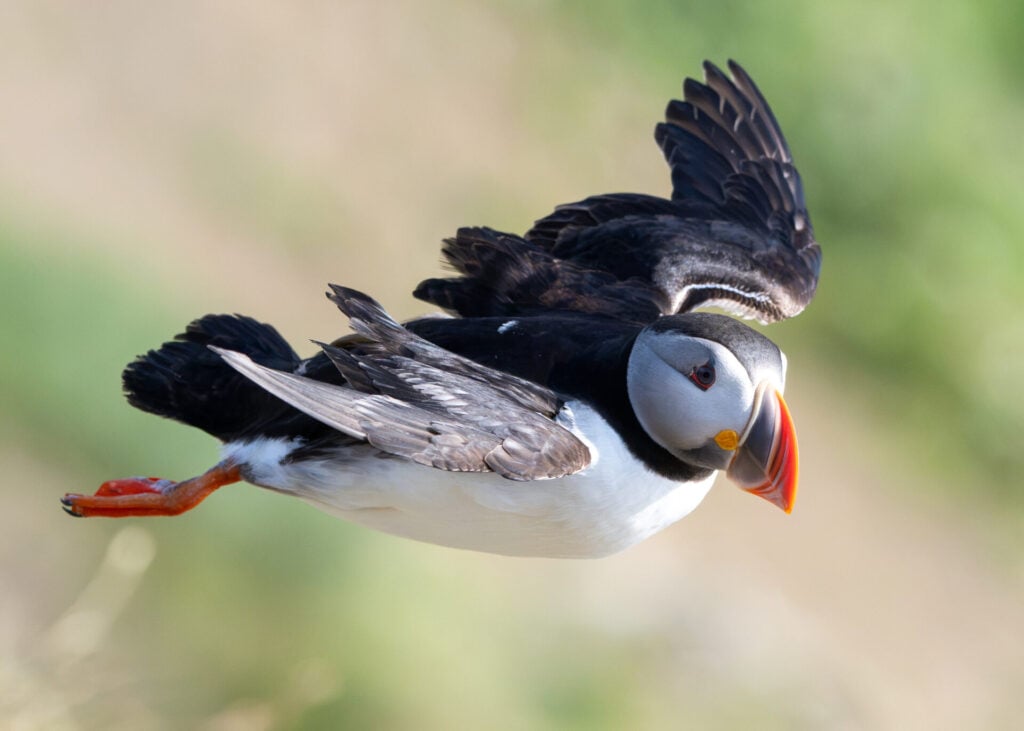
Best time of year to see puffins in Iceland
Although the exact timing varies slightly from year to year, puffins typically arrive in Iceland around late April/early May to begin establishing their nesting burrows. June through August is peak puffin season, with huge numbers flying out to fish from their nesting burrows, making this the best window to see active puffin colonies around the island.
In late August, adult puffins begin departing Iceland for the open North Atlantic, and by September, the breeding colonies are largely empty until the birds return the following spring. If seeing puffins in Iceland is a must, be sure to plan your trip for the summer months!
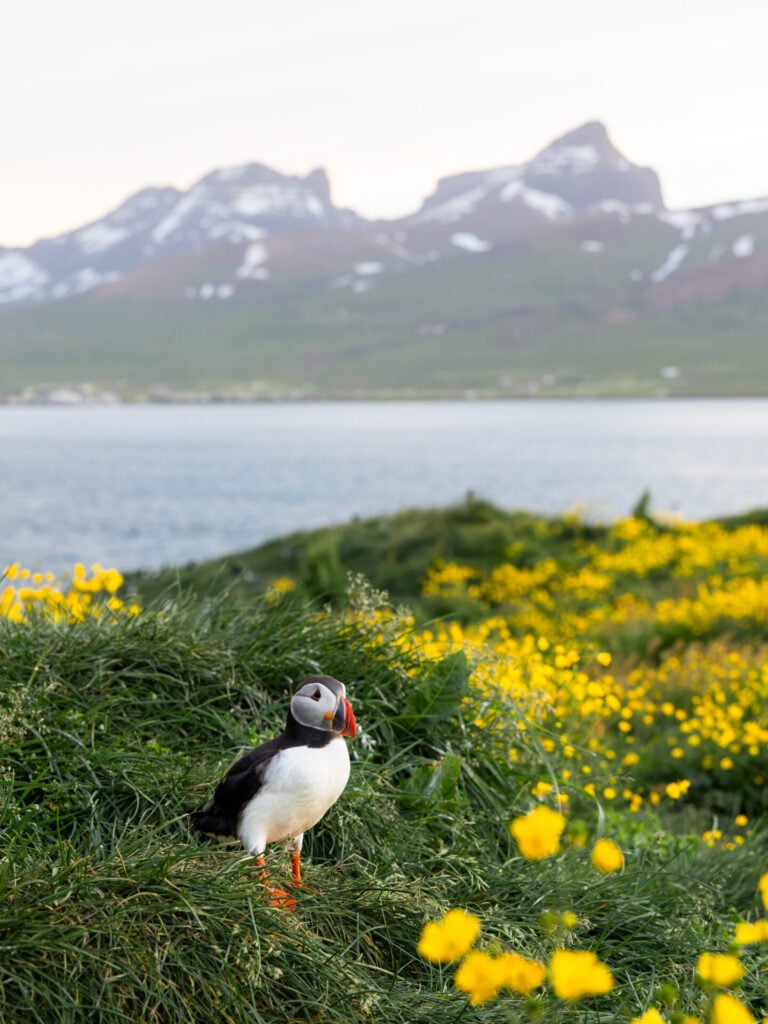
Best time of day to see puffins in Iceland
Many online guides recommend visiting puffin colonies early in the morning or late in the evening, and we generally found this to be true. Particularly at colonies in Borgarfjörður Eystri and Vestmannaeyjar, the greatest concentration of birds gathers around the nesting burrows from 9-11pm.
If you’re hoping to see (and photograph) dozens of puffins sitting outside their burrows in beautiful evening light, this is an excellent time to visit!
That said, we’ve also captured some of our very favourite puffin photos smack in the middle of the day. Adult puffins spend hours making fishing trips out to sea, and at bustling colonies like Drangey Island and Grímsey Island, you can see enormous numbers of puffins throughout the entire day carrying beaks full of sand eels back to their burrows.
Ultimately, the best time of day depends on which colony you’re visiting. I’ve included recommendations for each location below, but locals are also a great resource (and it’s safe to say if you’re joining a daytime boat tour to visit the puffins, then activity will be strong at this time).
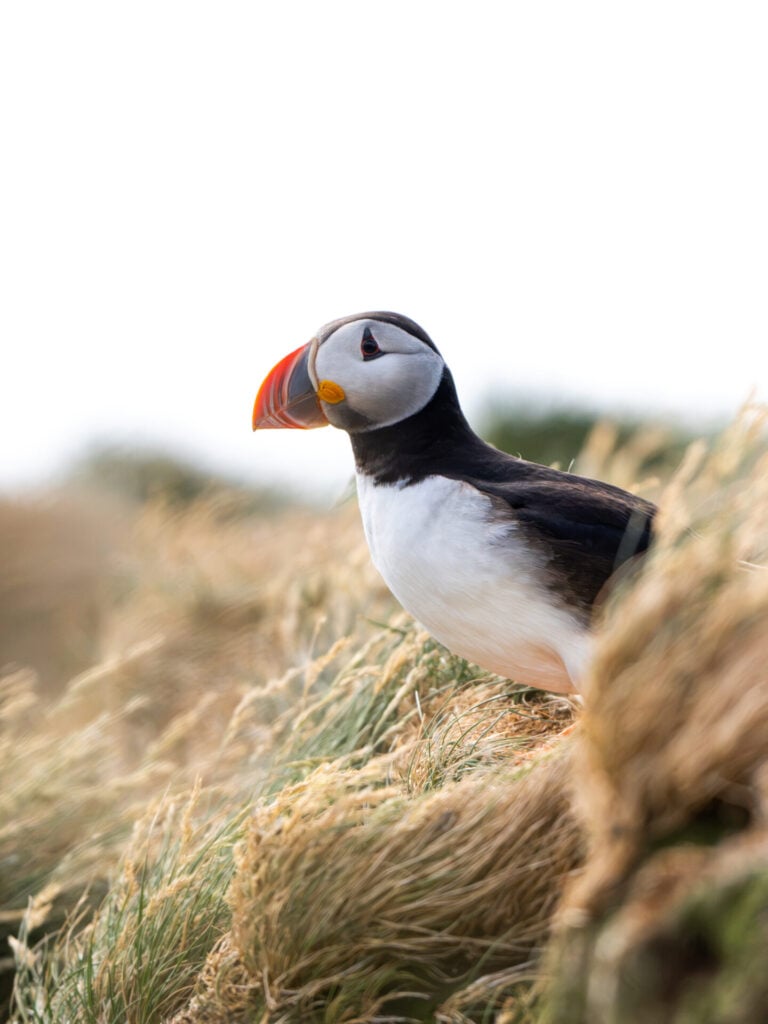
Puffin photography tips
- Bring the longest lens you have: our best puffin photos were taken with a 600mm telephoto lens, but we still captured fantastic images at 150mm in locations where the birds are particularly approachable. If you don’t have a telephoto lens, prioritise visiting colonies in Drangey Island, Borgarfjörður Eystri, and Grímsey Island (the first 3 entires below!).
- Keep shutter speed & ISO high: the greatest flurry of burrow activity typically occurs early in the morning or late at night (around 9-11pm in July/August), so you’ll need to bump up ISO to compensate for lower light (without dropping your shutter speed below 1/500). With recent advancements in Lightroom’s AI denoise, we got great results even shooting at 12800ISO!
- Shoot with the widest aperture possible: this creates a soft, buttery bokeh behind the puffin that really helps him/her really pop against the background.
- Get down to eye level: rather than photographing from above, kneel or lie down in the grass (where permitted) to capture more intimate portraits from the puffin’s perspective.
- Be respectful of wildlife: stay on marked paths and never approach nesting burrows too closely. If a puffin changes its behaviour because of your presence, you’re too close!


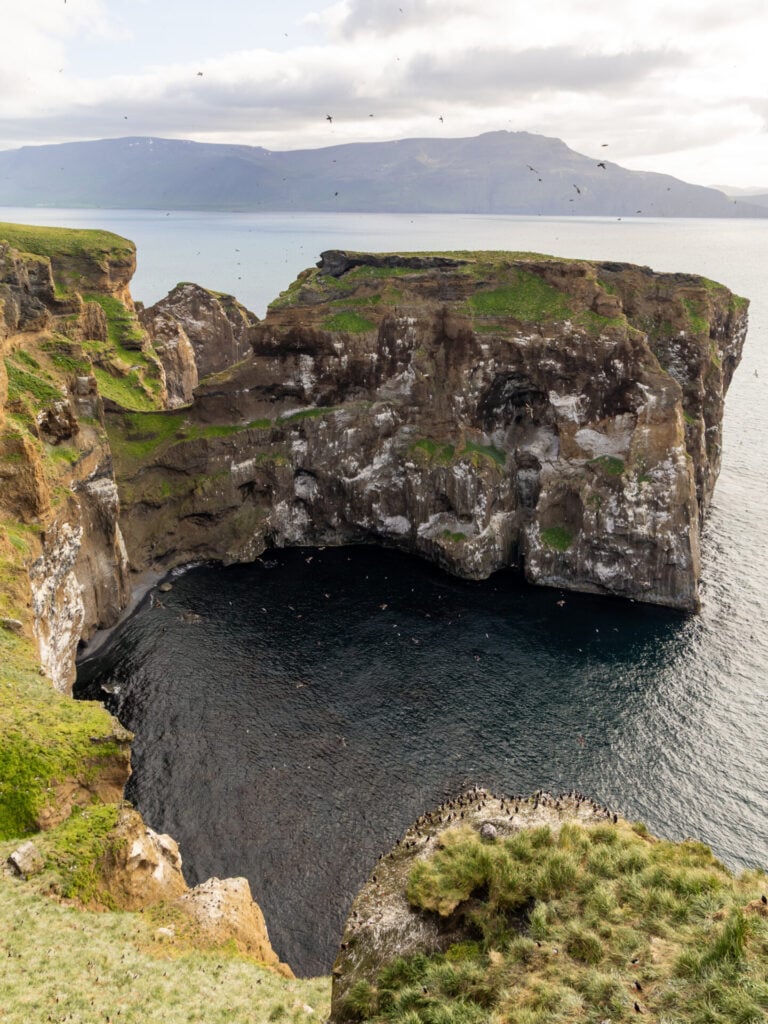
Best places to see puffins in Iceland
1 | Drangey Island (North Iceland)
- Access: boat tour from Skagafjörður (or Hofsos)
- Puffin proximity: very close and absolutely everywhere!
- Crowds: only one boat (up to 19 people) at any given time
- Best for: the most unique and immersive puffin experience in Iceland
Of all the incredible spots on this list, Drangey Island is our absolute favourite place to see puffins in Iceland. Rising dramatically from Skagafjörður off Iceland’s north coast, this isolated sea stack is home to hundreds of thousands of seabirds, and although it’s not the largest puffin colony in Iceland, it absolutely feels like it could be. I swear I’ve never seen so many birds in my entire life!


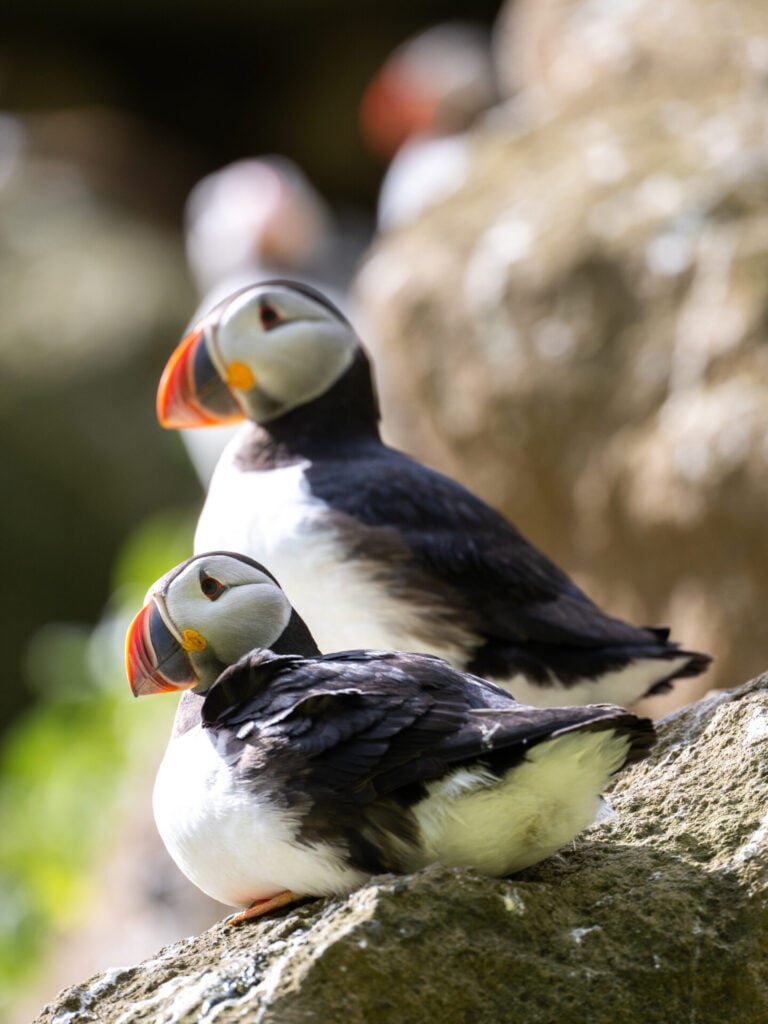
Access to the island is exclusively offered by family-owned Drangey Tours, who operate daily boat trips from Sauðárkrókur (or private tours from Hofsos) out to Drangey.
It takes about 30min to reach the island via boat and an adventurous 15min to climb up to the top, ascending ladders and hiking through several exposed sections of trail equipped with fixed ropes before reaching a grassy plateau 180m above the fjord.
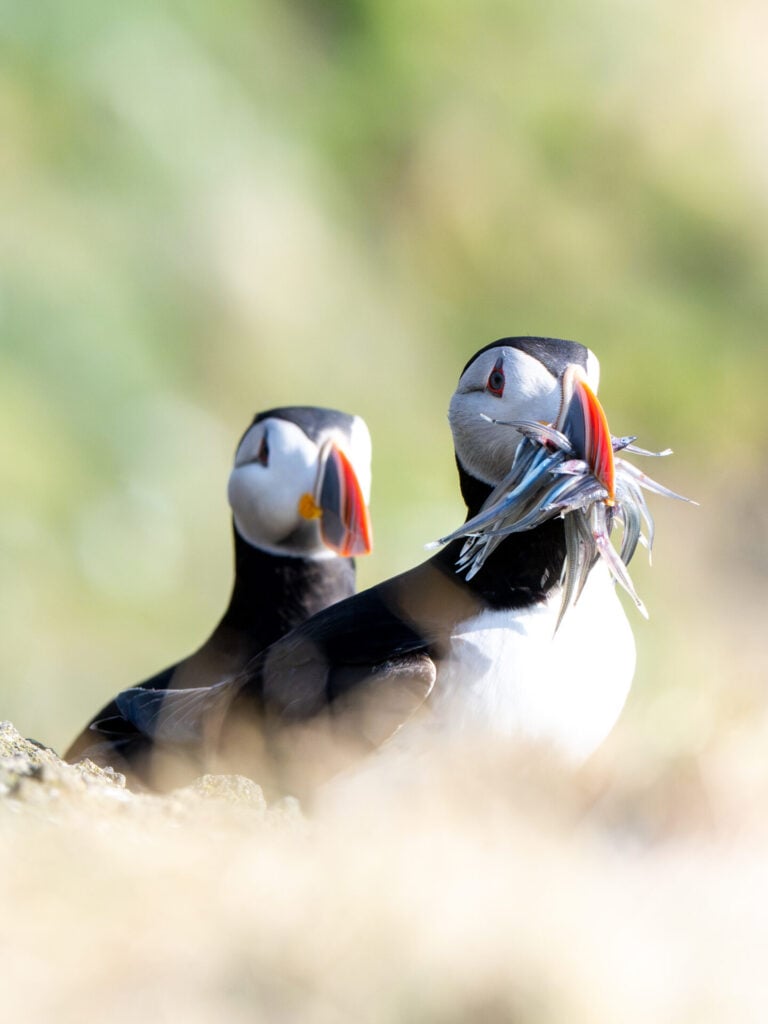
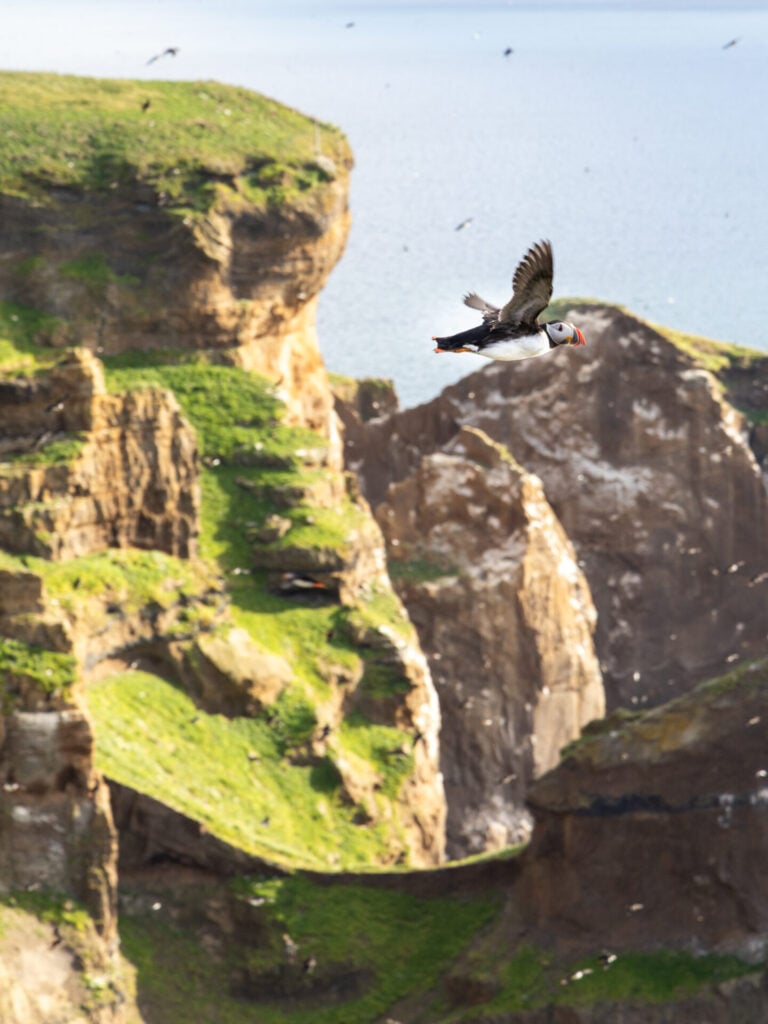
Towering basalt cliffs, sweeping views across Skagafjörður (where we saw whales and dolphins playing!), and the complete absence of tourists give the island an incredibly wild, untouched feel. And unlike many colonies that can only be spotted on distant cliffs, the puffins on Drangey nest all throughout the grassy plateau, often within metres of your lens.
The entire experience of visiting Drangey Island is truly unlike anything else and, for those travelling through northern Iceland, it’s a hidden gem worth going out of your way for!
2 | Hafnarhólmi (East Fjords)
- Access: paid parking area just beyond Borgarfjorður Eystri
- Puffin proximity: the closest you’ll see puffins anywhere in Iceland
- Crowds: fairly low
- Best for: experiencing the puffins at unbelievably close-range with a gorgeous mountain backdrop
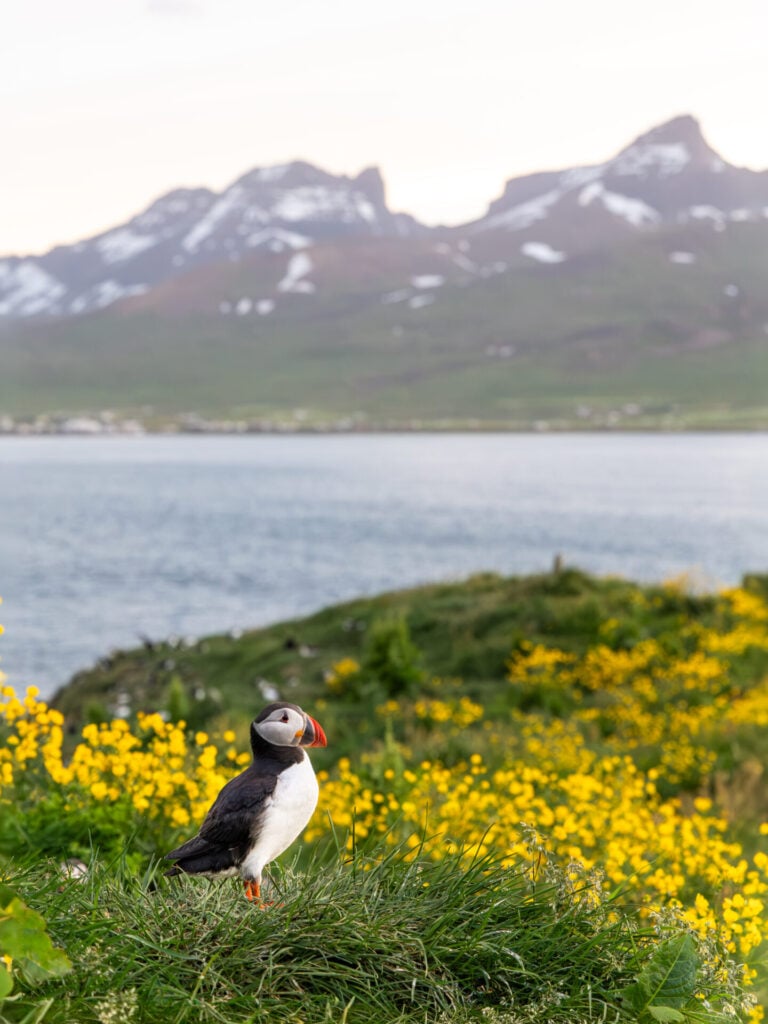
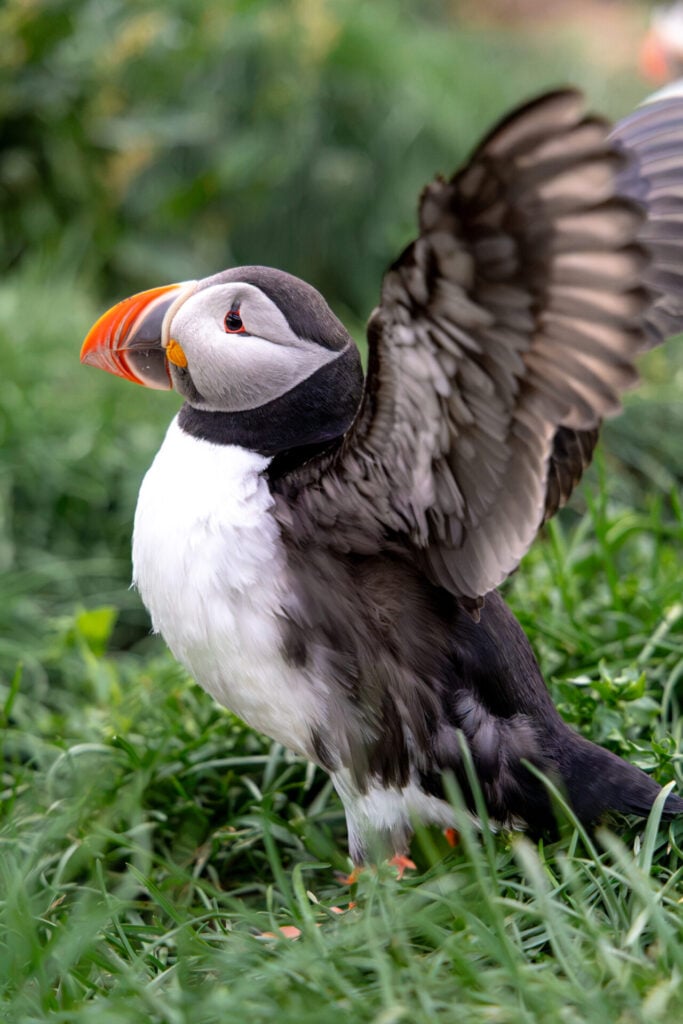
Hidden away in the remote and oft-overlooked East Fjords, Hafnarhólmi is the absolute best place in Iceland to see puffins up close. This small rocky islet (connected to the mainland by a short causeway) is home to a small but thriving puffin colony, and within just 5min of the parking area, a network of viewing platforms allows you to observe the birds from mere metres away.


What makes Hafnarhólmi even more special is its setting. Against the backdrop of Borgarfjörður Eystri’s jagged mountains, the scenery is every bit as impressive as the birdlife, particularly during sunset (around 10pm) when the entire scene takes on a golden hue.
Of all the places we’ve photographed puffins in Iceland, Hafnarhólmi offers by FAR the closest encounters, and we captured some of our absolute favourite photos here without even needing to use a telephoto lens!
3 | Grímsey Island (Westfjords)
- Access: boat tour from Drangsnes marina (operated by Malahorn Accommodation)
- Puffin proximity: very close and absolutely everywhere!
- Crowds: only one boat (~15 people) at any given time
- Best for: enormous puffin numbers at close range
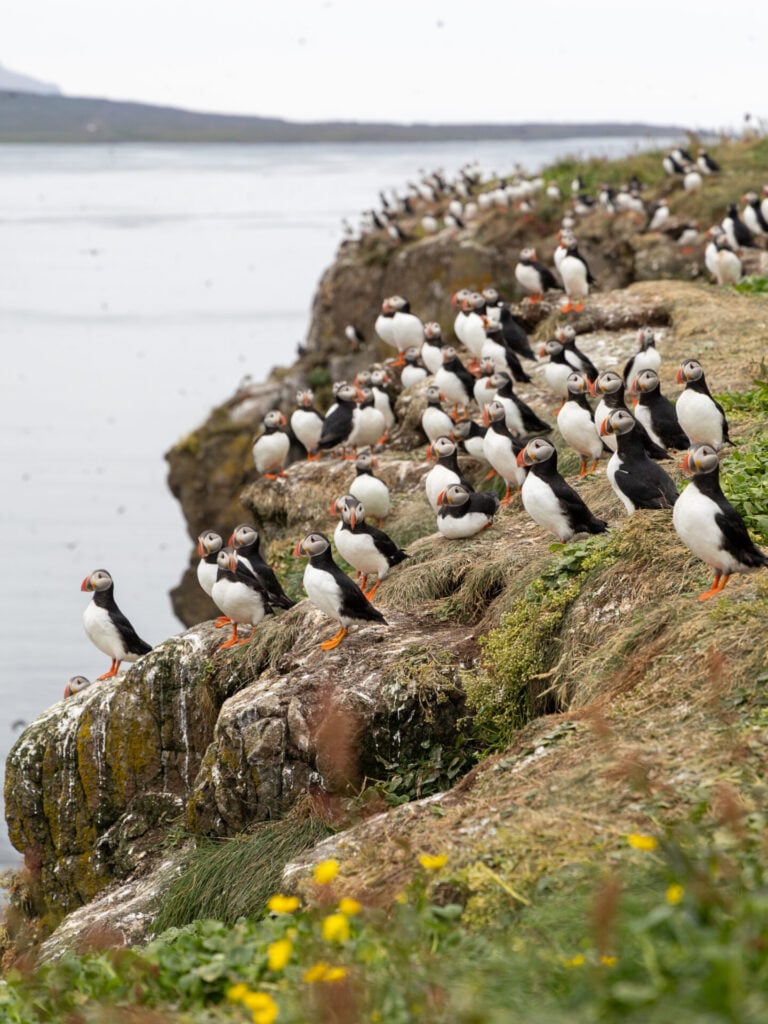
Not to be confused with the Grímsey Island located above the Arctic Circle, this tiny island off the coast of Drangsnes in Steingrímsfjörður is one of the most underrated puffin areas in Iceland. We stumbled across it almost by accident during a road trip through the Westfjords, and with so little information available online, we had truly no idea what to expect.
Having visited Drangey Island just a few days earlier, we honestly didn’t think another puffin colony could compare… but Grímsey totally surprised us!


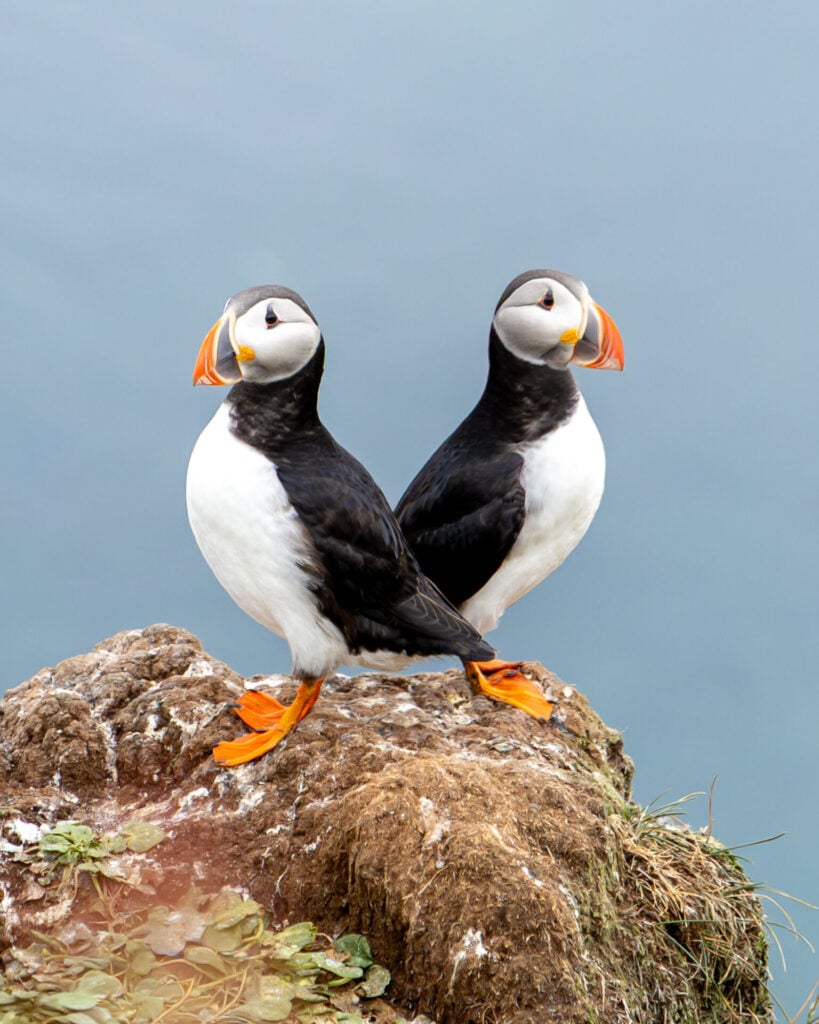
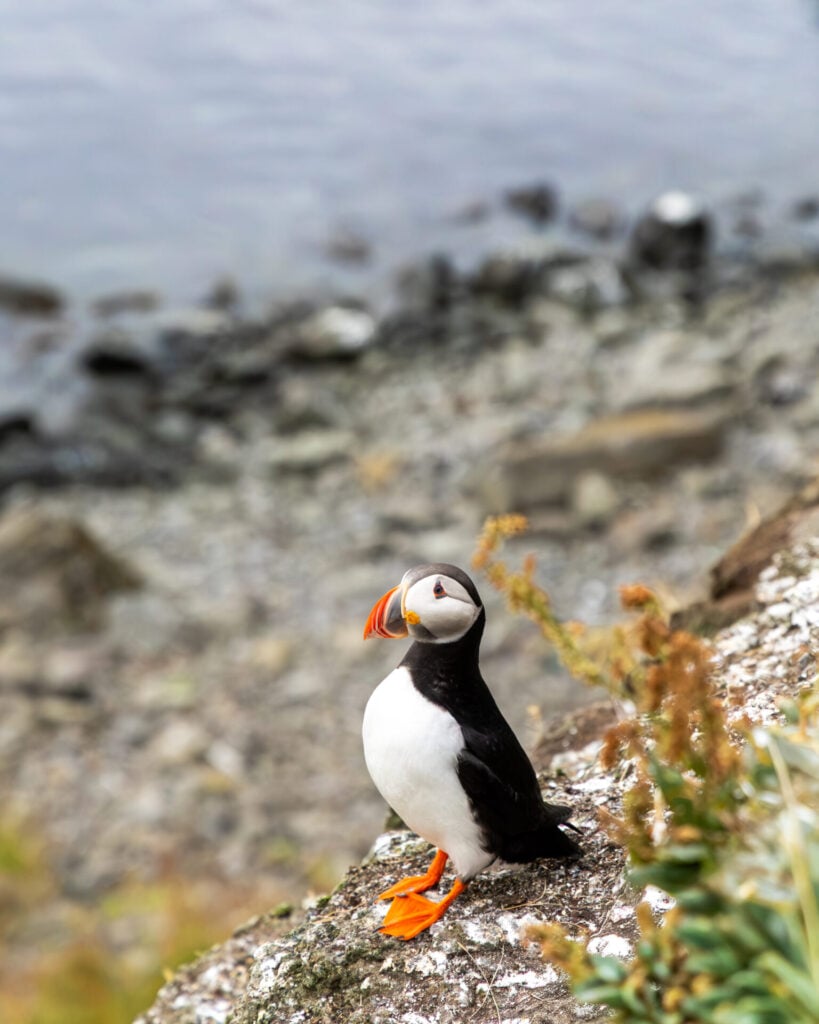
Daily boat trips operated by Malahorn Accommodations run from Drangsnes marina to the island in just 10min, and unlike Drangey, there’s no steep climb or strenuous hike. Within moments of landing, step into a landscape swarming with thousands of puffins, all entirely unfazed by the occasional human visitor.
Isolated and fully immersed amongst the puffins, Grímsey Island quickly became one of our all-time favourite wildlife experiences. If you’re exploring the Strandir coast, absolutely do not miss this hidden gem!
4 | Stórhöfði, Vestmannæyjar (South Iceland)
- Access: free parking area at the south of Heimaey (car/passenger ferry from Landeyjahöfn)
- Puffin proximity: usually possible to see them fairly close
- Crowds: moderate, but easy to find seclusion by walking further along the path
- Best for: experiencing the largest puffin colony in the world
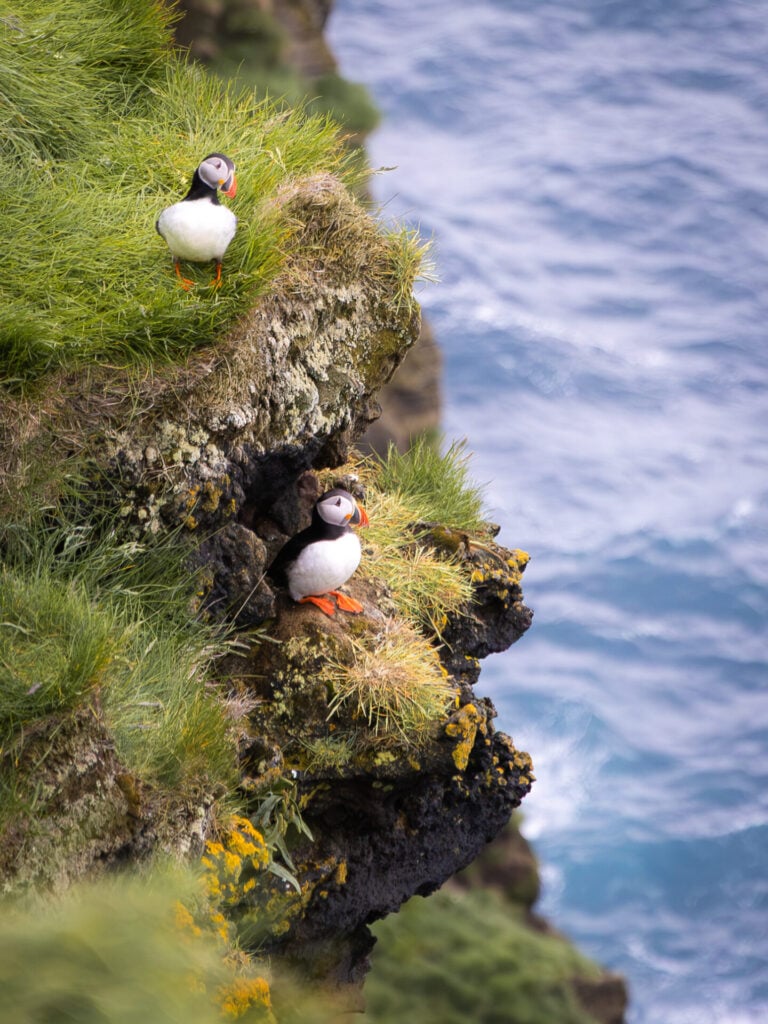
With an estimated 840,000 breeding pairs, Vestmannæyjar is home to the largest Atlantic puffin colony in the entire world. The puffins predominantly nest around the windswept southern tip of the largest inhabited island, Heimaey, and can be seen in large numbers just a short walk from the parking area.
A well-positioned viewing platform sits across and directly above quite a few nesting burrows, so you can typically see puffins fairly close with a little patience. Surprisingly few people continue beyond the main viewpoint onto the marked trail around Stórhöfði (about 1hr to complete the loop), but we found this to be another excellent opportunity to enjoy close encounters with puffins away from the crowds!


🐧 VESTMANNÆYJAR PUFFLING PATROL
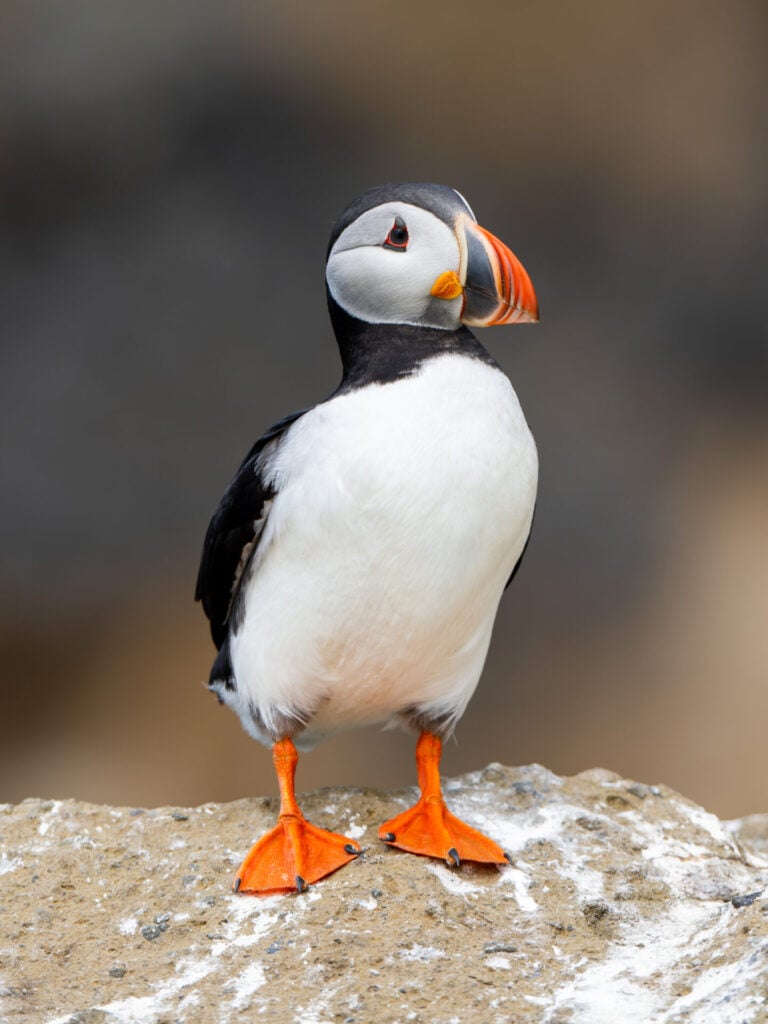
In late August and early September, newly fledged pufflings venture out of their burrows for the very first time, instinctively navigating towards the ocean using moonlight as their guide. In Vestmannæyjar, however, many become disoriented by the lights of Heimaey and wander towards town instead.
Local families search the streets and gardens each evening in the summer to rescue stranded pufflings, keep them safe overnight in cardboard boxes, and toss them from the island’s cliffs the following day so they can continue their journey out to sea. Read more about this unique Icelandic tradition and how to witness it!
5 | Látrabjarg Cliffs (Westfjords)
- Access: free parking at the end of a long 4WD-only road
- Puffin proximity: relatively far away, but sometimes you can get lucky
- Crowds: low to moderate
- Best for: Iceland’s most impressive puffin cliffs
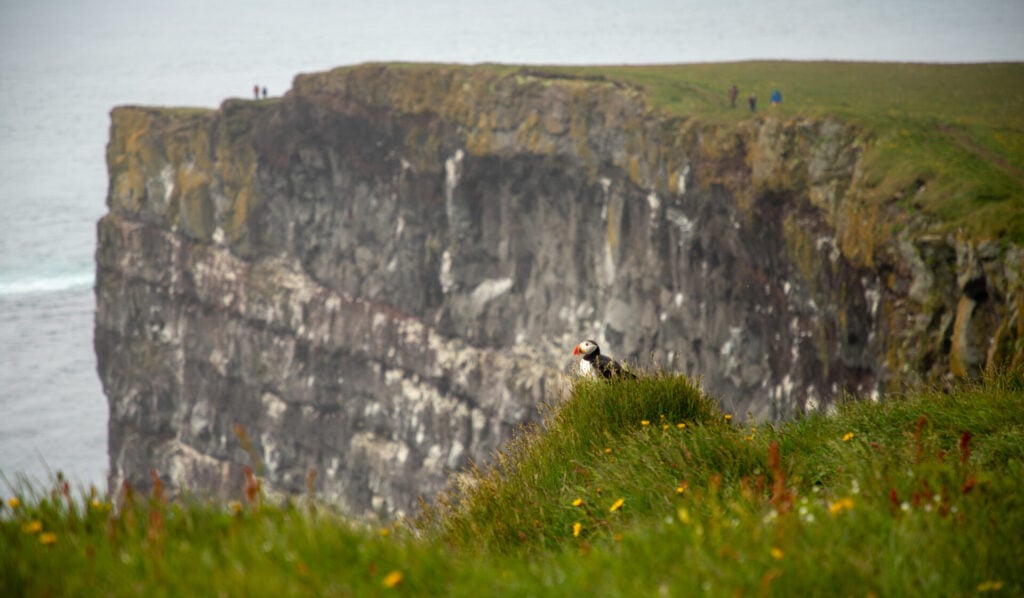
Stretching for 14km along the westernmost edge of Iceland, Látrabjarg is Europe’s largest seabird cliff and one of the country’s most iconic wildlife destinations. During the summer months, millions of puffins and other seabirds nest in the towering cliffs that plunge more than 400m into the North Atlantic.


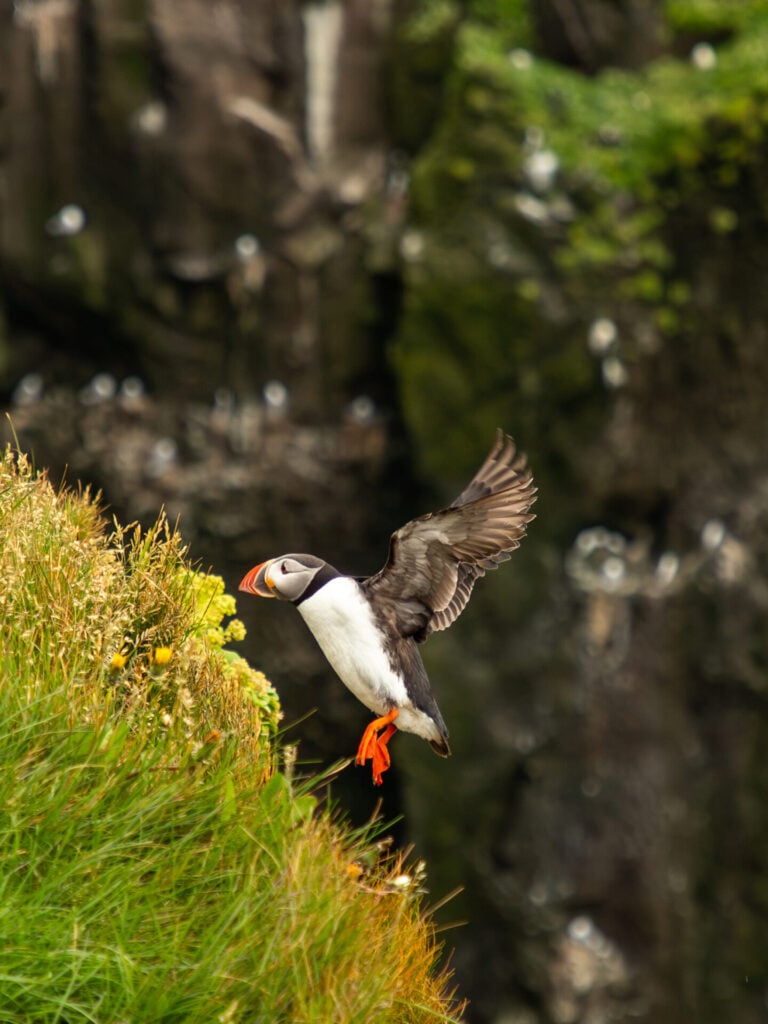
Many puffins remain on the steep cliff faces below the walking path, however, so you’ll need to get a little lucky to see them at photographable range.
Even when the puffins are keeping their distance, the sheer scale of the cliffs and the abundance of birdlife make this a truly incredible wildlife experience. It’s a VERY long drive to get out to the cliffs, even by Westfjords standards, but keen photographers may find that Látrabjarg is absolutely worth the detour!
6 | Dyrhólaey (South Iceland)
- Access: paid parking at Dyrhólaey Lighthouse
- Puffin proximity: quite far away and difficult to photograph without a telephoto lens
- Crowds: the highest of any spot on this list due to accessibility
- Best for: convenient stop on a South Coast road-trip
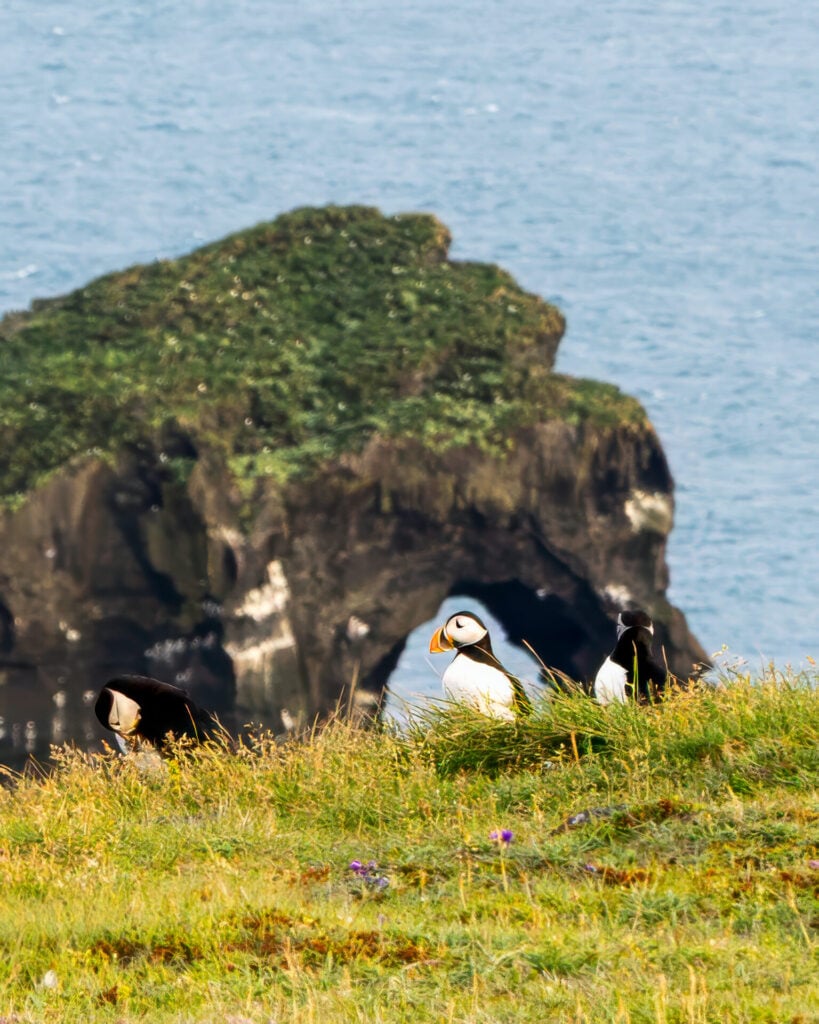
Just 20min west of Vík, Dyrhólaey is one of Iceland’s most accessible puffin colonies and an easy addition to any South Coast itinerary. Hundreds of puffins nest along the sea cliffs surrounding the lighthouse, visible mere minutes from the busy carpark.
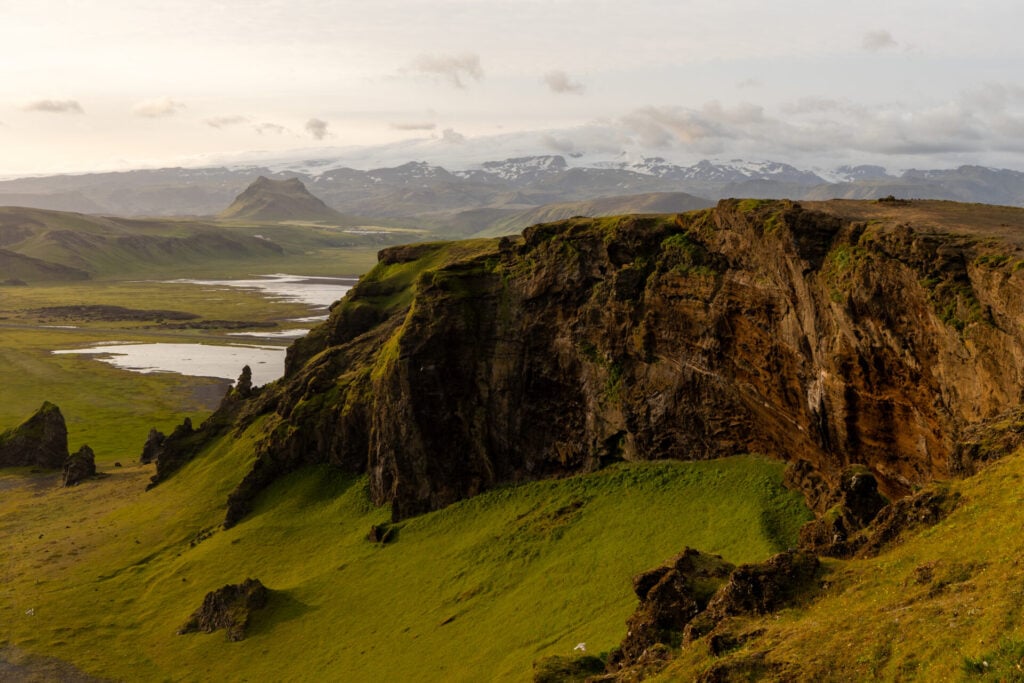
Much like Látrabjarg, the puffins at Dyrhólaey remain on the steep cliff walls below the designated walking paths and, as such, they can be fairly difficult to see. Without a telephoto lens (or a LOT of luck), it’s nearly impossible to get a good photo here.
While Dyrhólaey isn’t our favourite place in Iceland to photograph puffins, it’s hard to beat the convenience if you’re already exploring the South Coast. Just know that you’ll need to work extra hard to capture good puffin shots here!


Read all of my Iceland itineraries & travel guides
- Best hikes in Iceland
- Where to see puffins in Iceland: popular spots + hidden gems!
- 10-day Iceland 4WD campervan itinerary: best of the Highlands & F-roads
- Ultimate Iceland Ring Road itinerary
- East Fjords travel guide: best hikes, waterfalls & hot springs around Egilsstaðir
- 1-week Northern Iceland road trip itinerary from Akureyri
- Westfjords road trip itinerary
- Laugavegur + Fimmvörðuháls hiking guide
- Laugavegur packing list
