• start here
  • about
  • group trips
  • brooke beyond

  • hiking guides
  • outdoor gear
    • hiking boots
    • hiking backpacks
    • cold-weather layers
    • backpacking tent
    • outdoor sleep system
    • backcountry food
    • day-hike packing list
    • hut-to-hut packing list
    • via ferrata packing list
    • backpacking packing list
    • mountaineering packing list

brooke beyond

Juliana Bike Trail Slovenia
Europe / Slovenia

Juliana Bike Trail: a complete guide to Slovenia’s best cycling tour

26 July 2023

Last Updated on 26 March 2025

Winding around Triglav National Park for more than 300km, the Juliana Bike Trail offers unparalleled access to Slovenia’s small but spectacular Julian Alps, as well as its many gorges, turquoise rivers, alpine meadows, and charming historic towns. With nearly 10,000m of elevation gain, it’s no city bike ride— but dedicated cycle paths, good road conditions, and a pervasive bike-friendly culture ensure that even novice cyclists can enjoy this scenic route!

Pedal your way through the country, sampling delicious (& inexpensive!) local fare, sleeping in convivial campgrounds, and falling in love with the untouched beauty of Slovenia’s singular national park. My favourite aspect: the opportunity to customise this itinerary and tack on hiking/ climbing/ swimming/ sightseeing! This doesn’t have to be an 8hrs-per-day cycling trip; think of it instead as a means to travel around Slovenia and experience the very best of the country on your own schedule, with your own wheels. Ultimate freedom AND unmatched access to the outdoors!

This guide contains everything you need to know in order to plan your own Juliana Bike adventure, including hiring bikes, camping information, a detailed cost breakdown, a day-by-day itinerary (with the best side-trips!) and more.

What's in this guide

Toggle
  • Juliana Bike Trail
  • Logistics
    • Getting to the Juliana Bike Trail
    • Hiring bikes
    • Accommodation on the route
    • Food on the route
    • Estimated trip budget
  • Day 1: Ljubljana to Lesce to Bled
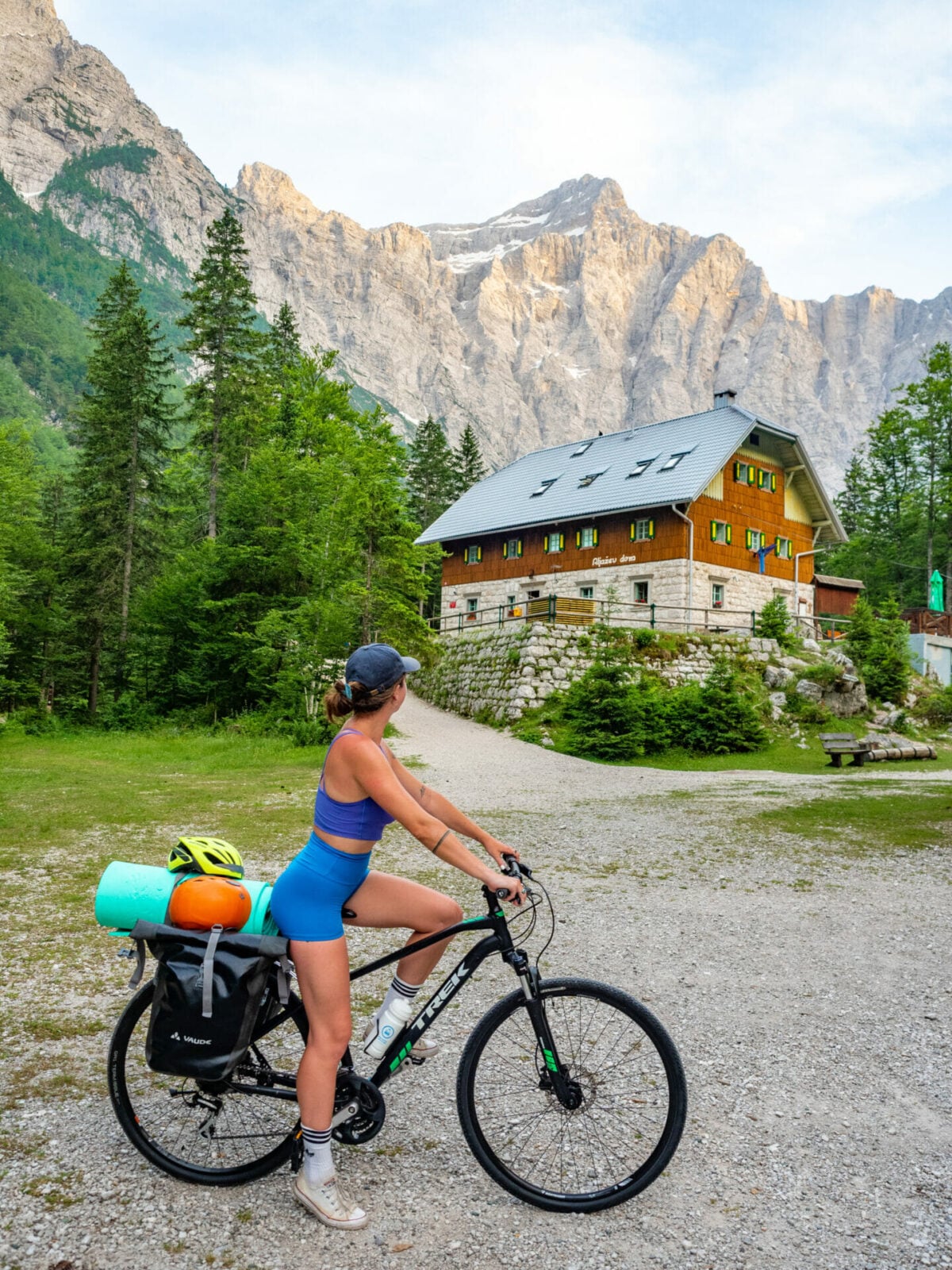
  • Day 2: Bled to Aljažev Dom
  • Day 3: Mt Triglav
    • Čez Prag Route: Aljažev Dom to Triglav Dom
    • Mali Triglav Route: Triglav Dom to Triglav summit
    • Tominšek Route: Triglav Dom to Aljažev Dom
  • Day 4: Aljažev Dom to Kranjska Gora
  • Day 5: Kranjska Gora to Soča via Vršič Pass
  • Day 6: Soča to Kobarid
  • Day 7: Kobarid to Bohinj
  • Day 8: Bohinj to Blejska Koča
  • Day 9: Blejska Koča to Bled

A big thank you to Life Bike in Lesce, Slovenia for providing bike hire and logistical support for this incredible experience. As always, all opinions in this post are entirely my own!

Juliana Bike Trail Slovenia

Juliana Bike Trail

Developed as a complement to the Juliana Trail, a hiking loop around the Julian Alps, this epic biking circuit extends anti-clockwise around Triglav National Park in seven official stages. You can see these stages highlighted on the map below, but this post describes a slightly modified itinerary that includes more hiking opportunities and refreshing swims along the way, delivering you every evening into a well-appointed campground with access to food and other supplies.

My suggested route extends some of these stats slightly, but I think it makes for the absolute best experience— a big thanks to the team at Life Bike for helping devise this incredible adventure!

  • Distance: 290km (+ suggested side-trips)
  • Elevation gain: 8500m (+ side-trips)
  • Time to complete: 4-10 days
  • Official stages:
    • 1 | Bohinjska Bistrica–Goreljek (32.4km; 1049m gain)
    • 2 | Goreljek–Kranjska Gora (65.2km; 1092m gain)
    • 3 | Kranjska Gora–Bovec (62.9km; 1585m gain)
    • 4 | Bovec–Tolmin (49.3km; 1763m gain)
    • 5 | Tolmin–Zakojca (31.1km; 1162m gain)
    • 6 | Zakojca–Podbrdo 19.3km; 904m gain)
    • 7 | Podbrdo–Bohinjska Bistrica (29.5km; 869m gain)
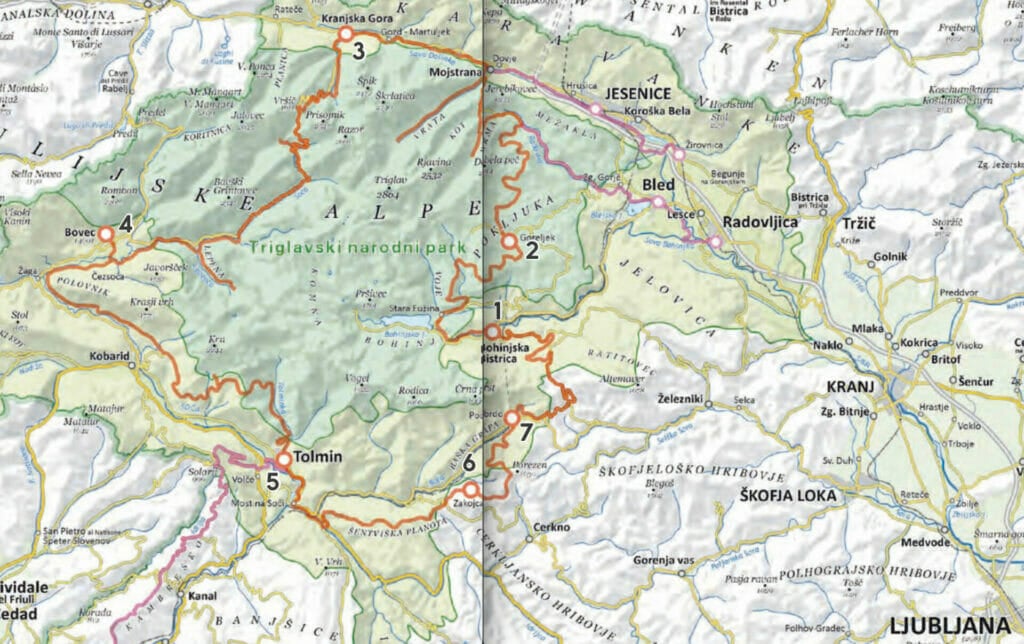
Juliana Bike Trail map

Logistics

Getting to the Juliana Bike Trail

If you arrive into Ljubljana by midday, you can easily begin your cycle tour on this same day— first, catch the #28 bus (3.7€) or a shuttle (15€) from the airport into the city.

From Ljubljana, it couldn’t be easier to access the Juliana Bike Trail: there are frequent direct trains to Lesce-Bled (1hr; 5€) and the Life Bike shop is conveniently located directly across the street from the station!
Juliana Bike Trail Slovenia
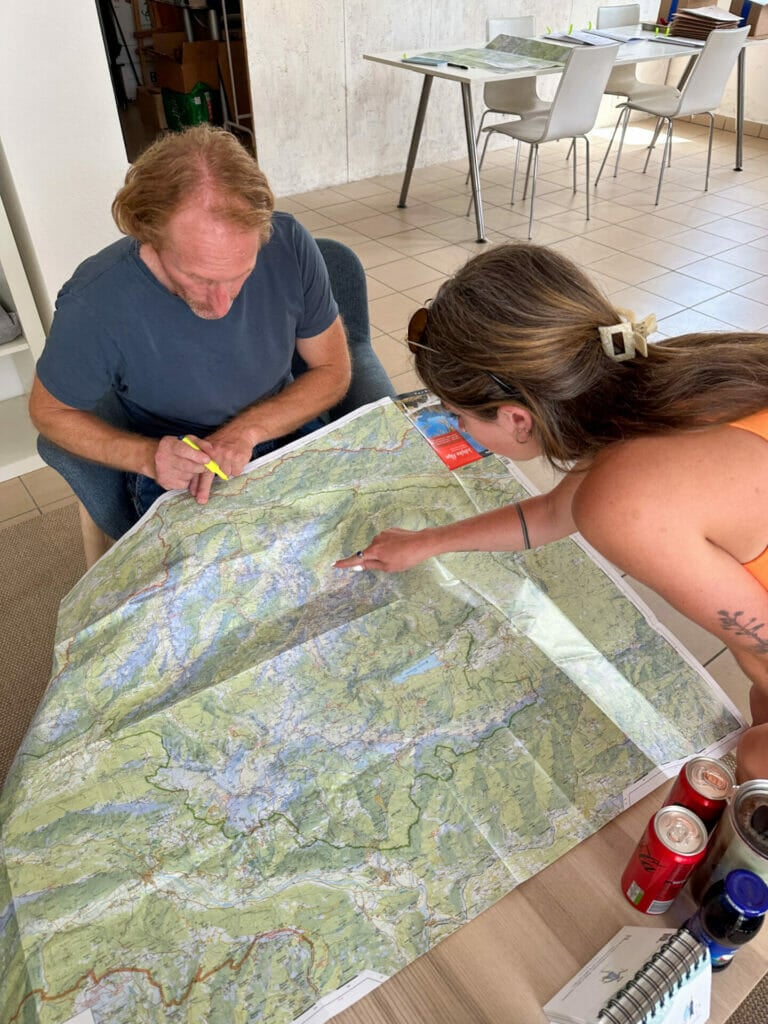
Planning my route with the experts at Life Bike

Hiring bikes

Life Bike in Lesce stocks a full range of touring and e-bikes, with prices from 20-40€/day. Contact the knowledgeable Matej to organise pick-up from the shop, where you can also rent panniers, camping gear, and even via ferrata equipment!

Touring bike vs e-bike?
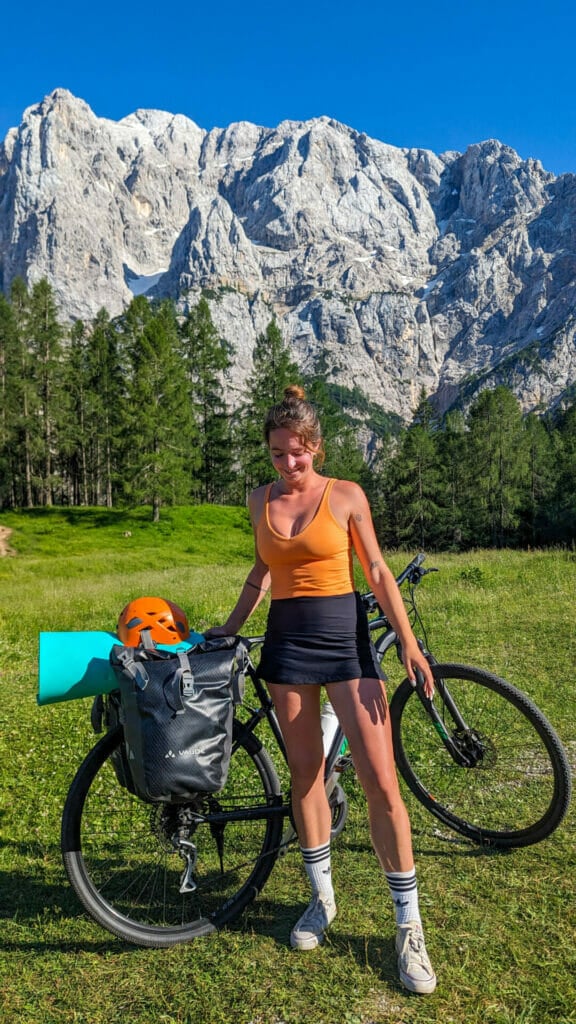
This itinerary features quite a few steep and/or sustained ascents, and with the additional weight of camping and climbing gear in your panniers, this can be a challenge for novice cyclists— it sure was for me! If you’re concerned about the cycle tour, or if you have a tighter time-frame, it might be worth considering an e-bike.
Juliana Bike Trail Slovenia

Accommodation on the route

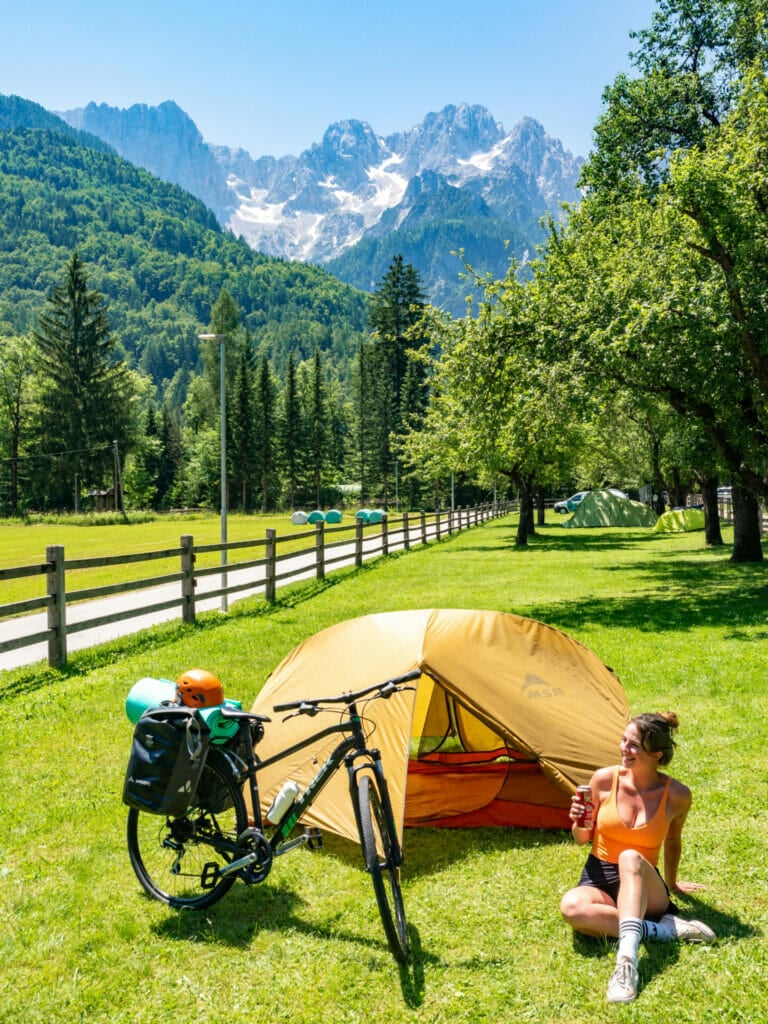
This itinerary was specifically designed around the ability to stay in local campgrounds, with a few mountain huts thrown in as a starting point for hiking and climbing objectives. Although hotels and Airbnbs are often available in nearby locations, camping in Slovenia was one of the trip highlights and helped keep costs low while also remaining flexible.

The great thing about being on a bike is that campgrounds, even when fully booked, won’t ever turn you away— there’s no need for advance reservation and they will always find room for your tent!

On average, I paid about 15€ per person to stay in campgrounds that were equipped with toilets, hot showers, and charging stations, many of which also offered on-site restaurants and/or markets and the occasional wifi network. Mountain huts typically cost around 50€ including a full-course dinner and breakfast, though you can expect the accommodation to be rustic (but comfortable) dorm rooms with blankets and pillows provided.
Juliana Bike Trail Slovenia

Food on the route

The Juliana Bike Trail passes through small villages every day, so a variety of food options are always available, ranging from grocery stores to local restaurants. As mentioned previously, all of the camping spots described below offer easy access to hot food and all mountain huts have half-board or a la carte options.

Juliana Bike Trail Slovenia

Estimated trip budget

Below is an estimated budget based on my recommended itinerary!

  • Transport (airport bus to/from Ljubljana, train to/from Lesce, train to Bohinjska): 21.7€
  • Bike hire (including panniers) for 9x days: 180€
  • Accommodation per person (6x nights camping + 3x nights in huts): 242€
  • Food for 9x days (picnic lunches + restaurant dinners): ~200€
Juliana Bike Trail Slovenia
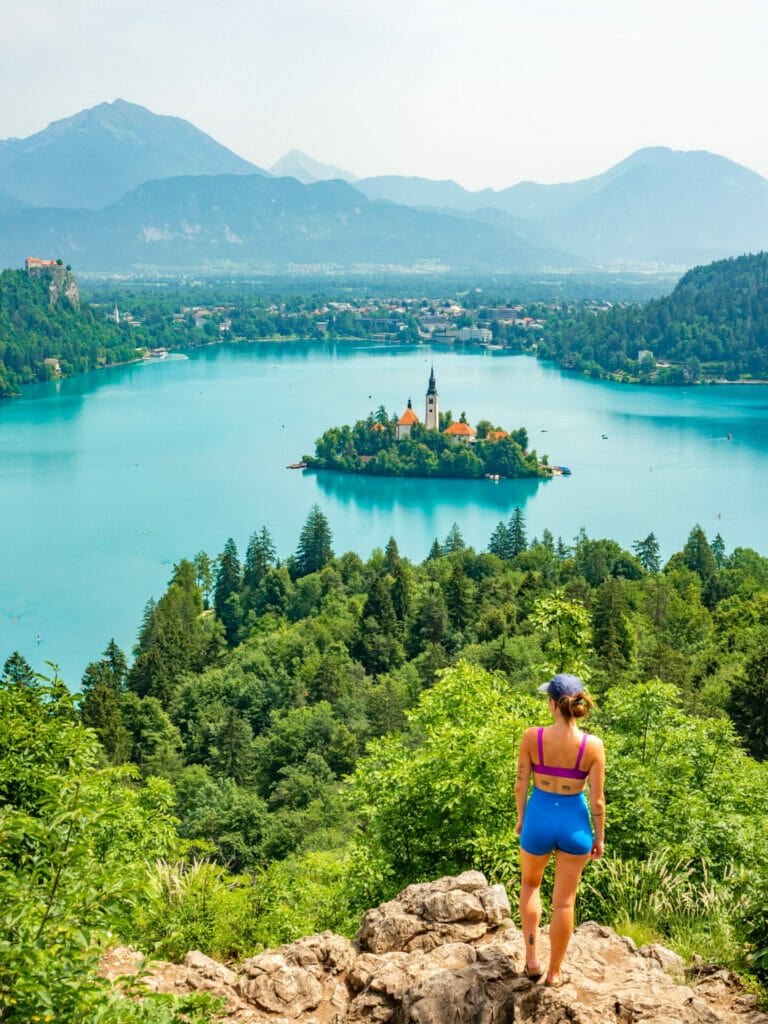
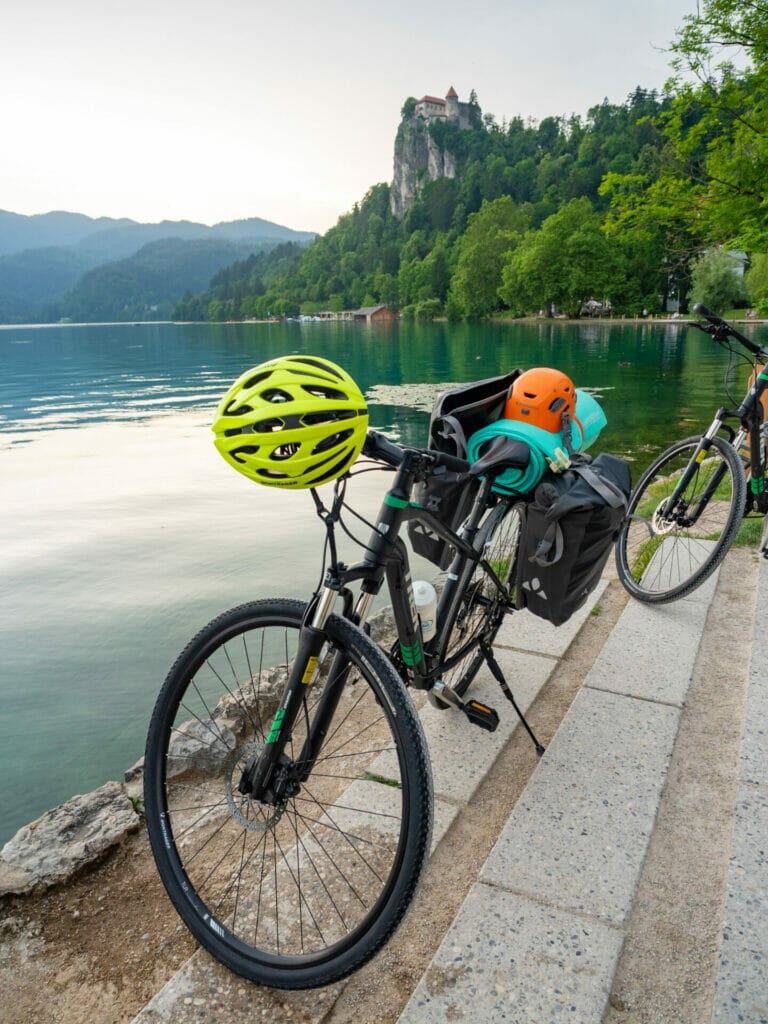
Gorgeous Lake Bled!

Day 1: Ljubljana to Lesce to Bled

10km; 165m gain; 45min cycling

After discussing your route with the friendly and incredibly knowledgeable Matej at Life Bike, pack up your saddle bags and hit the open road! Since today is largely occupied by logistics, I’d recommend cycling a short 10km to the shores of Lake Bled and calling it a day. 

There are a few small hills to climb along the way, but nothing too noteworthy— the spectacular views of Blejski Grad castle & eventually the island Church of the Mother of God provide ample opportunity for quick photo stops!

Juliana Bike Trail Slovenia

Things to do in Bled
As one of Slovenia’s premier travel destinations, there’s no shortage of leisure or adventure activities to enjoy in Bled— and the beauty of using this as the start and end of your cycle tour is that you’ll have 2 opportunities to enjoy some of the short hikes and exciting excursions nearby. Some of my top recommendations:

* Ojstrana Hill: cycle to the trailhead and then hike about 20min up to a gorgeous viewpoint over the lake
* Hire a wooden boat: 20€ for 1hr
* Blejski Grad: explore Slovenia’s oldest castle, situated over Lake Bled
* Vintgar Gorge: beautiful natural area carved by the Radovna River, about 5km above the lake

Juliana Bike Trail Slovenia

Night 1: Camping Bled

A spacious and well-appointed campground occupies the western shore of Lake Bled, offering easy access to a swimming beach and spectacular views of the church! This campground is almost always full, but one of the perks of cycle touring is that NO campground will turn you away, even if they are “full”— they will always find room for your tent!

  • Cost of tent site (per person): 17€
  • Amenities: wifi throughout the campground, charging in reception, hot showers
  • Food: the campground has a lovely outdoor restaurant (15€ for a pizza shared between 2 people). A bakery cart also comes to the campground every morning from 7.30-10am and you can grab some fresh brekky to go!
Juliana Bike Trail Slovenia
Aljažev Dom & Mt Triglav!

Day 2: Bled to Aljažev Dom

37km; 1120m gain; 4hrs cycling

After enjoying a beautiful morning on Lake Bled (see suggested activities above!), begin the somewhat challenging journey towards Aljažev Dom. This is a deviation from the official Julian Biking Loop, which continues straight through Mojstrana to Kranjska Gora, but it’s a worthwhile detour to ascend Mt Triglav, Slovenia’s highest peak, along an exciting via ferrata!

For a super detailed guide to climbing Mt Triglav, be sure to read this post: Čez Prag, Tominšek & Mali Triglav via ferrata in Slovenia’s Julian Alps

Right out of the gate, there are some hills to climb as you wind through small local villages, but once the route drops towards the river and enter Triglav National Park (less than 1hr from Bled), the cycling becomes a lot more pleasant!

Juliana Bike Trail Slovenia

Lake Kreda
This local swimming hole is the perfect place to enjoy a refreshing dip and a little picnic along your route! I stumbled upon it only because of the dozen or so cars parked along the road seemingly out of nowhere— just cross the wooden bridge and pedal about 2min to reach the grass, where you can kick up your bike and lay out in the sun (or shade). 

Back on the road, the route continues through dappled sunlight to reach a brutal 18% grade hill— thankfully, the ascent is fairly short lived and the backside is a sustained downhill cruise into Mojstrana, offering beautiful views and sweet relief. 

Juliana Bike Trail Slovenia

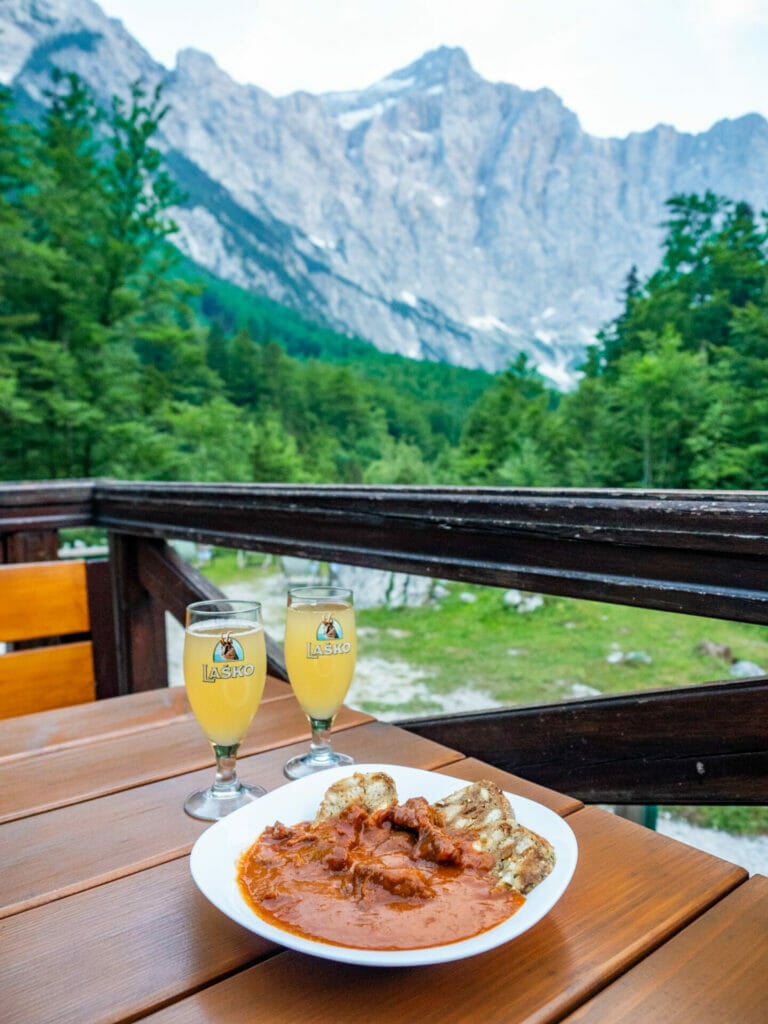
From Mojstrana, follow signs to Aljažev Dom, a straight 10km shot along a paved road through the trees, passing the beautiful waterfall Slap Peričnik. The road eventually steepens to an impossible 25% grade and you will work to earn those final kilometres, but it is such a sweet feeling to arrive at this beautiful mountain hut nestled in the shadow of Triglav and dig into a hearty meal & cold radler. 
Juliana Bike Trail Slovenia

Night 2: Aljažev Dom

Operated by the lovely Vilma and staffed by a handful of friendly Slovenian women, you will be taken care of well at Aljažev Dom! You can store your bike and panniers in a shed (just ask at reception) and then enjoy drinks and excellent food right at the base of the impressive Mt Triglav. Even if you aren’t interested in climbing, this is a super worthwhile detour for the views and atmosphere!

  • Cost of half-board (per person): 50€ (-15€ alpine club discount)
  • Amenities: charging in reception and rooms, cold showers for free or hot showers for 3min per 1€ coin
  • Food: with half-board, enjoy a delicious 2-course dinner and continental breakfast. The hut also serves food and drinks a la carte. 
Juliana Bike Trail Slovenia
Climbing towards Triglav Dom

Day 3: Mt Triglav

Beginning gradually at first and then climbing steeply above the valley, today’s hike is a spectacular showcase of the Julian Alps, dominated by the three-headed Mt Triglav.

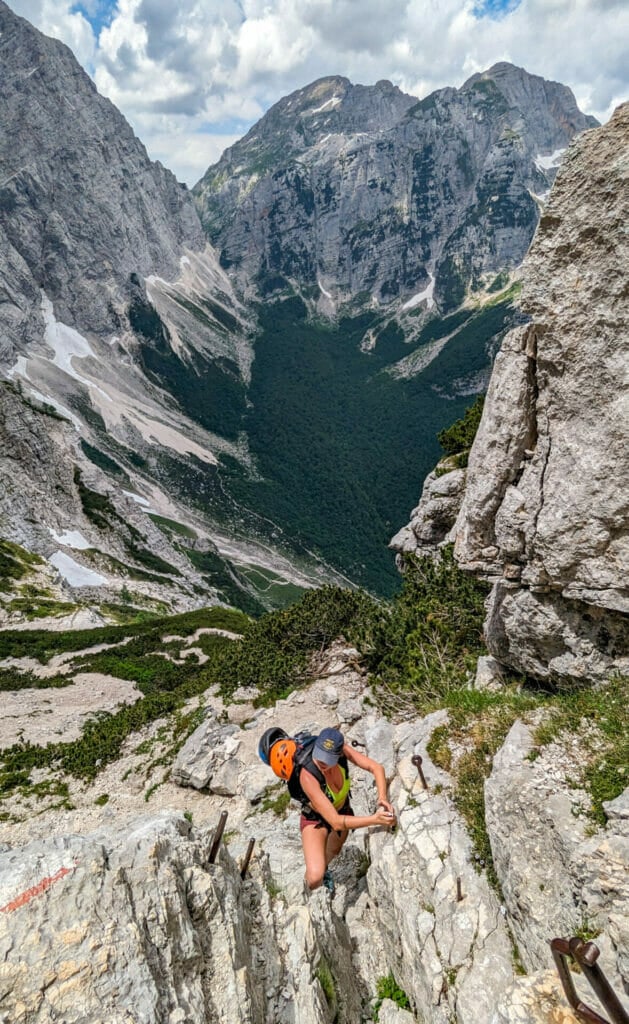
There are 2 common via ferrata routes that lead up the North Face of Triglav from the Vrata Valley: Čez Prag is slightly easier and a bit more gradual, while Tominšek features more exhilarating exposure and arguably better views. I ascended via Čez Prag and descended via Tominšek, but you might prefer to do the opposite; flip the details below accordingly.
Juliana Bike Trail Slovenia
Čez Prag Route to Mt Triglav

Čez Prag Route: Aljažev Dom to Triglav Dom

9km; 1900m gain; 4.5hrs ascending

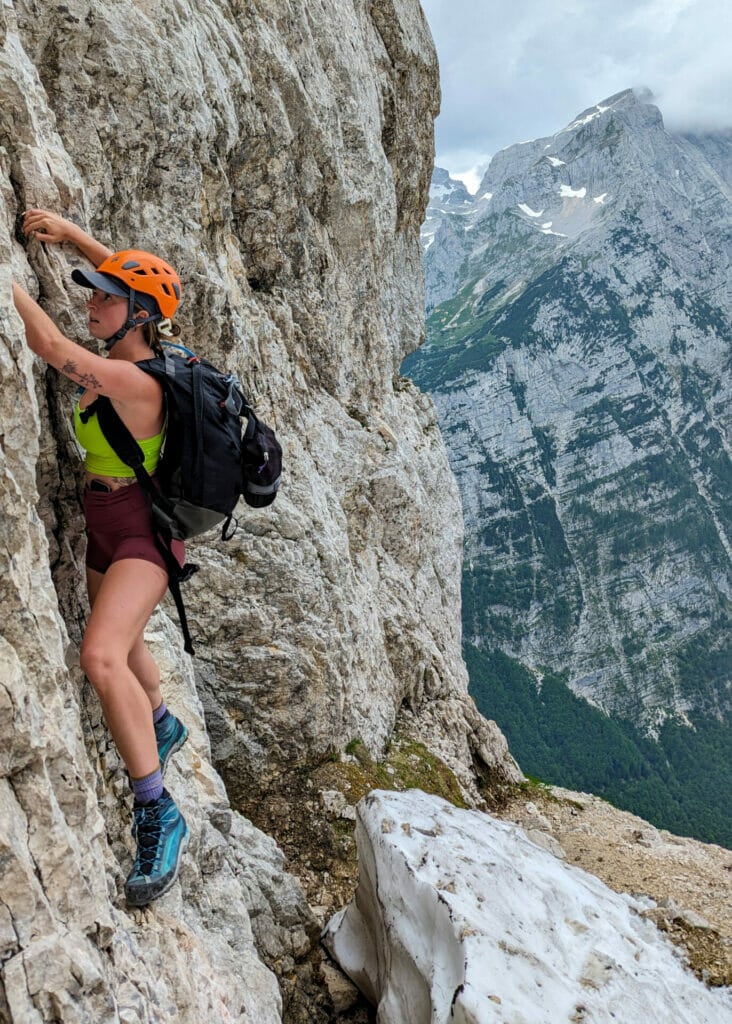
Within an hour of fairly easy uphill hiking up the valley, you’ll reach sections of iron pegs and stemples, some with a corresponding cable, that indicate the start of the Čez Prag route up the North Face. The climbing is fun and not overly demanding; you don’t necessarily need to clip in for any of these, but use your best judgement on when to wear a helmet. 

In under 4hrs, you’ll reach a signed mountain pass, from which the route levels substantially— although it lists Triglav Dom as a further 1h15m, you can likely reach it in about 40min from this junction.

Climbing Mt Triglav via ferrata Slovenia
Ascending Mt Triglav via ferrata

Mali Triglav Route: Triglav Dom to Triglav summit

400m gain; 2.5hrs return

Several routes are also possible from Triglavski Dom (2515m) to the summit (2864), but the most direct is up and over Mali Triglav, a sub-summit of Triglav. It’s a fun via ferrata with near-continuous cable protection, but the exposure isn’t too extreme, nor are the vertical ascents, so confident climbers may find they don’t really need to clip in. However, it is still advised to climb with gear in the case of inclement weather and a helmet is strongly encouraged for the entire route!

Atop the summit lies the iconic Aljažev Turret. As the story goes, during Nazi occupation in Slovenia, a local priest bought 4-square-feet of land at the top of Triglav and, under the cover of darkness, a group of locals carried the structure up the mountain piece by piece to erect it on the summit as a sign that this country still belonged to the Slovenians. This structure remains a national landmark and a massive point of pride for local people!

Climbing Mt Triglav via ferrata Slovenia

Depending on weather conditions, it’s definitely possible to climb from Aljažev Dom to Triglav and back in a single day, but Mother Nature may have other plans. On my climb day, a massive storm materialised about 5min before I reached the hut and continued through the entire night, such that the staff were actually forbidding people to ascend— I was grateful for the flexibility to extend by one day, by which time the weather had improved somewhat! For a more relaxed itinerary, I’d recommend staying a night at Triglavski Dom, as written here.
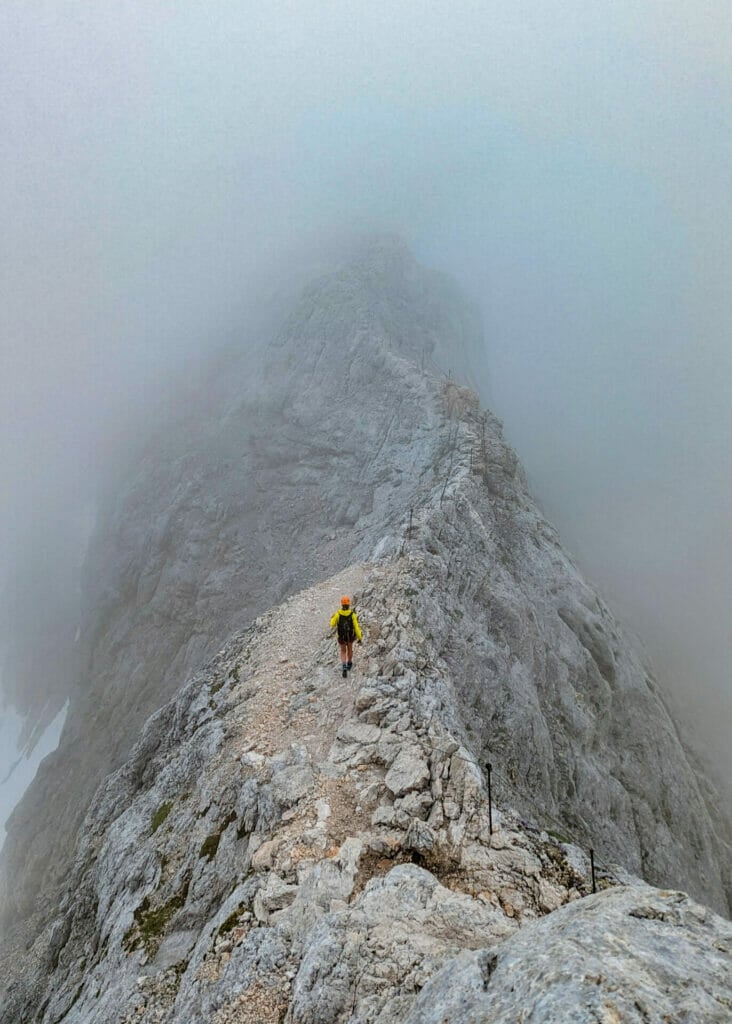
Climbing Mt Triglav via ferrata Slovenia
Into the mist over Mali Triglav

Tominšek Route: Triglav Dom to Aljažev Dom

6km; 1900m loss; 3.5hrs descending

From Triglavski Dom, descend below the pass to a signed junction, where you can descend left through the scree and begin dropping into the valley on the Čez Prag Route or continue straight to explore the Tominšek Route. This via ferrata is a bit more challenging and has substantially more exposure— it’s definitely my favourite of the two!

For a super detailed guide to climbing Mt Triglav, be sure to read this post: Čez Prag, Tominšek & Mali Triglav via ferrata in Slovenia’s Julian Alps

Climbing Mt Triglav via ferrata Slovenia

Night 3: Triglavski Dom

It’s a fun extension to the trip to stay the night at Triglav Dom before dropping back to the valley, which gives you the option to summit Triglav this afternoon or the following morning, weather dependent! This is a true alpine hut, with a bustle of hikers and climbers chattering in the dining room, hearty hot meals, and a fantastic view of the Julian Alps right out your window.

  • Cost of half-board (per person): 58€ (-10€ alpine club discount)
  • Amenities: charging in common areas, slippers for use in the hut
  • Food: half-board includes 2-course dinner and basic continental breakfast. The hut also serves food and drinks a la carte. 
Climbing Mt Triglav via ferrata Slovenia
Descending via the Tominšek Route

Day 4: Aljažev Dom to Kranjska Gora

19.5km; 170m gain; 1hr cycling

Due to a large afternoon storm the previous day, I ended up summiting Triglav this morning before returning back to the valley on the Tominšek Route, which meant that there was limited time for cycling. Depending on your own conditions, it may well be possible to combine Days 3 & 4 of this itinerary!

Back on the saddle after a day of hiking and climbing, the return journey from Aljažev Dom to Mojstrana—a brutal 25% grade climb that lasted an eternity— is reduced to about 20min of incredibly fun downhill cycling!

Juliana Bike Trail Slovenia

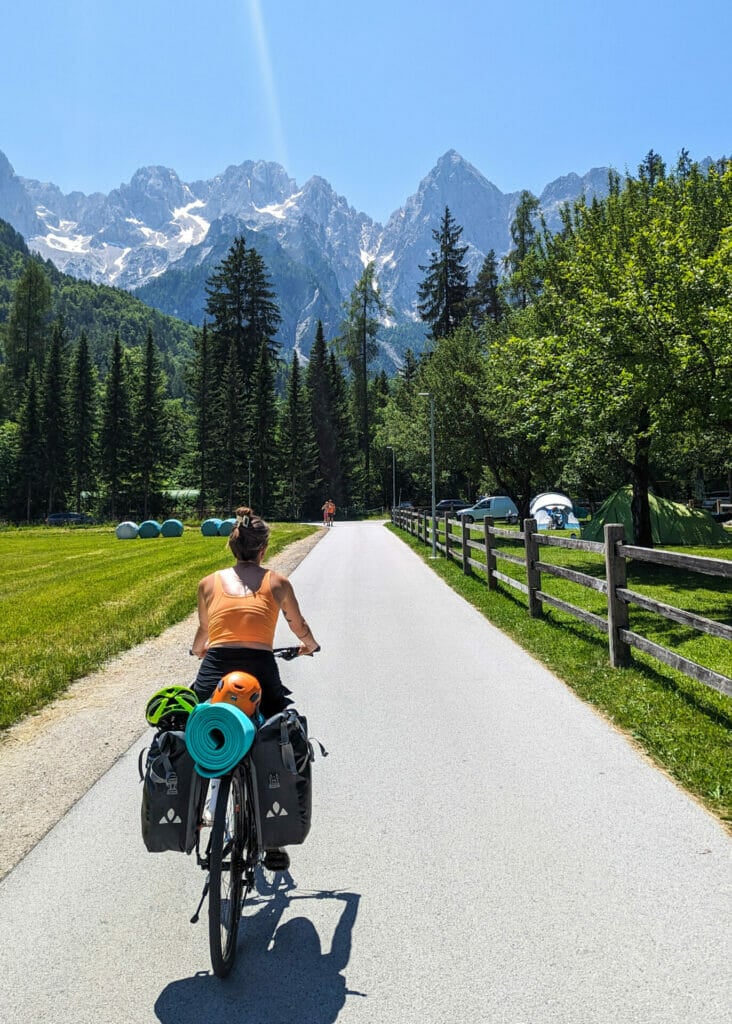
In town, connect with a signed cycle path leading towards Gozd Martuljek (9.4km) and Kranjska Gora (12.7km). I’d recommend riding to the former, a small town with a fantastic view of the Julian Alps and an excellent campsite right along the route.

Juliana Bike Trail Slovenia
Nothing but views at Camp Špik

Night 4: Camp Špik 

Set right beneath the incredible Špik Mountain Chain, this sunny campground is among the most scenic on the entire cycle tour. Pitch your tent in the grass field near the entrance and enjoy the breathtaking Julian Alps!

  • Cost of tent site (per person): 18€
  • Amenities: wifi available, charging in bathrooms, hot showers
  • Food: a well-stocked market is available on-site and a great restaurant (Gostilna in picerija Jožica) is just a 3min cycle away in town
Juliana Bike Trail Slovenia
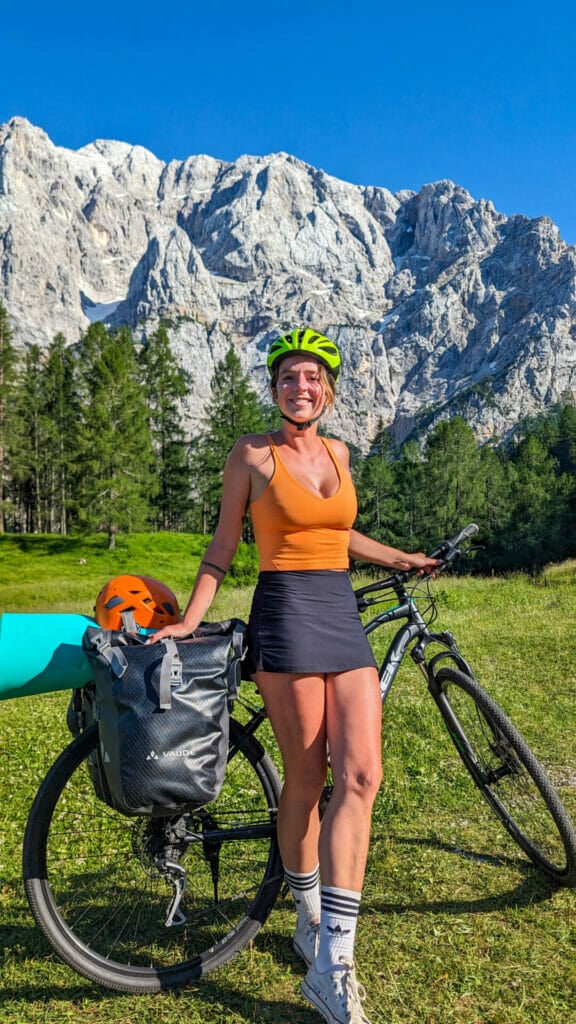
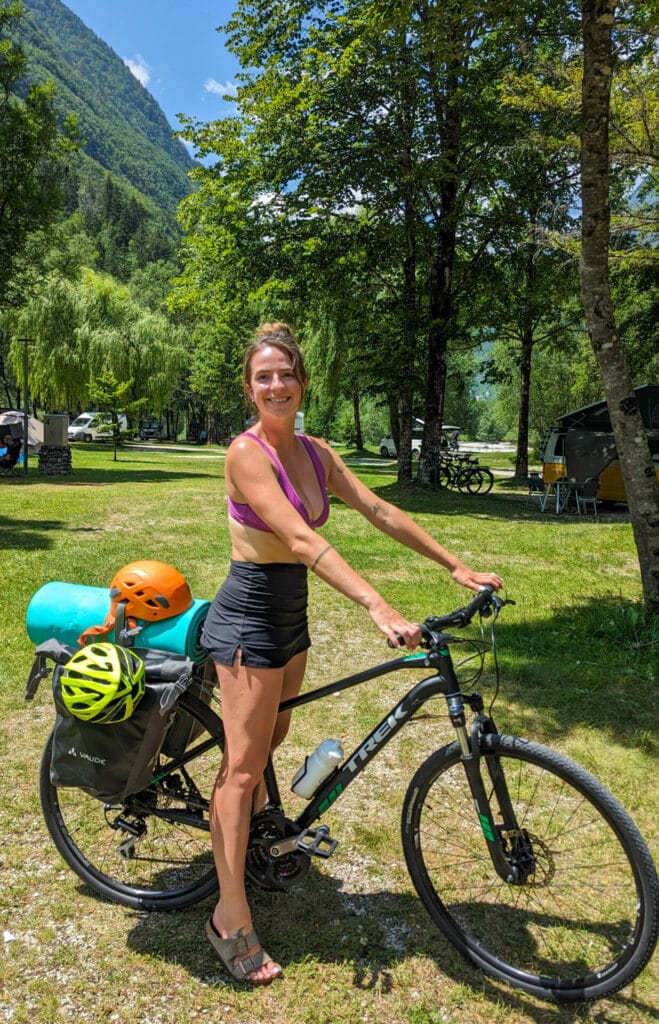
Still smiling on the brutal ascent to Vršič Pass

Day 5: Kranjska Gora to Soča via Vršič Pass

41km; 1150m gain; 4hrs cycling

Today represents the most challenging day of the cycle route, with a gruelling ascent over the high point of the official route at 1611m (if you opt for my recommended detour on day 8, your highpoint will be at 1630m). Thankfully, there’s plenty to enjoy along the way, so take it slow and savour the journey!
Juliana Bike Trail Slovenia

Lake Jasna
After cycling out of Gozd Martuljek on a dedicated cycle path, you’ll soon climb a short distance through Kranjska Gora and pass a bustling carpark— it’s well-worth popping in here to enjoy beautiful Lake Jasna, a freshwater swimming hole ringed by little ice cream vendors and cafes! The water is brisk, so it’s a great way to refresh some of your sore muscles for the arduous climb ahead.

Juliana Bike Trail Slovenia

When you can finally drag yourself away from the lakeshore and back onto the bike, the route begins to ascend towards Vršič Pass. Over 11km and 24 increasingly steep switchbacks, a paved road climbs 800m up to this scenic highpoint, and you can expect it to be a real challenge with fully loaded bikes! I stopped regularly for radlers to ease the pain.

Juliana Bike Trail Slovenia

The reward on the back end is 26 descending switchbacks that drop about 1300m off the pass and back into the valley, all the way to the incredible Soča River. Although the mountains are a bit farther after this loss in elevation, the next few days are staggeringly scenic and sure to impress.
Night 5: Kamp Klin

Several camping options are available along the Soča River after you drop off the pass, but this waterfront campground is a favourite. The amenities aren’t particularly rousing (I had to find dinner nearby since the restaurant closes at 8pm), but the opportunity to camp right on the river is surely worth it. Arrive early to get one of the best spots!

  • Cost of tent site (per person): 24€
  • Amenities: charging in bathrooms, hot showers
  • Food: no market, but there is a yogurt and cheese vending machine and reception sells some cold drinks. On-site restaurant open 12-8pm, plus a nice restaurant (Pristava Lepena) ~6min cycle up the hill 
Juliana Bike Trail Slovenia
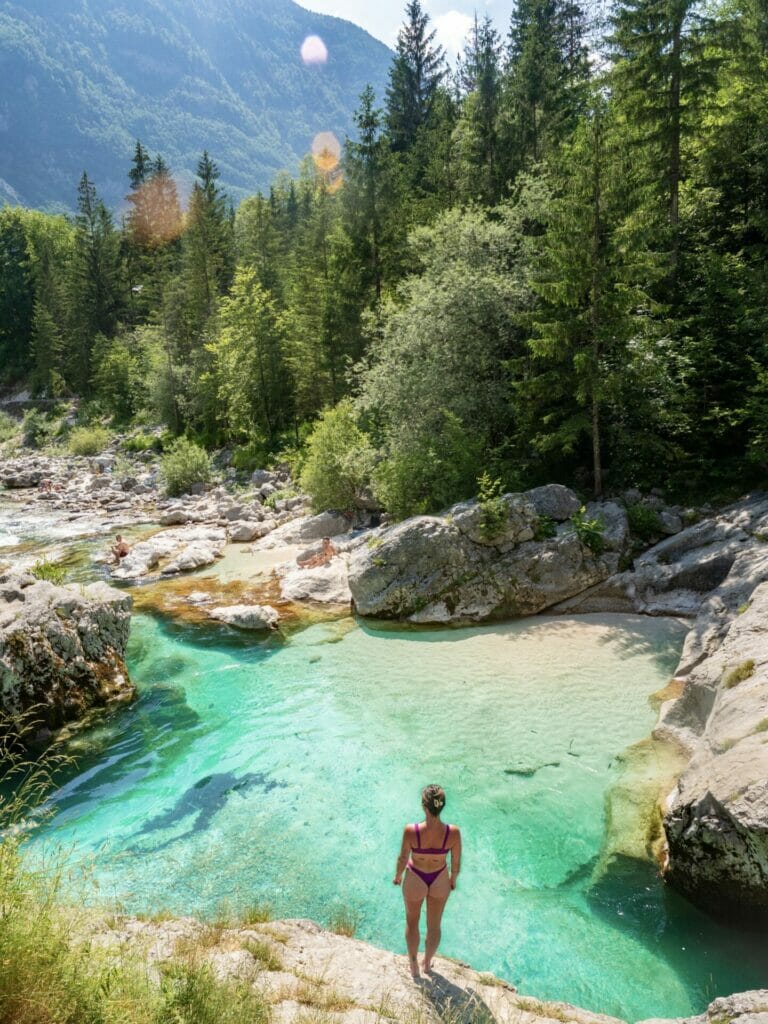
Soča River blues

Day 6: Soča to Kobarid

33km; 480m gain; 2.5hrs cycling

After a real hump up and over Vršič Pass yesterday, it’s such a treat to luxuriate in the icy waters of the nearby Soča River. There’s no massive rush to get back on the bike if you’re only aiming to make it to Bovec or Kobarid, so instead of hustling onto the road, head to the riverfront and spend the afternoon jumping and splashing in the chilly blue waters.
Juliana Bike Trail Slovenia

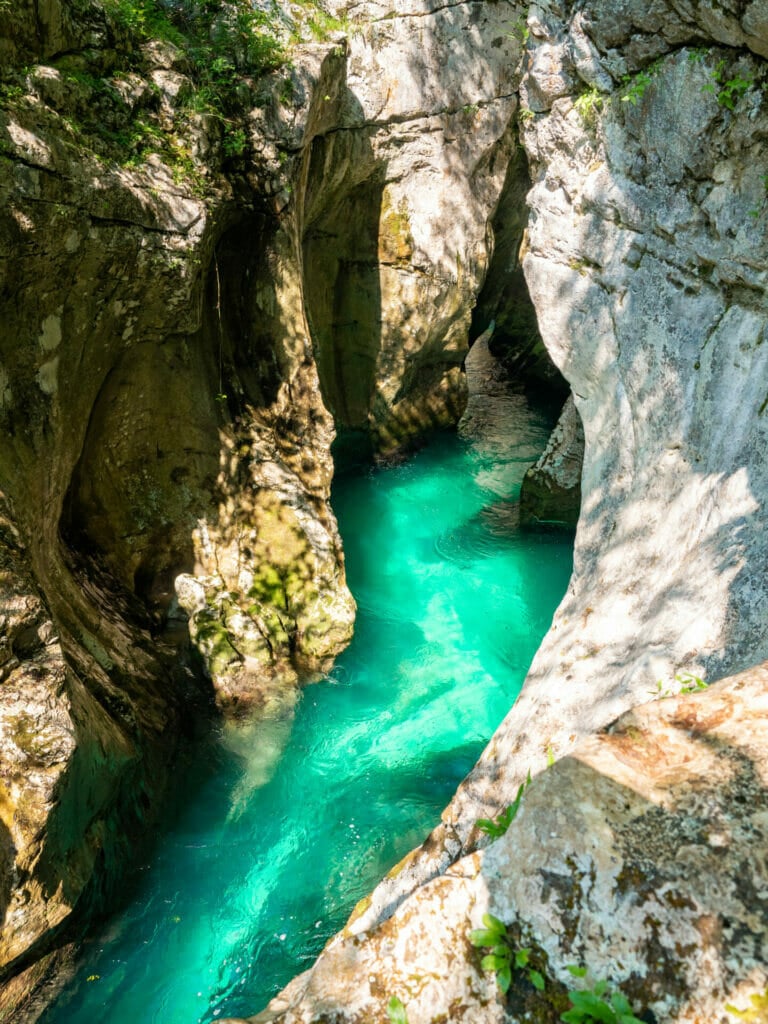
Velika Korita Soče
Perhaps the most unique & shockingly beautiful natural wonder in all of Slovenia is the Great Soča Gorge, dramatically carved by the glowing blue Soča River that characterises this section of the journey. Suspended in the chilly waters, minuscule limestone particles reflect mainly short wave colours & grant the water an impossibly rich shade of blue-green that wouldn’t be out of place in the Mediterranean. Bright limestone cliffs, lush green forests, and pale sandy beaches, all set against the backdrop of the alps… there’s really no where like the Soča Valley and today’s route provides unparalleled access to its many highlights. Soak it up!

Juliana Bike Trail Slovenia

Once back in the saddle, the journey is a pleasant downhill coast along the beautiful Soča River through the town of Bovec and into Kobarid.

Things to do in Bovec
Slovenia’s adrenaline capital is bustling with adventures, from white-water rafting to paragliding to canyoneering. You could easily spend several days in this quaint mountainside town partaking in a range of activities, but even with a single afternoon, you can really make the most of your time in Bovec:

* Slap Virje, Veliki Kozjak, Boka Waterfall…: explore the region’s many waterfalls
* white-water rafting on the Soča River
* join a canyoneering tour
* Thirsty River Brewing: sample local craft beer in town

Juliana Bike Trail Slovenia

Night 6: Camping Lazar

Featuring a bustling restaurant on the premises, complete with a cozy outdoor fire and an extensive local food and dessert menu, this campsite was among my favourites on the trip and somewhere I gladly would have stayed a second night! The tent sites were situated in a grassy field above most of the bustle and the facilities were fantastic.

  • Cost of tent site (per person): 14€
  • Amenities: charging available in bathrooms and reception, hot showers
  • Food: lively onsite restaurant and bar with a wide offering of local fare, plus breakfast.
Juliana Bike Trail Slovenia
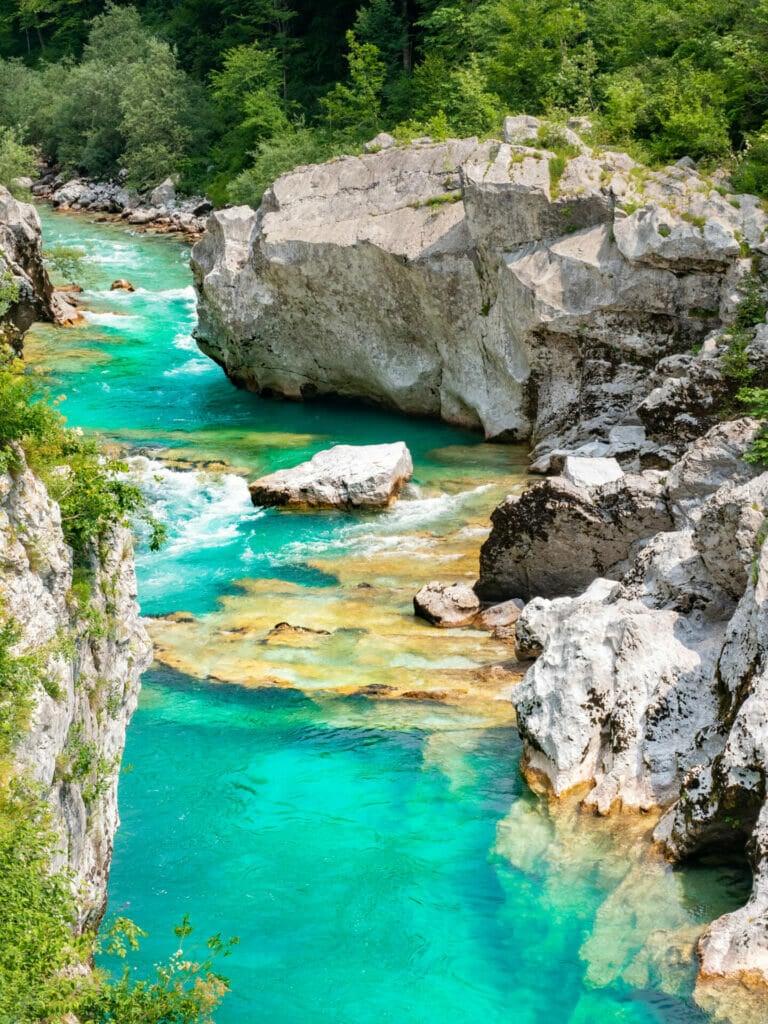
More Soča River views

Day 7: Kobarid to Bohinj

21km; 270m gain; 2hrs cycling

Enjoy a final day of cycling along the Soča River, gaining very little elevation as you cruise largely downhill along the water from Kobarid to Tolmin. Today’s route is punctuated with yet more fantastic riverfront scenery, so enjoy the gorgeous blue water before soaring to higher elevations tomorrow.

Juliana Bike Trail Slovenia

Tolmin is a great spot to stop for lunch or stock up on groceries, and nearby Tolminska Korita (Tolmin Gorge) also presents a fantastic side-trip!

Juliana Bike Trail Slovenia

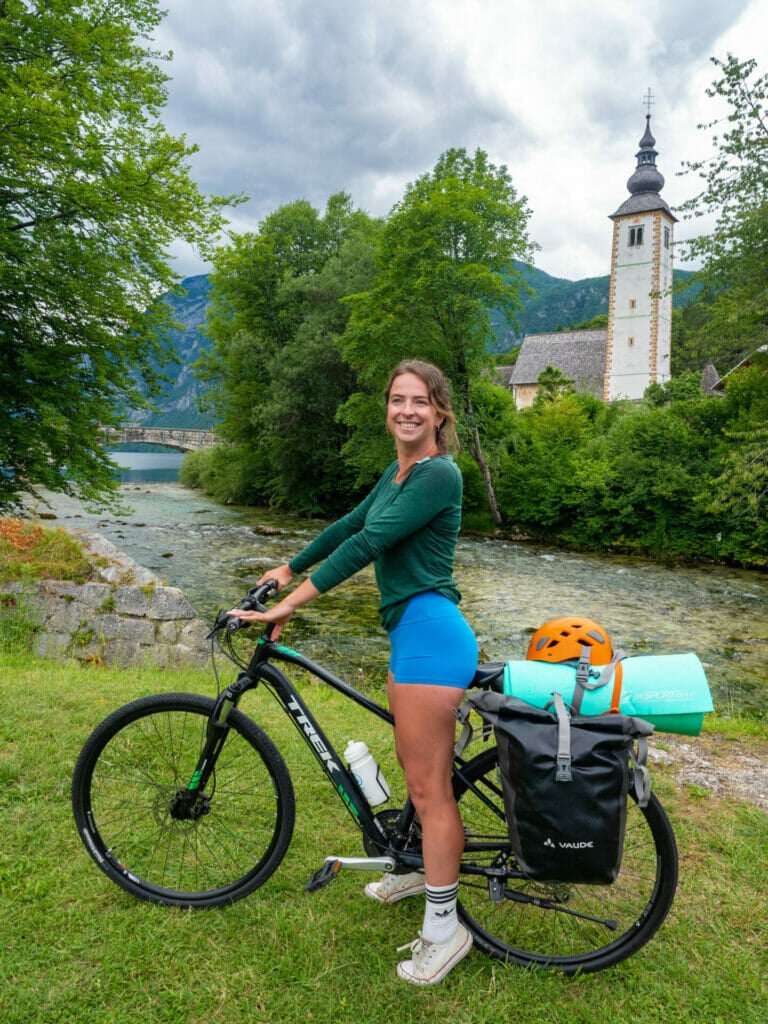
Due to inclement weather, I opted to shorten today’s route rather significantly by taking the train from Most na Soci to Bohinjska Bistrica (2.6€ per person plus 1.5€ per bike). In better weather, I’d instead recommend cycling an additional 25km from Most na Soci to Podbrdo before boarding a train that will take you through a mountain tunnel to Bohinjska Bistrica!
Juliana Bike Trail Slovenia
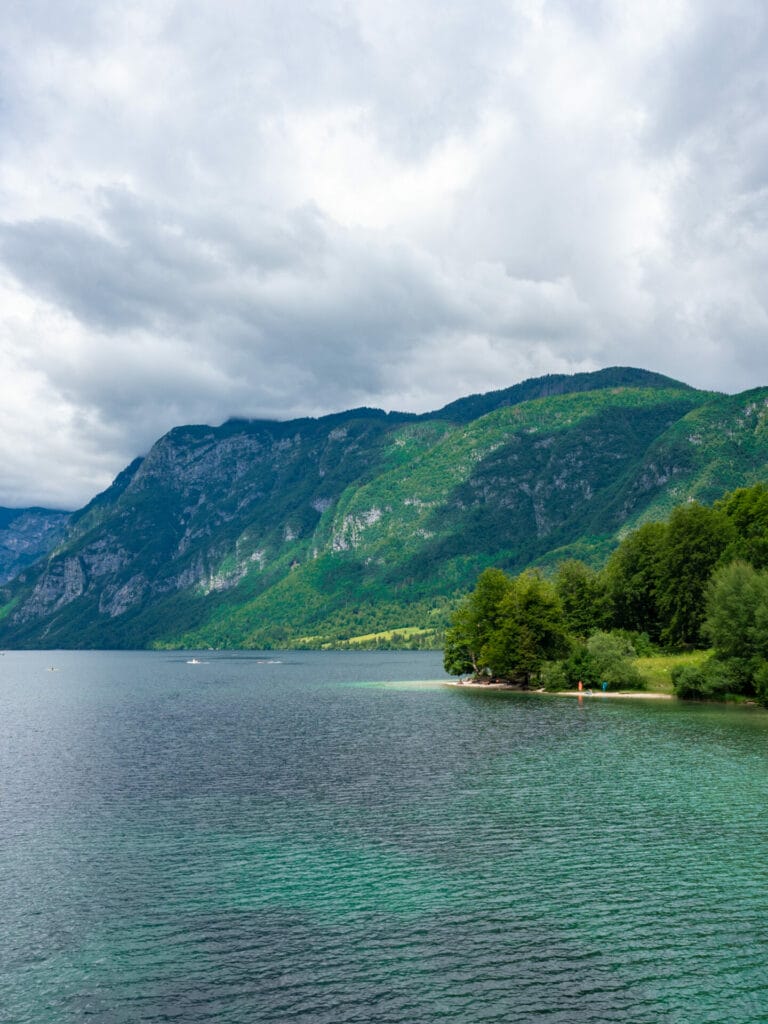
Lake Bohinj

Night 7: Camp Bohinj

Dwarfed slightly by the popularity of Lake Bled, Slovenia’s “other” lakeside holiday destination is still a whirl of adventure and an incredibly scenic place to spend the night. The campsite is located at the western end of the lake, opposite the town of Stara Fužina, so stock up as you pass through.

  • Cost of tent site (per person): 20€
  • Amenities: charging available, hot showers, lake access
  • Food: there is a bakery and restaurant available at the campground
Juliana Bike Trail Slovenia
What to pack for your Juliana Bike Trail adventure

Day 8: Bohinj to Blejska Koča

42km; 1550m gain; 4.5hrs cycling

After spending the morning at Lake Bohinj, soaking up the beautiful views and indulging in plenty of lakeside treats, today’s route ascends continuously to the lofty Pokljuka Plateau. The elevation gain is more than a little daunting— the largest on the entire tour— but dispersed over a well-graded road, it is a surprisingly comfortable cycle compared to the sweaty ascent of Vršič Pass!

Juliana Bike Trail Slovenia

Right around Goreljek, the typical end of this stage, veer off the route for the final time and begin what will be a steep and increasingly arduous climb towards Blejska Koča at 1630m.

The ascent starts on pavement but soon transitions to gravel and finally a hiking trail as it enters the national park; it is forbidden to cycle on this trail (not that you’d be physically able anyway), so you’ll be left with the rather dismal choices of locking your bike at the carpark or pushing it 1.5kms up an impossibly rough trail to the hut. Neither is particularly appealing, but the hut (and resultant hiking trails) are worth the effort!

Juliana Bike Trail Slovenia

Night 8: Blejska Koča

Run by the wonderful Tina and her family, this lively mountain hut nestled in the Julian Alps provides comfortable accommodation, tasty meals, and most importantly: prime access to several fantastic day hikes that offer sweeping views of Mt Triglav and surrounding peaks.

  • Cost of accommodation (per person): 40€ (-20% alpine club discount)
  • Amenities: charging in rooms and dining area, slippers for use in the hut
  • Food: the hut serves an excellent hot dinner, delicious homemade strudel for dessert, and a selection of drinks
Juliana Bike Trail Slovenia
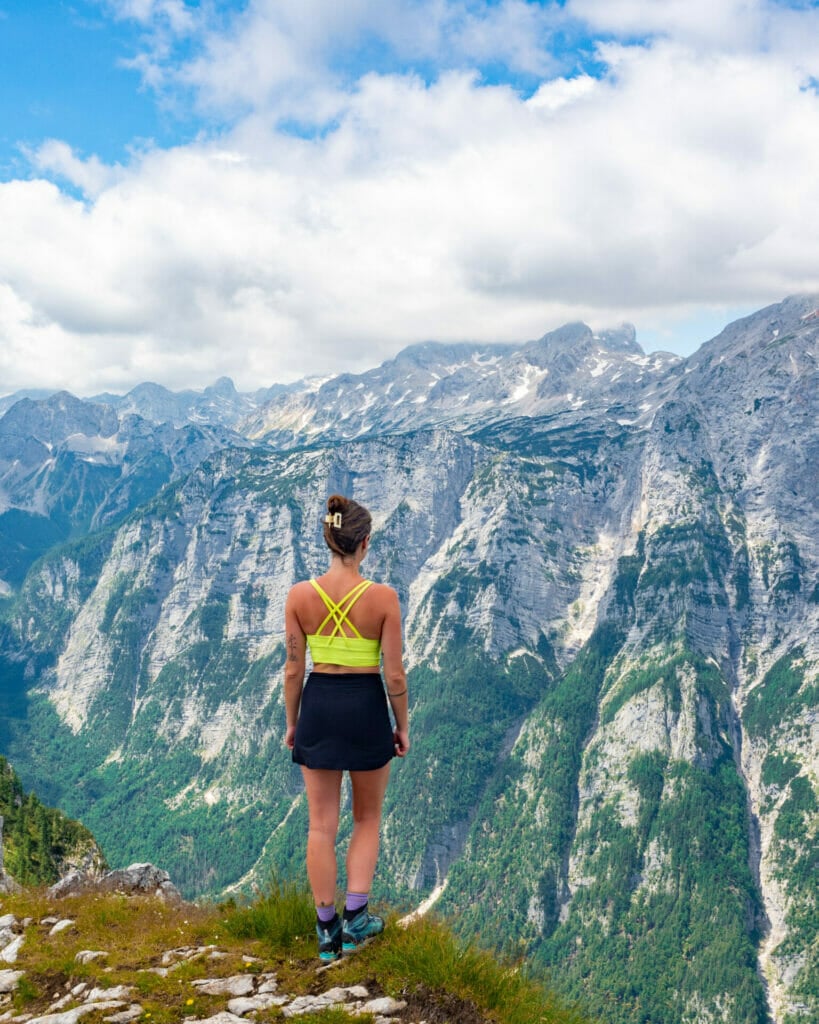
Debela Peč

Day 9: Blejska Koča to Bled

23km; 100m gain; 1.5hrs cycling

Debela Peč
Countless trails connect through Blejska Koča to bring you high into the Julian Alps for spectacular views. I’d specifically recommend ascending to Debela Peč at 2014m, an undemanding 1.5hr jaunt from the hut that brings you directly across from Mt Triglav. Having just climbed Slovenia’s highest peak at the start of this itinerary, it’s a great full-circle moment to appreciate just how far you’ve travelled!

Juliana Bike Trail Slovenia

Once back at the hut, enjoy a midday strudel before beginning the somewhat unpleasant process of wheeling your bike back down to the trailhead. Some care is required, after mounting your bike, to navigate the steep gravel descent, but once back on the pavement, it’s a blissful downhill journey back to your starting point at Lake Bled.

Juliana Bike Trail Slovenia

If you have time in your itinerary, refer back to Day 1 for some ideas on what to do around Lake Bled!
Juliana Bike Trail Slovenia
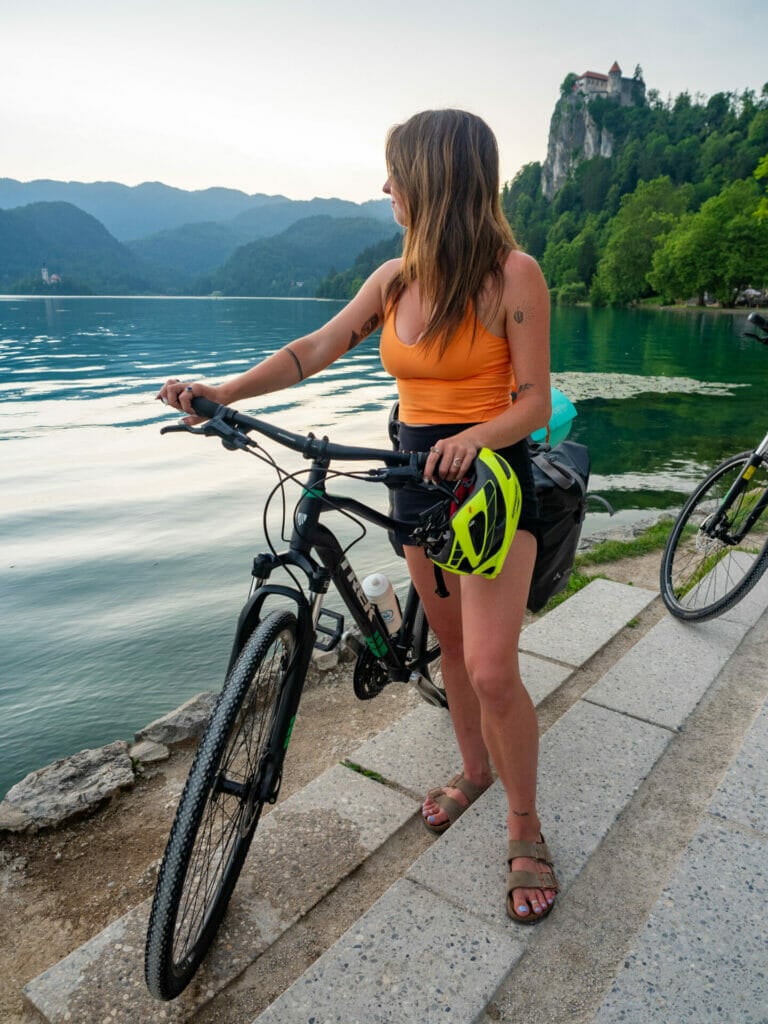
back on the shores of Lake Bled

Night 9: Camping Bled

Spend your final night back on the western shores of Lake Bled at this great campground! On the following morning, it’s a pleasant 30-40min cycle back to Life Bike in Lesce, where you can then catch a train back to Ljubljana or further afield into Slovenia.

  • Cost of tent site (per person): 34€
  • Amenities: wifi throughout the campground, charging in reception, hot showers
  • Food: the campground has a lovely outdoor restaurant (15€ for a pizza shared between 2 people). A bakery cart also comes to the campground every morning from 7.30-10am and you can grab some fresh brekky to go!
Juliana Bike Trail Slovenia
Packing list for the Juliana Bike Trail

Read about more adventures in the Alps

Climbing Mt Triglav: Čez Prag, Tominšek & Mali Triglav via ferrata in Slovenia’s Julian Alps

Introduction to via ferrata + complete via ferrata gear list

Alta Via 2: complete hiking + via ferrata route guide

Alta Via 4: complete hiking + via ferrata route guide

Solo climbing Mont Blanc via the Goûter Route

The ultimate guide to solo hiking & camping the Tour du Mont Blanc

Juliana Bike Trail: a complete guide to Slovenia’s best cycling tour

Walker’s Haute Route– coming soon

2 Comments
Share
brooke beyond

Hey, I'm Brooke and I'm obsessed with getting off the beaten path, exploring backcountry gems & travelling beyond the ordinary! I left Australia 5 years ago after finishing a PhD in Biomechanics & have been travelling the world full-time ever since (joined by my life/climbing partner, James). Whether it’s road-tripping through Mexico, climbing alpine peaks in the Andes, scuba diving in the Red Sea, or tackling epic via ferrata in the Dolomites, I hope this blog will inspire your future adventures & help you find wonder in every corner of the globe. xx bb

Leave a Comment Cancel Comment

The Comments

  • Dan
    25 July 2024

    Nice trip, but I’ve rarely seen a person so obsessed with themselves. If every image from your trip places you front and center, it gives the impression that you are your own main topic of interest.

    Reply
    • brooke brisbine
      Dan
      26 March 2025

      Thank you for the unsolicited feedback on my photos published on my blog, where I am indeed a topic of interest.

      Perhaps a map or guidebook would be a better source of information for you, if you are so bothered by my presence in photos. I’m not aware of any book yet published on this relatively new route, but I do know the local tourism board has a site with details: https://www.slovenia.info/en/stories/juliana-bike-mountain-bike-loop-in-the-julian-alps

      Best,
      Brooke

      Reply

You May Also Like

8 July 2018

Getting outdoors in the Wicklow Mountains

6 July 2018

Welcome to Ireland: exploring Dublin & Bray

2 December 2016

Iceland Roadtrip Days 1 & 2: Skógafoss, Sólheimasandur & Vík

hi, I’m brooke!

I'm obsessed with getting off the beaten path, exploring backcountry gems & travelling beyond the ordinary! I left Australia 5 years ago after finishing a PhD in Biomechanics & have been travelling the world full-time ever since (now joined by my life/climbing partner, James). I hope this blog will inspire your future adventures & help you find wonder in every corner of the globe. xx bb

read my story
currently exploring

currently exploring

iceland

read our gear guides

🥾 hiking boots

🎒 hiking backpacks

🌨️ cold-weather layers

⛺️ backpacking & alpine tents

🛌 sleeping bag & pads

🍪 backcountry food

📸 travel camera gear

✈️ travel clothing

trail guides

summit guides

itineraries

outdoor gear

GPS maps

recent posts

  • Laguna Humantay, Cusco Peru

    6 awesome day trips from Cusco, Peru

    24 November 2025
  • Adventure-ready picks from the REI Co-op Holiday Sale

    17 November 2025
  • 2-week Montenegro road-trip itinerary: epic hiking, Riviera beaches & wine country

    3 September 2025
  • 10-day Switzerland itinerary: Zermatt, Interlaken, Jungfrau & beyond!

    31 August 2025
  • Climbing Iztaccíhuatl volcano

    2-week Mexico volcanoes itinerary: climbing Pico de Orizaba, Izta, Malinche & Toluca

    3 June 2025

@brookebeyond_
brooke ✨travel & mountain gal

@brookebeyond_

  • WINTER IN TROMSØ, NORWAY: MINI TRAVEL GUIDE ❄️✨

Above the Arctic Circle at 69.6° North, Tromsø is one of the best places in the world to experience a true Arctic winter— explosive northern lights, snow-covered mountains, dramatic fjords, and cozy saunas after a day in the cold. 

🐋 WHAT TO DO
- Snowshoe in the Lyngen Alps
- Vulkana Spa Boat
- Pust Floating Sauna
- RIB boat whale watching in Skjervøy
- Northern Lights tour
- Arctic Cathedral
- Fjellheisen cable car

🥘 WHERE TO EAT
- Mors Mat
- Nitty Gritty
- Bardus Bistro
- Fiskekompaniet
- Svermeri Kafé
- Vervet Bakeri

📆 WHEN TO GO
Tromsø experiences *polar night* (where the sun literally doesn’t rise) from 27 Nov - 15 Jan— this is the absolute best time to see the aurora AND you still get gorgeous sunset colours for several hours in the middle of the day, which can make for incredible photos! From Jan to March, daylight increases quickly, which is better for skiing and longer outdoor adventures. 

⏱️ HOW MANY DAYS
Accounting for the often extreme winter weather and limited daylight that will prevent you from doing more than 1 activity per day (and sometimes even cancel tours for several days at a time), one week is the minimum amount of time I’d recommend in Tromsø during the winter to really maximise your experience.

🚗 GETTING AROUND
With so much snow on the roads, we’d recommend skipping the rental car and instead staying within walking distance of the city centre + choosing a few worthwhile tours who will handle the transport logistics.

——
#norway #tromsø #arcticcircle #northernlights #aurora
  • hi from arctic Norway!!!!! 🇳🇴❄️

I’ve spent the last 5 years of full-time travel chasing summer + basically avoiding winter at all costs, but this year we decided to do something TOTALLY different: 3 months in Norway, Sweden, and Finland. Basically the most winter that winter can be.

And already a month into Scandinavia, we’ve been absolutely loving it!!! 

We arrived in Tromsø at the end of December to -15C blizzards and *polar night* (where the sun literally doesn’t come over the horizon), but despite being absolutely FREEZING and completely dark for 22hrs a day, it’s insanely beautiful for the few hours of glowing sunset lighting around midday and the northern lights are out in full force as early as 3pm. It is, quite simply, MAGIC ✨

We can’t wait to share more of our adventures as we hike, ski, sauna, dogsled, and romp with our cameras through the glorious Nordics over the next few months!

——
#norway #tromsø #arcticcircle #winterwonderland #tromso
  • A friend asked me recently if I’d noticed a shift in my follower demographic here on Instagram (as it had been my goal over the last year to reach more women). According to the data, not really— I still have a majority male followers— but I have absolutely FELT a shift in the quality of people who choose to interact with my account. 

There was a time when posting a photo in a swimsuit or a sports bra would trigger a flood of angry villagers sprinting to the comments to tell me that I needed to leave more to the imagination, that I was sexualising myself (and therefore couldn’t expect others not to), that I was a wh*re … simply for existing in the body that I was born in. 

And I’ve always pushed back against the notion that my only solution was to wear baggy t-shirts or turtlenecks simply to make others feel more comfortable with MY BODY. 

The reality is that a woman’s worth CANNOT come down to what she’s wearing, her cup size, her willingness to cover herself up so that others don’t feel tempted to treat her like an object... If you only respect a woman when her body is entirely hidden, do you really respect her??

It’s been difficult to cling to these ideals amidst disparaging + often disgusting comments from strangers online, but it felt important to keep showing up as myself, in whatever I felt comfortable in, saying whatever I needed to say, if only to prove that wearing a swimsuit doesn’t make me less of a person, just like wearing sports bra doesn’t make me less of a climber and having breasts doesn’t automatically invalidate my opinions as a travel blogger. 

And somewhere along the way (after many feminist rants that cleaned out the undesirables & quite a bit of good ol fashioned blocking), I felt the shift I’d been waiting for. Comments this past year have been more about the content of my posts and the recommendations I make than what I’m wearing, and it feels SO FJKING GOOD to have made even a small degree of progress in this tiny corner of the internet. 

So please comment below if you don’t agree with any this and want to continue judging me based on what I wear so that I can block your account & protect my inner peace 🥰✌🏼
  • IS IT SAFE TO TRAVEL TO ETHIOPIA?? 🇪🇹

Since falling in love with Ethiopia and sharing so many spectacular, unique experiences here on insta, I’ve received a small flood of DMs asking about traveller safety— especially considering the US currently lists Ethiopia as “Level 3: Reconsider Travel”

So here’s some context and our personal experience 👇🏻

From 2020 to 2022, Ethiopia experienced a brutal civil war centred in the northern Tigray region that spilled over into some of the surrounds. The conflict claimed hundreds of thousands of lives and displaced millions, but by the grace of a peace agreement signed in late 2022, communities across northern Ethiopia have been actively rebuilding in the years since.

We travelled through Ethiopia twice in 2025 for several weeks at a time, visiting many regions that were directly affected by the war and, with our own eyes, experienced a country that felt stable, welcoming, generous, and deeply grateful for visitors returning. 

Perhaps most importantly, tourism here has REAL power. Every guesthouse stay, home-cooked meal, and local service directly injects money into communities recovering from the conflict, helping families restore their livelihoods, put food on the table, and send their children to school.

We absolutely adore Ethiopia and the beautiful people we’ve met here, so we’re passionate about sharing these experiences with fellow travellers— especially at a time when tourism dollars mean life and opportunity for so many. 

PLEASE don’t trust everything you read online. I would strongly encourage you to come discover this warm, unique, resilient country for yourself WITH the support of a trusted local guide and/or driver, who will always prioritise your safety based on real risk, not fear-mongering.

If you need a recommendation for a great guide/driver anywhere in the country, talk to our local friend Kiros @lucyethiopiatours and he will absolutely take care of you 🙏🏼

—
#ethiopia #travelsafety #travelethiopia #tigray
  • One of our last destinations of 2025: Djibouti, a country that hardly anyone seems to know anything about (but that surprised and delighted us in many ways!)

Perched on the Horn of Africa, where tectonic plates split the earth and salt flats stretch to the horizon, Djibouti feels raw, otherworldly + wildly alive. It’s home to Africa’s lowest point on land, volcanic deserts, crater lakes, pink flamingos, whale sharks, and landscapes that look more like another planet.

But it’s not just the scenery. There’s a fascinating blend of cultures here: Afar & Somali traditions, strong tribal identity, and layers of French influence that linger in language, architecture, and daily life. Standing at a crossroads between Africa, the Middle East & the Red Sea, Djibouti is truly a place shaped by movement— of people, of plates, of history.

The 3rd photo illustrates this perfectly (and it’s one of my favourite captures of the year): Afar people travelling on foot with a camel caravan across the desert borderlands, hauling bundles of palm fronds + Djiboutian salt hundreds of kilometres back towards home to Ethiopia.

Because we’ve spent so much time in Ethiopia lately (and have 2 sold-out group trips running this year!), Djibouti just felt like the next natural frontier for us, and certainly didn’t disappoint. We spent 5 days road-tripping across wild landscapes, swimming with whale sharks in the bay, camping on empty beaches, and discovering this untouched gem. 

Have you ever thought about visiting Djibouti??

—
#djibouti #afar #lacabbe #hornofafrica #travelbeyond
  • an entire year of my full-time travel expenses (365 days on the road!), from flights & hotels to healthcare & entrance fees to SIM cards & Spotify ↯

** these numbers are a reflection of my PERSONAL spending in 2025— not representative of the absolute cheapest long-term travel style, just intended to show how much I was able to experience this year for less than rent in a major city

$7,172 ACCOMMODATION
🏡 apartments = $2,415
🏕️ campsites = $121
🏨 hotels + hostels = $4,446
🛖 mountain huts = $190

$5,167 ACTIVITIES
🎟️ entrance fees + permits = $218
⛵️ experiences + tours = $4,217
🔥 hot springs + sauna = $733

$8,244 FOOD & DRINKS
🍹 drinks = $2,088
🌮 eating out = $4,999
🧀 groceries = $1,156

$4,807 PERSONAL EXPENSES 
🧴 consumables (ex. shampoo) = $981
💊 healthcare = $3,042
🧺 laundry = $69
📲 mobile data = $216
🗺️ subscriptions (ex. Garmin In-Reach, Spotify) = $500

$8,719 TRANSPORTATION
✈️ airfare = $3,826
🚘 car hire = $2,970
⛽️ fuel + parking = $659
🚕 private transport (ex. Uber) = $635
🚃 public transport (ex. train) = $627

$1,744 TRAVEL LOGISTICS
🚫 change fees + cancellations = $355
🧳 baggage fees + luggage storage = $385
🪪 ID (ex. licence renewal) = $255
💳 credit card annual fees = $448
💰 insurance = $72
🛂 travel visas = $229

= $35,852USD TOTAL LIVING EXPENSES
($98 per day)

—
#fulltimetravel #travelbudget #travelexpenses
  • HAPPY ETHIOPIAN CHRISTMAS (GENA ገና ) ✞🕯️✨

We were lucky enough to experience these celebrations last January (Christmas falls on the 7th according to the orthodox calendar), and it was truly one of the most incredible travel moments we’ve EVER had 🥹

We only saw 4 other foreigners during our 3 days in Lalibela, and we were welcomed so warmly into the churches, the festivities, and the traditions of Christmas by friendly locals who delighted in the opportunity to share their culture + customs with a couple of curious ferenjis 🤍

———

#ethiopia #gena #ethiopianchristmas #travelbeyond #lalibela
  • our cost of living as full-time travellers came in at $98/day this year (JUST UNDER OUR $100 daily goal) 💃🏻🍾✨

→ $$$ per person based on sharing rooms + joint travel costs with my partner— AND YES, THIS IS EVERY SINGLE DOLLAR SPENT ALL YEAR

this was the most expensive year I’ve had since starting full-time travel more than 5 years ago (!!), but it was also atypical in many ways...
- I had knee surgery in Mexico, which we paid for out of pocket
- because of the slow & terrible recovery from said surgery, we had to cancel most of our big hiking plans for the year, which meant extremely little camping and a lot more city time (= expensive)
- we splurged on a $5000+ campervan rental in Iceland because I’ve been trying to convince James (successfully!) that we should do van life— some of you will recall that I lived in a van for 1.5 years previously, which I LOVED, and the only thing missing was James 👩🏼‍❤️‍💋‍👨🏻
- I got a new MacBook, a new iPhone, AND we upgraded 2x cameras in 2025 (looking forward to no big upgrades in 2026 😅)

I always love chatting travel finance, so by all means— hit me with your questions in the comments! 

———

#2025 #fulltimetravel #travelfinance #costofliving
  • another year of prioritising memories > things 🔥

if you’re new here, I’m Brooke 👋🏻 and I’ve been travelling full-time for over 5 years, sharing unique experiences around the world, detailed adventure itineraries, financial breakdowns, and stories from the road.

follow @brookebeyond_ for more adventures in 2026!

———

#2025 #2025season #fulltimetravel
follow @brookebeyond_

travel beyond the ordinary

Explore my travel guides, custom itineraries & blog posts with an interactive world map ✨

all destinations

  • WINTER IN TROMSØ, NORWAY: MINI TRAVEL GUIDE ❄️✨

Above the Arctic Circle at 69.6° North, Tromsø is one of the best places in the world to experience a true Arctic winter— explosive northern lights, snow-covered mountains, dramatic fjords, and cozy saunas after a day in the cold. 

🐋 WHAT TO DO
- Snowshoe in the Lyngen Alps
- Vulkana Spa Boat
- Pust Floating Sauna
- RIB boat whale watching in Skjervøy
- Northern Lights tour
- Arctic Cathedral
- Fjellheisen cable car

🥘 WHERE TO EAT
- Mors Mat
- Nitty Gritty
- Bardus Bistro
- Fiskekompaniet
- Svermeri Kafé
- Vervet Bakeri

📆 WHEN TO GO
Tromsø experiences *polar night* (where the sun literally doesn’t rise) from 27 Nov - 15 Jan— this is the absolute best time to see the aurora AND you still get gorgeous sunset colours for several hours in the middle of the day, which can make for incredible photos! From Jan to March, daylight increases quickly, which is better for skiing and longer outdoor adventures. 

⏱️ HOW MANY DAYS
Accounting for the often extreme winter weather and limited daylight that will prevent you from doing more than 1 activity per day (and sometimes even cancel tours for several days at a time), one week is the minimum amount of time I’d recommend in Tromsø during the winter to really maximise your experience.

🚗 GETTING AROUND
With so much snow on the roads, we’d recommend skipping the rental car and instead staying within walking distance of the city centre + choosing a few worthwhile tours who will handle the transport logistics.

——
#norway #tromsø #arcticcircle #northernlights #aurora
  • hi from arctic Norway!!!!! 🇳🇴❄️

I’ve spent the last 5 years of full-time travel chasing summer + basically avoiding winter at all costs, but this year we decided to do something TOTALLY different: 3 months in Norway, Sweden, and Finland. Basically the most winter that winter can be.

And already a month into Scandinavia, we’ve been absolutely loving it!!! 

We arrived in Tromsø at the end of December to -15C blizzards and *polar night* (where the sun literally doesn’t come over the horizon), but despite being absolutely FREEZING and completely dark for 22hrs a day, it’s insanely beautiful for the few hours of glowing sunset lighting around midday and the northern lights are out in full force as early as 3pm. It is, quite simply, MAGIC ✨

We can’t wait to share more of our adventures as we hike, ski, sauna, dogsled, and romp with our cameras through the glorious Nordics over the next few months!

——
#norway #tromsø #arcticcircle #winterwonderland #tromso
  • A friend asked me recently if I’d noticed a shift in my follower demographic here on Instagram (as it had been my goal over the last year to reach more women). According to the data, not really— I still have a majority male followers— but I have absolutely FELT a shift in the quality of people who choose to interact with my account. 

There was a time when posting a photo in a swimsuit or a sports bra would trigger a flood of angry villagers sprinting to the comments to tell me that I needed to leave more to the imagination, that I was sexualising myself (and therefore couldn’t expect others not to), that I was a wh*re … simply for existing in the body that I was born in. 

And I’ve always pushed back against the notion that my only solution was to wear baggy t-shirts or turtlenecks simply to make others feel more comfortable with MY BODY. 

The reality is that a woman’s worth CANNOT come down to what she’s wearing, her cup size, her willingness to cover herself up so that others don’t feel tempted to treat her like an object... If you only respect a woman when her body is entirely hidden, do you really respect her??

It’s been difficult to cling to these ideals amidst disparaging + often disgusting comments from strangers online, but it felt important to keep showing up as myself, in whatever I felt comfortable in, saying whatever I needed to say, if only to prove that wearing a swimsuit doesn’t make me less of a person, just like wearing sports bra doesn’t make me less of a climber and having breasts doesn’t automatically invalidate my opinions as a travel blogger. 

And somewhere along the way (after many feminist rants that cleaned out the undesirables & quite a bit of good ol fashioned blocking), I felt the shift I’d been waiting for. Comments this past year have been more about the content of my posts and the recommendations I make than what I’m wearing, and it feels SO FJKING GOOD to have made even a small degree of progress in this tiny corner of the internet. 

So please comment below if you don’t agree with any this and want to continue judging me based on what I wear so that I can block your account & protect my inner peace 🥰✌🏼
  • IS IT SAFE TO TRAVEL TO ETHIOPIA?? 🇪🇹

Since falling in love with Ethiopia and sharing so many spectacular, unique experiences here on insta, I’ve received a small flood of DMs asking about traveller safety— especially considering the US currently lists Ethiopia as “Level 3: Reconsider Travel”

So here’s some context and our personal experience 👇🏻

From 2020 to 2022, Ethiopia experienced a brutal civil war centred in the northern Tigray region that spilled over into some of the surrounds. The conflict claimed hundreds of thousands of lives and displaced millions, but by the grace of a peace agreement signed in late 2022, communities across northern Ethiopia have been actively rebuilding in the years since.

We travelled through Ethiopia twice in 2025 for several weeks at a time, visiting many regions that were directly affected by the war and, with our own eyes, experienced a country that felt stable, welcoming, generous, and deeply grateful for visitors returning. 

Perhaps most importantly, tourism here has REAL power. Every guesthouse stay, home-cooked meal, and local service directly injects money into communities recovering from the conflict, helping families restore their livelihoods, put food on the table, and send their children to school.

We absolutely adore Ethiopia and the beautiful people we’ve met here, so we’re passionate about sharing these experiences with fellow travellers— especially at a time when tourism dollars mean life and opportunity for so many. 

PLEASE don’t trust everything you read online. I would strongly encourage you to come discover this warm, unique, resilient country for yourself WITH the support of a trusted local guide and/or driver, who will always prioritise your safety based on real risk, not fear-mongering.

If you need a recommendation for a great guide/driver anywhere in the country, talk to our local friend Kiros @lucyethiopiatours and he will absolutely take care of you 🙏🏼

—
#ethiopia #travelsafety #travelethiopia #tigray
  • One of our last destinations of 2025: Djibouti, a country that hardly anyone seems to know anything about (but that surprised and delighted us in many ways!)

Perched on the Horn of Africa, where tectonic plates split the earth and salt flats stretch to the horizon, Djibouti feels raw, otherworldly + wildly alive. It’s home to Africa’s lowest point on land, volcanic deserts, crater lakes, pink flamingos, whale sharks, and landscapes that look more like another planet.

But it’s not just the scenery. There’s a fascinating blend of cultures here: Afar & Somali traditions, strong tribal identity, and layers of French influence that linger in language, architecture, and daily life. Standing at a crossroads between Africa, the Middle East & the Red Sea, Djibouti is truly a place shaped by movement— of people, of plates, of history.

The 3rd photo illustrates this perfectly (and it’s one of my favourite captures of the year): Afar people travelling on foot with a camel caravan across the desert borderlands, hauling bundles of palm fronds + Djiboutian salt hundreds of kilometres back towards home to Ethiopia.

Because we’ve spent so much time in Ethiopia lately (and have 2 sold-out group trips running this year!), Djibouti just felt like the next natural frontier for us, and certainly didn’t disappoint. We spent 5 days road-tripping across wild landscapes, swimming with whale sharks in the bay, camping on empty beaches, and discovering this untouched gem. 

Have you ever thought about visiting Djibouti??

—
#djibouti #afar #lacabbe #hornofafrica #travelbeyond
WINTER IN TROMSØ, NORWAY: MINI TRAVEL GUIDE ❄️✨

Above the Arctic Circle at 69.6° North, Tromsø is one of the best places in the world to experience a true Arctic winter— explosive northern lights, snow-covered mountains, dramatic fjords, and cozy saunas after a day in the cold. 

🐋 WHAT TO DO
- Snowshoe in the Lyngen Alps
- Vulkana Spa Boat
- Pust Floating Sauna
- RIB boat whale watching in Skjervøy
- Northern Lights tour
- Arctic Cathedral
- Fjellheisen cable car

🥘 WHERE TO EAT
- Mors Mat
- Nitty Gritty
- Bardus Bistro
- Fiskekompaniet
- Svermeri Kafé
- Vervet Bakeri

📆 WHEN TO GO
Tromsø experiences *polar night* (where the sun literally doesn’t rise) from 27 Nov - 15 Jan— this is the absolute best time to see the aurora AND you still get gorgeous sunset colours for several hours in the middle of the day, which can make for incredible photos! From Jan to March, daylight increases quickly, which is better for skiing and longer outdoor adventures. 

⏱️ HOW MANY DAYS
Accounting for the often extreme winter weather and limited daylight that will prevent you from doing more than 1 activity per day (and sometimes even cancel tours for several days at a time), one week is the minimum amount of time I’d recommend in Tromsø during the winter to really maximise your experience.

🚗 GETTING AROUND
With so much snow on the roads, we’d recommend skipping the rental car and instead staying within walking distance of the city centre + choosing a few worthwhile tours who will handle the transport logistics.

——
#norway #tromsø #arcticcircle #northernlights #aurora
WINTER IN TROMSØ, NORWAY: MINI TRAVEL GUIDE ❄️✨

Above the Arctic Circle at 69.6° North, Tromsø is one of the best places in the world to experience a true Arctic winter— explosive northern lights, snow-covered mountains, dramatic fjords, and cozy saunas after a day in the cold. 

🐋 WHAT TO DO
- Snowshoe in the Lyngen Alps
- Vulkana Spa Boat
- Pust Floating Sauna
- RIB boat whale watching in Skjervøy
- Northern Lights tour
- Arctic Cathedral
- Fjellheisen cable car

🥘 WHERE TO EAT
- Mors Mat
- Nitty Gritty
- Bardus Bistro
- Fiskekompaniet
- Svermeri Kafé
- Vervet Bakeri

📆 WHEN TO GO
Tromsø experiences *polar night* (where the sun literally doesn’t rise) from 27 Nov - 15 Jan— this is the absolute best time to see the aurora AND you still get gorgeous sunset colours for several hours in the middle of the day, which can make for incredible photos! From Jan to March, daylight increases quickly, which is better for skiing and longer outdoor adventures. 

⏱️ HOW MANY DAYS
Accounting for the often extreme winter weather and limited daylight that will prevent you from doing more than 1 activity per day (and sometimes even cancel tours for several days at a time), one week is the minimum amount of time I’d recommend in Tromsø during the winter to really maximise your experience.

🚗 GETTING AROUND
With so much snow on the roads, we’d recommend skipping the rental car and instead staying within walking distance of the city centre + choosing a few worthwhile tours who will handle the transport logistics.

——
#norway #tromsø #arcticcircle #northernlights #aurora
WINTER IN TROMSØ, NORWAY: MINI TRAVEL GUIDE ❄️✨

Above the Arctic Circle at 69.6° North, Tromsø is one of the best places in the world to experience a true Arctic winter— explosive northern lights, snow-covered mountains, dramatic fjords, and cozy saunas after a day in the cold. 

🐋 WHAT TO DO
- Snowshoe in the Lyngen Alps
- Vulkana Spa Boat
- Pust Floating Sauna
- RIB boat whale watching in Skjervøy
- Northern Lights tour
- Arctic Cathedral
- Fjellheisen cable car

🥘 WHERE TO EAT
- Mors Mat
- Nitty Gritty
- Bardus Bistro
- Fiskekompaniet
- Svermeri Kafé
- Vervet Bakeri

📆 WHEN TO GO
Tromsø experiences *polar night* (where the sun literally doesn’t rise) from 27 Nov - 15 Jan— this is the absolute best time to see the aurora AND you still get gorgeous sunset colours for several hours in the middle of the day, which can make for incredible photos! From Jan to March, daylight increases quickly, which is better for skiing and longer outdoor adventures. 

⏱️ HOW MANY DAYS
Accounting for the often extreme winter weather and limited daylight that will prevent you from doing more than 1 activity per day (and sometimes even cancel tours for several days at a time), one week is the minimum amount of time I’d recommend in Tromsø during the winter to really maximise your experience.

🚗 GETTING AROUND
With so much snow on the roads, we’d recommend skipping the rental car and instead staying within walking distance of the city centre + choosing a few worthwhile tours who will handle the transport logistics.

——
#norway #tromsø #arcticcircle #northernlights #aurora
WINTER IN TROMSØ, NORWAY: MINI TRAVEL GUIDE ❄️✨

Above the Arctic Circle at 69.6° North, Tromsø is one of the best places in the world to experience a true Arctic winter— explosive northern lights, snow-covered mountains, dramatic fjords, and cozy saunas after a day in the cold. 

🐋 WHAT TO DO
- Snowshoe in the Lyngen Alps
- Vulkana Spa Boat
- Pust Floating Sauna
- RIB boat whale watching in Skjervøy
- Northern Lights tour
- Arctic Cathedral
- Fjellheisen cable car

🥘 WHERE TO EAT
- Mors Mat
- Nitty Gritty
- Bardus Bistro
- Fiskekompaniet
- Svermeri Kafé
- Vervet Bakeri

📆 WHEN TO GO
Tromsø experiences *polar night* (where the sun literally doesn’t rise) from 27 Nov - 15 Jan— this is the absolute best time to see the aurora AND you still get gorgeous sunset colours for several hours in the middle of the day, which can make for incredible photos! From Jan to March, daylight increases quickly, which is better for skiing and longer outdoor adventures. 

⏱️ HOW MANY DAYS
Accounting for the often extreme winter weather and limited daylight that will prevent you from doing more than 1 activity per day (and sometimes even cancel tours for several days at a time), one week is the minimum amount of time I’d recommend in Tromsø during the winter to really maximise your experience.

🚗 GETTING AROUND
With so much snow on the roads, we’d recommend skipping the rental car and instead staying within walking distance of the city centre + choosing a few worthwhile tours who will handle the transport logistics.

——
#norway #tromsø #arcticcircle #northernlights #aurora
WINTER IN TROMSØ, NORWAY: MINI TRAVEL GUIDE ❄️✨

Above the Arctic Circle at 69.6° North, Tromsø is one of the best places in the world to experience a true Arctic winter— explosive northern lights, snow-covered mountains, dramatic fjords, and cozy saunas after a day in the cold. 

🐋 WHAT TO DO
- Snowshoe in the Lyngen Alps
- Vulkana Spa Boat
- Pust Floating Sauna
- RIB boat whale watching in Skjervøy
- Northern Lights tour
- Arctic Cathedral
- Fjellheisen cable car

🥘 WHERE TO EAT
- Mors Mat
- Nitty Gritty
- Bardus Bistro
- Fiskekompaniet
- Svermeri Kafé
- Vervet Bakeri

📆 WHEN TO GO
Tromsø experiences *polar night* (where the sun literally doesn’t rise) from 27 Nov - 15 Jan— this is the absolute best time to see the aurora AND you still get gorgeous sunset colours for several hours in the middle of the day, which can make for incredible photos! From Jan to March, daylight increases quickly, which is better for skiing and longer outdoor adventures. 

⏱️ HOW MANY DAYS
Accounting for the often extreme winter weather and limited daylight that will prevent you from doing more than 1 activity per day (and sometimes even cancel tours for several days at a time), one week is the minimum amount of time I’d recommend in Tromsø during the winter to really maximise your experience.

🚗 GETTING AROUND
With so much snow on the roads, we’d recommend skipping the rental car and instead staying within walking distance of the city centre + choosing a few worthwhile tours who will handle the transport logistics.

——
#norway #tromsø #arcticcircle #northernlights #aurora
WINTER IN TROMSØ, NORWAY: MINI TRAVEL GUIDE ❄️✨

Above the Arctic Circle at 69.6° North, Tromsø is one of the best places in the world to experience a true Arctic winter— explosive northern lights, snow-covered mountains, dramatic fjords, and cozy saunas after a day in the cold. 

🐋 WHAT TO DO
- Snowshoe in the Lyngen Alps
- Vulkana Spa Boat
- Pust Floating Sauna
- RIB boat whale watching in Skjervøy
- Northern Lights tour
- Arctic Cathedral
- Fjellheisen cable car

🥘 WHERE TO EAT
- Mors Mat
- Nitty Gritty
- Bardus Bistro
- Fiskekompaniet
- Svermeri Kafé
- Vervet Bakeri

📆 WHEN TO GO
Tromsø experiences *polar night* (where the sun literally doesn’t rise) from 27 Nov - 15 Jan— this is the absolute best time to see the aurora AND you still get gorgeous sunset colours for several hours in the middle of the day, which can make for incredible photos! From Jan to March, daylight increases quickly, which is better for skiing and longer outdoor adventures. 

⏱️ HOW MANY DAYS
Accounting for the often extreme winter weather and limited daylight that will prevent you from doing more than 1 activity per day (and sometimes even cancel tours for several days at a time), one week is the minimum amount of time I’d recommend in Tromsø during the winter to really maximise your experience.

🚗 GETTING AROUND
With so much snow on the roads, we’d recommend skipping the rental car and instead staying within walking distance of the city centre + choosing a few worthwhile tours who will handle the transport logistics.

——
#norway #tromsø #arcticcircle #northernlights #aurora
WINTER IN TROMSØ, NORWAY: MINI TRAVEL GUIDE ❄️✨

Above the Arctic Circle at 69.6° North, Tromsø is one of the best places in the world to experience a true Arctic winter— explosive northern lights, snow-covered mountains, dramatic fjords, and cozy saunas after a day in the cold. 

🐋 WHAT TO DO
- Snowshoe in the Lyngen Alps
- Vulkana Spa Boat
- Pust Floating Sauna
- RIB boat whale watching in Skjervøy
- Northern Lights tour
- Arctic Cathedral
- Fjellheisen cable car

🥘 WHERE TO EAT
- Mors Mat
- Nitty Gritty
- Bardus Bistro
- Fiskekompaniet
- Svermeri Kafé
- Vervet Bakeri

📆 WHEN TO GO
Tromsø experiences *polar night* (where the sun literally doesn’t rise) from 27 Nov - 15 Jan— this is the absolute best time to see the aurora AND you still get gorgeous sunset colours for several hours in the middle of the day, which can make for incredible photos! From Jan to March, daylight increases quickly, which is better for skiing and longer outdoor adventures. 

⏱️ HOW MANY DAYS
Accounting for the often extreme winter weather and limited daylight that will prevent you from doing more than 1 activity per day (and sometimes even cancel tours for several days at a time), one week is the minimum amount of time I’d recommend in Tromsø during the winter to really maximise your experience.

🚗 GETTING AROUND
With so much snow on the roads, we’d recommend skipping the rental car and instead staying within walking distance of the city centre + choosing a few worthwhile tours who will handle the transport logistics.

——
#norway #tromsø #arcticcircle #northernlights #aurora
WINTER IN TROMSØ, NORWAY: MINI TRAVEL GUIDE ❄️✨

Above the Arctic Circle at 69.6° North, Tromsø is one of the best places in the world to experience a true Arctic winter— explosive northern lights, snow-covered mountains, dramatic fjords, and cozy saunas after a day in the cold. 

🐋 WHAT TO DO
- Snowshoe in the Lyngen Alps
- Vulkana Spa Boat
- Pust Floating Sauna
- RIB boat whale watching in Skjervøy
- Northern Lights tour
- Arctic Cathedral
- Fjellheisen cable car

🥘 WHERE TO EAT
- Mors Mat
- Nitty Gritty
- Bardus Bistro
- Fiskekompaniet
- Svermeri Kafé
- Vervet Bakeri

📆 WHEN TO GO
Tromsø experiences *polar night* (where the sun literally doesn’t rise) from 27 Nov - 15 Jan— this is the absolute best time to see the aurora AND you still get gorgeous sunset colours for several hours in the middle of the day, which can make for incredible photos! From Jan to March, daylight increases quickly, which is better for skiing and longer outdoor adventures. 

⏱️ HOW MANY DAYS
Accounting for the often extreme winter weather and limited daylight that will prevent you from doing more than 1 activity per day (and sometimes even cancel tours for several days at a time), one week is the minimum amount of time I’d recommend in Tromsø during the winter to really maximise your experience.

🚗 GETTING AROUND
With so much snow on the roads, we’d recommend skipping the rental car and instead staying within walking distance of the city centre + choosing a few worthwhile tours who will handle the transport logistics.

——
#norway #tromsø #arcticcircle #northernlights #aurora
@brookebeyond_
@brookebeyond_
•
Follow
WINTER IN TROMSØ, NORWAY: MINI TRAVEL GUIDE ❄️✨ Above the Arctic Circle at 69.6° North, Tromsø is one of the best places in the world to experience a true Arctic winter— explosive northern lights, snow-covered mountains, dramatic fjords, and cozy saunas after a day in the cold. 🐋 WHAT TO DO - Snowshoe in the Lyngen Alps - Vulkana Spa Boat - Pust Floating Sauna - RIB boat whale watching in Skjervøy - Northern Lights tour - Arctic Cathedral - Fjellheisen cable car 🥘 WHERE TO EAT - Mors Mat - Nitty Gritty - Bardus Bistro - Fiskekompaniet - Svermeri Kafé - Vervet Bakeri 📆 WHEN TO GO Tromsø experiences *polar night* (where the sun literally doesn’t rise) from 27 Nov - 15 Jan— this is the absolute best time to see the aurora AND you still get gorgeous sunset colours for several hours in the middle of the day, which can make for incredible photos! From Jan to March, daylight increases quickly, which is better for skiing and longer outdoor adventures. ⏱️ HOW MANY DAYS Accounting for the often extreme winter weather and limited daylight that will prevent you from doing more than 1 activity per day (and sometimes even cancel tours for several days at a time), one week is the minimum amount of time I’d recommend in Tromsø during the winter to really maximise your experience. 🚗 GETTING AROUND With so much snow on the roads, we’d recommend skipping the rental car and instead staying within walking distance of the city centre + choosing a few worthwhile tours who will handle the transport logistics. —— #norway #tromsø #arcticcircle #northernlights #aurora
22 hours ago
View on Instagram |
1/5
hi from arctic Norway!!!!! 🇳🇴❄️

I’ve spent the last 5 years of full-time travel chasing summer + basically avoiding winter at all costs, but this year we decided to do something TOTALLY different: 3 months in Norway, Sweden, and Finland. Basically the most winter that winter can be.

And already a month into Scandinavia, we’ve been absolutely loving it!!! 

We arrived in Tromsø at the end of December to -15C blizzards and *polar night* (where the sun literally doesn’t come over the horizon), but despite being absolutely FREEZING and completely dark for 22hrs a day, it’s insanely beautiful for the few hours of glowing sunset lighting around midday and the northern lights are out in full force as early as 3pm. It is, quite simply, MAGIC ✨

We can’t wait to share more of our adventures as we hike, ski, sauna, dogsled, and romp with our cameras through the glorious Nordics over the next few months!

——
#norway #tromsø #arcticcircle #winterwonderland #tromso
hi from arctic Norway!!!!! 🇳🇴❄️

I’ve spent the last 5 years of full-time travel chasing summer + basically avoiding winter at all costs, but this year we decided to do something TOTALLY different: 3 months in Norway, Sweden, and Finland. Basically the most winter that winter can be.

And already a month into Scandinavia, we’ve been absolutely loving it!!! 

We arrived in Tromsø at the end of December to -15C blizzards and *polar night* (where the sun literally doesn’t come over the horizon), but despite being absolutely FREEZING and completely dark for 22hrs a day, it’s insanely beautiful for the few hours of glowing sunset lighting around midday and the northern lights are out in full force as early as 3pm. It is, quite simply, MAGIC ✨

We can’t wait to share more of our adventures as we hike, ski, sauna, dogsled, and romp with our cameras through the glorious Nordics over the next few months!

——
#norway #tromsø #arcticcircle #winterwonderland #tromso
@brookebeyond_
@brookebeyond_
•
Follow
hi from arctic Norway!!!!! 🇳🇴❄️ I’ve spent the last 5 years of full-time travel chasing summer + basically avoiding winter at all costs, but this year we decided to do something TOTALLY different: 3 months in Norway, Sweden, and Finland. Basically the most winter that winter can be. And already a month into Scandinavia, we’ve been absolutely loving it!!! We arrived in Tromsø at the end of December to -15C blizzards and *polar night* (where the sun literally doesn’t come over the horizon), but despite being absolutely FREEZING and completely dark for 22hrs a day, it’s insanely beautiful for the few hours of glowing sunset lighting around midday and the northern lights are out in full force as early as 3pm. It is, quite simply, MAGIC ✨ We can’t wait to share more of our adventures as we hike, ski, sauna, dogsled, and romp with our cameras through the glorious Nordics over the next few months! —— #norway #tromsø #arcticcircle #winterwonderland #tromso
2 days ago
View on Instagram |
2/5
A friend asked me recently if I’d noticed a shift in my follower demographic here on Instagram (as it had been my goal over the last year to reach more women). According to the data, not really— I still have a majority male followers— but I have absolutely FELT a shift in the quality of people who choose to interact with my account. 

There was a time when posting a photo in a swimsuit or a sports bra would trigger a flood of angry villagers sprinting to the comments to tell me that I needed to leave more to the imagination, that I was sexualising myself (and therefore couldn’t expect others not to), that I was a wh*re … simply for existing in the body that I was born in. 

And I’ve always pushed back against the notion that my only solution was to wear baggy t-shirts or turtlenecks simply to make others feel more comfortable with MY BODY. 

The reality is that a woman’s worth CANNOT come down to what she’s wearing, her cup size, her willingness to cover herself up so that others don’t feel tempted to treat her like an object... If you only respect a woman when her body is entirely hidden, do you really respect her??

It’s been difficult to cling to these ideals amidst disparaging + often disgusting comments from strangers online, but it felt important to keep showing up as myself, in whatever I felt comfortable in, saying whatever I needed to say, if only to prove that wearing a swimsuit doesn’t make me less of a person, just like wearing sports bra doesn’t make me less of a climber and having breasts doesn’t automatically invalidate my opinions as a travel blogger. 

And somewhere along the way (after many feminist rants that cleaned out the undesirables & quite a bit of good ol fashioned blocking), I felt the shift I’d been waiting for. Comments this past year have been more about the content of my posts and the recommendations I make than what I’m wearing, and it feels SO FJKING GOOD to have made even a small degree of progress in this tiny corner of the internet. 

So please comment below if you don’t agree with any this and want to continue judging me based on what I wear so that I can block your account & protect my inner peace 🥰✌🏼
A friend asked me recently if I’d noticed a shift in my follower demographic here on Instagram (as it had been my goal over the last year to reach more women). According to the data, not really— I still have a majority male followers— but I have absolutely FELT a shift in the quality of people who choose to interact with my account. 

There was a time when posting a photo in a swimsuit or a sports bra would trigger a flood of angry villagers sprinting to the comments to tell me that I needed to leave more to the imagination, that I was sexualising myself (and therefore couldn’t expect others not to), that I was a wh*re … simply for existing in the body that I was born in. 

And I’ve always pushed back against the notion that my only solution was to wear baggy t-shirts or turtlenecks simply to make others feel more comfortable with MY BODY. 

The reality is that a woman’s worth CANNOT come down to what she’s wearing, her cup size, her willingness to cover herself up so that others don’t feel tempted to treat her like an object... If you only respect a woman when her body is entirely hidden, do you really respect her??

It’s been difficult to cling to these ideals amidst disparaging + often disgusting comments from strangers online, but it felt important to keep showing up as myself, in whatever I felt comfortable in, saying whatever I needed to say, if only to prove that wearing a swimsuit doesn’t make me less of a person, just like wearing sports bra doesn’t make me less of a climber and having breasts doesn’t automatically invalidate my opinions as a travel blogger. 

And somewhere along the way (after many feminist rants that cleaned out the undesirables & quite a bit of good ol fashioned blocking), I felt the shift I’d been waiting for. Comments this past year have been more about the content of my posts and the recommendations I make than what I’m wearing, and it feels SO FJKING GOOD to have made even a small degree of progress in this tiny corner of the internet. 

So please comment below if you don’t agree with any this and want to continue judging me based on what I wear so that I can block your account & protect my inner peace 🥰✌🏼
A friend asked me recently if I’d noticed a shift in my follower demographic here on Instagram (as it had been my goal over the last year to reach more women). According to the data, not really— I still have a majority male followers— but I have absolutely FELT a shift in the quality of people who choose to interact with my account. 

There was a time when posting a photo in a swimsuit or a sports bra would trigger a flood of angry villagers sprinting to the comments to tell me that I needed to leave more to the imagination, that I was sexualising myself (and therefore couldn’t expect others not to), that I was a wh*re … simply for existing in the body that I was born in. 

And I’ve always pushed back against the notion that my only solution was to wear baggy t-shirts or turtlenecks simply to make others feel more comfortable with MY BODY. 

The reality is that a woman’s worth CANNOT come down to what she’s wearing, her cup size, her willingness to cover herself up so that others don’t feel tempted to treat her like an object... If you only respect a woman when her body is entirely hidden, do you really respect her??

It’s been difficult to cling to these ideals amidst disparaging + often disgusting comments from strangers online, but it felt important to keep showing up as myself, in whatever I felt comfortable in, saying whatever I needed to say, if only to prove that wearing a swimsuit doesn’t make me less of a person, just like wearing sports bra doesn’t make me less of a climber and having breasts doesn’t automatically invalidate my opinions as a travel blogger. 

And somewhere along the way (after many feminist rants that cleaned out the undesirables & quite a bit of good ol fashioned blocking), I felt the shift I’d been waiting for. Comments this past year have been more about the content of my posts and the recommendations I make than what I’m wearing, and it feels SO FJKING GOOD to have made even a small degree of progress in this tiny corner of the internet. 

So please comment below if you don’t agree with any this and want to continue judging me based on what I wear so that I can block your account & protect my inner peace 🥰✌🏼
A friend asked me recently if I’d noticed a shift in my follower demographic here on Instagram (as it had been my goal over the last year to reach more women). According to the data, not really— I still have a majority male followers— but I have absolutely FELT a shift in the quality of people who choose to interact with my account. 

There was a time when posting a photo in a swimsuit or a sports bra would trigger a flood of angry villagers sprinting to the comments to tell me that I needed to leave more to the imagination, that I was sexualising myself (and therefore couldn’t expect others not to), that I was a wh*re … simply for existing in the body that I was born in. 

And I’ve always pushed back against the notion that my only solution was to wear baggy t-shirts or turtlenecks simply to make others feel more comfortable with MY BODY. 

The reality is that a woman’s worth CANNOT come down to what she’s wearing, her cup size, her willingness to cover herself up so that others don’t feel tempted to treat her like an object... If you only respect a woman when her body is entirely hidden, do you really respect her??

It’s been difficult to cling to these ideals amidst disparaging + often disgusting comments from strangers online, but it felt important to keep showing up as myself, in whatever I felt comfortable in, saying whatever I needed to say, if only to prove that wearing a swimsuit doesn’t make me less of a person, just like wearing sports bra doesn’t make me less of a climber and having breasts doesn’t automatically invalidate my opinions as a travel blogger. 

And somewhere along the way (after many feminist rants that cleaned out the undesirables & quite a bit of good ol fashioned blocking), I felt the shift I’d been waiting for. Comments this past year have been more about the content of my posts and the recommendations I make than what I’m wearing, and it feels SO FJKING GOOD to have made even a small degree of progress in this tiny corner of the internet. 

So please comment below if you don’t agree with any this and want to continue judging me based on what I wear so that I can block your account & protect my inner peace 🥰✌🏼
A friend asked me recently if I’d noticed a shift in my follower demographic here on Instagram (as it had been my goal over the last year to reach more women). According to the data, not really— I still have a majority male followers— but I have absolutely FELT a shift in the quality of people who choose to interact with my account. 

There was a time when posting a photo in a swimsuit or a sports bra would trigger a flood of angry villagers sprinting to the comments to tell me that I needed to leave more to the imagination, that I was sexualising myself (and therefore couldn’t expect others not to), that I was a wh*re … simply for existing in the body that I was born in. 

And I’ve always pushed back against the notion that my only solution was to wear baggy t-shirts or turtlenecks simply to make others feel more comfortable with MY BODY. 

The reality is that a woman’s worth CANNOT come down to what she’s wearing, her cup size, her willingness to cover herself up so that others don’t feel tempted to treat her like an object... If you only respect a woman when her body is entirely hidden, do you really respect her??

It’s been difficult to cling to these ideals amidst disparaging + often disgusting comments from strangers online, but it felt important to keep showing up as myself, in whatever I felt comfortable in, saying whatever I needed to say, if only to prove that wearing a swimsuit doesn’t make me less of a person, just like wearing sports bra doesn’t make me less of a climber and having breasts doesn’t automatically invalidate my opinions as a travel blogger. 

And somewhere along the way (after many feminist rants that cleaned out the undesirables & quite a bit of good ol fashioned blocking), I felt the shift I’d been waiting for. Comments this past year have been more about the content of my posts and the recommendations I make than what I’m wearing, and it feels SO FJKING GOOD to have made even a small degree of progress in this tiny corner of the internet. 

So please comment below if you don’t agree with any this and want to continue judging me based on what I wear so that I can block your account & protect my inner peace 🥰✌🏼
A friend asked me recently if I’d noticed a shift in my follower demographic here on Instagram (as it had been my goal over the last year to reach more women). According to the data, not really— I still have a majority male followers— but I have absolutely FELT a shift in the quality of people who choose to interact with my account. 

There was a time when posting a photo in a swimsuit or a sports bra would trigger a flood of angry villagers sprinting to the comments to tell me that I needed to leave more to the imagination, that I was sexualising myself (and therefore couldn’t expect others not to), that I was a wh*re … simply for existing in the body that I was born in. 

And I’ve always pushed back against the notion that my only solution was to wear baggy t-shirts or turtlenecks simply to make others feel more comfortable with MY BODY. 

The reality is that a woman’s worth CANNOT come down to what she’s wearing, her cup size, her willingness to cover herself up so that others don’t feel tempted to treat her like an object... If you only respect a woman when her body is entirely hidden, do you really respect her??

It’s been difficult to cling to these ideals amidst disparaging + often disgusting comments from strangers online, but it felt important to keep showing up as myself, in whatever I felt comfortable in, saying whatever I needed to say, if only to prove that wearing a swimsuit doesn’t make me less of a person, just like wearing sports bra doesn’t make me less of a climber and having breasts doesn’t automatically invalidate my opinions as a travel blogger. 

And somewhere along the way (after many feminist rants that cleaned out the undesirables & quite a bit of good ol fashioned blocking), I felt the shift I’d been waiting for. Comments this past year have been more about the content of my posts and the recommendations I make than what I’m wearing, and it feels SO FJKING GOOD to have made even a small degree of progress in this tiny corner of the internet. 

So please comment below if you don’t agree with any this and want to continue judging me based on what I wear so that I can block your account & protect my inner peace 🥰✌🏼
A friend asked me recently if I’d noticed a shift in my follower demographic here on Instagram (as it had been my goal over the last year to reach more women). According to the data, not really— I still have a majority male followers— but I have absolutely FELT a shift in the quality of people who choose to interact with my account. 

There was a time when posting a photo in a swimsuit or a sports bra would trigger a flood of angry villagers sprinting to the comments to tell me that I needed to leave more to the imagination, that I was sexualising myself (and therefore couldn’t expect others not to), that I was a wh*re … simply for existing in the body that I was born in. 

And I’ve always pushed back against the notion that my only solution was to wear baggy t-shirts or turtlenecks simply to make others feel more comfortable with MY BODY. 

The reality is that a woman’s worth CANNOT come down to what she’s wearing, her cup size, her willingness to cover herself up so that others don’t feel tempted to treat her like an object... If you only respect a woman when her body is entirely hidden, do you really respect her??

It’s been difficult to cling to these ideals amidst disparaging + often disgusting comments from strangers online, but it felt important to keep showing up as myself, in whatever I felt comfortable in, saying whatever I needed to say, if only to prove that wearing a swimsuit doesn’t make me less of a person, just like wearing sports bra doesn’t make me less of a climber and having breasts doesn’t automatically invalidate my opinions as a travel blogger. 

And somewhere along the way (after many feminist rants that cleaned out the undesirables & quite a bit of good ol fashioned blocking), I felt the shift I’d been waiting for. Comments this past year have been more about the content of my posts and the recommendations I make than what I’m wearing, and it feels SO FJKING GOOD to have made even a small degree of progress in this tiny corner of the internet. 

So please comment below if you don’t agree with any this and want to continue judging me based on what I wear so that I can block your account & protect my inner peace 🥰✌🏼
A friend asked me recently if I’d noticed a shift in my follower demographic here on Instagram (as it had been my goal over the last year to reach more women). According to the data, not really— I still have a majority male followers— but I have absolutely FELT a shift in the quality of people who choose to interact with my account. 

There was a time when posting a photo in a swimsuit or a sports bra would trigger a flood of angry villagers sprinting to the comments to tell me that I needed to leave more to the imagination, that I was sexualising myself (and therefore couldn’t expect others not to), that I was a wh*re … simply for existing in the body that I was born in. 

And I’ve always pushed back against the notion that my only solution was to wear baggy t-shirts or turtlenecks simply to make others feel more comfortable with MY BODY. 

The reality is that a woman’s worth CANNOT come down to what she’s wearing, her cup size, her willingness to cover herself up so that others don’t feel tempted to treat her like an object... If you only respect a woman when her body is entirely hidden, do you really respect her??

It’s been difficult to cling to these ideals amidst disparaging + often disgusting comments from strangers online, but it felt important to keep showing up as myself, in whatever I felt comfortable in, saying whatever I needed to say, if only to prove that wearing a swimsuit doesn’t make me less of a person, just like wearing sports bra doesn’t make me less of a climber and having breasts doesn’t automatically invalidate my opinions as a travel blogger. 

And somewhere along the way (after many feminist rants that cleaned out the undesirables & quite a bit of good ol fashioned blocking), I felt the shift I’d been waiting for. Comments this past year have been more about the content of my posts and the recommendations I make than what I’m wearing, and it feels SO FJKING GOOD to have made even a small degree of progress in this tiny corner of the internet. 

So please comment below if you don’t agree with any this and want to continue judging me based on what I wear so that I can block your account & protect my inner peace 🥰✌🏼
A friend asked me recently if I’d noticed a shift in my follower demographic here on Instagram (as it had been my goal over the last year to reach more women). According to the data, not really— I still have a majority male followers— but I have absolutely FELT a shift in the quality of people who choose to interact with my account. 

There was a time when posting a photo in a swimsuit or a sports bra would trigger a flood of angry villagers sprinting to the comments to tell me that I needed to leave more to the imagination, that I was sexualising myself (and therefore couldn’t expect others not to), that I was a wh*re … simply for existing in the body that I was born in. 

And I’ve always pushed back against the notion that my only solution was to wear baggy t-shirts or turtlenecks simply to make others feel more comfortable with MY BODY. 

The reality is that a woman’s worth CANNOT come down to what she’s wearing, her cup size, her willingness to cover herself up so that others don’t feel tempted to treat her like an object... If you only respect a woman when her body is entirely hidden, do you really respect her??

It’s been difficult to cling to these ideals amidst disparaging + often disgusting comments from strangers online, but it felt important to keep showing up as myself, in whatever I felt comfortable in, saying whatever I needed to say, if only to prove that wearing a swimsuit doesn’t make me less of a person, just like wearing sports bra doesn’t make me less of a climber and having breasts doesn’t automatically invalidate my opinions as a travel blogger. 

And somewhere along the way (after many feminist rants that cleaned out the undesirables & quite a bit of good ol fashioned blocking), I felt the shift I’d been waiting for. Comments this past year have been more about the content of my posts and the recommendations I make than what I’m wearing, and it feels SO FJKING GOOD to have made even a small degree of progress in this tiny corner of the internet. 

So please comment below if you don’t agree with any this and want to continue judging me based on what I wear so that I can block your account & protect my inner peace 🥰✌🏼
@brookebeyond_
@brookebeyond_
•
Follow
A friend asked me recently if I’d noticed a shift in my follower demographic here on Instagram (as it had been my goal over the last year to reach more women). According to the data, not really— I still have a majority male followers— but I have absolutely FELT a shift in the quality of people who choose to interact with my account. There was a time when posting a photo in a swimsuit or a sports bra would trigger a flood of angry villagers sprinting to the comments to tell me that I needed to leave more to the imagination, that I was sexualising myself (and therefore couldn’t expect others not to), that I was a wh*re … simply for existing in the body that I was born in. And I’ve always pushed back against the notion that my only solution was to wear baggy t-shirts or turtlenecks simply to make others feel more comfortable with MY BODY. The reality is that a woman’s worth CANNOT come down to what she’s wearing, her cup size, her willingness to cover herself up so that others don’t feel tempted to treat her like an object... If you only respect a woman when her body is entirely hidden, do you really respect her?? It’s been difficult to cling to these ideals amidst disparaging + often disgusting comments from strangers online, but it felt important to keep showing up as myself, in whatever I felt comfortable in, saying whatever I needed to say, if only to prove that wearing a swimsuit doesn’t make me less of a person, just like wearing sports bra doesn’t make me less of a climber and having breasts doesn’t automatically invalidate my opinions as a travel blogger. And somewhere along the way (after many feminist rants that cleaned out the undesirables & quite a bit of good ol fashioned blocking), I felt the shift I’d been waiting for. Comments this past year have been more about the content of my posts and the recommendations I make than what I’m wearing, and it feels SO FJKING GOOD to have made even a small degree of progress in this tiny corner of the internet. So please comment below if you don’t agree with any this and want to continue judging me based on what I wear so that I can block your account & protect my inner peace 🥰✌🏼
1 week ago
View on Instagram |
3/5
IS IT SAFE TO TRAVEL TO ETHIOPIA?? 🇪🇹

Since falling in love with Ethiopia and sharing so many spectacular, unique experiences here on insta, I’ve received a small flood of DMs asking about traveller safety— especially considering the US currently lists Ethiopia as “Level 3: Reconsider Travel”

So here’s some context and our personal experience 👇🏻

From 2020 to 2022, Ethiopia experienced a brutal civil war centred in the northern Tigray region that spilled over into some of the surrounds. The conflict claimed hundreds of thousands of lives and displaced millions, but by the grace of a peace agreement signed in late 2022, communities across northern Ethiopia have been actively rebuilding in the years since.

We travelled through Ethiopia twice in 2025 for several weeks at a time, visiting many regions that were directly affected by the war and, with our own eyes, experienced a country that felt stable, welcoming, generous, and deeply grateful for visitors returning. 

Perhaps most importantly, tourism here has REAL power. Every guesthouse stay, home-cooked meal, and local service directly injects money into communities recovering from the conflict, helping families restore their livelihoods, put food on the table, and send their children to school.

We absolutely adore Ethiopia and the beautiful people we’ve met here, so we’re passionate about sharing these experiences with fellow travellers— especially at a time when tourism dollars mean life and opportunity for so many. 

PLEASE don’t trust everything you read online. I would strongly encourage you to come discover this warm, unique, resilient country for yourself WITH the support of a trusted local guide and/or driver, who will always prioritise your safety based on real risk, not fear-mongering.

If you need a recommendation for a great guide/driver anywhere in the country, talk to our local friend Kiros @lucyethiopiatours and he will absolutely take care of you 🙏🏼

—
#ethiopia #travelsafety #travelethiopia #tigray
IS IT SAFE TO TRAVEL TO ETHIOPIA?? 🇪🇹

Since falling in love with Ethiopia and sharing so many spectacular, unique experiences here on insta, I’ve received a small flood of DMs asking about traveller safety— especially considering the US currently lists Ethiopia as “Level 3: Reconsider Travel”

So here’s some context and our personal experience 👇🏻

From 2020 to 2022, Ethiopia experienced a brutal civil war centred in the northern Tigray region that spilled over into some of the surrounds. The conflict claimed hundreds of thousands of lives and displaced millions, but by the grace of a peace agreement signed in late 2022, communities across northern Ethiopia have been actively rebuilding in the years since.

We travelled through Ethiopia twice in 2025 for several weeks at a time, visiting many regions that were directly affected by the war and, with our own eyes, experienced a country that felt stable, welcoming, generous, and deeply grateful for visitors returning. 

Perhaps most importantly, tourism here has REAL power. Every guesthouse stay, home-cooked meal, and local service directly injects money into communities recovering from the conflict, helping families restore their livelihoods, put food on the table, and send their children to school.

We absolutely adore Ethiopia and the beautiful people we’ve met here, so we’re passionate about sharing these experiences with fellow travellers— especially at a time when tourism dollars mean life and opportunity for so many. 

PLEASE don’t trust everything you read online. I would strongly encourage you to come discover this warm, unique, resilient country for yourself WITH the support of a trusted local guide and/or driver, who will always prioritise your safety based on real risk, not fear-mongering.

If you need a recommendation for a great guide/driver anywhere in the country, talk to our local friend Kiros @lucyethiopiatours and he will absolutely take care of you 🙏🏼

—
#ethiopia #travelsafety #travelethiopia #tigray
IS IT SAFE TO TRAVEL TO ETHIOPIA?? 🇪🇹

Since falling in love with Ethiopia and sharing so many spectacular, unique experiences here on insta, I’ve received a small flood of DMs asking about traveller safety— especially considering the US currently lists Ethiopia as “Level 3: Reconsider Travel”

So here’s some context and our personal experience 👇🏻

From 2020 to 2022, Ethiopia experienced a brutal civil war centred in the northern Tigray region that spilled over into some of the surrounds. The conflict claimed hundreds of thousands of lives and displaced millions, but by the grace of a peace agreement signed in late 2022, communities across northern Ethiopia have been actively rebuilding in the years since.

We travelled through Ethiopia twice in 2025 for several weeks at a time, visiting many regions that were directly affected by the war and, with our own eyes, experienced a country that felt stable, welcoming, generous, and deeply grateful for visitors returning. 

Perhaps most importantly, tourism here has REAL power. Every guesthouse stay, home-cooked meal, and local service directly injects money into communities recovering from the conflict, helping families restore their livelihoods, put food on the table, and send their children to school.

We absolutely adore Ethiopia and the beautiful people we’ve met here, so we’re passionate about sharing these experiences with fellow travellers— especially at a time when tourism dollars mean life and opportunity for so many. 

PLEASE don’t trust everything you read online. I would strongly encourage you to come discover this warm, unique, resilient country for yourself WITH the support of a trusted local guide and/or driver, who will always prioritise your safety based on real risk, not fear-mongering.

If you need a recommendation for a great guide/driver anywhere in the country, talk to our local friend Kiros @lucyethiopiatours and he will absolutely take care of you 🙏🏼

—
#ethiopia #travelsafety #travelethiopia #tigray
IS IT SAFE TO TRAVEL TO ETHIOPIA?? 🇪🇹

Since falling in love with Ethiopia and sharing so many spectacular, unique experiences here on insta, I’ve received a small flood of DMs asking about traveller safety— especially considering the US currently lists Ethiopia as “Level 3: Reconsider Travel”

So here’s some context and our personal experience 👇🏻

From 2020 to 2022, Ethiopia experienced a brutal civil war centred in the northern Tigray region that spilled over into some of the surrounds. The conflict claimed hundreds of thousands of lives and displaced millions, but by the grace of a peace agreement signed in late 2022, communities across northern Ethiopia have been actively rebuilding in the years since.

We travelled through Ethiopia twice in 2025 for several weeks at a time, visiting many regions that were directly affected by the war and, with our own eyes, experienced a country that felt stable, welcoming, generous, and deeply grateful for visitors returning. 

Perhaps most importantly, tourism here has REAL power. Every guesthouse stay, home-cooked meal, and local service directly injects money into communities recovering from the conflict, helping families restore their livelihoods, put food on the table, and send their children to school.

We absolutely adore Ethiopia and the beautiful people we’ve met here, so we’re passionate about sharing these experiences with fellow travellers— especially at a time when tourism dollars mean life and opportunity for so many. 

PLEASE don’t trust everything you read online. I would strongly encourage you to come discover this warm, unique, resilient country for yourself WITH the support of a trusted local guide and/or driver, who will always prioritise your safety based on real risk, not fear-mongering.

If you need a recommendation for a great guide/driver anywhere in the country, talk to our local friend Kiros @lucyethiopiatours and he will absolutely take care of you 🙏🏼

—
#ethiopia #travelsafety #travelethiopia #tigray
IS IT SAFE TO TRAVEL TO ETHIOPIA?? 🇪🇹

Since falling in love with Ethiopia and sharing so many spectacular, unique experiences here on insta, I’ve received a small flood of DMs asking about traveller safety— especially considering the US currently lists Ethiopia as “Level 3: Reconsider Travel”

So here’s some context and our personal experience 👇🏻

From 2020 to 2022, Ethiopia experienced a brutal civil war centred in the northern Tigray region that spilled over into some of the surrounds. The conflict claimed hundreds of thousands of lives and displaced millions, but by the grace of a peace agreement signed in late 2022, communities across northern Ethiopia have been actively rebuilding in the years since.

We travelled through Ethiopia twice in 2025 for several weeks at a time, visiting many regions that were directly affected by the war and, with our own eyes, experienced a country that felt stable, welcoming, generous, and deeply grateful for visitors returning. 

Perhaps most importantly, tourism here has REAL power. Every guesthouse stay, home-cooked meal, and local service directly injects money into communities recovering from the conflict, helping families restore their livelihoods, put food on the table, and send their children to school.

We absolutely adore Ethiopia and the beautiful people we’ve met here, so we’re passionate about sharing these experiences with fellow travellers— especially at a time when tourism dollars mean life and opportunity for so many. 

PLEASE don’t trust everything you read online. I would strongly encourage you to come discover this warm, unique, resilient country for yourself WITH the support of a trusted local guide and/or driver, who will always prioritise your safety based on real risk, not fear-mongering.

If you need a recommendation for a great guide/driver anywhere in the country, talk to our local friend Kiros @lucyethiopiatours and he will absolutely take care of you 🙏🏼

—
#ethiopia #travelsafety #travelethiopia #tigray
IS IT SAFE TO TRAVEL TO ETHIOPIA?? 🇪🇹

Since falling in love with Ethiopia and sharing so many spectacular, unique experiences here on insta, I’ve received a small flood of DMs asking about traveller safety— especially considering the US currently lists Ethiopia as “Level 3: Reconsider Travel”

So here’s some context and our personal experience 👇🏻

From 2020 to 2022, Ethiopia experienced a brutal civil war centred in the northern Tigray region that spilled over into some of the surrounds. The conflict claimed hundreds of thousands of lives and displaced millions, but by the grace of a peace agreement signed in late 2022, communities across northern Ethiopia have been actively rebuilding in the years since.

We travelled through Ethiopia twice in 2025 for several weeks at a time, visiting many regions that were directly affected by the war and, with our own eyes, experienced a country that felt stable, welcoming, generous, and deeply grateful for visitors returning. 

Perhaps most importantly, tourism here has REAL power. Every guesthouse stay, home-cooked meal, and local service directly injects money into communities recovering from the conflict, helping families restore their livelihoods, put food on the table, and send their children to school.

We absolutely adore Ethiopia and the beautiful people we’ve met here, so we’re passionate about sharing these experiences with fellow travellers— especially at a time when tourism dollars mean life and opportunity for so many. 

PLEASE don’t trust everything you read online. I would strongly encourage you to come discover this warm, unique, resilient country for yourself WITH the support of a trusted local guide and/or driver, who will always prioritise your safety based on real risk, not fear-mongering.

If you need a recommendation for a great guide/driver anywhere in the country, talk to our local friend Kiros @lucyethiopiatours and he will absolutely take care of you 🙏🏼

—
#ethiopia #travelsafety #travelethiopia #tigray
IS IT SAFE TO TRAVEL TO ETHIOPIA?? 🇪🇹

Since falling in love with Ethiopia and sharing so many spectacular, unique experiences here on insta, I’ve received a small flood of DMs asking about traveller safety— especially considering the US currently lists Ethiopia as “Level 3: Reconsider Travel”

So here’s some context and our personal experience 👇🏻

From 2020 to 2022, Ethiopia experienced a brutal civil war centred in the northern Tigray region that spilled over into some of the surrounds. The conflict claimed hundreds of thousands of lives and displaced millions, but by the grace of a peace agreement signed in late 2022, communities across northern Ethiopia have been actively rebuilding in the years since.

We travelled through Ethiopia twice in 2025 for several weeks at a time, visiting many regions that were directly affected by the war and, with our own eyes, experienced a country that felt stable, welcoming, generous, and deeply grateful for visitors returning. 

Perhaps most importantly, tourism here has REAL power. Every guesthouse stay, home-cooked meal, and local service directly injects money into communities recovering from the conflict, helping families restore their livelihoods, put food on the table, and send their children to school.

We absolutely adore Ethiopia and the beautiful people we’ve met here, so we’re passionate about sharing these experiences with fellow travellers— especially at a time when tourism dollars mean life and opportunity for so many. 

PLEASE don’t trust everything you read online. I would strongly encourage you to come discover this warm, unique, resilient country for yourself WITH the support of a trusted local guide and/or driver, who will always prioritise your safety based on real risk, not fear-mongering.

If you need a recommendation for a great guide/driver anywhere in the country, talk to our local friend Kiros @lucyethiopiatours and he will absolutely take care of you 🙏🏼

—
#ethiopia #travelsafety #travelethiopia #tigray
IS IT SAFE TO TRAVEL TO ETHIOPIA?? 🇪🇹

Since falling in love with Ethiopia and sharing so many spectacular, unique experiences here on insta, I’ve received a small flood of DMs asking about traveller safety— especially considering the US currently lists Ethiopia as “Level 3: Reconsider Travel”

So here’s some context and our personal experience 👇🏻

From 2020 to 2022, Ethiopia experienced a brutal civil war centred in the northern Tigray region that spilled over into some of the surrounds. The conflict claimed hundreds of thousands of lives and displaced millions, but by the grace of a peace agreement signed in late 2022, communities across northern Ethiopia have been actively rebuilding in the years since.

We travelled through Ethiopia twice in 2025 for several weeks at a time, visiting many regions that were directly affected by the war and, with our own eyes, experienced a country that felt stable, welcoming, generous, and deeply grateful for visitors returning. 

Perhaps most importantly, tourism here has REAL power. Every guesthouse stay, home-cooked meal, and local service directly injects money into communities recovering from the conflict, helping families restore their livelihoods, put food on the table, and send their children to school.

We absolutely adore Ethiopia and the beautiful people we’ve met here, so we’re passionate about sharing these experiences with fellow travellers— especially at a time when tourism dollars mean life and opportunity for so many. 

PLEASE don’t trust everything you read online. I would strongly encourage you to come discover this warm, unique, resilient country for yourself WITH the support of a trusted local guide and/or driver, who will always prioritise your safety based on real risk, not fear-mongering.

If you need a recommendation for a great guide/driver anywhere in the country, talk to our local friend Kiros @lucyethiopiatours and he will absolutely take care of you 🙏🏼

—
#ethiopia #travelsafety #travelethiopia #tigray
IS IT SAFE TO TRAVEL TO ETHIOPIA?? 🇪🇹

Since falling in love with Ethiopia and sharing so many spectacular, unique experiences here on insta, I’ve received a small flood of DMs asking about traveller safety— especially considering the US currently lists Ethiopia as “Level 3: Reconsider Travel”

So here’s some context and our personal experience 👇🏻

From 2020 to 2022, Ethiopia experienced a brutal civil war centred in the northern Tigray region that spilled over into some of the surrounds. The conflict claimed hundreds of thousands of lives and displaced millions, but by the grace of a peace agreement signed in late 2022, communities across northern Ethiopia have been actively rebuilding in the years since.

We travelled through Ethiopia twice in 2025 for several weeks at a time, visiting many regions that were directly affected by the war and, with our own eyes, experienced a country that felt stable, welcoming, generous, and deeply grateful for visitors returning. 

Perhaps most importantly, tourism here has REAL power. Every guesthouse stay, home-cooked meal, and local service directly injects money into communities recovering from the conflict, helping families restore their livelihoods, put food on the table, and send their children to school.

We absolutely adore Ethiopia and the beautiful people we’ve met here, so we’re passionate about sharing these experiences with fellow travellers— especially at a time when tourism dollars mean life and opportunity for so many. 

PLEASE don’t trust everything you read online. I would strongly encourage you to come discover this warm, unique, resilient country for yourself WITH the support of a trusted local guide and/or driver, who will always prioritise your safety based on real risk, not fear-mongering.

If you need a recommendation for a great guide/driver anywhere in the country, talk to our local friend Kiros @lucyethiopiatours and he will absolutely take care of you 🙏🏼

—
#ethiopia #travelsafety #travelethiopia #tigray
IS IT SAFE TO TRAVEL TO ETHIOPIA?? 🇪🇹

Since falling in love with Ethiopia and sharing so many spectacular, unique experiences here on insta, I’ve received a small flood of DMs asking about traveller safety— especially considering the US currently lists Ethiopia as “Level 3: Reconsider Travel”

So here’s some context and our personal experience 👇🏻

From 2020 to 2022, Ethiopia experienced a brutal civil war centred in the northern Tigray region that spilled over into some of the surrounds. The conflict claimed hundreds of thousands of lives and displaced millions, but by the grace of a peace agreement signed in late 2022, communities across northern Ethiopia have been actively rebuilding in the years since.

We travelled through Ethiopia twice in 2025 for several weeks at a time, visiting many regions that were directly affected by the war and, with our own eyes, experienced a country that felt stable, welcoming, generous, and deeply grateful for visitors returning. 

Perhaps most importantly, tourism here has REAL power. Every guesthouse stay, home-cooked meal, and local service directly injects money into communities recovering from the conflict, helping families restore their livelihoods, put food on the table, and send their children to school.

We absolutely adore Ethiopia and the beautiful people we’ve met here, so we’re passionate about sharing these experiences with fellow travellers— especially at a time when tourism dollars mean life and opportunity for so many. 

PLEASE don’t trust everything you read online. I would strongly encourage you to come discover this warm, unique, resilient country for yourself WITH the support of a trusted local guide and/or driver, who will always prioritise your safety based on real risk, not fear-mongering.

If you need a recommendation for a great guide/driver anywhere in the country, talk to our local friend Kiros @lucyethiopiatours and he will absolutely take care of you 🙏🏼

—
#ethiopia #travelsafety #travelethiopia #tigray
IS IT SAFE TO TRAVEL TO ETHIOPIA?? 🇪🇹

Since falling in love with Ethiopia and sharing so many spectacular, unique experiences here on insta, I’ve received a small flood of DMs asking about traveller safety— especially considering the US currently lists Ethiopia as “Level 3: Reconsider Travel”

So here’s some context and our personal experience 👇🏻

From 2020 to 2022, Ethiopia experienced a brutal civil war centred in the northern Tigray region that spilled over into some of the surrounds. The conflict claimed hundreds of thousands of lives and displaced millions, but by the grace of a peace agreement signed in late 2022, communities across northern Ethiopia have been actively rebuilding in the years since.

We travelled through Ethiopia twice in 2025 for several weeks at a time, visiting many regions that were directly affected by the war and, with our own eyes, experienced a country that felt stable, welcoming, generous, and deeply grateful for visitors returning. 

Perhaps most importantly, tourism here has REAL power. Every guesthouse stay, home-cooked meal, and local service directly injects money into communities recovering from the conflict, helping families restore their livelihoods, put food on the table, and send their children to school.

We absolutely adore Ethiopia and the beautiful people we’ve met here, so we’re passionate about sharing these experiences with fellow travellers— especially at a time when tourism dollars mean life and opportunity for so many. 

PLEASE don’t trust everything you read online. I would strongly encourage you to come discover this warm, unique, resilient country for yourself WITH the support of a trusted local guide and/or driver, who will always prioritise your safety based on real risk, not fear-mongering.

If you need a recommendation for a great guide/driver anywhere in the country, talk to our local friend Kiros @lucyethiopiatours and he will absolutely take care of you 🙏🏼

—
#ethiopia #travelsafety #travelethiopia #tigray
IS IT SAFE TO TRAVEL TO ETHIOPIA?? 🇪🇹

Since falling in love with Ethiopia and sharing so many spectacular, unique experiences here on insta, I’ve received a small flood of DMs asking about traveller safety— especially considering the US currently lists Ethiopia as “Level 3: Reconsider Travel”

So here’s some context and our personal experience 👇🏻

From 2020 to 2022, Ethiopia experienced a brutal civil war centred in the northern Tigray region that spilled over into some of the surrounds. The conflict claimed hundreds of thousands of lives and displaced millions, but by the grace of a peace agreement signed in late 2022, communities across northern Ethiopia have been actively rebuilding in the years since.

We travelled through Ethiopia twice in 2025 for several weeks at a time, visiting many regions that were directly affected by the war and, with our own eyes, experienced a country that felt stable, welcoming, generous, and deeply grateful for visitors returning. 

Perhaps most importantly, tourism here has REAL power. Every guesthouse stay, home-cooked meal, and local service directly injects money into communities recovering from the conflict, helping families restore their livelihoods, put food on the table, and send their children to school.

We absolutely adore Ethiopia and the beautiful people we’ve met here, so we’re passionate about sharing these experiences with fellow travellers— especially at a time when tourism dollars mean life and opportunity for so many. 

PLEASE don’t trust everything you read online. I would strongly encourage you to come discover this warm, unique, resilient country for yourself WITH the support of a trusted local guide and/or driver, who will always prioritise your safety based on real risk, not fear-mongering.

If you need a recommendation for a great guide/driver anywhere in the country, talk to our local friend Kiros @lucyethiopiatours and he will absolutely take care of you 🙏🏼

—
#ethiopia #travelsafety #travelethiopia #tigray
@brookebeyond_
@brookebeyond_
•
Follow
IS IT SAFE TO TRAVEL TO ETHIOPIA?? 🇪🇹 Since falling in love with Ethiopia and sharing so many spectacular, unique experiences here on insta, I’ve received a small flood of DMs asking about traveller safety— especially considering the US currently lists Ethiopia as “Level 3: Reconsider Travel” So here’s some context and our personal experience 👇🏻 From 2020 to 2022, Ethiopia experienced a brutal civil war centred in the northern Tigray region that spilled over into some of the surrounds. The conflict claimed hundreds of thousands of lives and displaced millions, but by the grace of a peace agreement signed in late 2022, communities across northern Ethiopia have been actively rebuilding in the years since. We travelled through Ethiopia twice in 2025 for several weeks at a time, visiting many regions that were directly affected by the war and, with our own eyes, experienced a country that felt stable, welcoming, generous, and deeply grateful for visitors returning. Perhaps most importantly, tourism here has REAL power. Every guesthouse stay, home-cooked meal, and local service directly injects money into communities recovering from the conflict, helping families restore their livelihoods, put food on the table, and send their children to school. We absolutely adore Ethiopia and the beautiful people we’ve met here, so we’re passionate about sharing these experiences with fellow travellers— especially at a time when tourism dollars mean life and opportunity for so many. PLEASE don’t trust everything you read online. I would strongly encourage you to come discover this warm, unique, resilient country for yourself WITH the support of a trusted local guide and/or driver, who will always prioritise your safety based on real risk, not fear-mongering. If you need a recommendation for a great guide/driver anywhere in the country, talk to our local friend Kiros @lucyethiopiatours and he will absolutely take care of you 🙏🏼 — #ethiopia #travelsafety #travelethiopia #tigray
1 week ago
View on Instagram |
4/5
One of our last destinations of 2025: Djibouti, a country that hardly anyone seems to know anything about (but that surprised and delighted us in many ways!)

Perched on the Horn of Africa, where tectonic plates split the earth and salt flats stretch to the horizon, Djibouti feels raw, otherworldly + wildly alive. It’s home to Africa’s lowest point on land, volcanic deserts, crater lakes, pink flamingos, whale sharks, and landscapes that look more like another planet.

But it’s not just the scenery. There’s a fascinating blend of cultures here: Afar & Somali traditions, strong tribal identity, and layers of French influence that linger in language, architecture, and daily life. Standing at a crossroads between Africa, the Middle East & the Red Sea, Djibouti is truly a place shaped by movement— of people, of plates, of history.

The 3rd photo illustrates this perfectly (and it’s one of my favourite captures of the year): Afar people travelling on foot with a camel caravan across the desert borderlands, hauling bundles of palm fronds + Djiboutian salt hundreds of kilometres back towards home to Ethiopia.

Because we’ve spent so much time in Ethiopia lately (and have 2 sold-out group trips running this year!), Djibouti just felt like the next natural frontier for us, and certainly didn’t disappoint. We spent 5 days road-tripping across wild landscapes, swimming with whale sharks in the bay, camping on empty beaches, and discovering this untouched gem. 

Have you ever thought about visiting Djibouti??

—
#djibouti #afar #lacabbe #hornofafrica #travelbeyond
One of our last destinations of 2025: Djibouti, a country that hardly anyone seems to know anything about (but that surprised and delighted us in many ways!)

Perched on the Horn of Africa, where tectonic plates split the earth and salt flats stretch to the horizon, Djibouti feels raw, otherworldly + wildly alive. It’s home to Africa’s lowest point on land, volcanic deserts, crater lakes, pink flamingos, whale sharks, and landscapes that look more like another planet.

But it’s not just the scenery. There’s a fascinating blend of cultures here: Afar & Somali traditions, strong tribal identity, and layers of French influence that linger in language, architecture, and daily life. Standing at a crossroads between Africa, the Middle East & the Red Sea, Djibouti is truly a place shaped by movement— of people, of plates, of history.

The 3rd photo illustrates this perfectly (and it’s one of my favourite captures of the year): Afar people travelling on foot with a camel caravan across the desert borderlands, hauling bundles of palm fronds + Djiboutian salt hundreds of kilometres back towards home to Ethiopia.

Because we’ve spent so much time in Ethiopia lately (and have 2 sold-out group trips running this year!), Djibouti just felt like the next natural frontier for us, and certainly didn’t disappoint. We spent 5 days road-tripping across wild landscapes, swimming with whale sharks in the bay, camping on empty beaches, and discovering this untouched gem. 

Have you ever thought about visiting Djibouti??

—
#djibouti #afar #lacabbe #hornofafrica #travelbeyond
One of our last destinations of 2025: Djibouti, a country that hardly anyone seems to know anything about (but that surprised and delighted us in many ways!)

Perched on the Horn of Africa, where tectonic plates split the earth and salt flats stretch to the horizon, Djibouti feels raw, otherworldly + wildly alive. It’s home to Africa’s lowest point on land, volcanic deserts, crater lakes, pink flamingos, whale sharks, and landscapes that look more like another planet.

But it’s not just the scenery. There’s a fascinating blend of cultures here: Afar & Somali traditions, strong tribal identity, and layers of French influence that linger in language, architecture, and daily life. Standing at a crossroads between Africa, the Middle East & the Red Sea, Djibouti is truly a place shaped by movement— of people, of plates, of history.

The 3rd photo illustrates this perfectly (and it’s one of my favourite captures of the year): Afar people travelling on foot with a camel caravan across the desert borderlands, hauling bundles of palm fronds + Djiboutian salt hundreds of kilometres back towards home to Ethiopia.

Because we’ve spent so much time in Ethiopia lately (and have 2 sold-out group trips running this year!), Djibouti just felt like the next natural frontier for us, and certainly didn’t disappoint. We spent 5 days road-tripping across wild landscapes, swimming with whale sharks in the bay, camping on empty beaches, and discovering this untouched gem. 

Have you ever thought about visiting Djibouti??

—
#djibouti #afar #lacabbe #hornofafrica #travelbeyond
One of our last destinations of 2025: Djibouti, a country that hardly anyone seems to know anything about (but that surprised and delighted us in many ways!)

Perched on the Horn of Africa, where tectonic plates split the earth and salt flats stretch to the horizon, Djibouti feels raw, otherworldly + wildly alive. It’s home to Africa’s lowest point on land, volcanic deserts, crater lakes, pink flamingos, whale sharks, and landscapes that look more like another planet.

But it’s not just the scenery. There’s a fascinating blend of cultures here: Afar & Somali traditions, strong tribal identity, and layers of French influence that linger in language, architecture, and daily life. Standing at a crossroads between Africa, the Middle East & the Red Sea, Djibouti is truly a place shaped by movement— of people, of plates, of history.

The 3rd photo illustrates this perfectly (and it’s one of my favourite captures of the year): Afar people travelling on foot with a camel caravan across the desert borderlands, hauling bundles of palm fronds + Djiboutian salt hundreds of kilometres back towards home to Ethiopia.

Because we’ve spent so much time in Ethiopia lately (and have 2 sold-out group trips running this year!), Djibouti just felt like the next natural frontier for us, and certainly didn’t disappoint. We spent 5 days road-tripping across wild landscapes, swimming with whale sharks in the bay, camping on empty beaches, and discovering this untouched gem. 

Have you ever thought about visiting Djibouti??

—
#djibouti #afar #lacabbe #hornofafrica #travelbeyond
One of our last destinations of 2025: Djibouti, a country that hardly anyone seems to know anything about (but that surprised and delighted us in many ways!)

Perched on the Horn of Africa, where tectonic plates split the earth and salt flats stretch to the horizon, Djibouti feels raw, otherworldly + wildly alive. It’s home to Africa’s lowest point on land, volcanic deserts, crater lakes, pink flamingos, whale sharks, and landscapes that look more like another planet.

But it’s not just the scenery. There’s a fascinating blend of cultures here: Afar & Somali traditions, strong tribal identity, and layers of French influence that linger in language, architecture, and daily life. Standing at a crossroads between Africa, the Middle East & the Red Sea, Djibouti is truly a place shaped by movement— of people, of plates, of history.

The 3rd photo illustrates this perfectly (and it’s one of my favourite captures of the year): Afar people travelling on foot with a camel caravan across the desert borderlands, hauling bundles of palm fronds + Djiboutian salt hundreds of kilometres back towards home to Ethiopia.

Because we’ve spent so much time in Ethiopia lately (and have 2 sold-out group trips running this year!), Djibouti just felt like the next natural frontier for us, and certainly didn’t disappoint. We spent 5 days road-tripping across wild landscapes, swimming with whale sharks in the bay, camping on empty beaches, and discovering this untouched gem. 

Have you ever thought about visiting Djibouti??

—
#djibouti #afar #lacabbe #hornofafrica #travelbeyond
One of our last destinations of 2025: Djibouti, a country that hardly anyone seems to know anything about (but that surprised and delighted us in many ways!)

Perched on the Horn of Africa, where tectonic plates split the earth and salt flats stretch to the horizon, Djibouti feels raw, otherworldly + wildly alive. It’s home to Africa’s lowest point on land, volcanic deserts, crater lakes, pink flamingos, whale sharks, and landscapes that look more like another planet.

But it’s not just the scenery. There’s a fascinating blend of cultures here: Afar & Somali traditions, strong tribal identity, and layers of French influence that linger in language, architecture, and daily life. Standing at a crossroads between Africa, the Middle East & the Red Sea, Djibouti is truly a place shaped by movement— of people, of plates, of history.

The 3rd photo illustrates this perfectly (and it’s one of my favourite captures of the year): Afar people travelling on foot with a camel caravan across the desert borderlands, hauling bundles of palm fronds + Djiboutian salt hundreds of kilometres back towards home to Ethiopia.

Because we’ve spent so much time in Ethiopia lately (and have 2 sold-out group trips running this year!), Djibouti just felt like the next natural frontier for us, and certainly didn’t disappoint. We spent 5 days road-tripping across wild landscapes, swimming with whale sharks in the bay, camping on empty beaches, and discovering this untouched gem. 

Have you ever thought about visiting Djibouti??

—
#djibouti #afar #lacabbe #hornofafrica #travelbeyond
One of our last destinations of 2025: Djibouti, a country that hardly anyone seems to know anything about (but that surprised and delighted us in many ways!)

Perched on the Horn of Africa, where tectonic plates split the earth and salt flats stretch to the horizon, Djibouti feels raw, otherworldly + wildly alive. It’s home to Africa’s lowest point on land, volcanic deserts, crater lakes, pink flamingos, whale sharks, and landscapes that look more like another planet.

But it’s not just the scenery. There’s a fascinating blend of cultures here: Afar & Somali traditions, strong tribal identity, and layers of French influence that linger in language, architecture, and daily life. Standing at a crossroads between Africa, the Middle East & the Red Sea, Djibouti is truly a place shaped by movement— of people, of plates, of history.

The 3rd photo illustrates this perfectly (and it’s one of my favourite captures of the year): Afar people travelling on foot with a camel caravan across the desert borderlands, hauling bundles of palm fronds + Djiboutian salt hundreds of kilometres back towards home to Ethiopia.

Because we’ve spent so much time in Ethiopia lately (and have 2 sold-out group trips running this year!), Djibouti just felt like the next natural frontier for us, and certainly didn’t disappoint. We spent 5 days road-tripping across wild landscapes, swimming with whale sharks in the bay, camping on empty beaches, and discovering this untouched gem. 

Have you ever thought about visiting Djibouti??

—
#djibouti #afar #lacabbe #hornofafrica #travelbeyond
One of our last destinations of 2025: Djibouti, a country that hardly anyone seems to know anything about (but that surprised and delighted us in many ways!)

Perched on the Horn of Africa, where tectonic plates split the earth and salt flats stretch to the horizon, Djibouti feels raw, otherworldly + wildly alive. It’s home to Africa’s lowest point on land, volcanic deserts, crater lakes, pink flamingos, whale sharks, and landscapes that look more like another planet.

But it’s not just the scenery. There’s a fascinating blend of cultures here: Afar & Somali traditions, strong tribal identity, and layers of French influence that linger in language, architecture, and daily life. Standing at a crossroads between Africa, the Middle East & the Red Sea, Djibouti is truly a place shaped by movement— of people, of plates, of history.

The 3rd photo illustrates this perfectly (and it’s one of my favourite captures of the year): Afar people travelling on foot with a camel caravan across the desert borderlands, hauling bundles of palm fronds + Djiboutian salt hundreds of kilometres back towards home to Ethiopia.

Because we’ve spent so much time in Ethiopia lately (and have 2 sold-out group trips running this year!), Djibouti just felt like the next natural frontier for us, and certainly didn’t disappoint. We spent 5 days road-tripping across wild landscapes, swimming with whale sharks in the bay, camping on empty beaches, and discovering this untouched gem. 

Have you ever thought about visiting Djibouti??

—
#djibouti #afar #lacabbe #hornofafrica #travelbeyond
One of our last destinations of 2025: Djibouti, a country that hardly anyone seems to know anything about (but that surprised and delighted us in many ways!)

Perched on the Horn of Africa, where tectonic plates split the earth and salt flats stretch to the horizon, Djibouti feels raw, otherworldly + wildly alive. It’s home to Africa’s lowest point on land, volcanic deserts, crater lakes, pink flamingos, whale sharks, and landscapes that look more like another planet.

But it’s not just the scenery. There’s a fascinating blend of cultures here: Afar & Somali traditions, strong tribal identity, and layers of French influence that linger in language, architecture, and daily life. Standing at a crossroads between Africa, the Middle East & the Red Sea, Djibouti is truly a place shaped by movement— of people, of plates, of history.

The 3rd photo illustrates this perfectly (and it’s one of my favourite captures of the year): Afar people travelling on foot with a camel caravan across the desert borderlands, hauling bundles of palm fronds + Djiboutian salt hundreds of kilometres back towards home to Ethiopia.

Because we’ve spent so much time in Ethiopia lately (and have 2 sold-out group trips running this year!), Djibouti just felt like the next natural frontier for us, and certainly didn’t disappoint. We spent 5 days road-tripping across wild landscapes, swimming with whale sharks in the bay, camping on empty beaches, and discovering this untouched gem. 

Have you ever thought about visiting Djibouti??

—
#djibouti #afar #lacabbe #hornofafrica #travelbeyond
One of our last destinations of 2025: Djibouti, a country that hardly anyone seems to know anything about (but that surprised and delighted us in many ways!)

Perched on the Horn of Africa, where tectonic plates split the earth and salt flats stretch to the horizon, Djibouti feels raw, otherworldly + wildly alive. It’s home to Africa’s lowest point on land, volcanic deserts, crater lakes, pink flamingos, whale sharks, and landscapes that look more like another planet.

But it’s not just the scenery. There’s a fascinating blend of cultures here: Afar & Somali traditions, strong tribal identity, and layers of French influence that linger in language, architecture, and daily life. Standing at a crossroads between Africa, the Middle East & the Red Sea, Djibouti is truly a place shaped by movement— of people, of plates, of history.

The 3rd photo illustrates this perfectly (and it’s one of my favourite captures of the year): Afar people travelling on foot with a camel caravan across the desert borderlands, hauling bundles of palm fronds + Djiboutian salt hundreds of kilometres back towards home to Ethiopia.

Because we’ve spent so much time in Ethiopia lately (and have 2 sold-out group trips running this year!), Djibouti just felt like the next natural frontier for us, and certainly didn’t disappoint. We spent 5 days road-tripping across wild landscapes, swimming with whale sharks in the bay, camping on empty beaches, and discovering this untouched gem. 

Have you ever thought about visiting Djibouti??

—
#djibouti #afar #lacabbe #hornofafrica #travelbeyond
One of our last destinations of 2025: Djibouti, a country that hardly anyone seems to know anything about (but that surprised and delighted us in many ways!)

Perched on the Horn of Africa, where tectonic plates split the earth and salt flats stretch to the horizon, Djibouti feels raw, otherworldly + wildly alive. It’s home to Africa’s lowest point on land, volcanic deserts, crater lakes, pink flamingos, whale sharks, and landscapes that look more like another planet.

But it’s not just the scenery. There’s a fascinating blend of cultures here: Afar & Somali traditions, strong tribal identity, and layers of French influence that linger in language, architecture, and daily life. Standing at a crossroads between Africa, the Middle East & the Red Sea, Djibouti is truly a place shaped by movement— of people, of plates, of history.

The 3rd photo illustrates this perfectly (and it’s one of my favourite captures of the year): Afar people travelling on foot with a camel caravan across the desert borderlands, hauling bundles of palm fronds + Djiboutian salt hundreds of kilometres back towards home to Ethiopia.

Because we’ve spent so much time in Ethiopia lately (and have 2 sold-out group trips running this year!), Djibouti just felt like the next natural frontier for us, and certainly didn’t disappoint. We spent 5 days road-tripping across wild landscapes, swimming with whale sharks in the bay, camping on empty beaches, and discovering this untouched gem. 

Have you ever thought about visiting Djibouti??

—
#djibouti #afar #lacabbe #hornofafrica #travelbeyond
One of our last destinations of 2025: Djibouti, a country that hardly anyone seems to know anything about (but that surprised and delighted us in many ways!)

Perched on the Horn of Africa, where tectonic plates split the earth and salt flats stretch to the horizon, Djibouti feels raw, otherworldly + wildly alive. It’s home to Africa’s lowest point on land, volcanic deserts, crater lakes, pink flamingos, whale sharks, and landscapes that look more like another planet.

But it’s not just the scenery. There’s a fascinating blend of cultures here: Afar & Somali traditions, strong tribal identity, and layers of French influence that linger in language, architecture, and daily life. Standing at a crossroads between Africa, the Middle East & the Red Sea, Djibouti is truly a place shaped by movement— of people, of plates, of history.

The 3rd photo illustrates this perfectly (and it’s one of my favourite captures of the year): Afar people travelling on foot with a camel caravan across the desert borderlands, hauling bundles of palm fronds + Djiboutian salt hundreds of kilometres back towards home to Ethiopia.

Because we’ve spent so much time in Ethiopia lately (and have 2 sold-out group trips running this year!), Djibouti just felt like the next natural frontier for us, and certainly didn’t disappoint. We spent 5 days road-tripping across wild landscapes, swimming with whale sharks in the bay, camping on empty beaches, and discovering this untouched gem. 

Have you ever thought about visiting Djibouti??

—
#djibouti #afar #lacabbe #hornofafrica #travelbeyond
One of our last destinations of 2025: Djibouti, a country that hardly anyone seems to know anything about (but that surprised and delighted us in many ways!)

Perched on the Horn of Africa, where tectonic plates split the earth and salt flats stretch to the horizon, Djibouti feels raw, otherworldly + wildly alive. It’s home to Africa’s lowest point on land, volcanic deserts, crater lakes, pink flamingos, whale sharks, and landscapes that look more like another planet.

But it’s not just the scenery. There’s a fascinating blend of cultures here: Afar & Somali traditions, strong tribal identity, and layers of French influence that linger in language, architecture, and daily life. Standing at a crossroads between Africa, the Middle East & the Red Sea, Djibouti is truly a place shaped by movement— of people, of plates, of history.

The 3rd photo illustrates this perfectly (and it’s one of my favourite captures of the year): Afar people travelling on foot with a camel caravan across the desert borderlands, hauling bundles of palm fronds + Djiboutian salt hundreds of kilometres back towards home to Ethiopia.

Because we’ve spent so much time in Ethiopia lately (and have 2 sold-out group trips running this year!), Djibouti just felt like the next natural frontier for us, and certainly didn’t disappoint. We spent 5 days road-tripping across wild landscapes, swimming with whale sharks in the bay, camping on empty beaches, and discovering this untouched gem. 

Have you ever thought about visiting Djibouti??

—
#djibouti #afar #lacabbe #hornofafrica #travelbeyond
One of our last destinations of 2025: Djibouti, a country that hardly anyone seems to know anything about (but that surprised and delighted us in many ways!)

Perched on the Horn of Africa, where tectonic plates split the earth and salt flats stretch to the horizon, Djibouti feels raw, otherworldly + wildly alive. It’s home to Africa’s lowest point on land, volcanic deserts, crater lakes, pink flamingos, whale sharks, and landscapes that look more like another planet.

But it’s not just the scenery. There’s a fascinating blend of cultures here: Afar & Somali traditions, strong tribal identity, and layers of French influence that linger in language, architecture, and daily life. Standing at a crossroads between Africa, the Middle East & the Red Sea, Djibouti is truly a place shaped by movement— of people, of plates, of history.

The 3rd photo illustrates this perfectly (and it’s one of my favourite captures of the year): Afar people travelling on foot with a camel caravan across the desert borderlands, hauling bundles of palm fronds + Djiboutian salt hundreds of kilometres back towards home to Ethiopia.

Because we’ve spent so much time in Ethiopia lately (and have 2 sold-out group trips running this year!), Djibouti just felt like the next natural frontier for us, and certainly didn’t disappoint. We spent 5 days road-tripping across wild landscapes, swimming with whale sharks in the bay, camping on empty beaches, and discovering this untouched gem. 

Have you ever thought about visiting Djibouti??

—
#djibouti #afar #lacabbe #hornofafrica #travelbeyond
One of our last destinations of 2025: Djibouti, a country that hardly anyone seems to know anything about (but that surprised and delighted us in many ways!)

Perched on the Horn of Africa, where tectonic plates split the earth and salt flats stretch to the horizon, Djibouti feels raw, otherworldly + wildly alive. It’s home to Africa’s lowest point on land, volcanic deserts, crater lakes, pink flamingos, whale sharks, and landscapes that look more like another planet.

But it’s not just the scenery. There’s a fascinating blend of cultures here: Afar & Somali traditions, strong tribal identity, and layers of French influence that linger in language, architecture, and daily life. Standing at a crossroads between Africa, the Middle East & the Red Sea, Djibouti is truly a place shaped by movement— of people, of plates, of history.

The 3rd photo illustrates this perfectly (and it’s one of my favourite captures of the year): Afar people travelling on foot with a camel caravan across the desert borderlands, hauling bundles of palm fronds + Djiboutian salt hundreds of kilometres back towards home to Ethiopia.

Because we’ve spent so much time in Ethiopia lately (and have 2 sold-out group trips running this year!), Djibouti just felt like the next natural frontier for us, and certainly didn’t disappoint. We spent 5 days road-tripping across wild landscapes, swimming with whale sharks in the bay, camping on empty beaches, and discovering this untouched gem. 

Have you ever thought about visiting Djibouti??

—
#djibouti #afar #lacabbe #hornofafrica #travelbeyond
@brookebeyond_
@brookebeyond_
•
Follow
One of our last destinations of 2025: Djibouti, a country that hardly anyone seems to know anything about (but that surprised and delighted us in many ways!) Perched on the Horn of Africa, where tectonic plates split the earth and salt flats stretch to the horizon, Djibouti feels raw, otherworldly + wildly alive. It’s home to Africa’s lowest point on land, volcanic deserts, crater lakes, pink flamingos, whale sharks, and landscapes that look more like another planet. But it’s not just the scenery. There’s a fascinating blend of cultures here: Afar & Somali traditions, strong tribal identity, and layers of French influence that linger in language, architecture, and daily life. Standing at a crossroads between Africa, the Middle East & the Red Sea, Djibouti is truly a place shaped by movement— of people, of plates, of history. The 3rd photo illustrates this perfectly (and it’s one of my favourite captures of the year): Afar people travelling on foot with a camel caravan across the desert borderlands, hauling bundles of palm fronds + Djiboutian salt hundreds of kilometres back towards home to Ethiopia. Because we’ve spent so much time in Ethiopia lately (and have 2 sold-out group trips running this year!), Djibouti just felt like the next natural frontier for us, and certainly didn’t disappoint. We spent 5 days road-tripping across wild landscapes, swimming with whale sharks in the bay, camping on empty beaches, and discovering this untouched gem. Have you ever thought about visiting Djibouti?? — #djibouti #afar #lacabbe #hornofafrica #travelbeyond
2 weeks ago
View on Instagram |
5/5

  • start here
  • about
  • group trips
  • destinations
  • hiking guides
  • outdoor gear
  • custom GPS maps
  • privacy
  • contact

COPYRIGHT © 2025 BROOKE BEYOND. TRAVEL BEYOND THE ORDINARY. Site Powered by Pix & Hue.


Loading Comments...